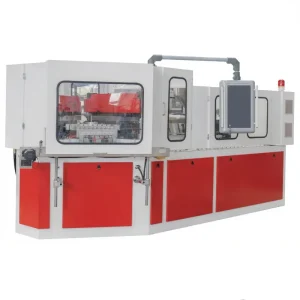
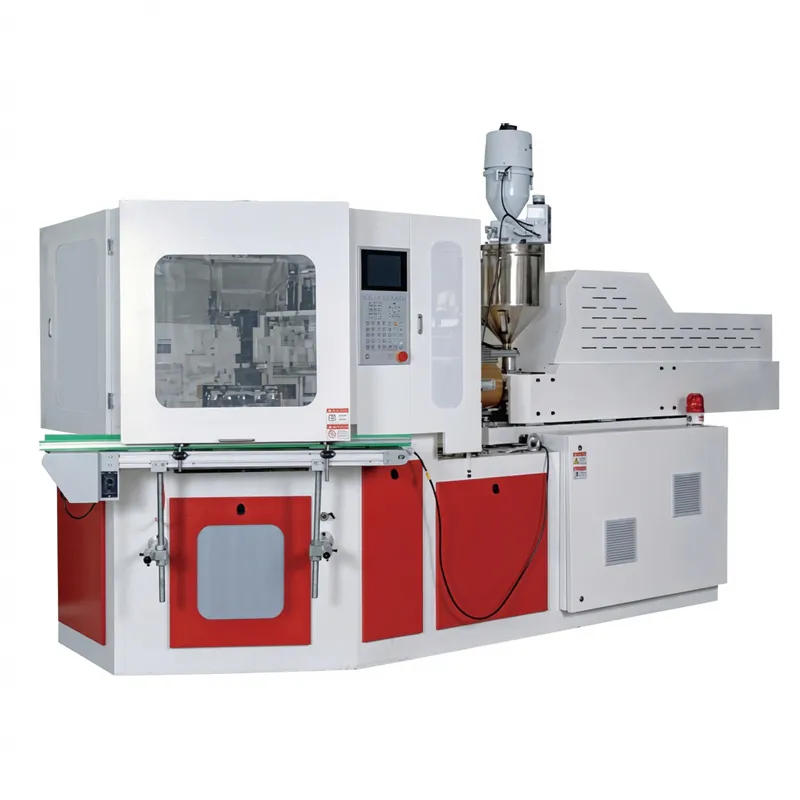
EP-Injection Blow Molding Machine Replacement of Bloma IBM45
The EP-ZQ40 is a compact, European-style injection blow molding machine designed as a replacement for the Bloma IBM45. It operates with a 400 KN injection clamping force and a 60 KN blowing clamping force, producing seamless containers from 1–1500 ml. The machine features a 3.5-second dry cycle, a dual-diameter screw (40/45 mm), and processes materials like HDPE, PP, and PET. With a total power of 20 KW, it offers 10–20% lower energy consumption. Its compact footprint (3.5×1.3×1.7 M) and 3.8-ton weight make it suitable for facilities with space constraints.
Compact European-Style Injection Blow Molding Machine
EP-ZQ40 Injection Blow Molding Machine
Replacement of Bloma IBM45
Full European-style structure · 400 KN Clamping Force · 20 KW Total Power · Bottle Capacity 1–1500 ml · Machine Footprint 3.5×1.3×1.7 M
Brand Reference Notice: The brand name Bloma is referenced here solely to assist customers in evaluating a compatible replacement option in the same clamping tonnage class. This page does not represent, sell, or imply any commercial affiliation with Bloma or any of its products. The EP-ZQ40 is an independently designed and manufactured injection blow molding machine. We respect all brands referenced and make no claim that they are inferior.
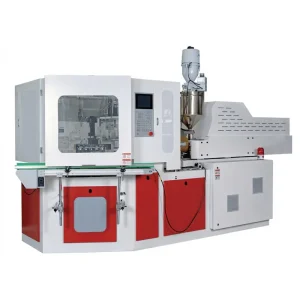
EP-ZQ40 | Injection Blow Molding Machine (European) · 3.5×1.3×1.7 M · 3.8 Ton
EP-ZQ40: Compact European Injection Blow Molding Machine
The EP-ZQ40 is a compact, entry-class injection blow molding machine built on a full European-style platform, designed for manufacturers who need precise, efficient container production without the floor space and utility demands of larger-tonnage equipment. Operating at a 400 KN injection clamping force and 60 KN blow clamping force, the ZQ40 produces seamless, flash-free containers across a 1–1500 ml volume range with the structural consistency expected of European-frame IBM design. For packaging producers in Colombia and across Latin America who are evaluating compact IBM equipment at the 40-ton clamping class — including those currently using or familiar with Bloma IBM45-class machines — the ZQ40 is a technically grounded option worth assessing on its own merits.
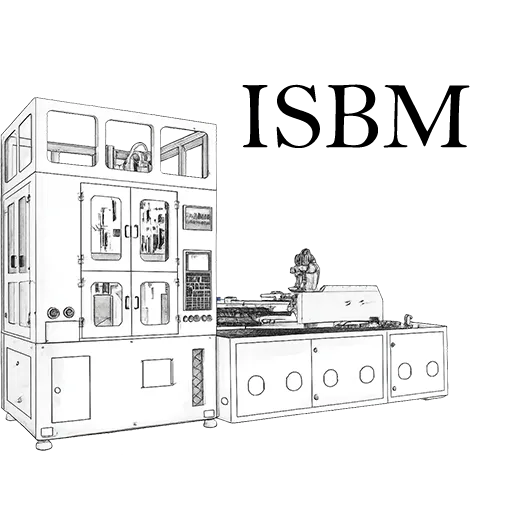
At its core, the ZQ40 is a servo-rotation, three-station injection blow molding machine: injection, blowing, and stripping all occur simultaneously on each turret index, so every 3.5-second dry cycle delivers a finished set of containers across all active cavities. The 40/45 mm dual-diameter screw with a 22:1 L/D ratio provides injection weight flexibility of 190/260 g, covering the range from small pharmaceutical vials and cosmetic tubes through medium-format household product bottles. The 3+N barrel heating zone configuration with 7.5 KW heating power maintains thermal uniformity across the plastication zone, supporting HDPE, PP, PET, PVC, and TPE resins without material-specific barrel changes.
With a total installed power of only 20 KW and a unique pressurized clamping structure where the booster cylinder operates independently of the mold open/close motion, the ZQ40 achieves 10–20% lower energy consumption than comparable machines in the same category. The machine's 3.5×1.3×1.7 M footprint and 3.8-ton weight make it among the most space-efficient small injection blow molding machines at this clamping level — a practical advantage for Colombian manufacturers working within constrained factory floors.
EP-ZQ40 Full Technical Specifications
| System / Category | Parâmetro | Unidade | ZQ40 Value |
|---|---|---|---|
| Injection System | |||
| Diâmetro do parafuso | mm | 40 / 45 | |
| Relação L/D da rosca | % | 22:1 | |
| Injection Weight | g | 190 / 260 | |
| Potência de aquecimento | KW | 7.5 | |
| Number of Barrel Zones | — | 3+N | |
| Injection Stroke | mm | 120 | |
| Clamping System | |||
| Clamping Force — Injection | KN | 400 | |
| Opening Stroke — Injection | mm | 165 | |
| Clamping Force — Blowing | KN | 60 | |
| Opening Stroke — Blowing | mm | 140 | |
| Lifting Height of Rotary Table | mm | 70 | |
| Mould | |||
| Max. Platen Size (L × W) | mm | 480 × 340 | |
| Mold Thickness | mm | 180 | |
| Max. Bottle Diameter | mm | 120 | |
| Max. Bottle Height | mm | 220 | |
| Suitable Bottle Volume | ml | 1 – 1500 | |
| Stripping Stroke | mm | 220 | |
| Hydraulic System | |||
| Hydraulic Pressure | MPa | 14 | |
| Potência do motor | KW | 11 | |
| Dry Cycle Time | s | 3.5 | |
| Total Power | KW | 20 | |
| Operating Power Efficiency | % | 52 – 70 | |
| Other Parameters | |||
| Min. Air Pressure (Compressed Air) | MPa | 0.7 – 1.2 | |
| Compressed Air Capacity | M³/min | 0.7 | |
| Cooling Water Flow | M³/h | 3.5 | |
| Pressão da água de refrigeração | MPa | 0.3 – 0.4 | |
| Dimensões da máquina (C × L × A) | M | 3.5 × 1.3 × 1.7 | |
| Net Weight | Ton | 3.8 | |
ZQ40 Mold Cavitation Reference by Bottle Volume
| Approx. Volume | 10 ml | 30 ml | 60 ml | 100 ml | 250 ml | 500 ml | 1000 ml |
|---|---|---|---|---|---|---|---|
| Max. Cavities | 9 | 8 | 6 | 4 | 3 | 2 | 1 |
Reference values only. Actual cavitation depends on container geometry and mold design. Contact our engineering team for your specific container requirements.
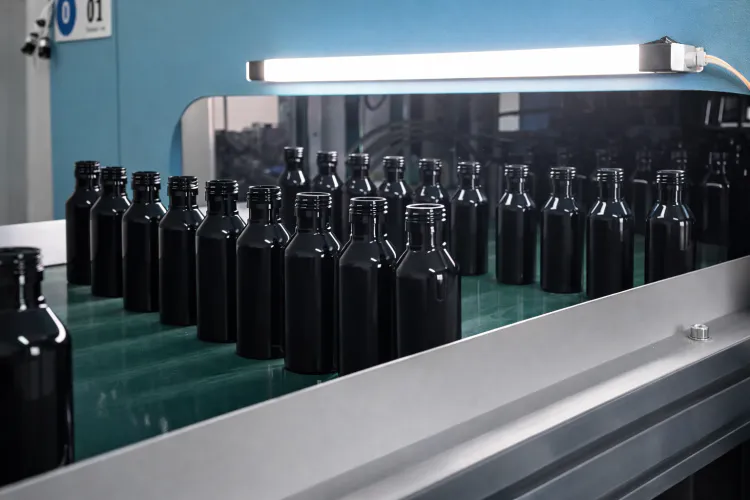
EP-ZQ40 vs. Bloma IBM45 — Objective Parameter Comparison
Brand Bloma referenced for selection assistance only. No commercial affiliation implied. Data presented for objective evaluation.
| Injection Blow Molding Machine Specification | EP-ZQ40 | Bloma IBM45 (ref.) |
|---|---|---|
| Clamping Force (Injection) | 400 kN | 350 KN |
| Clamping Tonnage Category | 40 T | IBM45 class |
| Diâmetro do parafuso | 40 / 45 mm | 45 mm |
| Injection Weight | 190 / 260 g | 180 g |
| Max. Platen Size (L × W) | 480 × 340 mm | 450 × 390 mm |
| Dimensões da máquina (C × L × A) | 3.5 × 1.3 × 1.7 M | 4.05 × 1.52 × 2.55 M |
| Total Power | 20 KW | IBM45 class standard |
| Energy Saving vs. Peers | 10–20% lower | Standard |
| Dry Cycle Time | 3.5 s | IBM45 class standard |
| Tipo de estrutura | Full European Frame | Standard IBM |
Five Key Performance Advantages of the EP-ZQ40
The following advantages are based on the ZQ40's verified engineering specifications and structural design characteristics.
400 KN Injection Clamping — 20–30% Above Category Average
At 400 KN injection clamping force, the ZQ40 delivers 20–30% more clamping capacity than the general industry standard for machines in this tonnage class. By comparison, the Bloma IBM45's injection clamping force is rated at 350 KN. This higher clamping capacity means the ZQ40 can run more demanding mold configurations at this size — wider platens, more cavities, or heavier preform geometries — without risking flash or parting-line deformation. For small-format pharmaceutical and cosmetic container manufacturers in Colombia where per-cavity output directly affects line economics, this clamping advantage is commercially meaningful.
10–20% Lower Energy Consumption via Independent Booster Clamping
The ZQ40's pressurized clamping structure uses a booster cylinder that activates only at the moment of full mold closure — it does not travel with the mold during opening and closing sequences. This architectural choice removes a significant portion of the hydraulic load from each cycle, reducing total energy draw by 10–20% compared to conventional machines in the same category. At 20 KW total installed power, the ZQ40 is among the most energy-efficient compact plastic injection blow molding machines in its clamping class. Over a two-shift operation in a Colombian facility, this saving translates to a measurable reduction in monthly electricity cost.
Dual Screw Diameter 40/45 mm — Injection Weight Flexibility
The ZQ40 offers a dual screw diameter option of 40/45 mm, providing injection weights of 190/260 g respectively. The Bloma IBM45 operates with a 45 mm screw at 180 g injection weight. The ZQ40's 260 g upper capacity gives operators meaningful headroom for producing larger containers within the 1–1500 ml range or running higher-density resins without compromising shot completeness. For Colombian packaging manufacturers running mixed product portfolios across pharmaceutical vials and personal care containers, this flexibility reduces the need for screw changeovers and keeps changeover downtime to a minimum.
3.5-Second Dry Cycle — Servo Rotation with Simple Structure
Standard servo rotation drives the ZQ40's three-station rotary table, achieving a dry cycle of 3.5 seconds with smooth, low-vibration indexing. The servo motor provides programmable acceleration and deceleration profiles, meaning the turret reaches its index position precisely without the mechanical overshoot and settling time that characterizes older hydraulic-rotation IBM designs. The straightforward mechanical architecture of the servo rotation system also means fewer maintenance touch-points and simpler operator training — both practical advantages for production operations in Colombia where engineering support resources may be lean.
Compact Footprint — 3.5×1.3×1.7 M, 3.8 Ton
The ZQ40 occupies just 3.5×1.3×1.7 M of floor space at 3.8 tons — substantially more compact than the Bloma IBM45's 4.05×1.52×2.55 M envelope, particularly in height at 1.7 M versus 2.55 M. This low profile makes the ZQ40 one of the most facility-friendly small injection blow molding machines available, fitting comfortably into mezzanine-level production floors, shared facility spaces, and mixed-use industrial buildings. For Colombian container manufacturers expanding capacity within existing buildings, the ZQ40's footprint efficiency allows more production lines per square meter than larger-format IBM alternatives.
How the Injection Blow Molding Process Works on the ZQ40
Estação 1 — Injeção
Molten resin is injected at high pressure around a precision steel core rod inside the injection mold cavity, forming a hollow preform with a perfectly finished neck. The 400 KN clamping force holds the mold shut against injection pressure, preventing flash at the parting line. The ZQ40's 3+N barrel zones maintain the specific melt temperature profile required for the resin being processed, ensuring complete cavity fill on every shot.
Station 2 — Blowing
The servo-driven rotary table indexes the core rod — still carrying the hot preform — into the blow mold. Compressed air at 0.7–1.2 MPa is introduced through the core rod, expanding the preform uniformly against the blow mold walls to produce the final container shape. The 60 KN blow clamping force holds the blow mold shut during air expansion, preventing parting-line deformation. The IBM process produces seamless containers with no flash waste at this stage.
Station 3 — Stripping
After the blow mold opens, the finished containers are stripped off the core rods with a 220 mm stripping stroke. At this station, the containers have cooled sufficiently to hold their shape and are released cleanly without distortion. Because all three stations operate simultaneously every cycle, the ZQ40 produces a complete batch of finished containers from every cavity with each 3.5-second turret index — maximizing productive output relative to machine size.
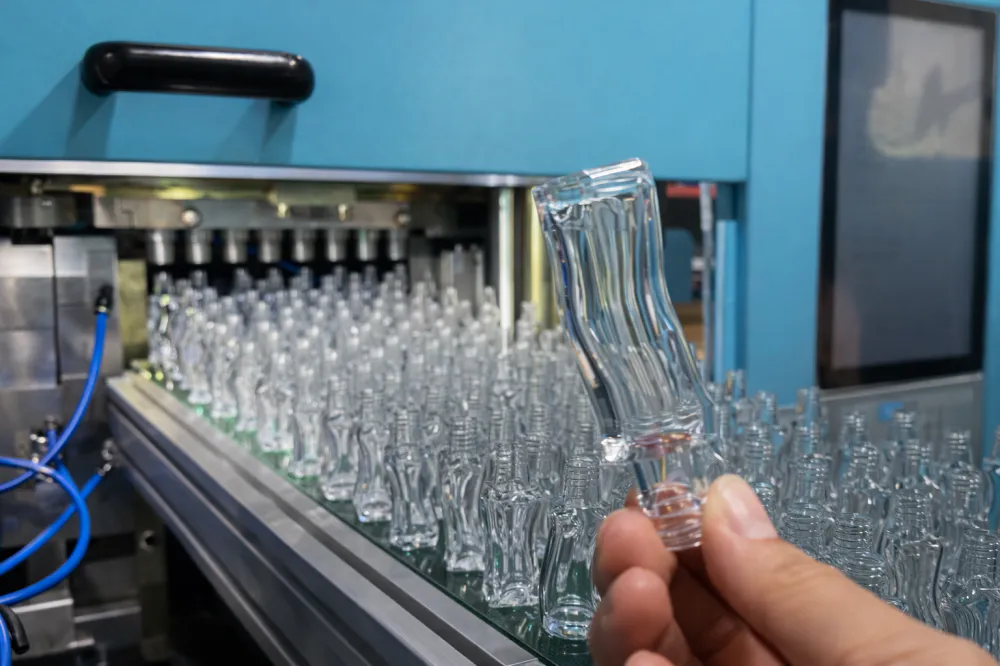
Cenários de aplicação
The ZQ40's compact format, precise neck-finish capability, and 1–1500 ml container range make it relevant across several industries where small injection blow molding machines are commercially deployed.
💊 Pharmaceutical Vials & Small-Format Bottles
The injection blow molding process is the preferred method for pharmaceutical vials, eye-drop bottles, nasal spray containers, and oral liquid bottles because it produces seamless, flash-free containers with consistent wall thickness and dimensionally precise neck finishes. The ZQ40 produces up to 9 cavities at 10 ml per cycle — making it suitable for specialty pharmaceutical producers and contract packaging operations in Colombia who need quality pharmaceutical-grade containers without the production volume demands of larger IBM machines. All output must comply with INVIMA packaging requirements and applicable pharmacopeia standards.
🧴 Cosmetics & Personal Care — Compact Volumes
Sample sachets, luxury serum vials, lip gloss containers, and small-format lotion bottles from 10–250 ml are the natural domain of the ZQ40. The machine's servo-driven rotation produces consistent container geometry and neck finish across all cavities, supporting the visual quality and closure compatibility requirements of branded cosmetic lines. For Colombian cosmetic manufacturers producing niche or premium product lines where batch volumes do not justify large-format IBM investment, the ZQ40's scale is a better economic match — lower tooling cost, faster mold changeovers, and lower minimum viable run quantities.
🧪 Laboratory & Diagnostic Consumables
Reagent bottles, sample collection containers, and laboratory standard solutions are produced in the 10–250 ml range in volumes that suit a compact injection blow molding machine well. The IBM process's wall thickness uniformity and sealed production environment prevent contamination between injection and blowing stages — important for laboratory-grade containers where particle contamination is a quality concern. Producers of diagnostic consumables for the Colombian healthcare sector must also meet INVIMA medical device packaging registration requirements where applicable.
🌿 Specialty Agrochemical & Household Products
Small agrochemical concentrate containers, insecticide spray bottles, and specialty cleaning product packaging in the 100–500 ml range can be efficiently produced on the ZQ40. These containers require chemical-resistant HDPE and PP resins that the ZQ40 processes reliably within its 190/260 g injection weight range. Colombian ICA agrochemical packaging regulations require containers that maintain closure integrity under storage and transport conditions — the IBM wall thickness uniformity from the ZQ40's injection blow molding process supports compliance with these requirements more consistently than extrusion blow molding alternatives for equivalent small-format containers.
🏭 R&D, Pilot Production & New Product Qualification
The ZQ40 is also well-suited for research and development use, where pharmaceutical or personal care companies need to produce small batches of new container formats for customer approval, regulatory submission, or market testing. A compact injection blow molding machine at 3.8 tons can be integrated into R&D facilities or quality labs that cannot accommodate production-scale equipment. For Colombian manufacturers who use the ZQ40 as a pilot machine before scaling to higher-tonnage IBM platforms, the European-style structure and servo rotation system produce containers that accurately represent the production process characteristics of larger ZQ-series machines.
Explore our full replacement series — compact 40 T platforms through heavy-duty 135 T industrial injection blow molding machines.
Regulatory Context for Injection Blow Molding Machines
Whether you are purchasing a compact ZQ40 for a specialist pharmaceutical line or evaluating the injection blow molding machine process for the first time, understanding the applicable regulatory environment for your product type and market is essential. The following frameworks are relevant to ZQ40 operators in Colombia and export markets.
🇨🇴 Colombia — INVIMA, ICONTEC & ICA
Pharmaceutical packaging produced on injection blow molding machines in Colombia must satisfy INVIMA regulations covering materials, closure integrity, and container labeling under Decree 677 and related pharmaceutical packaging resolutions. Food-contact containers must comply with ICONTEC NTC standards — particularly NTC 4728 — and INVIMA Decree 1575 for drinking water contact materials. Agrochemical containers fall under ICA supervision. Colombia's Law 2232 of 2022 on single-use plastics also creates environmental compliance obligations relevant to producers using IBM machines for packaging intended for the Colombian market.
🇪🇺 European Union — CE & Food Contact
EU Machinery Directive 2006/42/EC requires CE marking for injection blow molding machines placed on the European market. EU Regulation 10/2011 on plastic materials and articles in contact with food applies to IBM-produced containers for European food and beverage markets. The ZQ40's European-style structural design is developed with reference to these standards as engineering baseline requirements, though buyers are responsible for verifying CE documentation scope for their specific market and use case.
🇺🇸 USA — FDA 21 CFR & OSHA
Containers produced on injection blow molding machines for the US pharmaceutical market must comply with FDA 21 CFR Parts 210 and 211 for drug packaging. For food-contact containers, FDA 21 CFR Parts 174–186 (indirect food additives) apply. Machine operators in US-facing facilities must also follow OSHA 29 CFR 1910.147 lockout/tagout requirements during maintenance of the ZQ40's hydraulic systems. These standards are worth understanding even for Colombian producers whose containers enter US distribution channels through their customers.
🌎 Andean Community & Regional Standards
Within the Andean Community (Colombia, Peru, Ecuador, Bolivia), Decision 562 harmonizes technical regulations for packaging materials used across member markets. This harmonization means containers produced on the ZQ40 in Colombia can be validated under a shared regulatory framework for export to Peru and Ecuador without full re-qualification. MERCOSUR Resolution 56/92 covers food-contact plastic materials for Brazilian and Argentine markets — relevant for Colombian IBM container producers targeting these larger neighboring economies.
🌐 ISO Standards — Quality & Safety
ISO 9001 quality management, ISO 15378 pharmaceutical packaging quality systems, and ISO 14001 environmental management are the most commonly required certifications for facilities operating injection blow molding machines in the pharmaceutical and food sectors. ISO 45001 occupational health and safety is increasingly expected by global brand owners as a supply chain requirement. ISO 50001 energy management may also be relevant — the ZQ40's 10–20% energy reduction versus category peers supports energy management target setting within ISO 50001 programs.
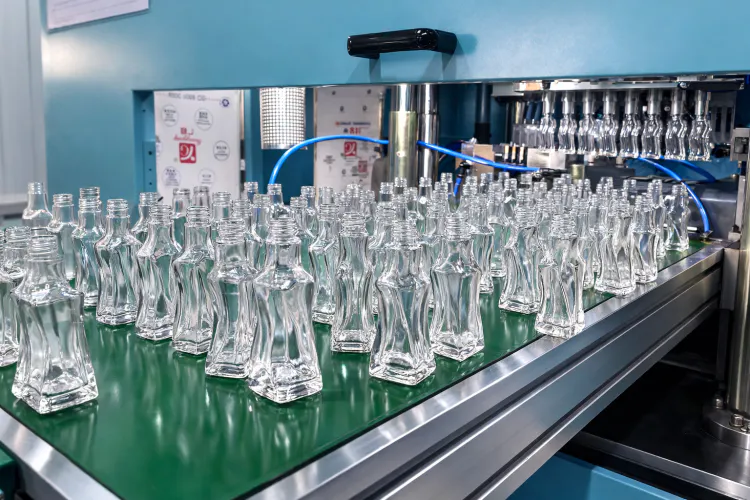
When Does a Compact Injection Blow Molding Machine Make Sense?
Not every container production requirement justifies a 60-ton or 100-ton injection blow molding machine. The ZQ40 addresses a genuine market need: producers who need the quality advantages of the IBM process — precise neck finish, zero flash, consistent wall thickness — at a scale and capital investment matched to their actual production volumes. Understanding when the ZQ40 is the right choice, versus when a larger machine is warranted, helps buyers make an informed procurement decision.
Lower Annual Volume Requirements
Production operations running below approximately 50–80 million containers per year per container size typically find that a compact injection blow molding machine like the ZQ40 matches their volume profile better than a 9-cavity or 14-cavity machine at higher tonnage. Over-investing in cavitation capacity that runs below 60% utilization wastes capital and inflates cost-per-unit. The ZQ40's 1–9 cavity range at this production scale is often the economically rational choice for Colombian specialty and niche packaging producers.
Frequent Product Changeovers
Producers running multiple container formats across short production campaigns benefit from the ZQ40's lower tooling cost per mold — smaller platens mean smaller molds at lower price points — and simpler changeover procedure compared to large-format IBM machines. For Colombian contract packaging operations servicing multiple customers across different container types, the ZQ40's flexibility across 1–1500 ml and its compact servo rotation design supports rapid product switching without the complexity of managing large mold inventories.
Space and Installation Constraints
At 3.5×1.3×1.7 M and 3.8 tons, the ZQ40 is one of the few injection blow molding machines that can realistically be installed in secondary production spaces, mezzanine floors, shared manufacturing facilities, or buildings with standard 3–4 M clearance heights. For Colombian manufacturers expanding within existing infrastructure, this physical flexibility removes the building modification costs that a taller, heavier machine would require, shortening the time from purchase decision to first production output.
Compatible Peripheral Equipment
We supply the complete auxiliary equipment needed to operate the ZQ40 injection blow molding machine as a fully integrated production system — oil-free compressed air, mold temperature control, and full commissioning support for customers across Colombia.
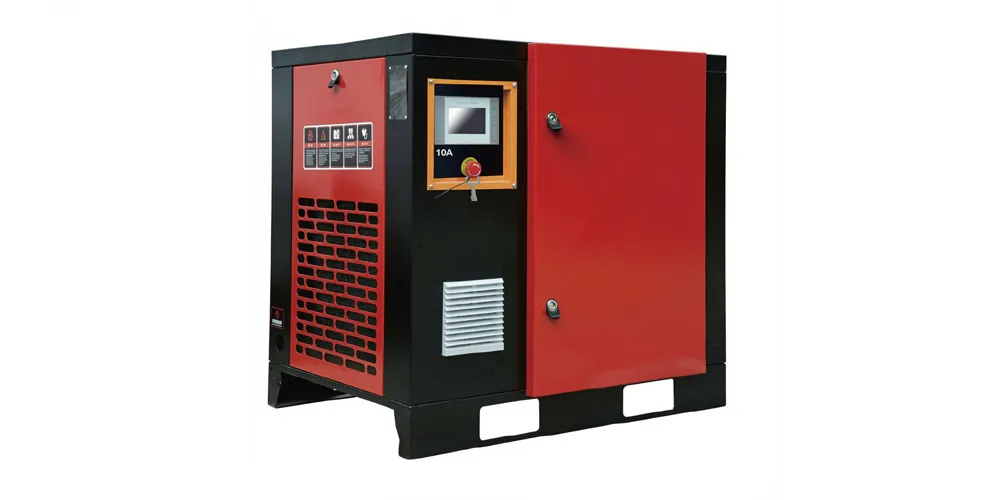
Oil-Free Air Compressor
Compressed air quality is a critical process variable on any injection blow molding machine. The ZQ40 requires 0.7 M³/min of clean, oil-free air at 0.7–1.2 MPa for consistent blowing performance across all active cavities. Even trace oil contamination in blow air can cause surface blemishes on transparent containers and constitutes a contamination event in pharmaceutical and food-grade applications. Our recommended oil-free air compressors are matched to the ZQ40's air demand specifications and validated for pharmaceutical and food-contact clean-air supply. Integrated pressure regulation ensures stable blow pressure across the full production shift without operator adjustment.
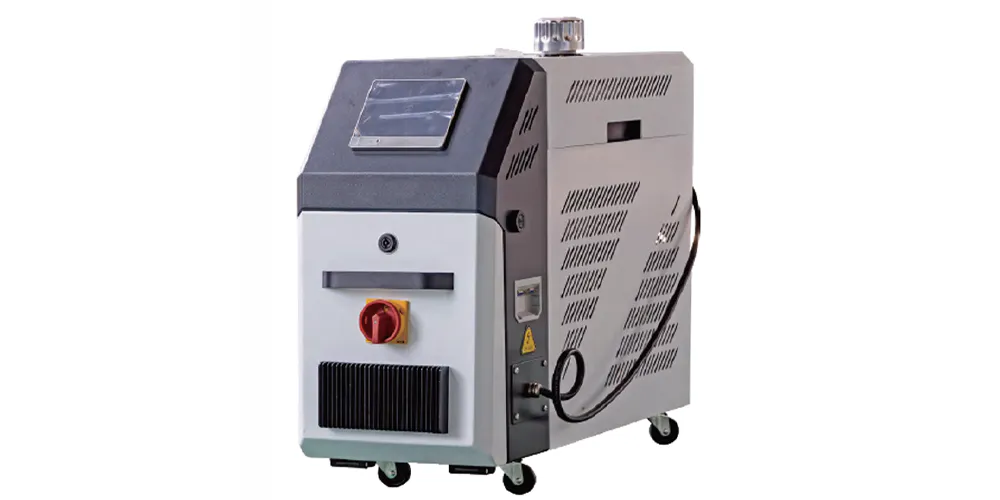
Controlador de temperatura do molde
On a compact injection blow molding machine like the ZQ40, mold temperature uniformity is directly related to the consistency of wall thickness and surface quality across all cavities in the 480×340 mm platen. The ZQ40 specifies a cooling water flow of 3.5 M³/h — our Mold Temperature Controllers regulate this circuit to within ±1°C of setpoint under continuous production load, preventing the gradual temperature drift that develops in uncontrolled cooling systems over a production shift. For specialty pharmaceutical vials and premium cosmetic containers where wall variation is visible and measurable, temperature control is not an optional accessory — it is part of the quality system.
One-Stop Supply Advantage
Sourcing the ZQ40 injection blow molding machine, compressed air system, and temperature control from a single supplier simplifies the installation process, removes interface ambiguity, and gives you a single point of contact for technical support across the entire production system. We provide complete line layout drawings, utility specifications for Colombian facility preparation, and coordinated delivery scheduling. For Colombian customers, we include DIAN customs classification documentation, Spanish-language operator manuals, and on-site commissioning support as standard components of every machine supply contract. Contact us for a complete system quotation.
About Us - Injection Blow Molding Machine Manufacturers
We design and manufacture a full range of injection blow molding machines — from compact platforms like the ZQ40 through heavy-duty 135-ton industrial machines — all built on European-style structural platforms with servo rotation drive and independent booster clamping hydraulics. Our development philosophy prioritizes verifiable engineering performance over marketing claims: every specification published for the ZQ40 is based on tested machine production, not theoretical projections.
We present the ZQ40 as one option among several in the compact IBM market — not as the only viable choice. We encourage customers to evaluate it alongside Bloma, Jomar, and other established brands using objective technical criteria relevant to their specific production requirements. If the ZQ40 is the right fit after that evaluation, we are confident the machine will perform as specified. If another platform better matches your needs, that is a good outcome too.
Oficina
Perguntas frequentes
Editor: PXY