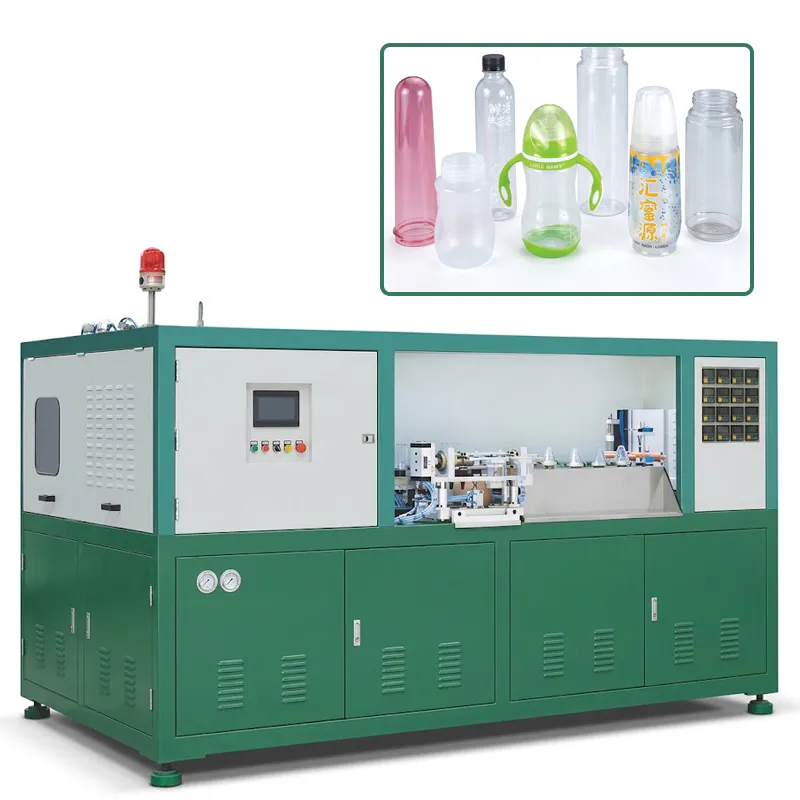
EP-HGA.FS-1CG130 1 Cavity Baby Bottle & PP Bottle Blow Molding Machine
The EP-HGA.FS-1CG130 is a single-cavity, two-step blow molding machine built for manufacturers who demand consistency across high-mix bottle runs. Whether you are producing BPA-free baby feeding bottles, pharmaceutical PP containers, cosmetic jars, or craft-shaped specialty packaging, this machine delivers a reliable production cycle that stands up to round-the-clock commercial schedules. The two stage blow molding machine design separates preform injection from the blowing phase, giving operators independent control over each process variable — temperature profile, stretch ratio, blowing pressure — so every bottle meets its wall-thickness and clarity targets.
Positioned within the FS series of our baby bottle and PP bottle blow molding machine lineup, the FS-1CG130 targets small-to-medium batch runs where precise dimensional accuracy matters more than raw throughput. Its compact footprint (3160 × 1500 × 1800 mm) fits comfortably in space-constrained workshops, while the 2000 kg frame provides the structural rigidity required for stable, vibration-free operation.
Two-Step Blow Molding Machine Series
EP-HGA.FS-1CG130
1 Cavity Baby Bottle & PP Bottle Blow Molding Machine
A fully automatic blow moulding machine engineered for precision production of baby bottles, PP bottles, crafts, and special-shaped containers — stable performance, outstanding output quality, and compact footprint for demanding production environments worldwide.
Technical Specifications — EP-HGA.FS-1CG130 Cavity Baby Bottle & PP Bottle Blow Molding Machine
All parameters below correspond to the FS-1CG130 single-cavity configuration. This automatic pet blowing machine is factory-tested before shipping and supplied with a full parameter sheet verified against the declared production output.
| Parâmetro | Unidade | Valor | Category |
|---|---|---|---|
| Clamping Stroke | mm | 150 | Molding |
| Mold-Open Distance | mm | 330 | Molding |
| Mold-Close Distance | mm | 180 | Molding |
| Stretching Stroke | mm | 350 | Molding |
| Mold-Open Distance (Base) | mm | 50 | Molding |
| Mold-Close Distance (Bottle) | mm | 130 | Molding |
| Preform Holder | — | 50 | Molding |
| Cavities | — | 1 | Molding |
| Volume máximo do recipiente | ml | 1500 | Container |
| Neck Diameter Range | mm | 98 | Container |
| Max. Container Diameter | mm | 110 | Container |
| Max. Container Height | mm | 250 | Container |
| Theoretical Output | bph | 700 | Container |
| Max. Heating Power | kW | 16 | Electrical |
| Additional Heating Power | kW | 10 | Electrical |
| Operating Pressure | kg/cm² | 7 | Air System |
| Low Pressure Air Consumption | ltr/min | 800 | Air System |
| Blowing Pressure | kg/cm² | 35 | Air System |
| High Pressure Air Consumption | ltr/min | 1200 | Air System |
| Cooling Water Operating Pressure | kg/cm² | 5–6 | Cooling Water |
| Cooling Water Temperature | °C | 8–10 | Cooling Water |
| Cooling Water Flow Rate | ltr/min | 30 | Cooling Water |
| Machine Size (L × W × H) | mm | 3160 × 1500 × 1800 | Machine |
| Peso da máquina | kg | 2000 | Machine |
Our Product Key Advantages of Blow Molding Machine
Two-Stage Process Precision
The two-step blow molding process cleanly isolates preform conditioning from the blowing phase. This separation lets operators fine-tune temperature curves, crystallinity, and stretch ratios independently — a critical advantage when switching between different bottle shapes or resin lots. Consistent wall distribution translates directly into reduced scrap rates and lower material cost per unit.
Multi-Material Compatibility
This plastic blowing machine supports PET, PETG, PC, PCTG, and PP resins without major mechanical reconfiguration. Whether you need the optical clarity of PETG for baby bottles or the chemical resistance of PP for pharmaceutical packaging, the machine's heating zones and blowing pressure range accommodate the unique processing windows of each material family.
Compact, Robust Construction
At 3160 × 1500 × 1800 mm and 2000 kg, the FS-1CG130 occupies a fraction of the floor space compared to multi-cavity systems. The machine frame is engineered for long-term rigidity: castings are stress-relieved, guide rails are precision-ground, and all wear surfaces are hardened. Manufacturers in Colombia, Southeast Asia, and the Middle East appreciate its ability to fit into existing production halls with minimal civil work.
Energy-Efficient Heating System
With a max heating power of 16 kW and supplementary capacity of 10 kW, the electrical system is zoned for efficient energy use. Infrared heating lamps are arranged in independently controlled sections, so the machine only heats the zones that a given preform profile requires. Real-world energy consumption runs noticeably below the rated peak in steady-state production.
Stable 700 BPH Output
A theoretical output of 700 bottles per hour positions this auto blowing machine well for specialty and premium product lines where quality — not maximum volume — drives business value. Baby bottle and pharmaceutical packaging customers in particular benefit from this controlled throughput, which keeps cycle times long enough to ensure complete stretching and cooling before mold release.
National Patent Technology
Our R&D team has filed and received numerous national patents covering blow molding machine mechanisms, heating systems, and mold-clamping structures. Each machine leaving the production floor incorporates patented innovations that competitors cannot replicate, giving buyers a genuine technological edge in quality and uptime over generic bottle blow molding alternatives on the market.
Partner Brands
With over two decades of dedicated research and development, our team has accumulated extensive experience in the manufacturing, operation, and management of blow molding machines. We continuously improve and upgrade our blow molding machine production systems and have applied for numerous national patents. We have developed specialized blow molding machines for packaging various materials (PET/PETG/PC/PCTG/PP), including cosmetics, water, oil, beverages, food packaging, pharmaceuticals, and baby products. We are particularly a leader in the high-end cosmetics, food, and pharmaceutical industries. Our clients include well-known brands such as Yibao, Haitian, Luhua, Walch, Blue Moon, Proya, Libai, Estée Lauder, Walmart, Da Senlin, and Shining Eye Drops.

Understanding the Two-Step Blow Molding Process
Buyers frequently ask: what are the steps involved in the two-stage blow molding process? In the first stage, raw resin pellets are injected into a preform mold cavity, producing a threaded test-tube-shaped preform. These preforms are then cooled, inspected, and either stored or fed directly into the second stage. In the second stage, preforms are reheated to their glass-transition temperature in a controlled infrared oven, then placed into the blow mold where a stretch rod extends axially while high-pressure air (35 kg/cm² on the FS-1CG130) inflates the preform to fill the mold cavity.
This two-stage approach — often called a two-step blow molding machine process — excels when container shape complexity is high or when the resin requires specific biaxial orientation for strength and barrier properties. For baby bottles, where dimensional tolerances on thread finish and body ovality are extremely tight, the process gives quality teams the checkpoints they need between stages to catch defects before the blowing phase.
Compared to single-stage processes, the two stage blow molding machine produces superior optical clarity in PETG and PC resins because the separate reheat stage allows more uniform temperature distribution across the preform wall. This is a decisive advantage in the baby products, pharmaceutical, and premium cosmetics segments — exactly the categories that the FS-1CG130 was designed to serve.

Blow Molding Machine's Mold Engineering
Preform Injection Mold

- The gate lip is constructed as a two-piece assembly, ensuring concentricity is maintained throughout preform formation for consistent wall thickness.
- The internal cooling circuit is laid out to maximize heat extraction, shortening cycle time while keeping preform surface temperatures within specification.
- Core forming components are manufactured from imported 2316 die steel — a grade prized for its corrosion resistance and suitability for demanding heat-treatment protocols.
- Core plates, cavity plates, and structural elements use 420 stainless steel throughout, providing long-term resistance to moisture and process chemicals.
- The mold architecture supports straightforward field maintenance without specialized tooling, reducing unplanned downtime.
- Standard interchangeable fittings allow a single mold chassis to produce multiple preform profiles, reducing tooling investment for multi-product lines.
Blowing Mold

- Premium-grade steel is selected for all cavity blocks, ensuring surface hardness and longevity through millions of cycles in continuous production environments.
- Container geometry is developed and verified using state-of-the-art 3D modeling software before any steel is cut, eliminating costly prototype iterations.
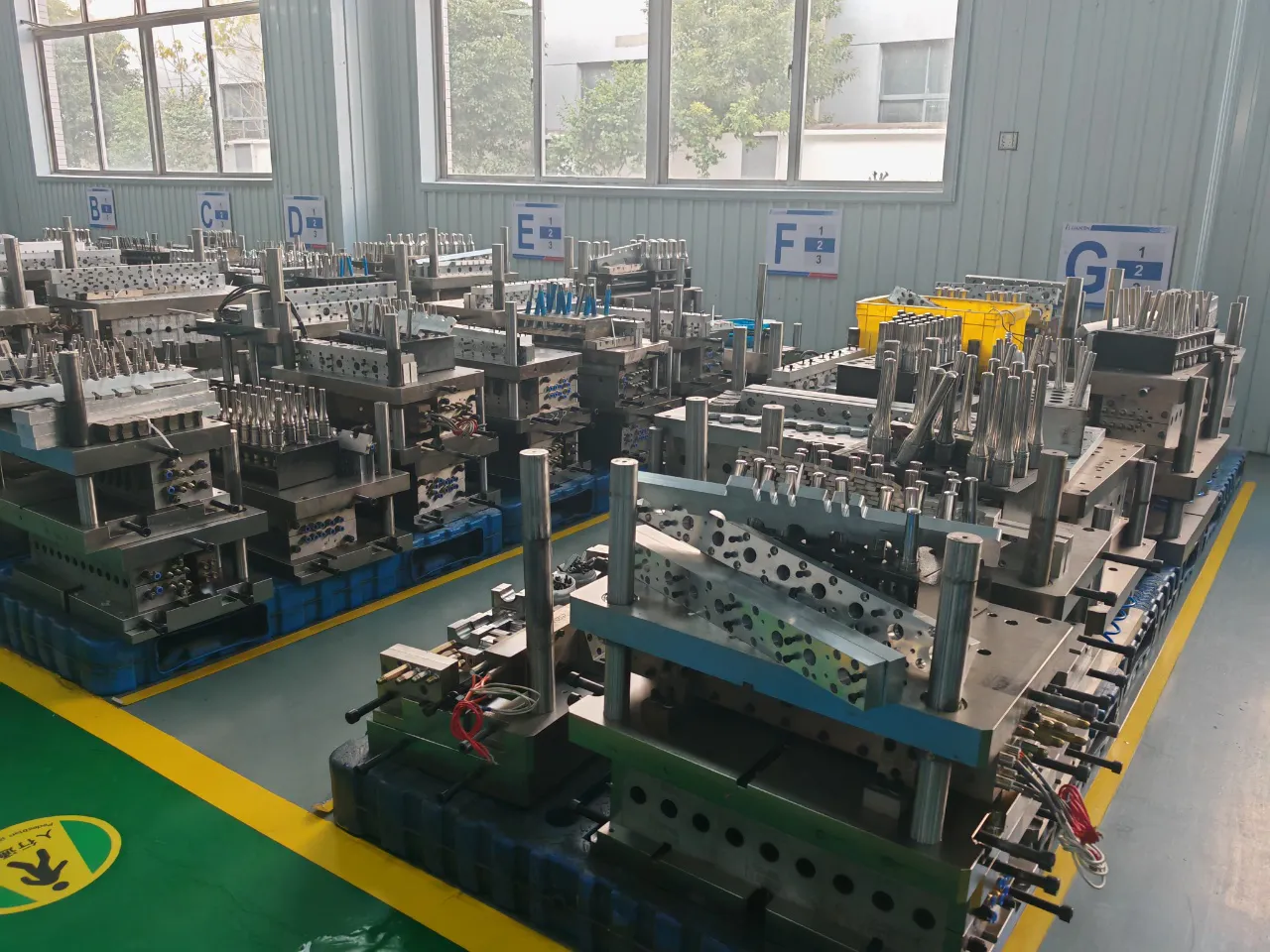
- A broad library of bottle silhouettes is available for selection, including cylindrical, oval, ergonomic, and complex contoured shapes suitable for the baby products and specialty packaging sectors.
- Water channels are routed to distribute cooling evenly across the entire cavity surface, preventing hot spots and reducing cycle time.
- All metalwork is processed on CNC machining centers, delivering tight tolerances on parting lines and cavity dimensions that directly affect the cosmetic quality of finished bottles.
Machine Structure & Design Highlights
The injection blow molding machine architecture of the FS-1CG130 reflects accumulated experience across hundreds of installed units in diverse production environments. The main frame is fabricated from heavy-section welded steel and then stress-relieved by heat treatment before final machining, eliminating long-term frame deformation that could misalign the clamp and blowing assemblies. Guide columns are induction-hardened and chrome-plated for smooth, wear-resistant movement across the full stroke range.
Sistema de controle PLC
A programmable logic controller governs all machine sequences — mold open/close, preform loading, oven traversal, stretch and blow — with millisecond-level timing accuracy. Stored recipes make product changeovers straightforward even for less experienced operators.
Infrared Reheat Oven
Independently switched lamp zones allow a precise temperature gradient from neck finish to base of the preform, optimizing material orientation during the stretch phase. The oven housing is insulated to minimize radiated heat loss and maintain a safer working environment around the blow molding machine.
High-Pressure Blowing Circuit
Rated at 35 kg/cm² blowing pressure with 1200 ltr/min high-pressure air consumption, the pneumatic circuit includes proportional pressure regulation for consistent results across every bottle cavity. Pressure surges that could cause mold flash or preform burst are damped by the system's accumulator design.
Closed-Loop Cooling
The machine's cooling water circuit operates at 5–6 kg/cm², 8–10 °C, flowing at 30 ltr/min. This controlled coolant specification removes heat from the mold cavity at a consistent rate cycle after cycle, maintaining dimensional repeatability between the first and ten-thousandth bottle produced.
Application Scenarios of Blow Molding Machine
Mamadeiras para bebês
PP and PETG resins approved for food contact with infants are readily processed on this auto blowing machine. Wide-neck preforms up to 98 mm neck diameter can be blown to the ergonomic silhouettes required by baby products brands, while optical clarity and zero-contamination production are maintained throughout.
Embalagens farmacêuticas
Pharmaceutical manufacturers in Colombia and global regulated markets use this bottle blow molding machine to produce dropper bottles, syrup containers, and specialty closures. PP's chemical inertness and PETG's clarity make both materials well-suited, and the machine's consistent wall-thickness distribution supports container integrity testing requirements.
Cosméticos de alta qualidade
From serum bottles to pump dispensers, cosmetic packaging demands zero visible blemishes and tight surface-finish tolerances. The blowing mold's CNC-machined cavities and precisely routed cooling channels deliver the surface gloss and dimensional consistency that premium cosmetics brands expect from a blow molding machine supplier.
Food & Beverage Bottles
Edible oil, drinking water, juice, and condiment containers up to 1500 ml volume are produced reliably on the FS-1CG130. The machine's stable 700 bph output and easy recipe recall make it practical for small-batch food producers who regularly switch between product SKUs without lengthy mold or parameter changes.
Crafts & Special-Shaped Bottles
Novelty containers, promotional bottles, and special-shaped decorative packaging require a plastic blowing machine that can faithfully reproduce complex 3D mold geometry. The high-quality steel blowing molds combined with 3D-designed cavity profiles allow production of shapes that would be impractical on conventional stretch blow molding equipment.
How to Choose the Right Blow Molding Machine
Selecting the correct machine from the range of available bottle blow molding machine models comes down to four primary criteria: container volume, neck diameter, target output, and resin type. The FS-1CG130, with its 1500 ml max volume, 98 mm neck range, and single-cavity configuration, is the right choice for manufacturers who prioritize product variety and quality over peak throughput.
If your production plan calls for a single bottle design at sustained high volumes, a multi-cavity model from the FS-2CB or ES-2C series will deliver better economics per bottle. Conversely, if you routinely handle four to eight different bottle shapes in the same week — as is common in contract packaging and specialty product environments — the FS-1CG130's fast mold-change design and single-cavity simplicity reduce the risk and cost of each changeover.
Consider the resin as well. PC and PCTG require elevated processing temperatures and careful temperature profiling that are better managed in the FS-1CG130's independently zoned oven than in a fast-cycling high-output machine. For straightforward PET water bottle production at high volume, look further up the FS or ES series instead. Our technical team is available to review your bottle drawings and production schedules and recommend the optimal machine configuration before purchase.

Sobre nós
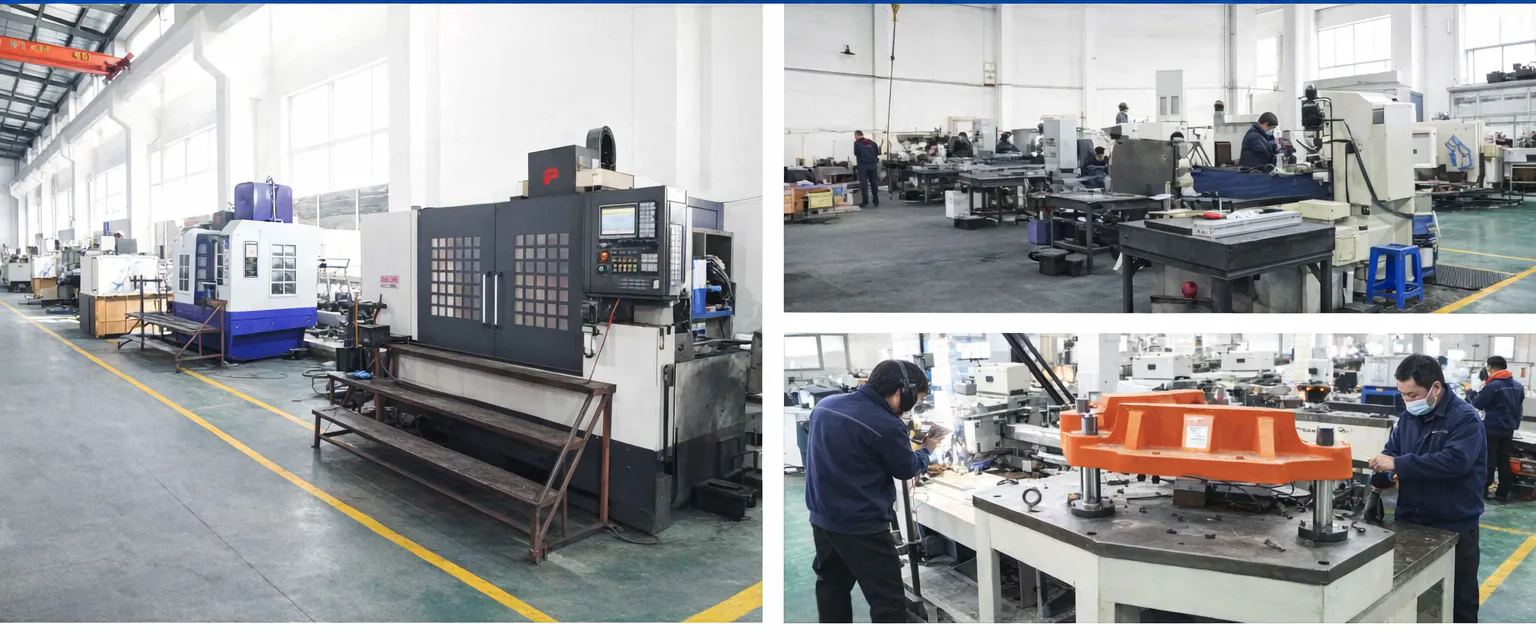
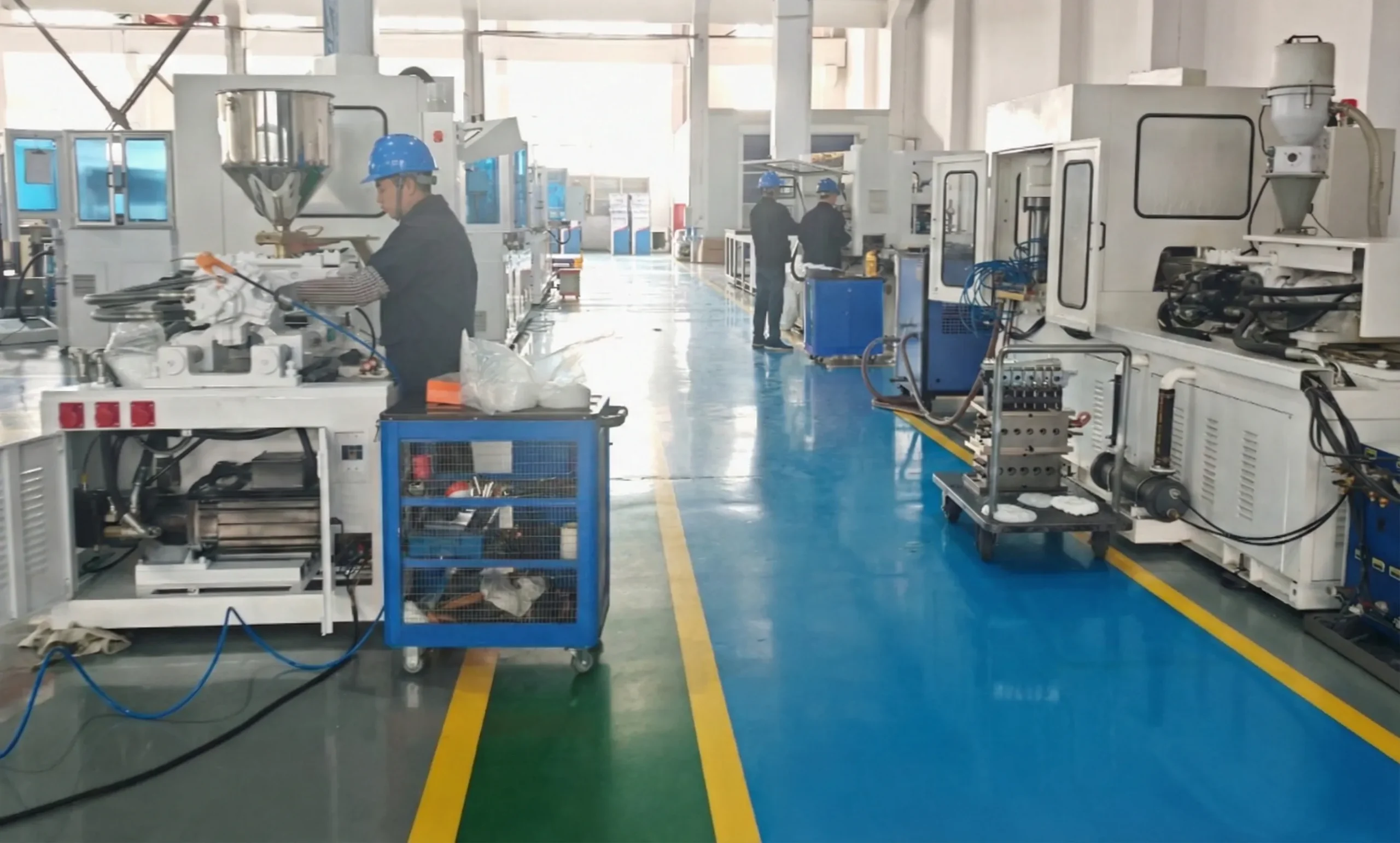
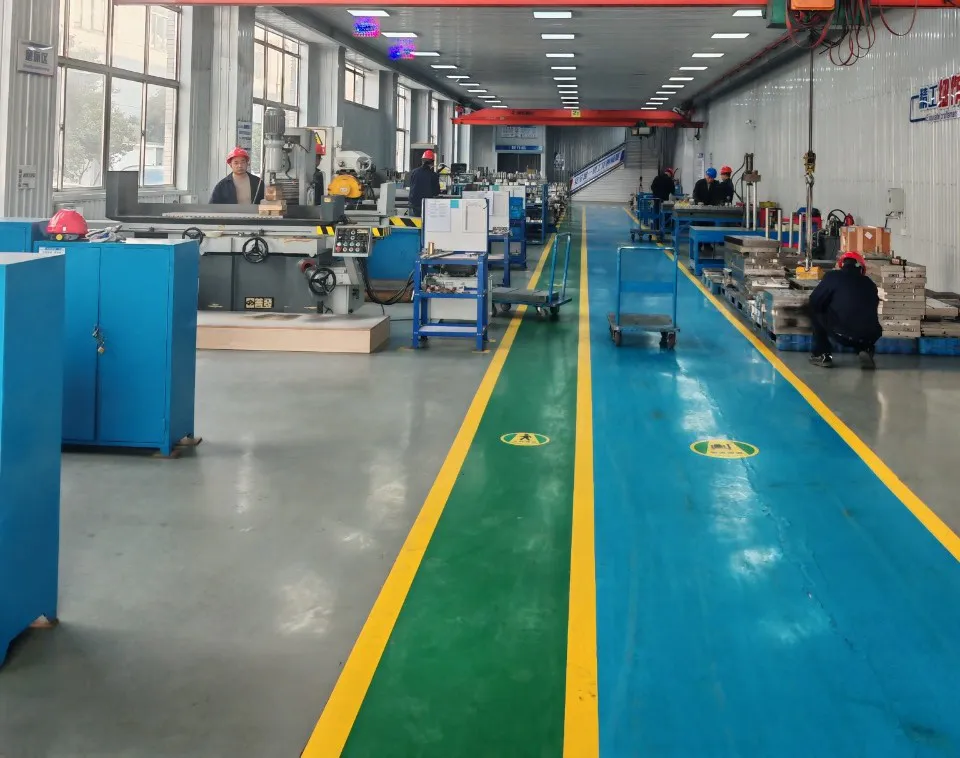
With more than twenty years focused exclusively on blow molding machine development and manufacture, our engineering team has accumulated the kind of practical, application-specific knowledge that only comes from commissioning hundreds of machines across dozens of industries. We do not resell or rebrand equipment from third parties — every machine bearing our model designation is designed, assembled, and tested in-house against documented quality standards before it leaves the factory floor.
Our blow molding machine production systems have been progressively refined through ongoing R&D investment, and that investment has produced a portfolio of national patents covering key machine subsystems. We specialize in PET/PETG/PC/PCTG/PP blow molding across cosmetics, food and beverage, pharmaceutical, baby products, and specialty packaging. Clients from Colombia to Australia, the Netherlands, South Korea, Brazil, and beyond have relied on our machines to start or scale their container production operations.
We offer comprehensive after-sales support: remote parameter guidance, on-site commissioning assistance, spare-parts supply, and mold design services. When you invest in a fully automatic blow moulding machine from our lineup, you gain access to the full technical team that built it.
Oficina
Compatible Auxiliary Equipment
A complete blow molding production line requires more than just the blow molding machine itself. We supply or can recommend the full range of auxiliary equipment needed to run an efficient, integrated line — all selected for compatibility with the FS-1CG130 and our broader machine range. One supplier for the core machine and its peripherals simplifies commissioning, reduces lead times, and gives you a single point of contact for technical support.
Air Compressor
High-pressure air supply is the lifeblood of any bottle blow molding machine. We partner with specialist compressor suppliers to provide machines precisely matched to the 35 kg/cm² blowing pressure and 1200 ltr/min high-pressure air consumption of the FS-1CG130. Oil-free compressor models are recommended for baby bottle and pharmaceutical applications where air purity is regulated.

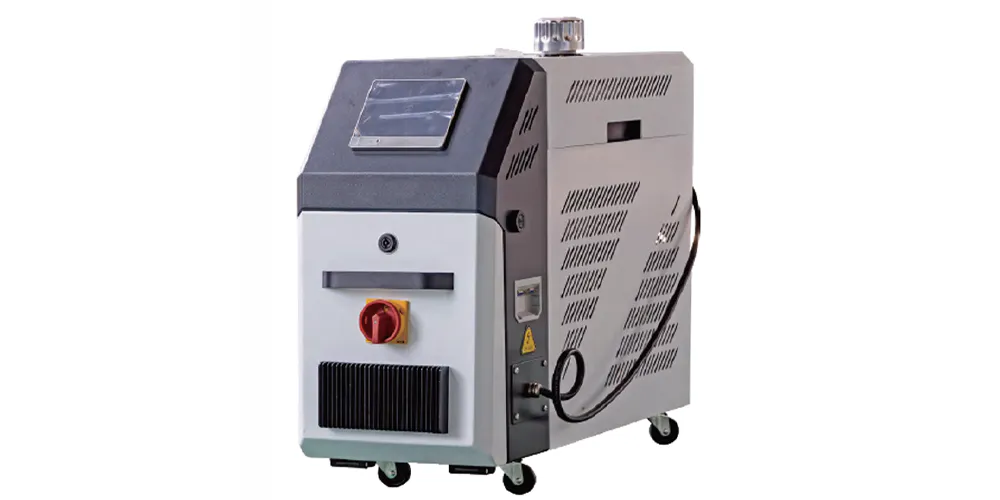
Controlador de temperatura do molde
Precise mold temperature control is essential when working with PC, PCTG, or any resin where narrow processing windows affect surface finish and dimensional consistency. A dedicated mold temperature controller circulates heated or cooled fluid through the mold channels, maintaining set-point temperature within ±1 °C regardless of ambient fluctuations — critical for high-gloss cosmetic bottles.
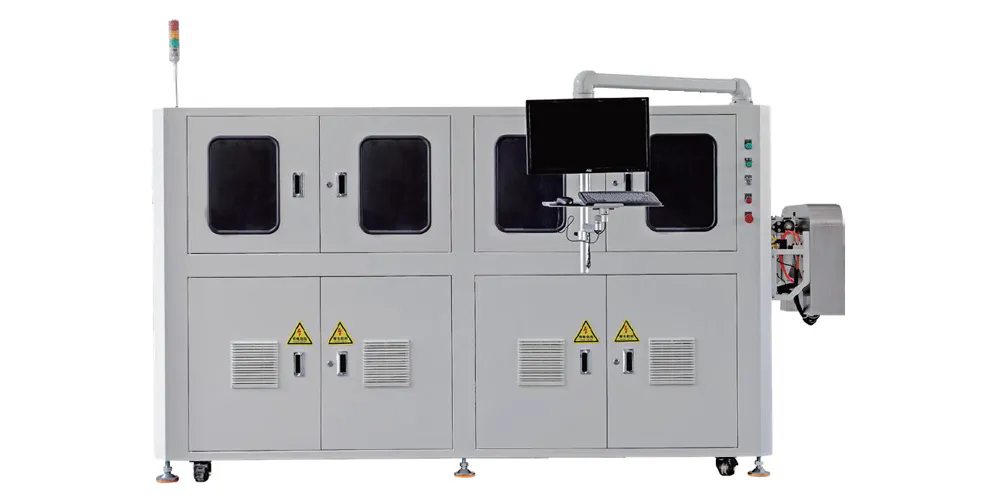
Bottle Visual Inspection Machine & Chiller
Automated visual inspection eliminates human error from the quality-check process, scanning every bottle for wall-thickness variation, cosmetic defects, and dimensional non-conformance at line speed. Paired with a dedicated chiller unit that delivers stable 8–10 °C cooling water to the FS-1CG130, these auxiliaries complete a fully integrated, one-source production solution for demanding blow molding environments.
Perguntas frequentes
▶ How does a two-stage blow molding machine improve bottle quality for baby product manufacturers in Colombia and South America?
The two-step process decouples preform production from container blowing, so each stage can be optimized independently. For baby bottle manufacturers, this means the preform's wall-thickness distribution is verified before it ever reaches the blow mold — eliminating a whole category of defects. In South American markets like Colombia where imported packaging lines must deliver consistent quality without easy access to on-site technical support, this process reliability translates directly into lower scrap rates and reduced warranty exposure.
▶ What are the key differences between single-stage and two-stage blow molding for PP baby bottle production in food-grade applications?
Single-stage machines inject and blow in one continuous thermal cycle, which minimizes reheating energy but limits process flexibility. The two-stage approach reheats preforms to a precisely controlled temperature profile before blowing, giving PP the biaxial orientation it needs for strength and chemical resistance without localized overheating that can cause stress whitening. For food-grade baby bottle production, the two-stage method also provides a natural inspection window between stages where out-of-spec preforms can be removed before they consume blowing-mold cycle time.
▶ Which blow molding machine model is best suited for producing small-batch specialty and craft-shaped bottles for the cosmetics industry in Europe?
For small-batch specialty production in European cosmetics markets, the EP-HGA.FS-1CG130 is typically the right fit. Its single-cavity configuration makes mold changeovers fast and cost-effective when you are running multiple SKUs per week. The CNC-machined blowing molds can replicate complex contoured geometries accurately, and the machine's 700 bph output rate is sustainable even for craft-shaped bottles with unusual wall-thickness profiles that slower or faster machines may struggle to process consistently.
▶ How do I determine the right air compressor capacity and pressure rating when setting up a fully automatic blow moulding machine production line?
The FS-1CG130 Blow Molding Machine requires 7 kg/cm² operating pressure for low-pressure functions (clamping, conveying) and 35 kg/cm² for the high-pressure blowing circuit, with a high-pressure consumption of 1200 ltr/min at steady state. When sizing a compressor, add a 20–30% capacity buffer above the machine's stated peak consumption to account for startup surges and distribution line losses. For pharmaceutical or baby bottle applications, specify an oil-free compressor model to comply with air-purity regulations.
▶ Where can pharmaceutical packaging manufacturers in Southeast Asia find a reliable pet blowing machine supplier that also provides after-sales technical support?
Pharmaceutical packaging producers in Southeast Asia should look for a pet blowing machine manufacturer with documented experience in regulated packaging sectors — not just general beverage production. Our machines have been installed and commissioned at pharmaceutical facilities across Asia and the Middle East, and our after-sales team provides remote parameter guidance, scheduled maintenance documentation, and on-site commissioning visits. We also stock spare parts for all active machine models to minimize downtime when wear components need replacement.
Editor: PXY
Produtos relacionados
-
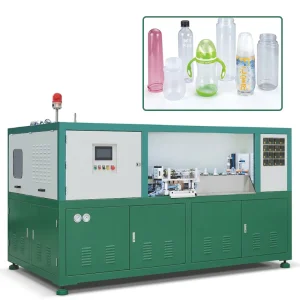
EP-HGA.FS-1CG150 1 Cavity Baby Bottle & PP Bottle Blow Molding Machine
-
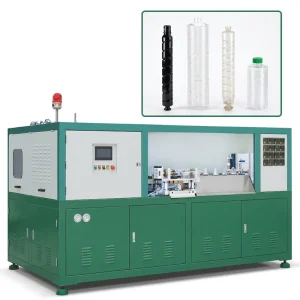
EP-HGA.FS-1CG220 1 Cavity Baby Bottle & PP Bottle Blow Molding Machine
-

EP-HGA.P.FS-2C150 2 Cavities Crafts & Special-shaped Bottle Blow Molding Machine
-

EP-HGA.JS-4C114 1000ml 4 Cavities Crafts & Special-Shaped Bottle Blow Molding Machine