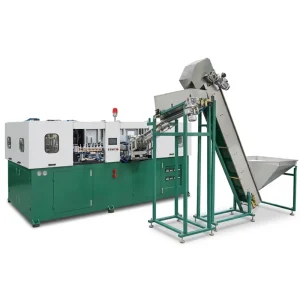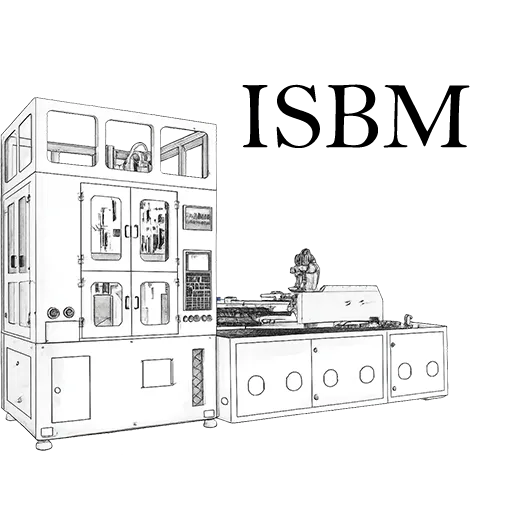

EP-HGA.JS-2C366(20L) Large-Volume Blow Molding Machine for Pesticide & Chemical Containers
De EP-HGA.JS-2C366(20L) Large-Volume Blow Molding Machine is a specialized 2-cavity system engineered for producing large containers up to 22 liters. It accommodates bottles with a maximum diameter of 300mm and height of 480mm. Designed for high-volume output, it achieves a theoretical production rate of 700 bottles per hour. The machine features a substantial 772mm mold-open distance and a 620mm stretching stroke to handle large preforms efficiently. It operates with a max heating power of 86 kW and requires high-pressure air at 35 kg/cm² with a consumption of 12,500 ltr/min. With robust dimensions of 4990×2660×3040mm and a weight of 7,000kg, this heavy-duty unit ensures stability and precision for manufacturing large-scale pesticide and chemical containers.
EP-HGA.JS-2C366(20L) Large-Volume Blow Molding Machine for Pesticide & Chemical Containers
The EP-HGA.JS-2C366(20L) represents the high end of the ES series product line — a purpose-built, two-step blow molding machine engineered for large-volume pesticide, industrial chemical, and agrochemical container production. With a maximum container capacity of 22,000 ml (22 litres) and a dual-cavity configuration, this machine occupies a category that very few fully automatic blow moulding machine platforms can address: blow-moulded PET and PC containers in the 5–20 litre range that must meet the dimensional precision, wall uniformity, and chemical resistance standards demanded by leading agrochemical formulators worldwide. Wherever large-format pesticide containers, 10-litre detergent drums, or 20-litre chemical jerricans are required — in Colombia, Brazil, Southeast Asia, or any major agricultural market — the JS-2C366(20L) delivers production-grade reliability.
Unlike smaller-cavity machines that struggle with the long stretching stroke and high blow-air volumes that large containers require, the JS-2C366(20L) was designed from the start for this demanding application. Its 620 mm stretching stroke and 12,500 ltr/min high-pressure air circuit provide the energy and mechanical travel needed to fully inflate a preform into a 480 mm tall, 300 mm diameter container at 35 kg/cm² — producing a biaxially oriented wall that resists both the chemical content and the rough handling typical of field-use agrochemical packaging.
Technical Specifications — HGA.JS-2C366(20L) Blow Molding Machine
All figures below are factory-tested reference values for the standard JS-2C366(20L) configuration. Actual production performance depends on preform specification, container geometry, resin grade, and site utility conditions.
| Blow Molding Machine Parameter | Eenheid | Waarde |
|---|---|---|
| Molding | ||
| Clamping Stroke | mm | 332 |
| Mold-Open Distance | mm | 772 |
| Mold-Close Distance | mm | 440 |
| Stretching Stroke | mm | 620 |
| Preform Holder | — | 116 |
| Aantal gaatjes | — | 2 |
| Container | ||
| Maximale containerinhoud | ml | 22,000 |
| Max. Neck Diameter Range | mm | 90 |
| Max. Container Diameter | mm | 300 |
| Max. Container Height | mm | 480 |
| Theoretical Output | bph | 700 |
| Electrical System | ||
| Max. Heating Power | kW | 86 |
| Normal Heating Power | kW | 45 |
| Air System | ||
| Operating Pressure | kg/cm² | 7 |
| Low Pressure Air Consumption | ltr/min | 4,000 |
| Blowing Pressure | kg/cm² | 35 |
| High Pressure Air Consumption | ltr/min | 12,500 |
| Cooling Water | ||
| Operating Pressure | kg/cm² | 5–6 |
| Water Temperature | °C | 8–12 |
| Flow Rate | ltr/min | 120 |
| Machine | ||
| Machine Size (L×W×H) | mm | 4090 × 2660 × 3040 |
| Machinegewicht | kg | 7,000 |

Large-Format Container Production: What Sets the JS-2C366(20L) Apart
Large-volume container production presents challenges that are qualitatively different from those in small-format bottle manufacturing. When a preform weighing 300 g or more is being inflated into a 20-litre container, the stretch-blow window — the narrow band of preform temperatures within which the material will orient correctly — is shorter and more sensitive to variation than in a 500 ml preform. Any deviation in preform temperature uniformity across its wall cross-section results in localised thinning, which in turn creates potential stress-crack initiation sites that can fail catastrophically in chemical service. The JS-2C366(20L) addresses this through its 86 kW infrared heating system, divided into independently controlled zones that maintain the preform body within a tight temperature envelope from the neck support ring to the gate, regardless of the preform's wall thickness distribution.
The machine's two-cavity blow station is configured for the large mold dimensions that containers in this volume range demand. The mold-open distance of 772 mm and clamping stroke of 332 mm accommodate blow molds with the external dimensions needed for 300 mm diameter containers, while the toggle-lever clamping mechanism maintains consistent closing force across both cavities simultaneously. At 700 bottles per hour theoretical output, the JS-2C366(20L) is positioned for operations where production runs are counted in days rather than hours — typical of large-volume agrochemical container lines supplying seasonal crop-treatment campaigns in Colombia, Brazil, India, and comparable agricultural markets.
Key Advantages of the JS-2C366(20L) Blow Molding Machine
Producing large-format chemical and pesticide containers on an automatic pet blowing machine at the quality level that major agrochemical brands require is a fundamentally different engineering challenge from small-bottle production. The JS-2C366(20L) Blow Molding Machine was designed around four core requirements that define performance in this application: thermal control over heavy preforms, adequate mechanical travel for tall containers, sufficient air-flow capacity for large internal volumes, and robust mold clamping across wide-face tooling. Each of these requirements has driven specific design decisions that distinguish the JS-2C366(20L) from adapted small-format machines that are sometimes offered for large-container applications.
The 86 kW heating system — the highest in the ES series — provides the thermal capacity to condition preforms weighing upwards of 250 g within the production cycle time required to sustain 700 bph output. The independent zone controllers allow the operator to establish a temperature gradient across the preform body that compensates for the non-uniform wall cross-section typical of heavy preforms, preventing the localised thinning that leads to gate-area stress cracking in service. The 120 ltr/min cooling water circuit — more than three times the flow of the smallest ES models — supports rapid mold cool-down after each blowing cycle, maintaining cycle time even when mold face areas are large and thermal mass is high.
📏 620 mm Stretching Stroke
The longest stretching stroke in the series accommodates containers up to 480 mm tall — covering 10-litre and 20-litre jerricans, drums, and wide-format agrochemical containers that smaller-cavity machines cannot physically reach.
💨 12,500 ltr/min Air Circuit
High-pressure air consumption of 12,500 ltr/min at 35 kg/cm² provides the sustained blow energy needed to fully inflate large-volume preforms without pressure drop mid-cycle — a common failure point on under-specified machines.
🌡️ 86 kW Heating Capacity
Series-leading installed heating power handles the heavy preforms that large containers require, with independent zone control maintaining the tight temperature uniformity that biaxial orientation demands across thick-wall cross-sections.
🔒 90 mm Neck Finish Range
Supports wide-mouth closures up to 90 mm diameter — accommodating the large-format screw caps, child-resistant closures, and spout systems common in 5–20 litre agrochemical and industrial chemical containers.

Partner Brands
Our engineering team carries over two decades of continuous research and practical manufacturing experience in blow molding machine design, spanning the full range from small-format cosmetic packaging to the large-volume agrochemical and industrial chemical containers this machine addresses. Throughout that period we have built a portfolio of national patents covering innovations in preform heating architecture, servo-driven stretch-blow mechanics, and high-pressure air management. Our production platform handles PET, PETG, PC, PCTG, and PP materials across industries including cosmetics, water and beverages, edible oil, pharmaceuticals, food packaging, and baby products. We maintain a particularly strong position in the high-specification cosmetics and pharmaceutical sectors, where dimensional accuracy is non-negotiable. Clients who rely on our plastic blow molding machine systems include Yibao, Haitian, Luhua, Walch, Blue Moon, Proya, Libai, Estée Lauder, Walmart, Da Senlin, and Shining Eye Drops.

Mold Engineering for Large-Format Containers
Large-volume container molds impose physical demands — mold weight, face area, cooling circuit length — that standard mold designs cannot satisfy without engineering compromises. All tooling supplied for the JS-2C366(20L) is manufactured in-house to specifications developed specifically for containers in the 5–20 litre range, with cooling circuit geometry and structural stiffness calculated for the thermal and mechanical loads of continuous production.
Preform Injection Mold

- The die lip is constructed in two precision-matched sections that lock concentrically during the forming cycle, maintaining gate-to-neck co-axiality on the heavy preforms this machine processes.
- Enhanced cooling channel routing extracts heat efficiently from thick-wall preform cross-sections, preventing the extended cooling times that would otherwise reduce overall output rate.
- Cavity-forming surfaces are machined from imported 2316 die steel — hardened, treated for corrosion resistance, and selected for its dimensional stability under repeated thermal cycling with large-mass preforms.
- Core plates and cavity plates are fabricated from 420 stainless steel, providing corrosion resistance appropriate for processing environments where moisture or cleaning chemicals contact the tool surface.
- Maintenance access is designed for practicality — a consideration that carries extra weight when the mold is physically large and heavy, requiring safe and efficient handling during scheduled service.
- Interchangeable die inserts follow a standardised fitment interface, allowing the same mold base to serve multiple preform neck-finish standards without full tooling replacement.
- The cavity architecture supports multi-type preform production from a single mold platform, providing flexibility for operations that supply multiple container formats from a shared preform base design.
Blowing Mold

- Cavity blocks are sourced from premium alloy tool steel grades selected for compressive strength at the high clamping forces that large-face molds require, and for dimensional stability over extended production campaigns.
- All container profiles — including grip geometry, label panels, stacking features, and base reinforcement — are developed in professional 3D CAD/CAM software and transferred directly to CNC cutting programs.
- A range of standard large-format container profiles is available for immediate selection; fully custom designs are supported through digital simulation and prototype validation before tool steel is committed.
- Cooling channel positioning is modelled to achieve uniform heat extraction across the full face of large-format container molds, preventing differential shrinkage that causes dimensional deviation in tall containers.
- All structural and cavity components are machined on multi-axis CNC centres, holding surface finish and dimensional tolerances critical for closure-sealing integrity on wide-mouth chemical containers.
Machine Structure & Engineering Detail
The JS-2C366(20L) stretch blow molding machine is structured around three sub-systems, each scaled for the physical demands of large-volume container production in ways that smaller ES series machines are not.
Preform Heating System: The 116-position preform carrier traverses an infrared heating tunnel with multiple independently controlled zones. For the heavy preforms that 10-litre and 20-litre containers require, the installed 86 kW capacity provides sufficient thermal energy to fully condition each preform within the available residence time at the target production rate. Zone-by-zone temperature adjustment allows the operator to build a deliberate temperature gradient from the gate area to the neck support ring — essential for directing material flow toward the container base and away from the neck finish during the stretch-blow cycle.
Blow Station: The two-cavity blow station uses a toggle-lever clamping mechanism providing repeatable clamping force across both large-format mold faces. The servo-driven stretch rods travel 620 mm — long enough to reach the base of a 480 mm tall container and maintain tension on the preform through the full blowing cycle. The 12,500 ltr/min high-pressure air supply at 35 kg/cm² ensures that the large internal volume of 20-litre containers is pressurised quickly and completely, with no pressure decay that would result in under-blown base panels or shoulder geometry defects.
Control & Utilities: The PLC platform manages all blow cycle parameters — stretch rod position profile, pre-blow pressure, blowing pressure, mold timing, and preform transport speed — through a colour touchscreen HMI. Up to 50 container format recipes can be stored and recalled instantly. The 120 ltr/min cooling water circuit is distributed through independently valved circuits for the mold body and the base plug, allowing differential cooling where the container geometry requires it. For operations in Colombia and other tropical markets where ambient temperatures affect utility performance, the separate cooling circuit control allows compensation without compromising container quality.
Toepassingsscenario's
The JS-2C366(20L) bottle blow molding machine is optimised for large-format container applications where the combination of volume, wall integrity, and closure-sealing precision determines commercial viability. The following categories represent the primary applications where this blow molding machine for sale provides the strongest operational fit.
🌾 20-Litre Pesticide & Herbicide Jerricans
The primary application for this machine. PET jerricans in the 10–20 litre range for pesticide concentrates, systemic herbicides, and fungicides. The biaxially oriented PET wall delivers the stress-crack and impact resistance that field-use agrochemical containers require, while the 90 mm neck supports the wide-mouth closures and pouring systems that farmers expect.
🛢️ Industrial Chemical Drums & Containers
Industrial solvents, concentrated cleaning compounds, lubricant additives, and process chemicals in 5–22 litre formats. The machine's large mold cavity and extended stretching stroke accommodate the taller, wider container profiles common in industrial distribution packaging, including stackable drum formats with reinforced base geometry.
💧 Large Water & Beverage Containers
18-litre and 20-litre water cooler bottles represent the beverage end of this machine's capability range. These containers require particularly consistent wall thickness around the neck — where the handling collar is positioned — and at the base, where repeated loading in water cooler units creates cyclic stress. The JS-2C366(20L)'s precise temperature zoning meets both requirements.
🧴 Automotive & Industrial Lubricant Containers
Engine oil, transmission fluid, and industrial lubricant containers in 5–10 litre sizes. The machine's wide container diameter range (up to 300 mm) accommodates the squat, broad-base profiles common in lubricant packaging, while the 480 mm height range covers the taller 10-litre jerricans used in the heavy transport sector.
Choosing the Right Blow Molding Machine for Large-Volume Container Production
Selecting a blow molding machine for large-format containers requires careful evaluation of parameters that are often less prominent in small-format machine procurement. The following considerations should guide the selection process.
1. Stretching Stroke vs. Container Height. The maximum container height a blow molding machine can produce is determined by its stretching stroke — not by mold height alone. The JS-2C366(20L)'s 620 mm stretching stroke sets the upper limit for axial preform extension, accommodating containers up to 480 mm tall. If your largest container format falls outside this range, no adjustment to mold design will compensate for insufficient stroke length. Confirm that your tallest SKU's internal container height is within the machine's stated stroke capacity before committing to a specification.
2. Air Supply Dimensioning. At 12,500 ltr/min high-pressure air consumption, the JS-2C366(20L) has the highest demand in the ES series by a considerable margin. Specifying the compressor for this machine is not a standard calculation — at high altitude locations such as those common in Colombia and the Andean agricultural belt, compressor output must be derated for air density. Engage your compressor supplier with the machine's stated consumption at the actual installation altitude before finalising the compressor specification.
3. Two-Step vs. Extrusion Blow Architecture. Understanding what are the different types of blow molding machines is essential when specifying for large containers. For PET containers in the 5–20 litre range requiring biaxial orientation and chemical barrier performance, the two step blow molding machine approach — injection-moulded preform plus separate stretch-blow — delivers superior wall uniformity and material properties compared with extrusion blow molding. For HDPE containers where biaxial orientation is not required, an extrusion blow molding machine may be an appropriate alternative. Confirming which material and orientation requirement your container specification demands should precede machine selection.
4. Cooling Water Flow Rate. The 120 ltr/min cooling water demand of the JS-2C366(20L) is significantly higher than the smaller ES models. Verify that your site's chiller or cooling tower can supply this flow rate at the required temperature (8–12°C) without degrading the thermal performance of other production equipment sharing the same circuit.

Compatible Auxiliary Equipment
The JS-2C366(20L) is designed for integration within a complete production system. We supply and recommend the following auxiliary equipment, each selected for compatibility with the machine's utility requirements and production characteristics — providing a genuine one-stop supply advantage for buyers who prefer a single accountable supplier for the entire blow moulding system.
Air Compressor
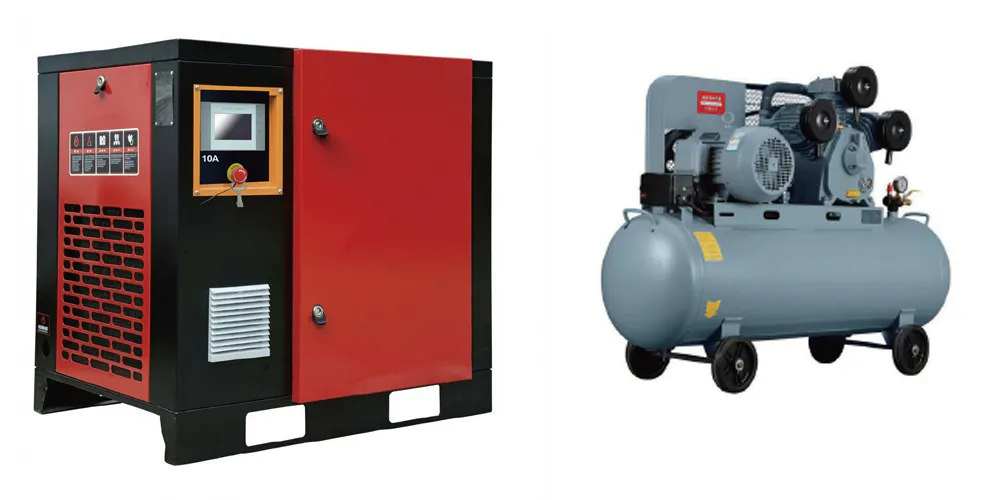
High-pressure oil-free compressors sized for 12,500 ltr/min at 35 kg/cm². For pesticide and food-grade chemical container applications, oil-free technology eliminates the risk of hydrocarbon contamination within the bottle interior. Altitude-derated models are available for installations in Colombia and Andean markets.
Temperatuurregelaar voor de matrijs
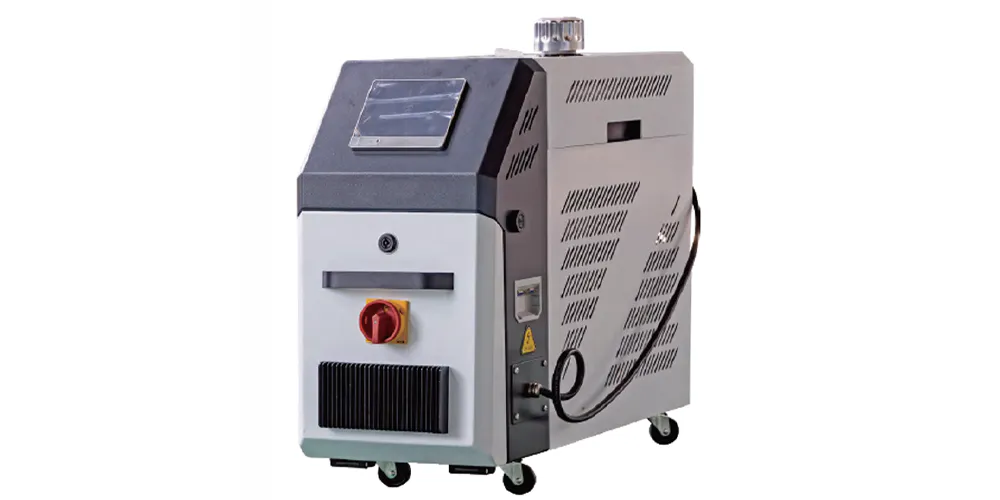
Water-circulation controllers maintaining mold temperature within 8–12°C across the large mold face areas of the JS-2C366(20L). Even mold temperature is particularly important for tall containers, where differential cooling across the 480 mm mold height can produce shape distortion in the finished container.
Bottle Visual Inspection Machine
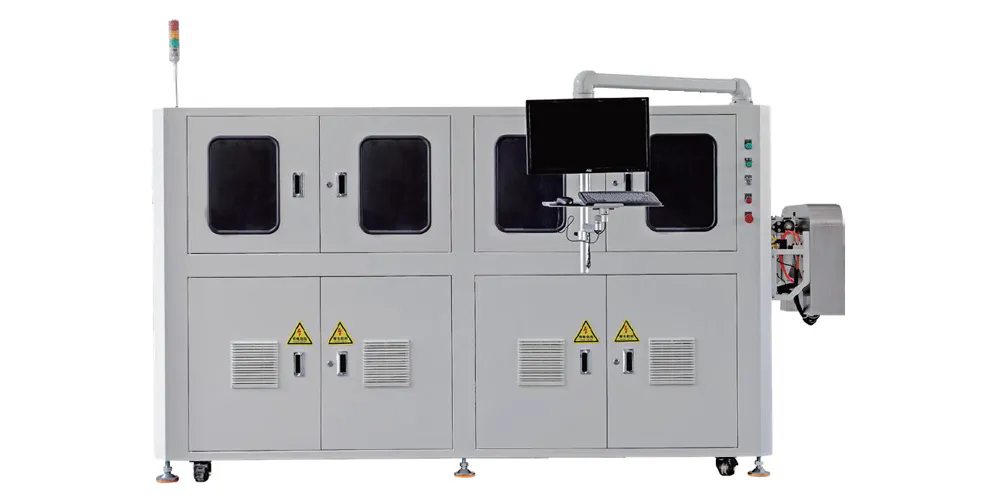
Inline vision inspection systems adapted for large-format containers. Because each container represents significantly more material and filling-line time than a small-format bottle, the cost of a defective 20-litre container reaching the filler is correspondingly higher — making inline inspection particularly valuable on large-container lines.
Chiller & Air Compressor Systems

Industrial chillers supplying 120 ltr/min at 8–12°C for the JS-2C366(20L)'s cooling water circuit, combined with auxiliary compressor staging packages for sites where a single compressor unit cannot cover the full 12,500 ltr/min demand.
Over ons
We are a blow molding machine manufacturer with over twenty years of specialist experience in stretch-blow container production systems, covering equipment from the smallest cosmetic packaging machines through to the large-volume industrial and agrochemical container platforms represented by the JS-2C366(20L) Blow Molding Machine. Our engineering team has developed and patented advances in preform heating efficiency, servo-controlled stretch mechanics, and high-pressure air management — each one the result of solving a real production problem identified in close collaboration with customers operating in demanding industrial and agricultural packaging environments.
Our export footprint extends across more than 50 countries. In Latin America — including Colombia, Brazil, Argentina, and Chile — we have an established installed base of large-format and standard blow molding machine systems serving both agricultural and industrial chemical packaging operations. Regional partners hold local stock of critical wear and replacement parts, providing rapid-response support that minimises production stoppages in markets where long machine downtime has a direct impact on seasonal agrochemical supply chains.
Each machine dispatched from our facility has completed a minimum 72-hour continuous factory acceptance test, with container samples from each cavity and a full production data record provided to the buyer before shipment. This standard applies to the JS-2C366(20L) as it does to every other model in the range — because a blow molding machine operating in an agrochemical packaging plant in Colombia should arrive at site as a proven production tool, not a prototype.
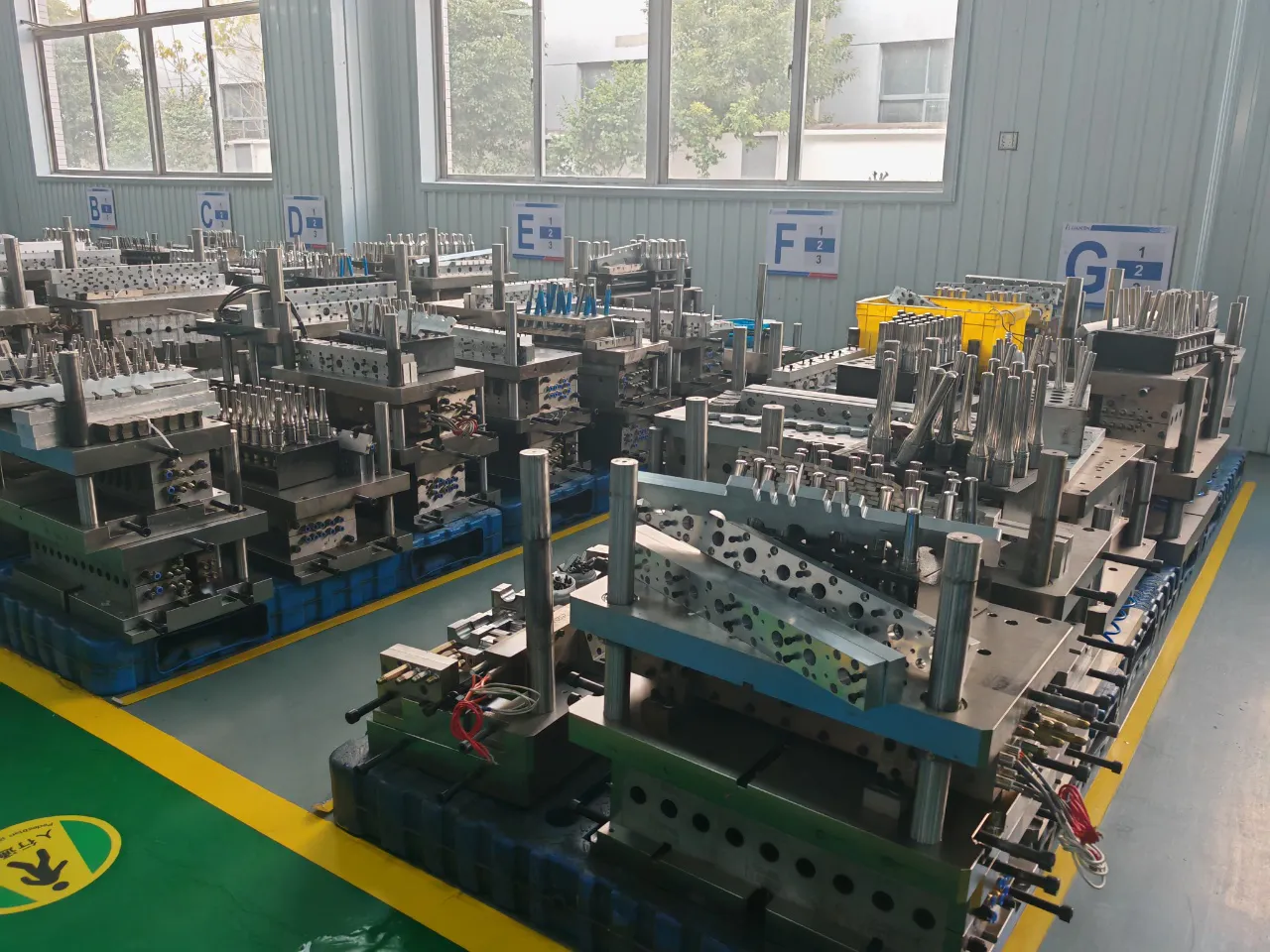
Workshop
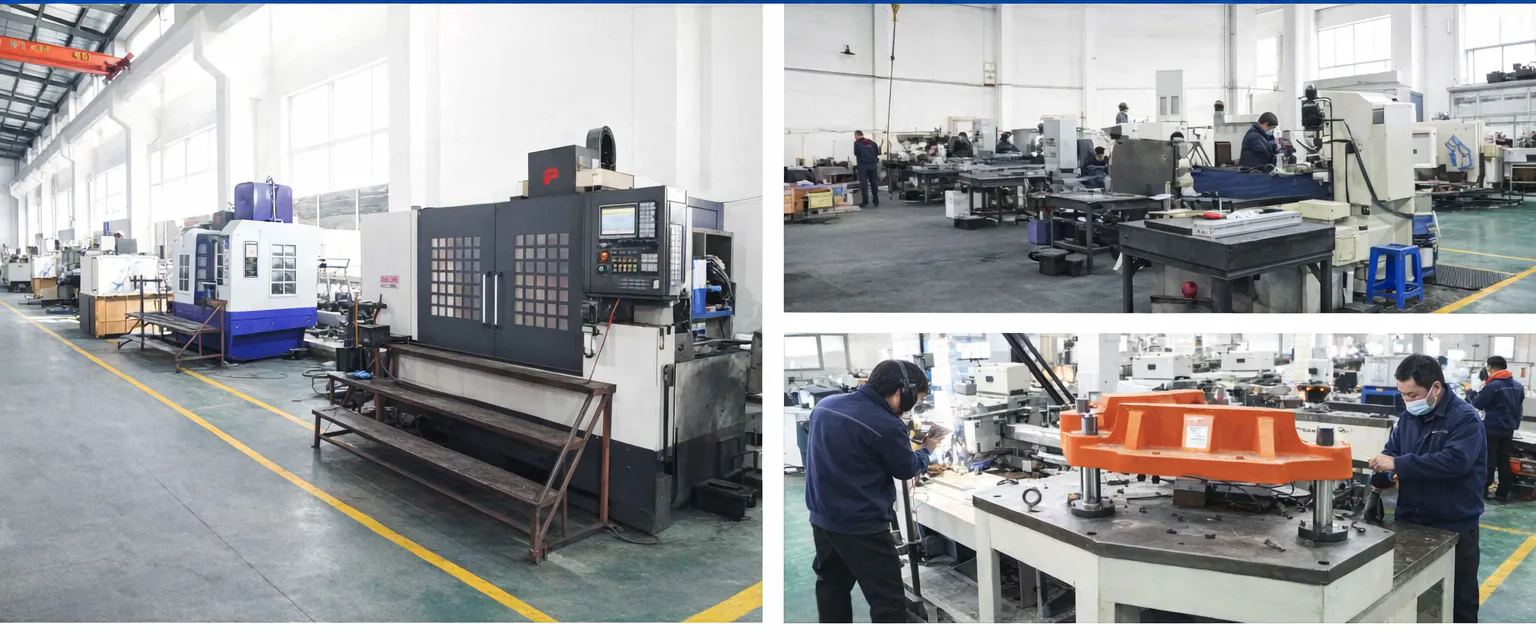
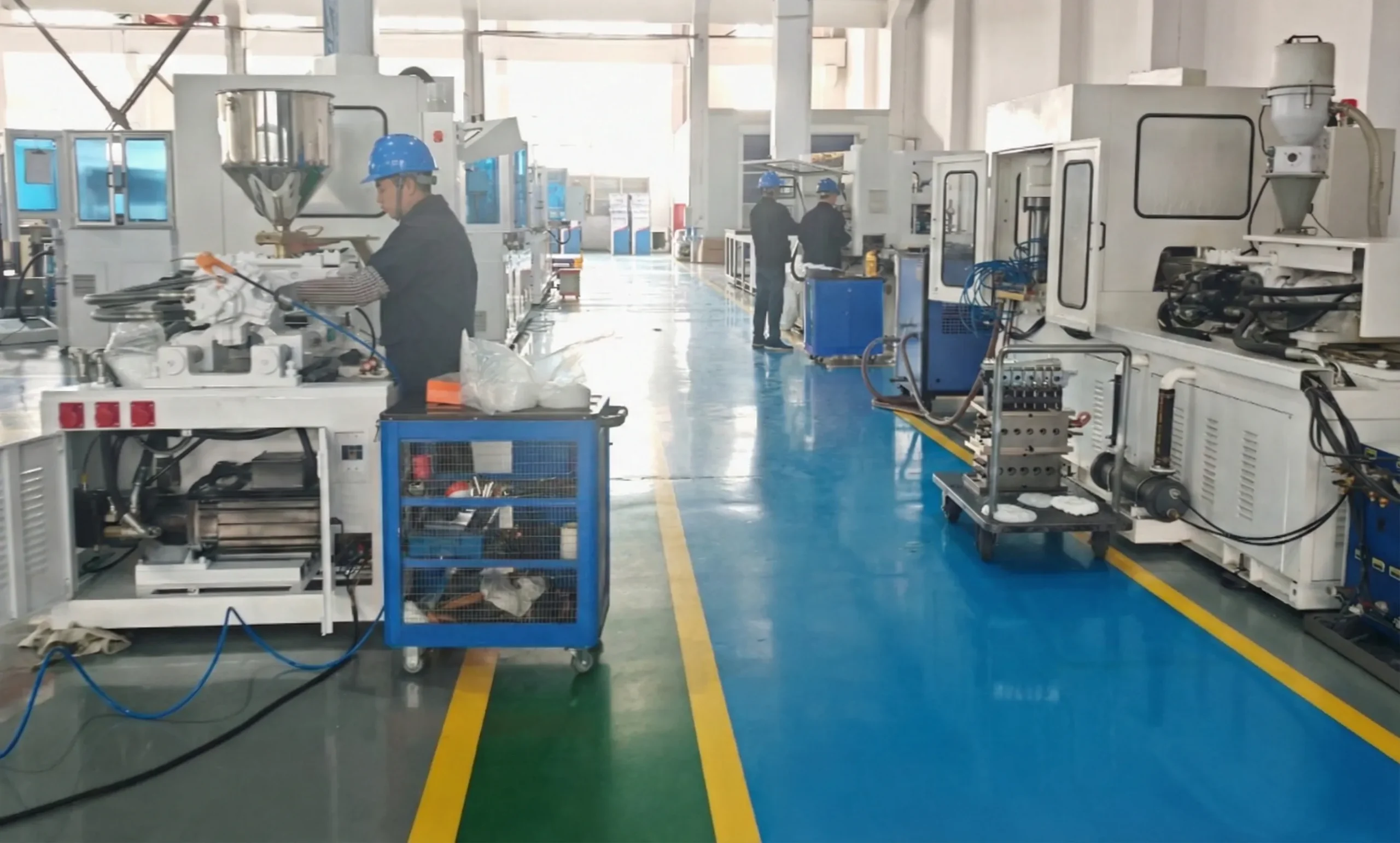
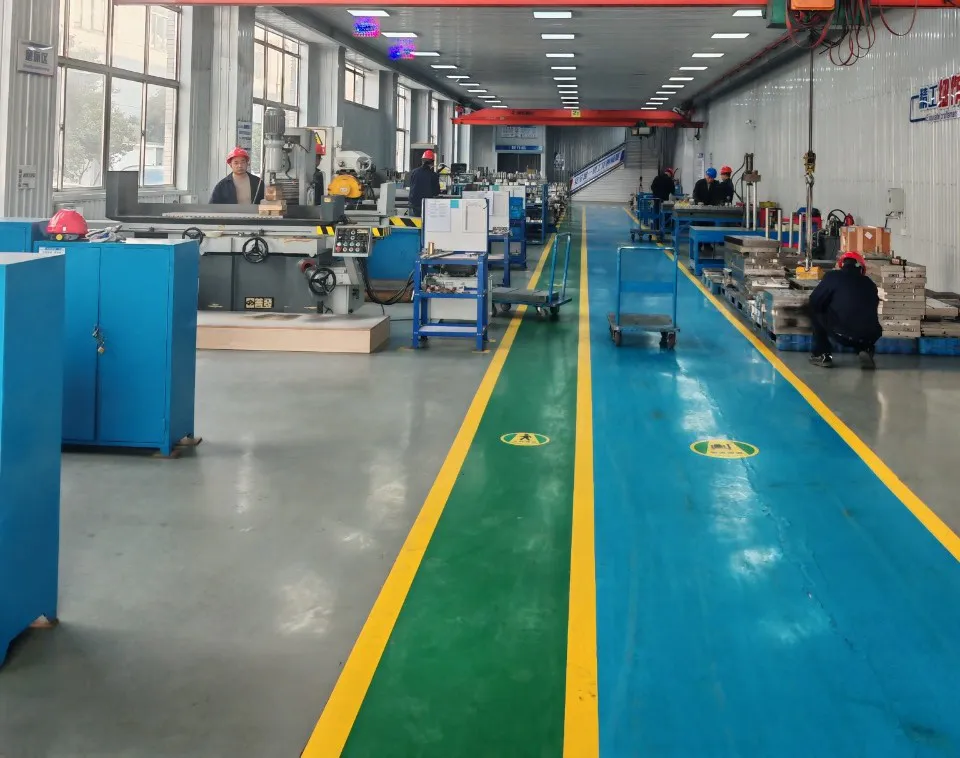
Veelgestelde vragen
Q1. What type of blow molding machine is most suitable for producing 10-litre and 20-litre PET pesticide jerricans that need to meet agrochemical transport regulations in Colombia?
A two-step stretch blow molding machine processing PET is the standard specification for large-volume pesticide jerricans destined for regulated markets including Colombia. The two stage blow molding process produces biaxially oriented PET walls — a requirement for containers that must pass UN-standard drop tests and stress-crack resistance evaluations for agrochemical transport compliance. Single-stage and extrusion blow processes can produce large containers in polyethylene, but for PET specifically, the injection-moulded preform plus stretch-blow approach delivers the wall uniformity and barrier properties that agrochemical regulations increasingly require. The JS-2C366(20L) blow molding machine is engineered precisely for this application, with a 620 mm stretching stroke and 480 mm maximum container height covering the full range of standard pesticide jerrican formats.
Q2. How does a fully automatic blow moulding machine handle the wide variety of 5-litre to 20-litre container formats that a multi-product agrochemical packaging plant in South America needs to produce?
A fully automatic blow moulding machine with recipe-based PLC control and standardised mold-plate dimensions handles format variety through rapid mold changeover rather than machine duplication. The JS-2C366(20L) stores up to 50 container format recipes — each with its own preform heating profile, stretch rod speed curve, pre-blow and main blow pressures, and mold timing parameters. Switching between a 5-litre herbicide bottle and a 20-litre pesticide jerrican involves recalling the saved recipe and physically swapping the blowing mold — a procedure that, with the machine's quick-release mold carriers, takes under 40 minutes on a trained crew.
Q3. What are the key differences between using a stretch blow molding machine versus an extrusion blow molding machine for large-volume industrial chemical containers in the 10 to 20 litre range?
The two processes produce fundamentally different material structures. A stretch blow molding machine processes injection-moulded PET preforms and biaxially orients the polymer during the stretch-blow cycle, producing container walls with aligned molecular chains that provide high stress-crack resistance, clarity, and chemical barrier performance. An extrusion blow molding machine extrudes a parison of molten thermoplastic — typically HDPE or LDPE — and inflates it into a mold without the axial stretching step, producing an isotropic (non-oriented) wall structure that is tougher at low temperature but lacks the chemical barrier and stress-crack resistance of oriented PET. For pesticide concentrates and industrial solvents where stress-crack resistance is critical, oriented PET from a stretch blow process is generally preferred.
Q4. Where can a pesticide packaging operation in Latin America find a reliable blow molding machine manufacturer that supplies large-volume container machines with local after-sales support?
Specialist pet blowing machine manufacturers that export to Latin America and maintain regional distribution networks can supply large-volume blow molding machine systems with local spare-parts stocking and technical support. When evaluating suppliers, key criteria include: factory acceptance testing with documented container samples before shipment; proximity and inventory depth of regional service partners; remote diagnostic capability via the machine's PLC network interface; and demonstrated experience supplying comparable large-container installations in similar climate conditions.
Q5. When should an agrochemical container manufacturer invest in a dedicated large-volume blow molding machine instead of trying to adapt a standard small-format machine for 10-litre and 20-litre production?
The adaptation of a standard small-format blow molding machine for large-volume container production is technically limited by the machine's stretching stroke, mold-open distance, air circuit capacity, and heating power — parameters that cannot be upgraded in the field. When your target container exceeds the stretching stroke or mold-open distance of your existing machine, no mold redesign will resolve the constraint. In practice, agrochemical container manufacturers typically reach the investment threshold for a dedicated large-format machine when demand for containers above 5 litres exceeds approximately 500,000 units per year, or when a key customer — often a major crop-protection brand tendering supply contracts — specifies a PET container that requires the biaxial orientation only a stretch-blow platform can deliver.
Redacteur: PXY