Collaboration & Supply Chain Content
A practical, end-to-end guide for procurement teams, freight coordinators, and production managers responsible for moving an Spritzstreckblasformmaschine from factory floor to installation site — safely, on schedule, and within regulatory compliance requirements across every major import market.
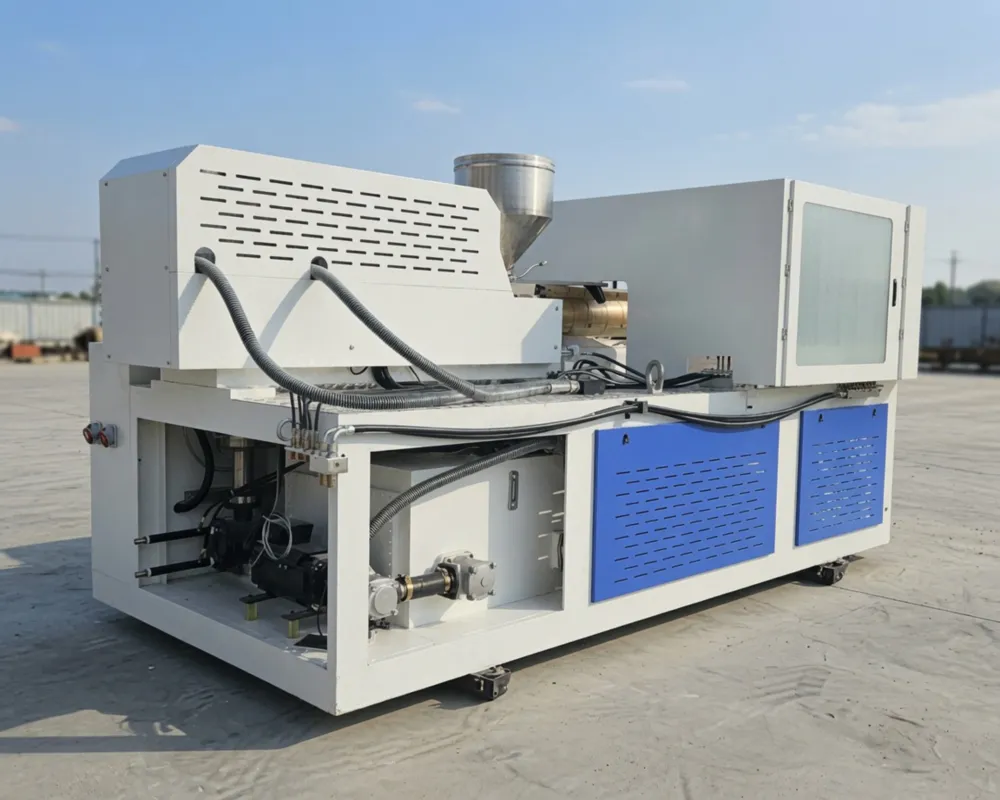
Heavy industrial equipment has always presented logistical challenges that desktop procurement decisions rarely anticipate. An injection stretch blow moulding machine — depending on the platform — can weigh anywhere from 3.5 tonnes for a compact 3-station configuration up to 28 tonnes for a large-format 4-station system designed for 20-litre containers. Getting that machine from the production facility to the buyer’s plant floor involves a coordinated chain of decisions: how the machine is disassembled and crated, how freight is booked and routed, what documentation is required at the destination port, and how the machine is reassembled and commissioned on arrival. Each step in that chain is an opportunity to lose time, incur cost, or damage equipment that took months to manufacture and test.
This article works through each layer of that supply chain — from the machine’s physical dimensions and factory acceptance testing through to destination-country import regulations and site readiness. The goal is to give buyers, logistics partners, and regional distributors a structured reference that makes the shipping process less opaque, so that the first machine cycle in a new facility happens on the timeline the business plan assumed rather than weeks or months after it.
1. Understanding Machine Physical Parameters Before You Book Freight
The single most common logistics planning failure is booking freight before confirming the machine’s crated dimensions and gross weight. Machine dimensions listed on product pages reflect the assembled footprint — not the shipping crate, which adds material on all six faces and, for larger systems, may be split across multiple export crates depending on which sub-assemblies can be pre-separated without requiring factory-level reassembly.
The table below maps the key physical parameters across the range of one-step injection stretch blow molding machines, drawn from the technical specifications that ship with each model. These figures are the assembled machine dimensions; buyers should request confirmed crated dimensions and gross weight from the logistics coordinator before issuing a freight booking, as crating adds 200–400 mm per axis and typically 800–2,000 kg in packing materials and structural timber for sea freight export.
| Modell | Bahnhöfe | Maschinengröße L×B×H (mm) | Maschinengewicht (T) | Typical Container Size Range |
|---|---|---|---|---|
| HGY50-V3-EV | 3 | 3.800 × 1.200 × 2.500 | 3.5 | 100 ml – 2,500 ml (up to 6 cavities) |
| HGYS150-V4 | 4 | 4.200 × 1.400 × 2.900 | 6 | 20 ml – 2,500 ml (up to 8 cavities) |
| HGYS150-V4-EV | 4 | 5,200 × 1,800 × 3,300 | 7 | 20 ml – 2,500 ml (up to 8 cavities) |
| HGYS200-V4 | 4 | 4.800 × 2.000 × 3.200 | 13 | 20 ml – 2,500 ml (up to 12 cavities) |
| HGY250-V4 | 4 | 6.300 × 2.400 × 3.700 | 16 | 30 ml – 2,500 ml (up to 14 cavities) |
| HGYS280-V6 | 6 | 5,900 × 2,600 × 3,200 | 14 | 20 ml – 2,500 ml (up to 10 cavities) |
| HGY650-V4 | 4 | 6.100 × 2.600 × 4.200 | 28 | 5 L – 20 L (1–4 cavities, large-format) |
The HGY650-V4 at 28 tonnes and 6,100 × 2,600 × 4,200 mm represents the heaviest and largest single-unit machine in the standard range. At that size and weight, shipping requires flat-rack or open-top container configuration for sea freight, a low-loader transport for over-road delivery to port, and in many destination markets, an oversized load permit for the last-mile transport from the destination port to the factory gate. Planning for these requirements early — not after the machine completes factory acceptance testing — keeps the schedule intact.
2. Manufacturing Structure and Pre-Shipment Preparation
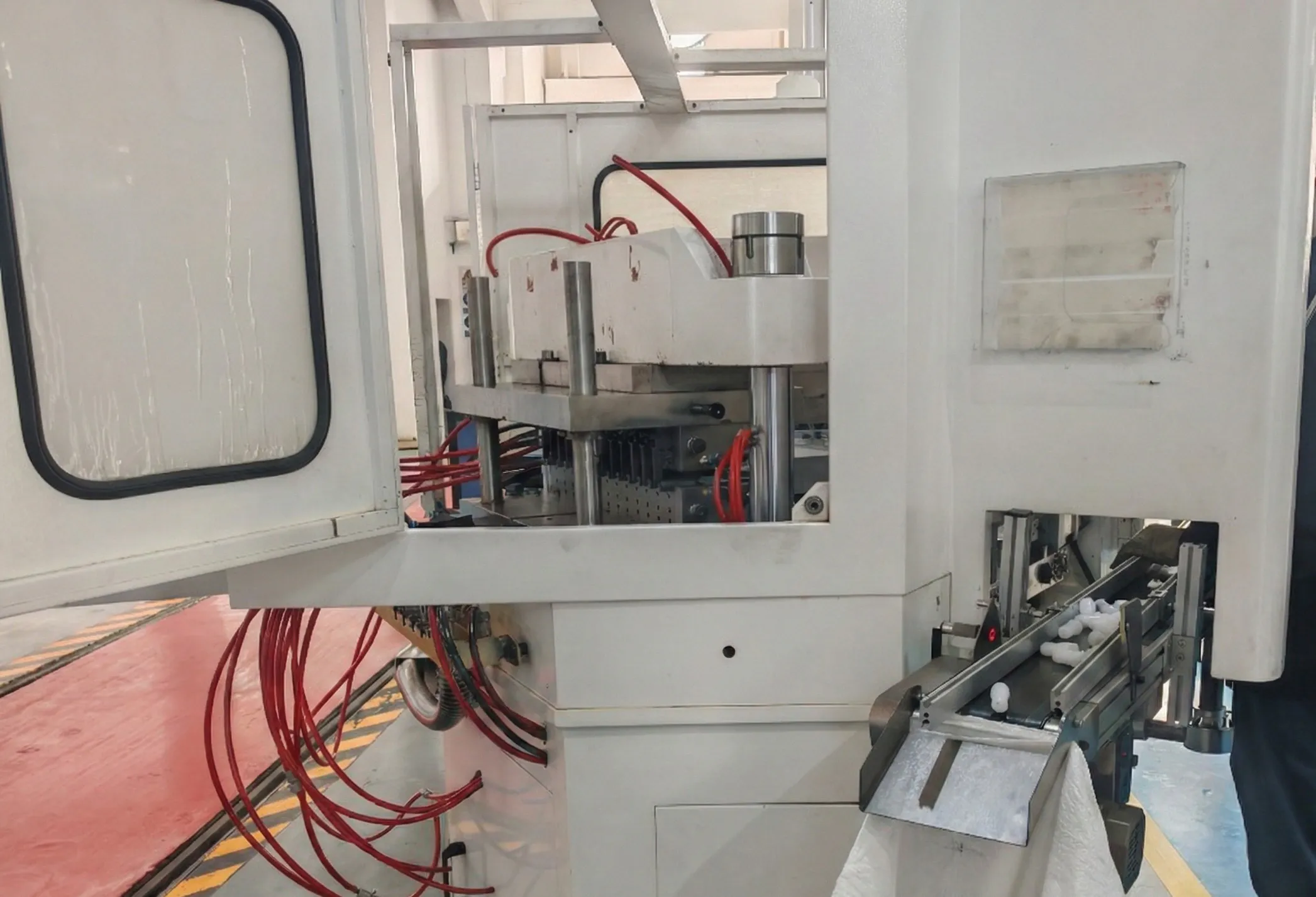
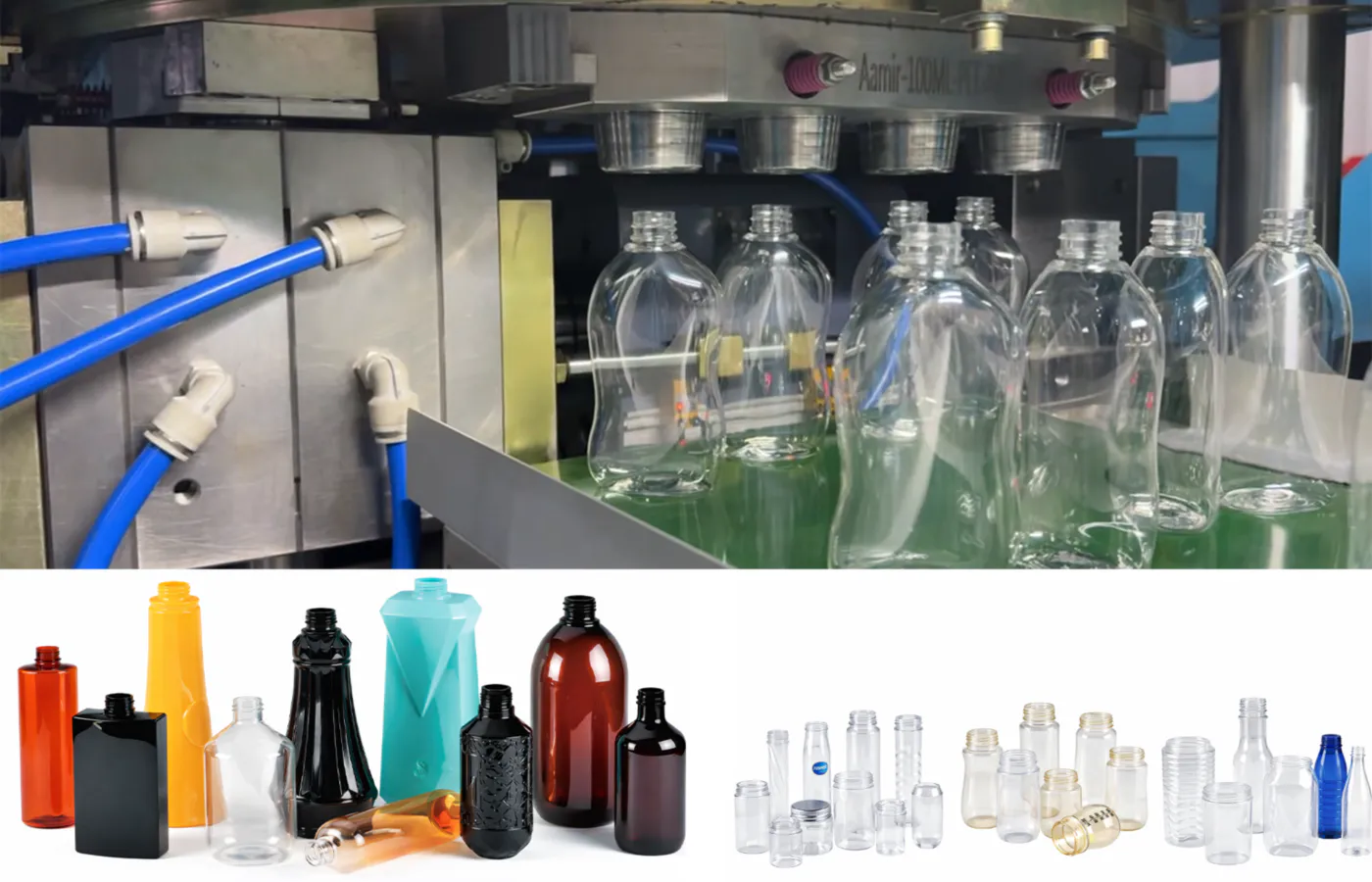
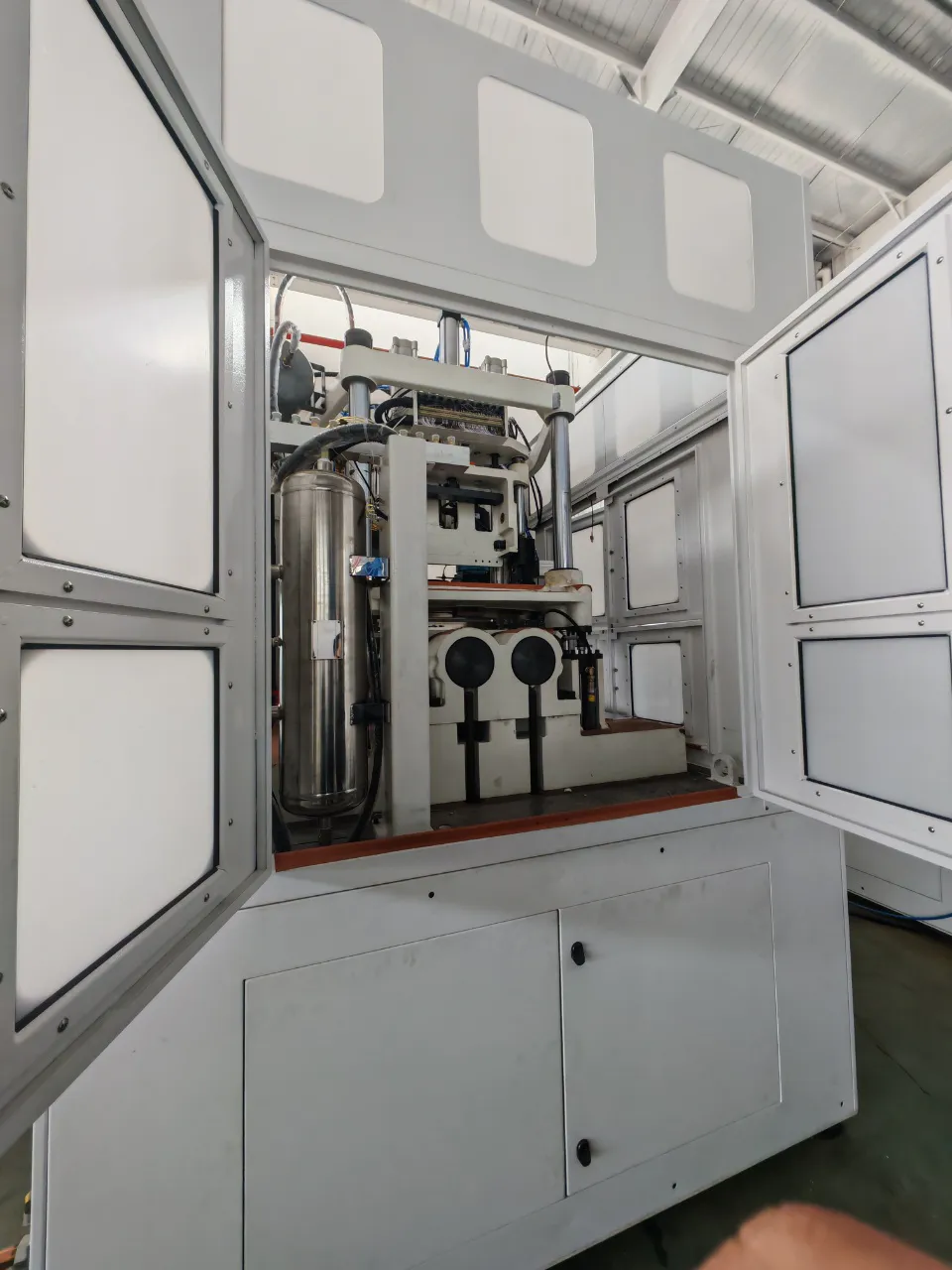
Before a machine leaves the factory, understanding its internal architecture is important for logistics planning — specifically, which sub-assemblies can be separated for shipping and which must remain integrated. A one-step injection stretch blow moulding machine combines three mechanical systems in a single rotating turntable platform: the injection unit (screw, barrel, and clamping mechanism), the blowing unit (blow mould clamping, core rods, and high-pressure air circuits), and the take-out and ejection system. The turntable itself is the structural spine of the machine, and in most configurations it ships assembled.
For machines in the 6–16 tonne range such as the HGYS200-V4 and HGY250-V4, the injection unit is typically detachable at the turntable interface, which allows the machine to be split into two lifting units of manageable weight. This matters at both the export port — where the crane capacity at the loading facility may set a practical weight-per-lift ceiling — and at the destination facility, where the buyer’s installed overhead crane or fork-lift may not be rated for the full assembled machine weight. When discussing pre-shipment preparation with the machine builder, buyers should confirm which interfaces are designed for field separation, what torque values apply to the reconnection fasteners, and whether any hydraulic circuits require re-bleeding after separation and reassembly.
Pre-shipment cleaning and protective treatment is a step that is frequently overlooked in procurement discussions but has direct relevance to both transit condition and destination-country biosecurity requirements. Hydraulic systems are drained or sealed; exposed machined surfaces are coated with anti-corrosion compound; electrical connectors are capped and sealed; and the entire machine is wrapped in moisture-barrier film before crating. For destinations with strict agricultural and biosecurity controls — notably Australia, New Zealand, Canada, and the United States — the timber used in export crating must be heat-treated and stamped with an ISPM 15 mark. Failure to present ISPM 15-compliant crating at arrival inspection results in fumigation requirements or outright rejection of the crate, either of which delays machine delivery and adds unbudgeted cost.
3. Factory Acceptance Testing: What Happens Before the Machine Leaves
Factory Acceptance Testing (FAT) is the formal validation process that confirms an injection stretch blow molding machine performs to its contractual specification before it is released for shipment. For buyers who cannot physically attend FAT at the production facility, understanding what the test covers — and what documentation should be requested — is essential to managing risk across a remote purchase.
A well-structured FAT for an ISBM machine covers the following verification areas:
Dimensional Verification
Neck diameter tolerance, bottle diameter, height, and wall thickness measured against drawing specification on a minimum 30-cycle production run using the buyer’s actual resin grade.
Cycle Time Verification
Continuous cycle time measured over a minimum 2-hour production run at rated cavity count, confirming the cycle time stated in the product specification is achievable under normal operating conditions.
Energieverbrauch
Recorded power draw during the production run, confirming compliance with the stated motor power and heating power figures. For servo-upgraded models, comparison of idle versus production power draw is documented.
Safety System Checks
Emergency stop function on all axes, guard interlocks, over-pressure relief on pneumatic circuits (2.0–3.5 MPa blow air range), and cooling water pressure regulation (0.4–0.6 MPa) are all verified and documented.
Documentation Package
CE declaration of conformity (for EU-market machines), electrical schematics, pneumatic and hydraulic circuit diagrams, PLC program backup, spare parts list, and operation/maintenance manual in the agreed language.
Mold Compatibility
Where the purchase includes ASB-12M or AOKI-compatible mold interfaces, FAT confirms the mold fits and produces to specification in the machine’s station geometry before shipment.
Buyers who are replacing an existing ASB injection molding machine or other legacy platform should request that FAT includes a side-by-side comparison run using the existing mold tooling on the new machine, confirming fit and product quality before the old machine is decommissioned. This parallel validation approach is particularly valuable for pharmaceutical and cosmetic producers where any change to the production process may trigger a re-validation requirement under GMP regulations, and having FAT documentation supporting product equivalence simplifies that process considerably.
4. Material System and Its Implications for Safe Transport
The material system of an injection stretch blow moulding machine — the combination of screw geometry, barrel heating zones, and control programming that allows it to process different polymer families — has direct implications for how the machine must be prepared for transport. Different materials leave different residues in the barrel and screw, and those residues behave differently during transit, particularly across temperature ranges that can vary significantly between a tropical origin port and a temperate destination.
PET (Polyethylene Terephthalate), the most common material processed on these machines, absorbs moisture readily and must be kept at low humidity during storage and transit. When a machine is shut down for transport with PET residue remaining in the barrel, the resin will absorb ambient moisture during transit, which then releases as steam during the next heating cycle and causes degradation, foaming, and contamination of the first production batch. The correct pre-shipment procedure is a purge cycle using a compatible purging compound or virgin PP, followed by a complete screw-forward purge to clear the barrel before cooldown and shutdown. PETG, PC, and Tritan resins follow similar hygroscopic logic with slightly different purging sequences depending on their processing temperature.
| Resin | Hygroscopic? | Pre-Transport Barrel Action | Transit Risk if Skipped |
|---|---|---|---|
| HAUSTIER | Yes (high) | Full purge; barrel sealed at both ends | Moisture-induced degradation on restart; contaminated first batch |
| PETG | Yes (moderate) | Full purge; desiccant pack in barrel cavity | Yellowing and haze defects on first production run |
| PC | Yes (very high) | Full purge with PP; barrel sealed; silica gel inside crate | Severe splay defects; screw surface staining |
| PP | No (low) | Partial purge adequate; barrel end cap recommended | Oxidation if barrel left open in humid conditions; minor |
| Tritan / PCTG | Yes (moderate-high) | Full purge; desiccant; sealed crate with humidity indicator card | Clarity loss; increased IV degradation; restart extended |
The screw itself, once cleaned and coated with a light food-grade anti-corrosion oil, should be re-inserted into the barrel for transit rather than shipped separately unless the screw diameter (40–60 mm across the machine range) makes this impractical for a specific model. Shipping the screw outside the barrel risks surface damage to the flight geometry, which directly impacts injection performance after installation.
Featured Machine for Global Logistics Planning
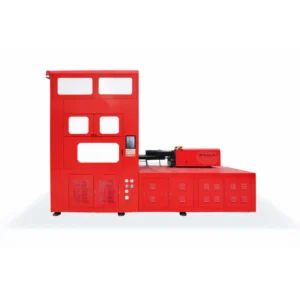
EP-HGY250-V4 · 4-Station ISBM Machine
Applicable Material: PET / PETG
Injection Clamping Force: 300 kN
Blowing Clamping Force: 200 KN (single side)
Motor Power: 67.7 KW | Heating Power: 15 kW
Machine Size (L×W×H): 6,300 × 2,400 × 3,700 mm
Machine Weight: 16 T
Blowing Air Pressure: 2.0–3.5 MPa
Mold Compatibility: Compatible with ASB-70DPH molds
Max Cavities / Max Volume: 14 cavities / 2,500 ml
At 16 tonnes and 6.3 m in length, the HGY250-V4 represents a mid-tier shipping challenge — manageable in a standard 40-foot high-cube container with careful sub-assembly planning, or on flat-rack with full weather protection. Its ASB-70DPH mold compatibility makes it a popular replacement injection stretch blow moulding machine for operators retiring legacy Japanese equipment.
5. Freight Mode Selection and Routing for Heavy Industrial Machinery
Selecting the right freight mode for an injection stretch blow moulding machine shipment depends on three variables: machine weight and dimensions, distance between origin and destination, and urgency. Sea freight by full container load (FCL) is the default for machines above 3 tonnes destined for markets outside the immediate region, offering the lowest per-kilogram cost and adequate transit times for machines that have been ordered with 8–16 weeks of production lead time. Air freight is rarely economical for assembled machines at these weights, but it may be appropriate for urgent shipment of a spare screw, a replacement servo drive, or a critical component needed to restart a down machine.
5.1 Container Selection by Machine Size
| Machine Weight Range | Recommended Container Type | Key Logistics Constraint | Typical Machine Models |
|---|---|---|---|
| 3–7 T | 20-ft or 40-ft standard / high-cube | Height — confirm container internal height vs. machine height + blocking | HGY50-V3-EV, HGYS150-V4-EV |
| 7–16 T | 40-ft high-cube or flat-rack with tarpaulin | Width — 2.4 m assembly may exceed standard container internal width with crating | HGYS200-V4, HGY250-V4, HGYS280-V6 |
| 16–28 T | Flat-rack (40-ft) or break-bulk; split into minimum 2 crates | Weight and height — 4.2 m height exceeds all standard container profiles; crane capacity at loading port | HGY650-V4 |
5.2 Routing Considerations for Key Markets
Transit routing affects not only delivery time but also the conditions the machine experiences during transit. Shipments passing through tropical transhipment ports — Singapore, Port Klang, Colombo — involve heat and humidity exposure that amplifies the risk of surface corrosion on unpainted machine components. Crates should include silica gel desiccant packs sized to the internal crate volume, with humidity indicator cards accessible through inspection holes so condition can be checked at intermediate ports without breaking the crate seal. Shipments destined for Australia routed via Fremantle or Brisbane, and those destined for North America routed via Long Beach or Vancouver, will pass through multiple cargo handling events, each representing a drop and impact risk that must be mitigated through internal crate blocking and bracing, not just external crating.
For injection stretch blow molding machine suppliers serving European markets, Rotterdam and Hamburg remain the primary entry ports for machine freight from East Asia, with typical sea transit times of 28–35 days from southern Chinese ports. From there, over-road delivery within Europe is generally straightforward for machines up to 16 tonnes, with the main constraint being bridge weight limits and tunnel height restrictions on specific routing segments — a detail that road haulage partners in the relevant country manage as part of their permit process.
6. Import Regulations and Compliance Requirements by Market
Every destination market imposes its own combination of customs, safety, electrical, and environmental compliance requirements on imported industrial machinery. For buyers sourcing an injection stretch blow moulding machine internationally, understanding these requirements before the purchase contract is signed — not after the machine arrives at port — is the difference between a commissioning timeline that holds and one that slips by months. The following overview covers the most commercially active markets for these machines.
| Market | Key Import / Safety Requirements | Documentation to Request at Order Stage |
|---|---|---|
| europäische Union | CE marking mandatory under Machinery Directive 2006/42/EC; Low Voltage Directive 2014/35/EU; EMC Directive; machine must arrive with EU Declaration of Conformity; ISPM 15 crating required | CE Declaration of Conformity, Technical File reference, test report summaries, electrical schematics to EN 60204-1 |
| United Kingdom | UKCA marking replaces CE post-Brexit for UK market; Supply of Machinery (Safety) Regulations 2008; ISPM 15 crating required; import tariff classification under UK Global Tariff (HS 8477) | UKCA Declaration of Conformity (or CE if dual-market), HS code confirmation, commercial invoice with full technical description |
| United States | OSHA 29 CFR 1910.212 (machine guarding); NEC electrical compliance; UL or ETL listing for electrical components preferred; ISPM 15 crating mandatory; FDA 21 CFR 211 if machine used for pharmaceutical container production | CBP Form 7501 commercial invoice, packing list, bill of lading; electrical schematic for local electrician sign-off; ISPM 15 crate stamps |
| Australia | ISPM 15 crating strictly enforced by DAFF; electrical equipment must comply with AS/NZS 3000 (Wiring Rules) before connection; state-specific WorkSafe registration required for machines above threshold hazard class; import tariff under AHECC 8477 | ISPM 15 certificate of compliance, electrical schematics, voltage/phase confirmed at 3-phase 400 V or 415 V as applicable, packing declaration |
| Canada | CSA Z432 safeguarding of machinery; electrical must meet CSA C22.1 (Canadian Electrical Code); ISPM 15 mandatory; import entry under HS 8477.10 or 8477.80 depending on configuration | CSA electrical compliance confirmation or letter of equivalency; CBSA B3 import entry; packing list, commercial invoice, certificate of origin |
| South Korea | KC Mark required for electrical components; import customs declaration under HS 8477; Ministry of Employment and Labor (MOEL) safety registration for new industrial machinery above rated power thresholds | KC certification for electrical sub-assemblies, MOEL safety registration documentation, Korean-language safety label set (available on request) |
| Brasilien | INMETRO conformity assessment for safety-relevant electrical components; NR-12 (Machinery Safety Standard) compliance required for operation; IBAMA import license may be required for machinery importing controlled substances or refrigerants; ISPM 15 crating required | INMETRO conformity declarations, NR-12 technical file, SISCOMEX import registration, nota fiscal equivalent commercial invoice, ISPM 15 evidence |
| Netherlands / EU Pharma | All EU requirements above apply; additionally, if machine is used in GMP pharmaceutical container production, equipment must be qualified under EU GMP Annex 15 (qualification and validation); IQ/OQ protocol documents typically required by pharmaceutical buyers | All CE documentation plus IQ/OQ template documentation, calibration certificates for temperature and pressure sensors, FAT report |
| Kolumbien | DIAN customs import through MUISCA system; INVIMA approval required if machine is used for pharmaceutical packaging; RETIE (electrical technical regulations) compliance; ISPM 15 crating required | Spanish-language commercial invoice and packing list, RETIE electrical compliance statement, certificate of origin for tariff preference under FTA if applicable |
HS (Harmonized System) classification of an injection stretch blow moulding machine falls under Chapter 84 in most markets, typically within HS 8477 (Machinery for working rubber or plastics or for the manufacture of products from these materials, not specified or included elsewhere). The specific six-digit or eight-digit subheading varies by market. Confirming the correct HS code with a licensed customs broker in the destination country before shipment determines the applicable import duty rate and whether any import licences or permits are required before the machine can legally enter.
7. Site Readiness: What the Factory Must Have Before the Machine Arrives
A common pattern in industrial machine projects is for the buyer’s team to focus intensively on the purchase and shipping logistics, then arrive at installation week to discover that the site is not ready to receive or connect the machine. Site readiness failures are almost always preventable through a structured pre-delivery checklist issued at the time of contract signing, with each item confirmed complete before the freight booking is released.
Floor Loading Capacity
Industrial floor loading capacity must exceed the machine weight plus a safety factor. For a 16-tonne machine like the HGY250-V4, a floor rated to at least 2.5 tonnes per square metre over the machine footprint is required. Floor loading capacity is often not documented in older facilities and may need to be assessed by a structural engineer before commitment.
Electrical Supply
Machines in the range operate at 370–400 V, 3-phase, 50 Hz or 60 Hz depending on market. The power supply rating must cover the total installed power — from 45.2 KW for the compact HGY50-V3-EV up to 112.8 KW for the full-servo HGYS150-V4-EV. The main isolator, cable cross-sections, and earth bonding must be sized to these loads by a licensed electrician before machine connection.
Compressed Air Supply
The machine’s blow circuit requires clean, dry compressed air at 2.0–3.5 MPa. This must be provided by a high-pressure compressor (typically 40 bar for PET blow moulding) distinct from the general workshop low-pressure air supply. Oil-free compressors are strongly recommended to avoid contamination of the Parker high-pressure valves fitted across the machine range.
Cooling Water Supply
Cooling water must be supplied at 0.4–0.6 MPa, with oil cooler water (for hydraulic models) at 0.3–0.4 MPa and temperature maintained at 20–25°C. For plants in warm climates — notably Southeast Asia, Brazil, and Northern Australia — an industrial chiller may be required rather than cooling tower water to maintain this temperature range year-round.
Lifting Equipment
An overhead crane or heavy fork-lift rated above the machine’s weight must be available at the installation site. For machines above 10 tonnes, an industrial crane rigging team should be engaged rather than using the plant’s standard material handling equipment. The machine supplier typically provides a lifting diagram specifying approved lifting points and sling angles.
Door and Access Clearance
The machine’s assembled height of up to 4,200 mm for the HGY650-V4 must clear the facility’s door opening on the day of delivery. In many industrial buildings, this requires temporary removal of the door frame or delivery through a dedicated machinery access bay. This is a detail that is easy to confirm months in advance and very expensive to address on delivery day.
Explore the full range of one-step and European-type blow molding machines available for global supply:
8. Post-Delivery Commissioning and Getting to First Production
Machine commissioning — the process of verifying that the machine functions correctly in its installed environment and produces product to specification — is the bridge between a successful logistics operation and an operating production line. It is also the point at which any transit damage or installation errors become apparent, which is why a structured commissioning protocol matters as much as the shipment itself.
A commissioning engineer from the machine builder, either on-site or providing remote support via video link and PLC network connection, should work through a defined sequence: mechanical integrity check of all bolted connections disturbed during installation; electrical insulation test before power-on; hydraulic circuit check and re-bleed where the injection unit was separated for transport; control system power-on and sensor verification; servo calibration and turntable rotation checks; dry-cycle run (no resin) to confirm all station movements are within specification; trial production run with resin to confirm melt quality, cycle time, and bottle dimensional specification are met.
For injection stretch blow molding machine manufacturers supplying into regulated markets — particularly pharmaceutical, medical, and food packaging applications — the commissioning process must generate a formal report that can be referenced in the buyer’s internal quality management records. Where the destination country requires a site inspection by a local regulatory authority before the machine can be operated commercially (as is the case in some South Korean and Brazilian applications), the commissioning report forms part of the inspection submission package.
The machine’s first production run also produces the first output from the new injection stretch blow molding process in that facility. Retaining a sample set from this run — properly labelled with the machine serial number, resin batch number, date, and process parameters — provides a reference baseline for quality management purposes and, in the event of a future product specification change, demonstrates what the machine was capable of at commissioning.
9. Supply Chain Optimization: From Order Placement to Running Production
The supply chain for an injection stretch blow moulding machine purchase spans from the moment a purchase order is placed through to the first saleable production batch. Mapping this timeline explicitly — with realistic lead times for each stage — prevents the compression of installation and commissioning time that occurs when upstream delays are not caught until the machine is already at port.
| Supply Chain Stage | Typical Duration | Key Actions / Dependencies |
|---|---|---|
| Order Confirmation & Design Freeze | 1–3 weeks | Screw diameter, mold compatibility, voltage, servo vs. hydraulic configuration confirmed; deposit received; production slot allocated |
| Machine Manufacturing | 8–14 weeks | Component procurement, machining, assembly, sub-system integration; lead time varies by model complexity and concurrent production load |
| Factory Acceptance Testing | 3–7 days | Buyer-witnessed or remote FAT; punch-list corrections; final documentation preparation |
| Pre-Shipment Preparation & Crating | 1–2 weeks | Purge and clean barrel, anti-corrosion treatment, ISPM 15 crating, loading survey, freight booking confirmed |
| Sea Freight Transit | 18–40 days | Depends on routing: 18–22 days to Southeast Asia; 25–30 days to Europe; 28–35 days to Australia; up to 40 days to Brazil or Colombia |
| Port Clearance & Last-Mile Delivery | 3–14 days | Customs clearance (variable by market and completeness of documentation); trucking permit for oversized load if applicable; delivery to factory gate |
| Installation & Commissioning | 3–7 days | Rigging into position, utility connections, commissioning engineer on-site or remote, trial production run, operator handover |
The practical implication of this timeline is that a machine ordered today with a standard ODM configuration will typically reach running production between 16 and 26 weeks from order placement, depending on the destination market. Buyers planning production launches around this equipment should build their project plan from the commissioning date backwards to the order date, not from the order date forward — the difference in planning discipline is the difference between a line that starts on time and one that misses a seasonal production window.
Über uns
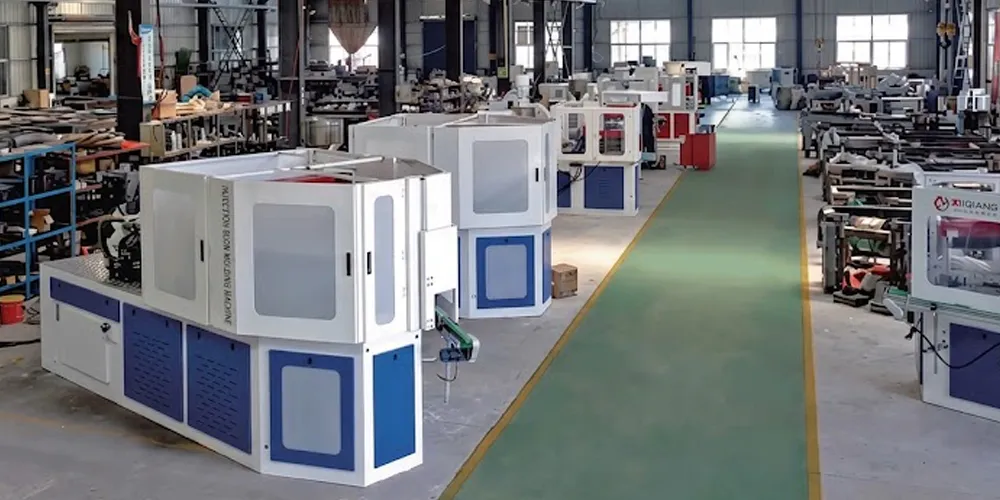
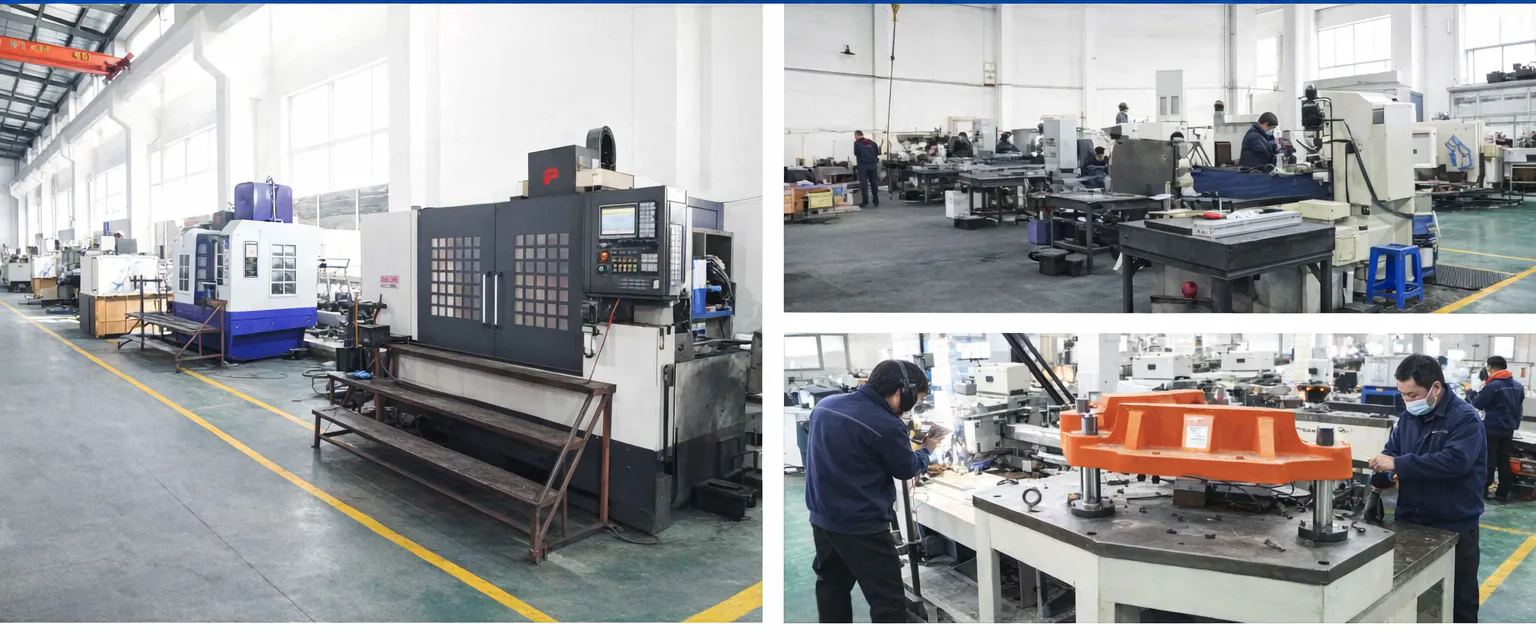
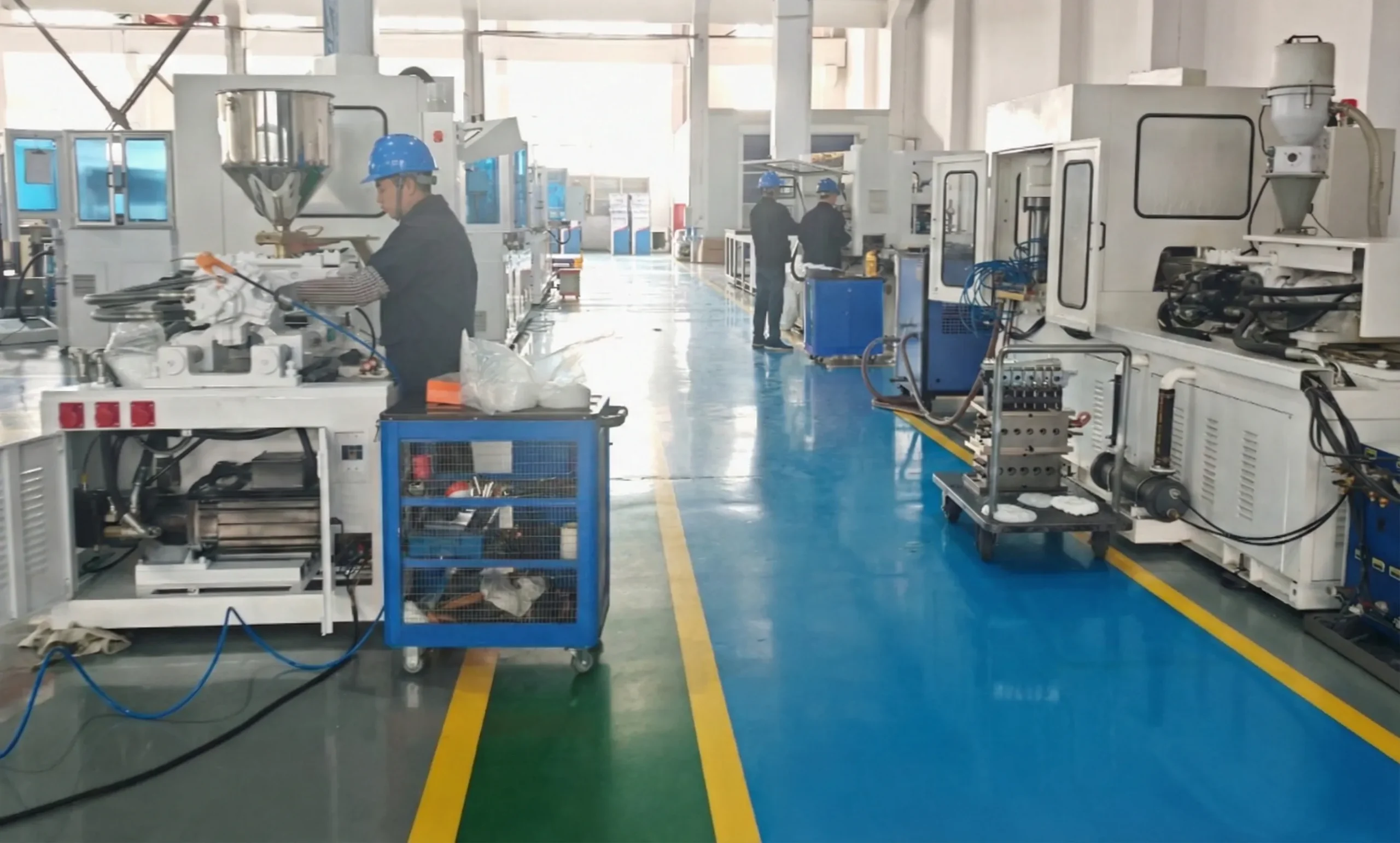
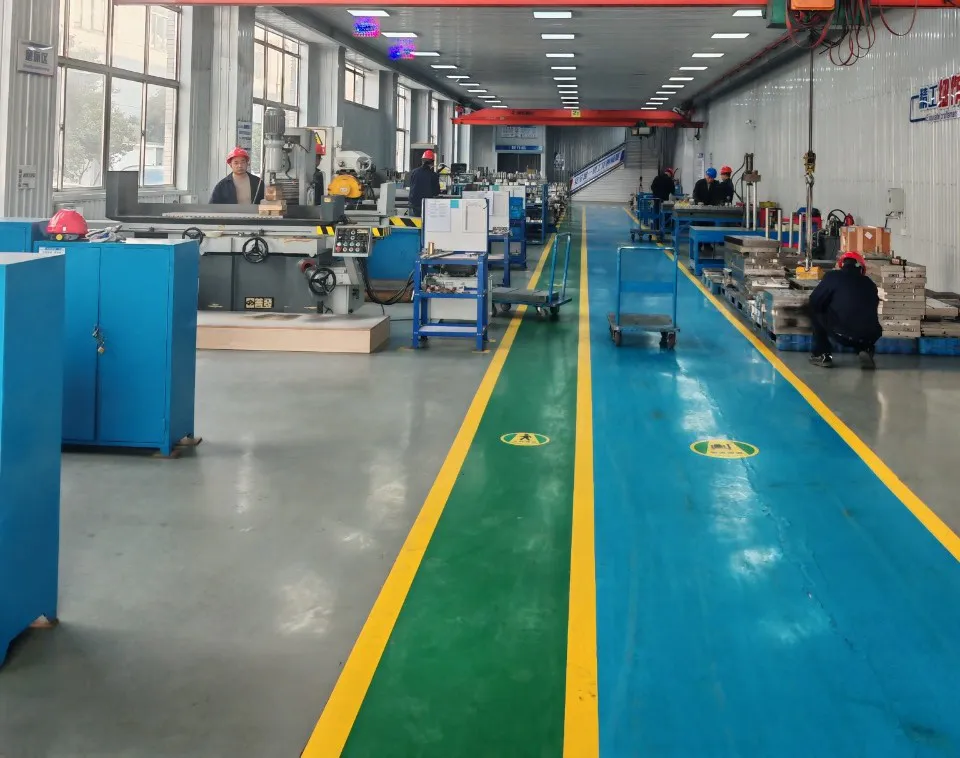
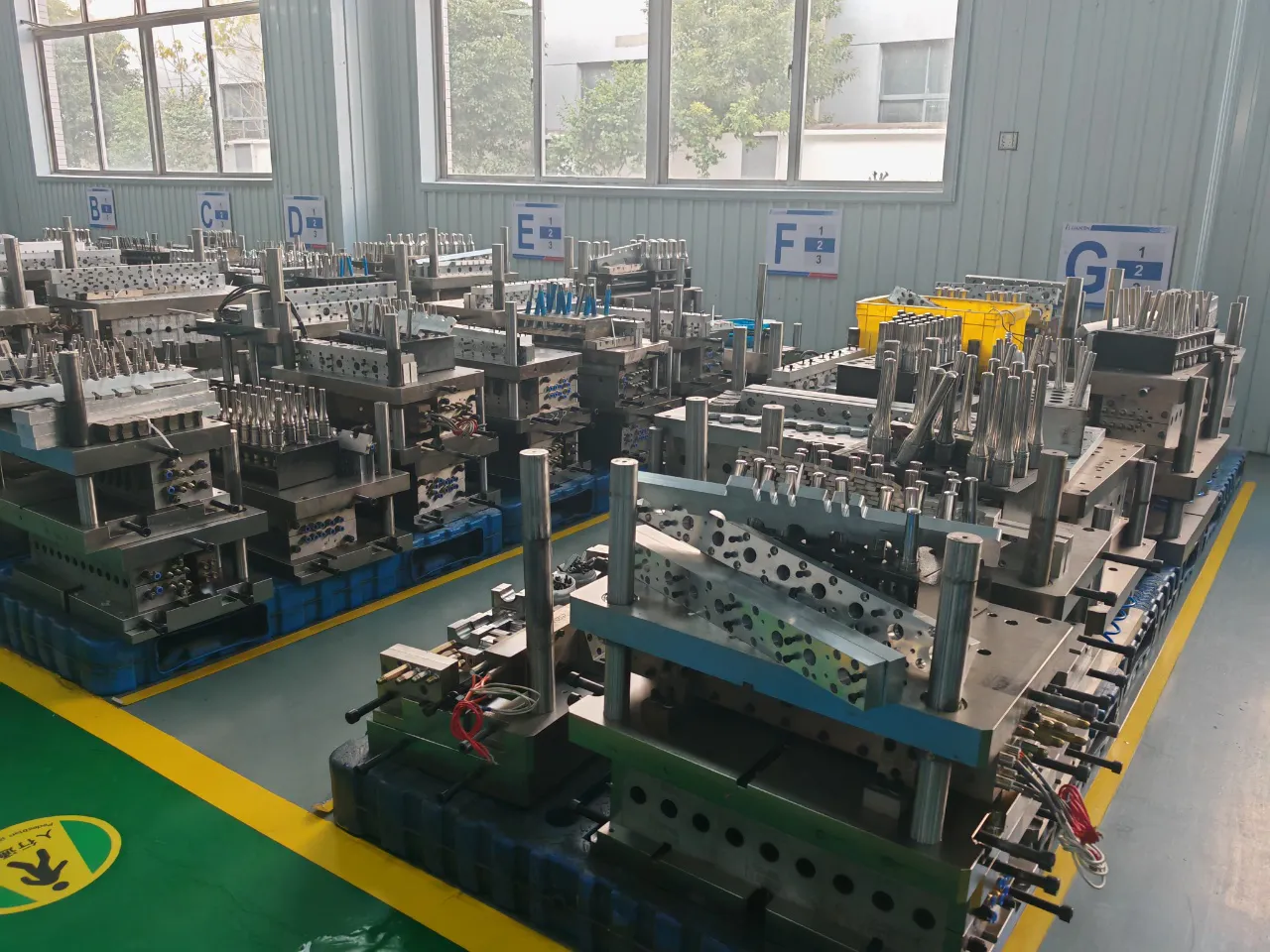
Our manufacturing facility — spanning more than 20,000 square metres of precision machining and assembly floor — integrates in-house R&D, full machining capability, and rigorous quality testing, so that every injection stretch blow moulding machine that leaves the production line has been validated against a formal factory acceptance test protocol. Over more than twenty years of developing blow molding machine platforms, the engineering team has accumulated deep practical knowledge of how machines perform across diverse operating environments — from high-humidity tropical facilities to climate-controlled pharmaceutical cleanrooms — and this knowledge informs both the machine design and the pre-shipment preparation that protects machine quality through transit.
Core mechanical and electrical components are sourced from globally recognized suppliers — Yaskawa servo motors, Parker high-pressure valves, NSK lead screws, YUKEN hydraulic control valves, and Italian-grade hydraulic tubing — ensuring that spare parts are available through established global supply networks in the markets where machines are installed. Machine documentation, including electrical schematics and PLC program backups, is provided in the agreed language as part of every standard supply package, supporting local electrician sign-off and regulatory compliance without delay.
Werkstatt
Related Equipment for a Complete ISBM Production System
The injection stretch blow moulding machine is the core of the production line, but reliable and compliant operation depends equally on the quality of the auxiliary systems connected to it. Two auxiliary systems have a direct and measurable effect on machine performance and output quality.
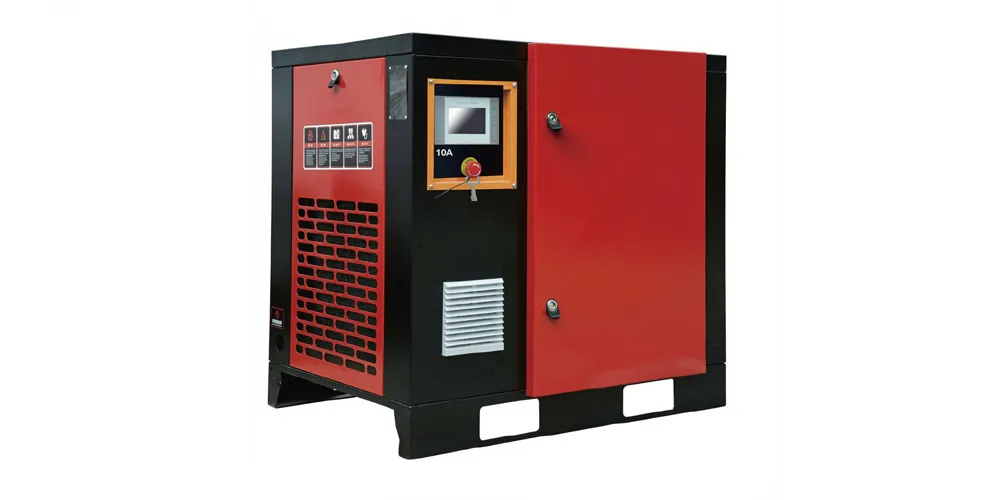
Oil-Free Air Compressor
The blow circuit of an injection stretch blow moulding machine requires clean, oil-free compressed air delivered consistently at 2.0–3.5 MPa. Oil contamination in the blow air stream damages the Parker high-pressure valve seats, degrades solenoid valve performance, and introduces oil aerosol into the container interior — a hygiene violation for food, pharmaceutical, and cosmetic applications. Oil-free high-pressure compressors matched to the machine’s cycle air demand eliminate this risk entirely. For facilities in humid climates, pairing the compressor with a cold-dry filter removes moisture that would otherwise freeze in the blow circuit at high pressure. Explore oil-free compressor specifications at compressoroilfree.com.
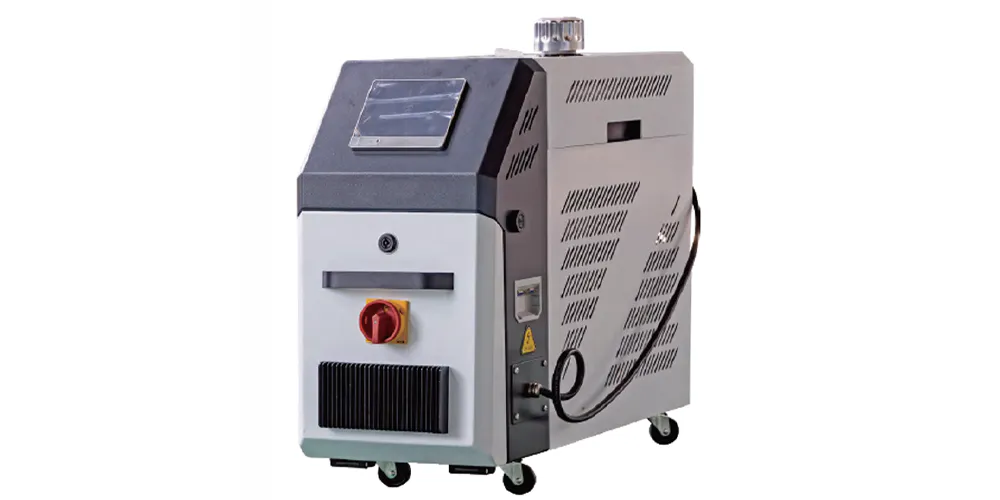
Formtemperaturregler
Stable mould temperature is one of the least visible but most impactful variables in injection stretch blow molding process quality. A mould temperature controller that delivers unstable coolant flow causes the blow mould to cycle through thermal expansion and contraction within each production cycle, leading to variable container wall thickness and, over extended production runs, measurable drift in bottle diameter. For operations producing to tight dimensional specifications — pharmaceutical neck tolerances, cosmetic heavy-wall profiles — a matched mould temperature controller with isolated electrical outputs eliminates cross-interference with the machine PLC that can otherwise generate false sensor alarm codes. Include mould temperature controller selection in the same procurement cycle as the machine to ensure system compatibility from day one.
Discuss Your Machine Shipping and Logistics Requirements
Whether you are planning the first international shipment of a new injection stretch blow moulding machine or managing a multi-unit supply program across different markets, our logistics coordination team can provide crated dimension data, recommended freight configurations, and import documentation checklists specific to your destination country.
Häufig gestellte Fragen
Herausgeber: PXY