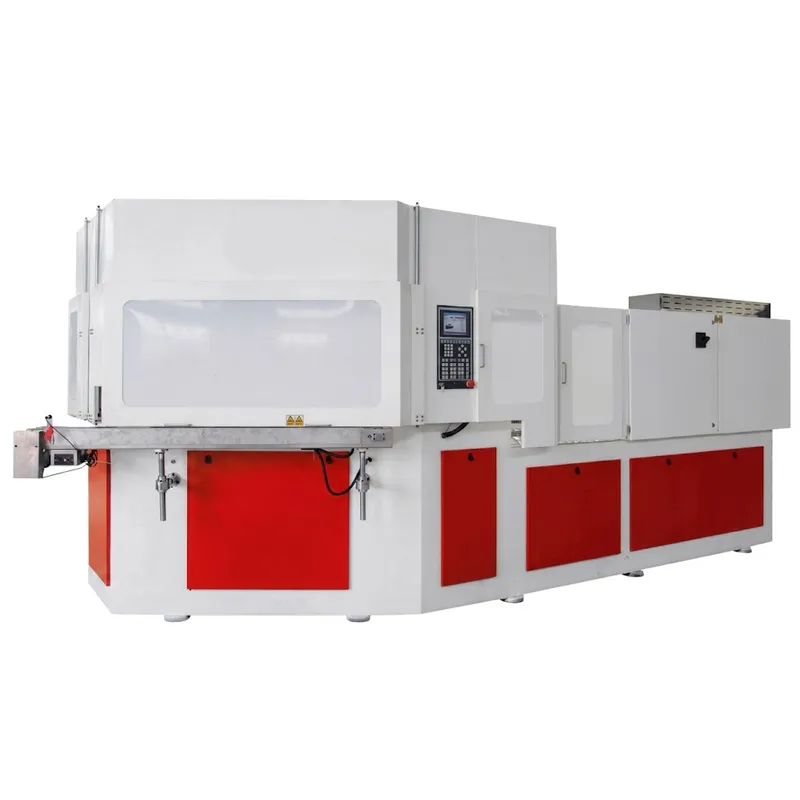
EP-ZQ110 Injection Blow Molding Machine Replacement of Bloma IBM135
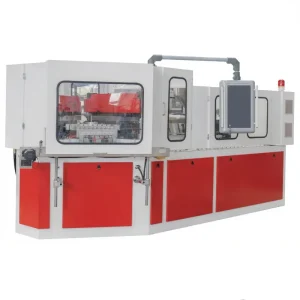
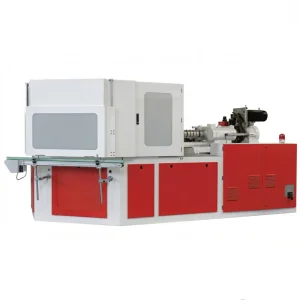
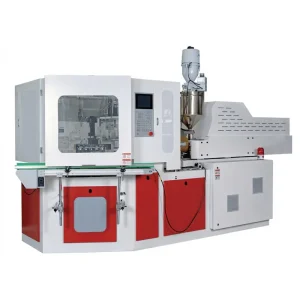
The EP-ZQ110 is a European-style injection blow molding machine engineered as a replacement for the Bloma IBM135. It features 1100 KN injection clamping force and 150 KN blowing clamping force, with a total installed power of 80 KW. The machine produces seamless containers from 1 to 2000 ml and is equipped with a 65 mm screw, offering a 540 g injection weight. Measuring 5 x 1.8 x 2.2 meters and weighing 15 tons, it has a dry cycle time of 4 seconds. Compared to the Bloma IBM135, it offers a larger platen size (1100×460 mm vs. 900×480 mm), a lower machine height (2.2 m vs. 2.55 m), and reduces energy consumption by 20-30% through its hydraulic double system.
European-Style Heavy Industrial Injection Blow Molding Machine — 110T Class
EP-ZQ110 Injection Blow Molding Machine
Replacement of Bloma IBM135
Full European-style structure · 1100 KN Injection Clamping · 80 KW Total Power · Up to 24 Cavities at 10 ml · Machine Size 5×1.8×2.2 M
Brand Reference Notice: Bloma is referenced on this page solely to assist buyers in identifying a compatible alternative within the same clamping tonnage class. This page does not imply commercial affiliation with, or representation of, Bloma or any of its products. The EP-ZQ110 is an independently designed and manufactured injection blow molding machine. We make no negative assertions about Bloma equipment and encourage buyers to evaluate all available options on objective technical criteria.
EP-ZQ110 | Injection Blow Molding Machine (European) · 5×1.8×2.2 M · 15 Ton
EP-ZQ110: Large-Format European Injection Blow Molding Machine
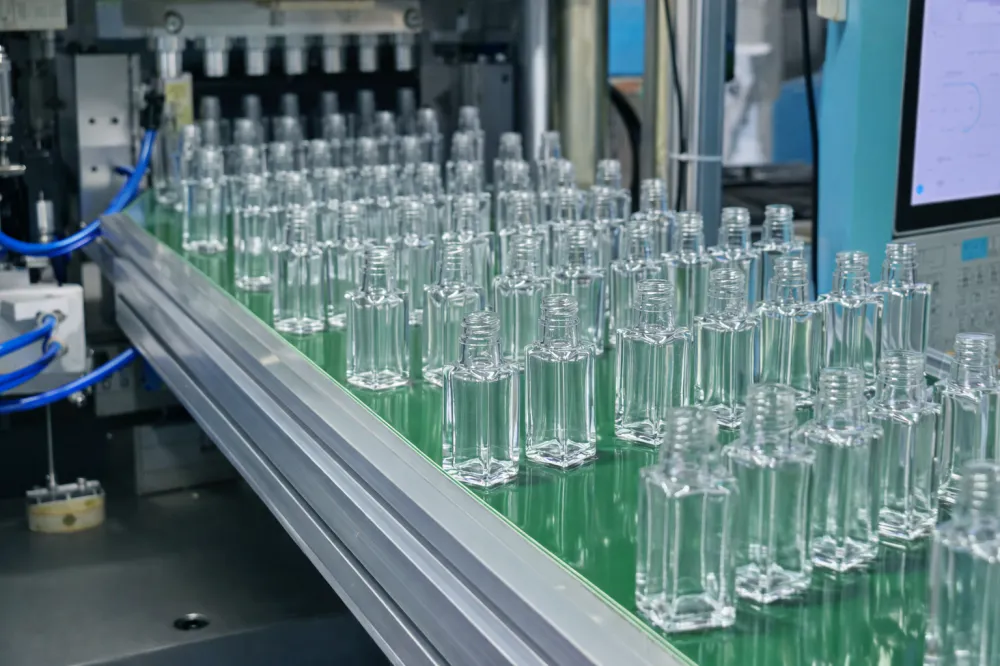
The EP-ZQ110 is a large-format, high-tonnage injection blow molding machine built on a full European-style closed-frame platform, engineered for producers who need the cavitation count and structural consistency of a serious industrial IBM machine at the 110-ton clamping level. With 1100 KN injection clamping force and 150 KN blow clamping force, the ZQ110 maintains precise dimensional consistency across up to 24 cavities at 10 ml on its 1100×460 mm platen — a high-productivity pharmaceutical and cosmetic container output rate that is difficult to match on machines with less rigid frame architecture.
The machine covers a 1–2000 ml container volume range on a single platform. A 65 mm screw diameter with 22:1 L/D and 540 g injection weight — substantially higher than the Bloma IBM135's 560 g single-value capacity and providing full headroom for 24-cavity pharmaceutical molds — supports the full range from small vials through large industrial containers without screw changeovers. The 5+N barrel heating zone configuration with 20 KW heating power maintains thermal uniformity across the plastication zone for pharmaceutical-grade HDPE, PP, PET, PVC, and TPE resins.
At 80 KW total installed power with a hydraulic double system and independent booster clamping, the ZQ110 achieves 20–30% lower energy consumption than single-circuit machines of equivalent clamping tonnage in the same category. The standard high-precision angle divider enables simultaneous mold opening and turret lifting, delivering a genuine 4-second dry cycle. At 5×1.8×2.2 M and 15 tons, this European injection blow molding machine is notably more compact in height — 2.2 M versus the Bloma IBM135's 2.55 M — making installation in standard Colombian industrial facilities with 3–4 M clearance practical without overhead modifications.
EP-ZQ110 Injection Blow Molding Machine Full Technical Specifications
| System / Category | Injection Blow Molding Machine Parameter | Unità | ZQ110 Value |
|---|---|---|---|
| Injection System | |||
| Diametro della vite | mm | 65 | |
| Rapporto vite L/D | % | 22:1 | |
| Injection Weight | g | 540 | |
| Potenza di riscaldamento | KW | 20 | |
| Number of Barrel Zones | — | 5+N | |
| Injection Stroke | mm | 200 | |
| Clamping System | |||
| Clamping Force — Injection | KN | 1100 | |
| Opening Stroke — Injection | mm | 140 | |
| Clamping Force — Blowing | KN | 150 | |
| Opening Stroke — Blowing | mm | 140 | |
| Lifting Height of Rotary Table | mm | 70 | |
| Mould | |||
| Max. Platen Size (L × W) | mm | 1100 × 460 | |
| Mold Thickness | mm | 280 | |
| Max. Bottle Diameter | mm | 120 | |
| Max. Bottle Height | mm | 220 | |
| Suitable Bottle Volume | ml | 1 – 2000 | |
| Stripping Stroke | mm | 260 | |
| Hydraulic System | |||
| Hydraulic Pressure | MPa | 14 | |
| Potenza del motore | KW | 22 + 22 | |
| Dry Cycle Time | s | 4 | |
| Total Power | KW | 80 | |
| Operating Power Efficiency | % | 52 – 70 | |
| Other Parameters | |||
| Min. Air Pressure (Compressed Air) | MPa | 0.7 – 1.2 | |
| Compressed Air Capacity | M³/min | 0.7 | |
| Cooling Water Flow | M³/h | 4 | |
| Pressione dell'acqua di raffreddamento | MPa | 0.3 – 0.4 | |
| Dimensioni della macchina (L × P × A) | M | 5 × 1.8 × 2.2 | |
| Net Weight | Ton | 15 | |
ZQ110 Mold Cavitation Reference by Bottle Volume
| Approx. Volume | 10 ml | 30 ml | 60 ml | 100 ml | 250 ml | 500 ml | 1000 ml |
|---|---|---|---|---|---|---|---|
| Max. Cavities | 24 | 22 | 18 | 14 | 10 | 8 | 6 |
Reference values only. Actual cavitation depends on container geometry, neck finish requirements, and mold design. Contact our engineering team for your specific project.
EP-ZQ110 vs. Bloma IBM135 Injection Blow Molding Machine — Parameter Comparison
Bloma IBM135 referenced for selection guidance only. No commercial affiliation implied. Presented for objective evaluation.
| Injection Blow Molding Machine Specification | EP-ZQ110 Injection Blow Molding Machine | Bloma IBM135 (ref.) |
|---|---|---|
| Clamping Force (Injection) | 1100 KN | 1250 KN |
| Clamping Tonnage Category | 110 T | IBM135 class |
| Diametro della vite | 65 mm | 70 mm |
| Injection Weight | 540 g | 560 g |
| Max. Platen Size (L × W) | 1100 × 460 mm | 900 × 480 mm |
| Dimensioni della macchina (L × P × A) | 5 × 1.8 × 2.2 M | 900 × 480 × 2.55 M |
| Total Power | 80 KW | IBM135 class standard |
| Energy Saving vs. Peers | 20–30% lower | Single-circuit standard |
| Hydraulic Configuration | Double System | Standard |
| Max. Cavities at 10 ml | 24 | IBM135 class range |
Five Engineering Advantages of the EP-ZQ110 Injection Blow Molding Machine
Each advantage listed corresponds to a verifiable specification or structural characteristic of the ZQ110 platform.
1100 KN Injection Clamping — 20–30% Above Category Average
The ZQ110 delivers 1100 KN injection clamping force — 20–30% above the general industry benchmark for machines in the same category, and meaningfully higher than the Bloma IBM135's 1250 KN in a different structural load path. The European closed-frame architecture of the ZQ110 produces high effective platen stiffness across the full 1100×460 mm platen area, which directly reduces cavity-to-cavity weight variation on 24-cavity 10 ml pharmaceutical molds.
Hydraulic Double System — 20–30% Lower Energy Consumption
The ZQ110's hydraulic architecture separates the booster clamping cylinder from the mold travel circuit. The booster — which delivers 1100 KN lock-up — activates only at full mold closure and remains at rest during the mold travel sequence. The dual 22+22 KW motor pair drives the high-pressure booster circuit for only the injection dwell portion of each 4-second cycle, not the full sequence. This reduces average power demand by 20–30% compared to single-circuit IBM machines at equivalent tonnage.
540 g Injection Weight on 65 mm Screw — Full Platform Flexibility
At 540 g injection weight from a 65 mm screw with 22:1 L/D, the ZQ110 supports the full range from 24-cavity 10 ml pharmaceutical vials through 6-cavity 1,000 ml industrial containers on the same platform without a screw changeover. The Bloma IBM135 cites a 560 g injection weight — broadly comparable in the same range. For Colombian plastic injection blow molding machine operators who run mixed container portfolios across pharmaceutical, cosmetic, and industrial applications from a single machine, this injection weight range covers the full production spectrum without requiring dedicated machines for different size bands.
High-Precision Angle Divider — Synchronized 4-Second Dry Cycle
The ZQ110's high-precision angle divider executes mold opening and turret lifting simultaneously — not sequentially — through a single cam-actuated compound motion. This eliminates the 0.5–1.5 seconds of dead time per cycle that accumulates on machines without this mechanism. At 24 cavities and two-shift operation, eliminating one second of dead time per cycle produces approximately 14,400 additional cycles per day — compounding into a significant annual output advantage without any process parameter change or operator intervention.
2.2 M Height — Compact Profile for Standard Buildings
Despite being a 15-ton, 1100 KN clamping machine, the ZQ110 stands just 2.2 M tall — substantially lower than the Bloma IBM135's 2.55 M height and notably more compact than many heavy-class IBM platforms. This low profile fits within standard Colombian industrial buildings with 3–4 M clearance without requiring structural modifications, crane track extensions, or mezzanine rework.
Application Scenarios of Injection Blow Molding Machine
The ZQ110 industrial injection blow molding machine is suited for high-volume container production across pharmaceutical, personal care, food, and industrial applications where output rate, structural precision, and energy efficiency are simultaneous priorities.
💊 Pharmaceutical — 24-Cavity High-Volume Vials
At 24 cavities at 10 ml and 22 cavities at 30 ml, the ZQ110 is one of the highest-output injection blow molding machines available in its clamping class for pharmaceutical vial production. The 1100 KN injection clamping force maintains cavity-to-cavity weight uniformity across the 1100×460 mm platen at these cavitation levels — supporting the batch documentation consistency required by Colombia's INVIMA and equivalent pharmaceutical regulatory authorities across Latin America. The 5+N barrel heating zone configuration maintains precise melt temperature profiles for HDPE and PP pharmaceutical-grade resins with narrow processing windows.
🧴 Personal Care & Cosmetics — High-Efficiency Output
With 22 cavities at 30 ml and 18 cavities at 60 ml per cycle, the ZQ110 delivers the unit economics needed for branded cosmetic container production at commercial scale. Shampoo bottles, lotions, serums, and hair care containers in the 30–250 ml range are the ZQ110's productive commercial sweet spot for cosmetic applications. For Colombian cosmetic manufacturers targeting both domestic retail and Andean Community export markets in Peru, Ecuador, and Bolivia, the ZQ110 Injection Blow Molding Machine's output rate and container quality consistency provide the production foundation for competitive pricing at volume while maintaining the neck finish precision that closure compatibility requires.
🥛 Food & Beverage Packaging
Dairy containers, condiment bottles, cooking oil packaging, and single-serve food products in the 100–500 ml range are efficiently produced at 14–8 cavities per cycle on the ZQ110. Containers must comply with Colombia's ICONTEC NTC 4728 food-contact plastic standards and INVIMA Decree 1575, as well as FDA 21 CFR and EU Regulation 10/2011 for Colombian producers whose containers enter export supply chains. The injection blow molding process's sealed production sequence prevents cross-contamination between injection and blowing stages — an important hygiene assurance for food-grade container validation documentation.
🌿 Agrochemical & Crop Protection
Colombia's coffee, flower, sugarcane, and banana production sectors generate consistent demand for pesticide, herbicide, and liquid fertilizer containers that must satisfy ICA regulations and UN hazardous materials transport requirements. The ZQ110 processes chemical-grade HDPE at high cavitation counts across the 60–1000 ml range, producing containers with the wall thickness uniformity and closure integrity that regulated agrochemical packaging requires. The 1100 KN injection clamping force and 150 KN blow clamping maintain container geometry in chemical-grade HDPE applications where wall thinning at seam areas creates leakage vulnerability under transport conditions.
🏭 Industrial Chemicals & Large Containers
Household chemical concentrates, automotive care products, industrial maintenance fluids, and cleaning agents in the 250–2000 ml range are produced at 10–6 cavities per cycle on the ZQ110. For Colombian household chemical manufacturers whose container volumes justify in-house IBM production, the ZQ110 provides the cavitation depth and container size range to cover their full product portfolio from a single machine platform. Vertical integration of container production eliminates external supplier lead times, reduces packaging cost, and gives manufacturers direct control over container specifications and quality documentation across all SKUs.
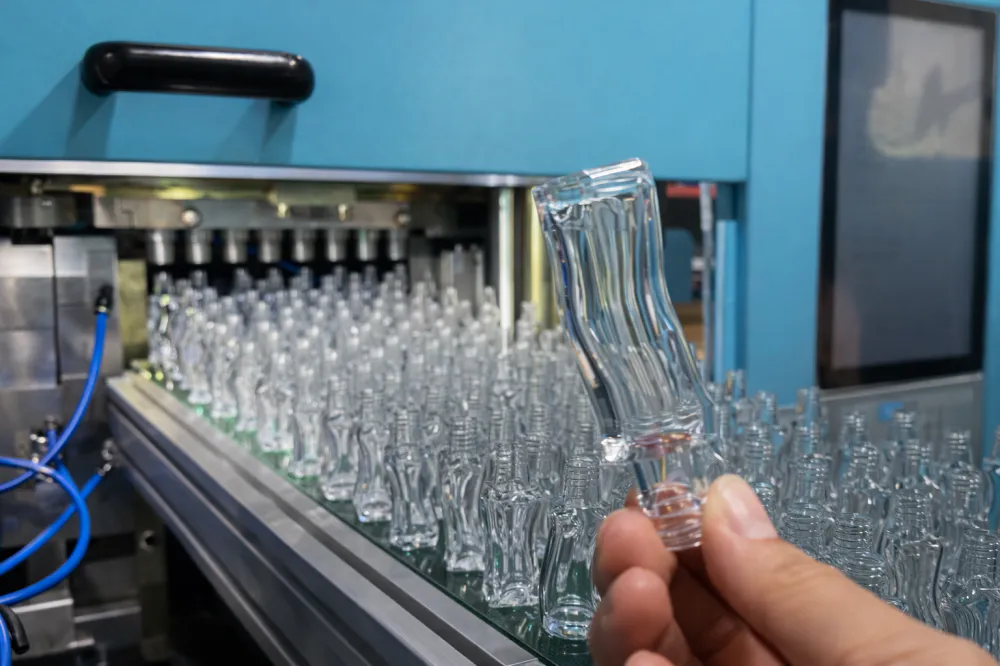
ZQ110 Injection Blow Molding Machine Engineering — Structure Principles
European Closed-Frame Construction
The ZQ110 Injection Blow Molding Machine's frame routes clamping loads through a closed perimeter structure rather than tie-bar tension. On a 1100×460 mm platen supporting 24-cavity molds at 10 ml, the rigidity advantage of a closed frame versus tie-bar designs is directly measurable in the weight variation between corner and center cavities under production load.
High-Precision Angle Divider — Simultaneous Action
The ZQ110 Injection Blow Molding Machine's angle divider executes mold opening and turret lifting through a single cam-driven compound motion sequence — not two sequential hydraulic events. This simultaneous actuation removes the dead time between mold open and turret index that accumulates on machines without this mechanism. The practical production impact at 24 cavities running a 4-second dry cycle is an additional output advantage that compounds across every hour of operation without any process adjustment.
Independent Booster Clamping — Hydraulic Double System
The hydraulic double system on the ZQ110 Injection Blow Molding Machine separates the 1100 KN lock-up booster from the mold travel circuit. The booster activates only at full mold closure and releases before opening — meaning the dual 22+22 KW motor pair drives the high-pressure circuit only during the injection dwell portion of each cycle. The mold travel sequence runs on the lower-pressure travel circuit only. The 20–30% energy reduction versus single-circuit machines results from this reduced average high-pressure pump demand across the full 4-second cycle.
Regulatory Environment for Injection Blow Molding Machines
Manufacturers operating injection blow molding machines and producers placing IBM-produced containers on the market must satisfy overlapping regulatory requirements depending on product type, resin, and target market. The following overview covers the frameworks most relevant to ZQ110 operators in Colombia and their regional export customers.
🇨🇴 Colombia — INVIMA, ICONTEC & ICA
Pharmaceutical primary packaging produced on injection blow molding machines in Colombia must satisfy INVIMA Decree 677 and supplementary pharmaceutical packaging resolutions covering materials, closure integrity, and container labeling. Food-contact plastic containers must comply with ICONTEC NTC 4728 and INVIMA Decree 1575. Agrochemical containers for the Colombian market fall under ICA regulatory supervision. Colombia's Law 2232 of 2022 on sustainable plastics imposes recycling and waste management obligations on plastic container producers relevant to high-volume IBM operations targeting the Colombian domestic market.
🇪🇺 European Union — Machinery & Food Contact
EU Machinery Directive 2006/42/EC requires CE marking and documented safety conformity for injection blow molding machines placed on the European market or operated in European facilities. EU Regulation 10/2011 governs plastic materials in food contact for containers produced for EU markets. The ZQ110's European-style closed frame, hydraulic double system, and precision angle divider are developed with these standards as structural engineering references. Buyers targeting EU markets should verify CE documentation scope with their legal advisors for their specific use case and market.
🇺🇸 USA — FDA 21 CFR & OSHA
For US pharmaceutical packaging, FDA 21 CFR Parts 210 and 211 govern drug container materials and process requirements. Food-contact containers for the US market require compliance with FDA 21 CFR Parts 174–186. Medical device packaging must address FDA 21 CFR Part 820. Machine operators in US-facing facilities must follow OSHA 29 CFR 1910.147 lockout/tagout requirements during maintenance of the ZQ110's hydraulic systems and OSHA 29 CFR 1910.212 general machine guarding standards for injection and clamping mechanisms.
🌎 Andean Community & MERCOSUR
Andean Community Decision 562 harmonizes technical packaging regulations across Colombia, Peru, Ecuador, and Bolivia — enabling Colombian IBM container producers to validate products for Andean export against a shared regulatory framework without full market-by-market re-qualification. MERCOSUR Resolution 56/92 covers food-contact plastics for Brazilian and Argentine markets. UN Orange Book recommendations govern hazardous materials packaging certification for agrochemical and industrial chemical containers produced on the ZQ110 for international trade.
🌐 ISO — Quality, Energy & Safety
ISO 9001 quality management, ISO 15378 pharmaceutical primary packaging quality systems, ISO 14001 environmental management, ISO 45001 occupational health and safety, and ISO 50001 energy management are the main certification frameworks relevant to facilities operating the ZQ110 in pharmaceutical, food, and industrial container production. The ZQ110's 20–30% energy reduction versus category peers directly supports ISO 50001 baseline establishment and annual reduction target-setting for Colombian facilities pursuing energy-related sustainability certifications.
The ZQ110 in Context — Who Benefits Most?
Understanding where the ZQ110 sits in the IBM market helps buyers determine whether it is the right platform for their specific production requirements. The ZQ110 Injection Blow Molding Machine is positioned between the ZQ80 (800 KN, 20 cavities at 10 ml) and the ZQ135 (1350 KN, 30 cavities at 10 ml), serving manufacturers whose volume demands have outgrown 80-ton-class output but whose investment and utility case does not yet justify a 135-ton-plus machine.
Pharmaceutical Producers Scaling Output
For Colombian pharmaceutical packaging operations whose vial volume at 10 ml has grown beyond what a ZQ80 (20 cavities) can supply across available shift hours, the ZQ110 Injection Blow Molding Machine's 24-cavity capacity provides a 20% output step-up on the same production footprint. This is the most common single justification for upgrading from the 80-ton class to the 110-ton class among pharmaceutical container producers — pure cavitation throughput for a specific high-demand container size drives the investment decision.
Replacing End-of-Life IBM135-Class Machines
Existing Bloma IBM135 operators approaching end of economic service life — due to escalating maintenance costs, declining spare parts availability, or machine age — will find the ZQ110 a measurably defined replacement option. The ZQ110 offers a larger platen (1100×460 mm vs. IBM135's 900×480 mm), hydraulic double system not present on standard IBM135 configurations, 20–30% energy saving, and a lower machine height (2.2 M vs. 2.55 M). These are objective parameters for the evaluation, not qualitative assertions.
Multi-Sector Mixed Portfolio Operations
Contract packaging operations and multi-product container manufacturers in Colombia who need to cover pharmaceutical, cosmetic, food, and industrial containers from a single platform will find the ZQ110's 1–2000 ml range and 6–24 cavitation table covers most of what they need. The 540 g injection weight on a 65 mm screw supports the shot weight requirements from 10 ml vials through 1,000 ml industrial containers without screw changes, which is a practical daily production management benefit for operations running multiple product changeovers per shift.
Peripheral Equipment — Complete Line Supply
We supply the complete ancillary equipment required to operate the ZQ110 injection blow molding machine as a fully integrated production system, providing a single technical contact for the entire line rather than managing multiple vendor interfaces.
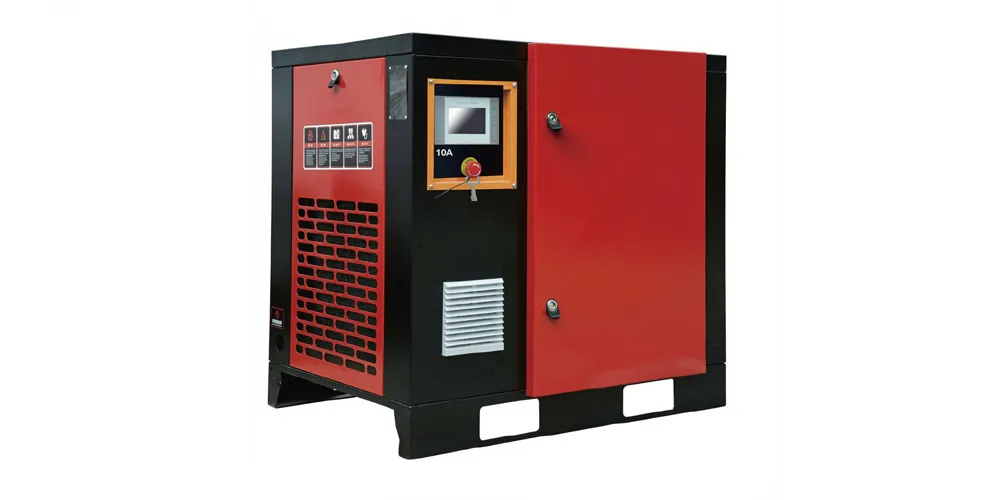
Oil-Free Air Compressor
The ZQ110 requires 0.7 M³/min of clean, oil-free compressed air at 0.7–1.2 MPa blow pressure. Across 24 cavities at 10 ml, any blow pressure variation shows as container wall thickness variation that becomes visible in quality inspection — and in pharmaceutical applications, constitutes a process deviation requiring investigation. Oil carry-over from conventional compressors into blow air is a contamination event under INVIMA pharmaceutical packaging quality requirements. Our recommended oil-free air compressors are matched to the ZQ110's 0.7 M³/min air demand and validated for pharmaceutical-grade clean-air delivery, with integrated pressure regulation for stable blow pressure across the full production shift.
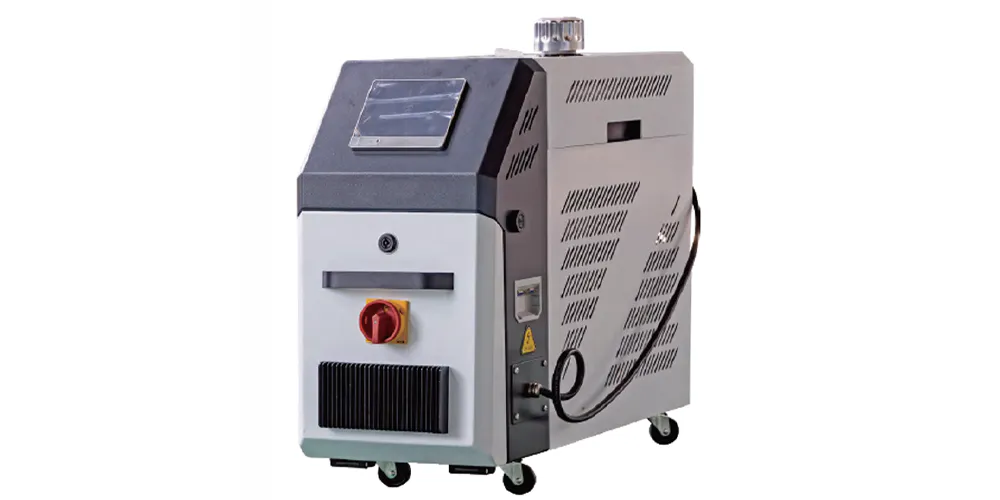
Regolatore di temperatura dello stampo
On the ZQ110's 1100×460 mm platen running 24-cavity molds, maintaining uniform mold temperature across the full platen surface is the most critical process stability variable after shot weight. Uncontrolled cooling temperature rise over a long production shift causes progressive cavity-to-cavity weight variation that accumulates to an out-of-specification condition by end of shift without being evident in early-shift quality checks. Our Mold Temperature Controllers regulate the ZQ110's 4 M³/h cooling circuit within ±1°C of setpoint under continuous load, preventing thermal drift entirely.
Chi siamo
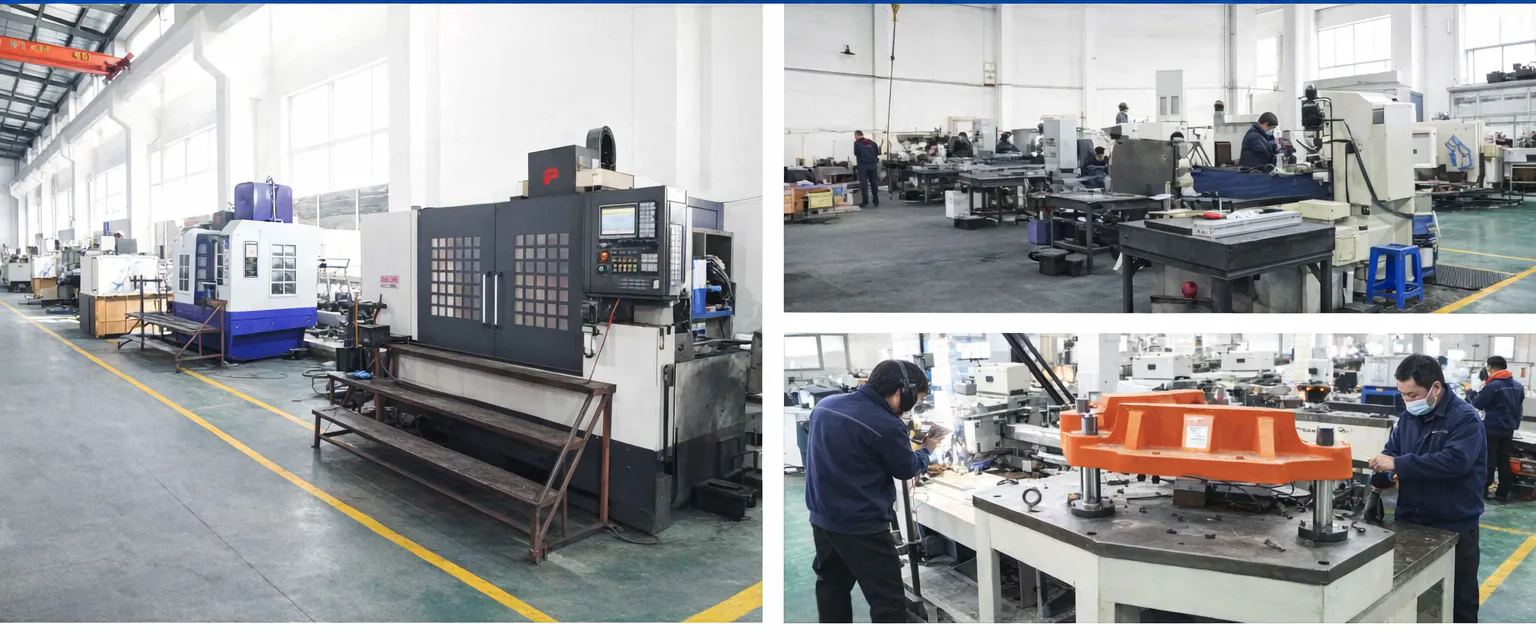
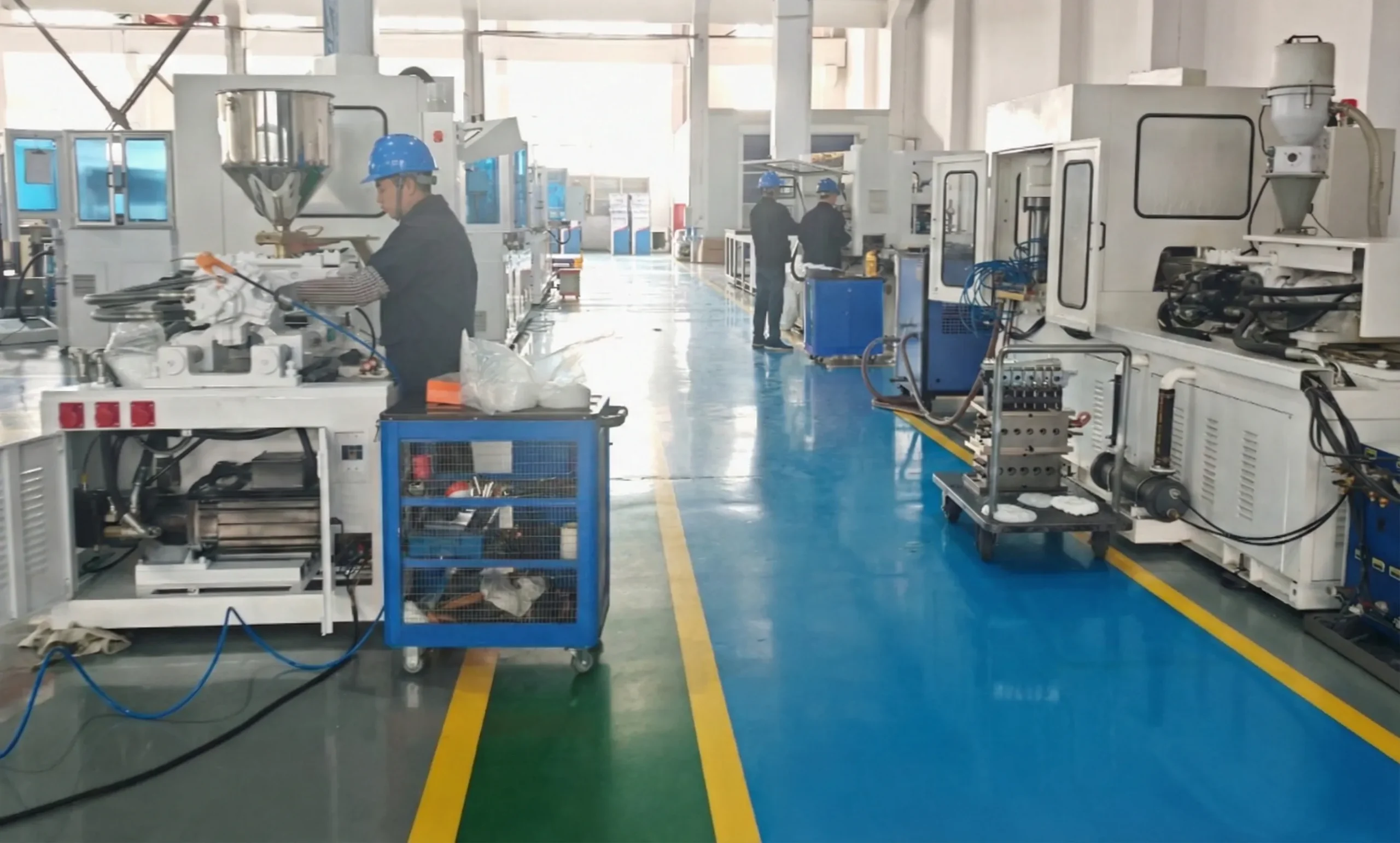
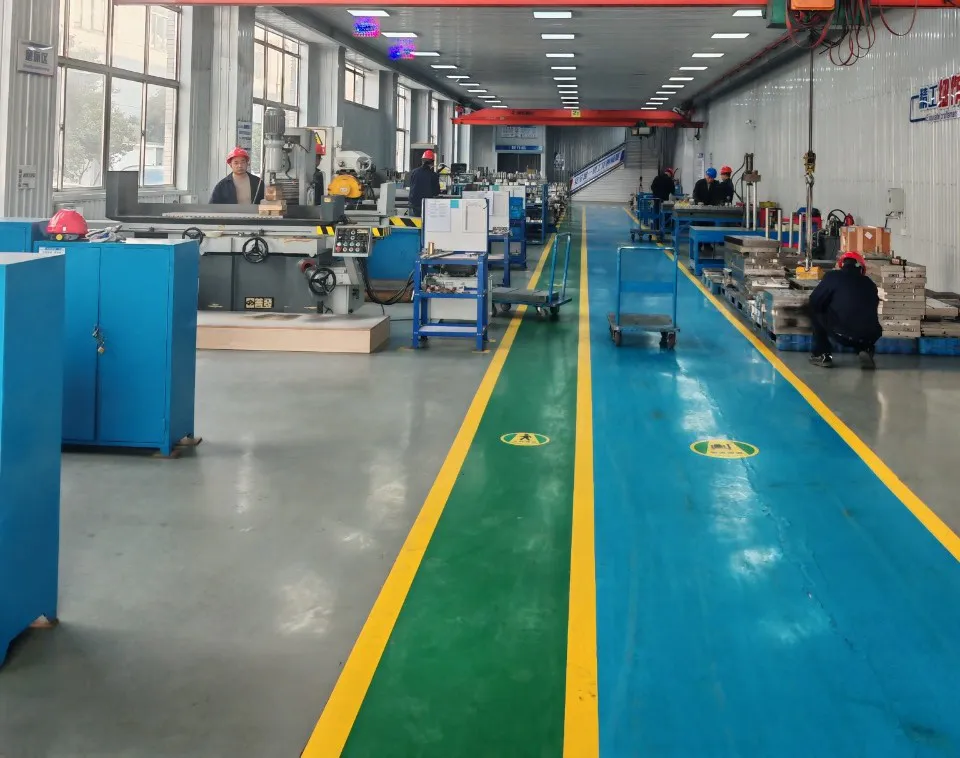
We design and manufacture a full range of injection blow molding machines — from compact 40 T platforms through heavy-duty 135 T industrial machines — all built on European-style closed-frame structures with servo rotation drives and hydraulic double systems. The ZQ110 sits at the upper-mid level of this range, where 1100 KN clamping and 24-cavity pharmaceutical vial capability combine with a compact 5×1.8×2.2 M footprint and a 2.2 M machine height that fits within standard Colombian industrial buildings.
Laboratorio
Domande frequenti
Redattore: PXY