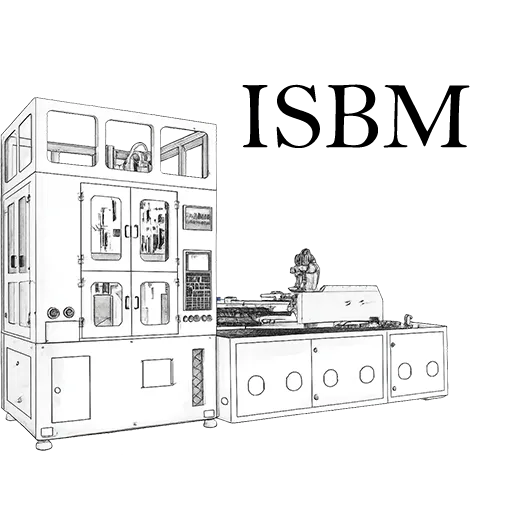
A structured guide for procurement managers, factory owners, and packaging engineers looking to source reliable injection stretch blow moulding machines through verified global distribution channels — covering supplier evaluation, regional regulations, and key product specifications.
Sourcing the right เครื่องฉีดขึ้นรูปยืดเป่า through an international distribution channel is a process that rewards patience and structured evaluation. The global market for PET blow molding equipment is large, competitive, and — for buyers who are new to it — genuinely difficult to navigate. There are dozens of machine configurations, a wide range of technical standards, and significant variation in after-sales support quality between suppliers and their regional distributors. Getting this decision right the first time saves considerable time, capital, and operational disruption.
This guide is written for procurement teams, packaging engineers, and production directors at companies across industries — beverages, cosmetics, pharmaceuticals, food, agrochemicals, and household products — who need to evaluate and source เครื่องฉีดขึ้นรูปยืดเป่า from international suppliers. It covers the logical sequence of steps from defining your technical requirements through to qualifying a distributor and placing an order, with reference to real machine specifications, regional regulatory requirements, and the commercial considerations that matter most in cross-border equipment procurement.
Whether you are looking for a compact three-station machine for a specialty cosmetic application or a large four-station unit capable of producing 20-liter containers for the bulk beverage or chemical sector, the evaluation framework below applies — and the same principles govern distributor selection regardless of which market you are buying from or selling into.
1. Why the Choice of Distributor Shapes the Lifetime Value of Your Machine
หนึ่ง เครื่องฉีดขึ้นรูปยืดเป่า is not a commodity purchase. A mid-range four-station unit represents a capital investment that a production facility will typically work over seven to fifteen years, operating in two or three shifts. Over that lifecycle, the machine will require spare parts, scheduled maintenance, PLC software updates, mold tooling changes, and occasional mechanical repairs. The quality of distributor support determines whether those interruptions last four hours or four weeks. A good international distributor is, in practical terms, the machine manufacturer’s local engineering team — and their ability to respond quickly, with the right parts and the right expertise, is a production uptime issue, not just a customer service issue.
With that context in mind, the distributor evaluation criteria that matter most are: geographic proximity to your facility or access to rapid logistics; inventory of critical spare parts (servo drives, heating elements, seal kits, ballscrews); technical staff with documented training on the specific machine models they represent; an established track record with reference customers in your country or region; and clear contractual terms covering warranty coverage, response time commitments, and escalation to the machine manufacturer. Price is relevant, but buying from the cheapest distributor without verifying these factors consistently produces higher total ownership costs than buying at a modest premium from a better-supported channel.
2. Define Your Technical Requirements Before Contacting Any Distributor
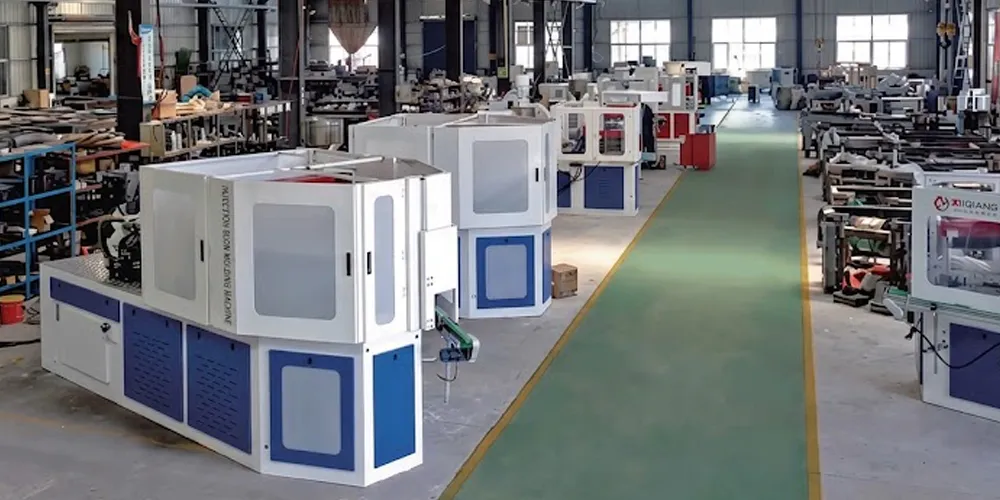
Many buyers approach distributors with a general request — “we need a PET blow molding machine” — and then spend weeks in back-and-forth correspondence that could have been compressed into two days with a properly prepared specification brief. Before reaching out to any distributor or ผู้ผลิตเครื่องฉีดขึ้นรูปและเป่าขึ้นรูปยืด, document the following with as much precision as your current product development stage allows.
Container geometry: bottle diameter, body height, neck diameter, and neck finish (thread standard). For reference, the EP-HGYS200-V4 four-station machine accommodates bottle diameters from 28 mm up to 118 mm across a production quantity range of 1 to 12 bottles per cycle, while the larger EP-HGY650-V4 handles body diameters up to 280 mm and containers up to 20 liters — parameters that are completely different market segments requiring different distributor expertise. Knowing your container dimensions narrows the field immediately.
Target resin: PET and PETG are the primary materials processed by the injection stretch blow molding process, but if your application requires PP, PC, or Tritan, confirm that the machine configuration and screw geometry are appropriate. Not all distributors stock machines configured for specialty resins, and some will sell a standard PET-optimized machine for PP applications without disclosing the limitation until production problems emerge.
Annual production volume: cavities-per-cycle and cycle time together determine annual output. A three-station machine running at 45-second cycles with 2 cavities produces a very different annual volume from a six-station unit running 10 cavities at 35 seconds. Communicate your target output in units per year, not just daily production targets, so distributors can recommend the correct station count and cavity number.
Utility specifications: local voltage (typically 380 V / 400 V / 415 V depending on region), available compressed air capacity, cooling water supply temperature, and floor space. The EP-HGY250-V4, for example, operates at 370–400 V, consumes 67.7 kW motor power plus 15 kW heating power, and requires a footprint of 6300 × 2400 × 3700 mm. A distributor who does not ask about your facility utilities is not doing their job properly.
| รายการข้อมูลจำเพาะ | What to Prepare | Why It Matters |
|---|---|---|
| Container dimensions | Drawing or 3D model with BD, H, E dimensions | Determines machine size class and mold cavity count |
| Resin type & grade | PET, PETG, PP, PC — food/pharma grade if applicable | Governs screw geometry, barrel temperature, drying system |
| Annual output target | Units per year, shift pattern | Drives station count and cycle time requirements |
| Existing mold tooling | ASB, AOKI, or other format, with model number | Determines compatibility with replacement machine |
| Facility utilities | Voltage, compressed air, cooling water, floor plan | Ensures machine spec matches installation environment |
| Regulatory requirements | CE, FDA, GMP, local standards as applicable | Filters out non-compliant machines and distributors |
3. How to Identify Legitimate International Distributors
The search for ซัพพลายเออร์เครื่องฉีดขึ้นรูปและเป่าขึ้นรูปยืด typically starts with trade shows, industry publications, online directories, and referrals from peer companies in the same sector. Each source has a different signal quality, and understanding the hierarchy helps you allocate evaluation time efficiently.
Trade Shows and Industry Events
Major packaging machinery exhibitions — including Drinktec (Germany), Interpack (Germany), Chinaplas (Asia), NPE (USA), and Pack Expo (USA) — remain the most effective venues for evaluating machines and their distributors side by side. Distributors who exhibit at these events are making a significant commercial commitment, which itself is a positive signal. More importantly, these environments allow your engineering team to interact with the machines directly, observe demos, and have unscripted technical conversations with the sales and applications engineering staff. A distributor whose technical team cannot discuss barrel temperature profiles, clamping force requirements, or cycle time calculations in depth at a trade show is unlikely to provide better support after the sale.
Online Platforms and Manufacturer Websites
Platforms such as Alibaba, Made-in-China, and Global Sources list hundreds of ผู้ผลิตเครื่องฉีดขึ้นรูปและเป่าขึ้นรูปยืด and distributors, but the verification quality varies enormously. A listing on these platforms does not constitute an endorsement of technical capability or financial stability. Use them for initial identification, but move quickly to direct contact with the manufacturer’s official website and request an authorized distributor list for your region. Legitimate manufacturers maintain published distributor networks, and any distributor who cannot be confirmed on the manufacturer’s official channel should be treated with caution. The manufacturer’s own website — including detailed product pages with verifiable technical specifications — is itself a quality signal: a machine supplier who publishes injection clamping forces, blow air pressure ranges, machine dimensions, and weight to the gram is operating with engineering transparency; one who only lists vague capability claims is not.
Industry Associations and Technical Bodies
National and regional plastics industry associations — such as the SPE (Society of Plastics Engineers, USA), PlasticsEurope (Europe), ABIPLAST (Brazil), ANIPAC (Mexico), or ACOPLASTICOS (Colombia) — maintain supplier directories and can refer members to distributors operating in their territory. These referrals carry implicit quality vetting because association membership requires annual renewal and compliance with professional conduct standards. Technical bodies such as EUROMAP (European Plastics and Rubber Machinery Association) publish standards that blow molding machines should conform to, and distributors familiar with EUROMAP standards are better equipped to help you navigate import compliance.
4. Distributor Qualification — The Questions That Separate Good from Marginal
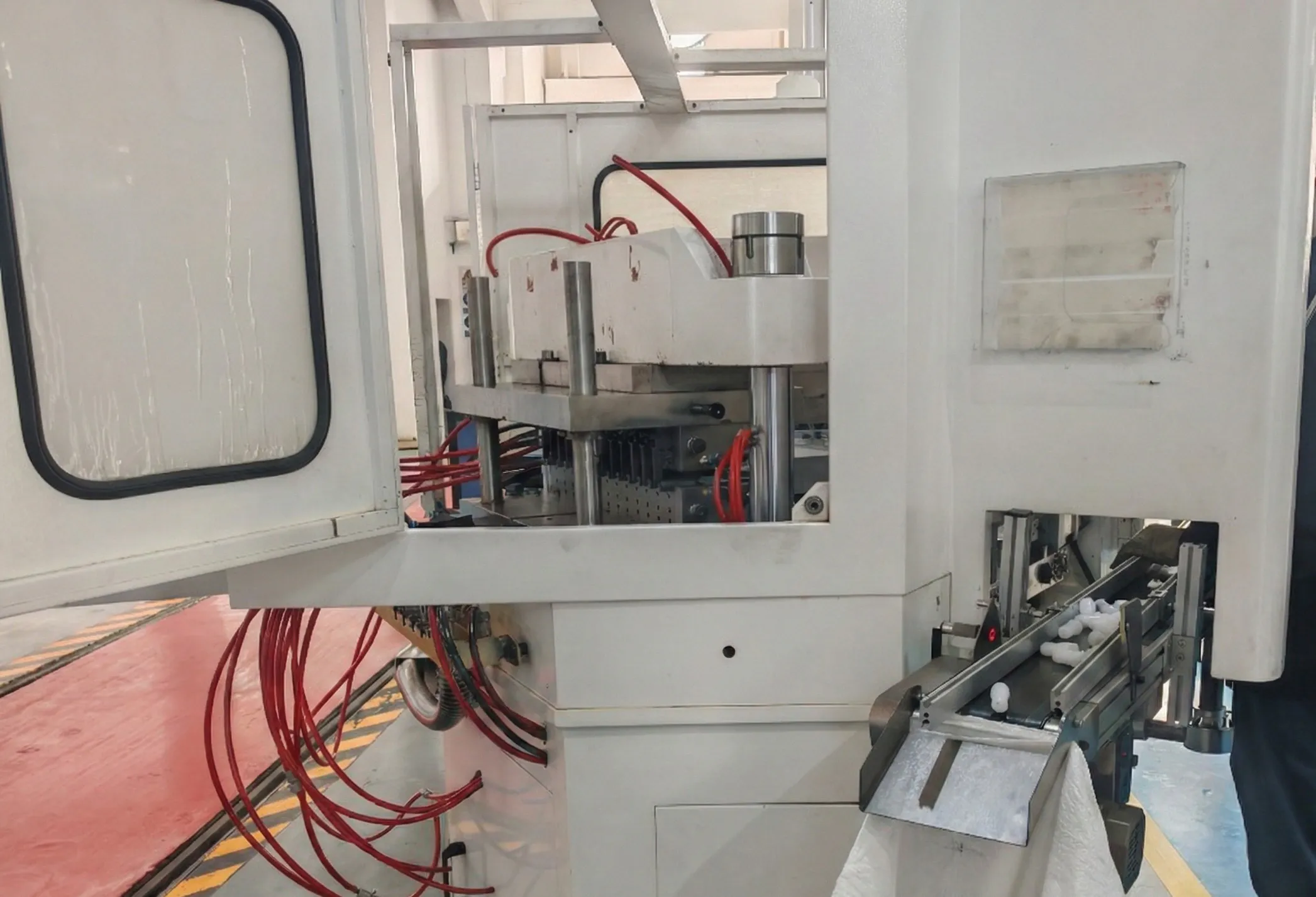
Once you have a shortlist of potential distributors, the qualification process should be structured and documented. The following questions address the dimensions of technical competence, logistics capability, financial stability, and post-sale support that determine whether a distributor can reliably serve your facility over a 10-year machine lifecycle. Ask all of them — and treat vague or evasive responses as a red flag rather than a minor concern.
Technical Competence
How many engineers on your team have factory-certified training on these specific machine models? Can you provide the training certificates? Have your engineers performed a mold changeover on this machine model without manufacturer support? What is your standard diagnostic protocol for a PLC alarm during production?
Spare Parts Inventory
Which critical spare parts do you hold in local stock? What is your lead time for servo drive replacement (a common failure mode on electric machines)? Do you stock standard seal kits, heating elements, and NSK ballscrews for the models you sell? Can I visit your warehouse to inspect inventory before placing an order?
Reference Customers
Can you provide three reference customers in my industry vertical and geographic region who have purchased the same machine model from you? May I visit one of those facilities to see the machine running? What were the most significant technical challenges encountered during commissioning, and how were they resolved?
Logistics & Import Support
Do you handle customs clearance, import documentation, and port-to-factory logistics as part of the service? Can you arrange CE certification documentation for machines entering the EU? What is your experience managing import duties under the relevant trade agreements in my target country? Have you shipped to my country before?
The answers to these questions will cluster into one of three outcomes: the distributor is well-qualified and the relationship is worth pursuing; the distributor has significant gaps that might be acceptable if the manufacturer’s direct support is strong; or the distributor is unsuitable and should be removed from your shortlist. Documenting this evaluation in a simple scoring matrix makes the final selection defensible to your management team and creates a reference record for future procurement cycles.
5. International Regulatory Requirements for PET Blow Molding Machine Import & Operation
Importing an เครื่องฉีดขึ้นรูปยืดเป่า across international borders involves navigating a layered set of regulatory requirements that vary significantly by destination country. These requirements cover machine safety certification, electrical standards, import duties, and — where the machine is used for food or pharmaceutical packaging — the regulatory status of the packaging materials it produces. Distributors who are experienced in cross-border equipment supply will have established processes for managing these requirements; those who cannot explain them clearly are likely to leave compliance gaps that create import delays or operational risk.
European Union — CE Marking & Machinery Directive
Any injection stretch blow molding machine placed on the market in the European Union or in EFTA countries (Norway, Switzerland, Iceland, Liechtenstein) must carry CE marking in conformity with the EU Machinery Directive 2006/42/EC (currently under revision as the EU Machinery Regulation 2023/1230, which applies from January 2027). CE marking requires a Technical Construction File (TCF), a Declaration of Conformity, and compliance with relevant harmonized standards including EN ISO 12100 (risk assessment), EN 60204-1 (electrical safety), and noise emission standards under EN ISO 11202. Distributors supplying into the EU should be able to provide CE documentation as a standard deliverable with the machine, not as a special request. Failure to provide CE-marked equipment exposes the importer to customs detention and market surveillance action from national authorities.
United States — OSHA Standards & UL/NRTL Certification
The United States does not require a single mandatory safety mark equivalent to CE marking for industrial machinery, but machines placed in production facilities must comply with OSHA 29 CFR Part 1910 (general industry machinery standards) and state-level equivalents. For electrical systems, OSHA generally requires compliance with NFPA 70 (National Electrical Code) and NFPA 79 (Electrical Standard for Industrial Machinery). Many US buyers and insurance underwriters require Nationally Recognized Testing Laboratory (NRTL) certification — commonly UL or ETL — for electrical panels and controls. Distributors who supply machines to the US market regularly will have experience preparing machines for NRTL evaluation and can advise on the timeline and cost.
India — BIS & PESO Requirements
In India, industrial machinery imports are subject to Bureau of Indian Standards (BIS) requirements for certain categories, and compressed air systems associated with blow molding equipment may require approval from the Petroleum and Explosives Safety Organisation (PESO) if high-pressure vessels are involved. The Ministry of Commerce and Industry’s Foreign Trade Policy governs import licensing for capital goods, and customs classification under the Harmonized System (HS) must be correctly identified to apply the applicable basic customs duty rate. Distributors active in the Indian market should be familiar with the relevant IGST (Integrated Goods and Services Tax) implications and BIS certification status of the machines they supply.
Southeast Asia — ASEAN Standards and Country-Level Requirements
Within ASEAN, there is no single harmonized machinery safety standard equivalent to the EU Machinery Directive. Country-level requirements vary significantly: Thailand operates under the Ministerial Regulation on Safety for Machinery (issued under the Hazardous Substances Act), Vietnam requires conformity assessment for certain industrial equipment categories under Circular 28/2012/TT-BKHCN, and Indonesia applies SNI (Standar Nasional Indonesia) requirements to some machinery categories. Malaysia’s DOSH (Department of Occupational Safety and Health) requires registration of certain classes of machinery under the Factories and Machinery Act 1967 (now superseded in part by the Occupational Safety and Health Act). Distributors operating across multiple ASEAN markets typically develop expertise in the specific requirements of each country rather than relying on a regional framework.
Brazil — INMETRO & NR-12
In Brazil, machinery safety is governed by NR-12 (Norma Regulamentadora No. 12), the primary regulatory standard covering safety requirements for machines and equipment in manufacturing environments. NR-12 establishes requirements for safeguarding, emergency stop systems, and operator training that apply to blow molding machines operating in Brazilian facilities. Import compliance is managed through INMETRO (Instituto Nacional de Metrologia, Qualidade e Tecnologia), which oversees product certification and conformity assessment. Distributors supplying the Brazilian market must be familiar with NR-12 requirements and able to provide documentation demonstrating machine compliance, including safety circuit diagrams and risk assessment reports.
Middle East — Gulf Cooperation Council (GCC) Standards
GCC countries (Saudi Arabia, UAE, Kuwait, Qatar, Bahrain, Oman) apply GSO (Gulf Standardization Organization) standards to industrial equipment, and the Saudi Standards, Metrology and Quality Organization (SASO) maintains mandatory certification schemes for certain product categories. Electrical equipment must generally comply with IEC standards, and machines for food or pharmaceutical packaging must additionally conform to requirements from local health authorities (SFDA in Saudi Arabia, ESMA in the UAE). Distributors established in the Gulf region will typically handle Saber product registration (Saudi Arabia) and CEC certification (UAE) as part of the import process.
| Region / Market | Primary Regulatory Body | Key Standard / Requirement | Distributor Deliverable |
|---|---|---|---|
| สหภาพยุโรป | National Market Surveillance Authorities | EU Machinery Directive 2006/42/EC / Reg 2023/1230 | CE Declaration of Conformity + TCF |
| United States | OSHA / NRTL | NFPA 70, NFPA 79, 29 CFR 1910 | NRTL certification for electrical panel |
| India | BIS / PESO / Ministry of Commerce | BIS Act, PESO Rules for pressure systems | BIS certificate, HS classification, IGST docs |
| บราซิล | INMETRO / Ministry of Labour | NR-12 Machinery Safety Standard | NR-12 compliance report + safety circuit docs |
| GCC / Middle East | GSO / SASO / ESMA | GSO standards, Saber registration (SA), CEC (UAE) | Product registration, IEC conformity |
| Southeast Asia | Country-level DOSH / MOI agencies | NR-equivalent national standards per country | Country-specific registration / approval |
6. Reading Machine Specifications as an International Buyer — What the Numbers Mean
Technical specification sheets from เครื่องฉีดขึ้นรูปยืดเป่า manufacturers contain a standardized set of parameters, but interpreting those numbers correctly — and understanding what is not listed — is a skill that distinguishes experienced buyers from those making their first capital equipment purchase. The following walks through the key parameters using the EP-HGYS200-V4 four-station machine as a reference example.
Injection Clamping Force (KN): This is the force applied to hold the injection mold closed during the resin injection phase. The EP-HGYS200-V4 generates 300 kN injection clamping force. Higher clamping force generally allows more cavities or larger neck geometries but also increases machine size and power consumption. When comparing machines from different ซัพพลายเออร์เครื่องฉีดขึ้นรูปและเป่าขึ้นรูปยืด, ensure you are comparing clamping force figures for the same production scenario — some manufacturers list theoretical maximum force while others list working force, which can be 80–85% of the theoretical figure.
Blowing Clamping Force (KN): The force applied to hold the blow mold closed during the stretch-blow phase. The EP-HGYS200-V4 delivers 200 kN blowing clamping force (single side). Insufficient blow clamping force relative to the blow air pressure and container projected area results in mold flash — thin plastic fins at the parting line — which is a quality defect that also creates mold maintenance issues over time. Verify that the blow clamping force specification matches your highest-pressure container application, not just your average application.
Theoretical Injection Volume (CM³): This parameter describes the maximum volume of resin that can be delivered per injection shot, which relates directly to the maximum preform weight and therefore the maximum container weight per cycle. For the EP-HGYS200-V4 with a 50 mm screw, theoretical injection volume is 310 cm³ — sufficient for producing up to 8 containers per cycle with individual container weights up to 65 g. Running a machine consistently at or near 100% of its theoretical injection volume is not recommended; a working range of 70–85% provides better melt consistency and longer screw life.
Motor Power vs. Heating Power (KW): These are listed separately because they represent different types of energy consumption with different demand profiles. The EP-HGYS200-V4 consumes 49.2 kW for servo motors and 10 kW for barrel heating. In actual production, motor power demand fluctuates with cycle phase (peak demand during injection and blow mold closing), while heating power maintains a more constant base load. Your electrical supply must handle the motor peak demand without voltage sag, which is a consideration in regions with unstable grid supply.
7. Featured Machine — EP-HGYS200-V4: Mid-Range Four-Station ISBM for Global Buyers
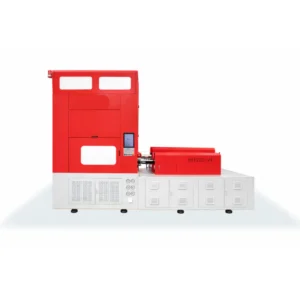
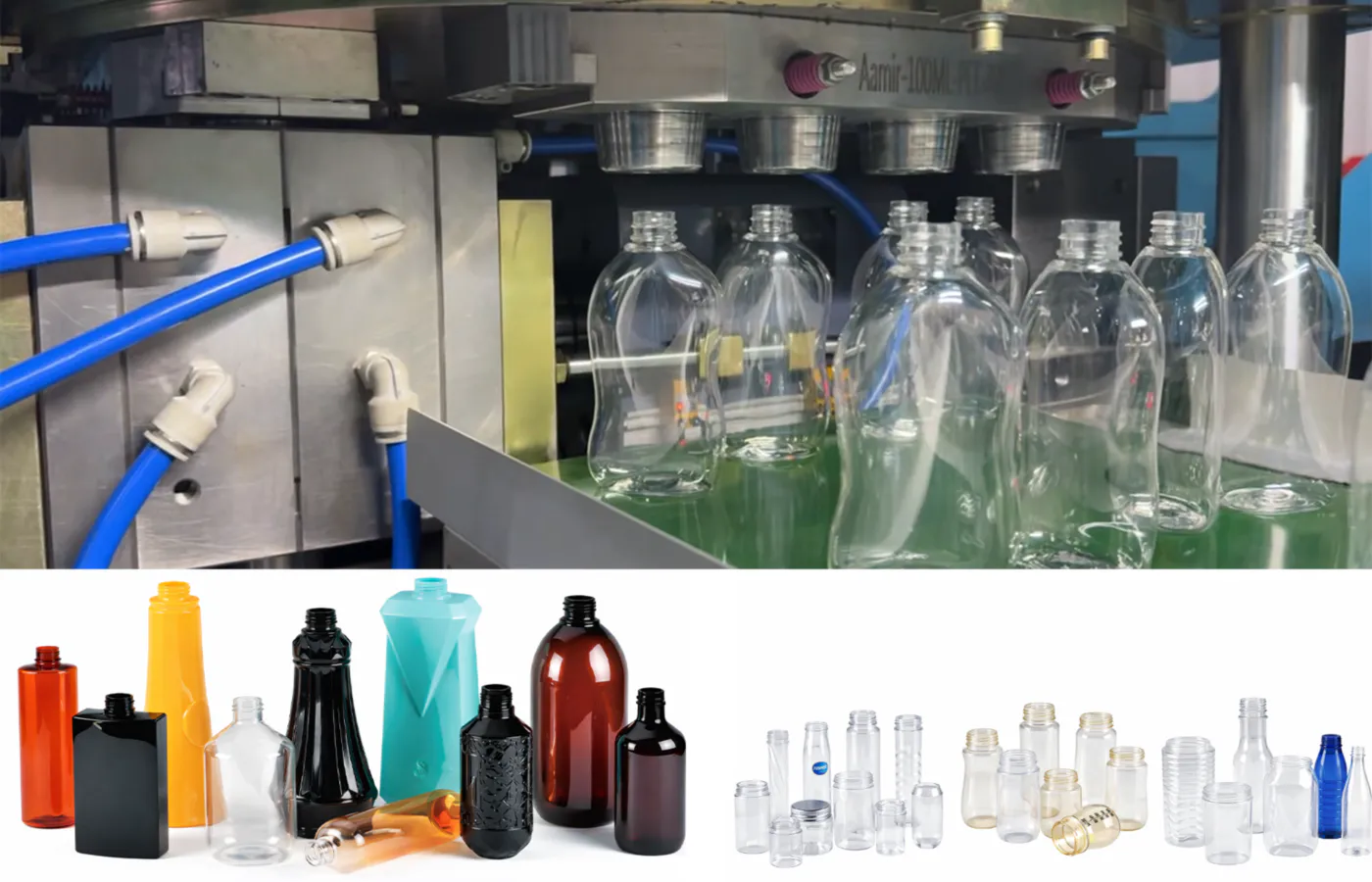
The EP-HGYS200-V4 is a four-station, servo pump-driven เครื่องฉีดขึ้นรูปยืดเป่า well-suited to mid-volume production of PET and PETG containers in the 28–118 mm diameter range, with container volumes from 20 ml to 2,500 ml. It represents a practical entry point for international buyers moving from two-step reheat systems to one-step integrated production, offering a meaningful reduction in energy consumption and footprint compared to separate injection molding and blow molding equipment.
Key specification highlights: injection clamping force 300 kN; blowing clamping force 200 kN (single side); screw diameter options of 40, 50, 55, and 60 mm; theoretical injection volumes from 188 to 480 cm³ depending on screw selection; motor power 49.2 kW; heating power 10 kW; machine size 4800 × 2000 × 3200 mm; machine weight 13 tonnes. The machine uses 3 servo pump systems (Inovance / WEICHI), a Japan Yaskawa servo motor for the turntable, Parker high-pressure valves, Airtac cylinders, and YUKEN hydraulic control valves from Taiwan — a component selection that reflects established sourcing standards rather than cost-minimized alternatives.
| พารามิเตอร์ | หน่วย | ค่า |
|---|---|---|
| แบบจำลองเครื่องจักร | — | EP-HGYS200-V4 (4-station) |
| Compatible Material | — | พีที / พีทีจี |
| ขนาดเส้นผ่านศูนย์กลางของสกรู (เลือกได้) | เอ็มเอ็ม | 40 / 50 / 55 / 60 |
| ปริมาณการฉีดตามทฤษฎี | ซีเอ็ม³ | 188 / 310 / 380 / 480 |
| แรงยึดฉีด | เคเอ็น | 300 |
| แรงยึดเป่าลม | เคเอ็น | 200 (ด้านเดียว) |
| กำลังมอเตอร์ | เควี | 49.2 |
| กำลังความร้อน | เควี | 10 |
| แรงดันลมเป่า | เมกะปาสคาล | 2.0–3.5 |
| แรงดันน้ำหล่อเย็น | เมกะปาสคาล | 0.4–0.6 |
| แรงดันไฟฟ้าของเครื่องจักร | วี | 370–400 |
| Machine Size (L×W×H) | เอ็มเอ็ม | 4800 × 2000 × 3200 |
| น้ำหนักเครื่องจักร | ที | 13 |
| ปริมาตรขวดสูงสุด | เอ็มแอล | มากถึง 2,500 |
8. Mold Compatibility and the Replacement of ASB & AOKI Systems
A recurring requirement among international buyers who already operate blow molding lines is the ability to run existing mold tooling on a new machine. Mold tooling for injection stretch blow molding represents a significant capital investment in its own right — particularly for pharma and cosmetic applications where precision molds can take 16–24 weeks to manufacture and validate. The ability to use existing molds on a เครื่องฉีดขึ้นรูปยืดเป่าทดแทน eliminates this lead time and capital outlay, which is commercially very significant for production facilities planning a machine upgrade.
Several models in the product range are specifically designed for ASB and AOKI mold compatibility. The EP-HGYS150-V4-EV is compatible with Japanese ASB-12M tooling, making it a direct path for facilities currently operating older ASB machines who want to upgrade to a fully servo-driven one-step system with improved energy efficiency and modern PLC control. The EP-HGY250-V4 is compatible with the ASB-70DPH format. When evaluating a machine as a การแทนที่ ASB และ AOKI equipment, verify mold compatibility specifically with the platen hole pattern, tie-rod pitch, and mold height range — not just the model name in the specification sheet. Distributors who have experience managing these compatibility transitions can provide measurement verification service before the machine order is finalized.
If you are currently operating a two-step reheat system and evaluating a move to one-step เครื่องฉีดขึ้นรูปและเป่าขึ้นรูป, the mold tooling conversation is different: existing blow molds from a reheat system are generally not compatible with one-step machines because the preform geometry and thermal conditioning requirements differ. In this case, new injection stretch blow mold tooling will need to be designed and manufactured as part of the project scope. Allow adequate lead time — typically 12–20 weeks for a new multi-cavity injection blow mold depending on complexity and supplier workload — when planning the project schedule.
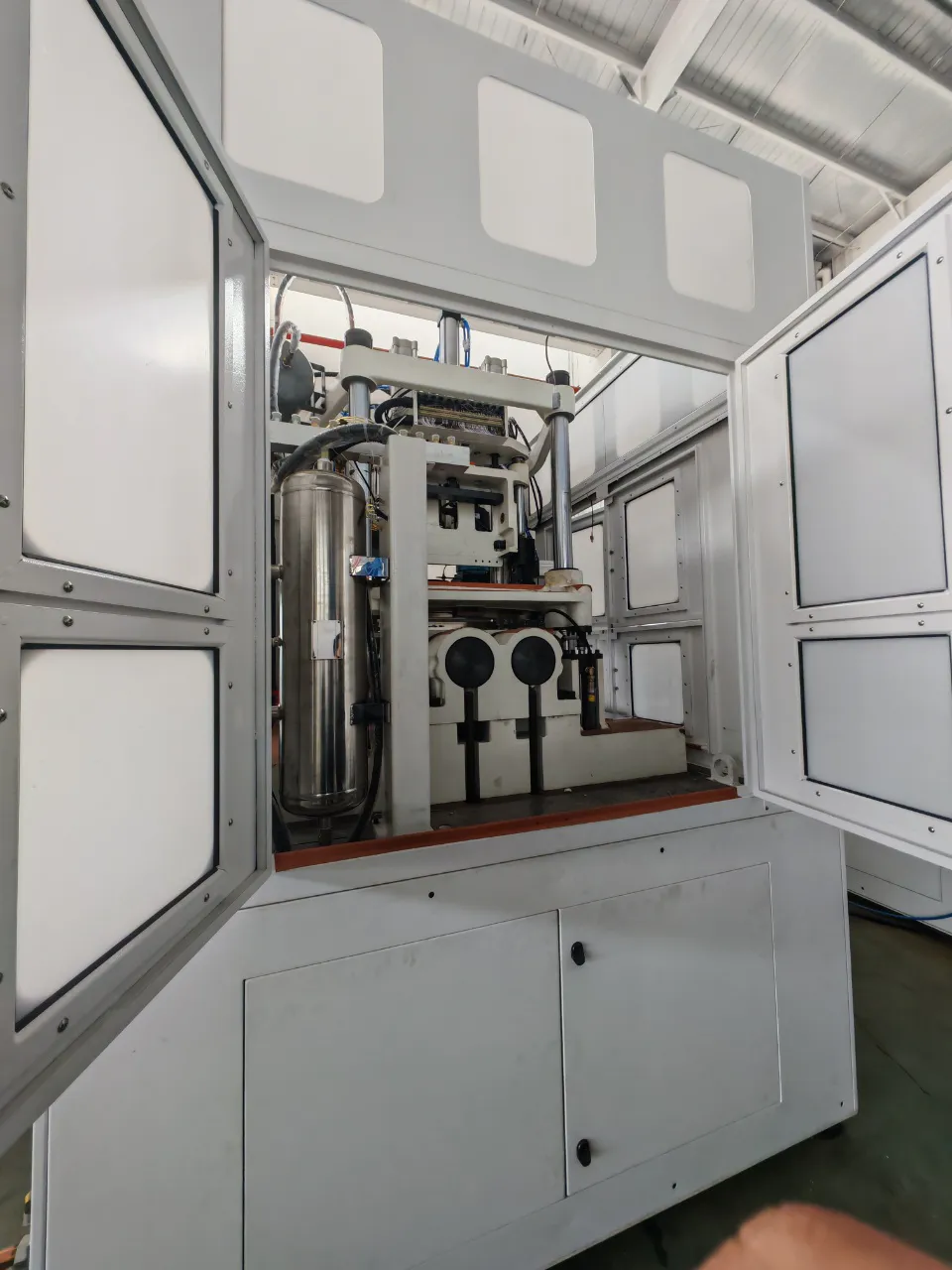
Browse Our Complete Range of Injection Stretch Blow Moulding Machines
From three-station compact units to large six-station configurations — find the machine that matches your container specifications, production volume, and facility requirements.
เกี่ยวกับเรา
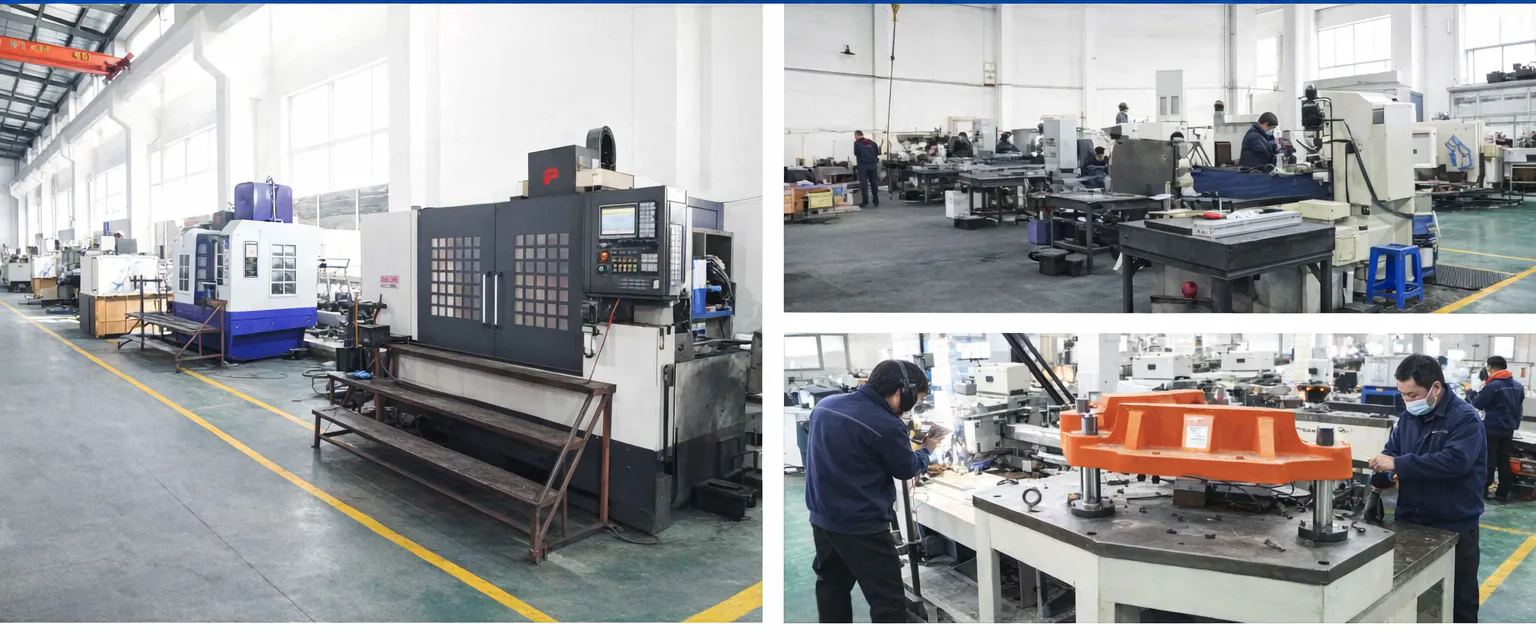
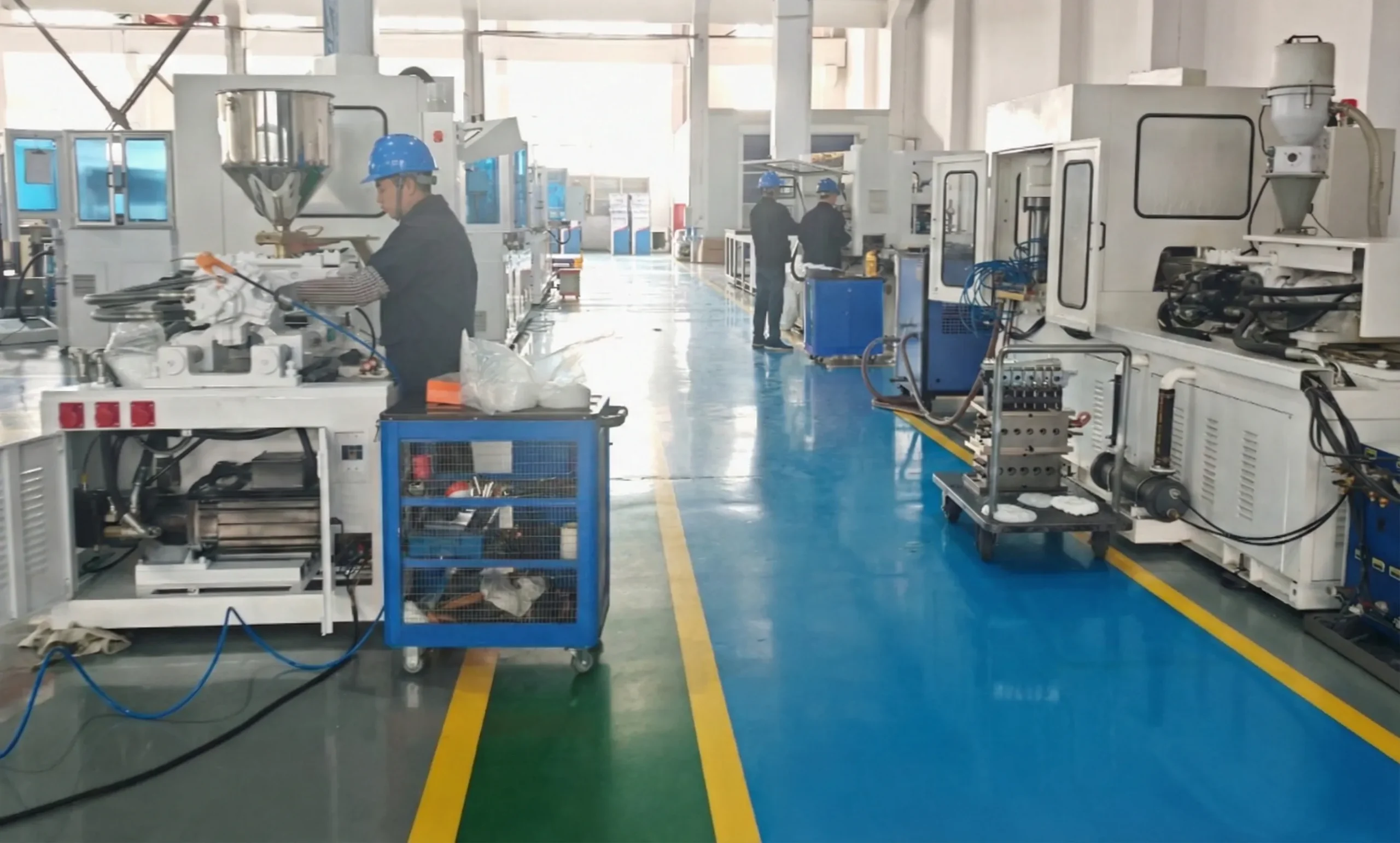
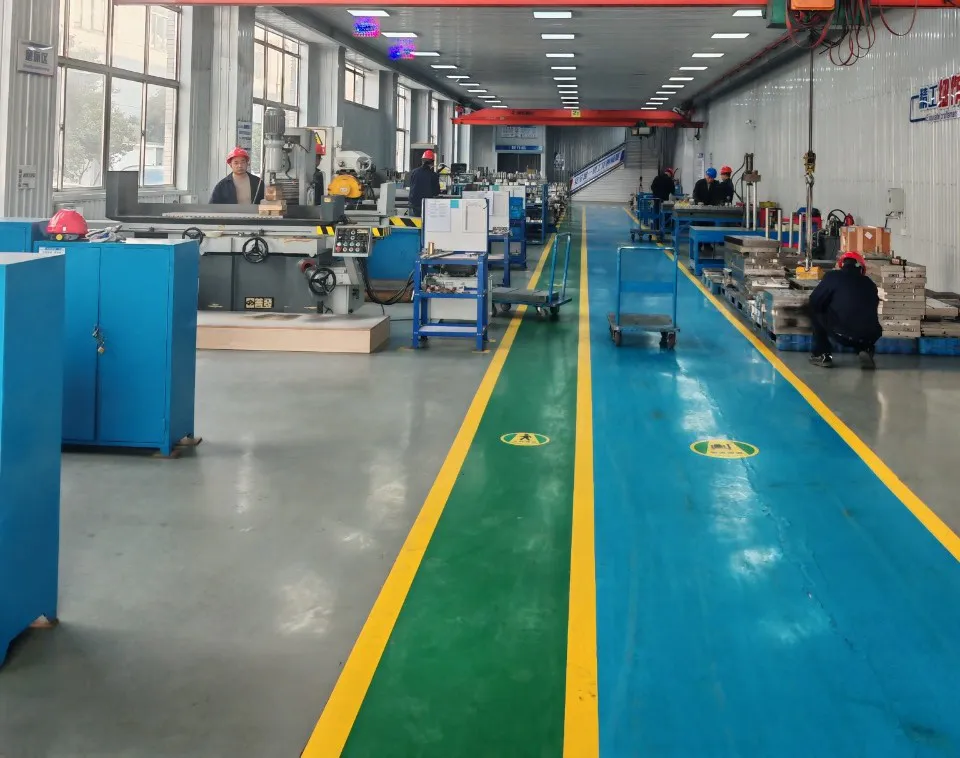
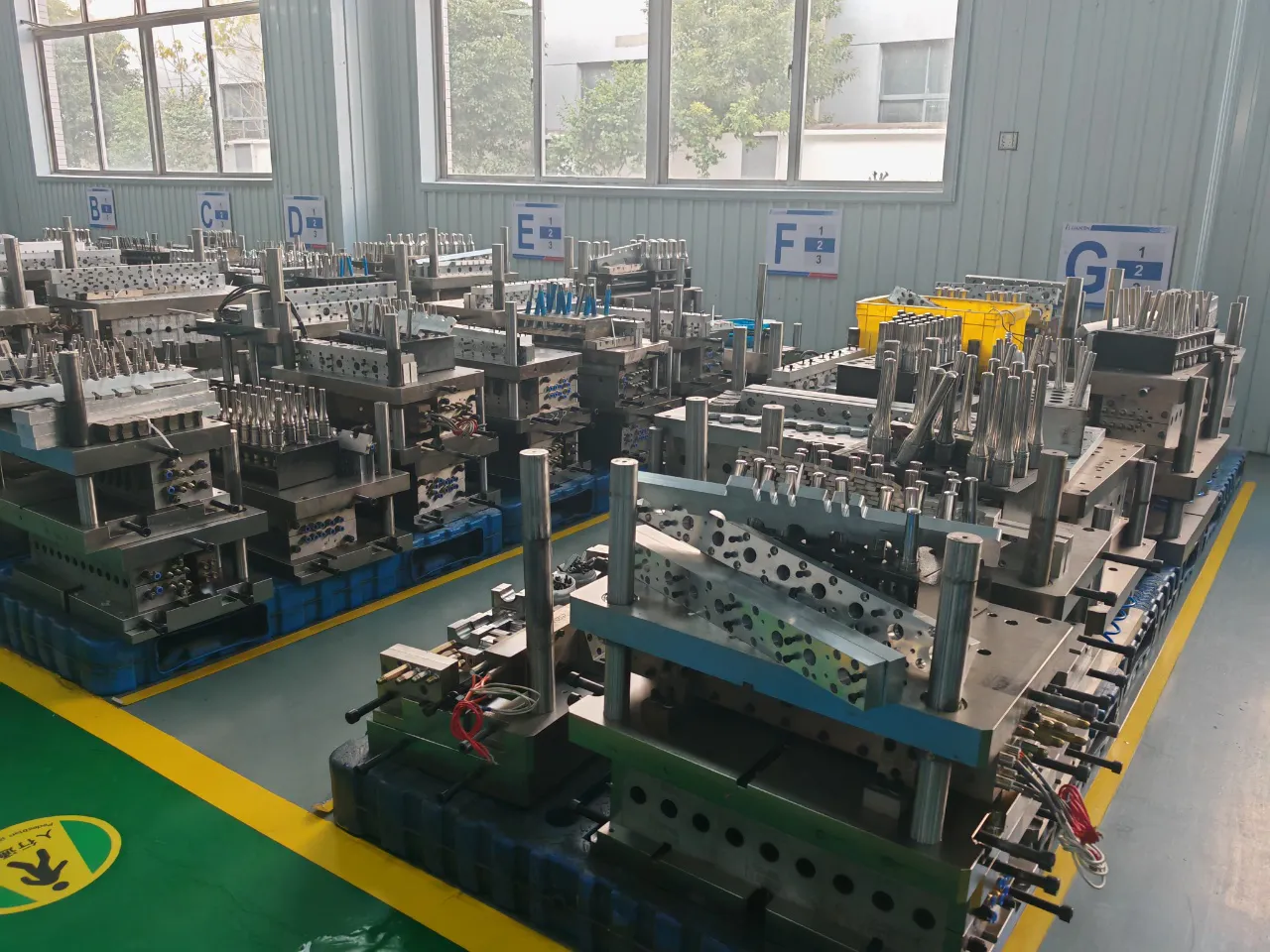
With over two decades of focused experience in the research, development, and production of one-step injection stretch blow moulding machines, our facility — exceeding 20,000 square meters of production capacity — has established a manufacturing foundation capable of supporting international buyers at every stage of project development, from machine selection and mold design through to commissioning support and after-sales technical assistance. The engineering team has applied for multiple national patents and developed machine configurations covering multi-material packaging in PET, PETG, PP, PC, PCTG, and related resins, with specialized machines serving the cosmetics, pharmaceutical, food, beverage, and baby product sectors.
Key components throughout the product range reflect international sourcing standards: servo motor systems from Inovance and Yaskawa Japan, high-pressure valves from Parker USA, ballscrews from NSK Japan, and hydraulic control systems from YUKEN Taiwan. This documented component sourcing is a tangible differentiator from lower-specification competitors and provides international buyers with traceable supply chains for spare parts throughout the machine’s operational life. Our machines have been commissioned in facilities across Asia, Europe, Latin America, and the Middle East, and our technical support team has accumulated practical experience managing the commissioning and regulatory requirements of each major market.
เวิร์กช็อป
Related System Solutions
A complete injection stretch blow molding installation functions as an integrated system. The performance and longevity of the machine depend significantly on the quality of the auxiliary equipment installed alongside it. We offer or recommend two critical auxiliary solutions as part of a one-stop supply package — ensuring compatibility from commissioning day one and reducing the operational variables that create unexpected downtime.
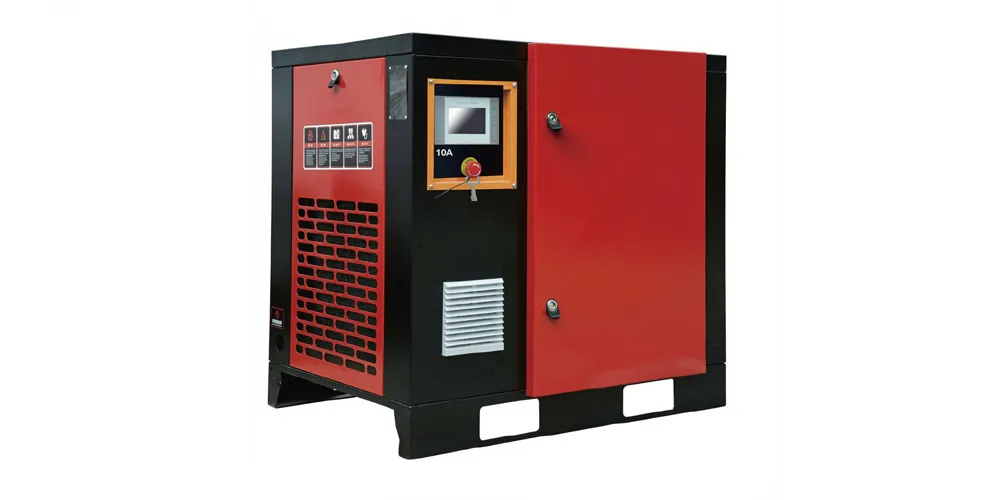
Oil-Free Air Compressor
Clean, dry compressed air at 2.0–3.5 MPa is an essential input for the blow phase of the injection stretch blow molding process. Oil contamination from a conventional compressor degrades high-pressure valve seats, corrodes solenoid valve internals, and can transfer oil vapor into the container during the blow cycle — a product quality and food-safety risk in pharmaceutical and food packaging applications. An oil-free compressor correctly sized for the machine cycle demand is not optional for professional production environments.
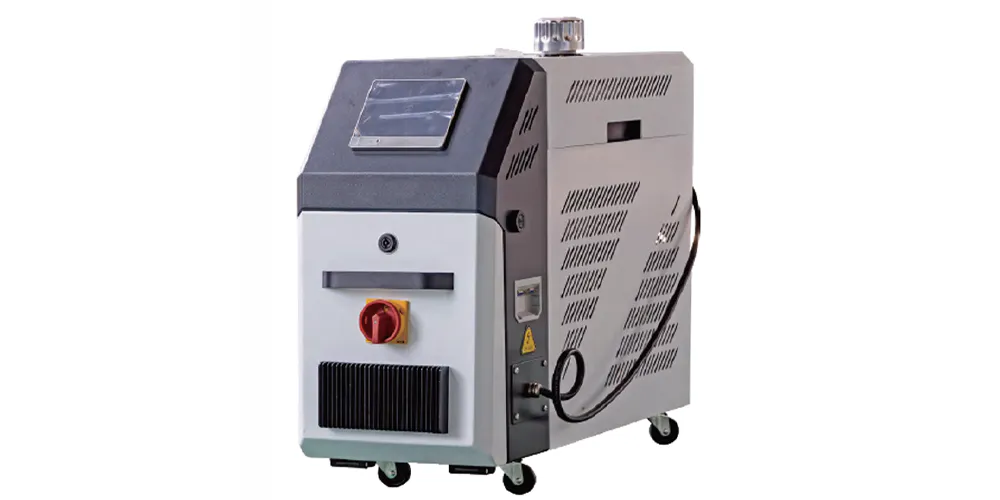
ตัวควบคุมอุณหภูมิแม่พิมพ์
Maintaining mold cooling water at a stable 20–25 °C is fundamental to dimensional consistency in injection stretch blow molding products. A mold temperature controller with stable output and isolated electrical circuits prevents the thermal variation that produces wall thickness inconsistencies and surface defects, while also protecting the machine PLC from temperature-related signal noise. For international buyers installing machines in regions with variable water supply temperatures, a dedicated mold temperature controller is a critical inclusion in the system specification.
9. What to Expect After Placing an Order — Commissioning & Support
The period between order placement and the first production-quality container coming off the line is when the quality of the distributor and manufacturer relationship becomes most apparent. Understanding what a well-managed commissioning process looks like — and what to demand if it is not happening — prepares buyers to manage this phase effectively regardless of where in the world the machine is being installed.
A professional commissioning process for a four-station เครื่องฉีดขึ้นรูปยืดเป่า typically follows this sequence: pre-delivery factory acceptance testing (FAT) at the manufacturer’s facility with customer engineers present; ocean freight under appropriate packing and climate control; import customs clearance managed by the distributor with all documentation pre-prepared; rigging, placement, and mechanical installation on the customer’s floor; electrical connection including grounding verification and insulation resistance testing; pneumatic and hydraulic circuit commissioning and leak testing; mold installation and first-article trial runs with resin to confirm preform weight, preform temperature distribution, blow pressure profile, and finished container dimensions; process documentation and hand-over to the customer’s production team; and a formal operator and maintenance training session covering PLC operation, routine maintenance, and alarm response procedures.
After commissioning, a well-structured distributor support program includes scheduled preventive maintenance visits (typically at 500-hour and 2000-hour intervals), remote PLC diagnostic access for fault analysis, rapid response spare parts delivery, and escalation paths to the machine manufacturer’s engineering team for issues that require factory-level expertise. The existence and quality of this program is worth asking about explicitly before placing an order — not after a production stoppage makes the absence of it very expensive.
คำถามที่พบบ่อย
Q1. How do I verify that an international injection stretch blow moulding machine supplier is authorized by the original manufacturer for my region?
Q2. What documents should I request from an injection stretch blow molding machine distributor before signing a purchase agreement in Europe?
Q3. Which injection stretch blow molding machine manufacturers offer a genuine ASB replacement that is compatible with existing Japanese mold tooling?
Q4. How long does it typically take to get a quote and delivery from international injection stretch blow molding machine suppliers when setting up a new packaging line?
Q5. What is the most effective way to evaluate the after-sales support quality of a PET blow molding machine distributor before committing to a purchase?
Q6. How does NR-12 machinery safety compliance in Brazil affect the technical specifications required from my injection stretch blow moulding machine distributor?
Q7. When is it worth paying a premium for a fully servo-driven injection stretch blow moulding machine versus a hydraulic-servo hybrid model for a high-volume cosmetics packaging plant?
Q8. Which injection stretch blow molding machine suppliers provide remote diagnostic support for production lines in the Middle East or Africa where on-site engineers cannot reach quickly?
บรรณาธิการ: PXY