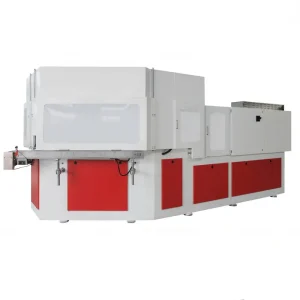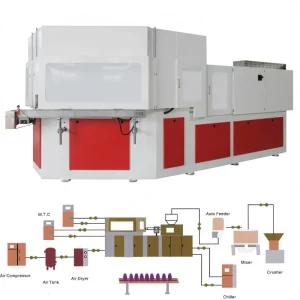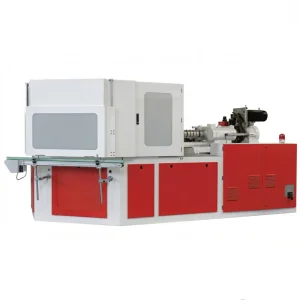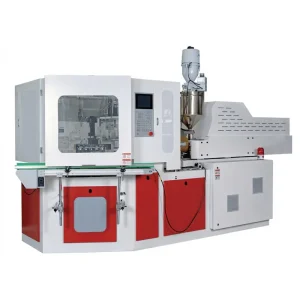
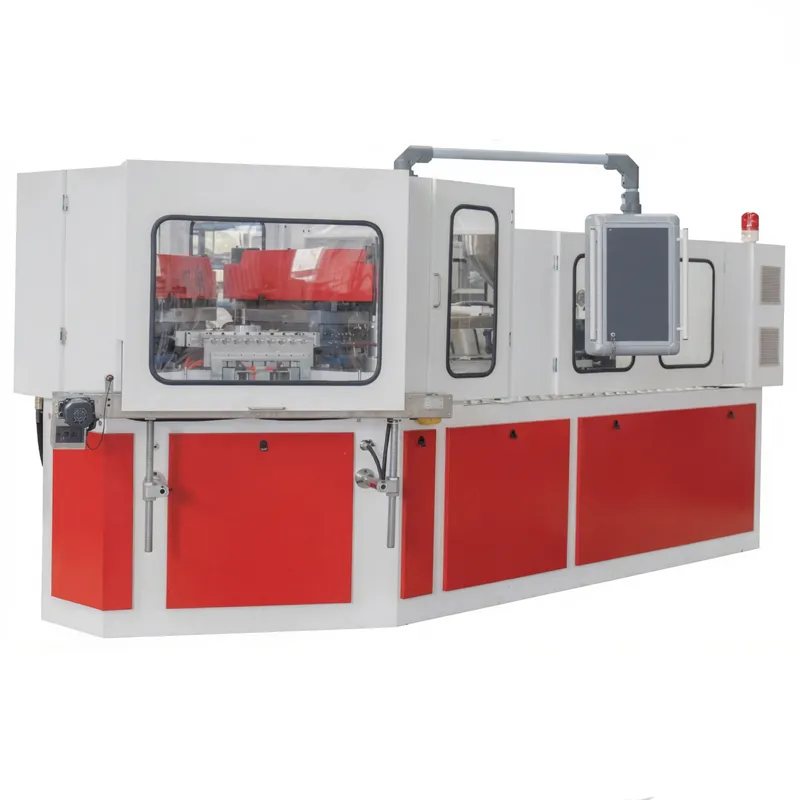
EP-European 3.8×1.4×1.8M Injection Blow Molding Machine
The EP60 Injection-Blow Molding Machine is designed for producing plastic bottles and containers in the 1 ml to 2000 ml volume range from HDPE, LDPE, PP, PS, ABS, and environmentally friendly materials including PLA and EVA. Its injection clamping force of 600 KN and blow clamping force of 100 KN, combined with a maximum platen size of 600×390 mm, position the EP60 as the ideal IBM machine for mid-volume pharmaceutical bottle, cosmetic packaging, daily chemical container, and food-grade plastic bottle production lines requiring bottle volumes up to 2,000 ml with cavity counts from 2 to 14 per mold cycle.
With a net weight of 5 tonnes and footprint of 3.8×1.4×1.8 M, the ZQ60 is compact enough for standard factory workshop bays while delivering production output equivalent to significantly larger extrusion blow molding equipment. Three key structural differentiators set the ZQ60 apart: full European-style structural design delivering clamping forces 20–30% stronger than competing domestic products; standard servo rotation ensuring simple, convenient operation; and a unique pressurized booster clamping structure where the booster cylinder does not participate in opening and closing movement — reducing energy consumption by 10–20% versus industry-standard machines of equivalent output capacity.
Injection Blow Molding Machine | IBM Series
EP60 Injection Blow Molding Machine (European Type)
Full European-style one-step injection blow molding machine hollow forming machine — clamping force 20–30% stronger than industry peers, unique pressurized clamping structure, suitable for 1–2000 ml containers in pharmaceutical, cosmetic, food, and chemical packaging.
|
Screw Ø: 45/50 mm
|
Max Injection: 383 g
|
Bottle Volume: 1–2000 ml
|
Total Power: 37 KW
1. Main Technical Parameters — EP60
All parameters are for reference only. The company reserves the right to modify specifications due to equipment improvements without prior notice.
| Parameter | Unit | EP60 |
|---|---|---|
| Injection System | ||
| Screw Diameter | mm | 45 / 50 |
| Screw L/D | % | 22:1 |
| Injection Weight | g | 260 / 383 |
| Heating Power | KW | 14 |
| Number of Barrel Zone | — | 3+N |
| Injection Stroke | mm | 160 |
| Clamping System | ||
| Clamping Force of Injection | KN | 600 |
| Opening Stroke for Injection | mm | 140 |
| Clamping Force of Blowing | KN | 100 |
| Opening Stroke for Blowing | mm | 140 |
| Lifting Height of Rotary Table | mm | 70 |
| Mould | ||
| Max. Platen Size (L×W) | mm | 600×390 |
| Mold Thickness | mm | 240 |
| Max. Bottle Diameter | mm | 120 |
| Max. Bottle Height | mm | 220 |
| Suitable Bottle Volume | ml | 1–2000 |
| Stripping Stroke | mm | 230 |
| Hydraulic System | ||
| Hydraulic Pressure | MPa | 14 |
| Motor Power | KW | 18.5 / 22 |
| Dry Cycle | S | 4 |
| Total Power | KW | 37 |
| Operating Power | % | 52–70 |
| Others | ||
| Min. Air Pressure (Compressed Air) | MPa | 0.7–1.2 |
| Compressed Air Capacity | M³/min | 0.7 |
| Water Flowage | M³/h | 4 |
| Cooling Water Pressure | MPa | 0.3–0.4 |
| Dimension (L×W×H) | M | 3.8×1.4×1.8 |
| Net Weight | Ton | 5 |
2. EP60 Mold Cavity Reference by Bottle Volume
The following table shows the maximum number of mold cavities per cycle for different bottle volumes on the EP60. For reference only — actual cavity count depends on mold design and bottle shape.
| Bottle Volume | 10 ml | 30 ml | 60 ml | 100 ml | 250 ml | 500 ml | 1000 ml |
|---|---|---|---|---|---|---|---|
| Max. Cavities | 14 | 12 | 10 | 8 | 5 | 3 | 2 |
3. Three Structural Advantages of the EP60
① Full European-Style Structure
The EP60 injection blow molding machine adopts a fully European-style frame and clamping structure. The injection clamping force of 600 KN and blow clamping force of 100 KN are 20–30% stronger than the output of domestic-design machines of equivalent platen size — delivering more stable bottle neck formation, more precise mold closure, and longer mold service life per production cycle.
② Standard Servo Rotation
The EP60 injection blow molding machine uses standard servo motor-driven turntable rotation — delivering simple, reliable mechanical structure with convenient operation and low maintenance requirements. The servo system ensures precise angular positioning of the three-station rotary table (preform injection → blow molding → bottle stripping) for consistent part transfer and repeatable cycle performance.
③ Unique Pressurized Booster Clamping
The EP60 injection blow molding machine's proprietary booster clamping structure keeps the booster cylinder disengaged from the mold opening and closing movement — it only activates at the final clamping stage. This design reduces the hydraulic energy demand during the majority of the mold cycle, lowering total energy consumption by 10–20% compared to conventional clamping designs of the same clamping force rating.
4. How the EP60 Injection Blow Molding Machine Works — Three-Station One-Step Process
Station 1 — Preform Injection
In the EP60 injection blow molding machine, plastic pellets are melted in the screw barrel and injected into the injection mold under precisely controlled injection pressure. The bottle neck and thread are formed accurately at this station. After appropriate mold-open control, the preform (parison) on the mandrel is transferred to the blow station by servo-driven turntable rotation.
Station 2 — Blow Molding
In the second station of this injection blow molding machine, the preform, still hot from injection, is enclosed by the blow mold. Compressed air is introduced through the mandrel to expand the preform against the mold cavity walls — forming the final bottle shape (wall thickness, bottom geometry, and outer contour). The mold shape determines cavity count. After cooling, the mold opens and the turntable advances to the stripping station.
Station 3 — Bottle Stripping
In the injection blow molding machine's third station, finished bottles are automatically ejected from the mandrels, then pass directly to downstream conveyors for filling, capping, or packaging lines. All three stations operate simultaneously in each cycle — injection, blowing, and stripping occur in parallel — giving the EP60 its high output efficiency and very low waste rate. No secondary heating is required between preform and blow stages.
5. Injection Blow Molding vs. Extrusion Blow Molding — Why IBM Wins
The EP60 uses injection blow molding machine (IBM) technology. The following comparison explains the key advantages of IBM over conventional extrusion blow molding (EBM) for pharmaceutical, cosmetic, and precision packaging applications.
| # | Comparison Item | Injection Blow Molding Machine (EP60) | EBM |
|---|---|---|---|
| 1 | Weight variation | ≈1% (very consistent) | ≈3% |
| 2 | Wall thickness | Uniform | Varies 10–20% |
| 3 | Parting line / flash | No flash, no parting line | Has cut-off area; weakens bottle bottom |
| 4 | Bottom quality | Very convex and strong | Bad convexity at bottom |
| 5 | Material waste | No waste in production | 20–40% scrap (edge trim) |
| 6 | Very thin wall capability | Possible with precision mold | Cannot form very thin walls |
| 7 | Temperature sensitivity | Not sensitive to environment | Needs more adjustment when temperature changes |
| 8 | Cavities / yield / mouth | High cavities, high yield, flat mouth | Fewer cavities, lower output, uneven neck |
| 9 | Mold life / production economics | Long mold life, suitable for long-term runs | Short mold life, better for short runs |
| 10 | Footprint | Compact system, small footprint | More auxiliaries, more floor space |
| 11 | Oval bottle forming | More complex to form oval shapes | Easier to form |
6. Application Fields
The EP60 injection blow molding machine is designed for the following industries and container types:
💊 Pharmaceutical Industry
The EP60 injection blow molding machine produces tablet bottles, oral liquid bottles, injection bottles, dropper bottles, diagnostic reagent containers, and medical packaging requiring tight neck tolerance and no flash.
💄 Cosmetic Industry
Skincare cream jars, lotion bottles, pump bottles, serum vials, and personal care packaging requiring high surface gloss and precise neck thread for closures.
🧴 Daily Chemical Bottles
Shampoo bottles, conditioner bottles, hand soap dispensers, cleaning fluid bottles, and household chemical containers in HDPE or PP with consistent fill volume.
🧪 Chemical Industry
Industrial chemical containers, agricultural chemical bottles, lubricant containers, and specialty chemical packaging requiring chemical resistance and uniform wall thickness.
🍼 Food Industry
Sauce bottles, edible oil containers, wide-mouth jars, food supplement bottles, feeding bottles, and 500–1000 ml food-grade PP containers for dairy and condiment applications.
7. Compatible Materials
The EP60 injection blow molding machine supports the following plastic materials:
LDPE
PP
PS
ABS
PLA (Corn Starch)
EVA
PCTG
High-Transparency PS
8. EP Series Injection Blow Molding Machine Comparison — Find the Right Model
| Parameter | EP40 IBM Machine | EP60 ★ | EP80 | EP110 | EP135 |
|---|---|---|---|---|---|
| Screw Diameter (mm) | 40/45 | 45/50 | 55 | 65 | 70 |
| Max. Injection Weight (g) | 260 | 383 | 466 | 540 | 650 |
| Injection Clamping Force (KN) | 400 | 600 | 800 | 1100 | 1350 |
| Bottle Volume Range (ml) | 1–1500 | 1–2000 | 1–2000 | 1–2000 | 1–2000 |
| Max. Platen Size (mm) | 480×340 | 600×390 | 800×400 | 1100×460 | 1300×500 |
| Total Power (KW) | 20 | 37 | 55 | 80 | 95 |
| Net Weight (Ton) | 3.8 | 5 | 10 | 15 | 18 |
| Max Cavities @ 100ml | 4 | 8 | 12 | 14 | 18 |
★ EP60 injection blow molding machine is currently selected. Contact us for detailed quotations on all injection blow molding machine models.
9. EP Series Injection Blow Molding Machine Mold Characteristics
Precision Mold Design
The injection mold cavity and neck are designed with movable blocks and specially designed oil/water channels to ensure accurate tube preform dimensions and stable temperature. The tube billet size can be changed conveniently for flexible product switching.
Premium Mold Materials
Injection mold material uses imported S136 steel alloy or 4Cr13 stainless steel. High-strength steel significantly increases mold service life. Blow mold bodies can use aluminum alloy for faster cooling and lighter weight.
Optimized Hot Runner System
The optimized hot runner system and bottle embryo design ensure that gram weight deviation and wall thickness deviation are minimized. The special mandrel structure maintains the fast molding cycle and provides good core cooling effect.
Perfect Bottle Quality
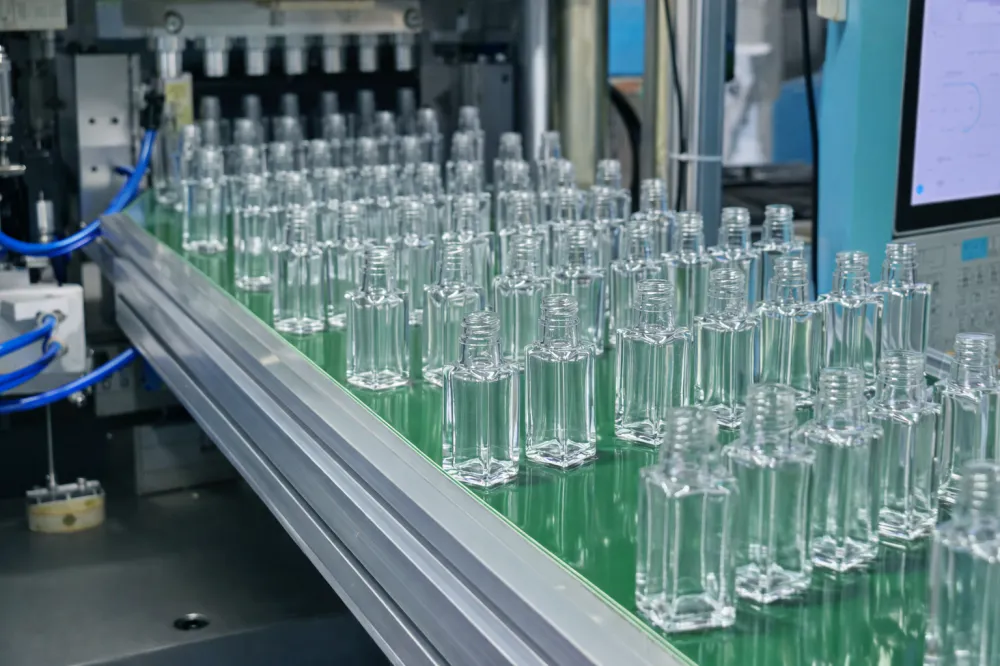
No burrs and no waste on the mouth and bottom of bottles. The product size, weight, mold parting line, and bottle thickness are consistent across all cavities. Bottle mouth and thread are accurate in size and 100% sealed.
10. About Our Machinery
The company brings together engineering and technical personnel engaged in injection blow molding machine design and mold engineering, with rich theoretical and practical experience. We can provide customers with detailed and thoughtful pre-sale, sale, and after-sale services. Product applications cover pharmaceutical packaging, food packaging, health care packaging, cosmetic packaging, and other plastic packaging — producing 1 ml to 1000 ml plastic products in HDPE, LDPE, PP, PS, ABS, environmentally friendly corn materials (EVA, PCTG), and high-transparency PS.
CE Certified
European safety certification for global export
One-Stop Turnkey
Machine + mold + auxiliary equipment supply
24/7 Service Hotline
Immediate response for equipment emergencies
Full Spare Parts
Adequate inventory to minimize downtime
11. After-Sales Service for the EP60 Injection Blow Molding Machine
Installation & Commissioning
Our experienced senior engineers are responsible not only for equipment installation but also for ensuring successful and stable production status and overall training on machine operation and mold process.
Preventive Maintenance
We visit our machines on a regular schedule, advising customers on preventive maintenance of machines and molds to avoid machine wear, reduce machine failure, and save maintenance costs or parts replacement expenses.
24/7 Service Hotline
As long as your equipment has an emergency, please contact us immediately. Our service hotline is available all day, 24 hours / 7 days. We are always ready to receive your call.
Spare Parts Supply
We maintain adequate inventory of equipment parts to shorten customer equipment downtime and reduce the loss caused by delayed delivery of goods. Rapid dispatch for critical spare parts worldwide.
Frequently Asked Questions — EP60 IBM Machine
Q1. What is the difference between the EP60 and the EP40 injection blow molding machine? Which model should I choose?
Q2. What plastic materials can the EP60 injection blow molding machine process?
Q3. How many cavities can the EP60 injection blow molding machine run for 100 ml pharmaceutical bottles?
Q5. What is the power consumption of the EP60 injection blow molding machine in normal operation?
Q6. Can the EP60 injection blow molding machine produce oval or non-round bottle shapes?
Q8. Does the EP60 injection blow molding machine have CE certification? Is it compliant for export to European markets?
Editor: PXY