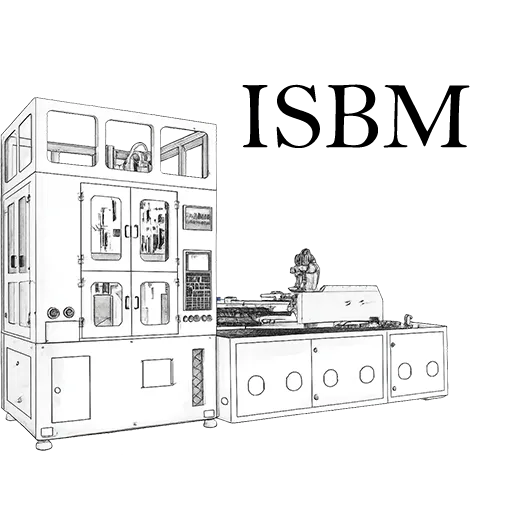
1. Pre-Arrival Site Preparation (2 to 4 Weeks Before Delivery)
Foundation and Floor Loading: The injection stretch blow moulding machine imposes both static dead weight and dynamic cyclic loading on the factory floor. A four-station HGY200-V4 weighs approximately thirteen tons in operating condition, while large-format HGY650-V4 platforms reach twenty-eight tons. The supporting floor must accommodate this load with adequate margin against settlement and resonance. Reinforced concrete floors of one hundred fifty millimeters minimum thickness, with compressive strength rated at twenty-five megapascals or higher, are typically required. The floor surface must be flat to within three millimeters across the machine footprint to ensure correct levelling at installation. Colombian industrial buildings constructed before two thousand often require floor reinforcement before ISBM machine installation — verify the structural drawings or commission a load assessment by a structural engineer before scheduling delivery.
Utilities Provisioning: The ISBM machine requires three-phase electrical supply at 380 to 400 volts, fifty hertz, with current capacity matched to the specific machine model — ranging from 80 amperes for compact three-station units up to 200 amperes for large-format machines. The electrical service must include a properly sized disconnect switch, surge protection, and a grounding system meeting RETIE (Reglamento Técnico de Instalaciones Eléctricas) requirements applicable to Colombian industrial installations. Compressed air supply must deliver oil-free, dry air at 0.7 to 1.0 megapascals for low-pressure machine motion circuits, plus a separate high-pressure circuit at 2.5 to 4.0 megapascals for blow air. Cooling water supply requires inlet temperature below twenty-five degrees Celsius, flow rates of eighty to two hundred litres per minute depending on machine size, and pressure between zero point four and zero point six megapascals.
Material and Tooling Receipt: Confirm receipt of all auxiliary equipment specified in the machine order: chiller for mould cooling, cooling tower for hydraulic oil cooling on hydraulic machine variants, hot-runner temperature control unit if not integrated, dehumidifying dryer for the resin material, and material conveying system. Storage temperature for PET, PETG, PC, and other moisture-sensitive materials should be maintained at twenty-three to twenty-five degrees Celsius with relative humidity below fifty percent — failure to dry these materials before processing causes hydrolytic degradation that produces brittle containers and white streaking defects. Mould tooling delivered with the machine should be inspected for transit damage, with particular attention to cavity surfaces, sealing surfaces, and cooling water connection ports before installation.
2. Machine Positioning, Levelling, and Utility Connection
Positioning the Machine: The ISBM machine arrives on a delivery truck and must be moved into final position using forklifts of adequate capacity — typically requiring fifteen-ton or larger units for medium machines and thirty-ton equipment for the HGY650-V4 platform. Lifting points designated by the manufacturer must be used; lifting at unauthorized points can damage the machine frame or hydraulic components in ways that may not be apparent until production reveals leaks or alignment issues. Position the machine with adequate clearance on all sides — manufacturers typically specify minimum service clearances of one meter on operator side, eight hundred millimeters on the rear, and two meters on the mould-change side for hoisting access. Colombian industrial space constraints sometimes tempt operators to install machines closer to walls or other equipment than specified, but this compromise creates ongoing service difficulties that increase maintenance time and downtime over the machine’s life.
Levelling and Anchoring: Once positioned, the machine is supported on adjustable foot pads (vibration isolators or solid steel feet depending on model). Use a precision spirit level to verify levelling in both axes across multiple measurement points on the machine bed — the indexing turntable’s accuracy depends critically on the machine being level within zero point one millimeter per meter. Adjust foot pads iteratively until level is achieved across all measurement points, then secure foot lock nuts to prevent settling. Anchoring to the floor by chemical anchor bolts is required for larger machines and recommended for all machines in Colombian seismic zones — Bogotá and the Andean region fall within seismic zones requiring equipment anchoring per NSR-10 (Reglamento Colombiano de Construcción Sismo Resistente) for industrial machinery above specified mass thresholds.
Utility Connections: Connect electrical supply through the machine’s main disconnect, verifying phase rotation matches the motor rotation requirement — incorrect phase rotation causes the hydraulic pump or servo system to attempt operation in reverse, which can damage components within seconds. Connect compressed air supply through a filter-regulator-lubricator (FRL) assembly with dewpoint indicator, and verify the high-pressure blow air supply through its independent regulator. Connect cooling water supply and return lines, with temporary pressure gauges installed to verify water flow during initial operation. Connect the chiller cooling circuit to the mould temperature control system if separate. Each connection should be pressure-tested at slightly above operating pressure for thirty minutes to verify no leaks before machine start-up.
3. Site Utility Requirements by Machine Model
The table below summarizes the site utility requirements for representative ISBM machine models. Use this data when planning facility preparation in advance of equipment delivery.
| Specifiche | HGY50-V3-EV (3 stazioni) | HGY150-V4 (4 stazioni) | HGY200-V4 (4 stazioni) | HGY250-V4 (4 stazioni) | HGY650-V4 (Grande) |
|---|---|---|---|---|---|
| Potenza totale (kW) | 45.2 | 53.2 | 59.2 | 82.7 | 90.7 |
| Tensione (V) | 370–400 | 370–400 | 370–400 | 370–400 | 370–400 |
| Pressione dell'aria soffiata (MPa) | 2,0–3,5 | 2,0–3,5 | 2,0–3,5 | 2,0–3,5 | 2,0–3,5 |
| Pressione dell'acqua di raffreddamento (MPa) | 0,4–0,6 | 0,4–0,6 | 0,4–0,6 | 0,4–0,6 | 0,4–0,6 |
| Oil Cooler Water Pressure (MPa) | N/A (electric) | 0,3–0,4 | 0,3–0,4 | 0,3–0,4 | 0,3–0,4 |
| Cooler Water Temperature (°C) | N/A | 20–25 | 20–25 | 20–25 | 20–25 |
| Potenza termica (kW) | 10.4 | 10 | 10 | 15 | 15 |
| Machine Footprint L×W (m) | 3.8×1.2 | 4.2×1.4 | 4.8×2.0 | 6.3×2.4 | 6.1×2.6 |
| Machine Height (m) | 2.5 | 2.9 | 3.2 | 3.7 | 4.2 |
| Operating Weight (T) | 3.5 | 6 | 13 | 16 | 28 |
| Hydraulic Oil Tank (L) | N/A (electric) | 300 | 300 | 600 | 600 |
| Recommended Floor Loading (kPa) | 8 | 12 | 15 | 15 | 20 |
4. Subsystem Verification: Action Mode, Structural Type, and Manufacturing Architecture
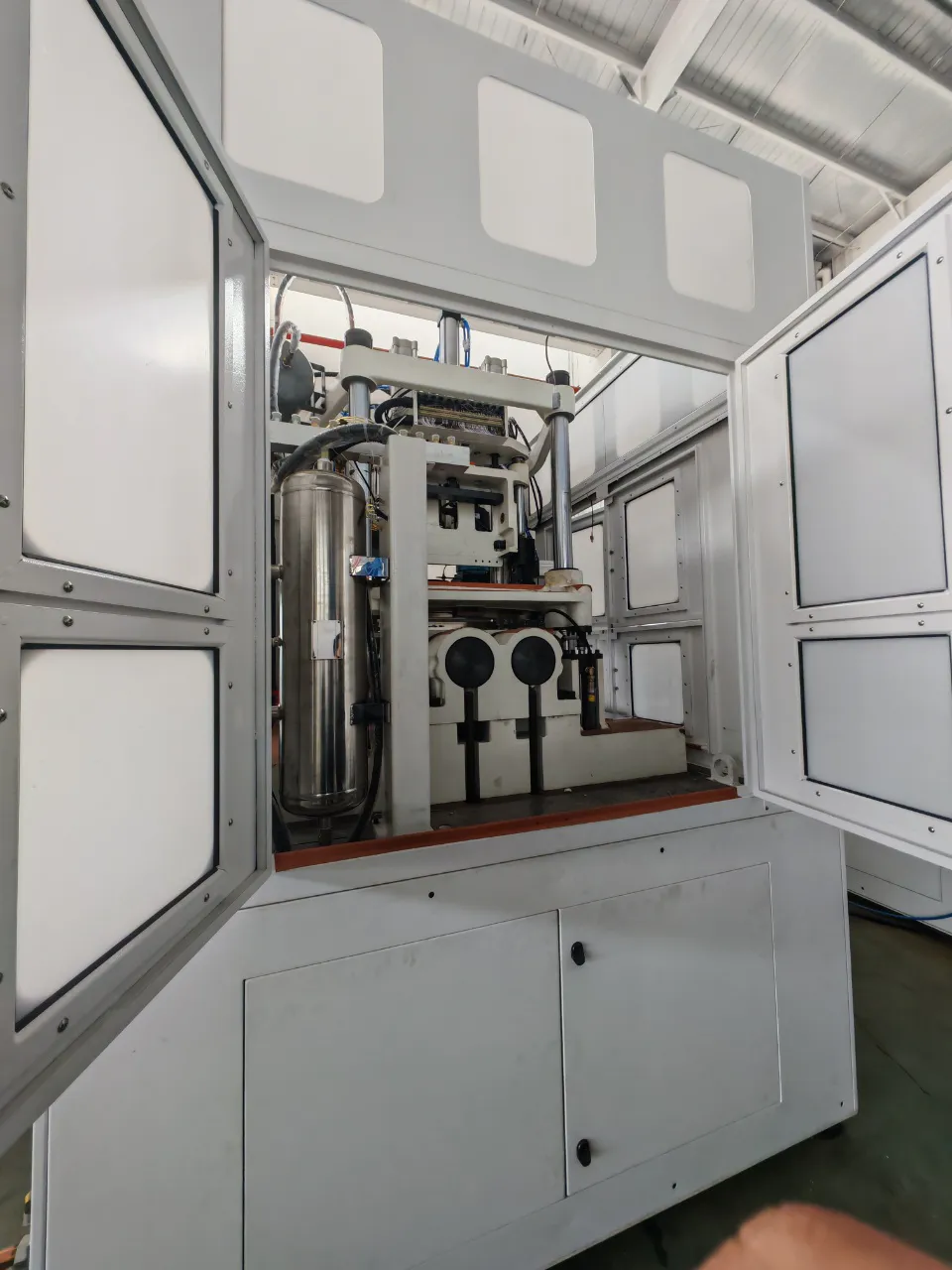
Action Mode Verification — Manual Mode First: All initial movement testing occurs in manual mode with reduced speeds and pressures, never in automatic cycle mode. With electrical power applied and the safety doors open (or with safety override permitted only during commissioning), test each axis individually using the manual mode controls. Verify that the injection unit advances and retracts smoothly without binding, that the indexing table rotates between stations cleanly, that the upper and lower mould halves close and open without misalignment, and that the blow station core rod stretch motion travels its full range. Each motion should be observed for hesitation, abnormal noise, or vibration that would indicate alignment issues, hydraulic air entrapment, or servo parameter mismatches requiring adjustment before automatic operation.
Structural Type — Drive System Verification: For servo-driven machine configurations, verify each servo motor’s rotation direction, encoder feedback signal integrity, and zero-position calibration before any high-speed motion testing. Servo systems include Inovance, Yaskawa, or equivalent brands with parameter sets configured at the factory for each axis — these parameters should not be modified during commissioning except under specific guidance from the manufacturer’s commissioning engineer. For hydraulic configurations, verify hydraulic pump start sequence, oil temperature monitoring, pressure relief valve settings, and YUKEN hydraulic control valve operation through the test sequence in the manufacturer’s commissioning manual. Fully electric EV models use servo motors throughout, eliminating hydraulic system commissioning steps but requiring careful verification of all servo zero positions and motion limits.
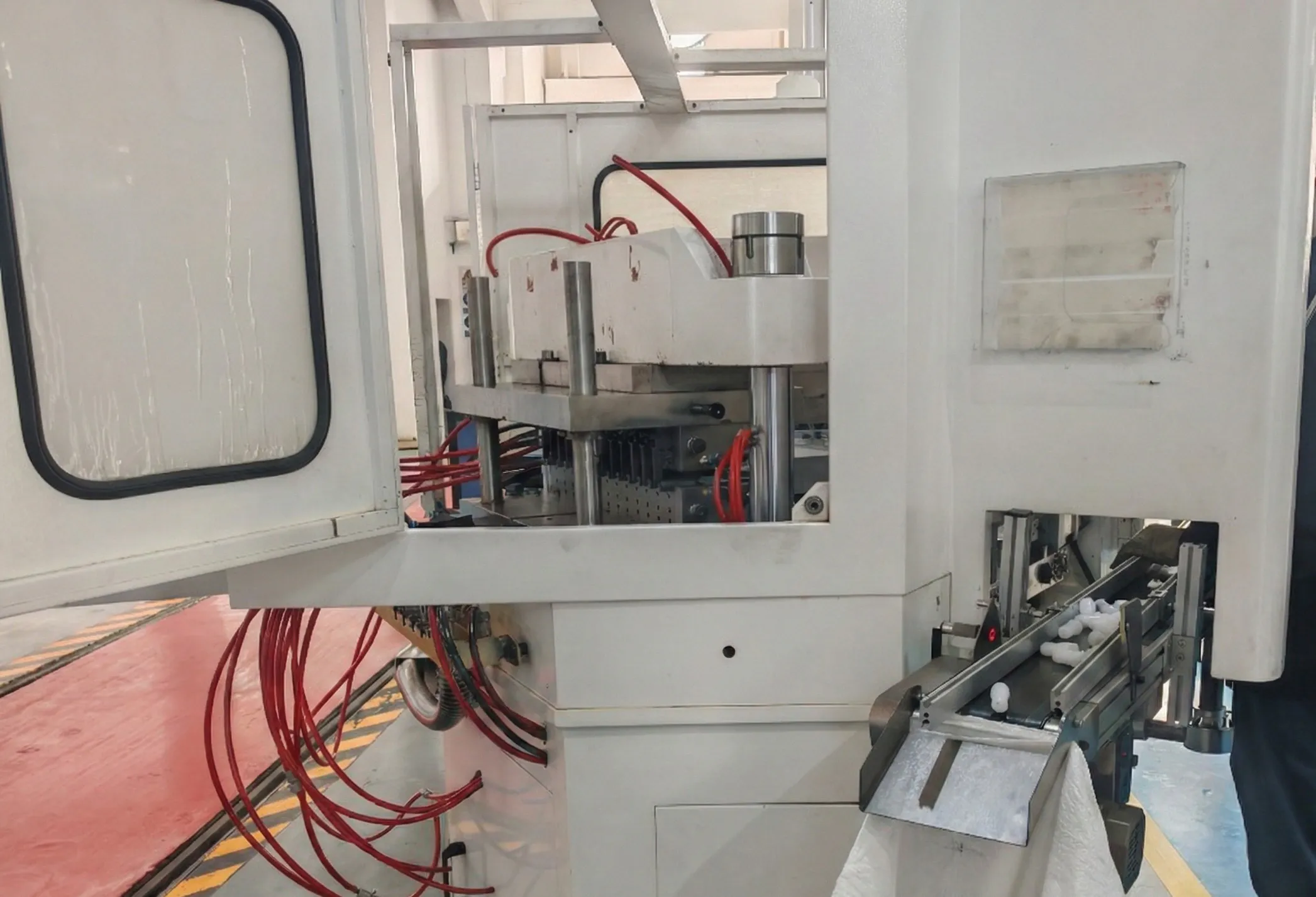
Manufacturing Architecture — Component-by-Component Checks: Verify each major subsystem in sequence: the injection unit including screw rotation direction, melt temperature controller calibration, and hot runner zone temperatures; the mould clamping unit including alignment between fixed and moving platens, ejector pin operation, and mould cooling water flow; the indexing turntable including rotational accuracy at each station position and clearance with surrounding components; the blow station including core rod stretch position calibration, blow air pressure regulation, and exhaust valve timing; and the takeout unit including container ejection clearance and conveyor synchronization. Document each subsystem’s verification result with specific measurements, signed by both the commissioning technician and a customer representative for the project record.
5. Five Key Practices That Differentiate a Successful First-Time ISBM Commissioning
Document Every Setting Before First Production Run
Record every controller parameter, valve position, regulator setting, and temperature setpoint in a commissioning logbook before the first automatic production cycle. This baseline documentation becomes the reference point against which all future process changes are measured. When a quality issue appears six months into operation, the ability to compare current settings against commissioning baseline often identifies the source of drift in minutes rather than days. For Colombian operators where machine support engineers may be remote, this documentation also enables informed dialogue with technical support without requiring physical machine access.
Verify Material Drying Before Loading the Hopper
PET, PETG, PC, PPSU, and PCTG are all hygroscopic — they absorb moisture from atmospheric humidity at rates that compromise injection moulding quality within hours of exposure to typical Colombian factory humidity levels. Before loading material to the machine hopper, verify that the dehumidifying dryer has achieved the required dewpoint (typically -40 to -50 degrees Celsius for PET) and that the material has been drying at the specified temperature (160 to 180 degrees Celsius for PET) for the minimum residence time (four to six hours). Skipping this step produces brittle containers with white streaking that will lead first-time commissioning teams to chase phantom machine problems for hours before realizing the actual cause is moisture in the polymer.
Run Dry Cycles Before Material-Filled Cycles
A dry cycle — running the machine through its motion sequence without injecting material — verifies all motion timings, station-to-station synchronization, and safety interlock function before any polymer enters the system. Run a minimum of fifty dry cycles in continuous automatic mode, monitoring for any timing drift, motion hesitation, or alarm conditions. Only after fifty trouble-free dry cycles should the operator transition to material-filled commissioning. This discipline catches the majority of mechanical and electrical issues that would otherwise manifest as scrapped containers and contaminated mould tooling during initial production attempts.
Inspect First Article Containers Comprehensively
When the first material-filled containers exit the machine, inspect them comprehensively against drawing specifications: overall height, body diameter at multiple points, neck dimensions including thread profile and inner diameter, base geometry, wall thickness distribution measured at minimum eight points, weight, and visual appearance for streaking, haziness, or bubbles. Compare the first article against the drawing on every measured dimension, not just the obvious ones. First-article inspection findings drive the process parameter adjustments that move the machine from working to producing — skipping this step or accepting “close enough” containers extends the commissioning period and risks shipping out-of-specification product to customers.
Conduct a Production Capability Run Before Handover
The final commissioning step is a production capability run — typically eight hours of continuous production at planned cycle rate, with sampling every fifteen to thirty minutes to verify dimensional and weight stability across the run. This data quantifies the process capability index (Cpk) on critical dimensions and provides the statistical foundation for ongoing quality monitoring during normal production. Process capability data also becomes essential evidence in customer audits, particularly for pharmaceutical and food-contact applications where suppliers must demonstrate documented process control. Document the capability run results, archive the resulting containers, and conduct the formal handover meeting only after the capability data confirms the machine is ready for production responsibility.
6. Material System and Surface Treatment During Commissioning
Sistema dei materiali: The injection stretch blow molding process accommodates a wide range of thermoplastic materials, but commissioning should typically begin with PET as the most forgiving material for initial process learning. PET tolerates wider variations in temperature profile, injection pressure, and stretch ratio than engineering polymers like PPSU or PC, allowing the operator to develop process intuition before tackling the tighter parameter windows of higher-performance materials. After PET commissioning is complete and stable production is achieved, the machine can transition through PETG, PP, and finally engineering polymers as application requirements demand. Each material change requires a complete process parameter set including barrel temperatures, mould temperatures, injection pressure profile, and stretch ratio — these recipes should be saved to the controller’s recipe storage system during commissioning of each material.
Surface Treatment — Mould Surface Care: The injection cavity and blow mould surfaces require careful handling during commissioning to prevent damage that affects container quality permanently. Before installation, mould cavities should be cleaned with manufacturer-recommended cleaning agents — never abrasive cleaners that scratch the polished surface. After installation, the mould should be brought to operating temperature gradually rather than thermal-shocked from ambient to full setpoint. Initial production cycles should produce containers that are inspected for surface defects originating in the mould — drag marks, embedded debris, or condensation marks — before they progress to a level that compromises commercial production. Mould preventive maintenance procedures should be documented during commissioning so that production operators have a clear reference for ongoing care.
7. Commissioning Considerations by Application Scenario
Cosmetics and Personal Care Container Lines
Commissioning for cosmetics applications focuses heavily on visual quality acceptance — surface clarity, freedom from haze or streak defects, and consistent neck threading for pump and dropper closures. Allocate extra time during commissioning for visual quality optimization, including iterative adjustment of barrel temperatures and injection pressure profile to eliminate visible imperfections. Colombian cosmetic manufacturers serving export markets including Mexico and the United States face strict incoming inspection at customer filling lines, so commissioning the machine to consistently produce containers within visual specification is essential before commercial production begins.
Pharmaceutical Container Production
Pharmaceutical applications require commissioning to include formal Installation Qualification (IQ), Operational Qualification (OQ), and Performance Qualification (PQ) documentation to satisfy GMP requirements applicable to INVIMA-registered pharmaceutical packaging operations. The commissioning timeline should include adequate buffer for the PQ phase — typically three production runs of at least one shift duration each, demonstrating consistent dimensional capability and material composition. The ISBM machine validation documentation provided by qualified suppliers should be reviewed and approved by the customer quality team before the first PQ run, not after the machine is already in production.
Food and Beverage Container Manufacturing
Food-contact container commissioning must verify that the production environment and machine surfaces in contact with the polymer melt and finished container are compliant with food safety regulations. INVIMA Resolution 683/2012 governs food-contact materials in Colombia, and the commissioning documentation should include material certificates for the polymer being processed and confirmation that all machine contact surfaces are food-grade compatible. For PET water bottle production, additional commissioning steps include barrier testing of finished containers to verify oxygen and moisture transmission rates meet shelf-life requirements for the specific beverage application.
Baby Bottle and Juvenile Product Lines
Baby bottle commissioning combines the rigor of pharmaceutical applications with the technical complexity of processing PPSU, Tritan, or PC at higher operating temperatures. The commissioning team should include personnel familiar with engineering polymer processing — these materials are less forgiving of temperature deviation or shear heating variation than PET. EV (fully electric) machine configurations are typically specified for baby bottle production, and their commissioning emphasizes verification of servo-controlled injection profile capability that produces consistent shot-to-shot wall thickness within tight specifications appropriate for sterilization-cycle durability.
Household Cleaning and Agrochemical Containers
Container commissioning for household cleaning and agricultural chemical packaging emphasizes the ability to consistently meet wall thickness specifications across the full container — particularly important for containers holding aggressive surfactants or solvents where wall integrity directly affects product shelf life. The commissioning team should verify wall thickness measurement points distributed across body, shoulder, and base zones, and process parameters should be optimized to maintain uniform thickness rather than minimum container weight. Colombian agrochemical packaging serving Andean coffee, banana, and palm oil agricultural sectors operates under ICA (Instituto Colombiano Agropecuario) regulations affecting container specifications.
8. Environmental Grade, Operating Conditions, Common Commissioning Failures, and Recommended Configuration
Grado ambientale: The injection stretch blow moulding machine commissioning environment should maintain ambient temperature between fifteen and thirty-five degrees Celsius and relative humidity below seventy-five percent — extremes outside this range affect both material drying performance and machine electronic stability during initial parameter setting. Colombian factories in coastal regions including Cartagena and Barranquilla may require additional dehumidification capacity to achieve these conditions, particularly during the wet season. Compressed air supply quality during commissioning should meet ISO 8573-1 Class 4 or better — particles below five micrometers, dewpoint below three degrees Celsius, and oil content below five milligrams per cubic meter.
Operating Conditions During Commissioning: Initial commissioning runs should operate at extended cycle times — typically twenty to thirty percent slower than the rated production cycle — to allow operator observation and intervention if issues develop. Cycle time reduction toward production rate occurs gradually over the commissioning period as confidence in machine stability grows. Barrel and hot runner temperatures should be brought up gradually over thirty to sixty minutes rather than driven directly to setpoint, allowing thermal equilibrium to develop without thermal stress on heater elements or mould components. The first production cycles after temperature stabilization should be inspected immediately to confirm material quality before continuing.
Typical Commissioning Failure Modes: The most frequent commissioning issues encountered include incorrect electrical phase rotation causing motor reverse rotation; inadequate material drying causing brittle or streaked containers; mould temperature control sensor displacement causing temperature reading errors; high-pressure blow air contamination from upstream piping debris; insufficient compressed air supply capacity causing pressure drop during high-flow events; cooling water flow imbalance between mould zones causing dimensional variation; servo system parameter drift requiring re-tuning before stable cycle achievement; and incorrect machine levelling causing turntable indexing errors. Each of these issues has a documented troubleshooting sequence in the manufacturer’s commissioning manual that operators should follow rather than ad hoc adjustment.
Recommended Commissioning Team Configuration: A successful first-time ISBM commissioning team includes the supplier’s commissioning engineer (typically on-site for one to two weeks), a customer process engineer who will own the machine after handover, an electrical maintenance technician familiar with industrial PLC and servo systems, a mechanical maintenance technician familiar with hydraulic systems on hydraulic configurations, and a quality engineer responsible for first article inspection and process capability documentation. For Colombian customers with limited internal experience, supplementing the commissioning team with an external blow moulding consultant during the first commissioning project transfers knowledge that benefits all subsequent equipment installations.
9. Regulatory Compliance During and After Commissioning
Colombia: Industrial machinery installation in Colombia must comply with RETIE (Reglamento Técnico de Instalaciones Eléctricas) electrical safety standards, NSR-10 building code seismic requirements for equipment anchoring, and applicable Ministry of Labor occupational safety regulations covering machine safeguarding (Resolución 2400/1979 and updates). For food-contact and pharmaceutical container production, INVIMA registration of the production facility and the specific containers produced is required before commercial production. The commissioning documentation must support the INVIMA application by demonstrating process capability, material compliance, and quality control system implementation.
Unione Europea: Machinery imported into or installed in EU member states must comply with the Machinery Directive 2006/42/EC, requiring CE marking and a Declaration of Conformity from the manufacturer. Food-contact containers produced on the machine must comply with EU Regulation 10/2011 covering plastic materials and articles. For pharmaceutical applications, EU GMP (Good Manufacturing Practice) Annex 1 covers manufacturing of sterile medicinal products including primary container production, with implications for the commissioning environment classification and documentation requirements.
Stati Uniti: ISBM machines installed in US facilities must comply with OSHA machinery safety regulations (29 CFR Part 1910, particularly Subpart O machine guarding requirements). Food-contact containers must use FDA-compliant materials per 21 CFR Part 177. Pharmaceutical container production facilities must satisfy FDA 21 CFR Part 211 cGMP requirements including Installation Qualification, Operational Qualification, and Performance Qualification documentation completed during commissioning and approved before commercial production releases.
10. About Our Commissioning Support Services
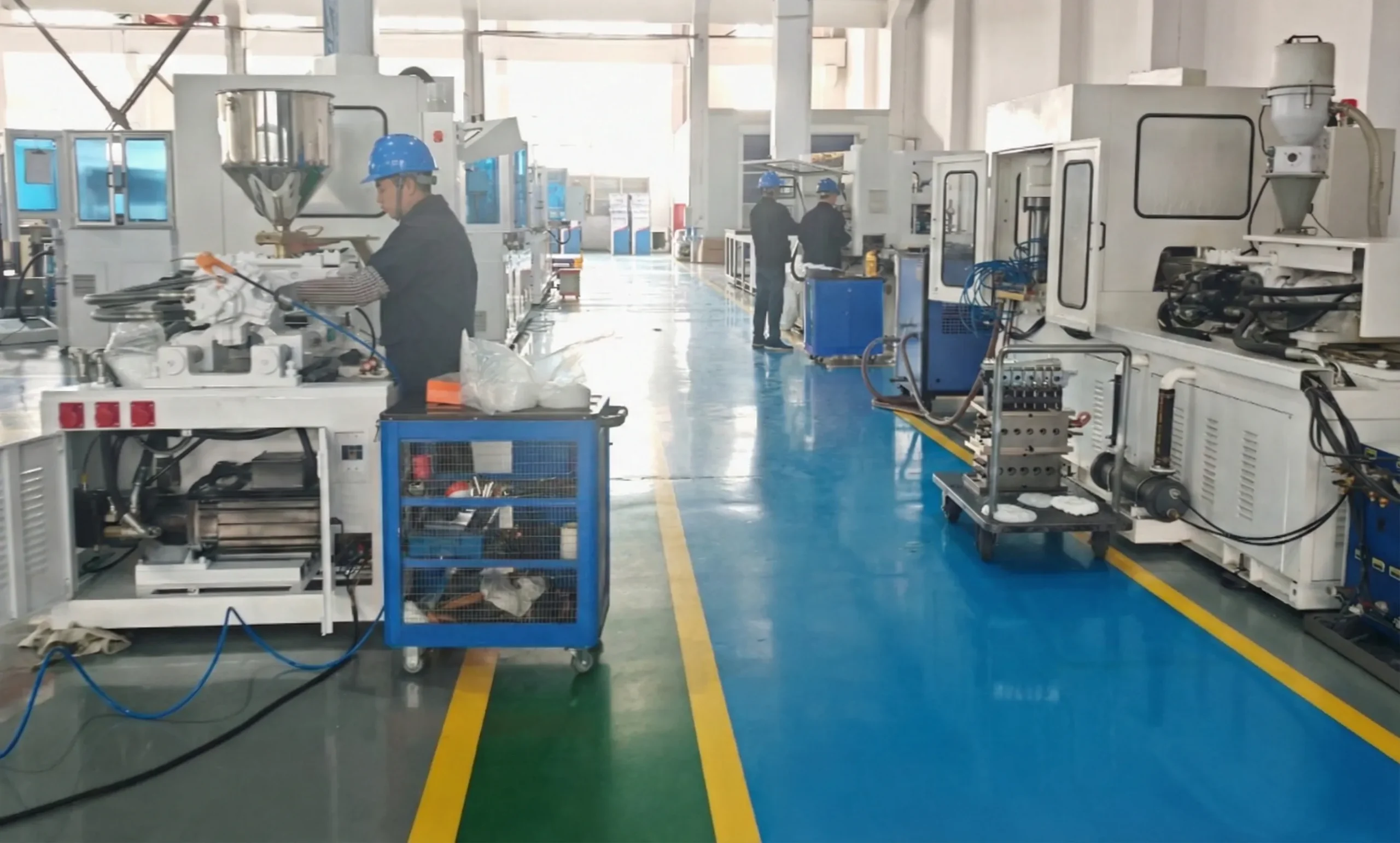
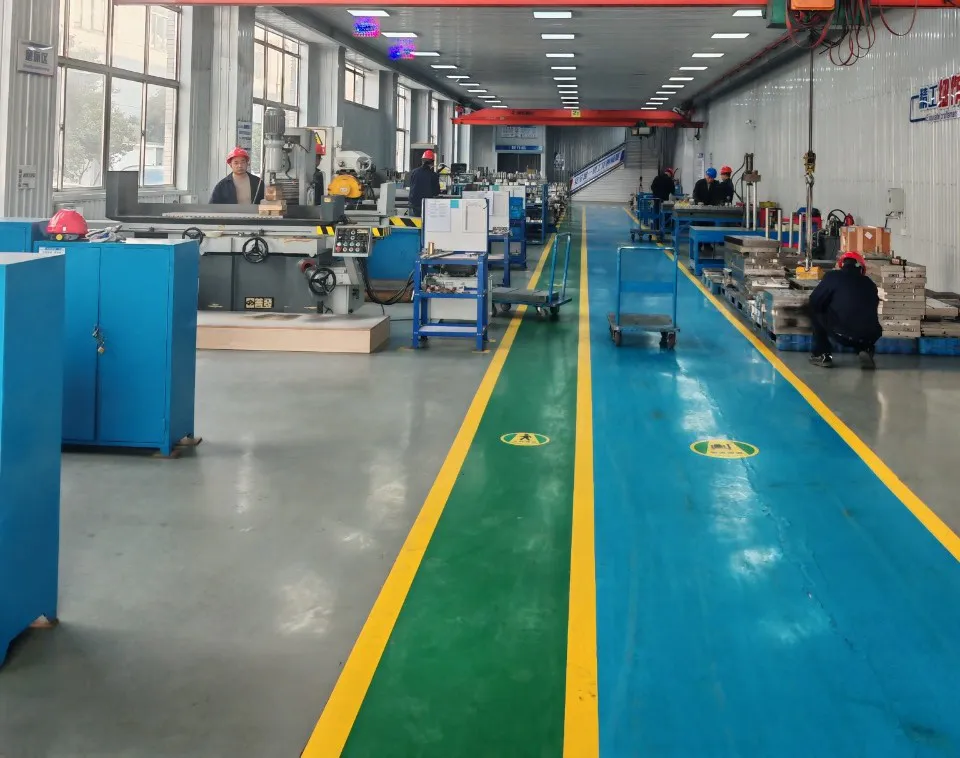
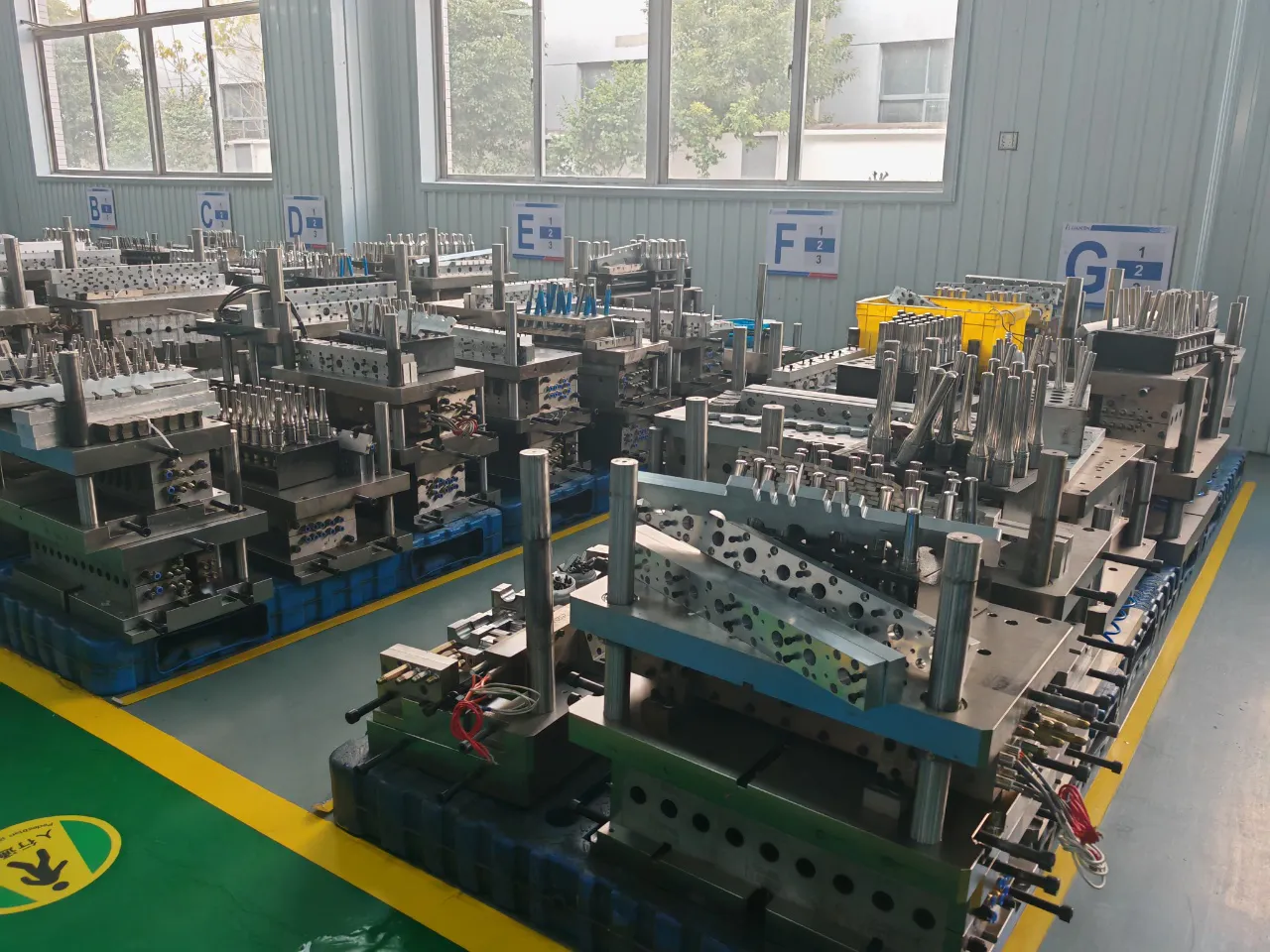
With over twenty years of experience in the design and manufacture of one-step injection stretch blow moulding machines, our commissioning support services accompany every machine delivery to ensure that customers achieve stable production within the agreed timeline. Our commissioning engineers — drawn from a team of more than twenty-five qualified engineers — travel to customer sites globally to perform installation supervision, parameter tuning, operator training, and process capability validation.
Laboratorio
11. Related Products: System Integration Components
Beyond the injection stretch blow moulding machine itself, complete production line commissioning involves auxiliary drive components — couplings connecting motors to driven shafts, gearbox drives for material handling and conveyor systems. Sourcing these components alongside the main ISBM machine provides system integration advantages and one-stop technical support for the complete production system.
Giunti rigidi for Motor-Drive Connections
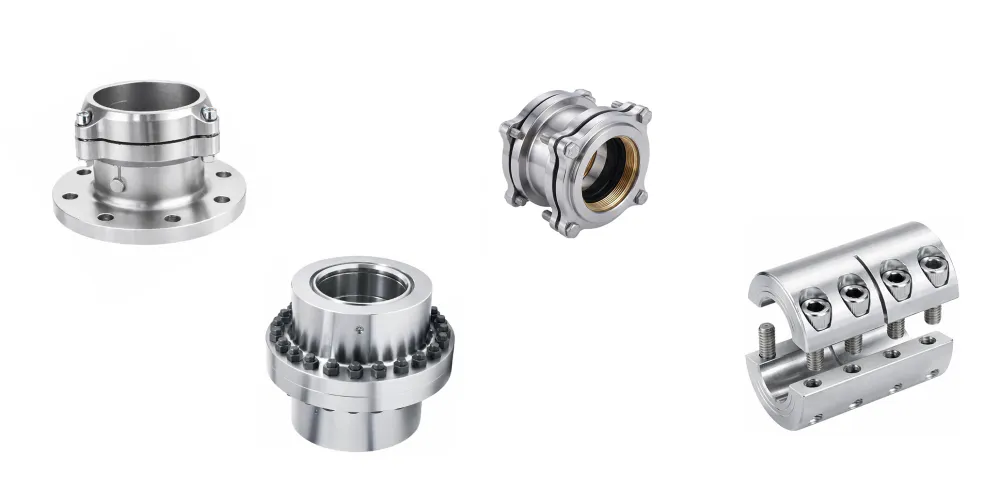
Precision rigid couplings ensure correct alignment and torque transmission between servo motors and driven shafts throughout the ISBM machine and its auxiliary equipment. During commissioning, coupling alignment verification using dial indicators or laser alignment tools is one of the standard checks before high-speed operation testing. Our rigid coupling product range covers shaft diameters and torque capacities matched to industrial drive applications, enabling consistent quality across all coupling installations.
Frequently Asked Questions About First-Time ISBM Commissioning
Redattore: PXY