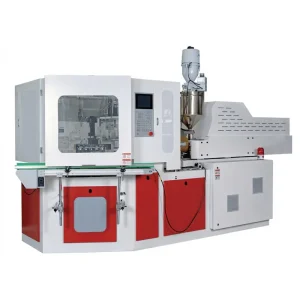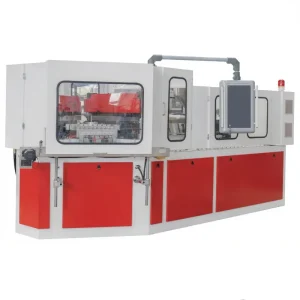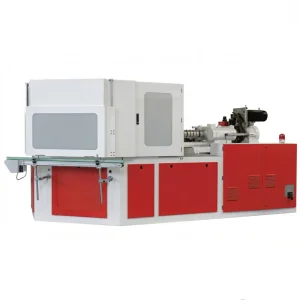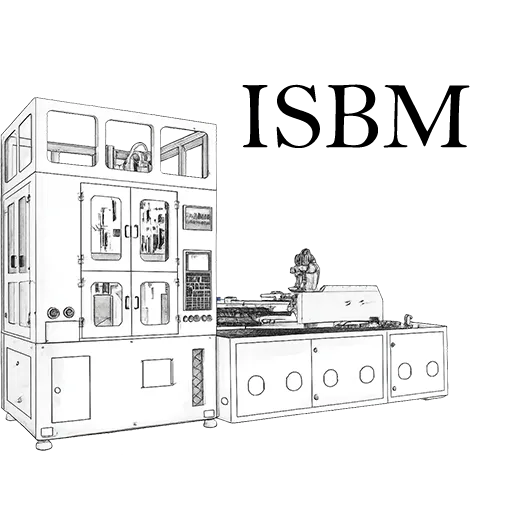
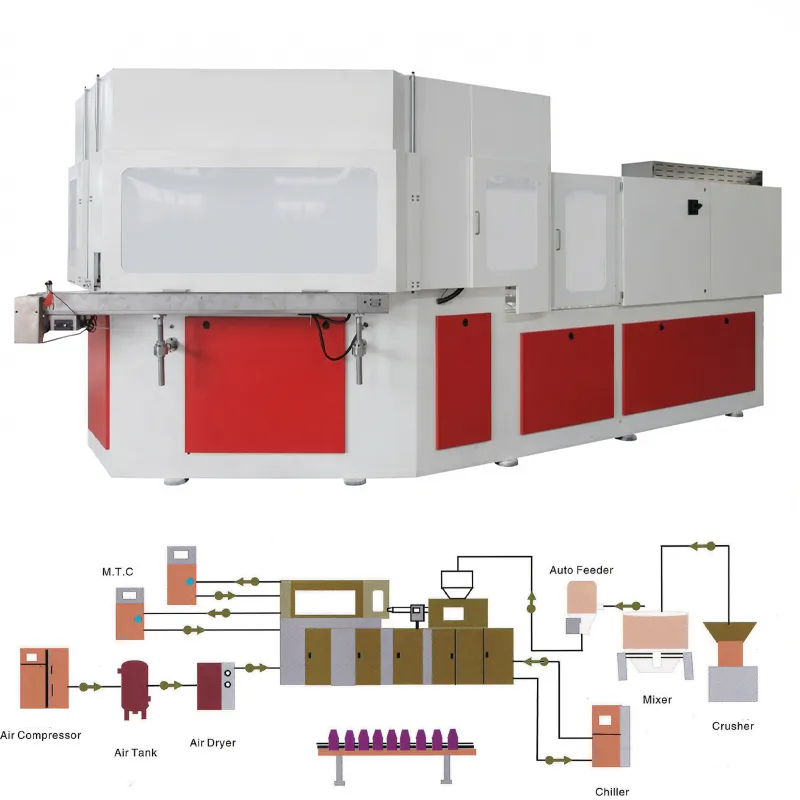
EP-ZQ135 Injection Blow Molding Machine Replacement of Jomar IBM175
The EP-ZQ135 is a high-tonnage, European-style injection blow molding machine engineered as a direct replacement for the Jomar IBM175. It features a robust 1350 KN injection clamping force, a 70 mm screw with a 650 g injection weight, and a total installed power of 95 KW. This machine processes containers from 1 ml to 2,000 ml, supporting high-cavitation molds up to 30 cavities. Key advantages over the IBM175 include a 20–30% reduction in energy consumption via a hydraulic double system, a more compact height of 2.4 M for easier facility integration, and a faster 4-second dry cycle. With a net weight of 18 tons and a footprint of 5.5×2×2.4 M, the ZQ135 delivers superior efficiency and output for large-scale production.
European-Style Heavy Industrial Injection Blow Molding Machine
EP-ZQ135 Injection Blow Molding Machine
Replacement of Jomar IBM175
Full European-style structure · 1350 KN Clamping Force · 95 KW Total Power · 30-Cavity at 10 ml · Machine Size 5.5×2×2.4 M
Brand Reference Notice: Jomar is referenced on this page solely to assist customers in evaluating compatible replacement options at the same tonnage category. This page does not imply commercial affiliation with, or representation of, Jomar or any of its equipment. The EP-ZQ135 is an independently designed and manufactured injection blow molding machine, developed on a European-style structural platform.
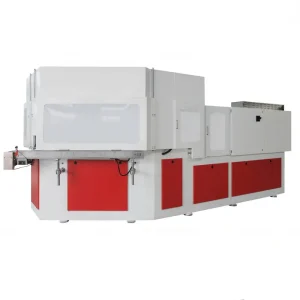
EP-ZQ135 | Injection Blow Molding Machine (European) · 5.5×2×2.4 M · 18 Ton
EP-ZQ135: High-Tonnage European Injection Blow Molding Machine
The EP-ZQ135 is a large-format injection blow molding machine built on a full European-style mechanical platform, designed for manufacturers who need high-cavitation output, broad container volume range, and sustained cycle efficiency across demanding production schedules. At 1350 KN injection clamping force and 200 KN blow clamping force, this machine delivers structural rigidity that translates directly into consistent cavity-to-cavity dimensional accuracy on large multi-cavity molds. For plastic container producers in Colombia and across Latin America who currently operate or are evaluating Jomar IBM175-class equipment, the ZQ135 presents a comparable option worth assessing on its own engineering merits.
The machine processes containers from 1 ml through 2,000 ml, supporting the full range of pharmaceutical, personal care, food packaging, and industrial container applications that characterize this tonnage class. The 70 mm screw diameter and 650 g injection weight — matching the Jomar IBM175's 450/550 g capacity and then some — ensure that high-cavitation molds receive adequate shot weight on every cycle without resorting to reduced cycle speeds. The 6+N barrel heating zones maintain thermal uniformity across the full screw length, which is particularly valuable when processing pharmaceutical-grade resins or materials with narrow melt temperature windows.
With a total installed power of 95 KW and a hydraulic double system where the booster cylinder operates independently of the mold travel circuit, the ZQ135 achieves 20–30% lower energy consumption compared to single-circuit hydraulic machines at equivalent clamping tonnage. The standard high-precision angle divider enables simultaneous mold opening and turret lifting, compressing the dry cycle to 4 seconds. At 18 tons net weight and a footprint of 5.5×2×2.4 M, the ZQ135 is a physically substantial machine — though notably more compact in height at 2.4 M compared to the Jomar IBM175's 4.22×2.67×3.58 M envelope, which makes installation in standard-height Colombian industrial facilities more straightforward.
EP-ZQ135 Technical Specifications
| System / Category | Parameter | Satuan | ZQ135 Value |
|---|---|---|---|
| Injection System | |||
| Diameter Sekrup | mm | 70 | |
| Rasio Panjang/Kedalaman Sekrup | % | 22:1 | |
| Injection Weight | g | 650 | |
| Daya Pemanas | KW | 30 | |
| Number of Barrel Zones | — | 6+N | |
| Injection Stroke | mm | 200 | |
| Clamping System | |||
| Clamping Force — Injection | KN | 1350 | |
| Opening Stroke — Injection | mm | 140 | |
| Clamping Force — Blowing | KN | 200 | |
| Opening Stroke — Blowing | mm | 140 | |
| Lifting Height of Rotary Table | mm | 70 | |
| Mould | |||
| Max. Platen Size (L × W) | mm | 1300 × 500 | |
| Mold Thickness | mm | 280 | |
| Max. Bottle Diameter | mm | 120 | |
| Max. Bottle Height | mm | 220 | |
| Suitable Bottle Volume | ml | 1 – 2000 | |
| Stripping Stroke | mm | 280 | |
| Hydraulic System | |||
| Hydraulic Pressure | MPa | 14 | |
| Tenaga Motor | KW | 37+37 | |
| Dry Cycle Time | s | 4 | |
| Total Power | KW | 95 | |
| Operating Power Efficiency | % | 52 – 70 | |
| Other Parameters | |||
| Min. Air Pressure (Compressed Air) | MPa | 0.7 – 1.2 | |
| Compressed Air Capacity | M³/min | 0.7 | |
| Cooling Water Flow | M³/h | 4 | |
| Tekanan Air Pendingin | MPa | 0.3 – 0.4 | |
| Dimensi Mesin (P × L × T) | M | 5.5 × 2 × 2.4 | |
| Net Weight | Ton | 18 | |
ZQ135 Mold Cavitation Reference by Bottle Volume
| Approx. Volume | 10 ml | 30 ml | 60 ml | 100 ml | 250 ml | 500 ml | 1000 ml |
|---|---|---|---|---|---|---|---|
| Max. Cavities | 30 | 26 | 22 | 18 | 14 | 10 | 8 |
Reference values. Actual cavitation depends on container geometry, mold design, and resin specification. Contact our engineering team for project-specific guidance.
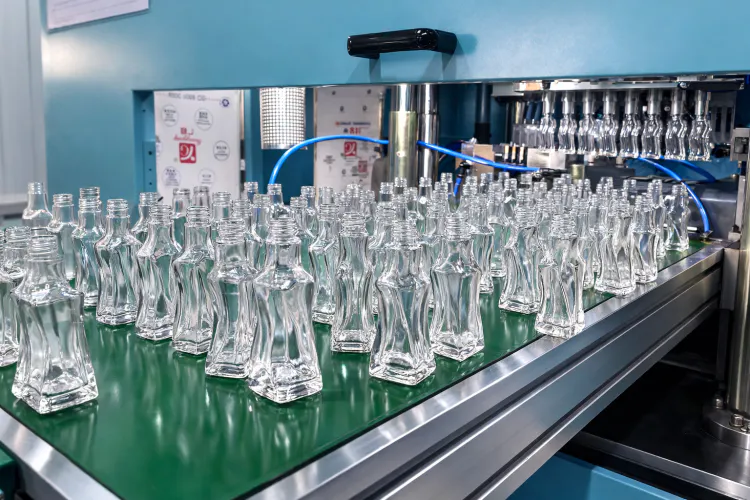
EP-ZQ135 vs. Jomar IBM175 — Parameter Comparison
Brand referenced for selection guidance only. No commercial affiliation implied.
| Spesifikasi | EP-ZQ135 | Jomar IBM175 (ref.) |
|---|---|---|
| Clamping Force (Injection) | 1350 KN | 1560 KN |
| Clamping Tonnage Category | 135 T | IBM175 class |
| Diameter Sekrup | 70 mm | 70 mm |
| Injection Weight | 650 g | 450 / 550 g |
| Max. Platen Size (L × W) | 1300 × 500 mm | 635 × 1372 mm |
| Dimensi Mesin (P × L × T) | 5.5 × 2 × 2.4 M | 4.22 × 2.67 × 3.58 M |
| Total Power | 95 KW | IBM175 class standard |
| Energy Saving vs. Peers | 20–30% lower | Single-circuit hydraulic |
| Hydraulic Configuration | Double System | Standar |
| Jenis Struktur | Full European Frame | Standard IBM |
Five Key Technical Advantages of the EP-ZQ135
1350 KN Injection Clamping — 20–30% Above Category Average
The ZQ135's full European-style frame concentrates its 1350 KN clamping force through a rigid closed-frame load path rather than through tie-bar tension. This structural approach produces higher effective platen stiffness at the same rated tonnage, which directly reduces mold deflection across large multi-cavity layouts. In practical production on a 30-cavity 10 ml pharmaceutical mold, this rigidity maintains container weight uniformity from edge cavities that would show measurable drift on a less rigid platform. The clamping force being 20–30% above industry average for machines in this category is a verifiable advantage, not a marketing claim.
Hydraulic Double System — Independent Booster Clamping
The ZQ135 uses a hydraulic double system in which the booster cylinder responsible for final clamping lock-up does not participate in the mold opening and closing sequence. This means the booster is at rest — consuming no hydraulic energy — for most of each machine cycle, activating only at the instant of full mold closure. The result is 20–30% lower energy consumption than single-circuit hydraulic IBM platforms in the same clamping class, reduced hydraulic oil thermal loading, and extended seal service life. For Colombian industrial injection blow molding machine operators where utility costs are a meaningful portion of production economics, this hydraulic architecture has a tangible impact on operating cost per unit produced.
650 g Injection Weight on 70 mm Screw
The ZQ135 delivers a 650 g injection weight from a 70 mm diameter screw with a 22:1 L/D ratio — competitive with the Jomar IBM175's 450/550 g range and providing headroom for demanding high-cavitation applications. This injection capacity supports the full 30-cavity mold at 10 ml and sustains adequate shot weight for 8-cavity molds at 1,000 ml without compromising cycle time. For Latin American plastic injection blow molding machine operators running mixed product lines across multiple container sizes, this shot weight flexibility reduces the frequency of screw changeovers and extends the platform's commercial versatility.
High-Precision Angle Divider — Simultaneous Motion, 4-Second Dry Cycle
The high-precision angle divider on the ZQ135 achieves synchronized mold opening and turret lifting in a single compound motion, eliminating the sequential dead time that occurs on IBM machines where these are separate hydraulic events. This synchronization is what allows the ZQ135 to achieve a genuine 4-second dry cycle in real production conditions. At 30 cavities per cycle on a 10 ml mold, even a 1-second reduction in dead time per cycle translates to meaningful additional container output per hour across a full shift. The precision of the angle divider also contributes to consistent turret positioning accuracy, which matters for tight-tolerance pharmaceutical neck finishes.
Compact Height Profile — 2.4 M vs. 3.58 M for Jomar IBM175
Despite being a heavy-duty injection blow molding machine at 18 tons and 1350 KN clamping, the ZQ135 stands just 2.4 M tall — substantially lower than the Jomar IBM175's 3.58 M height. This is a practical facility consideration that often gets overlooked in machine comparisons: a machine that fits within standard industrial building clearances without crane modification, mezzanine work, or structural reinforcement reduces installation lead time and cost. For manufacturing facilities across Colombia's industrial centers where building heights are fixed at 4–5 M, the ZQ135's 2.4 M profile provides comfortable working clearance above the machine.
Skenario Aplikasi
The ZQ135 industrial injection blow molding machine serves diverse container production requirements across pharmaceutical, personal care, food, and industrial sectors where high cavitation, consistent quality, and reliable throughput all matter simultaneously.
💊 High-Volume Pharmaceutical Container Production
The 30-cavity configuration at 10 ml places the ZQ135 among the highest-output injection blow molding machines available for pharmaceutical vial production. Consistent injection clamping at 1350 KN across the full 1300 × 500 mm platen maintains cavity-to-cavity weight uniformity required for pharmaceutical batch documentation. INVIMA in Colombia and equivalent authorities across Latin America require packaging material traceability and consistent quality system records — the ZQ135's European-frame rigidity and controlled injection parameters support the quality consistency that underpins these records.
🧴 Personal Care & Cosmetics — High-Cavity Efficiency
Shampoo bottles, lotion dispensers, skincare serums, and personal care containers in the 30–250 ml range are the commercial sweet spot for the ZQ135. Running 26 cavities at 30 ml or 22 cavities at 60 ml per cycle, this machine achieves the unit economics needed for branded cosmetic lines competing on retail shelf price. Colombian cosmetic manufacturers targeting the growing domestic personal care market — as well as export markets in Ecuador, Peru, and Central America — will find the ZQ135's output rates directly relevant to their capacity planning.
🥛 Food & Beverage Containers
Single-serve dairy products, condiment containers, cooking oil bottles, and flavored beverage packaging in HDPE and PP fall well within the ZQ135's production envelope. Containers produced on this plastic injection blow molding machine for food-contact use must comply with Colombia's NTC standards administered through ICONTEC and INVIMA Decree 1575, as well as FDA 21 CFR and EU Regulation 10/2011 for manufacturers serving export markets. The sealed IBM process prevents airborne contamination between injection and blowing stages, a hygiene advantage relevant to food-grade production environments.
🌿 Agrochemical & Crop Protection Packaging
Colombia's substantial agricultural sector — coffee, cut flowers, bananas, and sugarcane among others — generates consistent demand for pesticide, herbicide, and fertilizer containers that must meet chemical-resistance and closure-integrity requirements under ICA regulations. The ZQ135 processes chemical-grade HDPE reliably at high cavitation counts, producing containers suitable for UN-certified hazardous materials packaging. The machine's 200 KN blow clamping force maintains container wall uniformity in chemical-grade containers where wall thinning at seam lines creates leakage risk.
🧪 Household Chemicals & Industrial Fluids
Cleaning agents, disinfectants, automotive care products, and maintenance chemicals are packaged in volumes from 100 ml to 2,000 ml — the ZQ135 covers this entire range. At 10 cavities per cycle for 500 ml and 8 cavities for 1,000 ml, this machine supports the output volumes needed for in-house container production at major household chemical manufacturers. Vertically integrating container production on the ZQ135 eliminates dependence on external IBM container suppliers and gives manufacturing operations in Bogotá, Medellín, Cali, and Barranquilla direct control over container specifications, lead times, and quality.
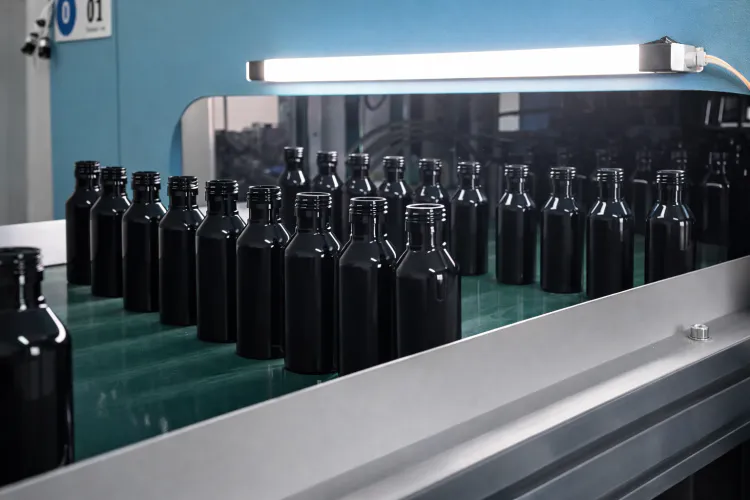
Regulatory Frameworks for Injection Blow Molding Machines
Manufacturers operating injection blow molding machines, and those placing IBM-produced containers on the market, must navigate a layered set of regulations that vary by product type, end-use, and destination market. The following overview covers the frameworks most relevant to ZQ135 operators in Colombia and neighboring regions.
🇨🇴 Colombia — INVIMA, ICONTEC & ICA
Pharmaceutical and food-contact plastic containers produced by injection blow molding machines must comply with INVIMA's applicable technical regulations and ICONTEC's NTC standards series — including NTC 4728 for food-contact plastics. Agrochemical containers fall under ICA supervision. Colombia's Law 2232 of 2022 on sustainable plastics and Decree 1076 of 2015 (environmental protection) impose additional obligations on plastic container producers regarding post-consumer recycling and waste management, directly relevant to operations running high-volume injection blow molding machines for single-use container applications.
🇪🇺 European Union — CE Machinery & Food Contact
The EU Machinery Directive 2006/42/EC requires CE conformity assessment for injection blow molding machines placed on the European market or used in European facilities. EU Regulation 10/2011 on plastic materials in contact with food governs containers produced on IBM machines targeting EU food markets. The ZQ135's European-style frame and hydraulic double system are designed with these standards as structural references, though operators should verify applicable directives for their specific product and market scope with their legal or compliance team.
🇺🇸 United States — FDA & OSHA
For containers produced on injection blow molding machines and exported to the US market, FDA 21 CFR Parts 174–186 govern indirect food additives, and 21 CFR Parts 210/211 cover pharmaceutical packaging. Machine-level safety for US-operating facilities references OSHA 29 CFR 1910.217 (mechanical power presses) and 1910.147 (lockout/tagout for maintenance). The ZQ135's hydraulic safety interlock architecture and dual-circuit hydraulic system address the fundamental OSHA machine-safeguarding requirements structurally.
🌎 Andean Community & Regional Trade
Andean Community Decision 562 harmonizes packaging technical regulations across Colombia, Peru, Ecuador, and Bolivia. MERCOSUR Resolution 56/92 addresses food-contact plastics for Brazilian and Argentine markets. Manufacturers using injection blow molding machines in Colombia to produce containers for regional export must satisfy both the domestic ICONTEC standards and the applicable regional harmonized framework, which in some categories impose additional testing or documentation requirements beyond the Colombian domestic baseline.
🌐 ISO — Quality, Safety & Environmental
ISO 9001 quality management and ISO 15378 primary pharmaceutical packaging quality systems are increasingly standard requirements for pharmaceutical-grade IBM container suppliers. ISO 14001 environmental management, ISO 45001 occupational health and safety, and ISO 50001 energy management cover the operational context of running injection blow molding machines in a compliant facility. The ZQ135's 20–30% energy reduction versus category benchmarks supports energy management targets relevant to ISO 50001 implementation programs.
ZQ135 Machine Engineering — Structure Detail
Full European-Style Closed Frame
The ZQ135's structural frame follows European injection blow molding machine design conventions that locate the primary load path through a closed-frame perimeter rather than through tie-bar tension. This approach distributes clamping loads more evenly across the mold interface area, reducing the differential deflection that causes cavity-to-cavity weight variation on less rigid platforms. For the 1300 × 500 mm platen size of the ZQ135, frame rigidity at the outer corners of the platen is the critical variable — and the closed European frame maintains this rigidity under sustained production loading without progressive creep that would develop in lighter open-frame designs over time.
High-Precision Angle Divider
The angle divider mechanism is what distinguishes a machine that claims a 4-second dry cycle from one that actually achieves it in production. On the ZQ135, the angle divider achieves true simultaneous mold opening and turret lifting — not a closely sequenced pair of separate events — through a mechanical cam profile that drives both motions from a single actuator sequence. This simultaneity removes a fixed dead-time component from every cycle, the cumulative benefit of which scales with cavitation count and daily run hours. At 30 cavities and two-shift operation, the cycle time difference between simultaneous and sequential actuation is commercially significant on an annual output basis.
Hydraulic Double System Configuration
Separating the booster clamping circuit from the mold travel circuit into independent hydraulic systems is an engineering choice, not just a labeling convention. On the ZQ135, the booster cylinder engages only at the moment of full mold closure and releases before mold opening begins. The mold travel cylinder operates the entire open-close-stroke sequence at lower hydraulic pressure without the booster in the circuit. This separation means the high-pressure side of the hydraulic system cycles at much lower frequency than in a single-circuit machine, which reduces fluid shear heating, extends oil change intervals, and lowers pump wear rates alongside the stated energy reduction. These are practical maintenance-cost benefits that supplement the energy saving headline figure.
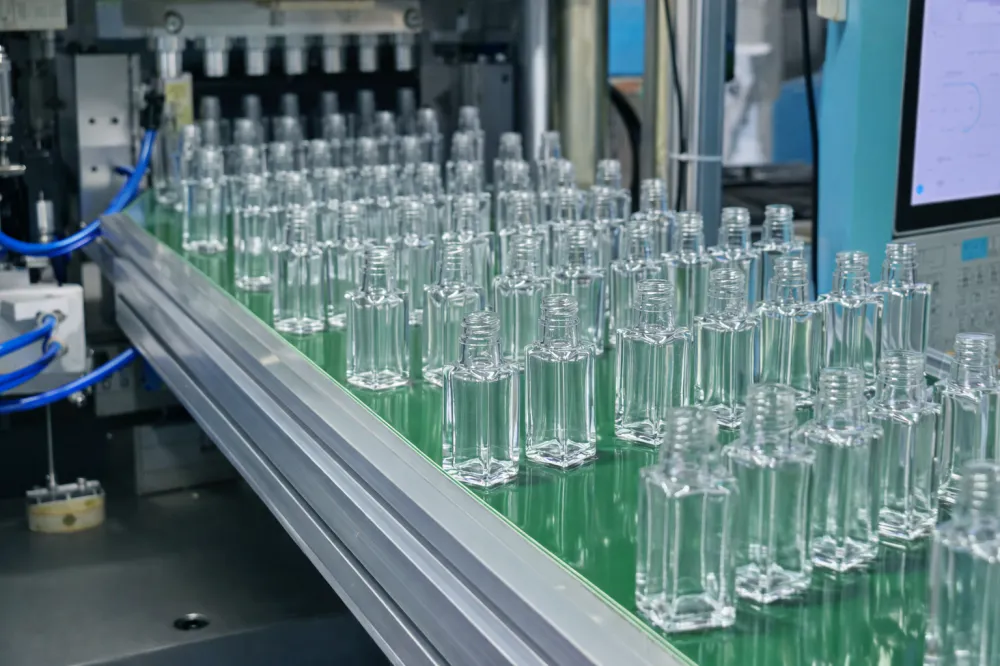
Explore our complete range of injection blow molding machine replacement models — from compact 60 T platforms through heavy-duty 135 T machines like the ZQ135.
Auxiliary Equipment — Complete Line Supply
We supply the complete peripheral equipment needed to run the ZQ135 injection blow molding machine as a fully integrated, single-source production system. Coordinated procurement simplifies installation, commissioning, and ongoing technical support.
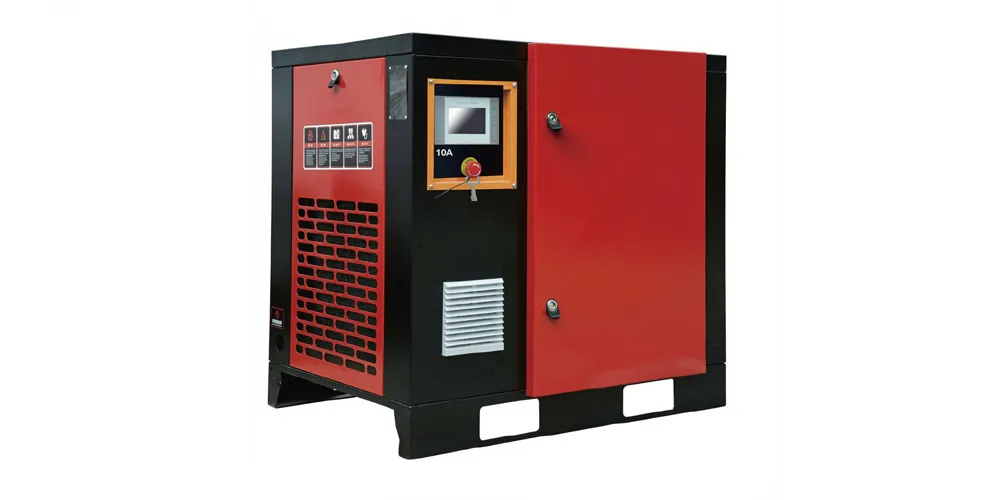
Oil-Free Air Compressor
The ZQ135 requires a steady 0.7 M³/min of compressed air at 0.7–1.2 MPa blow pressure for consistent container formation across all 30 cavities in every cycle. Any variation in blow air pressure translates directly into wall thickness variation and potential under-blow defects. Our recommended oil-free air compressors deliver pressure-stable, contamination-free compressed air with integrated pressure regulation matched to the ZQ135's demand profile. For pharmaceutical and food-contact applications where oil carry-over in blow air is an absolute disqualifier, oil-free compressor technology is not optional — it is a quality system requirement. Pre-validated integration with the ZQ135 PLC reduces commissioning time and eliminates interface uncertainty.
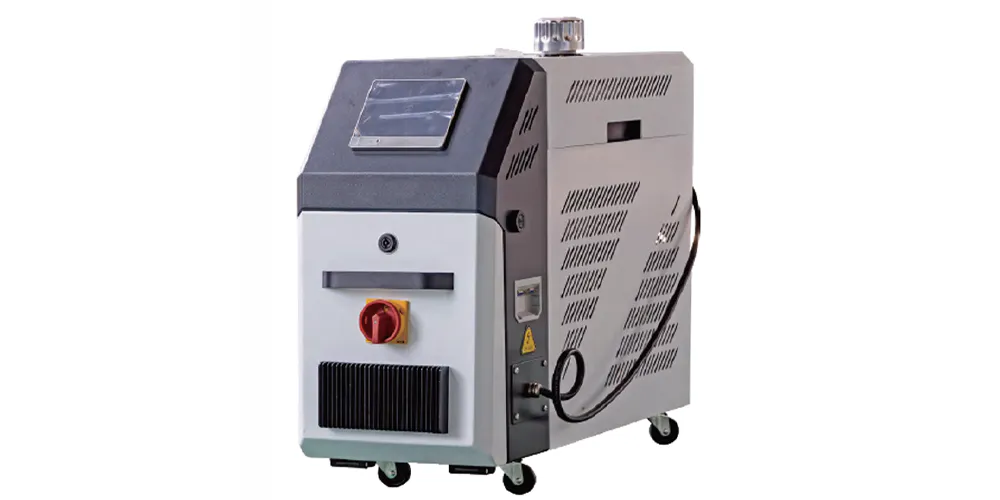
Pengontrol Suhu Cetakan
At 30 cavities across a 1300 × 500 mm mold, temperature uniformity from one end of the mold to the other is a meaningful engineering challenge. Uneven mold temperature creates differential cooling rates that produce container-to-container weight and height variation even with identical injection parameters on every cycle. Our Mold Temperature Controllers maintain the ZQ135's cooling circuit water temperature within ±1°C of setpoint at the 4 M³/h cooling water demand this machine specifies. For transparent PET cosmetic containers and pharmaceutical-grade HDPE vials where optical and dimensional consistency are customer-facing requirements, this level of temperature control is what separates a consistently on-spec line from one that requires frequent parameter adjustments and elevated reject rates.
One-Stop Line Integration
When the machine, compressor, and temperature control system come from a single supply source, the interface responsibilities are clear and the commissioning process is streamlined. Our engineering team provides complete line layout drawings, utility specification sheets covering electrical supply, compressed air capacity, cooling water flow and pressure, and drainage requirements — everything a Colombian facility needs to prepare the installation site for the ZQ135 before the machine arrives. We coordinate shipping logistics, import documentation for DIAN customs, and on-site startup support in Spanish. For manufacturers in Bogotá, Medellín, Cali, Barranquilla, or any other major Colombian industrial center, this integrated approach reduces the time from delivery to first production output.
Tentang Kami
We design and manufacture injection blow molding machines and related IBM equipment, with engineering focus on European-style platform development across the full clamping force range from compact 60 T machines through heavy industrial platforms like the ZQ135.
The ZQ135 addresses each of these points through a European closed frame, an independent hydraulic double system, and a 650 g injection capacity that provides meaningful headroom above the container size range most customers plan for at initial purchase. This headroom matters because container manufacturers' product portfolios rarely stay static — new customer requirements, new product formats, and market expansion all push the range upward over the machine's operational life.
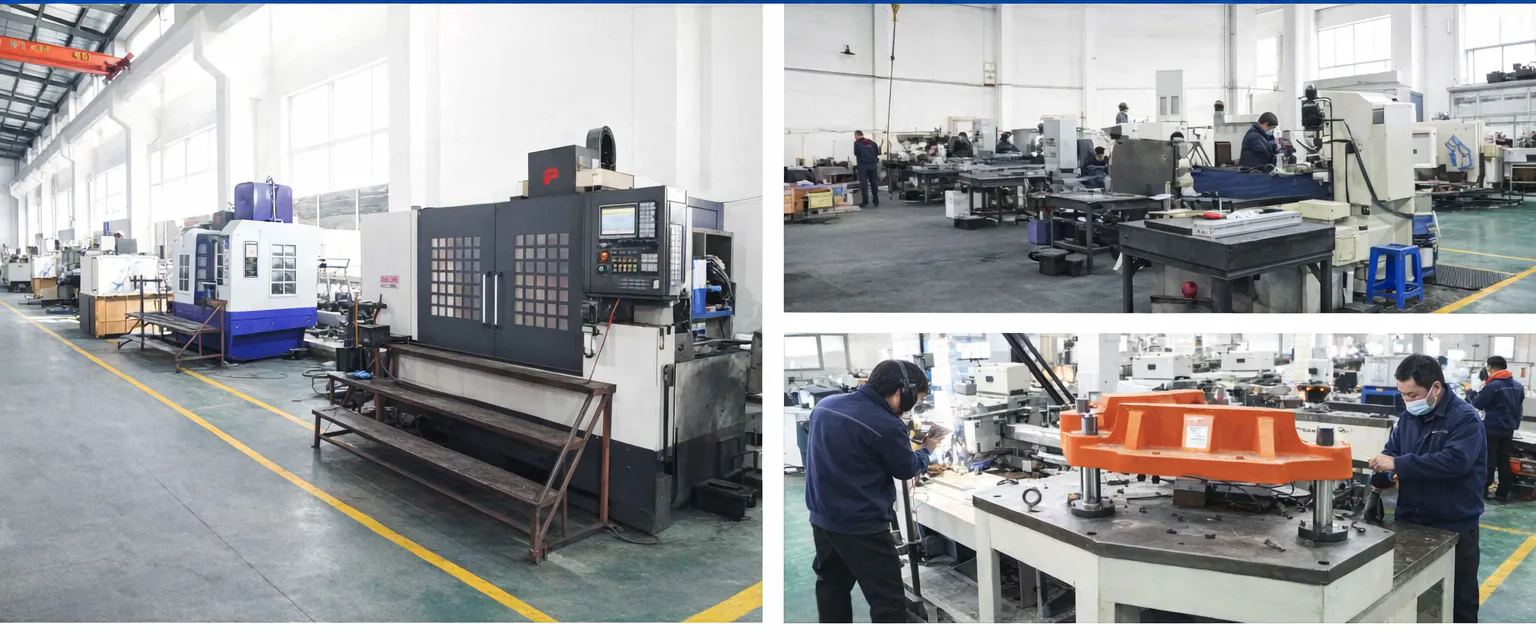
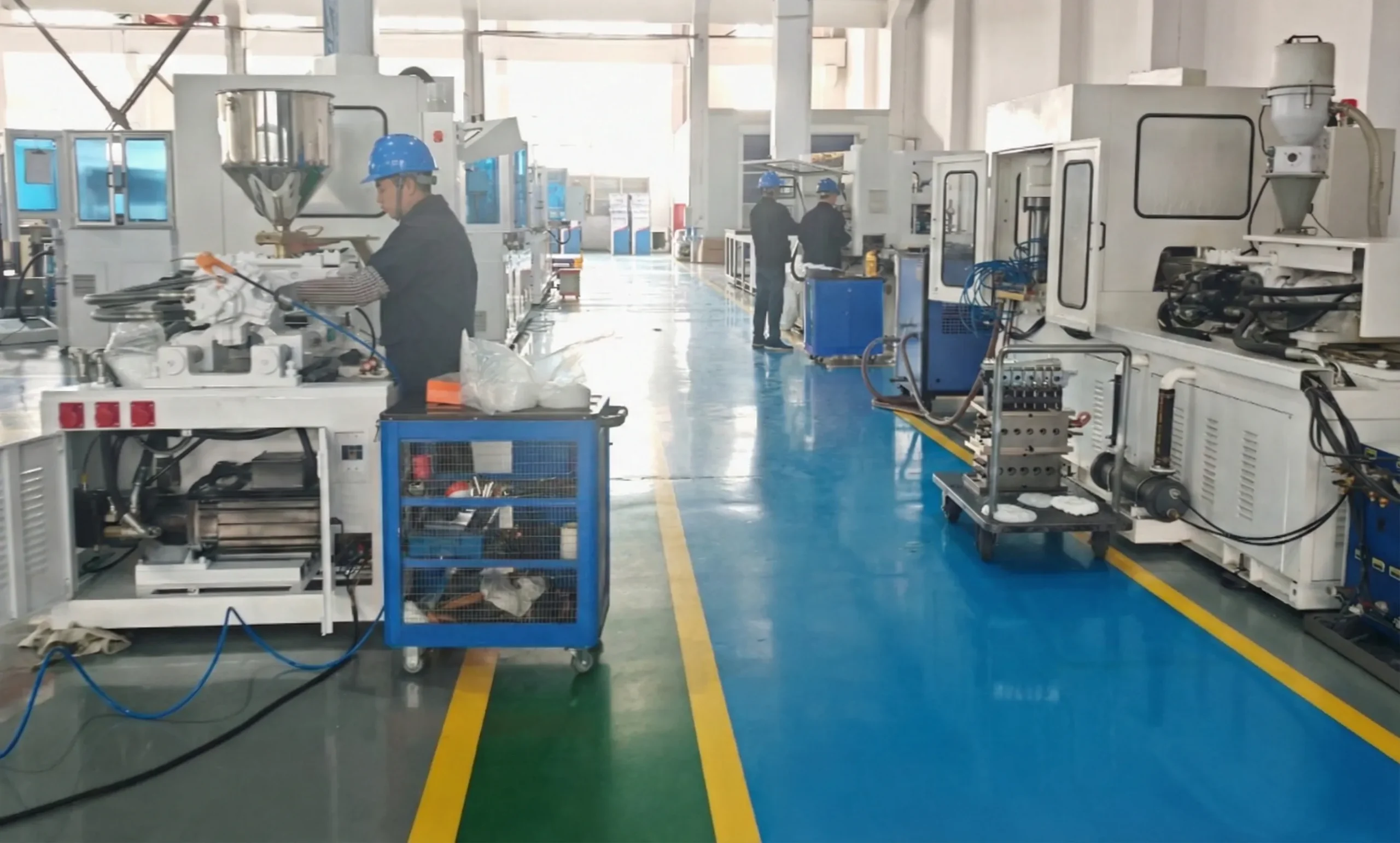
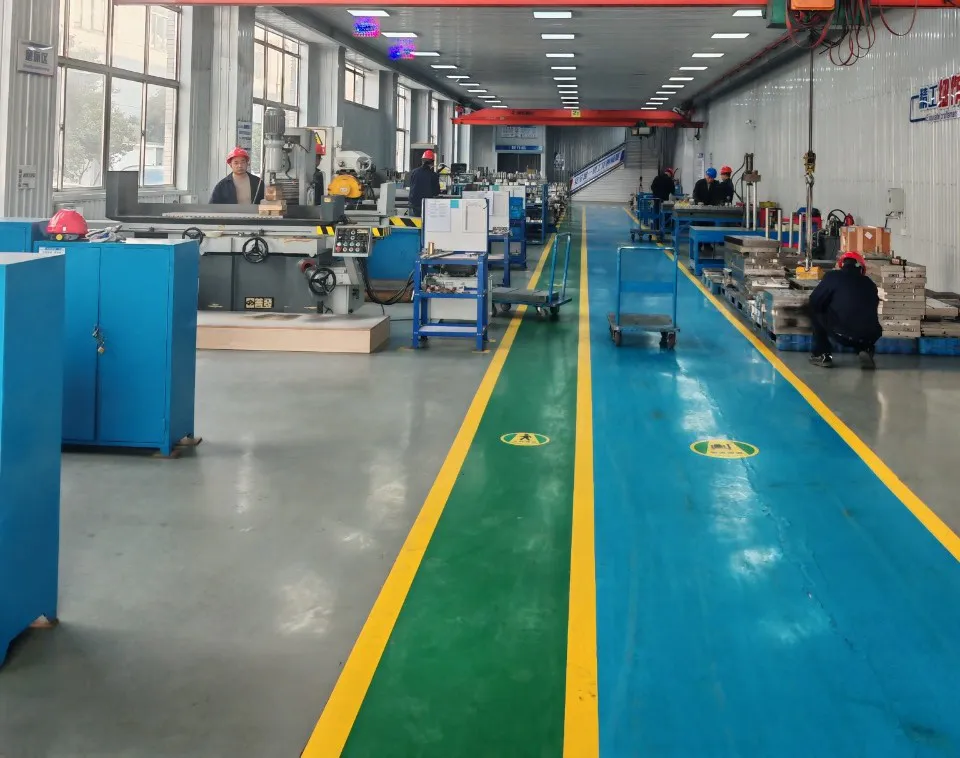
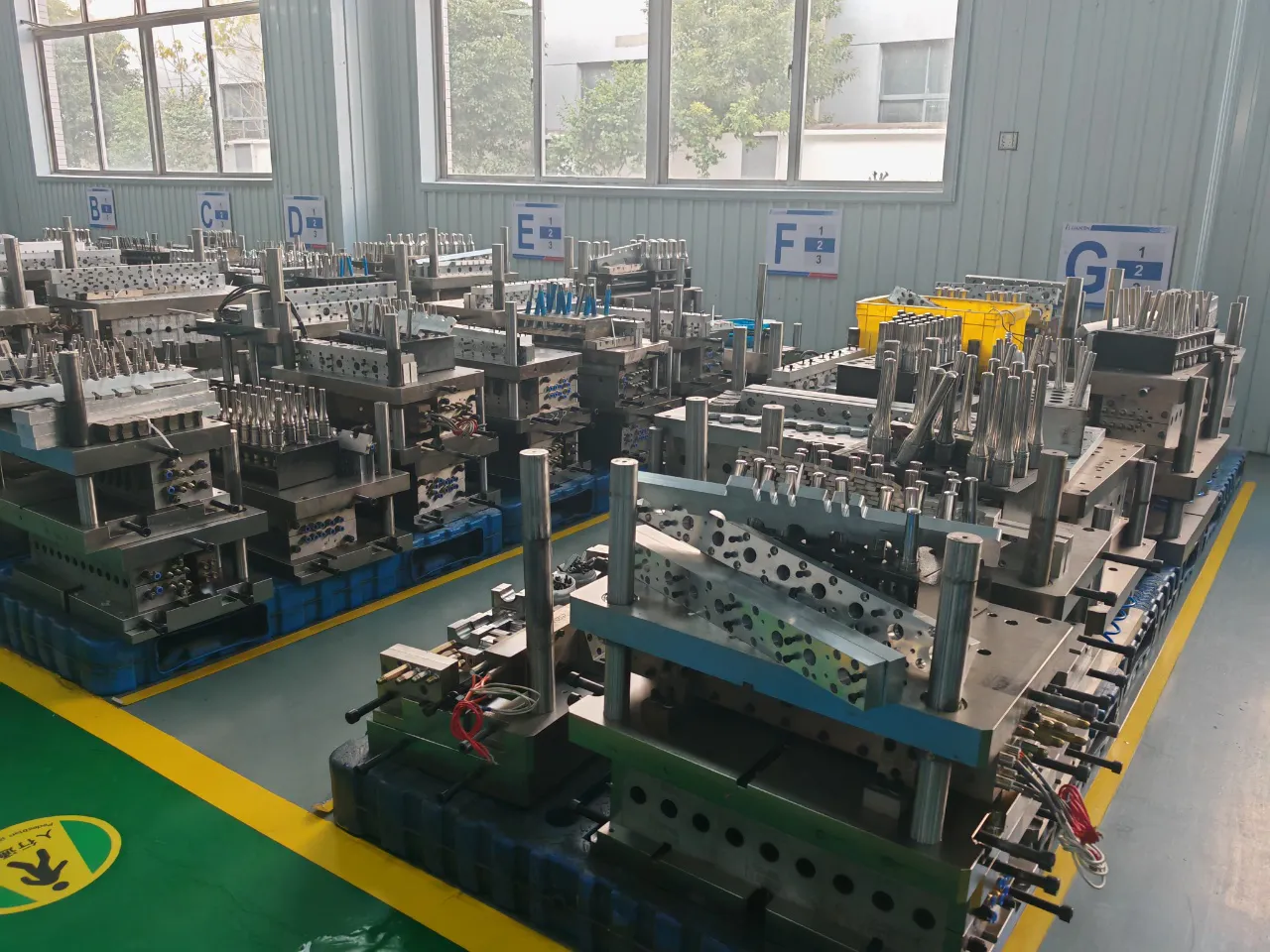
Bengkel
Pertanyaan yang Sering Diajukan
Editor: PXY