Food & Beverage Packaging — Technology Application
How the 4-station ISBM machine with temperature conditioning unlocks the thick-wall, wide-opening container geometries that premium food brands demand for viscous food products.
The Wide-Mouth Jar Challenge — Why Standard Bottle Processes Fall Short
Wide-mouth jars for viscous food products — honey, nut butters (peanut, almond, cashew), tahini, jam, marmalade, fruit spreads, and similar products — represent one of the most technically demanding container formats in food packaging. The combination of a wide opening (typically 63 mm to 110 mm or larger), a thick wall for structural rigidity and user ergonomics, and the visual clarity that premium food brands increasingly demand from their packaging places this application squarely in the domain of the 4-station mesin cetak tiup peregangan injeksi.
Standard 3-station ISBM processes, designed primarily for narrow-neck bottles and thin-wall containers in PET, struggle with wide-mouth jar applications for a straightforward reason: the thicker preform walls and wider preform geometry required for a wide-mouth jar need significantly more controlled and uniform temperature conditioning before the stretch-blow step than retained injection heat alone can reliably provide. Without an independent temperature conditioning station, the preform body temperature across the thick wall develops an internal-to-external thermal gradient during rotation from the injection station — producing non-uniform orientation in the blown jar and visible wall thickness bands in the finished product. The 4-station ISBM machine solves this by adding a dedicated conditioning station where heating and cooling elements precisely re-profile the preform body temperature distribution before blowing, independent of the injection thermal history.
This article examines the specific engineering requirements of wide-mouth jar production for honey and nut butter, the ISBM machine architecture and material systems best suited to these applications, the regulatory frameworks governing food-contact plastic jar packaging globally, and the process parameters that determine jar quality in production. Wide-mouth jar production on ISBM equipment is a technically distinct discipline from standard water bottle production, and the differences matter both for machine selection and for tooling design.
What Makes Wide-Mouth Jar Geometry Different From Bottle Production
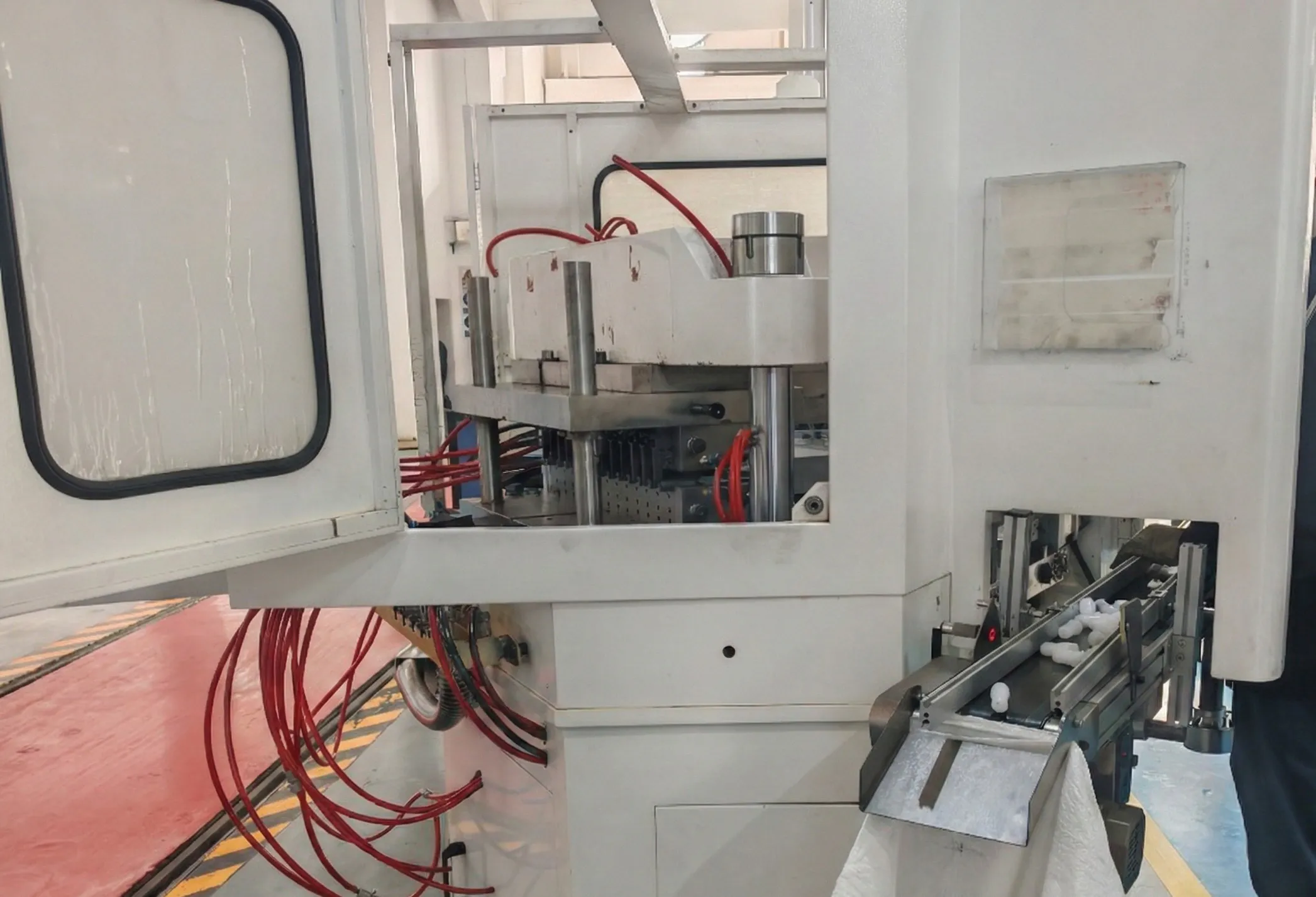
The fundamental difference between producing a wide-mouth food jar and a standard beverage bottle on an ISBM machine comes down to geometry, wall thickness, and the ratio of container opening diameter to body diameter. In a typical 500 ml narrow-neck PET bottle, the neck finish accounts for perhaps 20–25% of the preform diameter, and the container body blows out to 3 to 4 times the preform body diameter. In a wide-mouth 250 ml honey jar with an 82 mm opening, the neck finish may account for 40–60% of the preform diameter — and the blowup ratio in the radial direction is substantially lower, producing a container where the relationship between material distribution and orientation level is fundamentally different from thin-wall bottle production.
Lower blowup ratios mean lower biaxial orientation levels in the jar body. This has consequences for the jar’s mechanical properties: wide-mouth food jars have lower top-load strength per unit wall thickness than comparably sized beverage bottles because the molecular chains in the jar wall are less extensively aligned. To compensate, wide-mouth jars are designed with heavier wall sections — typically 0.8–2.5 mm in the body panel, compared to 0.2–0.4 mm in a water bottle. These heavier walls require substantially higher injection shot weights and longer injection hold and cooling times, which in turn require preform tooling and ISBM machine specifications that differ significantly from those used for thin-wall beverage bottles.
Wide Neck Diameter
Honey jars: typically 63, 70, 82, or 89 mm opening. Nut butter jars: 89 mm to 110 mm for easy product removal with a utensil. Larger neck diameters mean larger preform neck ring tooling, higher injection clamping requirements, and a fundamentally different preform-to-jar geometry ratio than bottle applications.
Heavy Wall Section
Wide-mouth food jars require wall sections 0.8–2.5 mm thick — 3 to 10 times heavier than thin-wall water bottles. Heavier walls require more shot weight, longer injection hold and cooling, and the temperature conditioning station to ensure thermal uniformity across the thick preform cross-section before blowing.
Lower Blowup Ratio
The relatively modest difference between preform body diameter and finished jar body diameter means lower biaxial orientation levels than bottles achieve. Material distribution engineering in the preform design becomes critical — the preform wall thickness profile must be precisely tailored to produce the target jar wall thickness distribution within the constraints of the lower orientation driving force.
Clarity vs. Opacity
Premium honey jars are often designed for maximum clarity to showcase the product color — amber, golden, or crystalline white honey. Nut butter jars may prioritize either clarity (showing the product texture and color) or opacity (hiding natural oil separation). Material selection, orientation level, and wall thickness jointly determine the final jar optical properties.
Manufacturing Architecture: 4-Station ISBM for Wide-Mouth Jars
Why the Temperature Conditioning Station Is Essential
The temperature conditioning station — the second station in a 4-station injection stretch blow moulding machine — is not simply a refinement for wide-mouth jar production: it is a functional necessity. A thick-walled preform for a honey jar (for example, a 250 ml jar with a 82 mm neck and 1.5 mm wall sections) has substantially more thermal mass than a thin-walled water bottle preform. When the injection mould opens after the injection and hold steps, the preform carries a temperature gradient across its wall cross-section — the inner surface adjacent to the core rod has cooled more than the outer surface, which in turn has cooled more than the center of the wall. In a 3-station machine, this gradient is carried directly into the stretch-blow station, where the variation in material temperature across the thick wall produces variation in orientation and wall thickness in the blown jar.
The temperature conditioning station addresses this by exposing the preform to calibrated heating and cooling elements that reduce the internal temperature gradient and bring the preform body to a target temperature distribution (typically 95–120°C for PET wide-mouth jars, with a narrower wall-to-wall differential than the injection process inherently provides). The neck zone is thermally protected — it does not require conditioning because it was injection-moulded to final dimensions at Station 1 and should not be deformed. This separation of neck and body thermal management is the characteristic feature of 4-station ISBM architecture that enables it to produce wide-mouth food jars with wall uniformity that a 3-station machine cannot reliably achieve.
Stretch-Blow Parameters for Wide-Mouth Jar Geometry
Wide-mouth jar stretch-blow parameters differ materially from those used for bottles. The axial stretch ratio for a wide-mouth honey jar (height-to-diameter ratio typically 1.0–1.5:1) is substantially lower than for a bottle (height-to-diameter ratio typically 2.5–4:1). The stretch rod travels a shorter absolute distance in the jar application, and the radial blowup ratio (final jar diameter divided by preform body diameter) is also lower. This means the biaxial orientation achieved in the jar wall is modest compared to bottles — typically 1.2–1.8:1 in both directions for wide-mouth jars, versus 2.5–3.5:1 for bottles. The blow moulding parameters (pre-blow timing, main blow pressure, blow duration) must be calibrated specifically for this lower-ratio geometry to achieve the wall thickness uniformity the jar design requires without producing stress whitening at the shoulder or inadequate orientation at the base.
Material Systems for Honey and Nut Butter Jars
The material selected for a honey or nut butter jar must satisfy several simultaneous requirements: food-contact compliance, chemical compatibility with the product (including fats, acids, and sugars at the specific concentrations and pH of the food), the optical properties the brand requires (clarity, gloss, haze), the thermal properties needed for filling (ambient, warm fill, or pasteurized fill), and the mechanical properties needed for distribution (stacking, drop resistance). The following materials are processed on ISBM machines for wide-mouth food jar applications, each with distinct processing characteristics on 4-station equipment.
| Bahan | Clarity | Fat Resistance | Application | ISBM Processing Notes for Wide-Mouth Jars |
|---|---|---|---|---|
| PELIHARAAN | Excellent (glass-clear) | Good to moderate | Honey jars, fruit spread jars, light sauces | Most common on 4-station ISBM for wide-mouth applications. Requires careful conditioning temperature control for thick walls. IV range 0.76–0.82 recommended. Not ideal for high-fat nut butters due to stress cracking risk with oils at elevated temperatures. |
| PETG | Exceptional clarity | Good | Premium honey jars, gourmet food spreads, high-clarity nut butter | Lower processing temperature than PET; amorphous structure prevents crystallization haziness. Excellent clarity at heavy wall sections without the temperature sensitivity of standard PET. Preferred for premium honey brands showcasing product color. No need for high biaxial orientation to achieve clarity. |
| PP (high clarity grade) | Good (slightly hazy) | Excellent | Nut butter jars, tahini, cooking spreads, pasteurized fills | Superior chemical and fat resistance versus PET. Can withstand hot-fill temperatures above 80°C for pasteurized nut butters. Wide-mouth PP jar production on ISBM requires precise conditioning temperature management due to PP’s wider crystallization risk window. Clarified nucleating PP grades improve clarity significantly. |
| PCTG | Very high clarity | Good | Gourmet honey, luxury food spreads, premium gift-market jars | Combines high clarity of PETG with improved impact resistance. Popular for premium gourmet food packaging targeting gift retail. Heavier construction possible without optical haze. No orientation requirement for clarity — material is inherently clear at any orientation level. |
| TRITAN | Excellent, BPA-free | Excellent | BPA-free nut butter and honey jars, organic food brands | Growing demand from organic and clean-label food brands seeking BPA-free, food-safe, dishwasher-compatible jar packaging. Higher processing temperature than PET; requires 4-station ISBM with appropriate barrel specifications. Premium positioning justifies material premium over standard PET. |
Material-Product Compatibility for Honey and Nut Butter
Two food chemistry factors particularly affect material selection for honey and nut butter jars. First, honey is a supersaturated sugar solution with a water activity of approximately 0.6 and a pH of 3.2–4.5, meaning it is mildly acidic with negligible microbial activity but high osmotic pressure. PET and PETG are both well-suited to honey contact, and there is no significant migration risk under normal storage conditions at ambient temperature. Second, nut butters contain 45–55% fat (predominantly unsaturated fatty acids in almond, peanut, and cashew varieties). Fat contact with some plastics — particularly certain styrenic materials — can cause stress cracking or softening under mechanical load. PET is generally adequate for nut butter contact at ambient temperature, but high-oleic formulations stored at elevated temperatures (above 25°C for extended periods) may warrant migration testing. PP’s superior fat resistance makes it the preferred material choice for nut butter applications where elevated temperature storage is expected.
Featured ISBM Machine for Wide-Mouth Jar Production
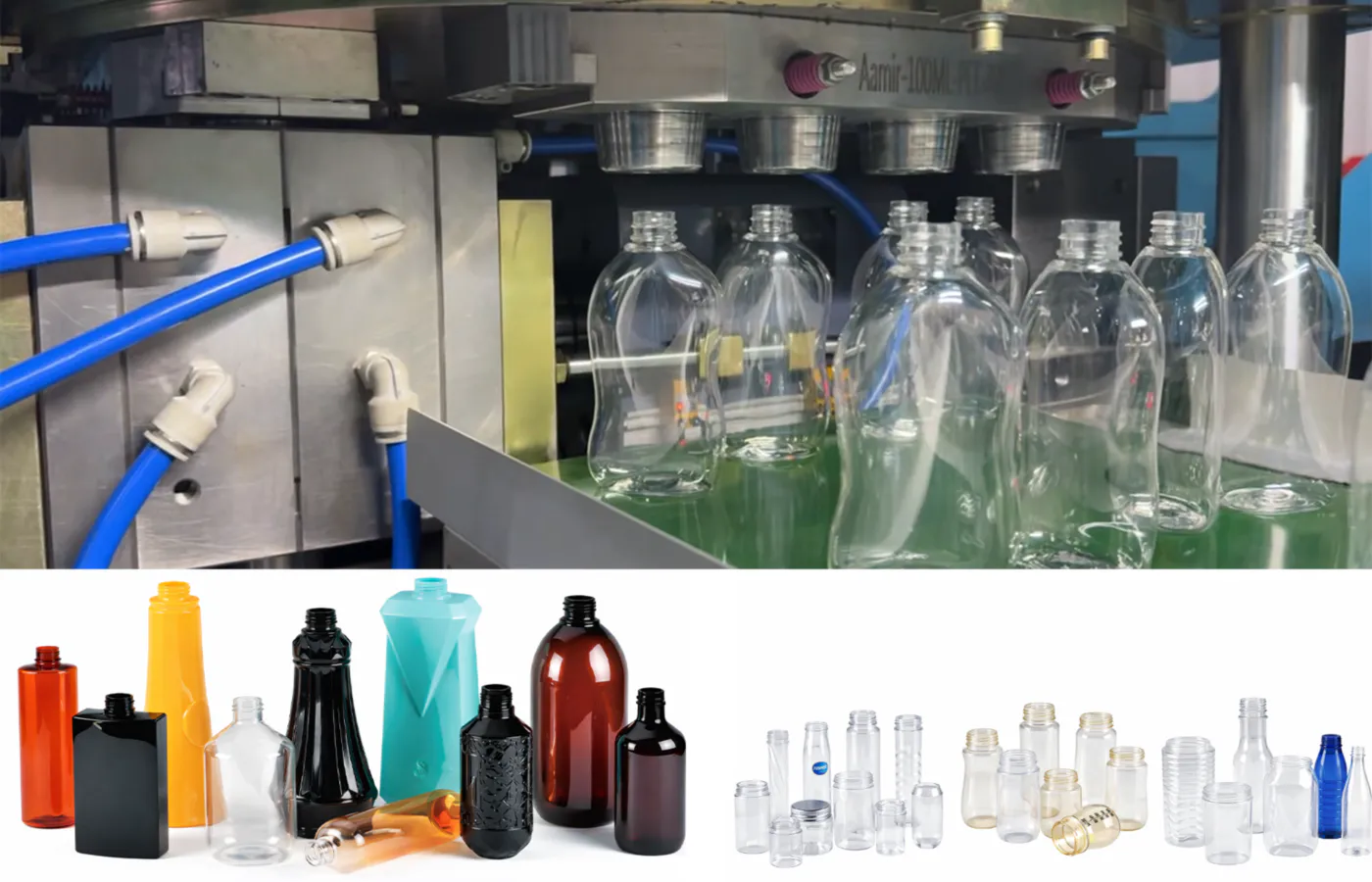
The EP-HGYS150-V4 is a 4-station one-step injection stretch blow moulding machine well-suited to wide-mouth jar applications including honey jars, nut butter containers, and specialty food spreads in PET, PETG, PCTG, PP, and TRITAN.
EP-HGYS150-V4 One-Step Injection Stretch Blow Moulding Machine (4-Station)
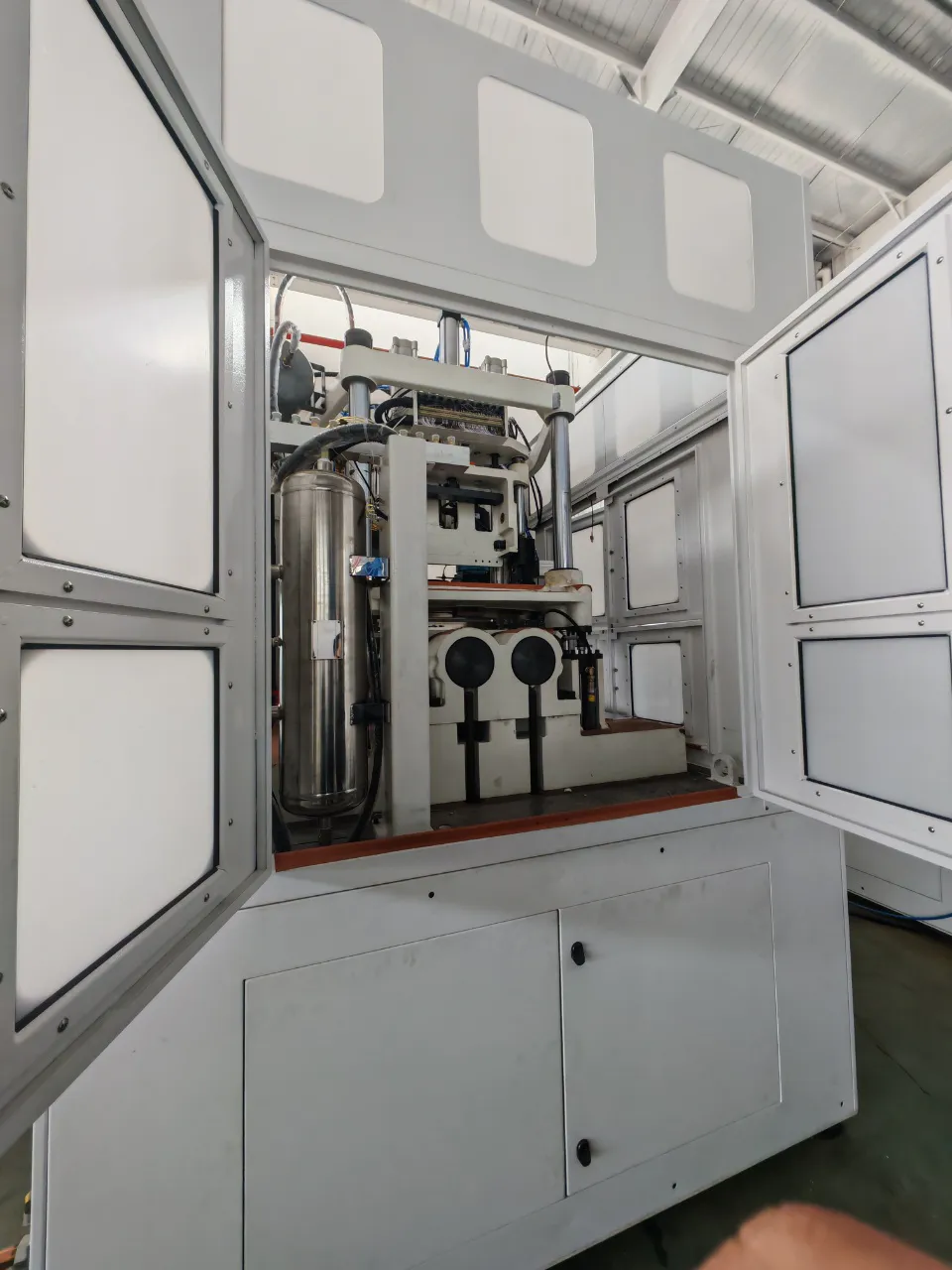
The EP-HGYS150-V4 is a 4-station ISBM machine that integrates injection, temperature conditioning, stretch-blow, and ejection into a single continuous cycle. The dedicated temperature conditioning station makes this machine specifically capable for wide-mouth jar applications where thick-walled preforms require careful thermal re-profiling before blowing. The machine processes PET, PETG, PCTG, PP, PC, TRITAN, SAN, PMMA, and PS — covering the full range of materials used in premium food jar applications for honey, nut butters, fruit spreads, and similar viscous food products.
The 4-station architecture is what distinguishes HGYS-series machines from 3-station platforms: the conditioning station allows independent control of the preform body temperature distribution, enabling consistent orientation and wall thickness uniformity in thick-walled wide-mouth containers that would show wall thickness banding on a 3-station machine. Servo-controlled stretch rod actuation and programmable blow profiles allow the machine to be precisely calibrated for the lower blowup ratios characteristic of wide-mouth jar geometries, producing food containers with the even wall thickness and controlled clarity that premium food brands require.
Regulatory Frameworks for Food-Contact Wide-Mouth Plastic Jars
Wide-mouth ISBM food jars for honey, nut butter, and food spreads are food-contact materials regulated by overlapping national food safety frameworks and material-specific standards. Producers of plastic food jars using ISBM machines must navigate these frameworks for each market in which their packaging is placed — both as a compliance obligation and as a prerequisite for retailer and brand owner approval in major retail markets globally.
🇺🇸 United States — FDA 21 CFR & USDA Honey Standards
Food-contact plastics for honey and nut butter jars must comply with FDA 21 CFR 177.1630 for PET, 21 CFR 177.1520 for PP, and 21 CFR 177.1640 for PETG/PCTG resins. Honey sold in the US must comply with FDA’s Standard of Identity for honey (21 CFR Part 101) and USDA grading standards that affect permitted packaging types. Organic nut butter packaging must meet National Organic Program (NOP) requirements under 7 CFR Part 205, which affect material and processing aid approvals for packaging contact materials. Peanut butter specifically is regulated under FDA 21 CFR 164.150 for standard of identity, but no packaging material restriction exists beyond general food-contact compliance.
🇪🇺 European Union — Regulation 10/2011 & Honey Standards
EU Regulation 10/2011 on plastic materials for food contact establishes the Overall Migration Limit (OML: 60 mg/kg food or 10 mg/dm²) and Specific Migration Limits for individual substances that apply to PET, PETG, and PP honey and nut butter jars. EU Council Directive 2001/110/EC (the Honey Directive) defines standards for honey including permitted packaging types. The EU’s Organic Regulation (2018/848) imposes additional packaging requirements for organic honey and nut butter. The European Food Safety Authority (EFSA) reviews packaging material safety for specific formulations — manufacturers using novel additives or recycled materials in EU-market honey jars should verify substance-specific compliance through the EFSA assessment process.
🇬🇧 United Kingdom — UK Food Contact Materials Legislation
Post-Brexit, the UK applies its retained plastic food-contact material regulations (largely derived from EU 10/2011) managed by the Food Standards Agency. UK Honey Regulations 2015 (SI 2015/1348) govern honey standards and labeling. The UK’s Extended Producer Responsibility (EPR) framework and Plastic Packaging Tax (PPT) affect producers of plastic honey and nut butter jars manufactured or sold in the UK — jars containing less than 30% recycled content by weight are subject to the tax. This regulatory pressure is driving interest in rPET and rPP grades for food jar applications across the UK food sector.
🌏 Asia-Pacific — Key National Frameworks
Australia and New Zealand apply FSANZ Food Standards Code Standard 1.4.4 for food-contact materials including plastic honey and nut butter jars. Japan applies JHF (Japan Hygienic Food Contact) standards for polyester and polypropylene food containers. India’s FSSAI (Food Safety and Standards Authority of India) Food Safety and Standards (Packaging) Regulations 2018 govern plastic packaging for honey and similar products, with specific migration test requirements. Singapore’s SFA (Singapore Food Agency) applies packaging material standards aligned to Codex Alimentarius Plastic Guidelines and EFSA assessment principles.
🌍 Retailer & Brand Owner Requirements
Beyond national regulatory compliance, major retailers and food brand owners in North America, Europe, and Australia apply their own packaging sustainability requirements that affect ISBM jar specifications. Programs such as the Consumer Goods Forum’s Plastic Waste Coalition, the Ellen MacArthur Foundation’s New Plastics Economy commitments, and retailer-specific packaging standards (Walmart’s Sustainable Chemistry Policy, Waitrose’s Packaging Standards) create requirements for recyclability, recycled content percentages, and material composition transparency that jar producers must satisfy as conditions of supply approval. These voluntary but commercially mandatory requirements increasingly influence material selection for honey and nut butter ISBM jar production.
ISBM Tooling Design for Wide-Mouth Food Jars
Wide-Mouth Neck Ring Engineering
Wide-mouth jar neck ring tooling for ISBM machines must manage a significantly larger injection flow front than narrow-neck bottle tooling of equivalent preform shot weight. For a 250 ml honey jar with an 82 mm neck, the neck ring cavity diameter is approximately three times that of a standard 28 mm water bottle neck, requiring different gate configuration (often a pin gate at the jar base combined with the core rod rather than a single central gate) and careful cooling channel placement to achieve uniform neck solidification across the much larger neck ring cross-section. Neck ring material for food jar applications follows the same principles as pharmaceutical tooling — S136H stainless steel at HRC 50–52 provides the wear resistance and corrosion protection needed for extended production runs in contact with moist PET and PP melts.
Preform Design for Thick-Wall Wide-Mouth Applications
The preform for a wide-mouth honey or nut butter jar is shorter and wider than a beverage bottle preform of equivalent shot weight, with a wall section that tapers from the heavy neck area (which will not be stretched) to the lighter body (which will be biaxially oriented in the blow step). Preform wall thickness profiling — using graduated wall sections from thick near the neck transition to thinner in the preform body — is the primary tool for managing material distribution in the final jar. Computer simulation of the stretch-blow step (using Finite Element Analysis with material models calibrated to the specific resin at its target conditioning temperature) is strongly recommended for wide-mouth jar tooling design because the lower blowup ratios are less forgiving of preform design errors than high-ratio beverage bottle applications.
Blow Cavity Sealing and Venting for Food Jars
Wide-mouth jar blow cavities require careful attention to parting line location and cavity venting. For honey jars where the jar body has no vertical straight sections (many honey jar designs use hexagonal, faceted, or tapered profiles for shelf differentiation), the cavity parting line placement must avoid visible parting line marks on display-facing jar panel surfaces. Cavity venting is more critical for wide-mouth jar blow moulding than for bottles because the slower blowup rate (lower radial ratio) means the air in the mould has more time to be compressed against the blow cavity wall — inadequate venting produces dimples or blow hesitation marks on the jar body surface that are visually unacceptable in premium food retail contexts.
Critical Process Parameters for Wide-Mouth Food Jar Quality
The process parameters for wide-mouth ISBM jar production require calibration specific to the heavier wall sections, lower blowup ratios, and wider neck geometries involved — they cannot simply be transferred from a bottle production process. The following table summarizes the parameters most directly linked to food jar quality attributes in 4-station ISBM production.
| Process Parameter | Jar Quality Attribute Affected | Typical Range (PET) | Wide-Mouth Jar Specific Notes |
|---|---|---|---|
| Injection barrel temperature by zone | Wall density, optical clarity, AA content | 260–280°C | Heavier wall shot weight means longer plastication dwell — keep melt temp conservative to limit AA generation and IV degradation in extended dwell periods during machine stops. |
| Injection hold pressure and time | Preform weight consistency, gate vestige | 60–90% of fill pressure; 3–8 s | Heavy wall wide-mouth jars require longer hold times than bottles to ensure gate freeze-off before core rod rotation. Short hold produces light preforms with inconsistent wall distribution in the blown jar. |
| Conditioning station temperature | Wall thickness uniformity, orientation level, clarity | 95–120°C (preform body surface) | The conditioning station is the primary quality control tool for wide-mouth jar production. Target temperature distribution should minimize the internal-external wall temperature differential to below 5°C across the preform wall cross-section. |
| Stretch rod speed and travel | Axial orientation level, base material distribution | Axial ratio 1.5–2.5:1 for wide-mouth jars | Lower axial stretch ratios than bottles. Rod must travel to the jar base without bottoming out — rod length calibration for each jar design is essential. Under-stretch → thick base, thin shoulder → top-load failure. |
| Pre-blow pressure and timing | Shoulder and upper sidewall wall thickness distribution | 0.2–0.6 MPa pre-blow | Pre-blow timing relative to stretch rod position is more critical for wide-mouth jars than bottles due to the short axial distance involved. Early pre-blow → thin shoulder. Late pre-blow → poor shoulder definition, base material concentration. |
| Main blow pressure and duration | Jar dimensional accuracy, surface finish against mould | 2.0–3.5 MPa main blow; 1.5–3.0 s | Longer blow duration than thin-wall bottles needed to ensure heavy jar walls conform fully to the cavity surface. Shorter blow → poor panel definition on faceted or embossed honey jar designs. Longer duration also improves clarity by quenching from a more fully contacted mould surface. |
| Blow mould cooling temperature | Cycle time, jar shrinkage, closure cap fit | 8–20°C for still-fill food jars | Heavier jar walls require longer cooling residence time in the blow mould than thin-wall bottles. Mold temperature controller precision (±1°C) directly affects jar-to-jar dimensional consistency — critical for closure cap fit across the full production lot. |
Filling, Closure, and Downstream Considerations for Honey and Nut Butter Jars
Filling Temperature Constraints
Honey is typically filled at ambient or slightly warm temperature (25–40°C) — well within the thermal stability range of PET and PP ISBM jars. The food itself is a high-viscosity liquid that fills slowly, which affects filling line design but does not create thermal stress in the jar. Nut butter and tahini are filled at slightly elevated temperatures (35–55°C for nut butter, to reduce viscosity and facilitate pouring) — also within material tolerance for standard PET and PP. Hot-fill honey products (pasteurized honey filled at 60–75°C) require jar materials with adequate thermal stability at the fill temperature — standard amorphous PET jars are borderline at these temperatures, and heat-set ISBM jars or PP jars may be required for commercial products regularly filled at the upper end of this range.
Wide-Mouth Closure Systems
Wide-mouth food jars use several closure types that have direct implications for ISBM jar neck finish tooling: continuous thread (CT) closures in 70 mm, 82 mm, and 89 mm diameters dominate the honey and nut butter market globally. ROPP (roll-on pilfer-proof) aluminium closures are used for premium honey formats. Press-on/twist-off (PT/TO) closures are common in jam and fruit spread formats. Each closure system imposes specific dimensional requirements on the jar neck finish — T dimension (thread outside diameter), E dimension (neck outside diameter), and I dimension (inside diameter) tolerances — that the ISBM neck ring tooling must achieve consistently across the full production lot to ensure reliable closure application on high-speed filling and capping lines.
Label and Decoration Compatibility
Wide-mouth honey jars typically carry sleeve labels (heat-shrink or stretch sleeve), pressure-sensitive labels, or direct print (for premium glass-replacement formats). ISBM PET and PETG jars are compatible with all three decoration systems, but sleeve label shrinkage profiles must be matched to the jar’s surface geometry. For hexagonal honey jar designs — common in artisan and premium honey brands — sleeve label behaviour around the panel edges requires careful label selection. ISBM PP jars may require corona or flame surface treatment before pressure-sensitive label application to achieve adequate label adhesion on the lower surface energy PP substrate.
ISBM Wide-Mouth Jars vs. Injection Moulded Jars: When Each Technology Applies
Wide-mouth food jars are produced by two principal processes: injection moulding (producing a jar in a single step without a stretch-blow phase) and injection stretch blow moulding (producing a jar through the two-step ISBM process). Understanding where each technology excels helps food brands and packaging engineers make the right production platform investment for each specific jar application.
| Kriteria | 4-Station ISBM Wide-Mouth Jar | Injection Moulded Jar |
|---|---|---|
| Wall Thickness | 0.8–2.5 mm (biaxially oriented) | 1.5–4.0 mm (unoriented) |
| Material Weight per Jar | Lower — biaxial orientation provides stiffness with thinner walls | Higher — unoriented material needs more wall for equivalent stiffness |
| Optical Clarity (PET) | Very high — biaxial orientation enhances clarity | Good — but can show haze in thick unoriented sections |
| Drop Resistance | Higher — oriented polymer chain network absorbs impact | Lower — unoriented material has less impact resistance per unit weight |
| Design Flexibility | Good for round, tapered, hexagonal profiles | Very high — complex undercuts, handles, ribs possible |
| Production Scale | Best for low to mid volume; flexible format changes | Very high volume; limited format flexibility per mould set |
| Terbaik untuk | Premium honey jars, gourmet nut butter, artisan food spreads, glass-replacement formats | Mass market nut butter, commodity spreads, complex lid geometries |
Discuss Your Wide-Mouth Jar Production Requirements
Whether you are developing a new honey jar format for a premium brand, transitioning nut butter packaging from glass to ISBM plastic, or expanding an existing food jar production line, our engineering team can provide specific guidance on machine selection, tooling design, and material qualification.
Compatible Auxiliary Equipment
We supply the complete auxiliary equipment needed to operate 4-station ISBM machines efficiently for wide-mouth food jar production — oil-free compressed air, mold temperature control, and integrated system solutions.
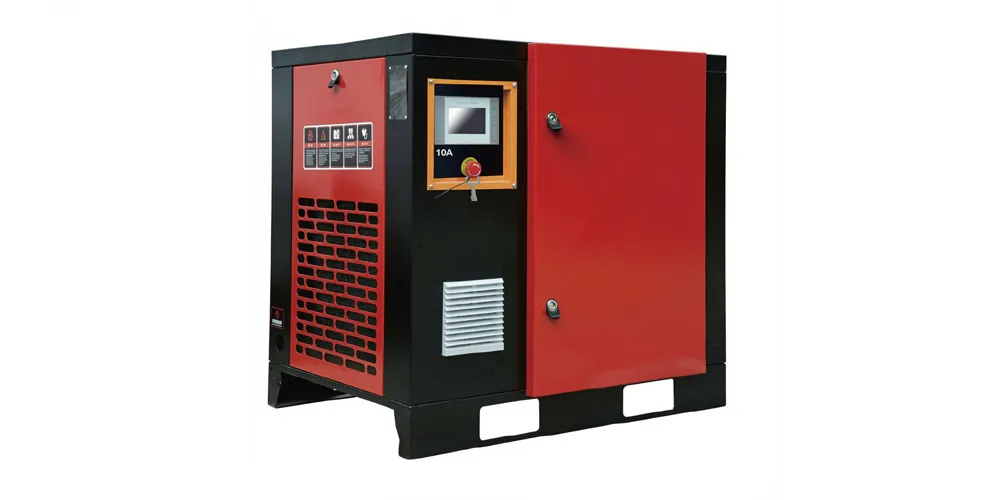
Oil-Free Air Compressor
Wide-mouth food jar blow moulding requires clean, oil-free compressed air at 2.0–3.5 MPa for the blow station. For honey, nut butter, and food spread jar applications, oil contamination in blow air constitutes a food-contact hygiene event under all applicable food-contact regulations. Our recommended oil-free air compressors deliver ISO 8573-1 Class 0 oil-free air validated for direct food-contact blow air applications in ISBM jar production. Stable pressure delivery across the full production shift is particularly important for wide-mouth jars, where blow pressure variation during the longer blow duration required for heavy-wall jars directly affects sidewall panel definition and surface finish quality.
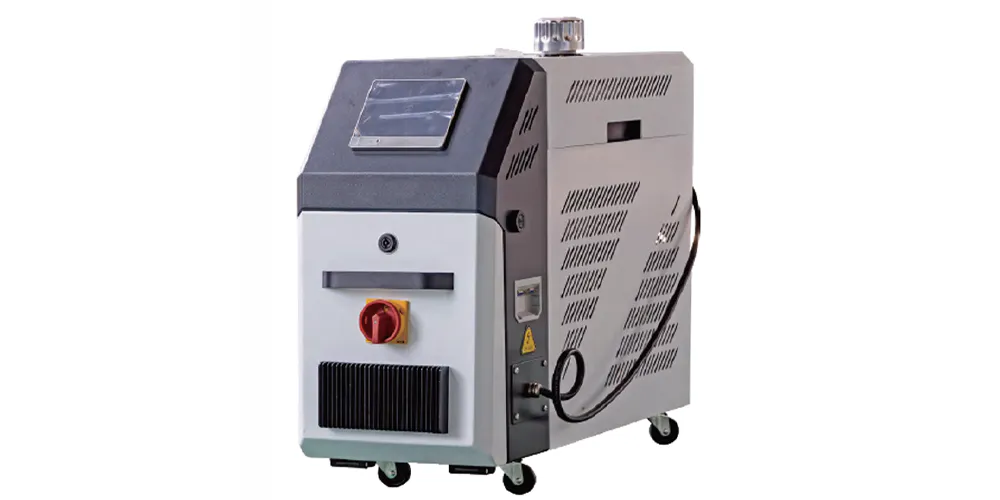
Pengontrol Suhu Cetakan
Wide-mouth food jar blow mould temperature control is more critical than for thin-wall bottle production because the heavier jar wall requires more consistent cooling to achieve dimensional stability before ejection. Mould temperature variation across the blow cavity — between adjacent jar surfaces, or progressively during the shift as coolant temperature rises in uncontrolled systems — causes jar-to-jar dimensional variation that directly affects closure cap fit consistency on the filling line. A ±1°C precision Mold Temperature Controller maintaining the blow mould coolant at a validated setpoint (typically 10–20°C for still-fill PET and PETG honey jars, 5–15°C for PP nut butter jars) prevents this variation entirely and supports dimensional consistency documentation for retailer technical approval processes.
Tentang Kami
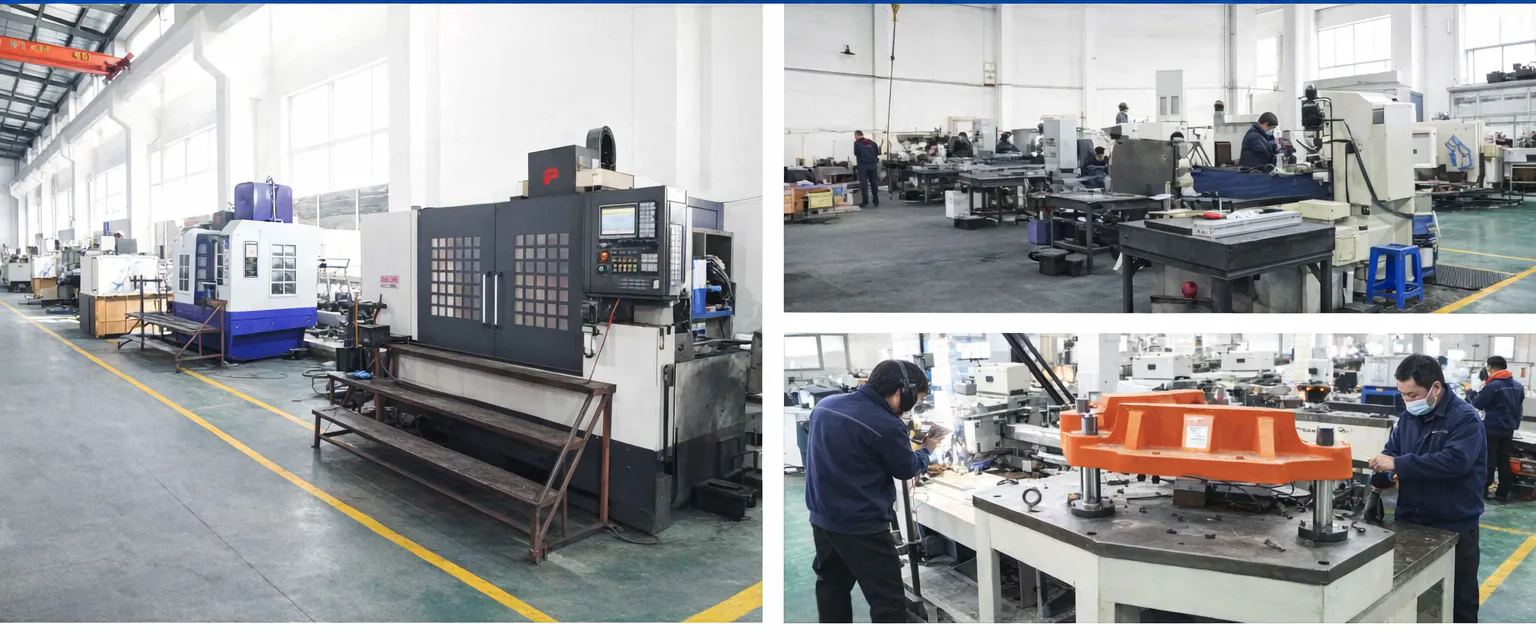
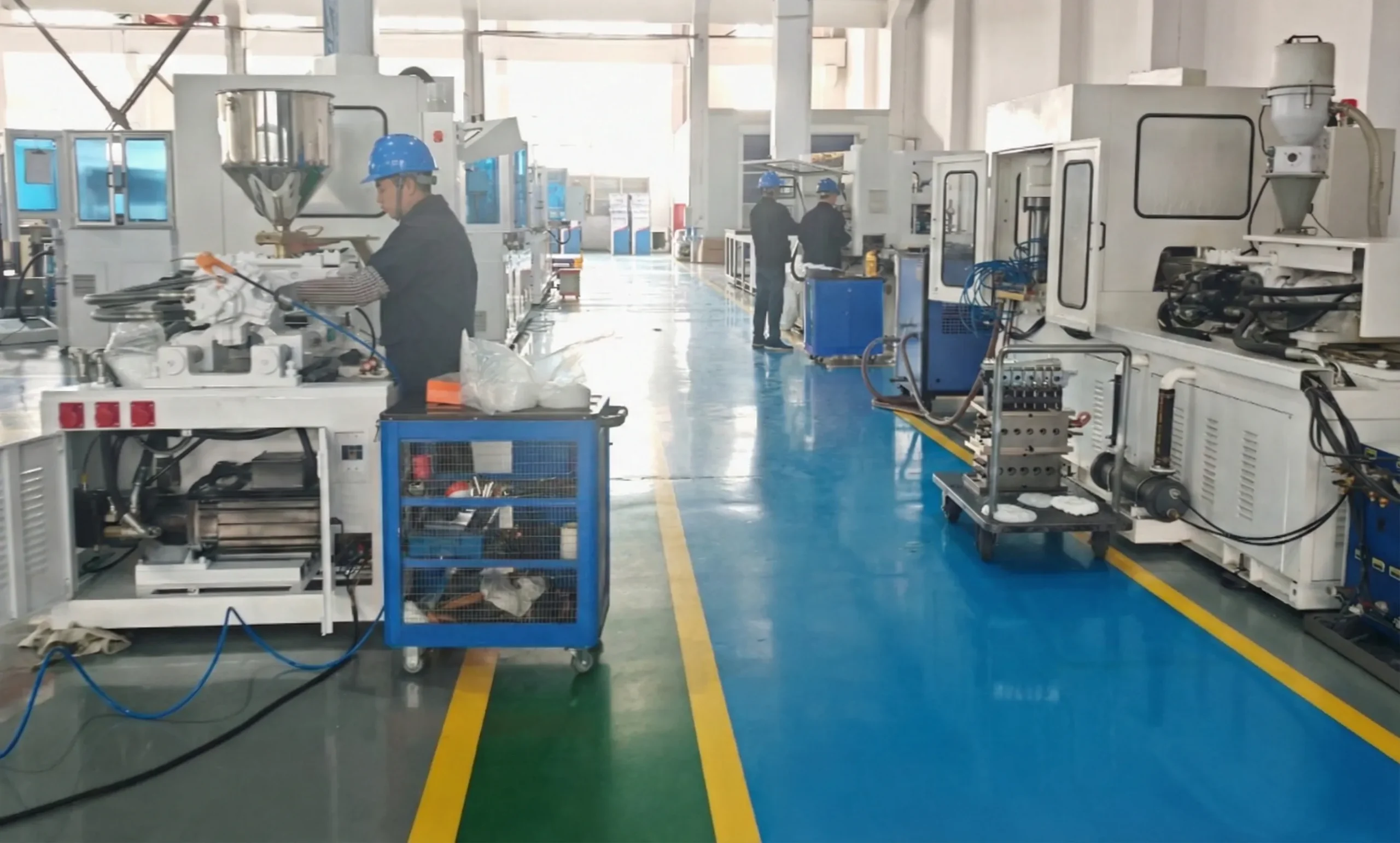
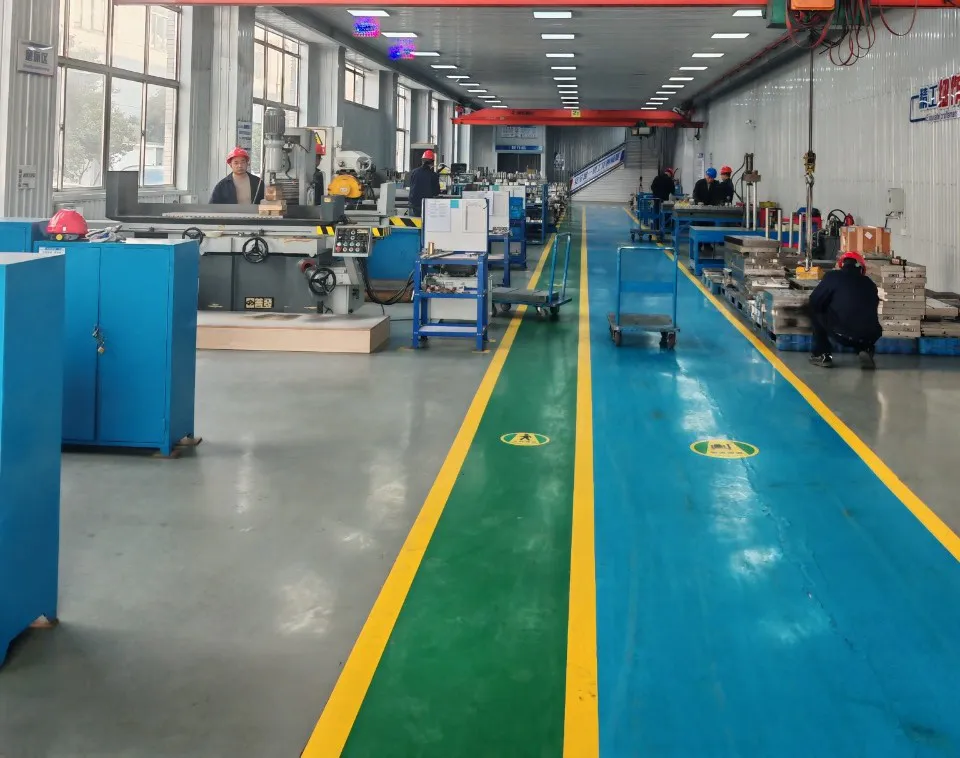
We design and manufacture one-step injection stretch blow moulding machines and associated tooling for the food, beverage, pharmaceutical, cosmetic, and industrial packaging sectors. Our 4-station ISBM product range — including the HGYS and HGY-V4 series machines — is specifically developed for applications requiring the precise preform temperature conditioning that wide-mouth food jars, cosmetic jars, and thick-walled specialty containers demand. We process PET, PETG, PCTG, PP, PC, TRITAN, SAN, PMMA, and PS across container volumes from 50 ml through 5,000 ml.
In the food packaging sector, we serve honey producers, nut butter manufacturers, specialty food brands, contract packaging companies, and private-label food retailers across North America, Europe, the Middle East, Southeast Asia, Africa, and Latin America. Our wide-mouth jar tooling engineering experience covers round, hexagonal, faceted, and custom profile honey and food spread jar designs in PET, PETG, and PP, with closure systems from 63 mm to 120 mm and jar volumes from 125 ml to 2,500 ml.
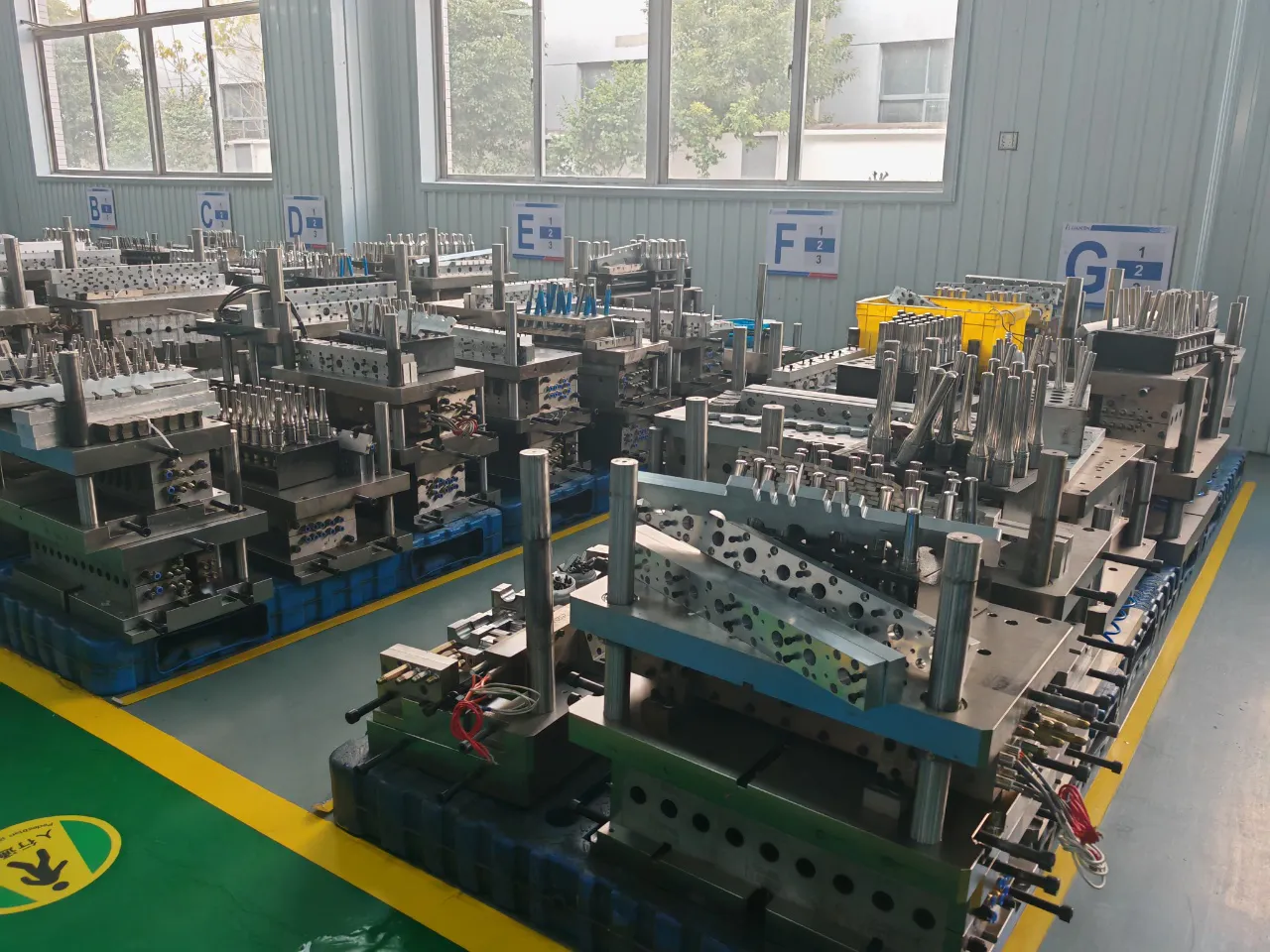
Bengkel
Pertanyaan yang Sering Diajukan
Editor: PXY