Food & Beverage — Large-Format Water Packaging
A comprehensive technical guide for water cooler jug manufacturers, bottled water distributors, and packaging engineers evaluating large-format injection stretch blow moulding machine platforms for 5-litre to 20-litre PET and PC container production globally.
The 20-litre returnable water jug sits at a very different point on the packaging technology spectrum from a 500 ml single-serve bottle. It is heavier, taller, and structurally more demanding — required to hold 20 kilograms of liquid, survive repeated wash and refill cycles in a returnable format, withstand transport stacking forces, and deliver a consistent airtight seal to the water cooler dispensing mechanism. For all of these reasons, the forming technology used to produce it matters considerably more than it does for a thin-wall beverage bottle where surface speed and cycle count per hour dominate the equipment selection conversation.
Injection stretch blow moulding machines — specifically large-format 4-station platforms with extended mould stroke ranges and high injection clamping forces — have emerged as the preferred technology for producing 20-litre PET water jugs and similar large-format water cooler containers. The combination of injection-moulded neck precision (critical for cooler fitment and refill station sealing), biaxial orientation of the jug body (which provides load-bearing strength and impact resistance), and a single-machine process that eliminates intermediate handling makes the ISBM process well-matched to the structural demands of large-format returnable water packaging. This article examines every dimension of that match in detail.
Why 20-Litre Water Jugs Are a Specialist Forming Challenge
A 20-litre water jug is not simply a larger version of a beverage bottle. It presents a set of structural and dimensional requirements that define — and constrain — the equipment capable of producing it reliably. The gross wall area of a standard 20-litre round water jug body is roughly 25–30 times the surface area of a 500 ml bottle, and the preform required to produce it carries proportionally more resin mass. The injection unit of the ISBM machine must therefore deliver substantially higher shot volume, and the blow mould must accommodate a container body height and diameter combination that exceeds the envelope of standard beverage bottle machines.
The structural demands are equally specific. A 20-litre jug in a returnable format — the standard for water cooler service in most markets — will be filled, labelled, delivered, inverted into a water cooler dispenser, emptied, returned, washed, inspected, and refilled. Depending on market conditions and jug quality, a single container may go through 20–50 fill cycles before retirement. Each inversion into the dispenser places the jug neck under compressive load; each fill cycle re-exposes the container to the sanitising chemicals used in the wash process; transport stacking places the base and body under sustained compressive stress from the containers above. These are the conditions the forming process and material system must be designed to accommodate from the outset.
20 kg fill weight plus stacking forces of up to 3–4 filled jugs above; biaxial orientation provides the compressive strength that makes thin-wall designs viable
Water cooler neck standards (typically 55 mm or 70 mm Bericap or Snap-on) require injection-moulded neck finish tolerances that extrusion cannot reliably achieve
Returnable jugs are washed with sodium hypochlorite or peracetic acid solutions between fill cycles; PET and PC (BPA-free) must resist repeated chemical exposure without stress cracking
Water cooler jugs must be sufficiently transparent for fill-level inspection while providing adequate UV screening to inhibit algae growth in long-duration dispensing installations
Manufacturing Structure: How Large-Format ISBM Machines Produce 20-Litre Jugs
The one-step injection stretch blow moulding process for large-format containers follows the same fundamental sequence as small-format bottle production, but each parameter — injection shot volume, mould stroke, blow air volume, cooling dwell time, and clamping force — is scaled substantially upward to accommodate the much larger preform and container geometry. Understanding how each station contributes to the final jug quality is essential for operators evaluating large-format ISBM machine specifications.
| Station | Operation | Large-Format 20L Jug Significance |
|---|---|---|
| 1 — Injection | High-shot-volume injection unit fills the large preform cavity; injection clamping force holds the cavity closed against substantial melt pressure | Shot volume for a 20L jug preform may exceed 400–480 cm³; injection clamping forces of 300–400 KN required; neck geometry formed here to water-cooler standard tolerances |
| 2 — Conditioning | Thick preform wall sections require extended conditioning to achieve uniform temperature distribution across the full body height before blowing | Longer conditioning time than small-format; TEMP. Regulating core stroke of 250–300 mm required on large machines; uneven conditioning causes thin-spot defects in the blown jug body |
| 3 — Stretch Blow | Extended mechanical stretch rod travel covers the tall preform height; high blow clamping force holds the large mould against blow pressure; large blow air volume required | Upper mould stroke of 1070 mm on HGY650-V4; blow clamping force 400 KN (single side); blow mould stroke 175+175 mm; sufficient for 20L jug body height of ~510 mm |
| 4 — Take-Out | Extended take-out stroke required for tall jug format; mould cooling dwell time longer than small-format to ensure sufficient crystallinity for structural performance | Take-out stroke 300 mm on HGY650-V4; adequate cooling before ejection ensures the jug body retains its form without distortion under its own weight when hot |
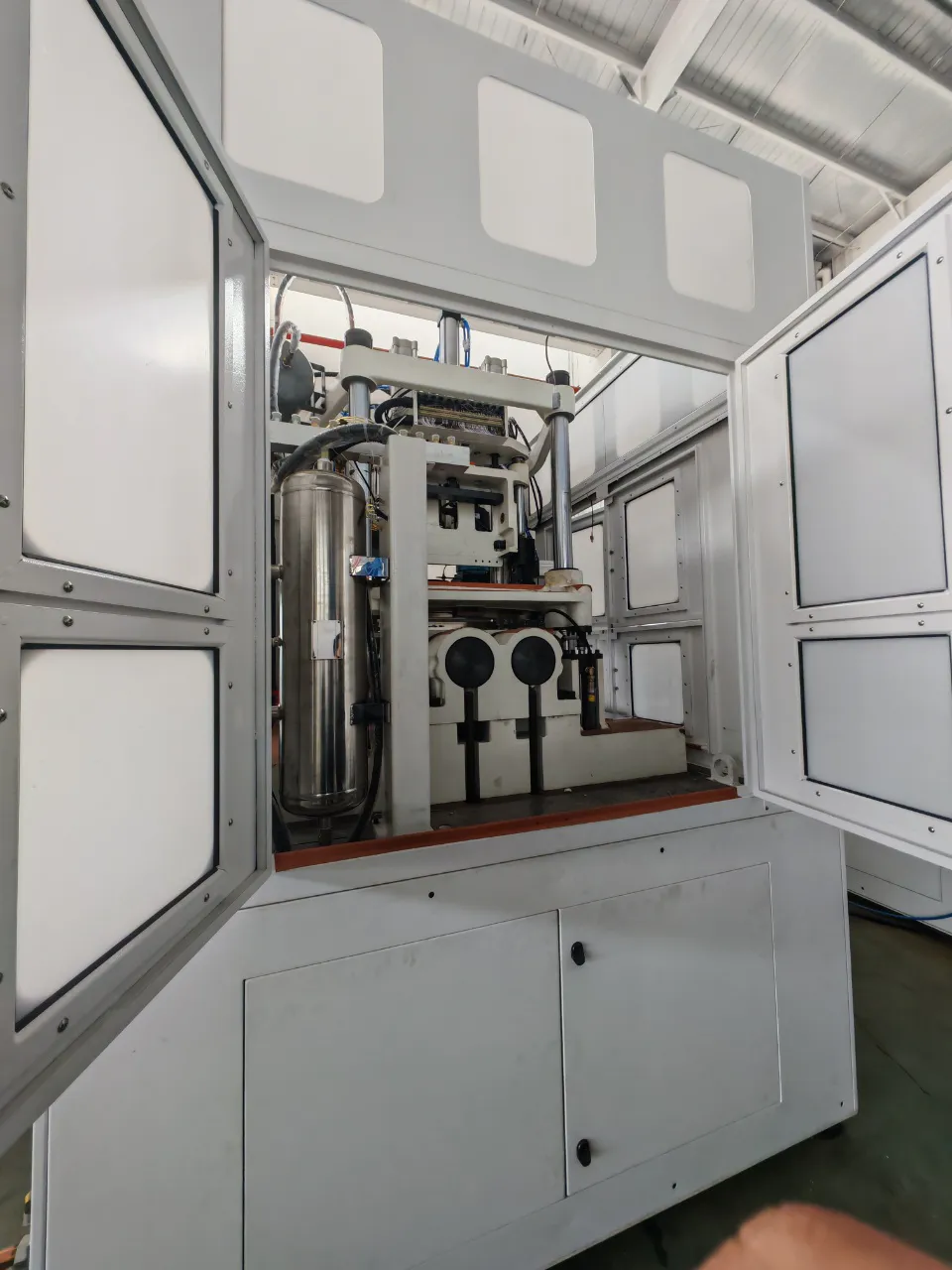
The machine architecture for large-format 20-litre jug production typically employs a servo pump hydraulic system rather than a full-servo configuration, because the actuation forces involved in clamping large moulds and driving extended stroke movements are better served by hydraulic power delivery at this scale. Servo pump systems — which match hydraulic pump output to instantaneous demand rather than running at constant displacement — provide the energy efficiency benefits of servo technology while generating the high clamping forces needed for large-mould operations. The combination of servo pump efficiency and the elimination of the preform reheating stage inherent to the one-step ISBM process still delivers a meaningfully lower energy cost per jug produced than equivalent two-step forming operations.
Material Systems for 20-Litre Water Jugs
The dominant materials for 20-litre water cooler jugs are PET (for single-trip or limited-return formats) and PC (polycarbonate, BPA-free grades for premium returnable formats). Both are processable on large-format injection stretch blow moulding machines, but they have different process characteristics, regulatory profiles, and end-of-life recycling pathways that influence the specification decision at the brand and market level.
| Property | PET (Polietilen Tereftalat) | PC — BPA-free Grades | PETG |
|---|---|---|---|
| Returnable cycles | 5–15 cycles typical in commercial use; single-trip also viable | 30–50 cycles; industry-standard premium returnable format | Limited returnable suitability; primarily ambient fill single-trip |
| Impact resistance | Good — biaxial orientation in ISBM significantly improves vs. unoriented PET | Excellent — inherent high impact strength; drop-resistant in returnable service | Good; superior to standard PET in notch impact; lower than PC |
| Wash/chemical resistance | Good; sodium hypochlorite at standard sanitising concentrations; peracetic acid compatible with appropriate dwell time control | Very good; alkaline wash and chlorine sanitising compatible; avoid strong oxidisers at elevated temperatures | Good chemical resistance; similar profile to PET for water jug wash protocols |
| Food contact status | FDA 21 CFR 177.1630; EU Regulation 10/2011; widely approved globally for drinking water contact | BPA-free PC grades carry food contact clearance in most markets; regulatory scrutiny of bisphenol compounds varies by jurisdiction — verify grade-specific documentation | EU Regulation 10/2011; FDA food contact listings; Eastman regulatory support file for Tritan-based grades |
| Recyclability | Excellent; widely recycled; large-format PET jug compatible with existing PET recycling infrastructure in most markets | Recyclable but separate from PET stream; some markets have limited PC recovery infrastructure | Recyclable; typically co-processed with PET in some schemes; check local infrastructure |
| ISBM processing note | 265–285°C melt; larger shot mass requires extended residence time management; biaxial orientation is essential for structural performance at 20L scale | 280–320°C melt; highest processing temperature in this group; confirm machine barrel specification is rated for PC processing | 230–250°C melt; lower processing temperature than PET; good clarity but limited return cycle suitability |
The global shift in water cooler jug markets toward PET — particularly in Europe, North America, and growing markets in Southeast Asia and the Middle East — reflects a combination of factors: the tightening regulatory environment around bisphenol compounds in several jurisdictions, the better alignment of PET with extended producer responsibility recycling streams, and technical improvements in PET jug design (including UV-blocking additive packages and improved wash-cycle durability treatments) that have narrowed the gap in returnable service life compared to PC. For manufacturers establishing new large-format injection stretch blow moulding machine capacity, PET is currently the dominant specification in most new installation projects, though PC remains important in markets with established premium returnable infrastructure.
Jug Geometry and Mould Design for 20-Litre Water Cooler Containers
The geometry of a 20-litre water cooler jug is constrained by a combination of water cooler dispenser standards, transport logistics requirements, and structural performance criteria that together produce a narrow design envelope. Understanding these constraints is important for both mould tooling specification and machine selection.
The neck finish of the 20-litre water jug is one of the most critically specified features in the entire container design. Water cooler dispensers in most markets use one of a small number of standardised neck formats — the most common being the 55 mm Snap-On (also called the Sports Cap standard) used across North America, Europe, and much of Asia, and the 70 mm Screw-Cap format used in some Middle Eastern and Asian markets. The dimensional tolerances of these neck standards are tight — typically ±0.2–0.3 mm on the critical sealing diameter — because the water cooler dispenser probe must pierce the cap membrane or seat against the jug neck without leaking. The injection moulding station of the ISBM machine produces the neck finish under full dimensional control in the injection cavity, achieving these tolerances consistently across production runs without the post-forming trimming that extrusion blow moulding sometimes requires on large-format containers.
| Geometric Parameter | Typical 20L Jug Specification | ISBM Machine Requirement |
|---|---|---|
| Overall height | ~500–520 mm (body + neck) | Upper mould stroke ≥ 1000 mm required; HGY650-V4 provides 1070 mm |
| Body diameter | ~230–280 mm | Blow mould cavity diameter must accommodate; cavity steel machined per jug design specification |
| Neck diameter | 55 mm (Snap-On) or 70 mm (Screw-Cap) | Injection cavity tooled to relevant neck standard; ±0.2 mm tolerance on sealing diameter |
| Wall thickness (body) | 0.8–1.8 mm depending on resin, return cycles, and stackability spec | Controlled by stretch ratio and blow expansion ratio; conditioning uniformity directly affects wall distribution |
| Base design | Petaloid or champagne-base for stacking stability; base must self-stand under 20 kg fill weight | Base mould geometry engineered with appropriate blow expansion to avoid base inversion under load |
| Handle provision | Some markets require integrated handles for consumer carrying; others use separate clip-on handles | Integrated handle jugs require specialised mould cavity design; separate handle formats are simpler to produce on standard ISBM tooling |
| Cavities per shot | 1–2 on most large-format ISBM machines at 20L scale; 3 possible at 12L scale | HGY650-V4 accommodates 1–4 bottles per shot depending on body diameter (1 cavity at 280 mm, 2 at 235 mm) |
Global Regulatory Framework for 20-Litre Water Jug Production and Distribution
Water cooler jugs sit at the intersection of drinking water contact regulations, food packaging material safety requirements, and in many markets, specific bottled water packaging regulations that govern the container materials, reuse protocols, and labelling requirements for water distributed in large-format returnable or single-trip containers. Manufacturers supplying multiple markets need to navigate this regulatory landscape carefully, as the combination of drinking water contact requirements and returnable format obligations creates a more complex compliance picture than standard food packaging.
| Market | Key Regulation | Relevance to 20L PET Jug ISBM Production |
|---|---|---|
| Uni Eropa | EU Regulation 10/2011 (plastic food contact); Council Directive 2020/2184 (drinking water quality); EU PPWR 2024; EFSA guidelines for recycled PET | PET for drinking water contact must comply with Regulation 10/2011 substance lists; Directive 2020/2184 sets quality standards for drinking water distributed in containers including water cooler format; PPWR mandates recyclable design; EFSA framework governs rPET inclusion in food/water contact applications |
| United States | FDA 21 CFR 177.1630 (PET food contact); FDA 21 CFR Part 129 (bottled water); NSF/ANSI 61 (drinking water system components); NSF/ANSI 53 | 21 CFR Part 129 governs production of bottled water including large-format cooler jugs; NSF/ANSI 61 certification may be required for components in contact with drinking water distributed commercially; FDA 21 CFR 177.1630 covers PET resin food contact compliance |
| United Kingdom | UK Food Safety Act 1990; The Natural Mineral Water, Spring Water and Bottled Drinking Water (England) Regulations 2007 (amended 2020); UK FCM Regulations 2012 | UK bottled water regulations cover packaging requirements for water distributed in sealed containers including large-format cooler jugs; UK FCM framework governs PET and PC food contact compliance post-Brexit; UK Plastic Packaging Tax applies to jug packaging at £217.85/tonne below 30% recycled content |
| Middle East (GCC) | GSO 1985/2014 (Bottled Water); GSO 993 (food contact plastics); individual national standards (Saudi SASO, UAE ESMA, Qatar QSTP) | The Middle East is among the world’s largest markets for 20-litre water cooler jugs; GSO standards govern food contact material compliance for jug packaging; SASO and ESMA conformity marking required for Saudi Arabia and UAE market respectively; returnable jug hygiene standards apply |
| India | FSSAI Food Safety and Standards (Bottled Water) Regulations 2011; BIS IS 14543 (packaged drinking water); IS 10146 (PP) / IS 12252 (PET food contact) | FSSAI bottled water regulations apply to 20-litre jug products; BIS IS 14543 specifies packaging standards for packaged drinking water including container material; IS 12252 governs PET food contact for the Indian market; India is a very large and growing 20-litre water jug market |
| Southeast Asia (ASEAN) | ASEAN Food Safety Policy; national standards: SNI 01-3553 (Indonesia), Thai FDA bottled water regulations, Vietnam QCVN 6-1, Malaysia Food Act 1983 | Southeast Asia is a rapidly growing market for packaged water including 20-litre cooler jugs driven by limited safe tap water access in many areas; national food contact and bottled water regulations apply; PET and PC are the primary container materials across the region |
| Australia / New Zealand | FSANZ Standard 2.6.2 (non-alcoholic beverages and brewed soft drinks); FSANZ Standard 1.4.1 (contaminants); APCO recyclability guidelines | FSANZ governs food safety of bottled water products including large-format cooler jugs; material migration limits apply; APCO guidelines encourage recyclable and refillable packaging — water cooler jugs in returnable PET format score well on both criteria |
| Brazil | ANVISA RDC 498/2021 (food contact plastics); MAPA Resolution (bottled water); ABNT NBR standards for water containers | Brazil has a substantial 20-litre water jug market (galão); ANVISA governs food contact materials for container production; returnable galão standards include hygiene and cycle-limit requirements; PET galão production on large-format ISBM machines is a growing application |
| South Korea | MFDS Food Standards Codex; Korean Food Safety Act; MFDS positive list for food contact plastics | MFDS regulates food contact materials for bottled water containers; PC (BPA-free) scrutiny is particularly active in South Korea — BPA-free documentation is mandatory for any PC jug sold in the market; PET is the preferred regulatory path for new container projects |
| Japan | Food Sanitation Act (MHLW); JHOSPA positive list; Japan Bottled Water Standards (Ministry of Health notification) | Japan’s bottled water market, including water cooler services, is regulated under the Food Sanitation Act; JHOSPA positive list governs permitted substances in PET and PC food contact applications; bisphenol A migration limits in food contact are stringent — BPA-free PC documentation required if PC material is used |
A recurring compliance theme across all these markets is that large-format water jugs in returnable service require specific hygiene documentation that single-trip containers do not: sanitising protocol validation, cycle-life limits based on physical inspection criteria, and in some markets, statutory recording of jug age and fill history. Manufacturers producing ISBM jugs for returnable markets should engage with their water company customers early in the project to understand the wash and reuse protocol the jug will be subjected to, and confirm that the selected resin grade and wall specification are compatible with the expected number of cycles under that specific wash chemistry.
Featured Machine: EP-HGY650-V4 — The Purpose-Built Large-Format ISBM Platform
Among the available injection stretch blow moulding machine configurations, the EP-HGY650-V4 is the platform specifically engineered for large-format container production in the 5-litre to 20-litre range. Its extended mould stroke, high blowing clamping force, and large-barrel injection unit make it the correct technical choice for 20-litre PET water jug production at commercial output rates.
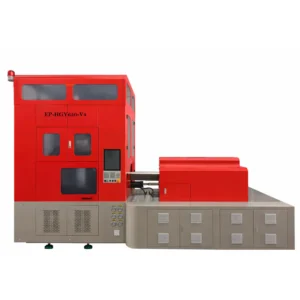
EP-HGY650-V4 | 4-Station Large-Format Injection Stretch Blow Moulding Machine
Three servo pump systems; Inovance/WEICHI servo motors rated at 75.7 KW; upper mould stroke of 1070 mm; blowing clamping force of 400 KN (single side); maximum bottle volume of 20 litres; take-out stroke of 300 mm. Designed specifically for the demands of large-format PET and PETG container production including 20-litre water cooler jugs.
| Spesifikasi | Nilai |
|---|---|
| Model Mesin | HGY650-V4 |
| Bahan yang Berlaku | PET / PETG |
| Diameter Sekrup (opsional) | 50 / 55 / 60 mm |
| Volume Injeksi Teoritis | 340 / 420 / 480 cm³ |
| Gaya Penjepitan Injeksi | 400 KN |
| Gaya Jepit Tiup | 400 KN (single side) |
| Tenaga Motor | 75.7 KW |
| Total Daya Mesin | 90.7 KW |
| Langkah Cetakan Atas | 1070 mm |
| Lower Mould Stroke | 550 mm |
| Blow Mould Stroke | 175 + 175 mm |
| Pukulan Inti Tiup | 300 mm |
| Take-Out Stroke | 300 mm |
| Tekanan Udara Tiup | 2,0 – 3,5 MPa |
| Tekanan Air Pendingin | 0,4 – 0,6 MPa |
| Volume Tangki Minyak | 600 L |
| Machine Size (L×W×H) | 6100 × 2600 × 4200 mm |
| Berat Mesin | 28 T |
| Volume Botol Maksimum | 20 liter |
| Max. Bottle Diameter (1 cavity) | 280 mm |
| Cavities Available | 1 (280 mm) / 2 (235 mm) / 3 (230 mm) / 4 (180 mm) |
| Max. Bottle Weight (1 cavity) | 900 g |
| Voltase | 370 – 400 V |
Global Market Context for 20-Litre Water Jug Production
The 20-litre water cooler jug market is driven by a fundamentally different dynamic than most consumer beverage packaging segments: it grows fastest in regions where domestic tap water quality is either unreliable or distrusted, and where a cold or hot water dispenser in the home or office is a mainstream appliance rather than a luxury. Those conditions describe a large and growing share of the global population, particularly across the Middle East, South Asia, Southeast Asia, Latin America, and parts of Africa — markets where the water cooler jug infrastructure is either established or rapidly developing.
In the Middle East — Saudi Arabia, the UAE, Kuwait, Qatar, and surrounding countries — 20-litre water jugs are effectively the standard domestic and office drinking water delivery format. Per-capita consumption of packaged water in these markets is among the highest in the world, and the jug format dominates over smaller bottles for the household segment. Production demand is substantial, and local manufacturing of jugs using large-format injection stretch blow moulding machines has become commercially significant as transport cost and lead time advantages of local production have become apparent to water companies and their packaging partners.
In India, the market known locally as the 20-litre “jar” is a dominant format for office and household water delivery, particularly in urban areas where packaged water services have displaced tap water consumption among middle-income households. FSSAI-regulated water companies purchasing jugs from local producers operating ISBM machines represent a large and growing procurement base. Brazil’s equivalent format — the galão de 20 litros — plays a similar role in the Brazilian urban water supply landscape, with ANVISA-regulated production standards governing both the water product and the container. Each of these markets has a distinct regulatory framework, a specific neck standard preference, and different attitudes toward PET versus PC materials — all of which need to be factored into the machine and mould tooling specification for manufacturers serving them.
Why Injection Stretch Blow Moulding Outperforms Extrusion for 20-Litre Jug Production
Extrusion blow moulding has historically been used for large-format water containers in some markets, particularly for HDPE jugs in North American office water service. But for PET and PC 20-litre jugs destined for modern water cooler dispensers with precision neck fitment requirements, the ISBM process has significant technical advantages that have made it the dominant forming technology for new capacity investments in this segment globally.
The injection-moulded neck finish on an ISBM jug meets water cooler dispenser neck standards without secondary trimming or reaming operations. Extrusion blow moulding produces a pinched-off neck that often requires post-forming trimming to achieve the dimensional tolerances demanded by snap-on dispenser caps and probe mechanisms. On a 20-litre jug produced at volume, eliminating this trimming step represents a significant operational cost saving.
Biaxial orientation during the ISBM stretch blow stage produces a jug body with substantially more uniform wall thickness than is achievable in extrusion blow moulding at this scale. For a returnable 20-litre jug, uniform wall thickness means consistent stacking strength (no weak zones), predictable drop resistance, and reliable cycle-life performance. Extrusion blow moulded large containers typically show pronounced wall thickness variation between the parting line area and the panel zones, which creates stress concentration points that shorten returnable service life.
The body of an ISBM-produced water jug is free of the parting-line flash seam that characterises extrusion blow moulded containers. For water jugs that are inverted into dispenser units and visible on desks and in offices, surface appearance is a brand consideration. The seamless ISBM body also has no flash trimming waste — reducing material use and eliminating the secondary flash removal operation that extrusion blow moulding requires on large containers.
Biaxial orientation in the ISBM process improves the mechanical properties of PET to the point where a lighter wall can meet the same structural specification as a heavier unoriented wall. For a 20-litre jug that may weigh 800–900 grams in standard specification, even a 5% resin reduction per container compounds significantly across millions of units per year — reducing material cost, carbon content per jug, and transport weight. This resin efficiency benefit is unavailable in extrusion blow moulding of comparable containers.
Tentang Kami
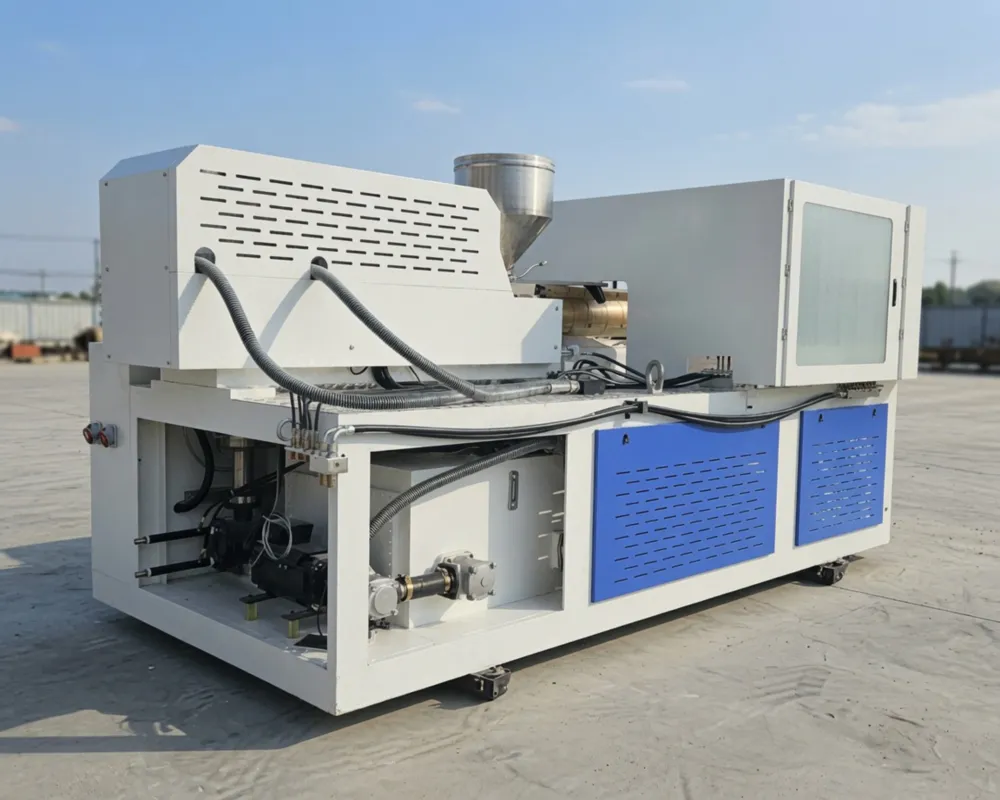
Our team has spent more than twenty years developing, manufacturing, and supporting injection stretch blow moulding machines across the full format range — from compact 3-station machines for small-format pharmaceutical and cosmetic containers through to large-format 4-station platforms purpose-built for 20-litre water jug production. Operating from a production facility of over 20,000 square metres with a fully integrated supply chain, we deliver complete machine solutions including servo control systems, hydraulic components, and custom mould tooling for large-format water container applications.
Our large-format ISBM machines have been deployed in water jug production operations across the Middle East, South Asia, Southeast Asia, Latin America, and Europe. We understand the specific technical requirements of 20-litre jug production — from the neck finish precision demanded by water cooler dispenser standards to the wall specification needed for returnable-format cycle-life performance — and we can support material qualification, mould design consultation, and regulatory documentation for the markets our customers serve. Our goal is to be the most technically capable and commercially reliable large-format injection stretch blow moulding machine partner in the global water packaging market.
Bengkel
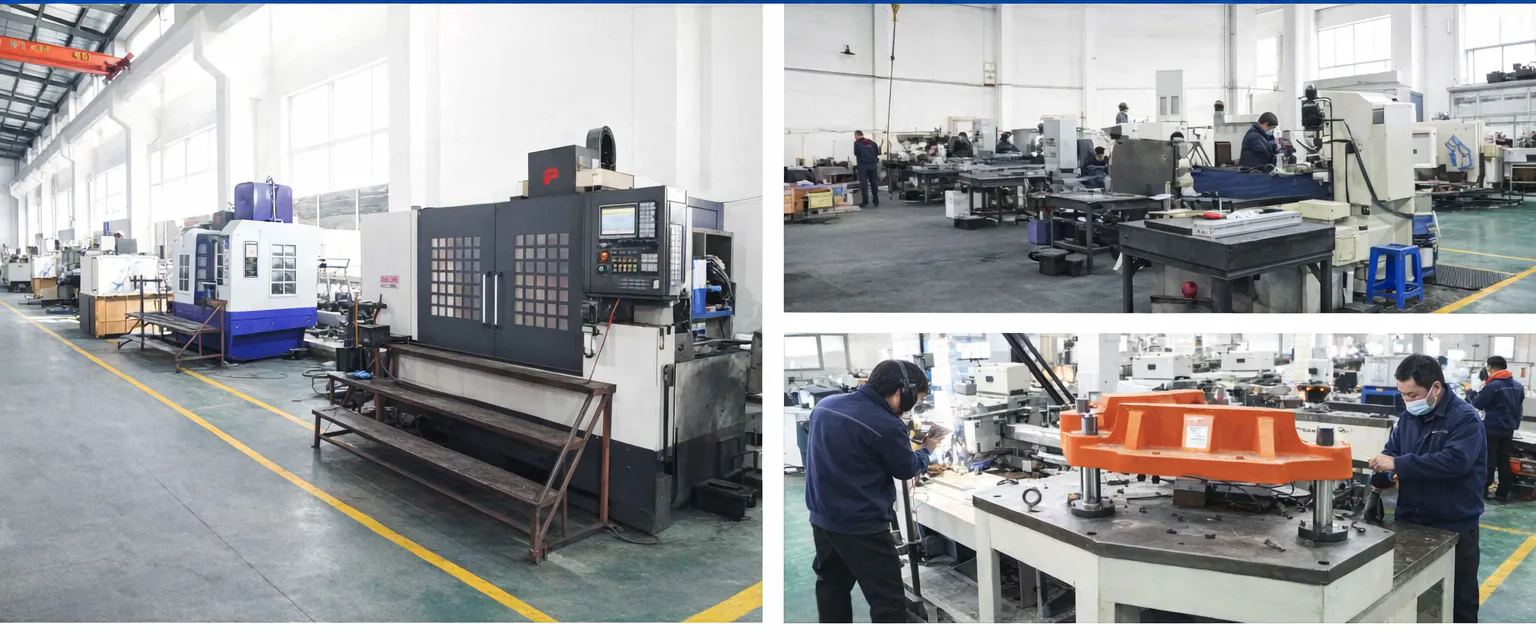
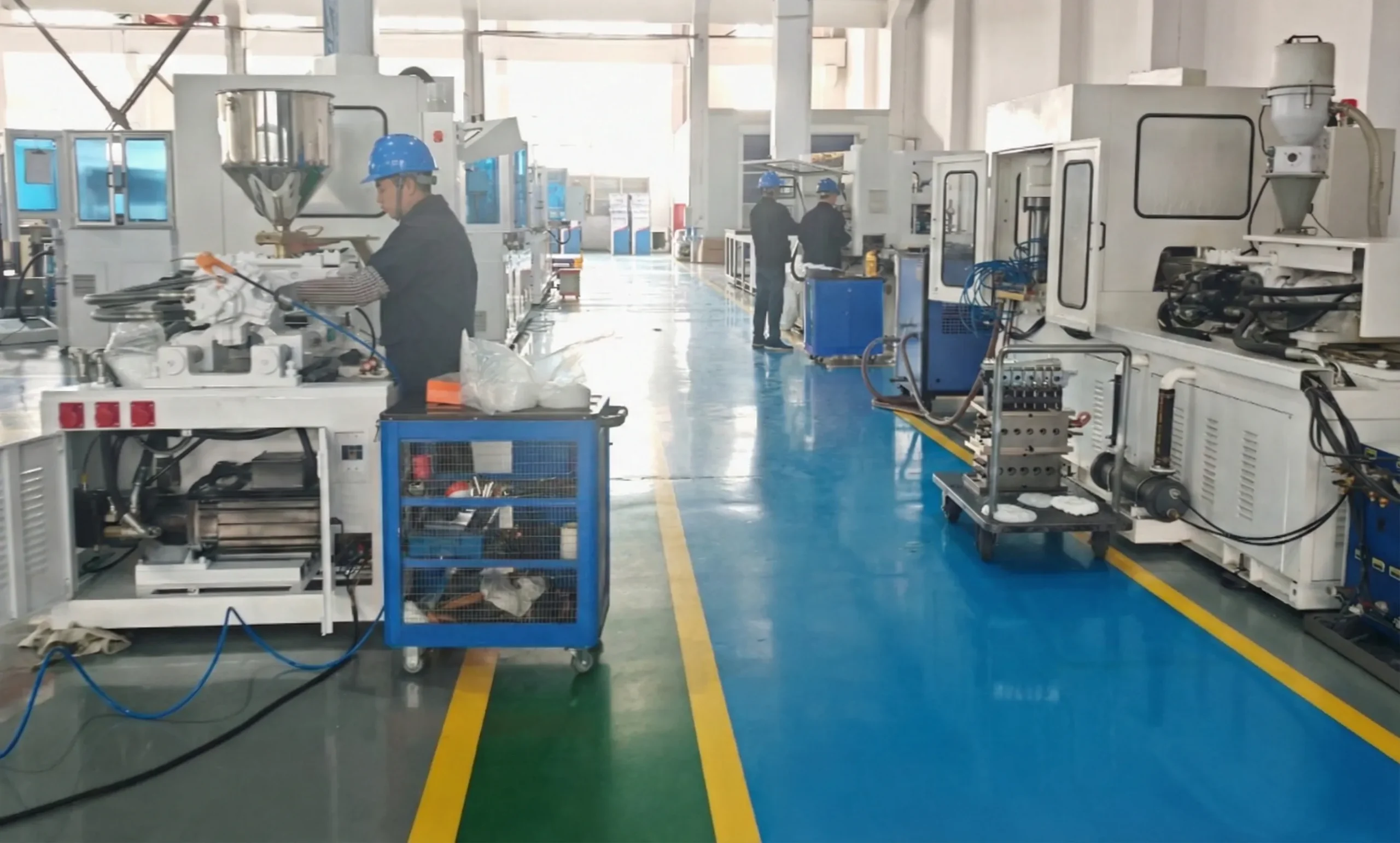
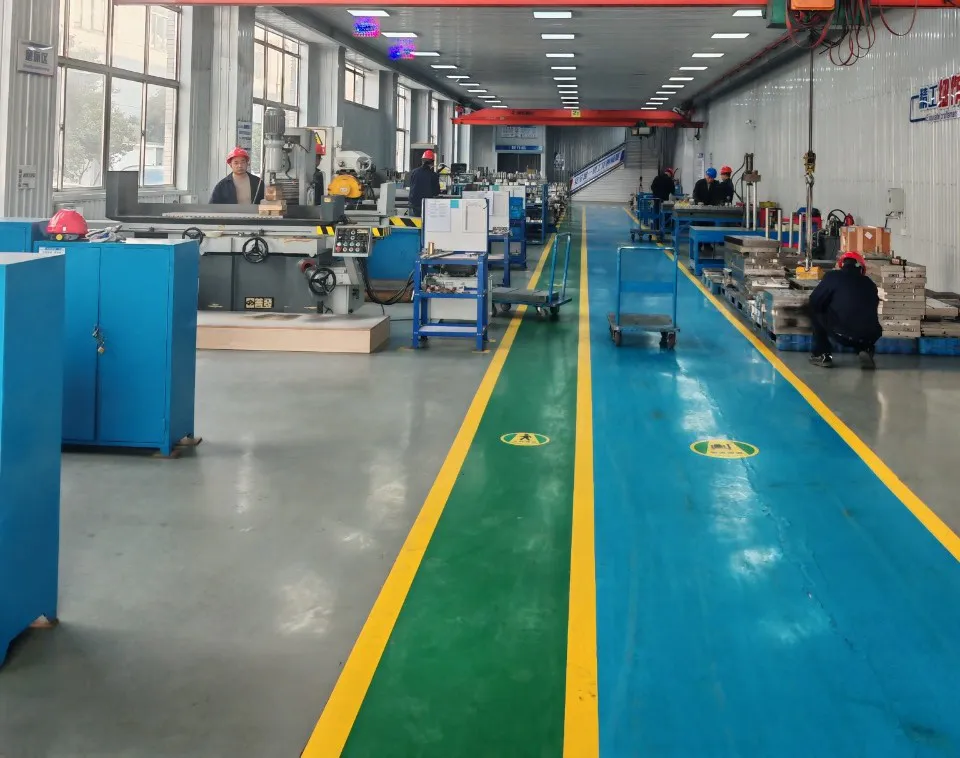
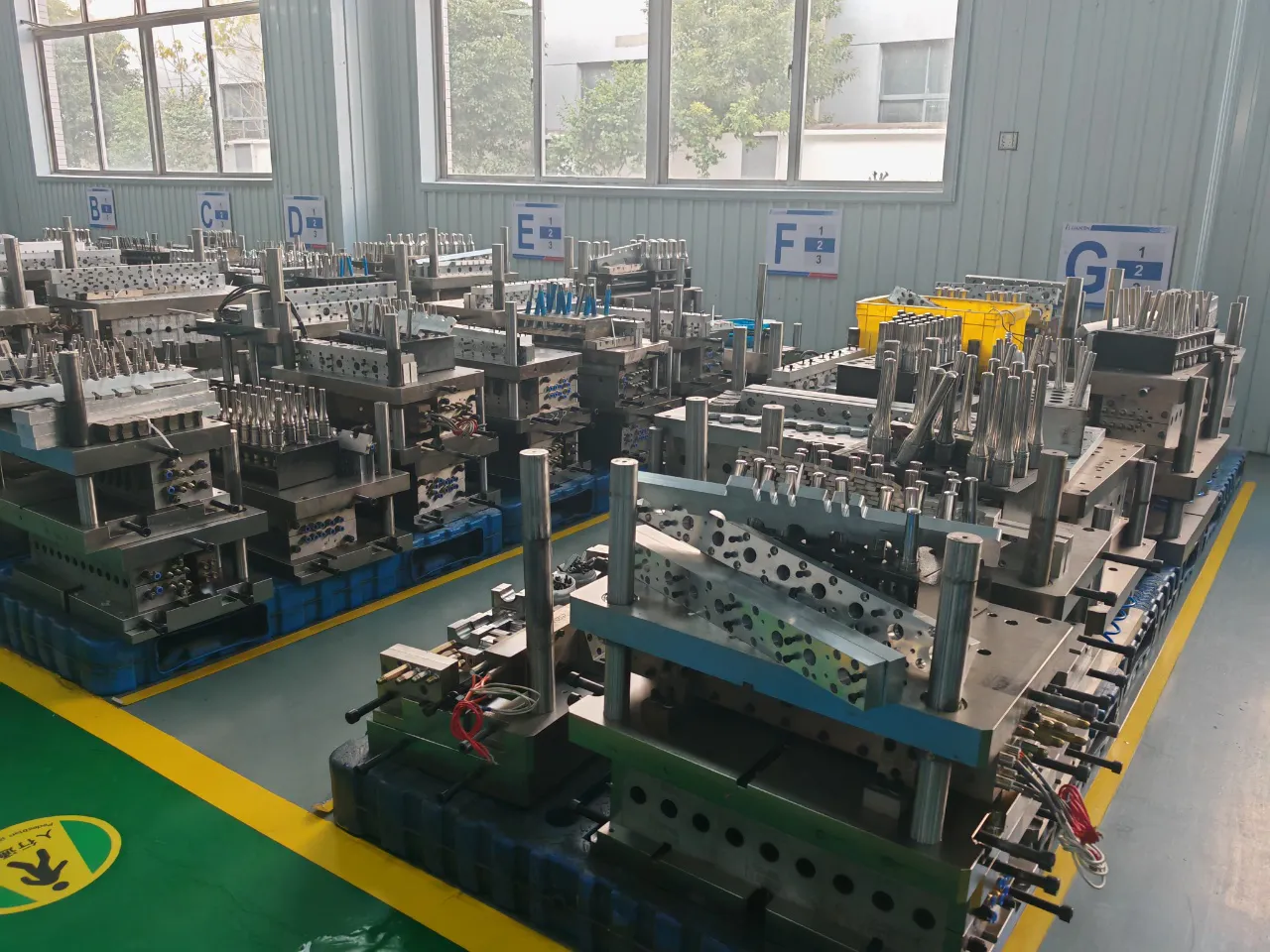
System-Compatible Equipment for Large-Format Water Jug Production Lines
A complete 20-litre water jug production line operating on a large-format injection blow moulding machine requires matched peripheral equipment. The following are available as part of a one-stop system supply to ensure compatibility and optimise total line performance:
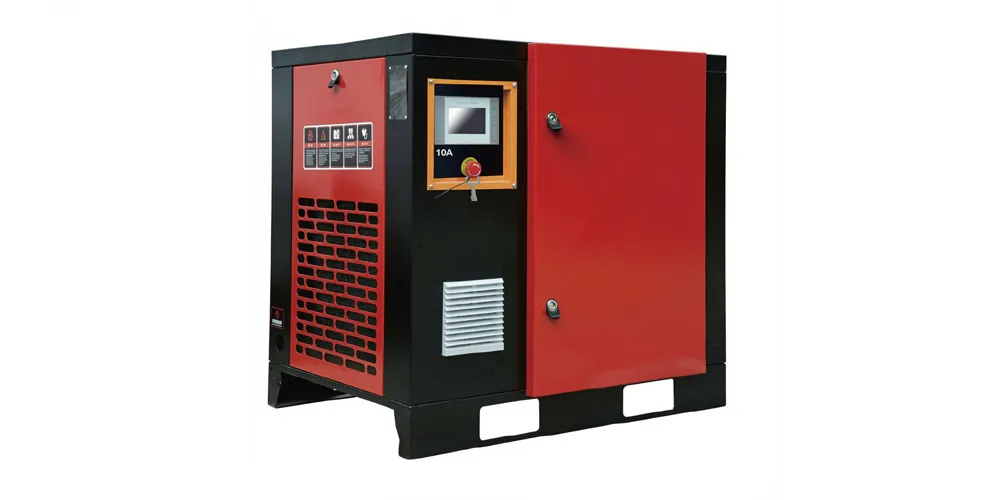
Oil-Free Air Compressor
Large-format 20-litre jug production requires significantly more compressed air volume per cycle than small-format bottle production — a single 20-litre jug blow cycle consumes a substantially larger volume of blow air than a 500 ml bottle cavity. The compressor specification must account for both the pressure requirement (2.0–3.5 MPa) and the volumetric flow rate demanded at the HGY650-V4 blow station. For drinking water containers, oil-free compressor technology is mandatory — any hydrocarbon contamination in the blow air creates a food contact safety issue that violates FDA 21 CFR, EU EC 1935/2004, FSSAI, and GCC GSO food contact standards. Our oil-free compressor range is available in configurations sized to the specific air volume demands of large-format ISBM jug production.
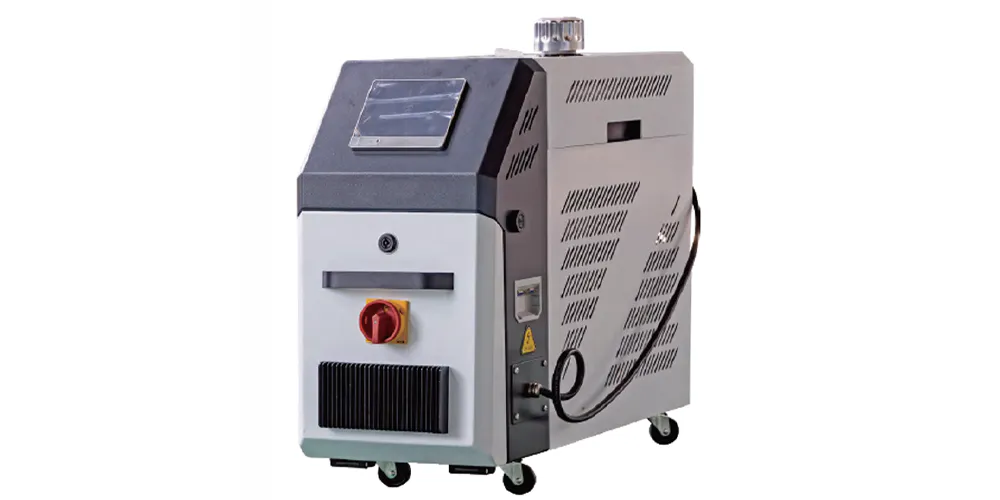
Pengontrol Suhu Cetakan
The cooling phase for a 20-litre jug mould is proportionally longer and more thermally demanding than for small-format containers. The mould surface must extract heat from a much larger PET mass, and the rate of cooling directly affects the crystallinity and stress distribution of the jug body — which in turn determines cycle-life performance in returnable service. A mould temperature controller operating at the machine’s cooling water pressure of 0.4–0.6 MPa provides consistent mould surface temperature across production runs, ensuring each jug exits the machine with the same crystallinity profile and wall temperature distribution. This consistency reduces jug-to-jug variation in structural performance and supports returnable format qualification testing against consistent samples.
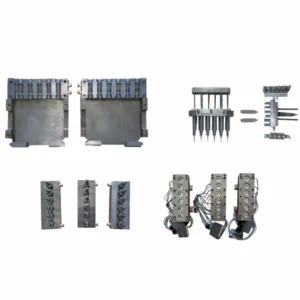
One-Step Injection Stretch Blowing Mould
Large-format mould tooling for 20-litre water jug production is engineered to the specific neck standard (55 mm Snap-On or 70 mm Screw-Cap), body geometry, and blow expansion ratio required for the target jug design. Injection preform cavity and blow mould cavity are designed as an integrated tooling set, ensuring that the preform geometry and blow ratio are matched for consistent wall distribution across the jug body height of up to 510 mm. Cavity steel grade is selected for the processing temperature of PET or PC and the expected production volume. Single-cavity tooling is standard at 20-litre scale; dual-cavity (2-up) tooling is available at 12-litre and below, subject to machine mould stroke capacity confirmation.
Specify Your 20-Litre Water Jug Production Line
Whether you are establishing a new water jug production facility, upgrading existing equipment to handle 20-litre PET formats, or evaluating PET versus PC for a returnable jug programme in your market — our technical team is ready to support your specification from resin selection and mould design through to machine commissioning and regulatory documentation.
Pertanyaan yang Sering Diajukan
What is the best large-format injection stretch blow moulding machine for producing 20-litre PET water jugs for the Middle East water cooler market?
The EP-HGY650-V4 is the machine specifically designed for this application — its upper mould stroke of 1070 mm, blowing clamping force of 400 KN (single side), and maximum bottle volume of 20 litres make it the correct technical specification for 20-litre jug production. For Middle East markets, confirm that the mould tooling is specified to the neck standard used in your target market (typically 55 mm Snap-On for most GCC water cooler services) and that the PET resin grade carries GSO and relevant national food contact documentation. Local production in GCC countries avoids significant import costs and lead time — making in-country ISBM jug production commercially attractive for established water companies.
How many return cycles can a 20-litre PET water jug produced on an injection stretch blow moulding machine typically handle before retirement?
PET water jugs produced on large-format ISBM machines with appropriate wall specification and biaxial orientation typically achieve 15–25 return cycles in commercial water cooler service before retirement, depending on the wash protocol, handling conditions, and physical inspection criteria applied. PC jugs can reach 30–50 cycles but carry higher material cost and, in some markets, regulatory scrutiny around bisphenol compounds. The actual cycle life achieved depends on the jug wall thickness specification, the sanitising chemistry used (concentration and temperature), the physical handling practices of the water delivery service, and the rejection criteria applied at the wash-and-inspect station.
Which injection blow moulding machine specifications should an Indian water company look for when sourcing equipment to produce 20-litre jars compliant with FSSAI IS 14543?
For FSSAI IS 14543-compliant 20-litre jar production in India, the key machine specifications to confirm are: injection clamping force sufficient for the preform cavity (400 KN recommended at 20-litre scale), upper mould stroke of at least 1000 mm for the jug body height, and PET/PETG material compatibility with IS 12252 food contact resin grades. Also confirm that the machine barrel and screw system are rated for the melt temperature required by the specified food contact PET grade. At the documentation level, the resin supplier should provide IS 12252 compliance certification, and the water product should be tested in the container per FSSAI bottled water regulations before commercial launch.
What is the difference between using PET and PC on a large-format injection stretch blow moulding machine for 20-litre water cooler jug production?
PET at 20-litre scale requires a lower melt temperature (265–285°C vs. 280–320°C for PC), is fully recyclable through established PET recycling streams in most markets, and avoids the bisphenol regulatory scrutiny that applies to conventional PC in an increasing number of jurisdictions including South Korea, Japan, and several EU member states. PC offers higher cycle-life (30–50 vs. 15–25 for PET), superior drop-impact resistance, and inherently better clarity without UV additive packages. For new installations in markets where regulatory direction on bisphenol compounds is uncertain, PET is the lower-risk long-term choice. For markets where premium returnable service is the business model and cycle life is the primary commercial driver, BPA-free PC with documented regulatory clearance for the specific market remains a viable specification.
Where can a water company in Southeast Asia get a quote for an industrial injection blow molding machine capable of producing 20-litre PET water jugs at commercial volume?
To receive a meaningful quotation for a 20-litre PET jug ISBM machine, have the following ready: target output per hour (jugs per hour), target jug weight range, preferred neck standard (55 mm Snap-On, 70 mm Screw-Cap, or other), single-trip versus returnable specification, PET resin grade if already selected, and available electrical supply (voltage and capacity). Use the contact link on this page to submit these details, and our technical team will recommend the appropriate machine platform, mould configuration, and ancillary equipment package with a response within one business day.
How does the injection blow moulding machine process for 20-litre PET jugs compare to extrusion blow moulding in terms of neck finish quality and dispenser compatibility?
The neck finish of an ISBM-produced 20-litre jug is formed in the injection moulding stage under full dimensional control, achieving the ±0.2–0.3 mm tolerances required by water cooler dispenser probe and snap-on cap standards without secondary trimming operations. Extrusion blow moulded large containers produce a pinched-off neck that frequently requires post-forming trimming or reaming to achieve adequate concentricity and dimensional accuracy for snap-on dispenser cap engagement. For water companies operating dispenser fleets where neck-to-dispenser fitment consistency is a service quality issue, the ISBM neck finish advantage translates directly into fewer dispenser seal failures and lower field service costs.
What NSF/ANSI 61 or FDA requirements apply to 20-litre PET water jug production in the United States and how does the ISBM process support those requirements?
In the United States, 20-litre water cooler jugs are regulated as bottled water containers under FDA 21 CFR Part 129 (which covers production standards for bottled water facilities) and food contact materials under 21 CFR 177.1630 (PET). NSF/ANSI 61 certification applies to components of drinking water distribution systems, and while it primarily targets plumbing components, some water companies require NSF 61 evaluation for returnable jug materials in commercial service. The ISBM process supports FDA 21 CFR Part 129 compliance by producing containers from defined, documented resin grades under controlled process conditions — the process data records from servo-controlled machines provide the batch-level documentation that 21 CFR Part 129-registered facilities may require as part of their quality systems.
How does the cost of producing 20-litre PET water jugs on a large-format injection stretch blow moulding machine compare to importing pre-made jugs for a water company in Brazil or Latin America?
The economic case for local ISBM jug production versus jug importation in Brazil and Latin America generally favours local production at volumes above approximately 1–2 million jugs per year, when import duties, freight, inventory cost, and lead time risk are fully modelled. A 20-litre jug is a very low-value-to-volume product — the freight cost per jug shipped internationally is disproportionately high relative to the container value. Local ISBM production eliminates this freight cost entirely, allows supply-demand matching without safety stock, and in Brazil provides ANVISA-regulated documentation from a domestic facility. The capital investment in the machine and tooling is typically recovered within 24–48 months for operations at this volume level.
When should a water jug manufacturer consider a replacement injection stretch blow moulding machine versus upgrading existing large-format blow moulding equipment?
Replacement is typically the better option when the existing equipment has a hydraulic system that cannot reliably hold neck-finish tolerances within water cooler dispenser standards, when maintenance costs are escalating due to wear of hydraulic seals and valve bodies, when the machine cannot accommodate newer jug tooling formats or lighter-wall specifications demanded by the market, or when energy consumption per jug produced is significantly above the current servo-pump benchmark. Upgrading existing equipment is viable when the structural frame and core mechanisms are sound but control systems are outdated — PLC and servo drive upgrades on otherwise serviceable machines can restore process consistency without full machine replacement. Our technical team can advise on which path is appropriate based on the specific machine age, condition, and production requirement.
Editor: PXY