Food & Beverage — Edible Oil Packaging
A technical reference for edible oil packaging engineers, brand owners, and contract manufacturers evaluating injection stretch blow moulding machine platforms for PET, PETG, and PP oil bottle production across global markets.
Edible oil is one of the most demanding food packaging applications for plastic containers — and one of the most consequential from a consumer safety perspective. The combination of high fat content, oxygen sensitivity, light sensitivity, and the need for long ambient shelf life creates a precise set of requirements for the bottle that holds the product. Add the complexity of international trade, where a bottle produced in one market may be required to meet food contact regulations in three others, and the packaging engineer faces a specification challenge with little margin for error.
Injection stretch blow moulding machines have become a mainstream technology for edible oil bottle production precisely because the process delivers the combination of properties the category demands: biaxially oriented PET walls with superior oxygen and moisture barrier performance, injection-moulded neck finishes that achieve consistent torque performance with tamper-evident closures, and dimensional uniformity that allows label application and filling line operation at high speeds without container-to-container variation. This article explores the technical and commercial case for ISBM technology in edible oil bottle manufacturing in detail — covering material selection, process architecture, barrier engineering, shelf-life implications, global food contact compliance, and the equipment specifications best suited to this application.
Why Edible Oil Packaging Demands More from the Container
Vegetable oils, olive oils, sunflower oils, and specialty culinary oils oxidise when exposed to oxygen. This oxidation — which produces the characteristic rancid odour and off-flavour that makes spoiled oil unmistakable — is accelerated by light exposure and by elevated temperature. For a consumer oil product with an expected shelf life of 12–24 months sitting on an ambient retail shelf or in a household pantry, the container must function as a barrier system, not merely a structural vessel. The rate at which oxygen permeates through the bottle wall, and the rate at which UV and visible light penetrates to the product, are both packaging performance parameters that directly determine whether the oil inside remains organoleptically acceptable at the end of its stated shelf life.
Beyond barrier performance, edible oil bottles have filling line requirements that place specific demands on container dimensional consistency. High-speed rotary oil filling lines — particularly those operating with vacuum filling or under-cap flushing with nitrogen — require neck finish concentricity and body circumference consistency that avoids starwheel jams, miss-fills, and capping torque variation. Container-to-container variation in wall thickness also affects label adhesion: a bottle with a thin-spot on the label panel that deflects under normal handling will present a wrinkled label on the retail shelf, regardless of how well the label was applied at the packaging line. All of these requirements point toward a forming process that produces containers with controlled, consistent geometry and material properties — which is precisely what the injection stretch blow moulding machine process delivers.
Oxygen transmission rate (OTR) through the bottle wall must be low enough to prevent peroxide-driven oxidation within the product shelf life at ambient storage temperature
UV and visible light accelerates oxidation of unsaturated fatty acids; amber or opaque pigmentation of the PET bottle wall, or UV-stabilising additives in clear bottles, is required for light-sensitive oils
The container must not contribute off-flavours or odours to the oil; acetaldehyde migration from PET is a key concern for premium olive oils and must be managed through resin selection and process parameter control
1-litre to 5-litre edible oil bottles must maintain shape under shelf stacking forces and during distribution; ISBM biaxial orientation significantly improves compressive stiffness relative to wall thickness
Manufacturing Structure: How the ISBM Process Addresses Oil Bottle Requirements
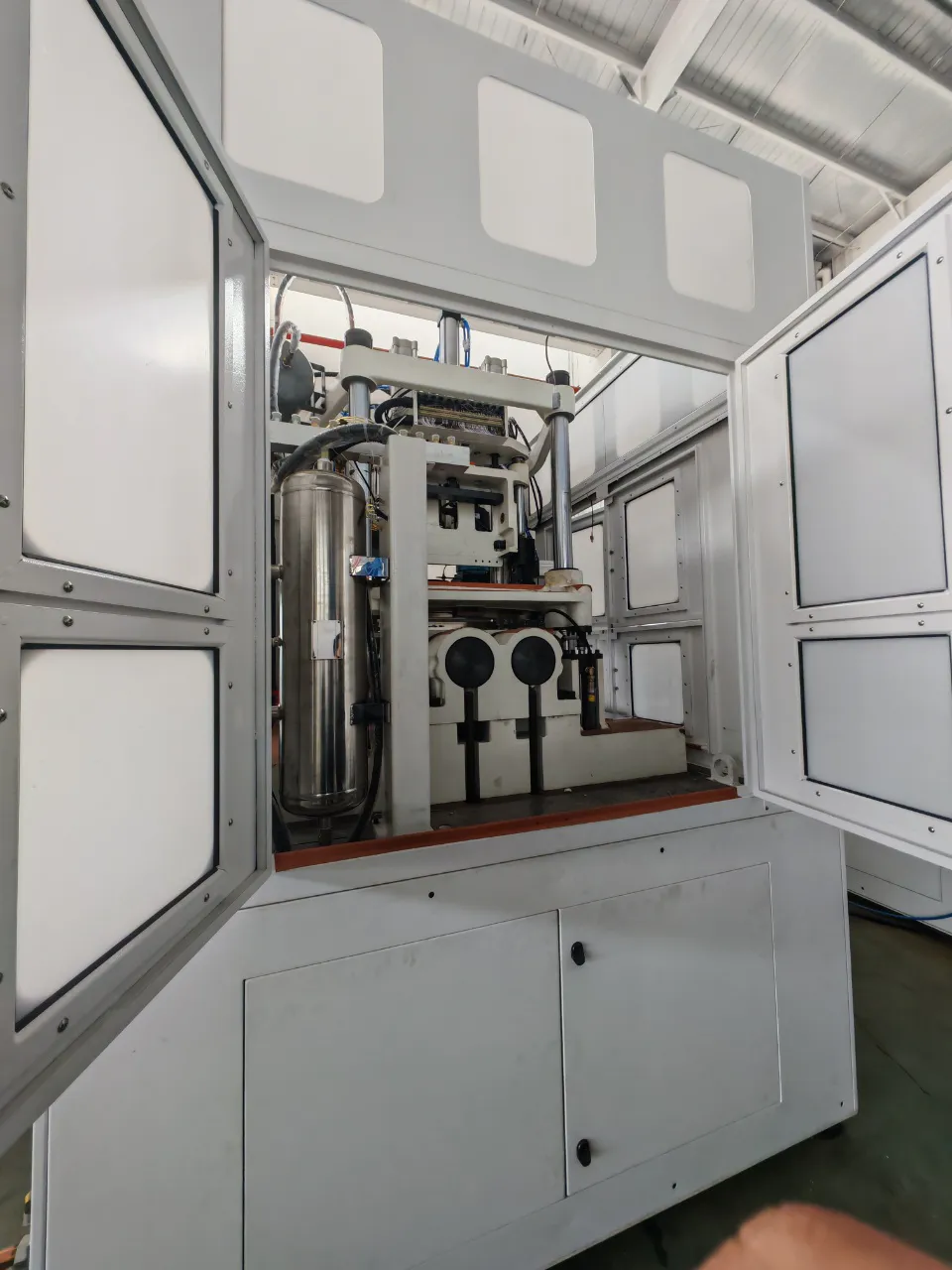
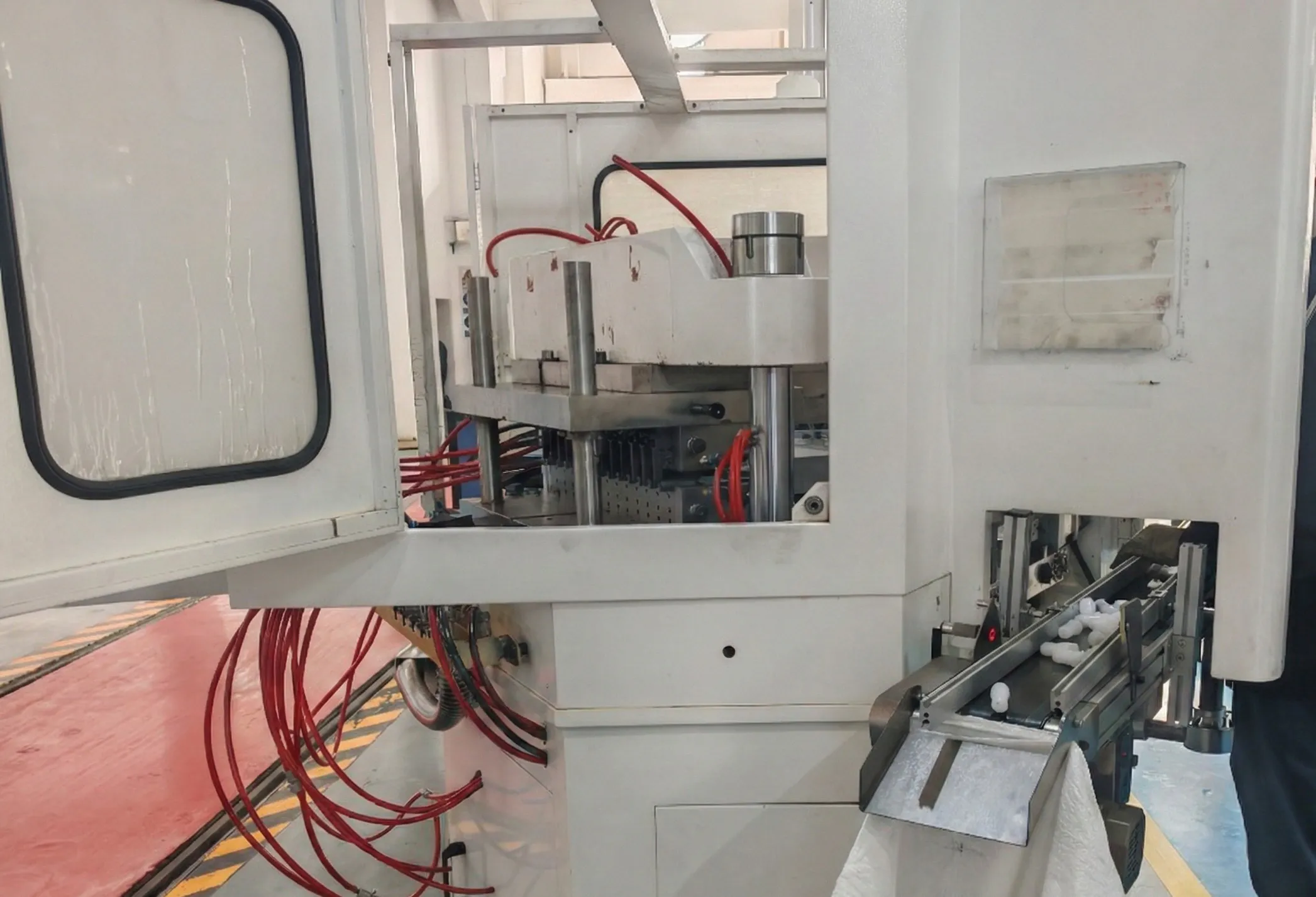
The one-step injection stretch blow moulding machine produces edible oil bottles through a continuous four-station sequence that gives the process engineer direct control over every variable affecting the barrier and structural performance of the finished container. Understanding what happens at each station — and why it matters for oil bottle quality — is the foundation for specifying both the machine and the mould tooling correctly.
| Station | Operation | Edible Oil Bottle Significance |
|---|---|---|
| 1 — Injection | Resin injected into the preform cavity at precisely controlled melt temperature and residence time; neck geometry formed here | Melt temperature and residence time directly control acetaldehyde generation in PET — the primary flavour migration concern for premium edible oils. Neck finish concentricity for tamper-evident closure torque is set at this station |
| 2 — Conditioning | Preform temperature profiled to achieve optimal biaxial orientation temperature distribution across wall sections of varying thickness | Uniform preform temperature ensures consistent stretch orientation across the bottle body — directly controlling wall thickness distribution and therefore barrier uniformity from base to shoulder |
| 3 — Stretch Blow | Mechanical stretch rod plus 2.0–3.5 MPa blow air achieves biaxial molecular orientation in the bottle body | Biaxial orientation is the primary mechanism for improving OTR in PET oil bottles. Higher biaxial orientation = tighter polymer chain packing = lower gas permeability. The stretch ratio achieved here directly determines the barrier performance of the finished container |
| 4 — Take-Out | Finished bottle ejected; mould cooling dwell time determined by container wall mass and crystallinity target | Adequate cooling before ejection prevents post-ejection distortion of the label panel — critical for label adhesion performance on high-speed self-adhesive label application equipment used by oil bottlers |
The one-step architecture of the injection stretch blow moulding machine provides a meaningful process advantage for edible oil bottles specifically at the acetaldehyde management step. In two-step reheat stretch blow moulding, the preform is reheated for the second time before blowing — a thermal event that can generate additional acetaldehyde from PET if temperature control is not precise. In the one-step process, the preform moves directly from injection to blow without a reheating step; the only thermal history the material experiences is the single injection moulding cycle. For premium olive oil and specialty culinary oil brands where flavour purity is a key attribute, this single-thermal-cycle advantage is commercially meaningful — and distinguishable in consumer sensory panel testing at the end of a 12-month shelf storage trial.
Material Systems for Edible Oil Bottles
The choice of resin for an edible oil bottle affects barrier performance, clarity, light transmission, recyclability, and food contact regulatory status in every market the product will be sold. There is no single universally correct answer — the optimal material depends on the specific oil type, the intended shelf life, the retail positioning of the brand, and the regulatory framework of the target market. The following comparison covers the primary resin candidates processable on injection stretch blow moulding machines.
| Bahan | Oxygen Barrier (OTR) | Oil Compatibility | Clarity / Colour Options | Typical Edible Oil Applications |
|---|---|---|---|---|
| PET (standard) | Moderate — improved ~5–8× vs. unoriented PET by biaxial orientation; adequate for 12-month shelf life in many oil categories | Good; low extractable profile; acetaldehyde management required for high-sensitivity oils | Clear (standard); amber; green; opaque white — amber/green preferred for light-sensitive oils | Sunflower oil, rapeseed oil, blended vegetable oils (1L–5L); dominant global format |
| PET with passive barrier (wall colour) | Equivalent OTR to standard PET; light barrier improved by amber or green pigmentation to block UV and visible light oxidation triggers | Same as standard PET; pigment additives must be on the food contact approved substance list | Amber or dark green — significantly reduces light transmission; olive oil sector preference | Extra virgin olive oil (EVOO), premium cold-pressed oils where light sensitivity is the primary shelf-life driver |
| PET + active barrier additive | Enhanced — oxygen scavenging additives (e.g. iron-based or MXD6-blend) reduce effective OTR by actively consuming oxygen permeating the wall; suitable for 18–24 month EVOO shelf life | Compatible; scavenger additive must have food contact approval in target market | Typically amber or green to combine active + passive barrier | Premium EVOO and specialty oils with 18–24 month shelf life requirement; export formats |
| PETG | Similar to PET; lower crystallinity development limits barrier enhancement relative to standard PET at equivalent stretch ratio | Good oil compatibility; no acetaldehyde concern; lower light barrier unless pigmented | Excellent clarity; pigmentable | Premium specialty oils where exceptional clarity is a brand priority; shorter shelf-life formats |
| PP | Lower oxygen barrier than PET; suitable for shorter shelf life bulk oil formats; higher moisture barrier than PET | Excellent oil and fat resistance; no acetaldehyde; flavour-neutral | Naturally translucent; pigmentable to opaque formats | Institutional / foodservice oil containers; coconut oil; palm oil; bulk formats where rapid turnover limits shelf life concern |
For the global edible oil market, PET remains the dominant material choice across volume segments from 500 ml consumer bottles to 5-litre family-size containers. The biaxial orientation achieved in the ISBM process improves PET oxygen barrier performance by 5–8 times compared to unoriented PET — a function of the chain alignment that makes the oriented polymer network significantly less permeable to small-molecule gas diffusion. For standard vegetable oils with 12-month shelf life targets, this oriented-PET barrier is adequate without any active oxygen scavenger additive. For premium extra virgin olive oil with 18–24 month shelf life claims or for export products spending months in transit before retail sale, combining amber or green pigmentation with an oxygen scavenging additive in the PET wall provides the total barrier performance the product requires.
Barrier Engineering for Edible Oil PET Bottles: Orientation, Pigmentation, and Active Additives
The oxygen barrier performance of a PET edible oil bottle is not a fixed property of the resin — it is the outcome of a set of process and design decisions made at the forming stage. Understanding the mechanics of barrier enhancement in PET helps oil packaging engineers specify the right combination of container design, material selection, and ISBM process parameters for their specific product shelf-life requirement.
Biaxial orientation is the primary mechanism. During the stretch blow stage, the mechanical stretch rod extends the preform axially while blow air expands it radially, aligning the PET polymer chains in two perpendicular directions simultaneously. This biaxial chain alignment reduces the free volume in the amorphous polymer network — the spaces through which oxygen molecules diffuse — and therefore reduces the oxygen transmission rate through the oriented wall. The degree of orientation achieved depends on the stretch ratio (the ratio of final bottle dimension to preform dimension in each direction) and the temperature at which blowing occurs. On a well-controlled injection stretch blow moulding machine with stable conditioning temperature, consistent stretch rod velocity, and calibrated blow air pressure, the stretch ratio can be held within tight limits that produce a predictable OTR from bottle to bottle across a production run.
Light barrier management is the second dimension. PET is naturally transparent — it transmits broadly across the visible and near-UV spectrum. For oils where photooxidation (light-triggered oxidation) is the primary shelf-life driver — primarily extra virgin olive oil but also cold-pressed rapeseed and flaxseed oils — a clear PET bottle provides insufficient protection unless an opaque outer carton is used. Amber or dark green pigmentation of the PET wall reduces light transmission substantially, with amber providing the broadest light-blocking coverage across both UV and visible ranges. The pigment masterbatch must be added in the injection moulding stage, and the masterbatch supplier must confirm that the pigment is on the positive list of permitted food contact additives in every market where the bottle will be used.
| Barrier Strategy | Mechanism | Shelf Life Extension | Typical Application |
|---|---|---|---|
| Biaxial orientation alone | Chain alignment reduces O₂ diffusion path through amorphous PET network | Up to 12 months for standard vegetable oils at ambient storage | Sunflower, rapeseed, blended vegetable oil in clear or lightly tinted PET |
| Orientation + amber/green pigmentation | OTR reduction via orientation + light transmission reduction via pigment | 12–18 months for light-sensitive oils including EVOO at ambient retail shelf | Extra virgin olive oil, cold-pressed specialty oils, premium retail formats |
| Orientation + active oxygen scavenger | Chain alignment + scavenger molecule consumes O₂ permeating through wall | 18–24 months for premium oils; suitable for export shelf-life requirements | Export EVOO, premium cold-pressed oils, long-transit supply chains |
| Orientation + pigment + active scavenger | Combined active and passive barrier protection against both oxidative and photooxidative degradation | Maximum shelf life protection; 24+ months possible for EVOO in amber PET with scavenger | Premium EVOO export, long-shelf-life specialty oil formats for international retail |
Global Regulatory Framework for Edible Oil Plastic Packaging
Edible oil packaging sits at the intersection of general food contact material regulation and, in some markets, specific regulations governing oil labelling, packaging materials, and bottle colouring that reflect historic quality concerns — particularly around olive oil adulteration and photooxidation. The regulatory landscape is more fragmented than for, say, bottled water or pharmaceutical packaging, because edible oil has a longer history of artisanal and regional production with national quality standards that predate the modern harmonised food contact frameworks.
| Market | Key Regulation | Relevance to ISBM Edible Oil Bottle Production |
|---|---|---|
| Uni Eropa | EU Regulation 10/2011 (plastic food contact materials); Commission Regulation (EU) 1308/2013 (olive oil marketing standards); EC 1935/2004; EU PPWR 2024 | EU 10/2011 governs substance lists and migration limits for PET, PETG, and PP food contact; Regulation 1308/2013 specifies that retail olive oil packaging must be in containers of 5 litres or less, with closure requirements; PPWR 2024 mandates recyclable design — mono-material PET ISBM bottles comply; pigments and additives must appear on the positive list |
| United States | FDA 21 CFR 177.1630 (PET food contact); FDA 21 CFR 177.1520 (PP food contact); 21 CFR Part 101 (food labelling); FDA Threshold of Regulation for incidental migrants | PET resin for edible oil contact must comply with 21 CFR 177.1630; any additive (oxygen scavenger, pigment, UV stabiliser) used in the food contact layer must have appropriate FDA clearance; 21 CFR Part 101 food labelling rules specify fill volume requirements applicable to oil packaging |
| United Kingdom | UK Food Contact Materials Regulations 2012 (SI 2012/2619); UK Olive Oil Regulations; UK Plastic Packaging Tax 2022 | UK FCM framework substantially mirrors EU Regulation 10/2011 post-Brexit; UK Olive Oil Regulations specify container integrity requirements; UK PPT at £217.85/tonne for packaging below 30% recycled content — mono-material PET ISBM oil bottles are recyclable and support rPET incorporation strategies |
| Spain / Italy / Greece (EU olive oil major producers) | EU Regulation 1308/2013 + national quality specifications; EU Regulation 2568/91 (olive oil quality characteristics); IOC quality standards (International Olive Council) | IOC standards recommend dark glass or dark PET for extra virgin olive oil to protect against photooxidation; EU 1308/2013 limits retail EVOO container size to 5 litres; national olive oil PDO specifications may specify container requirements for origin-protected products |
| India | FSSAI Food Safety and Standards (Packaging) Regulations 2018; BIS IS 12252 (PET food contact); Prevention of Food Adulteration Act; FSSAI Edible Oils Standards | FSSAI Packaging Regulations 2018 specify migration testing requirements for plastic containers used for edible oils; IS 12252 governs PET food contact in India; India is a large and growing market for PET edible oil bottles (1L–5L sunflower, groundnut, palm, and blended oils) produced on ISBM machines for local brands |
| Southeast Asia (Indonesia, Malaysia, Thailand, Vietnam, Philippines) | ASEAN food packaging framework; SNI standards (Indonesia); MESTI Malaysia; Thai FDA; TCVN Vietnam food contact standards | Southeast Asia is the world’s largest palm oil production region; local edible oil (palm, coconut, blended) packaged in PET bottles produced by regional ISBM operations for domestic and export markets; national food contact standards based on ISO and Codex Alimentarius principles apply |
| Middle East (GCC) | GSO 993 (food contact plastics); individual national standards (SASO Saudi Arabia, ESMA UAE); Codex Alimentarius edible oils standards | GCC imports large volumes of edible oil (sunflower, corn, blended vegetable) in PET bottles; local PET oil bottle production using ISBM machines is growing; GSO 993 governs food contact material compliance; SASO and ESMA conformity marks required for Saudi and UAE markets |
| Brazil | ANVISA RDC 498/2021 (food contact plastics); MAPA Resolution (edible oils and fats); ABNT standards for food packaging | Brazil is a large edible oil producer and exporter (soybean, sunflower, corn); ANVISA RDC 498 governs food contact material substances for PET and PP oil bottles; MAPA regulates edible oil product standards including packaging requirements |
| Japan | Food Sanitation Act (MHLW); JHOSPA positive list; Japan Edible Oil Standards (NFS) | JHOSPA positive list governs permitted substances in PET and PP food contact for edible oil applications; Japan’s premium cooking oil market (sesame oil, rice bran oil) uses small-format PET bottles with high clarity requirements — ISBM-produced PETG or standard PET meets this need |
| Australia / New Zealand | FSANZ Standard 2.4.1 (edible oils); FSANZ Standard 1.4.1 (contaminants); APCO packaging recyclability guidelines | FSANZ Standards govern labelling and composition of edible oils; food contact material migration limits apply to PET containers; APCO guidelines support recyclable mono-material PET oil bottles; olive oil and premium specialty oil imports in PET are a growing retail category |
A notable regulatory specificity for the olive oil sector is that several national and supranational frameworks either recommend or effectively require dark-coloured packaging — amber glass or amber/dark green PET — for retail extra virgin olive oil, particularly for protected designation of origin (PDO) and protected geographical indication (PGI) products. Producers using ISBM technology to produce dark amber or green PET olive oil bottles should verify that the specific pigment grade used is on the EU Regulation 10/2011 positive list and that migration testing has been conducted in food simulants appropriate to oil (simulant D1, 95% ethanol, and simulant D2, vegetable oil, per EN 1186 or equivalent) before the resin-additive combination is released for commercial production.
Edible Oil Bottle Formats Produced on Injection Stretch Blow Moulding Machines
The edible oil category spans a wide range of container formats by volume, neck finish, body shape, and consumer handling requirement. Injection stretch blow moulding machines produce all of the major formats used in global edible oil retail and foodservice packaging, and the multi-cavity capability of 4-station and 6-station platforms allows efficient production of multiple SKUs across the format range.
| Container Format | Volume | Bahan | Key Specification Driver | Market Segment |
|---|---|---|---|---|
| Consumer oil bottle (standard) | 500 ml – 1 L | PET (clear or amber) | OTR, clarity, label panel flatness, tamper-evident neck | Retail sunflower, vegetable, and olive oil; global mainstream format |
| Premium EVOO bottle | 250 ml – 750 ml | Amber or dark green PET | Light barrier + O₂ barrier for 18–24 month shelf life; premium aesthetics | Premium retail EVOO; specialty food stores; direct-to-consumer export |
| Family-size oil bottle | 2 L – 5 L | PELIHARAAN | Structural stacking strength; handle provision; base stability under fill weight | Retail family pack; bulk consumer; large household oil purchase formats |
| Specialty / artisan oil bottle | 100 ml – 500 ml | PETG / amber PET | Distinctive bottle shape; clarity or amber; gift and premium format positioning | Specialty cooking oils (truffle, walnut, sesame, herb-infused); gourmet retail and gift |
| Foodservice / institutional oil container | 5 L – 10 L | PET / PP | Structural integrity under pallet stacking; handle; pour neck; compatibility with pump dispenser systems | Restaurant supply; institutional catering; food manufacturing ingredient packaging |
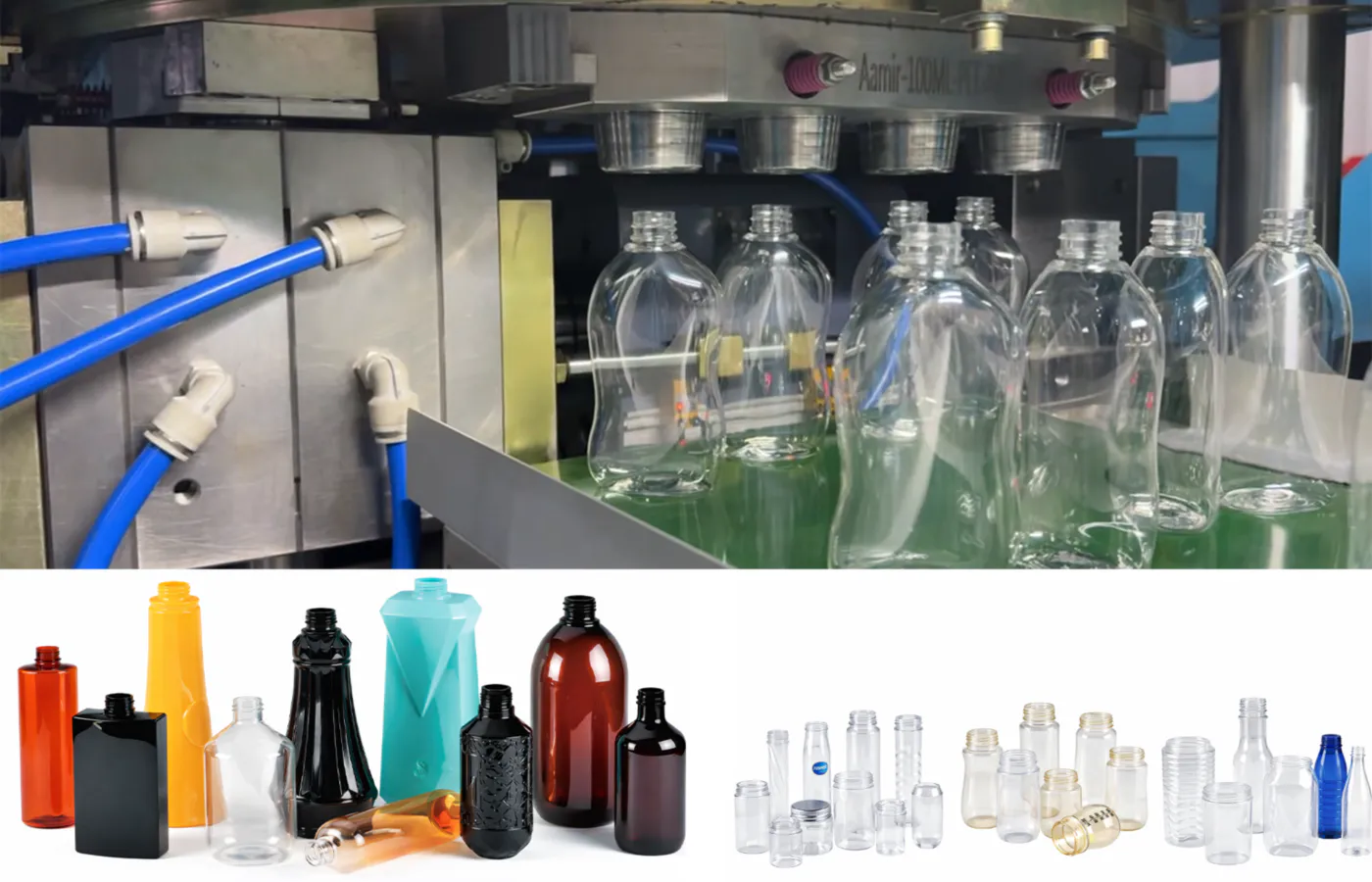
Recommended Machine: HGYS280-V6 for High-Volume Edible Oil Bottle Production
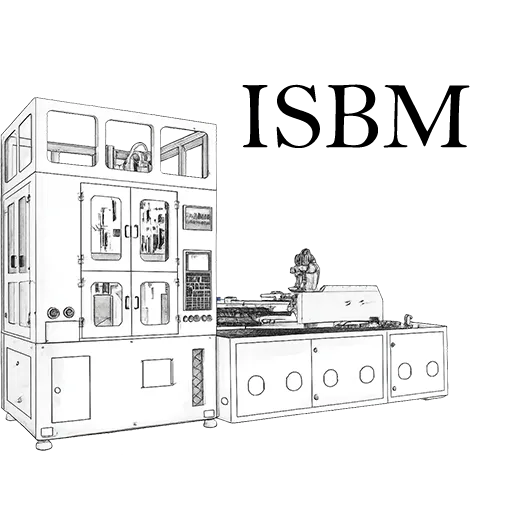
For edible oil bottlers producing high volumes of 1-litre to 2.5-litre PET bottles across multiple SKUs — the standard consumer oil format in most retail markets — the six-station injection stretch blow moulding machine in the HGYS280-V6 configuration offers an efficient combination of output per shift, multi-cavity tooling compatibility, and a compact footprint relative to its production capacity. The dual-screw injection unit architecture allows simultaneous injection of two preform sets per cycle, significantly increasing throughput for smaller bottle formats.
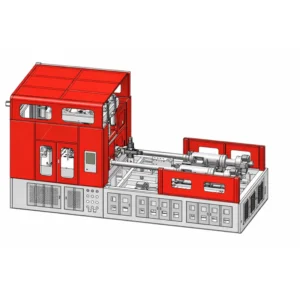
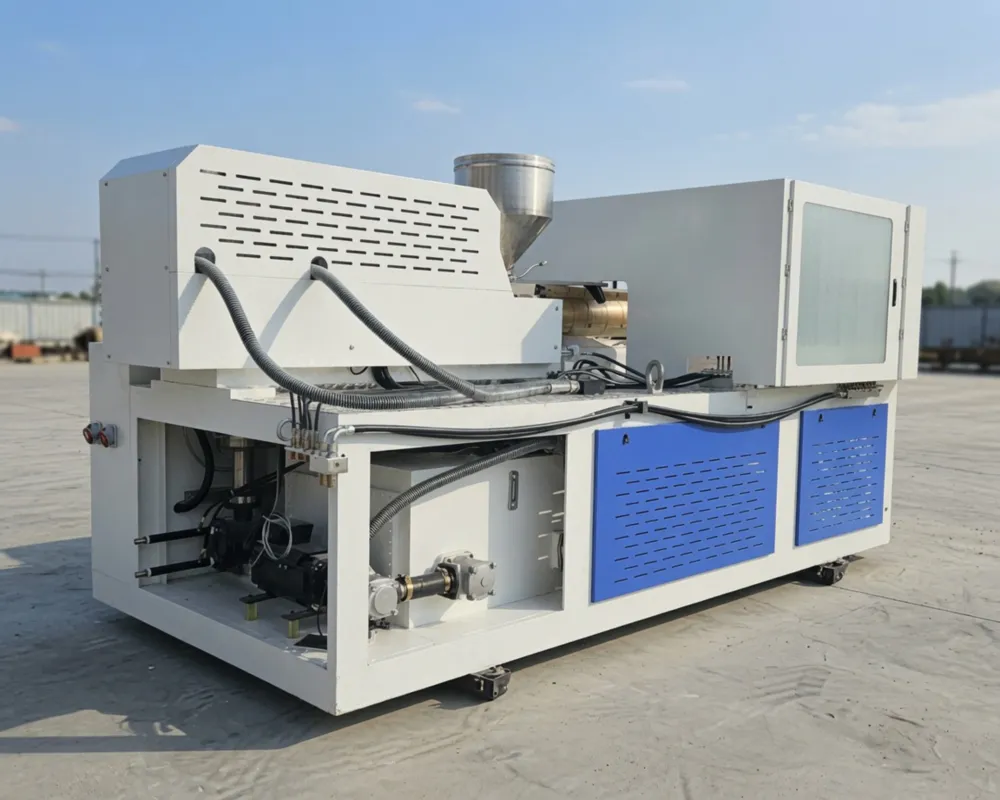
EP-HGYS280-V6 | 6-Station Injection Stretch Blow Moulding Machine
Two servo pump systems with dual-screw injection unit; Inovance/WEICHI servo motors at 43.2 KW; six-station turntable increases effective output per machine by operating two preform injection sets per cycle; suitable for PET/PETG oil bottles from 20 ml to 2,500 ml across up to 10 cavities per shot at small formats.
| Spesifikasi | Nilai |
|---|---|
| Model Mesin | HGYS280-V6 |
| Stasiun | 6 (dual injection + conditioning + stretch blow × 2 + take-out) |
| Bahan yang Berlaku | PET / PETG |
| Diameter Sekrup (opsional) | 40 / 50 / 55 / 60 mm |
| Volume Injeksi Teoritis | 188 / 310 / 442 / 480 cm³ |
| Gaya Penjepitan Injeksi | 150 KN |
| Gaya Jepit Tiup | 200 KN (single side) |
| Tenaga Motor | 43,2 KW |
| Total Daya Mesin | 53.2 KW |
| Langkah Cetakan Atas | 250 mm |
| Tekanan Udara Tiup | 2,0 – 3,5 MPa |
| Tekanan Air Pendingin | 0,4 – 0,6 MPa |
| Volume Tangki Minyak | 300 L |
| Machine Size (L×W×H) | 5900 × 2600 × 3200 mm |
| Berat Mesin | 14 T |
| Volume Botol Maksimum | Hingga 2500 ml |
| Max. Cavities per Shot (small format) | Up to 10 (per injection station) |
| Voltase | 370 – 400 V |
Tentang Kami
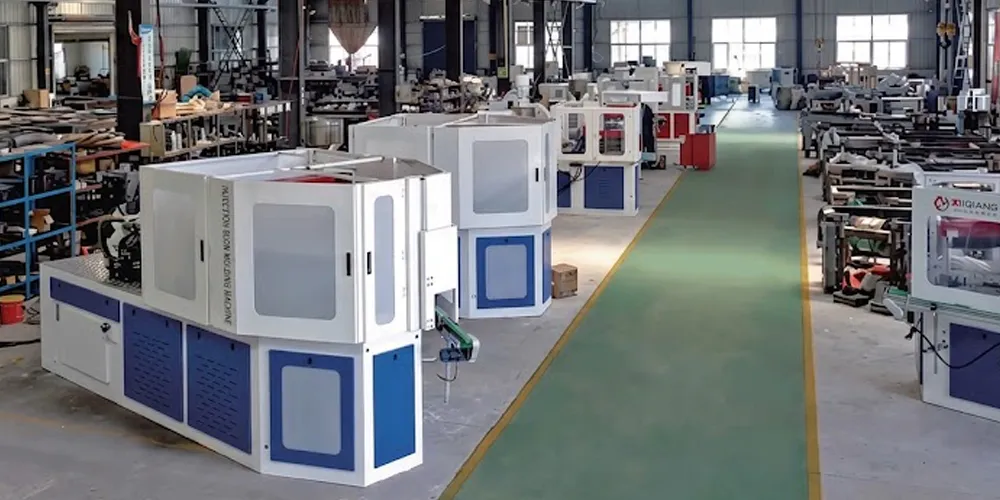
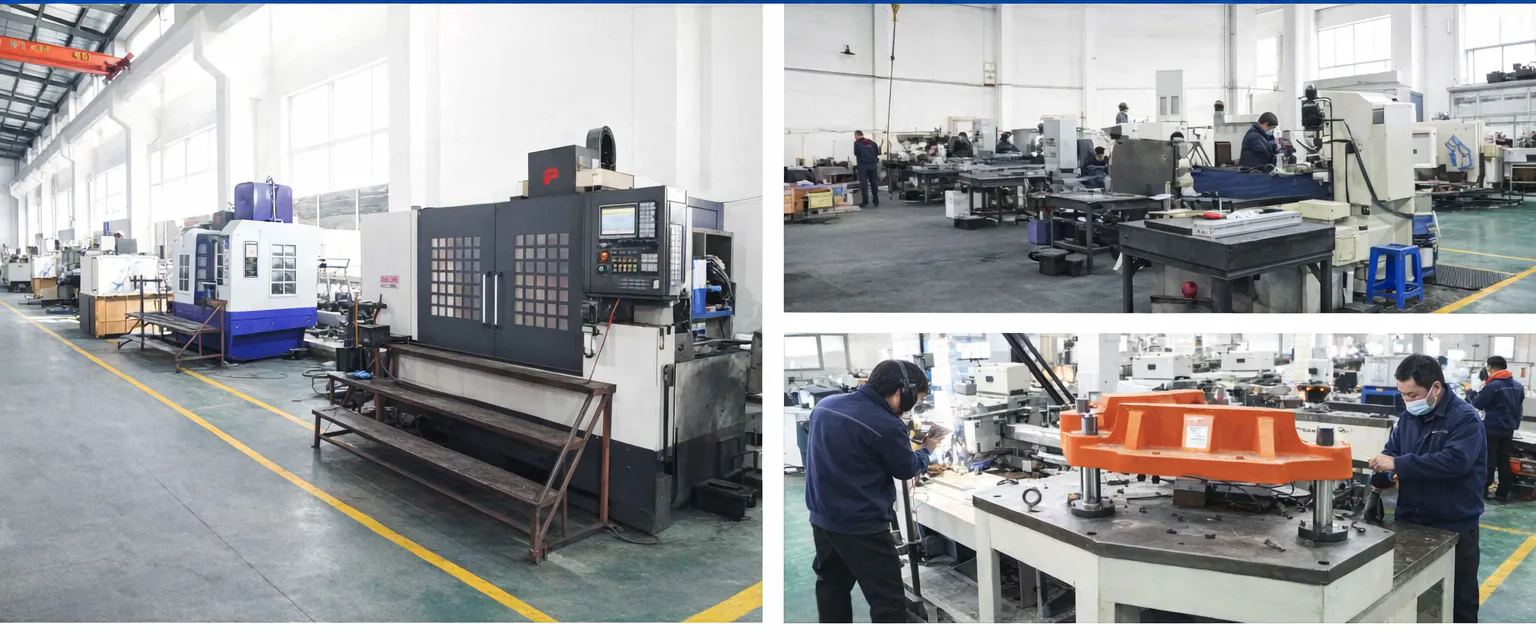
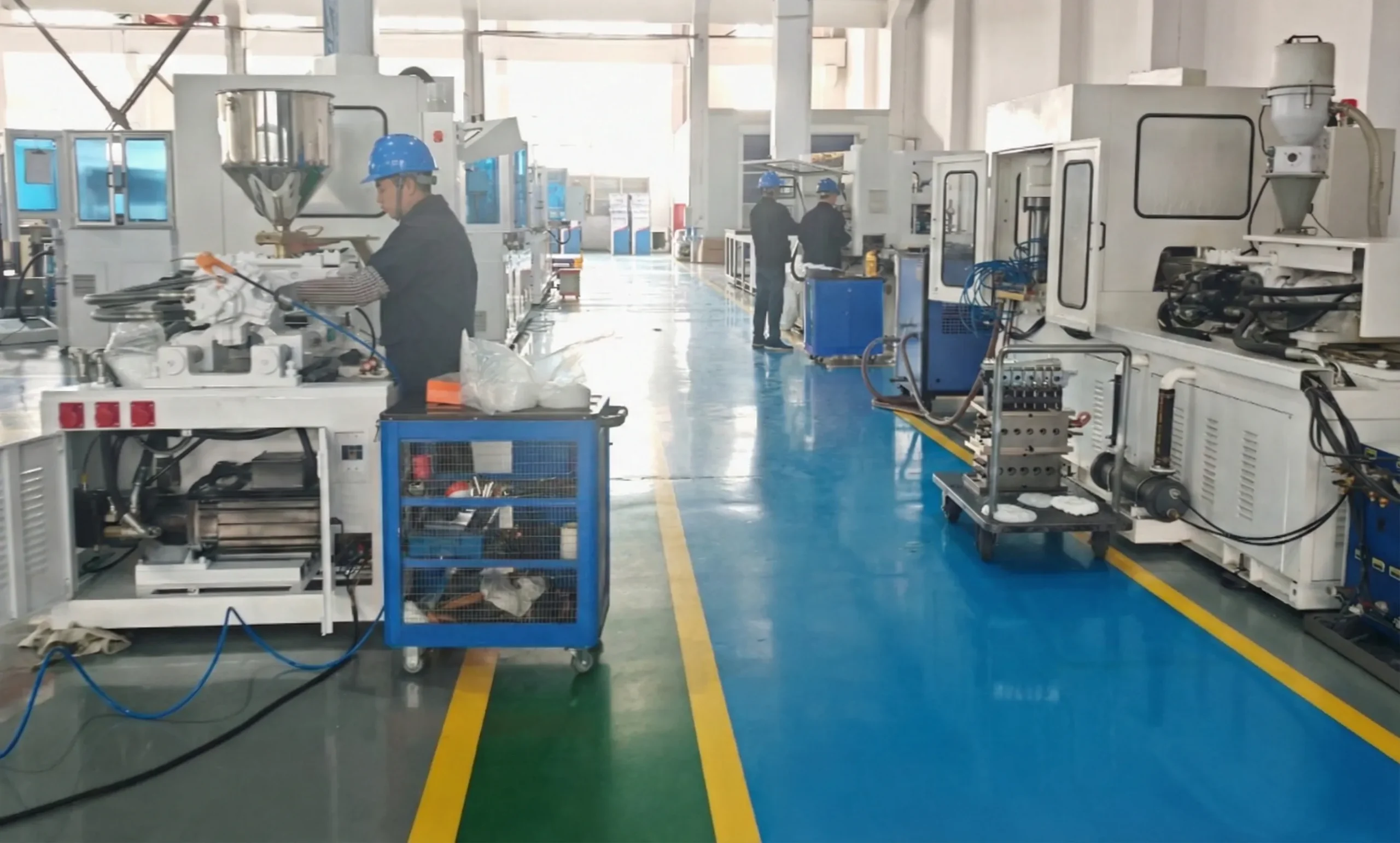
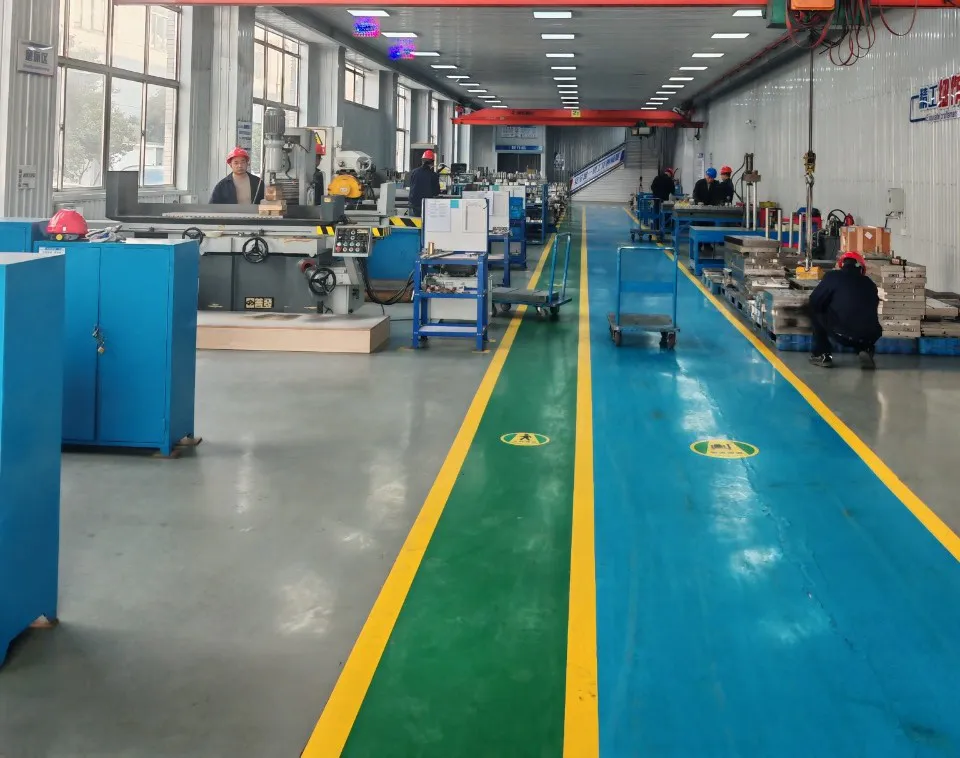
Over more than two decades of focused development and manufacturing experience, our team has built injection stretch blow moulding machines that serve the full spectrum of food and beverage packaging applications — from small-format specialty oil bottles through to large-format 5-litre family containers and 20-litre water cooler jugs. Operating from a 20,000-square-metre production base with a fully integrated supply chain covering machine assembly, mould tooling, servo control systems, and after-sales technical support, we provide complete production line solutions for edible oil packaging manufacturers globally.
Our ISBM machines have been deployed in edible oil packaging operations across Europe, the Middle East, South Asia, Southeast Asia, and Latin America. We understand the specific barrier engineering requirements of oil packaging, the regulatory nuances of olive oil container specifications in European markets, and the high-volume production demands of commodity vegetable oil bottlers operating in Asia and the Middle East. Whether you are specifying a new machine for a greenfield edible oil packaging facility or upgrading an existing line to a more energy-efficient and process-capable ISBM platform, our technical team is equipped to support you from material specification through to machine commissioning and operator training.
Bengkel
Compatible Equipment for Edible Oil Bottle Production Lines
A complete edible oil bottle production line using an injection blow moulding machine requires matched peripheral equipment. We supply or recommend the following system-compatible components for one-stop procurement:
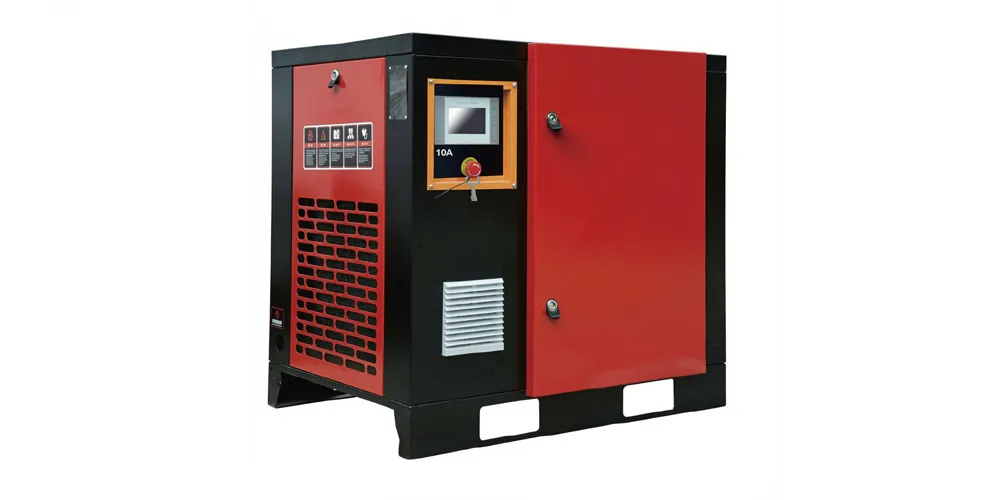
Oil-Free Air Compressor
For edible oil bottle production, oil-free compressed air is mandatory — not a premium option. The blow air at 2.0–3.5 MPa is in direct contact with the interior surface of each newly formed PET bottle at the moment it exits the blow mould. Any hydrocarbon oil aerosol carried in that air stream will be deposited on the bottle interior and then transferred to the edible oil product at the filling stage. This constitutes a food contact contamination event under EU Regulation 10/2011, FDA 21 CFR, and all equivalent national food contact frameworks. An oil-free compressor eliminates this contamination pathway entirely. Our recommended range is sized to the blowing air pressure and volumetric flow demands of each ISBM machine platform, including the higher air volume per cycle required by larger 2-litre to 5-litre oil bottle formats.
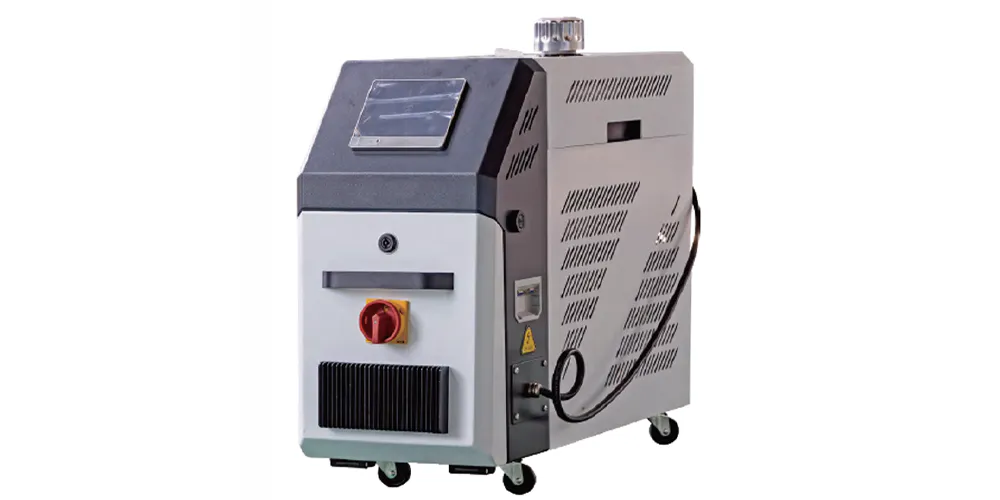
Pengontrol Suhu Cetakan
For edible oil bottles, consistent mould temperature across production runs is a direct predictor of label panel flatness. The label panel of a 1-litre oil bottle — the large flat or slightly curved area where the front label is applied — must be dimensionally stable with minimal surface curvature variability for self-adhesive label application at line speed. Temperature variation between cavities or between shifts causes cycle-to-cycle crystallinity differences that produce subtle distortions in the label panel. A mould temperature controller operating at the machine’s cooling water pressure range of 0.4–0.6 MPa, with tight regulation accuracy, removes this variability source. The result is a more consistent container geometry that performs better on high-speed filling and labelling lines — reducing reject rates from label adhesion failures and container starwheel jams on the rotary filler.
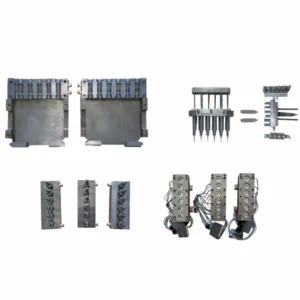
One-Step Injection Stretch Blowing Mould
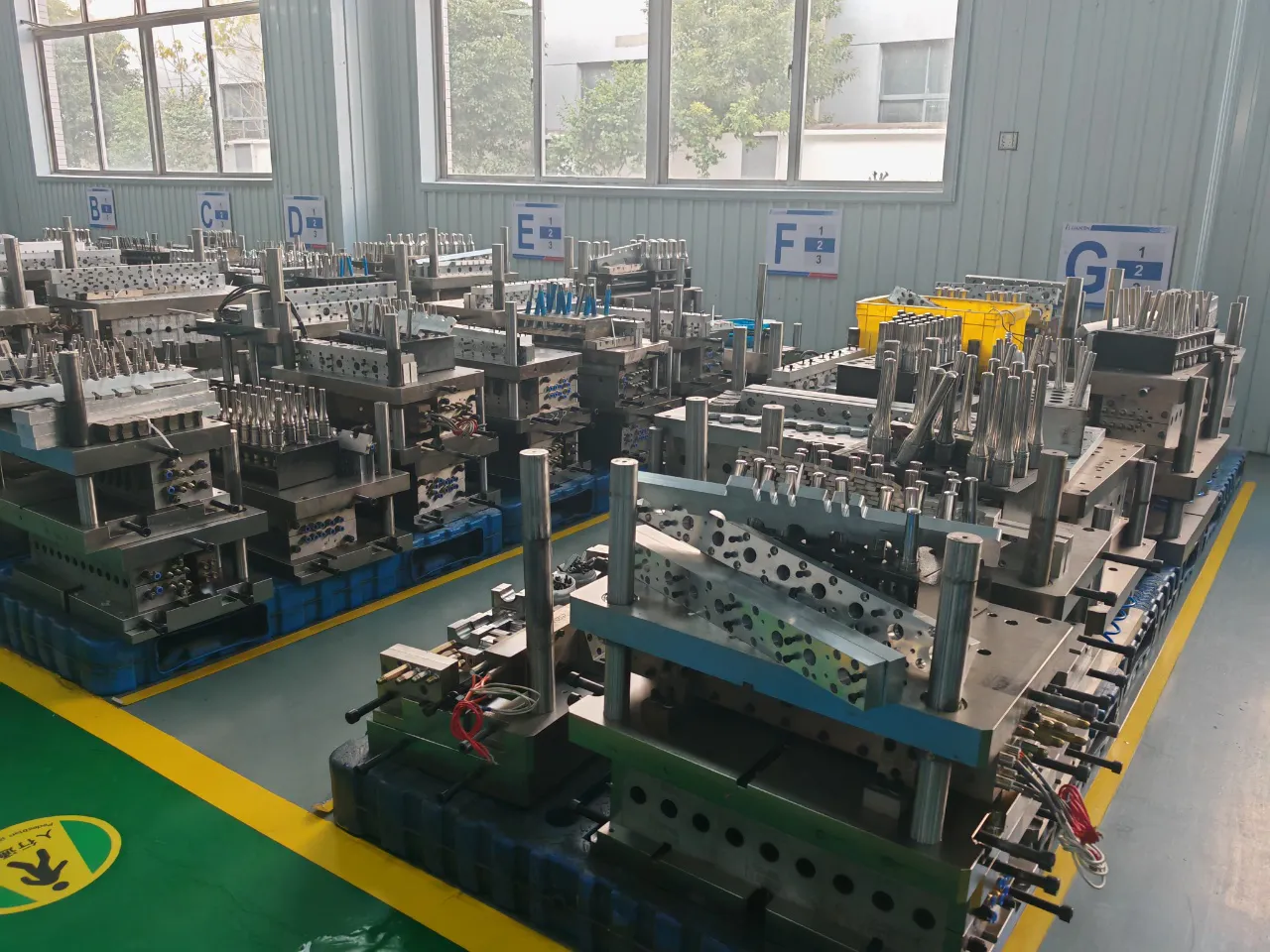
Custom mould tooling for edible oil bottles is available across the full volume range from 100 ml specialty oil formats to 5-litre family containers. Injection preform cavity and blow cavity are engineered as an integrated set with the stretch ratio and blow expansion ratio matched to the target bottle weight, body height, and label panel geometry. For amber or dark green PET oil bottles, the mould cavity surface finish is specified to produce the smooth exterior that makes premium oil brands visually distinctive on the retail shelf. Multi-cavity configurations — up to 10 cavities per injection station on the 6-station HGYS280-V6 — are available for high-volume standard oil bottle production to maximise bottles per shift per machine.
Specify Your Edible Oil Bottle Production Solution
Whether you are producing high-volume commodity vegetable oil bottles, premium amber EVOO containers, or large-format foodservice oil jugs — our technical team can support your specification from material and barrier design through to machine commissioning and regulatory documentation for your target markets.
Pertanyaan yang Sering Diajukan
What is the best injection stretch blow moulding machine for producing amber PET extra virgin olive oil bottles that meet EU Regulation 10/2011 food contact requirements?
For amber PET EVOO bottle production targeting EU markets, a 4-station ISBM machine in the HGYS150-V4 or HGYS200-V4 class is appropriate for 500 ml to 1-litre formats, while the HGY250-V4 covers 2-litre to 5-litre family sizes. The critical specification points are: PET resin with specific amber pigment masterbatch that confirms EU Regulation 10/2011 substance list compliance; melt temperature control tight enough to minimise acetaldehyde generation (confirmed through headspace GC testing of finished bottles); and a process setpoint package that achieves the biaxial orientation ratio needed for adequate OTR performance at the target shelf life. Migration testing using food simulant D2 (vegetable oil) should be conducted on the amber PET bottle-resin combination before commercial release.
How does the injection stretch blow moulding process control acetaldehyde levels in PET edible oil bottles produced for premium olive oil brands in Europe and the United States?
Acetaldehyde (AA) in PET bottles arises primarily from thermal degradation of the PET polymer during the injection moulding stage. In the ISBM process, AA generation is controlled through three parameters: melt temperature (lower barrel temperature setpoints reduce AA formation rate), residence time in the barrel (shorter residence times reduce cumulative AA exposure), and screw speed (higher shear generates more frictional heat, increasing AA). On servo-controlled ISBM machines, all three parameters are precisely set and held within narrow tolerances across the production run. For premium EVOO brands where flavour purity is a brand promise, specifying an AA target of less than 10 µg/L headspace in the finished bottle — and asking the machine supplier to demonstrate that the machine’s process setpoints achieve this — provides a validated starting point for shelf-life evaluation.
Which injection blow moulding machine configuration is most suitable for producing 1-litre to 5-litre edible oil bottles for the Indian market in compliance with FSSAI packaging regulations?
For Indian market edible oil bottle production, a 4-station ISBM machine covering the 1-litre to 5-litre range is the standard configuration. The HGYS150-V4 handles 1-litre and 2-litre formats efficiently at multi-cavity (6–8 cavities for 1L bottles); the HGY200-V4 or HGY250-V4 is appropriate for 3-litre to 5-litre formats. FSSAI Packaging Regulations 2018 compliance requires migration testing of the PET resin in food simulants relevant to oil (simulant D per Indian standards equivalent); the PET grade should carry IS 12252 documentation from the resin supplier. India’s high-volume oil categories — sunflower, groundnut, palm, mustard, and blended vegetable oils — are predominantly packaged in 1-litre PET bottles, making the 4-station multi-cavity platform the highest commercial impact choice for this market.
What is the difference between clear PET and amber PET for edible oil bottles and how does the injection stretch blow moulding machine handle pigmented resin production?
Clear PET allows consumers to see the oil colour and fill level — useful for premium EVOO where golden colour is a quality signal — but provides no light barrier against photooxidation. Amber PET blocks a broad range of UV and visible light wavelengths, slowing the photooxidative degradation that produces rancid flavours in light-sensitive oils. Dark green PET blocks visible light selectively and is historically associated with premium olive oil packaging. On an ISBM machine, pigmented PET resin is produced by feeding a pigment masterbatch via a volumetric dosing unit mounted at the injection hopper — typically at 1–3% masterbatch loading by weight. The masterbatch must be compatible with the PET processing temperature range (265–285°C) without thermal degradation of the pigment, and the colourant system must be on the EU Regulation 10/2011 positive list or equivalent for the target market.
Editor: PXY