Pharmaceutical & Medical Packaging — Technology Insight
A technical examination of why ISBM machine process control is the foundation of reliable child-resistant packaging performance in regulated pharmaceutical markets worldwide.
Why Neck Dimensions Determine Child-Resistant Closure Reliability
Child-resistant closures (CRCs) sit at the intersection of regulatory compliance, patient safety, and product integrity. When a child-resistant cap fails — whether it opens too easily, does not reseal properly, or fails the torque test during quality inspection — the cause is almost always a dimensional mismatch between the closure and the container neck finish. This is not a closure problem. It is a container neck problem. And it is precisely here that the دستگاه قالب گیری بادی کششی تزریقی process delivers an advantage over other plastic bottle production methods that is both measurable and reproducible at scale.
The neck finish of a pharmaceutical container — defined by parameters including the T dimension (thread outside diameter), E dimension (neck outside diameter), I dimension (inside diameter), H dimension (thread height), and S dimension (thread pitch) — must conform to tolerance windows typically specified within ±0.1 mm to ±0.3 mm depending on the closure design. At these tolerances, conventional extrusion blow moulding (EBM) processes struggle with consistency because the parison wall distribution is inherently variable across the neck zone. The injection stretch blow moulding process, by contrast, injection-molds the neck finish to final dimensions in the first station of the cycle — making the neck a precision-molded component rather than a blown component. This distinction changes everything about how neck dimension consistency is achieved and maintained in high-volume pharmaceutical production.
This article examines the ISBM process architecture that enables this consistency, the material and tooling systems involved, the regulatory frameworks that make neck precision a compliance requirement rather than simply a quality preference, and the specific machine capabilities that pharmaceutical packaging engineers should evaluate when specifying ISBM equipment for child-resistant closure applications.
Manufacturing Architecture: How ISBM Creates Precision Neck Finishes
The Injection Station — Where Neck Precision Is Born
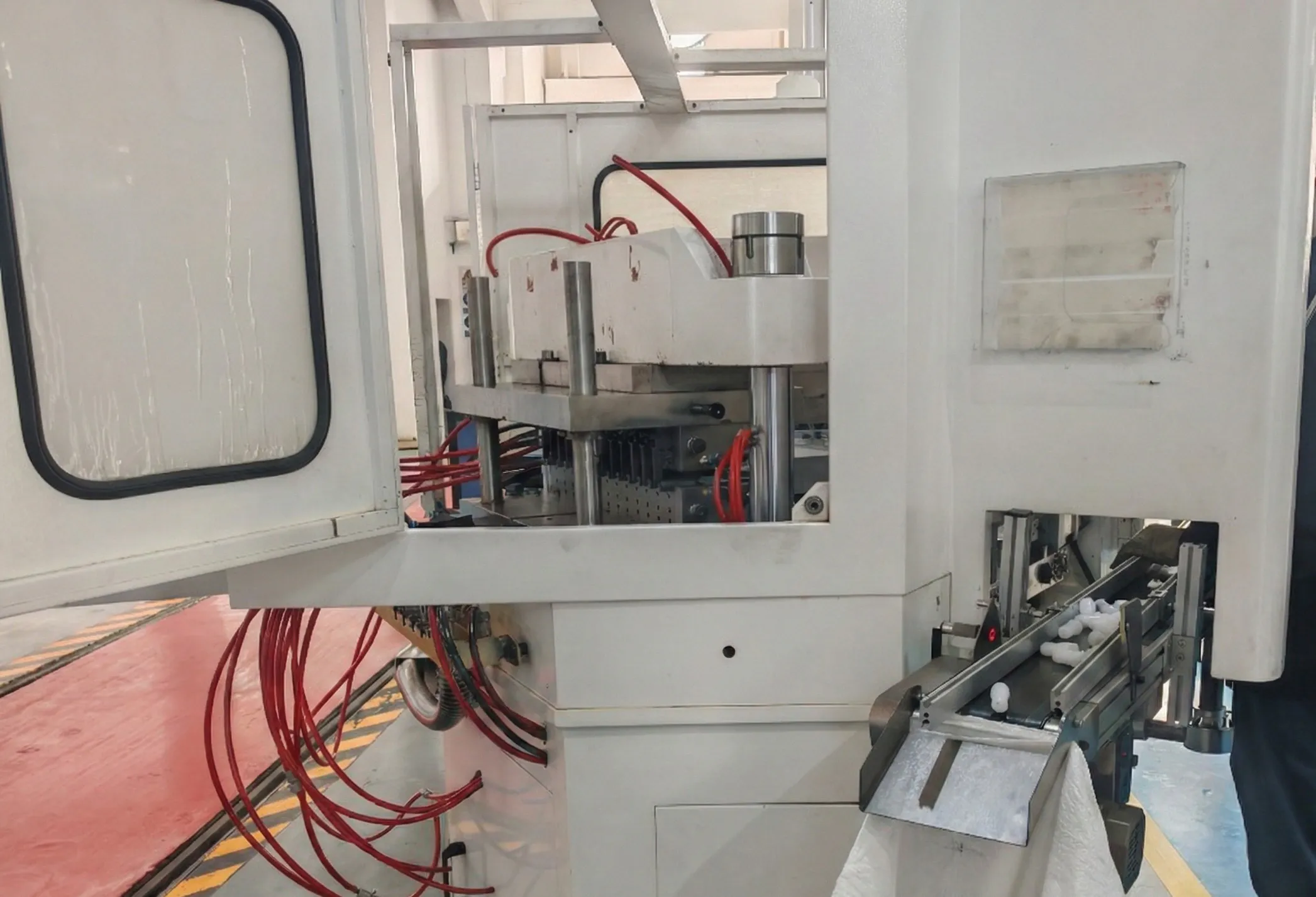
In a one-step injection stretch blow moulding machine, the production cycle begins with the injection station, where molten polymer is injected under high pressure into a closed injection cavity around a steel core rod. At this station, the neck finish — including all threads, the transfer bead, and the sealing surface — is injection-moulded to its final dimensions. The mold steel contacts every surface of the neck zone simultaneously under full injection pressure, replicating the tool geometry with the same dimensional accuracy as standard injection moulding. This is fundamentally different from the EBM process, where the neck is formed by pinching an extruded parison in a split mold, creating a weld line at the pinch-off and an inherent variation in wall distribution around the neck circumference.
The practical consequence of injection-moulded neck formation is that T, E, and I dimensions on ISBM containers are held to tolerances comparable to pure injection-moulded components. In validated pharmaceutical packaging systems — where the closure-container combination is tested as a functional unit under ISO 8317 and USP <671> protocols — this precision is what enables the system to reliably engage the child-resistant mechanism (whether it is a push-and-turn, squeeze-and-turn, or align-and-push design) within the tested torque range across the full temperature and humidity operating window.
The Temperature Conditioning Station — Enabling Controlled Stretch
Four-station ISBM machines — such as those in the EP-HGYS and EP-BPET product families — include a dedicated temperature conditioning station between injection and blow moulding. After the preform is injection-moulded, it rotates to this station where temperature conditioning elements re-profile the preform body temperature to a precisely controlled distribution before blowing. This is particularly important in pharmaceutical applications where thick-walled containers, wide-mouth jars, or specialty resin materials (PC, PETG, PCTG) require a more uniform preform temperature than can be reliably achieved by the retained injection heat alone.
The neck zone is not touched during temperature conditioning — it retains the precisely moulded dimensions from the injection station while the body is conditioned for optimal stretch response. This separation of neck and body thermal management is an architectural feature of 4-station ISBM machines that directly benefits pharmaceutical neck precision: the neck never goes through the blow moulding step as a plastically deformable component. It arrives at the blow station already fully solidified and dimensioned to tolerance.
3-Station ISBM
Injection → Stretch-Blow → Ejection. The preform uses retained injection heat for blowing. Best suited for standard PET and PP containers up to approximately 2,500 ml. Lower capital cost and compact footprint. Pharmaceutical applications: pharmaceutical syrup bottles, oral liquid containers, nasal spray bottles in PET.
4-Station ISBM
Injection → Temperature Conditioning → Stretch-Blow → Ejection. Independent temperature control of the preform body before blowing. Required for thick-walled containers, wide-mouth pharmaceutical jars, PC and TRITAN medical containers, and applications where preform uniformity is a GMP requirement. Higher precision, broader material compatibility.
Neck Formation — Both Types
In both 3-station and 4-station configurations, the neck finish is injection-moulded at Station 1 to final dimensions. The neck never experiences the blow pressure step as a plastically deformable element — it is carried through the cycle on the core rod as a fully solidified precision component. This is the fundamental source of ISBM neck dimensional superiority over EBM for CRC applications.
Material Systems for Child-Resistant Pharmaceutical Closures
The material selected for the pharmaceutical container directly affects the neck dimensional stability over the product’s shelf life and across its storage temperature range. Child-resistant closure systems are qualified against a specific container-closure combination including the container material — meaning a validated CRC system with a PET bottle cannot be assumed to perform identically with the same closure on a PP bottle of the same nominal dimensions. The following materials are commonly processed on ISBM machines for pharmaceutical CRC container applications, each with distinct dimensional stability characteristics.
| مواد | Key Property | Shrinkage Rate | CRC Compatibility | Pharmaceutical Application |
|---|---|---|---|---|
| پت | High clarity, barrier | 0.2–0.5% | Excellent — low creep | Oral liquids, syrup, vitamin supplements |
| پتگ | Glass-clear, impact | 0.2–0.4% | Excellent — rigid neck | High-clarity pharmaceutical packaging, pediatric syrup |
| پی پی | Chemical resistance | 1.0–2.5% | Good — requires tighter mold tolerance | Pharmaceutical dispensing bottles, acid-sensitive products |
| کامپیوتر | Impact strength | 0.5–0.7% | Excellent — high rigidity | Medical device containers, reusable pharmaceutical bottles |
| تریتان | BPA-free clarity | 0.3–0.6% | Excellent — stable dimensions | Pediatric pharmaceutical containers, BPA-free OTC products |
| پی سی تی جی | PETG + PC hybrid | 0.3–0.5% | Very good | Premium pharmaceutical and nutraceutical packaging |
PP’s higher shrinkage rate requires tighter mold design compensation and more controlled cooling in the neck zone compared to PET or PC. ISBM machines with precise independent temperature control per station are better equipped to manage PP neck dimensional consistency than machines with simple zone-controlled barrel heating alone. When evaluating an ISBM machine for PP pharmaceutical container production, the ability to independently control the injection mold cooling circuit — particularly the neck ring cooling channel — is a specification criterion that directly affects CRC dimensional reliability in production.
Neck Finish Tolerance Standards and CRC Testing Protocols
Industry Thread Finish Standards
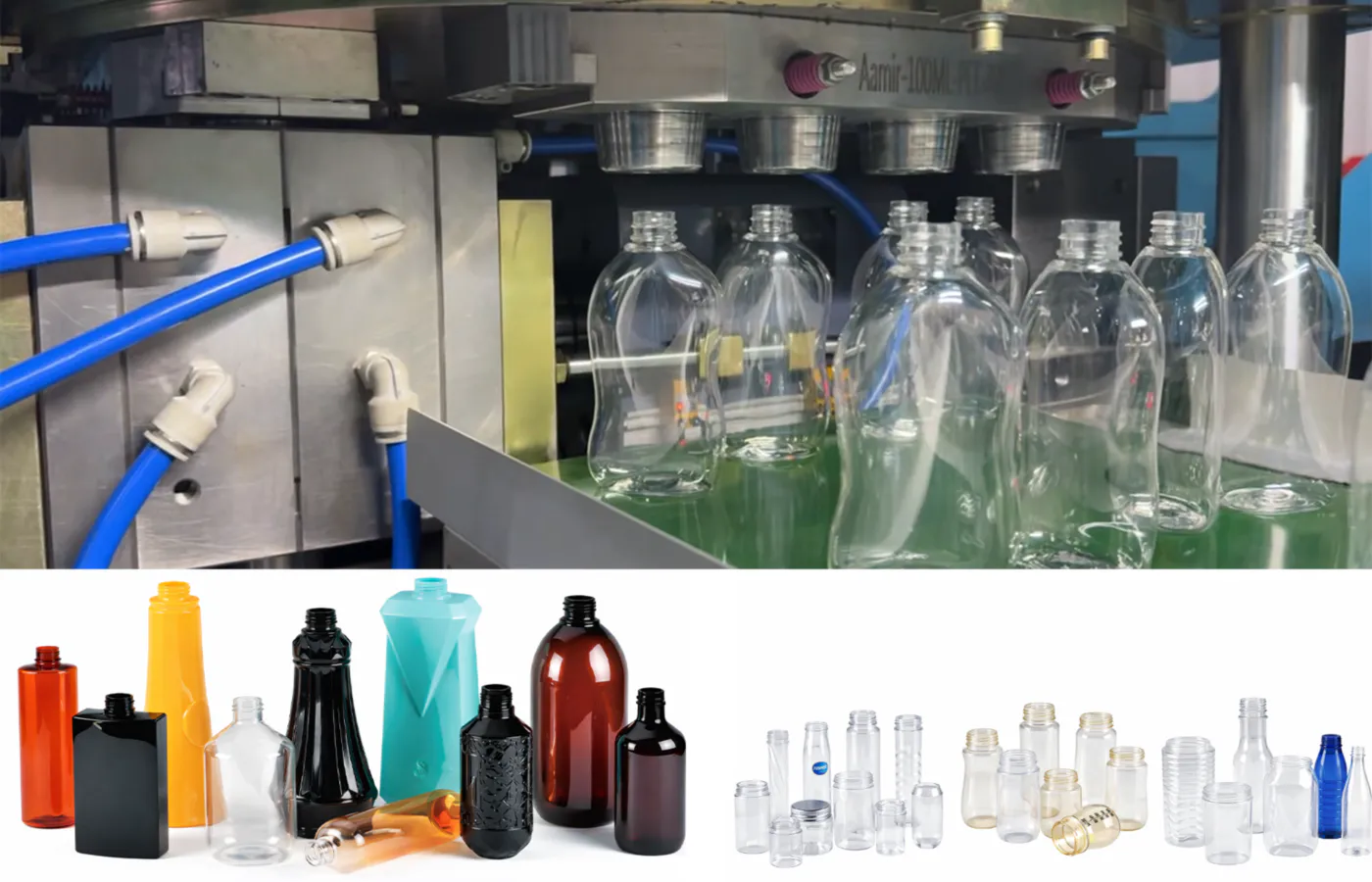
Pharmaceutical container neck finishes are standardized through the Society of Plastics Industry (SPI) and the Plastic Container Component Standard (PCCS) published by the ASTM Committee E55. The most commonly specified neck finishes for child-resistant pharmaceutical closures include SP-400, SP-410, SP-415, and proprietary designs from closure manufacturers such as Comar, Berry Plastics, and Rexam. These standards define the T, E, I, H, and S dimensions and their allowable tolerances — typically ranging from ±0.15 mm on T and E dimensions for precision pharmaceutical applications, to ±0.3 mm for general-purpose pharmaceutical containers.
ISBM containers consistently produce neck T dimensions within ±0.1 mm of the specified value across production runs when the injection mold neck ring tooling is correctly maintained and the machine’s process parameters are controlled within validated ranges. This is approximately three times tighter than what EBM processes typically achieve for the same nominal neck dimensions. The practical consequence is that ISBM containers can be qualified with tighter closure-container interface tolerances, enabling more sensitive child-resistant mechanisms — those with lower unlock torque and higher lock-to-unlock torque ratios — to be reliably used.
Child-Resistant Closure Testing Protocols
In regulated markets, the performance of child-resistant packaging systems is evaluated through human factors testing under internationally recognized protocols. ISO 8317:2015 (Packaging — Child-resistant packaging — Requirements and testing procedures for reclosable packages) is the primary international standard, defining protocols for testing with panels of children aged 42–51 months and adult panels aged 50–70 years. The standard requires that fewer than 20% of the child panel can access the package within 5 minutes, while more than 90% of the adult panel can open and reclose it within 60 seconds. In the United States, the Poison Prevention Packaging Act (PPPA) and 16 CFR Part 1700 set equivalent requirements administered by the Consumer Product Safety Commission (CPSC).
What is not always appreciated in discussions of CRC testing is that the human factors performance of the system is directly dependent on the physical torque profile of the closure-container interface — which is in turn directly dependent on the neck thread dimensions. When the T dimension is at the lower end of tolerance, the closure can engage threads at lower torque, making adult opening easier but reducing the lock-to-unlock torque ratio that defeats young children. When the T dimension is above upper tolerance, the closure may not fully engage, creating a system that fails the senior adult opening test. ISBM’s inherent neck precision keeps production within the window that achieves both tests simultaneously — which is precisely what pharmaceutical packaging validation requires.
Global Regulatory Frameworks for Child-Resistant Pharmaceutical Packaging
The regulatory landscape for child-resistant pharmaceutical packaging spans multiple international frameworks, each establishing different testing requirements, documentation expectations, and enforcement mechanisms. Manufacturers using ISBM machines to produce pharmaceutical containers for global distribution need to understand which frameworks apply to each market and how neck dimensional control contributes to regulatory compliance.
🇺🇸 United States — PPPA & 16 CFR Part 1700
The Poison Prevention Packaging Act (PPPA) requires child-resistant packaging for most oral prescription drugs, controlled substances, and many OTC products. 16 CFR Part 1700 specifies testing protocols using the ISO 8317 framework adapted for the US market. The FDA’s 21 CFR Part 211 Current Good Manufacturing Practice (cGMP) requirements additionally impose documentation requirements for packaging component specifications and acceptance testing, including dimensional inspection of container neck finishes as part of the incoming material acceptance program. Container-closure system integrity testing under 21 CFR 211.94 requires that the packaging system maintain product integrity throughout its shelf life — which depends on maintained neck dimensional compliance across the entire production lot.
🇪🇺 European Union — EU Directive 2001/83/EC & EN ISO 8317
EU Directive 2001/83/EC on medicinal products for human use establishes GMP requirements for pharmaceutical packaging under which container-closure system qualification is mandatory. The European Medicines Agency (EMA) guideline on plastic immediate packaging materials (CPMP/QWP/4359/03) specifies testing and documentation requirements for container materials. EN ISO 8317 is the harmonized testing standard for child-resistant reclosable packages. CE marking under the General Product Safety Directive (GPSD) may also apply to packaging for consumer pharmaceutical products. The EU’s requirement for patient information leaflets and tamper-evidence in pharmaceutical packaging systems creates additional dimensional requirements at the bottle neck where tamper-evident seals are applied.
🇬🇧 United Kingdom — UK MDR & MHRA
Post-Brexit, the MHRA (Medicines and Healthcare products Regulatory Agency) has established UK-specific frameworks for pharmaceutical packaging compliance. The UK’s BS EN ISO 8317 remains aligned with the EU standard. The Human Medicines Regulations 2012 (SI 2012/1916) and the associated GMP guidelines place direct obligations on marketing authorization holders to validate their container-closure systems. For manufacturers exporting ISBM-produced pharmaceutical containers to the UK, MHRA’s technical guidance on container closure integrity testing (CCIT) provides specific expectations for plastic container dimensional acceptance criteria.
🌏 Asia-Pacific — TGA, CDSCO & PMDA
Australia’s TGA (Therapeutic Goods Administration) adopts ISO 8317 for CRC testing under the Therapeutic Goods Act 1989. India’s CDSCO (Central Drugs Standard Control Organization) under Schedule M of the Drugs and Cosmetics Act requires child-resistant packaging for specified drug categories and references BIS standards adapted from ISO 8317. Japan’s PMDA (Pharmaceuticals and Medical Devices Agency) aligns pharmaceutical packaging requirements with ICH Q6A specifications for container-closure systems. Each regulatory authority expects container dimensional data as part of the drug product registration dossier — making ISBM’s documented dimensional consistency a direct enabler of multi-market regulatory submissions from a single production platform.
🌍 ICH Guidelines — International Harmonization
The International Council for Harmonisation (ICH) guidelines — particularly Q1A (Stability Testing), Q6A (Specifications), and Q8 (Pharmaceutical Development) — provide the framework within which container-closure system qualification data is structured for multi-market regulatory submissions. ICH Q1A requires that stability study containers be identical to the proposed market container, making neck dimensional consistency across production lots a stability study design requirement, not just a quality preference. When an ISBM machine can demonstrate statistical process control (SPC) data showing neck dimensions in control across multiple production batches, this data directly supports ICH Q6A container specification sections in drug product registration dossiers.
Tooling Systems for Pharmaceutical ISBM Neck Precision
Neck Ring Design and Material
The neck ring — the split mold component that forms the exterior thread and transfer bead of the container neck — is the most dimensionally critical tooling element in an ISBM mold. For pharmaceutical CRC applications, neck rings are typically manufactured from hardened stainless steel (S136H at HRC 50–52, or equivalent) rather than the aluminium or P20 steel sometimes used in less demanding applications. The hardened stainless steel provides superior wear resistance at the thread-forming surfaces, maintaining dimensional accuracy across significantly higher production volumes before maintenance intervention is required.
The cooling channel design within the neck ring is equally important. Pharmaceutical applications often require faster neck solidification cycles than beverage container applications, because the neck must reach full dimensional stability before the core rod rotates to the blow station. Conformal cooling channels in modern ISBM neck ring tooling — following the contour of the neck cavity rather than running straight through the tool body — reduce the thermal gradient across the neck ring cross-section, producing more uniform cooling rates from the inside diameter to the outside thread surface. This uniformity directly reduces the differential shrinkage that can cause thread pitch distortion in conventionally cooled neck ring designs.
Core Rod Specifications for CRC Applications
The core rod defines the inside diameter of the container neck — the I dimension in SPI neck finish specifications. For CRC applications where the inner neck diameter affects how a push-in dip tube or drop dispenser interfaces with the container, I dimension control is as important as the T dimension. Core rods for pharmaceutical ISBM tooling are manufactured from hardened tool steel (H13 at HRC 48–52) with chromium plating or nitriding on the neck-forming zones. The core rod geometry at the neck-body transition must produce a preform neck base that transmits the correct neck extension characteristics into the preform body without creating stress concentration points that could lead to container crazing or cracking in aggressive pharmaceutical solvent environments.
Injection Cavity Material for Pharmaceutical Tooling
The injection cavity body is typically manufactured from P20 prehardened steel for standard pharmaceutical containers, or from H13 tool steel (hardened to HRC 48–52) for high-precision applications and materials that impose high injection pressures (PC, TRITAN). In pharmaceutical applications where direct FDA or EMA submission documentation is required for tooling materials, the tooling material certifications — including material certificates, hardness test records, and dimensional inspection reports — form part of the technical file submitted with the drug product registration dossier as part of the container specification. ISBM mold manufacturers supplying pharmaceutical markets should maintain and provide these records as standard documentation deliverables with tooling supply.
Featured ISBM Machine for Pharmaceutical Packaging
The EP-HGY50-V3-EV is a 3-station one-step injection stretch blow moulding machine well-suited to pharmaceutical oral liquid and CRC container production in PET and PETG.
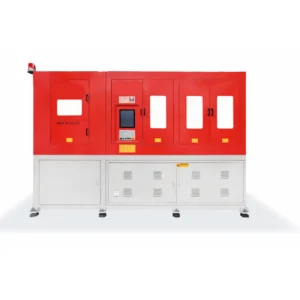
EP-HGY50-V3-EV One-Step Injection Stretch Blow Moulding Machine
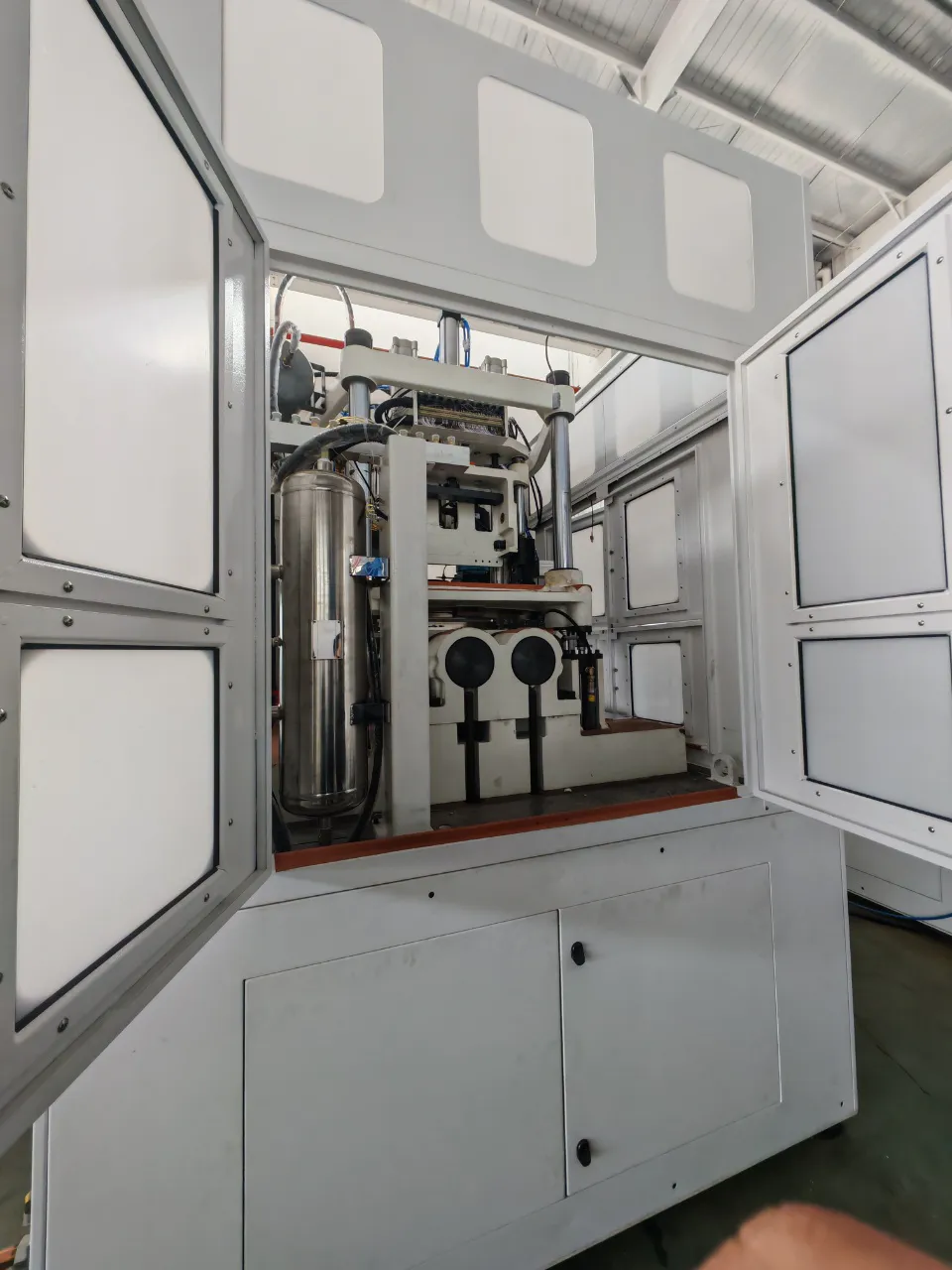
The EP-HGY50-V3-EV is a 3-station one-step injection stretch blow moulding machine that integrates injection, stretch-blow, and ejection in a single cycle. The machine processes PET, PETG, PCTG, PP, SAN, PMMA, PC, and TRITAN resins, making it applicable across the range of pharmaceutical container material specifications commonly required for CRC applications. The one-step process eliminates the preform reheating stage, reducing energy consumption by 25–40% compared to two-stage ISBM and maintaining a closed, contaminant-free production environment from resin to finished container — an important hygiene consideration for pharmaceutical primary packaging.
For child-resistant closure applications, the EP-HGY50-V3-EV’s injection station produces neck finishes to the dimensional tolerances required by CRC qualification testing. The servo-controlled cycle ensures process parameter repeatability across production batches, supporting the statistical process control (SPC) documentation that ICH and FDA GMP frameworks expect for validated pharmaceutical packaging systems.
Process Control Parameters That Govern Neck Dimensional Consistency
Understanding which machine process parameters directly influence neck dimension consistency is essential for pharmaceutical process validation engineers designing the process control strategy for ISBM-produced CRC containers. The following parameters require validated control ranges and should be included in the process validation (PV) protocol as critical process parameters (CPPs) under ICH Q8 Pharmaceutical Development principles.
| Process Parameter | Effect on Neck Dimensions | Recommended Control Method | Validation Approach |
|---|---|---|---|
| Injection barrel temperature (by zone) | Melt viscosity → fill pressure → cavity packing → neck wall density | PID temperature controller per zone; ±1°C setpoint tolerance | Univariate DOE across ±5°C range |
| Injection pressure and hold pressure | Cavity packing completeness → T dimension at upper or lower tolerance | Servo-controlled injection unit with pressure transducer feedback | Mold filling analysis; pressure profile mapping |
| Hold time | Gate freeze-off time → dimensional stability before core rod rotation | Timer with ±0.1 s precision; validated per resin and wall thickness | Gate freeze study; weight vs. time profile |
| Neck ring cooling water temperature | Neck solidification rate → dimensional stability before rotation → E dimension consistency | Mold temperature controller (MTC) set to ±1°C on neck ring circuit | Thermal imaging validation; E dimension vs. coolant temp DOE |
| Cycle time | Thermal history of neck from injection to ejection → cumulative shrinkage | Fixed servo-controlled cycle; deviation alarm integrated into PLC | Measure T, E dimensions at ±5% nominal cycle time |
| Screw speed (plasticising rate) | Shear heat generation → melt temperature variation → viscosity → fill uniformity | Servo screw drive; SPC on shot weight as surrogate | Shot weight variability study; correlate to neck dimensions |
When these parameters are controlled within validated ranges on a qualified ISBM machine, the resulting neck dimension distribution is typically a Cpk value above 1.33 for T and E dimensions in PET and PETG pharmaceutical containers — satisfying the process capability standard commonly required in pharmaceutical packaging validation under FDA 21 CFR Part 211 and EU GMP Annex 15 (Validation and Qualification) frameworks.
In-Process Quality Systems for ISBM Pharmaceutical Neck Dimension Control
Statistical Process Control (SPC)
Implementing SPC on neck T and E dimensions using automated gauge systems with go/no-go plug gauges or optical measurement integrated at the ejection station provides real-time process stability data. Control charts (Shewhart X-bar and R charts) on neck dimensions per cavity allow cavity-specific drift to be detected and corrected before out-of-tolerance product leaves the machine. Modern ISBM control systems can interface with SPC software via OPC-UA or similar industrial protocols, enabling paperless batch records that directly support 21 CFR Part 11 electronic records requirements in FDA-regulated manufacturing environments.
Incoming Material Control
Neck dimension consistency in ISBM production begins with incoming resin control. PET intrinsic viscosity (IV), PP melt flow index (MFI), and PC flow characteristics affect mold filling and shrinkage behavior in the neck zone. Pharmaceutical ISBM operations should establish incoming resin acceptance criteria — including IV range for PET, MFI range for PP, and lot-specific moisture content specifications — as part of the Pharmaceutical Quality System (PQS) documented under ICH Q10. Raw material lot changes should trigger monitoring of neck dimension control charts for at least one full production batch to confirm that the new lot performs within the validated parameter ranges.
Tooling Maintenance and Qualification
ISBM neck ring tooling for pharmaceutical CRC applications requires a documented maintenance and qualification program. Wear at the thread-forming surfaces of the neck ring causes progressive T dimension drift — initially detectable in SPC data as a gradual downward trend in T dimensions before any individual measurement triggers an out-of-control signal. A proactive tooling qualification schedule — including dimensional inspection of neck rings at defined production cycle intervals — prevents dimension drift from reaching the point where production product is at risk. Tooling qualification records form part of the Change Control documentation required under FDA 21 CFR Part 211.68 and EU GMP Chapter 3.
Container-Closure System Validation Strategy for ISBM Pharmaceutical Containers
The container-closure system (CCS) validation strategy for ISBM-produced pharmaceutical CRC containers should address three distinct phases of the product lifecycle: development qualification, process validation, and continued process verification. Understanding how ISBM machine process control interfaces with each phase helps pharmaceutical packaging engineers design a validation strategy that is both technically robust and regulatorily defensible.
Development Qualification (DQ)
During development, the container-closure combination is evaluated for functional performance including child-resistant testing per ISO 8317 or PPPA 16 CFR Part 1700, container closure integrity testing (CCIT) per USP <1207>, and compatibility testing per ICH Q1A stability study design. The ISBM machine at this stage produces prototype tooling containers that may differ from final production tooling but should be dimensionally representative. Using ISBM-produced containers at DQ rather than hand-fabricated or machined prototypes is strongly recommended because the ISBM neck geometry — particularly the relationship between thread lead angle and transfer bead height — affects CRC engagement characteristics in ways that machined prototypes cannot fully replicate.
Process Validation (PV)
Process validation for ISBM pharmaceutical container production typically follows a three-batch protocol (Installation Qualification, Operational Qualification, and Performance Qualification — IQ/OQ/PQ) consistent with FDA’s 2011 Process Validation Guidance and EU GMP Annex 15. The PQ phase specifically should include dimensional testing of T, E, I, H, and S dimensions across a statistically representative sample from each of the three validation batches, confirming that the neck finish specification is met with Cpk ≥ 1.33 across all tested dimensions. The PQ should also include functional CRC testing on production containers — not just dimensional measurement — to confirm that the validated process parameters produce containers that pass the child-resistant packaging protocol as a system.
Continued Process Verification (CPV)
After commercial launch, FDA’s 2011 Process Validation Guidance requires continued process verification to demonstrate ongoing state of control. For ISBM pharmaceutical container production, CPV typically includes ongoing SPC monitoring of neck dimensions per lot, periodic CRC functional testing, and annual product review data summarizing process performance against validated specifications. The ISBM machine’s ability to generate consistent, traceable process parameter data — through its PLC data logging and, in more advanced configurations, MES integration — directly supports the CPV data collection requirements without manual data transcription, reducing the risk of transcription errors in GMP records.
Discuss Your Pharmaceutical ISBM Requirements
Whether you are evaluating ISBM machines for a new pharmaceutical container line or qualifying an existing platform for CRC applications, our engineering team can provide technical guidance on machine selection, tooling specification, and process validation support.
Compatible Auxiliary Equipment
We supply the complete peripheral equipment needed to operate ISBM machines in pharmaceutical GMP environments — oil-free compressed air, mold temperature control, and integrated system solutions.
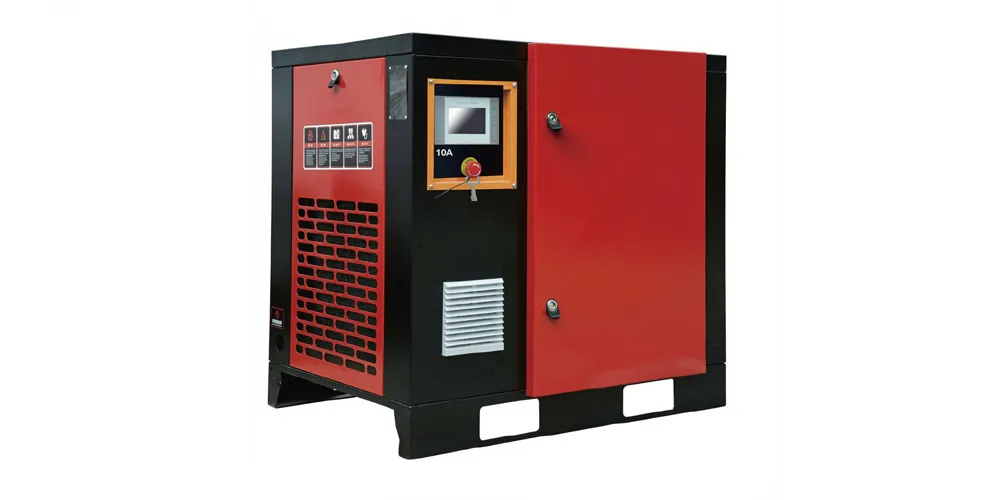
Oil-Free Air Compressor
Pharmaceutical ISBM production requires oil-free compressed air for the blow station — any oil carry-over into the high-pressure blow air constitutes a primary packaging contamination event. Our recommended oil-free air compressors deliver ISO 8573-1 Class 1 oil-free air validated for pharmaceutical direct-contact blow air applications. Stable pressure across the full production shift prevents wall thickness variation in blown containers that would otherwise affect the container body geometry around the CRC neck finish zone.
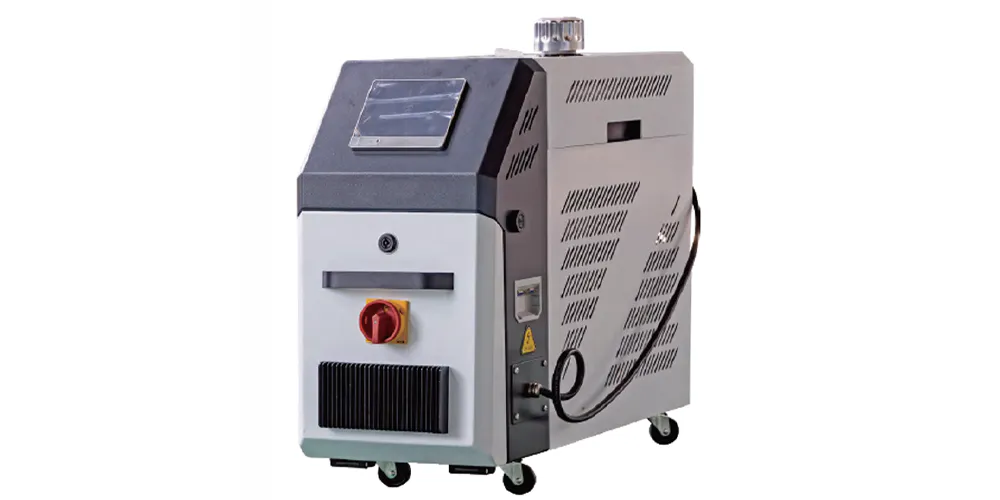
کنترل کننده دمای قالب
Precise neck ring cooling is the single most important thermal control parameter for pharmaceutical CRC neck dimension consistency in ISBM production. Our Mold Temperature Controllers maintain the neck ring cooling circuit at ±1°C of setpoint under continuous pharmaceutical production loads, preventing the dimensional drift that results from gradual coolant temperature rise in uncontrolled systems. For process validation documentation, MTC setpoint, actual temperature, and deviation records are automatically logged and available for GMP batch record integration.
One-Stop GMP Line Supply
Procuring the ISBM machine, oil-free compressor, and mold temperature controller from a coordinated supply source simplifies the GMP qualification process: equipment qualification (IQ/OQ/PQ) can be structured as a single coordinated protocol rather than three independent vendor qualification exercises. We provide complete utility specification documentation (electrical, compressed air, cooling water, drainage), equipment qualification support documentation (URS, DQ, IQ templates), and commissioning support aligned to GMP expectations. Contact our engineering team to discuss your pharmaceutical ISBM line qualification requirements.
درباره ما
We design and manufacture one-step injection stretch blow moulding machines, injection blow moulding machines, and associated tooling systems for pharmaceutical, medical, cosmetic, food, and industrial container applications. Our ISBM product range covers 3-station and 4-station platforms processing PET, PETG, PCTG, PP, PC, TRITAN, SAN, PMMA, and PS resins, in container volumes from 5 ml through 5,000 ml and cavity counts suited to both high-volume commercial production and specialized low-volume pharmaceutical applications.
In the pharmaceutical packaging sector specifically, we understand that machine selection is only the starting point. Process validation documentation support, tooling qualification records, and after-sales technical engineering assistance are as important as the machine specification itself in pharmaceutical supply chain contexts. Our technical team provides guidance on ISBM process validation protocol design, critical process parameter identification, and SPC implementation for pharmaceutical GMP environments.
کارگاه
سوالات متداول
تدوینگر: PXY