What Is a Blow Molding Machine? A Complete Beginner’s Guide
The manufacturing landscape for plastic packaging has undergone a massive transformation over the past decade, and understanding what this technology entails is crucial for any enterprise looking to optimize its production lines. When exploring the capabilities of an advanced injection stretch blow moulding machine, one quickly realizes that it represents the pinnacle of efficiency and precision in container manufacturing. This technology is particularly vital in rapidly growing industrial hubs such as those found in Colombia, where the demand for high-quality, durable, and aesthetically pleasing packaging solutions in the beverage, pharmaceutical, and cosmetics sectors is skyrocketing. By integrating the injection, conditioning, stretching, and blowing phases into a single, seamless, and automated operation, a one-step injection stretch blow molding machine eliminates the need for secondary preform reheating, thereby saving significant amounts of energy and reducing the overall carbon footprint. For businesses operating in regions with stringent environmental regulations and high energy costs, adopting this state-of-the-art machinery is not just a technological upgrade but a strategic imperative. The seamless transition from raw resin to a finished, crystal-clear bottle ensures that manufacturers can meet tight deadlines, maintain exceptional quality control, and remain highly competitive in an increasingly demanding global marketplace while catering to the specific aesthetic and functional requirements of diverse end-users.
2. Action Mode & Structure Type
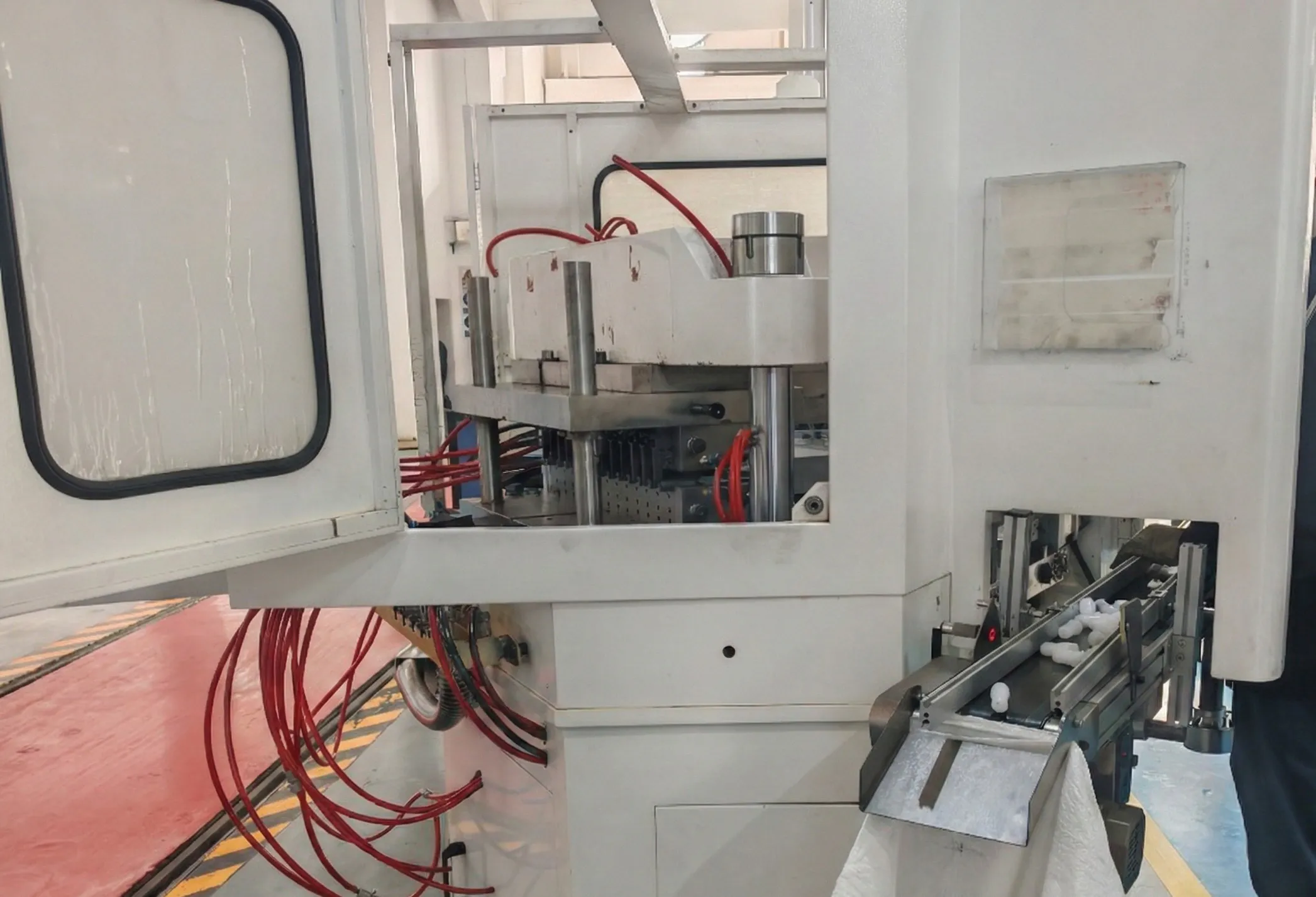
Diving into the mechanical brilliance of these systems, the action mode and structure type of a modern injection stretch blow moulding machine are engineered to maximize throughput while minimizing mechanical wear and tear. Unlike traditional two-step processes that require separate machines for creating the preform and blowing the final bottle, the one-step structure consolidates these operations onto a single continuous rotary or linear platform. The structure type typically revolves around a highly robust three-station or four-station indexing table. In a four-station setup, the machine seamlessly rotates the preforms through injection, thermal conditioning, stretch-blowing, and finally, the ejection or take-out phase. This continuous action mode is driven by highly sophisticated servo motors that provide precise rotational speed and positioning, ensuring that each station operates in perfect synchronization. The structural integrity of the machine is further enhanced by utilizing heavy-duty steel frames that dampen vibrations during the high-pressure clamping and injection phases. By employing a dual servo motor mold clamping system equipped with high-pressure compensation functions, the machinery guarantees that the molds remain perfectly sealed, eliminating the risk of flash and ensuring uniform wall thickness across every single container produced, which is paramount for maintaining brand reputation and product safety.
3. Manufacturing Structure & Recommended Configuration
To achieve unparalleled longevity and precision, the manufacturing structure of a top-tier injection stretch blow moulding machine relies on a meticulously selected array of globally proven components. The recommended configuration for operations seeking maximum reliability includes integrating industry-leading servo systems, such as Inovance or Yaskawa servo motors, which deliver exceptional torque control and energy efficiency. These motors are crucial for driving both the injection screw and the mold clamping mechanisms with absolute precision. Furthermore, the hydraulic framework should be outfitted with premium American Parker high-pressure valves and Yuken hydraulic control valves sourced from reputable manufacturers, ensuring fluid stability and rapid response times under extreme operational pressures. For the pneumatic systems, Airtac cylinders provide the necessary force for the stretch rods and ejection mechanisms without compromising on speed or reliability. The mold structure itself is a critical component; utilizing S136 stainless steel for the molds ensures unparalleled resistance to corrosion and wear, while also allowing for a mirror-like surface polish that imparts a flawless finish to the final injection stretch blow molding products. This robust manufacturing configuration not only minimizes the total cost of ownership through reduced maintenance but also provides a versatile platform capable of adapting to various production demands and complex bottle designs.
4. Material System & Surface Treatment
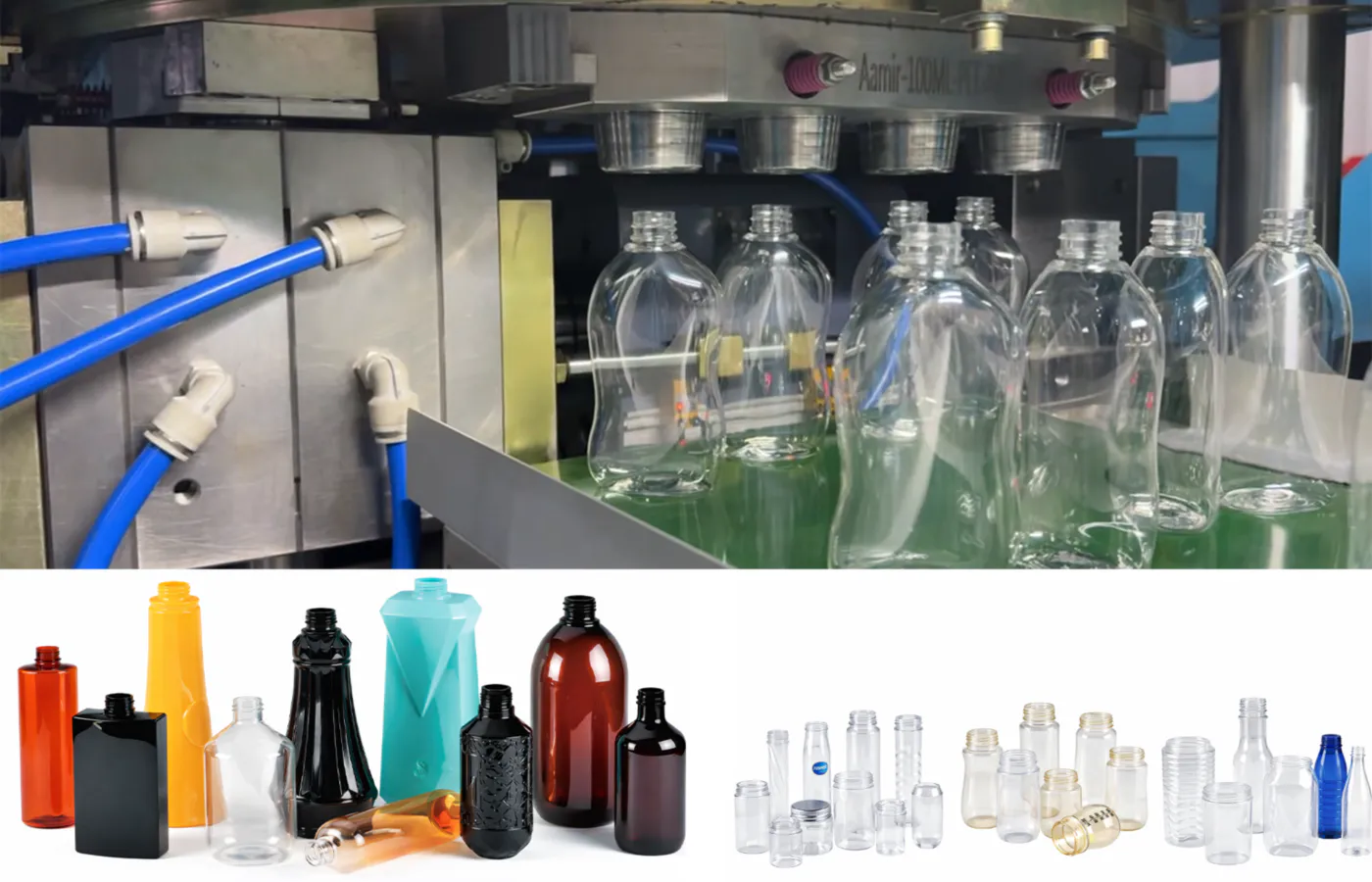
The versatility of a premium injection stretch blow moulding machine is largely defined by its advanced material handling capabilities and the superior surface treatment of its internal tooling. These machines are masterfully designed to process a wide spectrum of thermoplastic polymers, including PET, PETG, PP, PC, Tritan, PS, ABS, and even biodegradable options like PLA. Each material requires distinct thermal profiles and shear rates; thus, the material system features a specialized injection screw heated by nano-far-infrared energy-saving heating rings, providing precise temperature gradients that prevent polymer degradation. The surface treatment of the molds and the hot runner systems plays an equally critical role in the final product’s quality. As mentioned, the utilization of S136 stainless steel allows for advanced surface treatments, including high-grade polishing and specialized coatings that prevent material adhesion and facilitate smooth demolding. This is especially vital when manufacturing high-clarity cosmetics containers or medical-grade vials where any surface imperfection, scratch, or haziness is strictly unacceptable. By meticulously controlling the interaction between the molten polymer and the highly polished mold surfaces, the equipment consistently yields containers that boast exceptional transparency, brilliant gloss, and structurally sound barrier properties, perfectly suited for the most demanding global brands.
5. Environmental Grade & Working Condition Characteristics
Modern manufacturing facilities prioritize sustainability and operational safety, making the environmental grade and working condition characteristics of the injection stretch blow moulding machine a paramount consideration. Fully electric or advanced servo-hydraulic hybrid models are specifically engineered to eliminate the risk of oil contamination, achieving a superior environmental grade that complies with strict cleanroom standards necessary for pharmaceutical and food-grade packaging. The working condition characteristics of these machines are incredibly resilient, designed to operate efficiently even in challenging environments such as high-altitude locations like Bogotá, Colombia, where atmospheric pressure and ambient temperatures can fluctuate. The equipment features integrated, closed-loop cooling systems and oil coolers that maintain optimal operating temperatures regardless of external environmental stress. Furthermore, the acoustic profile of these machines has been optimized to reduce workplace noise pollution, contributing to a safer and more comfortable environment for the operators. By leveraging direct utilization of the injection preform’s latent heat, the one-step process inherently reduces overall energy consumption by up to 40% compared to traditional methods, aligning perfectly with global sustainability initiatives and providing a significant competitive edge for eco-conscious injection stretch blow molding machine manufacturers and their clients.
6. Typical Failure Modes & Compliance Regulations
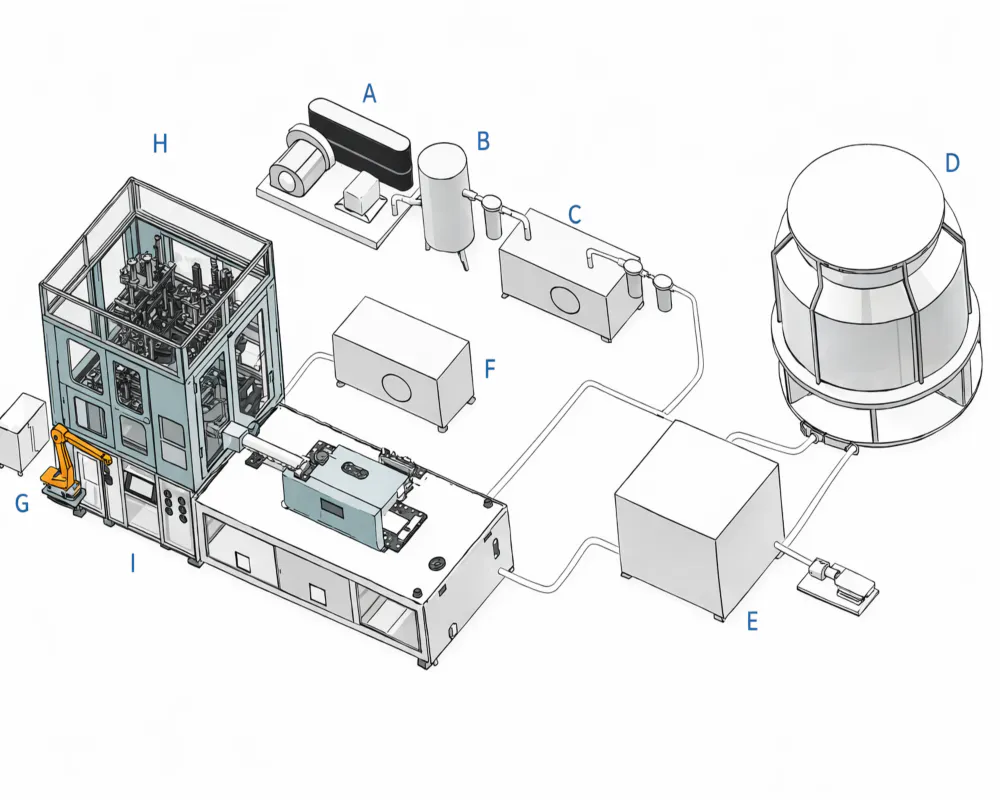
Understanding and mitigating typical failure modes is essential for maintaining the continuous productivity of an injection stretch blow moulding machine. Common operational challenges include premature wear of the stretch rod pneumatic seals, localized heater band failures leading to uneven preform temperature distribution, and potential hydraulic fluid micro-leaks in older, non-servo systems. To combat these, our advanced machinery incorporates predictive maintenance sensors and utilizes highly durable Japanese NSK lead screws alongside robust Inovance PLC systems that instantly alert operators to anomalous temperature or pressure deviations before catastrophic failures occur. Moreover, when deploying these robust machines in international markets like Colombia, strict adherence to local laws and regulations is mandatory. The machinery must comply fully with RETIE (Reglamento Técnico de Instalaciones Eléctricas), ensuring that all electrical panels, grounding systems, and high-voltage components meet the rigorous Colombian safety standards to prevent electrical hazards. Additionally, the mechanical gearboxes, rotational turrets, and high-pressure pneumatic vessels are designed in accordance with strict industrial safety norms mandated by the Colombian Ministry of Labor and NTC (Norma Técnica Colombiana) guidelines. This comprehensive compliance guarantees that the equipment not only delivers exceptional performance but also ensures the utmost safety for the workforce, legally protecting the facility from regulatory penalties and operational shutdowns.
7. Five Key Advantages
- Unmatched Energy Efficiency: The one-step injection stretch blow molding process eliminates the need to cool and subsequently reheat the preforms. By directly utilizing the latent heat retained from the initial injection phase, facilities can achieve up to a 40% reduction in electrical energy consumption, drastically lowering overhead costs.
- Exceptional Product Consistency: Thanks to fully automated, closed-loop servo controls and high-pressure compensation during clamping, every bottle produced exhibits identical wall thickness, weight, and dimensional accuracy, ensuring a zero-defect rate for critical pharmaceutical and cosmetic applications.
- Compact Footprint & Space Savings: By combining injection, stretching, and blowing into a single, unified structure, the injection stretch blow moulding machine requires significantly less floor space than traditional two-step systems, freeing up valuable real estate within the manufacturing plant for other operations.
- Superior Aesthetic & Neck Quality: Because the preform neck is securely held and protected throughout the entire rotational process without being transferred between disparate machines, the final containers boast flawless, highly precise threads and a pristine, scratch-free surface finish.
- Ultimate Production Flexibility: Designed for rapid mold changeovers and compatible with existing replacement of ASB and Aoki molds, the equipment allows manufacturers to swiftly pivot between different container shapes, sizes, and resins (such as PET, PP, or Tritan) to rapidly respond to dynamic market demands.
8. Working Principle
The working principle of the injection stretch blow moulding machine is a fascinating symphony of thermodynamics, fluid mechanics, and precise robotic automation divided into four distinct stations. In the first station (Injection), raw thermoplastic resin, such as PET pellets, is melted using a specialized screw and injected under extreme pressure into a precision mold cavity to form a preform. This preform already features the perfectly formed, final threaded neck of the bottle but has a thick, test-tube-like body. Once the preform solidifies just enough to hold its shape, the entire mold core, holding the hot preform, rotates to the second station. Here, in the Temperature Conditioning station, the preform is allowed to equilibrate; its internal temperature is finely adjusted using targeted heating and cooling zones to reach the perfect thermoplastic state, while the neck is actively cooled to prevent any distortion. The turret then rotates to the third station (Stretch Blow), where the magic truly happens. A mechanical stretch rod descends through the neck, physically stretching the hot preform to the bottom of the blow mold cavity, orienting the polymer molecules longitudinally. Simultaneously, high-pressure compressed air is blasted into the preform, forcing the plastic to expand radially against the chilled walls of the blow mold, causing bi-axial molecular orientation which gives the bottle its incredible strength and clarity. Finally, the machine indexes to the fourth station (Ejection), where the finished, cooled containers are precisely stripped from the core rods and safely deposited onto an automated conveyor system, ready for immediate filling and packaging without the need for any secondary handling or sterilization procedures.
9. Technical & Performance Parameters
| Parameter / Model | HGY50-V3-EV (3-Station) | HGY150-V4 (4-Station) | HGY250-V4 (4-Station) |
|---|---|---|---|
| Applicable Materials | PET / PETG | PET / PETG / PP / PC | PET / PETG / Tritan |
| Screw Diameter (mm) | 40 / 50 / 55 | 40 / 50 / 55 / 60 | 50 / 55 / 60 |
| Theoretical Injection Volume (cm³) | 239 / 315 / 442 | 188 / 310 / 380 / 480 | 340 / 420 / 480 |
| Injection Clamping Force (KN) | 50 | 150 | 300 |
| Blowing Clamping Force (KN) | 100 | 200 | 200 |
| Motor Power (KW) | 34.8 | 43.2 | 67.7 |
| Blowing Air Pressure (Mpa) | 2.0 – 3.5 | 2.0 – 3.5 | 2.0 – 3.5 |
10. Application Scenarios
Cosmetics & Personal Care Packaging
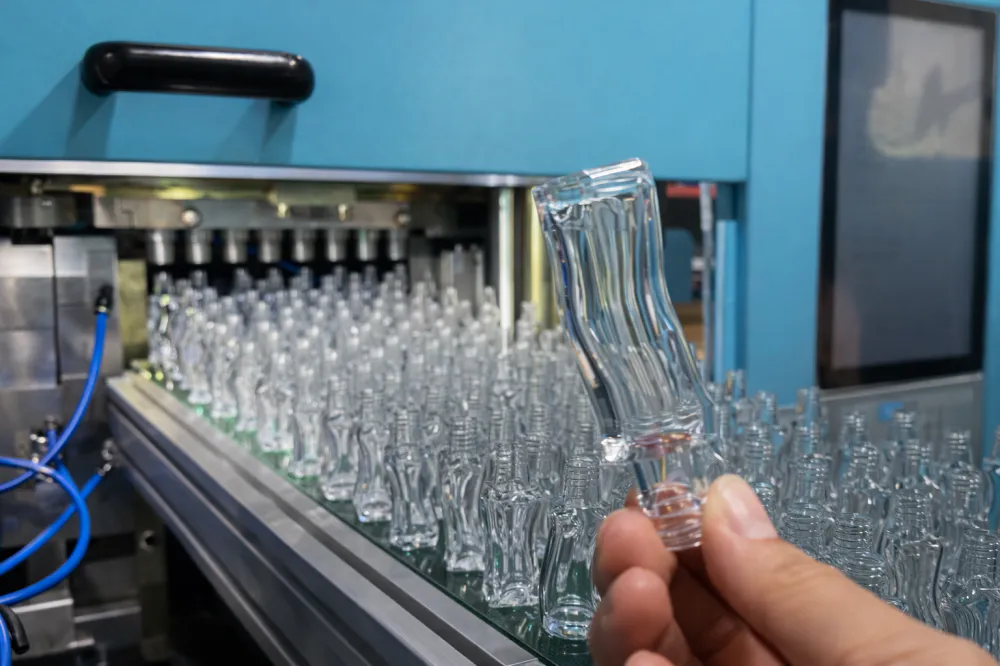
The cosmetic industry demands absolute perfection in packaging aesthetics. A new injection stretch blow moulding machine is heavily utilized to produce thick-walled, ultra-transparent jars, sophisticated lotion pumps, and elegant perfume bottles. By utilizing PETG and specialized resins, manufacturers achieve glass-like clarity combined with shatterproof durability, allowing premium brands to showcase their serums and creams flawlessly while ensuring the integrity of the delicate chemical formulations inside.
Pharmaceutical & Medical Vials
In the highly regulated pharmaceutical sector, preventing contamination is paramount. The one-step injection stretch blow molding process inherently guarantees an untouched, sterile environment from resin melting to final bottle ejection. It is the preferred method for producing precise eye drop dispensers, oral liquid vials, and pill bottles. The unmatched control over neck thread dimensions ensures that child-resistant and tamper-evident closures fit flawlessly, strictly meeting international health and safety packaging compliance mandates.
Food & Beverage Containers
From crystal-clear drinking water bottles to heat-resistant wide-mouth jars for jams and sauces, the injection stretch blow molding products dominate supermarket shelves. Utilizing advanced PP and PET resins, the machinery creates containers with exceptional barrier properties that lock in freshness, carbonation, and flavor while keeping oxygen and moisture out. The process is critical for producing lightweight yet incredibly strong beverage bottles that reduce shipping costs and carbon footprints for global food distributors.
Baby Products & Specialized Drinkware
Safety and durability are non-negotiable for infant care products. Utilizing BPA-free materials like PPSU, PC, and Tritan, the injection stretch blow moulding machine is perfectly suited for crafting high-end baby feeding bottles and robust sports water bottles. The bi-axial stretching ensures these bottles can withstand extreme impact, repeated high-temperature sterilization, and rigorous daily use without degrading, cracking, or leaching harmful chemicals, providing ultimate peace of mind for consumers worldwide.
WorkShop
Frequently Asked Questions (FAQ)
Q1. How does an injection stretch blow moulding machine reduce production cost for packaging suppliers in Colombia?
A1. By consolidating the preform injection and stretch-blowing into a single continuous step, the machine completely eliminates the need for secondary preform reheating. This direct utilization of latent heat slashes electrical energy consumption by up to 40%, drastically lowering utility expenses for Colombian packaging manufacturers while reducing labor requirements.
Q2. What are the specific power requirements and RETIE compliance needs for operating an injection stretch blow moulding machine in Bogota?
A2. Operating in Bogota requires strict adherence to RETIE electrical safety regulations. Our machines operate on a standard 370-400V industrial supply, featuring deeply integrated grounding, high-grade servo-drive insulation, and fail-safe safety interlocks that fully comply with local Colombian electrical norms, ensuring safe, legal, and uninterrupted industrial operations.
Q3. Which injection stretch blow molding machines provide the best energy efficiency for pharmaceutical container manufacturing facilities?
A3. The fully electric EV series injection stretch blow molding machines provide unparalleled energy efficiency and pristine environmental grades. Because they utilize direct-drive servo motors instead of hydraulic oil systems, they consume significantly less power and completely eliminate the risk of oil mist contamination, making them the absolute perfect choice for sterile pharmaceutical cleanrooms.
Q4. What kind of daily maintenance schedule does an advanced injection stretch blow moulding machine require to prevent unexpected downtime?
A4. To ensure continuous operation, daily maintenance should strictly include verifying the integrity of the Airtac pneumatic cylinders, checking the chiller water pressure metrics, and inspecting the nano-far-infrared heating bands. The automated PLC interface vastly simplifies this by providing real-time diagnostic alerts, allowing technicians to address minor deviations proactively before any serious downtime occurs.
Q5. What is the typical delivery and setup timeframe when securing a new injection stretch blow moulding machine quote for South American operations?
A5. When you request a customized quote for South American deployment, the standard manufacturing lead time is generally tailored to the complexity of your custom molds. Following oceanic transit, our dedicated engineering teams typically complete the rigorous on-site assembly, precise calibration, and operator training within a structured two-to-three-week intensive setup phase.
Q6. How does the one-step injection stretch blow molding process compare to two-step alternatives regarding overall equipment footprint?
A6. The one-step injection stretch blow molding process requires a substantially smaller footprint because it consolidates resin melting, preform molding, and final bottle blowing within a single, unified structure. This eliminates the massive space requirements for separate preform storage silos, conveyors, and secondary reheating ovens typically associated with outdated two-step setups.
Q7. Which replacement injection stretch blow moulding machine is most compatible with existing ASB and Aoki molds in our facility?
A7. Our HGY-V4 series serves as the ultimate replacement injection stretch blow moulding machine for facilities looking to upgrade. These sophisticated platforms are meticulously engineered with adaptable clamping interfaces and stroke dimensions specifically designed for seamless replacement of ASB and Aoki molds, protecting your previous expensive tooling investments while modernizing production.
Editor: PXY