Cosmetics & Personal Care · Application Guide
A technical and commercial deep-dive into how the injection blow molding machine — specifically the one-step injection stretch blow moulding platform — delivers the dimensional accuracy, optical clarity, and surface quality that premium cosmetic lotion and cream jars demand from the luxury beauty sector through to mass-market personal care.
Cosmetic packaging sits at an unusual intersection of engineering precision and aesthetic expectation. A lotion jar or cream container is not simply a vessel — it is a brand statement, a tactile experience, and in regulated markets, a legally accountable primary packaging component. The material it is made from, the dimensional tolerances of its neck thread, the wall thickness consistency, and the optical clarity of the body all feed into a consumer’s first-second impression of the product inside. Getting any one of these wrong at scale means either a premium brand losing shelf authority or a mass-market line absorbing unacceptable reject rates.
This is precisely where the injection blow molding machine — in its one-step injection stretch blow moulding configuration — has fundamentally changed what is achievable in cosmetic container production. By integrating preform injection, temperature conditioning, biaxial stretch blowing, and ejection into a single continuous machine cycle, this process delivers the kind of wall thickness uniformity (±5% in closed-loop servo configurations), thread form accuracy, and optical clarity that cosmetic brands previously associated only with glass. This guide explains how, and why that matters for lotion and cream jar producers serving markets from Europe and South Korea to Australia and Brazil.
1. Why the Injection Blow Molding Machine Suits Lotion and Cream Jar Production
Lotion and cream jars present a set of technical demands that expose the limitations of conventional packaging processes. Wide-mouth jars — the dominant format in skincare — require a neck opening large enough for a finger or spatula, which means the neck finish is not a minor geometric detail: it is the primary structural element around which the lid seals, labels align, and filling equipment engages. A neck thread that drifts by 0.3 mm across a production run will generate cap fitment complaints from the filling line and potential leak failures in distribution. The injection blow molding machine addresses this at the root cause, because the neck finish is formed during the injection phase — before the container body is blown — and the injection mold sets the thread geometry to tolerances tighter than ±0.05 mm. That neck dimension does not change during blowing; it is locked before the preform rotates to the blow station.
Beyond neck accuracy, the heavy-wall profile that premium cream jars require — typically 3 to 8 mm of wall thickness in the body to provide the weight, rigidity, and glass-like feel that luxury brands expect — is achievable through the one-step injection stretch blow molding process in a way that two-stage blow molding cannot reliably replicate. The temperature conditioning station available on 4-station machine configurations actively manages the preform’s thermal profile between injection and blowing, ensuring that the thick-walled preform stretches uniformly without localized thin spots or crystallization-induced hazing. The result is a heavy-wall container with consistent optical clarity across the body — whether in natural PET transparency or in the glass-like depth of PETG.
Neck Thread Accuracy
Thread geometry formed at the injection stage, locked to ±0.05 mm before blowing — consistent cap fitment across every cavity and every shift.
Heavy-Wall Capability
4-station temperature conditioning enables thick-walled PETG and PET jars without hazing or uneven stretch — the glass-feel premium brands demand.
Optical Clarity
No preform reheating means the resin’s thermal history is managed in a single controlled cycle — preserving PETG crystal clarity without yellowing or haze.
Surface Cleanliness
The preform is never exposed to ambient air between injection and blowing — eliminating the surface contamination and finger-mark risk that accumulates during preform storage in two-stage processes.
Complex Shapes
Non-round profiles, oval cross-sections, and faceted geometries achievable through the 4-station process — container shapes that drive retail differentiation without tooling compromise.
Energy Efficiency
Eliminating the preform reheating oven reduces total energy consumption by 20–40% versus two-stage lines — a measurable operational saving that compounds across high-volume cosmetic production.
2. Manufacturing Structure of the One-Step Injection Blow Molding Machine
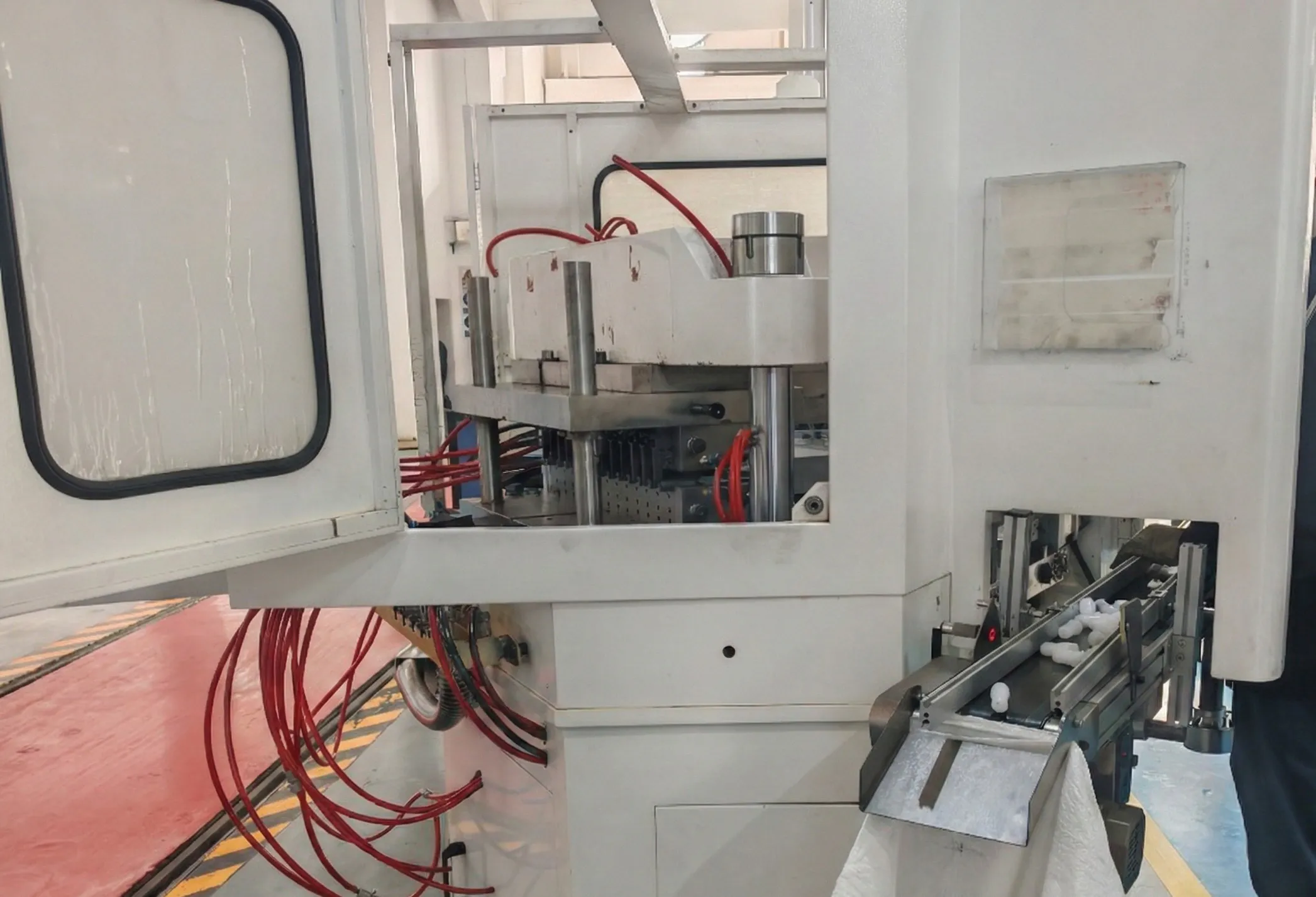
The manufacturing architecture of a one-step injection blow molding machine revolves around a rotating turntable that carries the preform through each production stage within a single, sealed mechanical environment. This structural design is what gives the process its quality advantages for cosmetic container production — because the preform’s thermal and geometric condition is controlled from first melt to finished container without any external handling event that could introduce variability.
2.1 The Four-Station Process Sequence
The four-station configuration — the preferred platform for cosmetic lotion and cream jar production — moves the preform through four sequential positions as the turntable rotates:
Injection Station
Raw resin (PETG, PET, PC, PP) injected into preform cavity. Neck thread, neck height, and sealing surface formed to final tolerances.
Temperature Conditioning
Critical for thick-walled jars. Active thermal management equalizes the preform temperature profile for uniform heavy-wall stretching without crystallization.
Stretch Blow Moulding
Stretch rod extends preform axially while 2.0–3.5 MPa blow air expands it radially. Biaxial molecular orientation enhances wall strength and clarity.
Ejection
Finished jars automatically removed and oriented — no manual handling, no surface contact marks that would compromise cosmetic presentation.
2.2 Core Mechanical Sub-Systems
For lotion and cream jar production specifically, several sub-systems in the injection blow molding machine’s architecture are directly relevant to output quality. The servo drive configuration — whether the machine uses servo pump systems (hydraulic hybrid) or full-servo motors across all axes — determines the repeatability of the injection and clamping cycle. Full-servo configurations, such as the HGYS150-V4-EV platform, achieve cycle-to-cycle repeatability that full-hydraulic machines cannot match, because servo position feedback eliminates the hydraulic system’s inherent pressure drift. For cosmetic jars where wall thickness consistency across a 12-hour production shift directly determines whether the batch meets the brand’s quality specification, this repeatability difference is commercially significant.
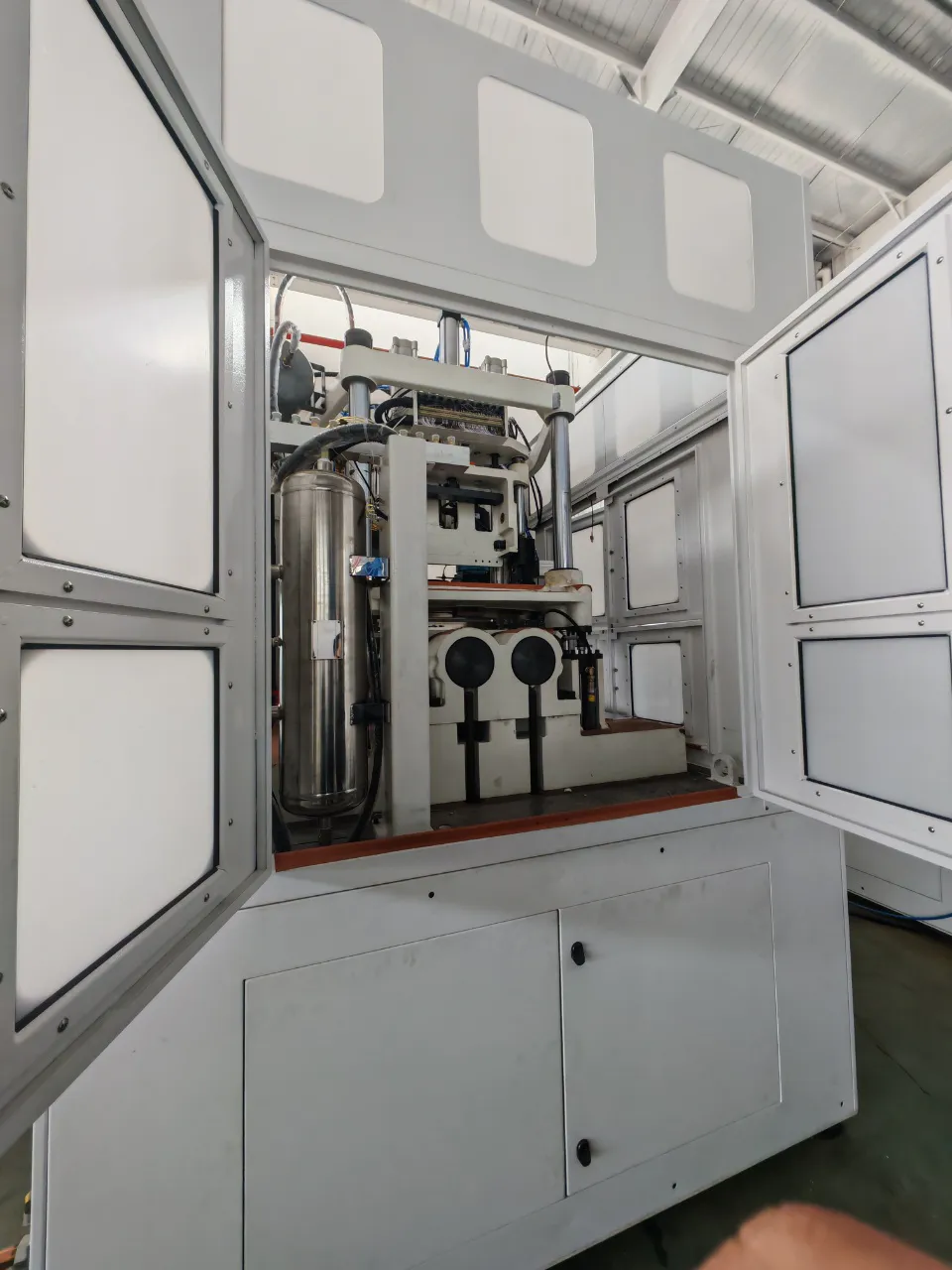
The temperature control sub-system — using an integrated control box rather than a distributed wiring arrangement — provides the precision needed for PETG processing. PETG has a narrower processing window than commodity PET, and unstable temperature control produces either crystallization (visible as whitening in the jar body) or insufficient stretch (producing thin spots and reduced mechanical strength). Nano far-infrared heating rings on the screw and barrel provide targeted, stable heat without the thermal runaway risk of conventional band heaters. High-pressure valves from Parker (USA), air cylinders from Airtak, and lead screws from NSK Japan are consistent across the machine range, ensuring that component performance specifications are maintained regardless of the specific model selected.
3. Material System: Which Resins Work for Cosmetic Lotion and Cream Jars
Material selection for cosmetic containers is driven by a combination of brand aesthetics, chemical compatibility with the formulation being packaged, regulatory requirements in the target market, and the processing characteristics of the injection blow molding machine being used. Each resin family has distinct advantages and constraints in the context of lotion and cream jar production, and understanding these allows packaging engineers to make informed decisions that align manufacturing capability with brand positioning.
| Material | Clarity | Chemical Resistance | Heavy-Wall Suitability | Best Cosmetic Application | Machine Station Requirement |
|---|---|---|---|---|---|
| PETG | Glass-like | Excellent (alcohols, surfactants) | High | Luxury serum jars, heavy-wall cream containers, faceted bottles | 4-station preferred |
| PET | High clarity | Good (most aqueous formulations) | Moderate | Body lotion jars, toner containers, mid-range personal care | 3-station or 4-station |
| PC | Crystal clear | Good; avoid strong alkalis and ketones | Very high | Reusable premium cream jars, high-impact vanity packaging | 4-station required |
| PCTG | Excellent | Excellent | High | Luxury cosmetics requiring PC aesthetics without BPA concern | 4-station preferred |
| PP | Good (with clarifier) | Excellent (oils, esters, silicones) | Moderate | Oil-based creams, sunscreen jars, products with high oil content | 3-station or 4-station |
PETG deserves particular attention in the cosmetic lotion and cream jar context. Its glycol modification prevents the crystallization that makes standard PET haze when subjected to the slow cooling rates inherent in thick-walled sections. This means PETG can be processed into jars with 5–8 mm body walls that look and feel remarkably similar to glass — a characteristic that luxury skincare brands have actively sought as an alternative to actual glass, which carries fragility and weight penalties in e-commerce distribution. The one-step injection blow molding machine’s temperature conditioning station is what makes this possible at production scale: by precisely managing the thick preform’s thermal profile, it ensures the PETG stretches into the blow mold uniformly without the cold-section hazing that would occur if the preform were allowed to cool unevenly during a two-stage process pause.
4. Recommended Machine for Cosmetic Jar Production
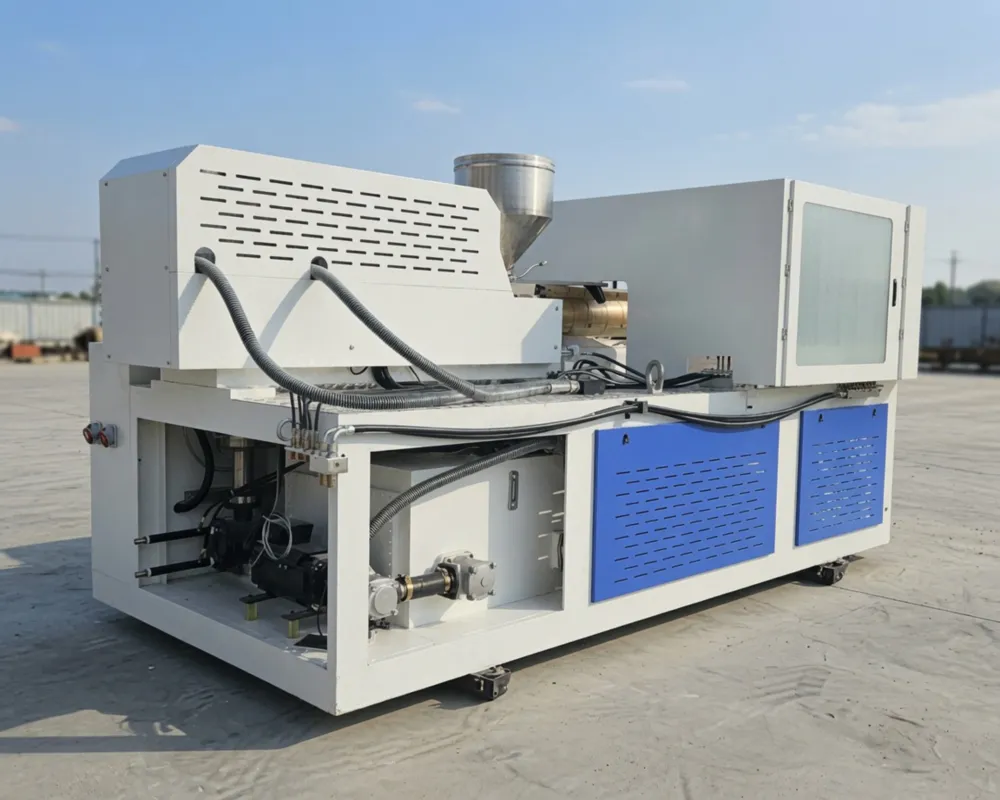
For cosmetic lotion and cream jar applications — particularly in the wide-mouth heavy-wall format that premium skincare brands require — the four-station platform is the natural choice. The HGYS150-V4 exemplifies why: its dedicated temperature conditioning station handles the thermal complexity of thick-walled PETG and PC preforms, while its broad cavity range (up to 8 cavities from 20 ml to 2,500 ml bottle volume) covers the full width of cosmetic SKU ranges from travel-size samples to 500 ml body lotion jars.
EP-HGYS150-V4 · 4-Station One-Step Injection Blow Molding Machine
Applicable Material: PET / PETG (PC, PP with screw configuration)
Injection Clamping Force: 150 KN
Blowing Clamping Force: 200 KN (single side)
Motor Power: 43.2 KW | Heating Power: 10 KW
Blowing Air Pressure: 2.0–3.5 MPa
Machine Size (L×W×H): 4,200 × 1,400 × 2,900 mm
Machine Weight: 6 T
Screw Diameter Options: 40 mm / 50 mm / 55 mm / 60 mm
Theoretical Injection Volume: 188–480 cm³ (by screw diameter)
Max Cavities: 8 | Max Container Volume: 2,500 ml
Mold Compatibility: Compatible with ASB-12M molds
Energy Saving: Approximately 30–40% less than conventional two-stage systems
5. Container Design Considerations for Lotion and Cream Jars
The design freedom available when specifying a container for production on an injection blow molding machine is substantially greater than many cosmetic packaging developers realize, particularly when the machine is configured in 4-station format. The preform is injection-molded to a precise geometry at Station 1, and the blow mold at Station 3 defines the final container shape — meaning that the container’s external form is governed by the mold design rather than by the machine itself. This allows producers to design containers with significant creative latitude while the machine handles the manufacturing precision.
5.1 Wide-Mouth Jar Geometry
Wide-mouth cream jars — typically with neck opening diameters from 38 mm to 90 mm — are the standard format for facial creams, body butters, and solid balms. The HGYS150-V4’s neck diameter range (15–83 mm across the cavity range) covers the standard cosmetic jar neck spectrum from 15 mm travel-size vials up to 83 mm wide-mouth cream jars in a single-cavity configuration. The injection-formed neck finish sets thread depth, pitch, and sealing surface geometry before the container body is blown, ensuring that every container in every batch engages the cap with the same closure torque. This is particularly critical for cream jars where over-torqued closures deform the neck or strip the thread — a field complaint that traces directly to inconsistent neck injection in competing processes.
5.2 Wall Thickness Profiles
A premium cream jar communicates quality partly through weight and feel — a container that flexes visibly when the consumer first picks it up from a shelf feels cheap regardless of what is inside. Achieving the 3–8 mm body wall profile that gives PETG cosmetic jars their glass-like rigidity requires the preform to be designed with significantly more material in the body section than a lightweight beverage bottle preform. The 4-station machine’s conditioning station manages the thermal gradient that a thick preform develops between its outer surface (which cools faster) and its core, ensuring that both surfaces are at the correct stretching temperature when the blow station activates. Without this active conditioning, thick preforms blow unevenly — thin at the poles, heavy at the equator — a defect visible to the naked eye in a clear PETG jar and commercially unacceptable for premium cosmetics.
5.3 Surface Finish and Decoration Compatibility
Cosmetic jars are routinely decorated — UV-printed graphics, hot-stamped logos, spray-applied colours, and sleeve labels all require a dimensionally consistent container surface to register correctly. The biaxial molecular orientation that the stretch blowing stage induces in the container wall produces a surface that is notably stiffer and dimensionally more stable than extrusion blow molded equivalents, because the oriented polymer chains resist thermal and mechanical deformation better than isotropic material. This stiffness means that screen-printed or pad-printed decoration applied to the jar maintains its register even when the container is handled, filled, capped, and packed — a practical advantage that downstream decoration suppliers recognise and value.
6. Selecting the Right Injection Blow Molding Machine for Your Cosmetic Production Volume
The injection blow molding machine range covers a broad spectrum of production capacities and container size ranges. For cosmetic lotion and cream jar producers, the choice between platforms depends primarily on the target container format, the annual production volume, and the material being processed. The following comparison maps key models to cosmetic application profiles:
| Model | Stations | Inj. Clamp (KN) | Max Cavities | Neck Diameter Range (mm) | Cosmetic Jar Use Case |
|---|---|---|---|---|---|
| HGY50-V3-EV | 3 | 50 | 6 | 17–60 | Travel-size serums, eye cream vials, sample-size jars up to 100 ml |
| HGYS150-V4 | 4 | 150 | 8 | 15–83 | Full cosmetic cream jar range: face cream (50 ml), body butter (200 ml), wide-mouth lotion (500 ml) |
| HGYS200-V4 | 4 | 300 | 12 | 23–90 | High-volume personal care jars; multi-SKU cosmetic lines with frequent changeover |
| HGY250-V4 | 4 | 300 | 14 | 16–130 | Large-format hair mask jars, bulk body cream containers, professional salon sizes |
| HGYS280-V6 | 6 | 150 | 10 | 12–85 | High-output small cosmetic vials and jars; dual-screw platform for mixed-SKU production |
Cosmetic producers who are replacing legacy ASB injection molding machine platforms or evaluating a switch from glass packaging should note that several models in this range — including the HGYS150-V4 — are engineered to accept tooling originally designed for ASB-12M mold systems. This mold compatibility means that existing tooling investment can be retained when transitioning to the new injection blow molding machine platform, significantly reducing the capital cost of the switch and allowing the first production run on the new machine to use validated mold geometry.
7. Regulatory Requirements for Cosmetic Packaging Produced on Injection Blow Molding Machines
Cosmetic lotion and cream jars are regulated as primary packaging — they are in direct contact with the product, which is in turn applied to human skin. This direct-contact status places cosmetic jars within the scope of multiple overlapping regulatory frameworks across different markets, covering the materials used, the substances that may migrate from packaging into the formulation, and in some markets, the machine safety certification required to operate the production equipment commercially. Understanding these requirements at the container design stage — before the mold is cut — avoids costly material changes or test failures after production tooling has been committed.
| Market | Container Material Regulation | Machine Safety / CE Requirements | Key Compliance Notes |
|---|---|---|---|
| European Union | EU Cosmetics Regulation (EC) 1223/2009; REACH (EC) 1907/2006 for restricted substances in packaging; EU Packaging and Packaging Waste Regulation (PPWR) | CE marking under Machinery Directive 2006/42/EC required; Low Voltage Directive 2014/35/EU | Phthalates, Bisphenol-A restricted in packaging materials; PETG and PET on EU positive list; PPWR pushes toward recyclable mono-material formats — PET and PETG are well-positioned |
| United Kingdom | UK Cosmetics Regulation (Regulation 1223/2009 as retained in UK law); UK Plastic Packaging Tax (30% recycled content threshold) | UKCA marking post-Brexit; Supply of Machinery (Safety) Regulations 2008 | Plastic Packaging Tax applies to cosmetic jars below 30% recycled content threshold; rPET and rPETG blending in machine processing is possible at 25–50% inclusion |
| United States | FDA regulates cosmetics under the FD&C Act and MoCRA (Modernization of Cosmetics Regulation Act 2022); packaging material must not adulterate product | OSHA 29 CFR 1910.212 machine guarding; NEC electrical compliance for installation | MoCRA (effective since 2023) requires cosmetic facility registration; packaging material safety is part of product safety file; PETG and PET are well-established FDA-compliant cosmetic packaging materials |
| Australia | TGA for therapeutic cosmetics; ACCC product safety for general cosmetics; Australian Packaging Covenant (APCO) 2025 targets for recyclable packaging | AS/NZS 3000 for electrical connection; state WorkSafe machinery registration above threshold power | APCO 2025 target requires 70% of packaging to be recyclable, reusable, or compostable; PET and PETG cosmetic jars are accepted as recyclable under current APCO guidelines |
| South Korea | Ministry of Food and Drug Safety (MFDS) Cosmetics Act; Act on Registration and Evaluation of Chemical Substances (K-REACH) for packaging materials | KC Mark for electrical components; MOEL machinery safety registration | K-REACH restricts certain substances in plastic packaging; cosmetic container materials must be declared in product notification; South Korea’s comprehensive EPR system incentivises PET mono-material packaging |
| Brazil | ANVISA RDC 752/2022 (cosmetics); packaging material must not transfer substances to product in quantities that could affect safety | NR-12 machinery safety; INMETRO conformity for electrical components; RETIE electrical regulations | ANVISA requires cosmetic product notification including primary packaging description; PNRS (National Solid Waste Policy) favours recyclable PET packaging formats in the Brazilian market |
| Japan | Pharmaceutical and Medical Device Act (PMD Act) for quasi-drugs; Act on Pharmaceutical and Medical Devices for cosmetics; JIS standards for packaging materials | Industrial Safety and Health Act for machinery; CE or equivalent testing documentation accepted | Cosmetics regulation in Japan requires Ministry of Health, Labour and Welfare (MHLW) notification; packaging material safety must be demonstrated; PETG widely used in Japanese premium cosmetics packaging |
Across all markets, the one-step injection blow molding machine process offers a cleanliness advantage that is relevant to cosmetic compliance: because the preform is never exposed to ambient air between injection and blowing, the risk of surface contamination from airborne particles, handling oils, or moisture is eliminated within the machine cycle. This hygiene characteristic, combined with the precision of injection-formed neck threads and the dimensional consistency of closed-loop servo control, positions the ISBM process as a natural fit for cosmetic primary packaging in regulated markets where product safety documentation must account for packaging material contributions.
8. Quality Control in Cosmetic Jar Production: What the Machine Delivers
Quality control in cosmetic packaging is not simply about catching defects at the end of a production run — it is about designing a process where defects are prevented by the machine’s inherent control architecture. The one-step injection blow molding machine achieves this through several interconnected quality mechanisms that operate continuously during production.
Closed-loop servo control on the injection and clamping axes maintains injection pressure and position profiles to within a fraction of a percent of the set value, cycle after cycle. This means that the preform wall thickness is held constant regardless of variations in resin viscosity across a production run — the servo system compensates for resin lot-to-lot variation that would cause visible wall thickness drift on a fixed hydraulic machine. For cosmetic jars where the wall thickness profile determines both the container’s appearance and its top-load strength under filled-and-capped stacking conditions, this compensation capability has direct commercial value.
The temperature conditioning station’s effect on quality is measurable and consistent: by actively equalising the preform temperature before blowing, the machine eliminates the pearlescence and stress-whitening defects that appear when a thick preform stretches unevenly. These defects — visible as cloudy patches in an otherwise clear PETG container — are a brand quality failure in luxury cosmetics and an acceptance criterion failure in any properly specified quality plan. The 4-station platform prevents them at the process design level rather than relying on inspection to catch them after the fact.
Statistical process monitoring, available through the Inovance or MIRLE PLC data logging on machines so configured, gives production managers trend data on injection pressure, cycle time, and conditioning temperature across shifts — enabling proactive intervention before a drift becomes a reject event. For cosmetic producers operating under ISO 9001 or a brand-owner quality management requirement that specifies process monitoring records, this data logging capability satisfies the evidence requirement without additional instrumentation investment.
About Us
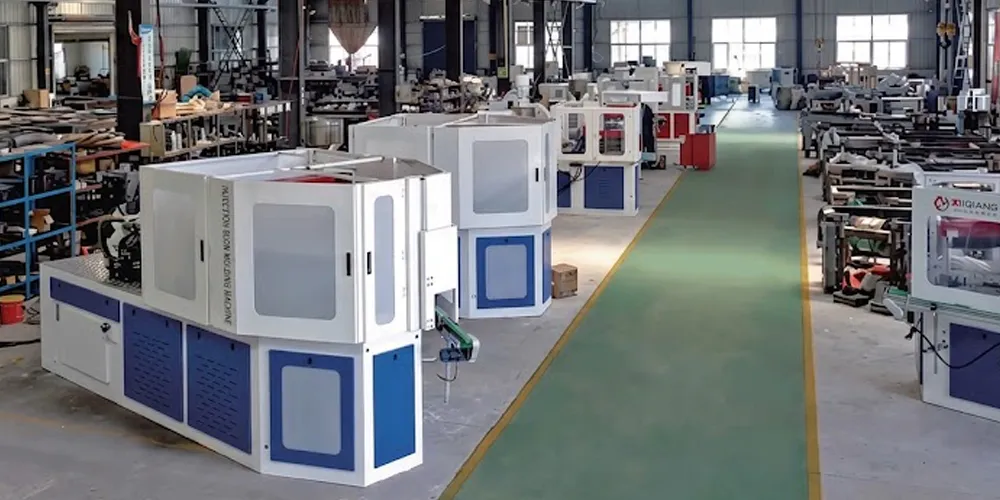
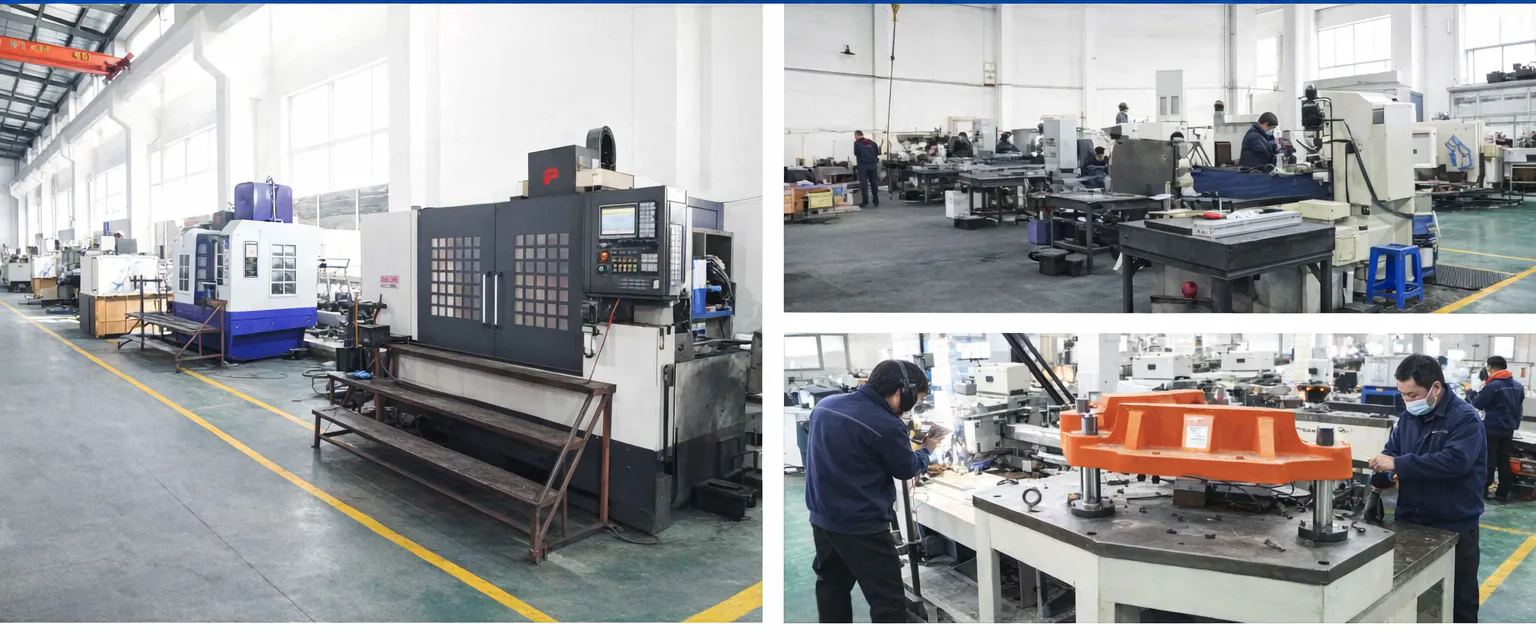
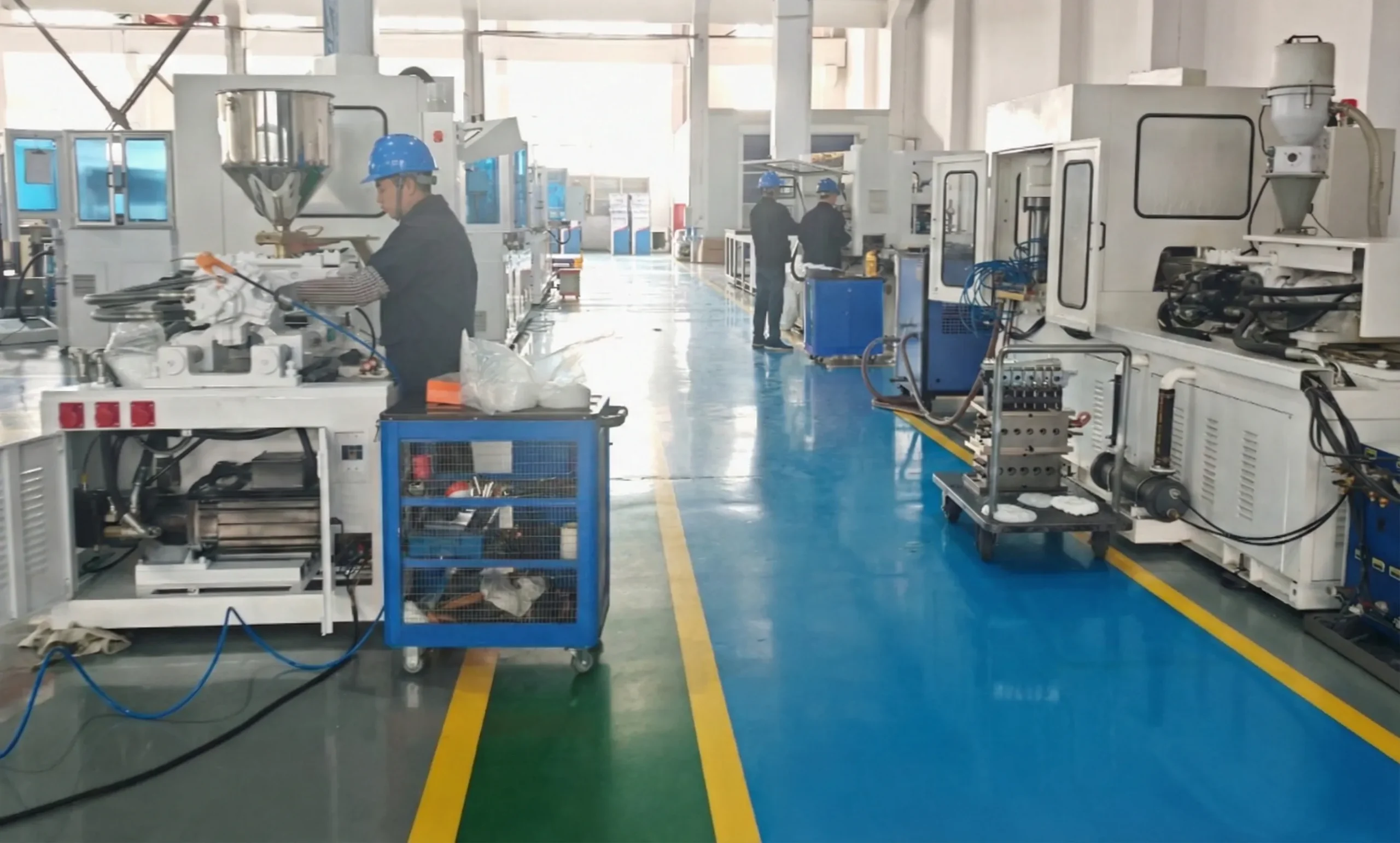
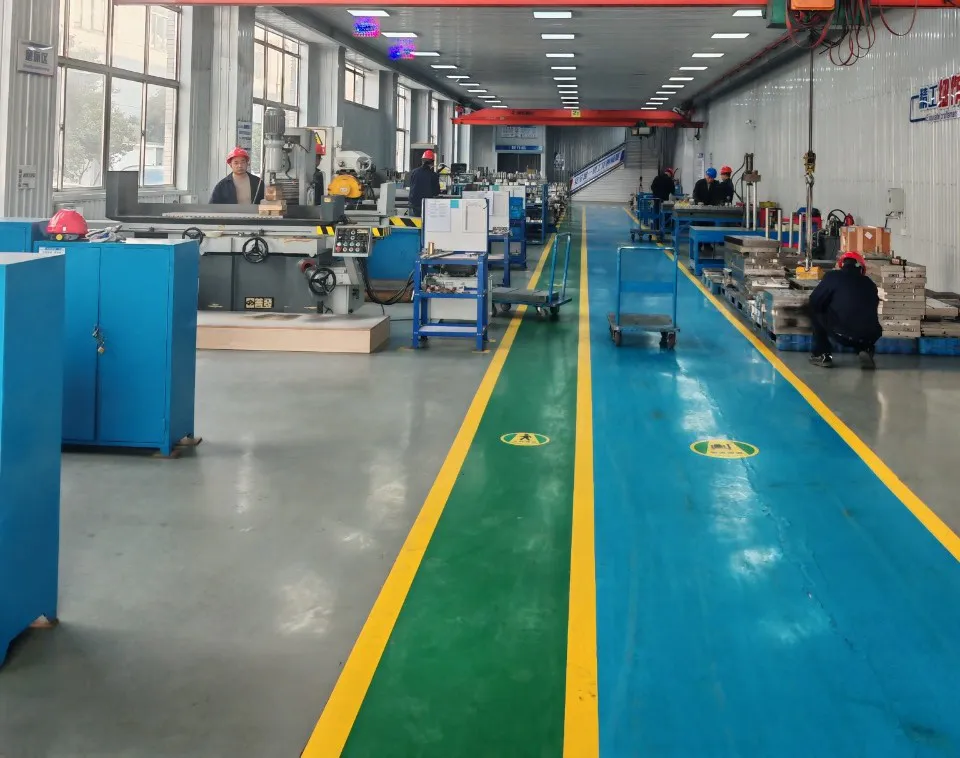
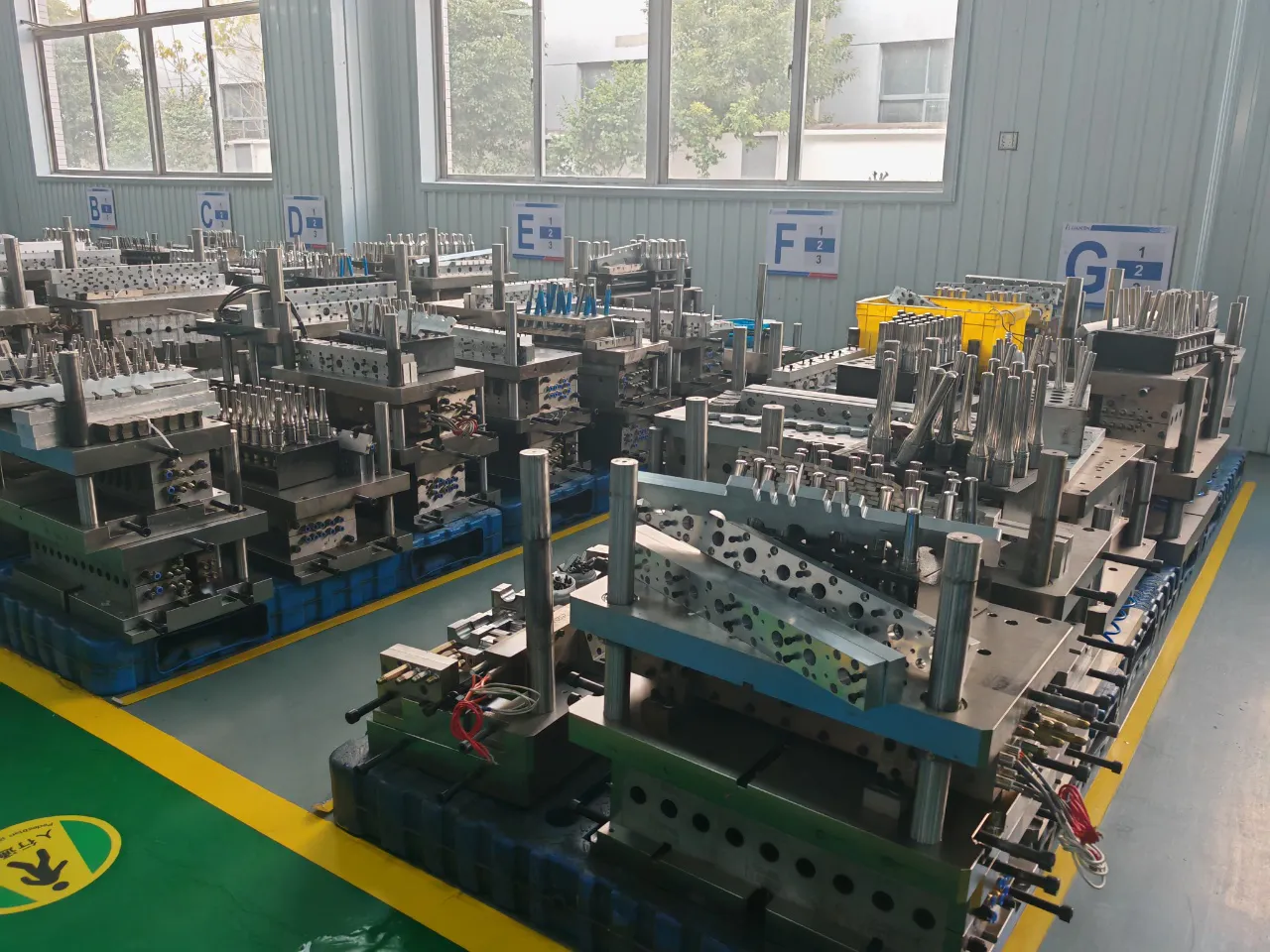
Our production facility covers more than 20,000 square metres of dedicated machining, assembly, and testing floor, where each injection blow molding machine is built, assembled, and subjected to factory acceptance testing using actual production resin before shipment. Over more than twenty years of developing one-step blow moulding platforms, the engineering team has accumulated particular depth of experience in cosmetic and personal care applications — developing machine configurations and mold tooling optimized for the heavy-wall PETG profiles, wide-mouth neck geometries, and multi-SKU production requirements that characterize premium skincare and luxury beauty packaging. Cosmetic brands including leading global names in high-end skincare, food and beverage, and pharmaceutical packaging have relied on this platform for demanding production applications.
Core components are sourced from internationally recognized suppliers: Yaskawa and Inovance servo systems, Parker high-pressure valves, NSK lead screws, Airtak air cylinders, and YUKEN hydraulic valves ensure that every machine performs to specification in the diverse operating environments of cosmetic packaging plants worldwide — from climate-controlled European facilities to high-ambient-temperature production environments in Southeast Asia and South America. Machine documentation, electrical schematics, and PLC program backups are supplied in the agreed language as standard, supporting local electrician sign-off and regulatory compliance from day one.
WorkShop
Related Equipment for Cosmetic Jar Production Lines
Consistent output from an injection blow molding machine in a cosmetic packaging application depends not only on the machine itself but on the quality and stability of the connected auxiliary systems. Two auxiliary systems have direct, measurable effects on container quality in cosmetic production environments.
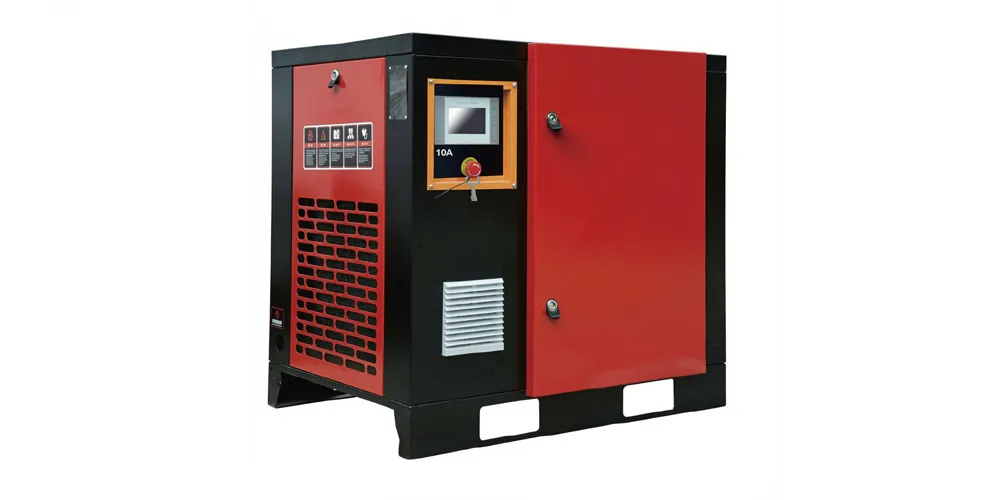
Oil-Free Air Compressor
In cosmetic jar production, the blow air that forms the container interior surface must be clean and completely oil-free. Oil aerosol in the blow circuit deposits on the interior container wall — contaminating the packaging surface that will be in direct contact with lotion or cream formulations. Oil contamination also degrades the Parker high-pressure valves fitted across the machine range, shortening maintenance intervals and introducing pressure instability that affects blow consistency. An oil-free high-pressure compressor matched to the machine’s cycle air demand eliminates both risks. Visit compressoroilfree.com for specifications matched to cosmetic production environments.
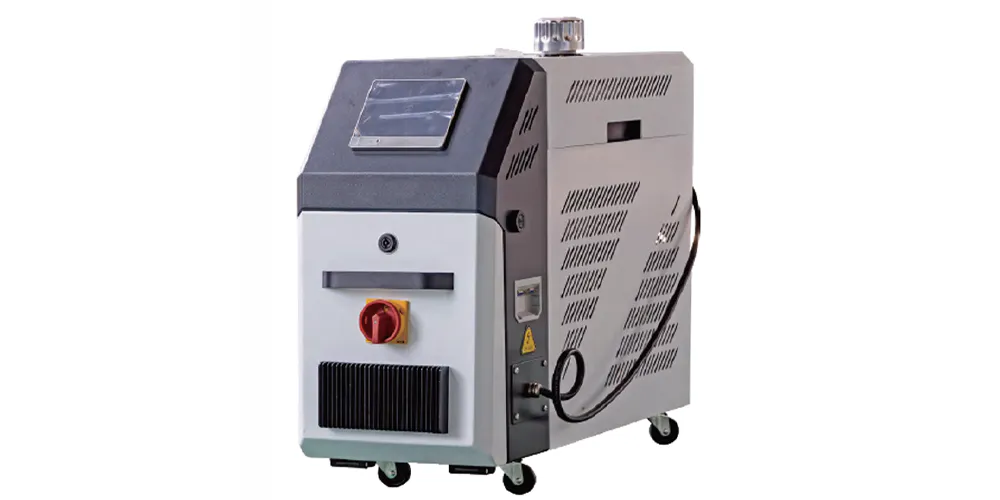
Mold Temperature Controller
For cosmetic jar molds running PETG or PC in heavy-wall profiles, mould temperature stability is critical to both surface finish and dimensional consistency. A mould temperature controller that allows the coolant temperature to drift causes the blow mould cavity surface to cycle through micro-expansions and contractions, producing bottles with variable outer diameter and inconsistent surface gloss — defects that are visible under cosmetic display lighting and unacceptable to brand owners. A matched mould temperature controller with isolated electrical outputs prevents temperature-induced signal noise from interfering with the machine PLC, eliminating spurious temperature sensor alarms and providing a stable thermal baseline for the container specification. Including the mould temperature controller in the same procurement as the injection blow molding machine ensures system compatibility and simplifies commissioning.
Discuss Your Cosmetic Jar Production Requirements
Whether you are specifying a new lotion jar container format, evaluating a switch from glass to PETG, or sourcing a replacement injection blow molding machine to replace legacy ASB or AOKI equipment, our application engineering team is available to review your container specification and recommend the right machine and mold configuration.
Frequently Asked Questions
Editor: PXY