Cosmetics & Personal Care · Technical Guide
A specialist guide to how the injection blow molding machine — in its one-step ISBM configuration — meets the precision demands of eye cream and serum dropper bottle production, from neck thread accuracy and optical clarity through to global regulatory compliance for prestige skincare markets.
Eye cream and serum dropper bottles occupy a uniquely demanding corner of cosmetic packaging. The containers are small — typically ranging from 5 ml to 50 ml — but the dimensional tolerances they require are anything but minor. A dropper bottle neck must align precisely with the dropper pump or pipette closure, with thread engagement measured in fractions of a millimetre. An eye cream jar or vial must present a flawless optical surface under the bright lighting of a prestige beauty counter. Any deviation in wall thickness, neck thread form, or body clarity translates directly into a filling line rejection or a consumer return — and in a product category where unit values are high and brand reputation is hard-won, neither outcome is acceptable.
This is the precise application context where the injection blow moulding machine — operating through the one-step injection stretch blow molding process — delivers capabilities that conventional packaging processes struggle to match. By forming the neck finish during injection, conditioning the preform’s temperature profile before blowing, and completing the entire sequence within a single sealed machine cycle, the ISBM approach produces small cosmetic containers with dimensional consistency and surface quality that luxury skincare brands specifically seek. This guide explains the technical and commercial case for this platform in eye cream and serum applications, covering machine structure, material selection, container design principles, applicable regulations, and machine selection across global markets.
1. The Specific Demands of Eye Cream and Serum Dropper Bottle Production
Serum dropper bottles and eye cream containers place requirements on the production process that are qualitatively different from general cosmetic packaging. Consider the functional chain: a 15 ml serum bottle is filled with an active-ingredient formulation worth several times its weight in cost, sealed with a dropper pipette closure that engages a specific neck thread profile, labelled with micron-registered print, and sold through channels — department stores, e-commerce unboxing, travel retail — where the container’s first visual impression is inseparable from the perceived product quality. Each link in that chain depends on the container meeting tighter specifications than most packaging engineers routinely work to.
Neck thread dimensions for dropper closures are typically specified to ±0.1 mm or tighter on both thread diameter and pitch, because the pipette tip must seat correctly against the bottle shoulder to produce consistent draw volume. Body wall thickness must be controlled not only for structural integrity but for the optical consistency that determines how the liquid inside appears through the glass-clear PETG or PET body. And the container’s exterior surface must be free of gate marks, parting line witness lines, and surface hazing — all of which are rejection criteria in prestige packaging quality inspection.
The one-step injection blow molding machine addresses each of these demands at the process architecture level. The injection station forms the neck thread to injection-mold tolerances before the container body exists. The temperature conditioning station (on 4-station machines) manages the small-format preform’s thermal profile precisely, preventing the localised cooling that causes wall thickness variation in thin-walled serum bottles. The biaxial stretch blowing stage orients the polymer molecules for maximum optical clarity and mechanical stiffness. And the fully automated ejection station removes bottles without surface contact that would leave marks on the cosmetically critical exterior surface.
2. Manufacturing Structure of the Injection Blow Moulding Machine for Small-Format Bottles
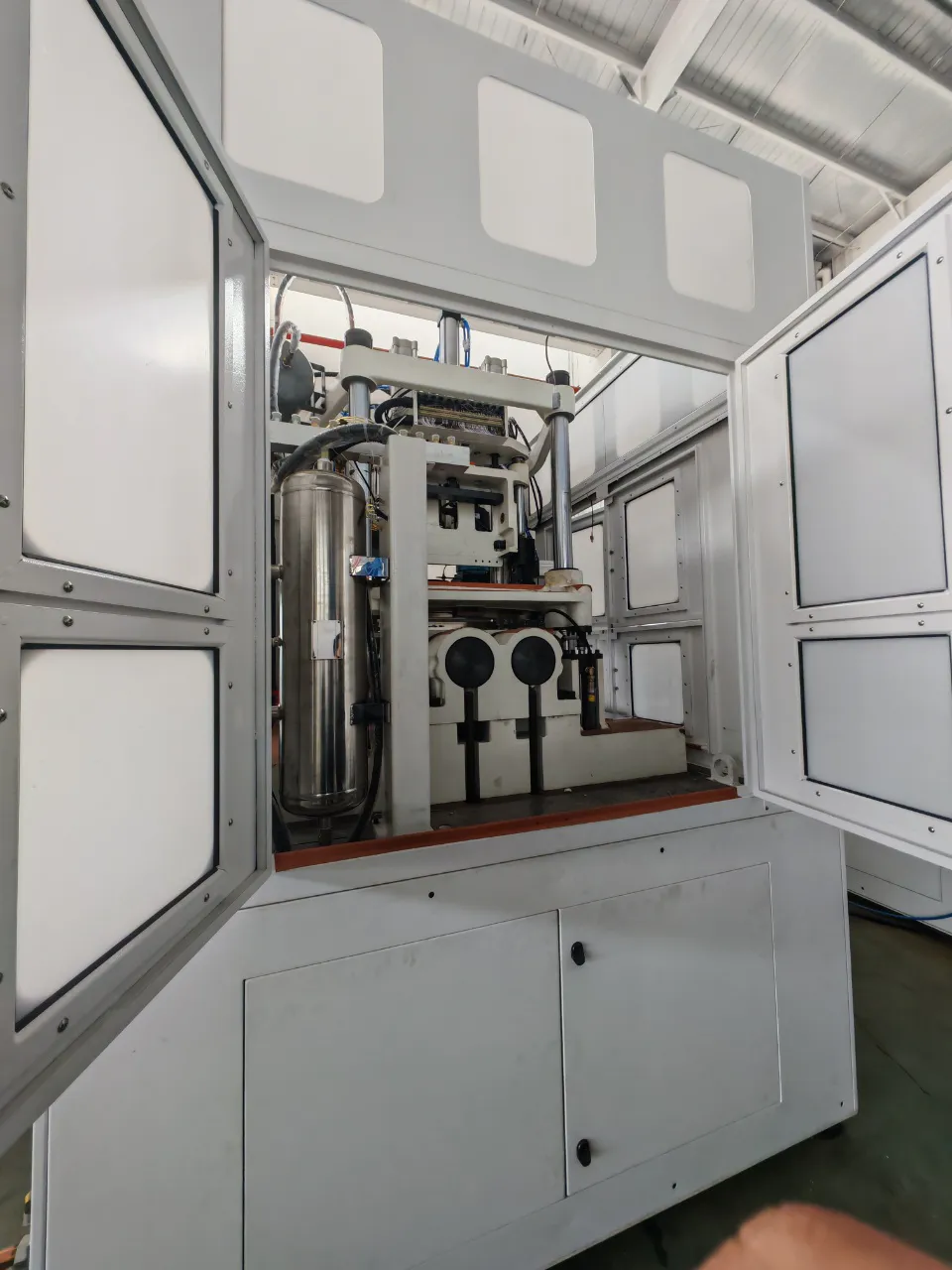
The structural architecture of a one-step injection blow moulding machine is particularly well-suited to high-precision small-format container production. The machine’s rotating turntable carries preforms through each station without removing them from the tooling system — meaning that the neck finish, once injection-moulded at Station 1, is never exposed to external handling forces or environmental contaminants between injection and the moment the finished bottle is ejected. For serum and eye cream containers where surface contamination or dimensional distortion at the neck affects dropper fitment, this closed-cycle geometry is a process quality advantage rather than simply a production efficiency feature.
2.1 Three-Station vs. Four-Station Architecture for Small Cosmetic Bottles
The 3-station injection blow moulding machine — running injection → preform tail cut and heat preservation → stretch blow moulding → take-out — performs well for standard serum bottle formats in PET or PETG with conventional thin wall profiles (0.5–1.5 mm body wall). For this class of container, the 3-station cycle is energy-efficient and productive, and the compact footprint (3,800 × 1,200 × 2,500 mm for the HGY50-V3-EV) suits smaller facilities or dedicated product lines. The 4-station configuration adds a temperature conditioning station between injection and blowing — critical when the serum bottle specification calls for heavier walls (2–4 mm in PETG for a premium feel), non-round cross-sections that require controlled circumferential temperature distribution, or PC material which has a significantly narrower processing window than PET.
| Architecture | Station Sequence | Best For (Eye Cream / Serum) | Key Limitation |
|---|---|---|---|
| 3-Station | Injection → Heat Preserve / Tail Cut → Stretch Blow → Take-out | Standard thin-wall PET/PETG serum bottles (5–30 ml), high cavity count small vials | Limited control of preform temperature profile for thick-wall or complex geometries |
| 4-Station | Injection → Temperature Conditioning → Stretch Blow → Take-out | Heavy-wall PETG eye cream vials, non-round serum dropper bottles, PC containers, Tritan formats | Larger footprint; higher capital cost; more appropriate where premium container specification justifies |
2.2 Key Mechanical Sub-Systems That Determine Small-Bottle Quality
For eye cream and serum dropper bottle production specifically, four mechanical sub-systems in the injection blow moulding machine architecture have disproportionate influence on output quality:
Screw and Barrel Heating
Nano far-infrared heating rings provide stable, zone-specific barrel temperature control that is critical when processing small shot weights — the theoretical injection volume for a 10 ml serum bottle preform may be 30–60 g, where temperature non-uniformity translates directly into inconsistent IV and viscosity across cavities.
Servo Drive Precision
Full-servo configurations such as the HGY50-V3-EV maintain cycle-to-cycle injection pressure and position consistency that hydraulic-only machines cannot achieve. For small serum bottles where preform weight variation of ±0.5 g produces visible wall thickness asymmetry, servo repeatability is a direct quality driver.
High-Pressure Blow Circuit
Parker high-pressure valves across the machine range control blow air delivery at 2.0–3.5 MPa. Pressure ramp profile precision is critical for small-format serum bottles, where the blow time window is short and inadequate pressure build-up causes incomplete shoulder formation — a cosmetically critical area that consumers examine closely.
Integrated Temperature Control
The integrated control box (rather than distributed PLC-linked temperature cards) provides temperature stability across all barrel zones simultaneously. For PETG processing, where zone temperature drift of ±3°C changes melt flow characteristics measurably, this stability directly affects shoulder clarity and the absence of flow lines in the finished serum bottle body.
3. Material System: Resin Selection for Eye Cream and Serum Dropper Containers
Material selection for eye cream and serum dropper bottles is driven by an interplay of aesthetics, chemical compatibility, regulatory compliance, and the processing characteristics of the injection blow molding machine being used. The resin must produce the crystal clarity that prestige serums require, withstand the active ingredients in the formulation without permeation or migration, and process consistently in the small preform shot weights that 5–50 ml containers demand. The following matrix covers the materials most relevant to this application on one-step ISBM platforms.
| Resin | Optical Clarity | Chemical Resistance | Wall Thickness Range | Serum / Eye Cream Fit | Station Requirement |
|---|---|---|---|---|---|
| PETG | Glass-like | Excellent (alcohols, glycols, peptides) | 0.5–4 mm | Premium serum bottles, heavy-wall eye cream vials, luxury dropper bottles | 4-station for heavy wall; 3-station for standard |
| PET | High | Good (aqueous-based serums) | 0.3–2 mm | Mid-market serum dropper bottles, hyaluronic acid serums, toner vials | 3-station or 4-station |
| PC | Crystal clear | Good; avoid strong alkalis and aromatic solvents | 1–5 mm | High-impact premium eye cream vials, reusable dropper containers | 4-station required |
| PCTG | Excellent | Excellent (retinol, vitamin C, acids) | 0.8–4 mm | Active-ingredient serums requiring PC aesthetics without BPA — retinol, AHA, peptide formulas | 4-station preferred |
| PP | Good with clarifier | Excellent (oils, esters, silicones) | 0.5–2 mm | Oil-based eye cream vials, bakuchiol serum dropper bottles, anhydrous formulas | 3-station or 4-station |
PETG and PCTG deserve special attention in the serum dropper bottle context because of their chemical resistance profiles. Luxury serum formulations routinely include active ingredients at concentrations that can permeate standard PET over extended shelf periods — retinol (vitamin A), ascorbic acid (vitamin C), and AHA/BHA acids are common examples. PETG’s glycol modification improves resistance to these actives compared to standard PET, while PCTG’s copolymer structure extends this resistance further while maintaining the glass-like optical properties that prestige serum packaging demands. For brands specifying a retinol serum or a high-concentration vitamin C dropper, the additional material cost of PETG or PCTG over standard PET is routinely justified by the reduction in oxygen permeation and formulation compatibility risk over the product’s shelf life.
4. Recommended Machine for Eye Cream and Serum Dropper Bottle Production
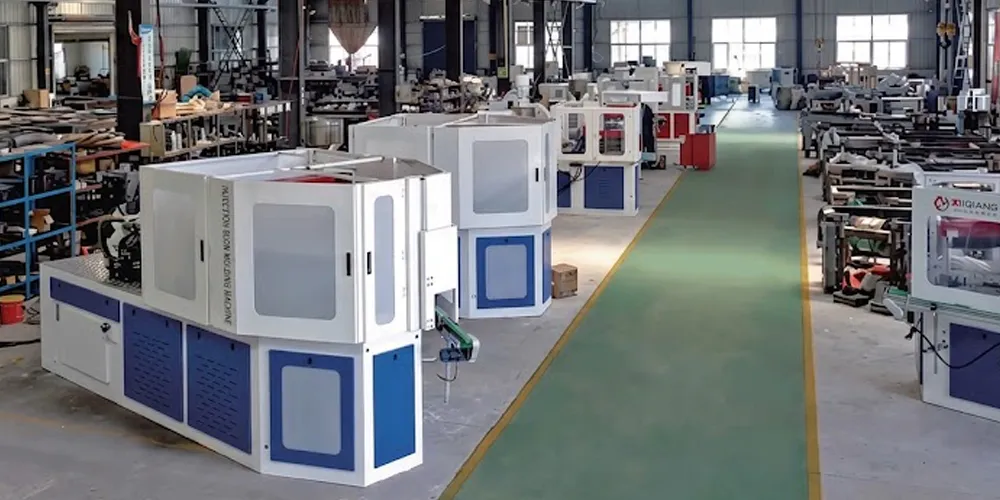
For small-format cosmetic containers in the 5–100 ml range — covering the full spectrum from 5 ml eye cream vials to 30 ml serum dropper bottles to 100 ml lotion flacons — the 3-station full-servo platform represents the most efficient production solution for standard wall-thickness formats. The HGY50-V3-EV brings five servo axes, a compact footprint, and the cycle repeatability that precision serum bottle production requires.
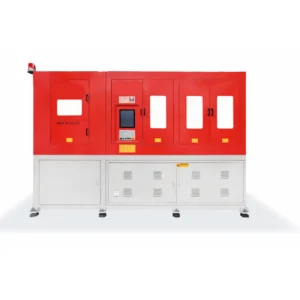
EP-HGY50-V3-EV · 3-Station Full-Servo Injection Blow Moulding Machine
Applicable Material: PET / PETG
Servo System: 5 sets of servo systems (Inovance / MIRLE)
Servo Motor Power: 34.8 KW (Inovance / WEICHI servo)
Injection Clamping Force: 50 KN
Blowing Clamping Force: 100 KN (single side)
Heating Power: 10.4 KW
Blowing Air Pressure: 2.0–3.5 MPa
Screw Diameter Options: 40 mm / 50 mm / 55 mm
Theoretical Injection Volume: 239 cm³ (40 mm) / 315 cm³ (50 mm) / 442 cm³ (55 mm)
Upper / Lower Mold Stroke: 280 mm / 280 mm
Take-out Stroke: 150 mm | Blow Core Stroke: 100 mm
Max Cavities: 6 | Max Bottle Volume: 2,500 ml
Machine Size (L×W×H): 3,800 × 1,200 × 2,500 mm
Machine Weight: 3.5 T | Total Power: 45.2 KW
Voltage: 370–400 V
Lead Screw: NSK Japan | High-Pressure Valve: Parker USA
For producers whose serum or eye cream bottle specification calls for heavier walls, non-round cross-sections, or PC/PCTG material, the 4-station HGYS150-V4 is the appropriate platform — its temperature conditioning station manages the more demanding thermal requirements of these formats while supporting neck diameters from 15 mm to 83 mm across up to 8 cavities. Both machines accept tooling designed to ASB-12M mold standards, allowing brands transitioning from legacy asb injection molding machine platforms to retain existing validated tooling.
5. Container Design Principles for Serum Dropper Bottles and Eye Cream Vials
5.1 Dropper Bottle Neck Geometry
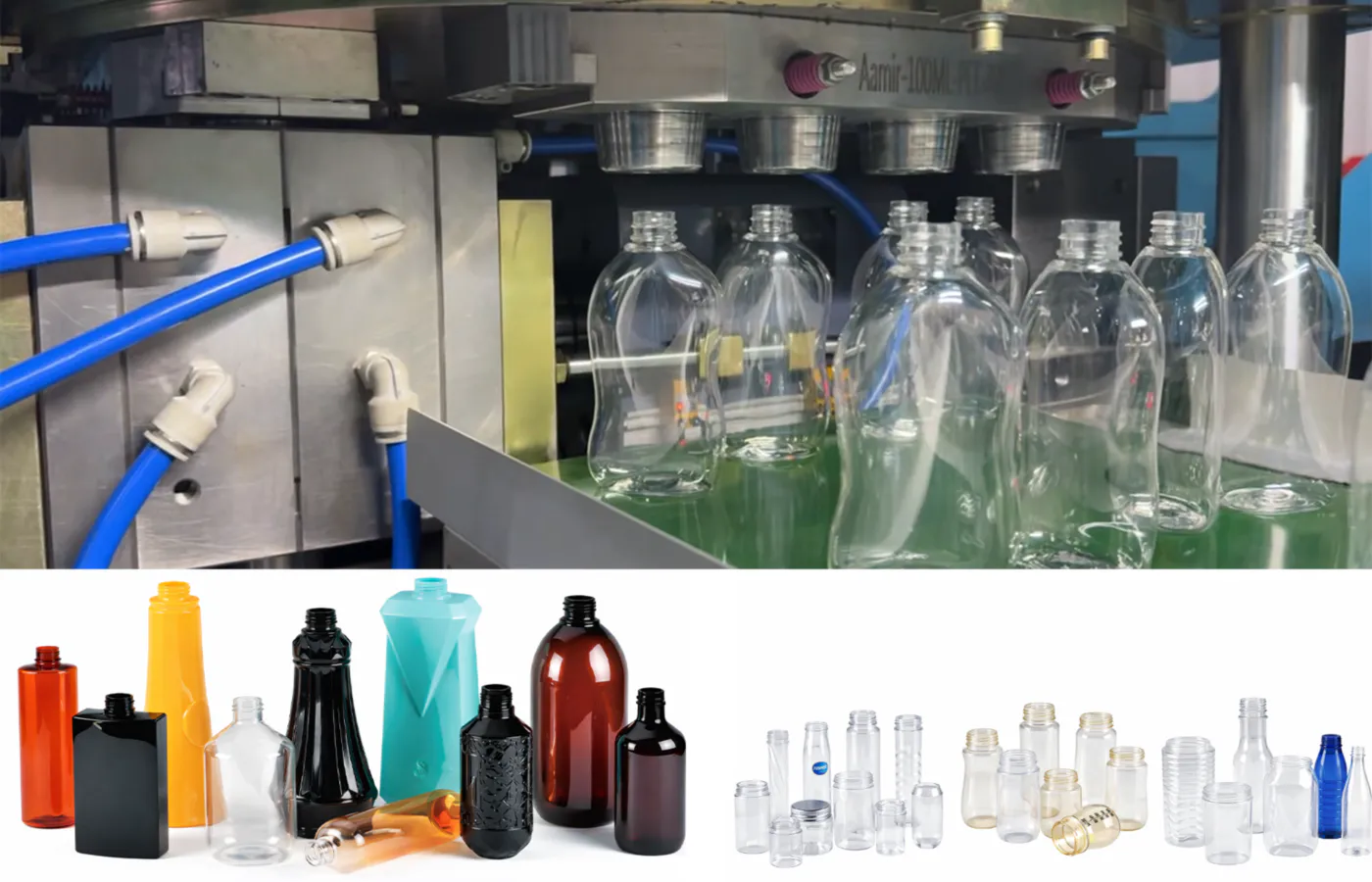
The neck finish of a serum dropper bottle is the most functionally critical dimension in the entire container specification. The dropper pump or pipette closure must engage the neck thread to a consistent depth to produce the correct dispense volume — typically 0.02–0.05 ml per draw for eye serums — and create a hermetic seal that prevents formulation evaporation and oxidation. Thread forms used in cosmetic dropper closures follow either DIN (metric) or proprietary brand-owner standards, with neck diameters commonly ranging from 17 mm to 28 mm for serum vials. The injection blow moulding machine’s injection station forms these thread dimensions to injection-mold tolerances — tighter than ±0.05 mm on diameter, ±0.1 mm on thread pitch — in every cycle, regardless of cavity position or production shift. This tolerance capability is not achievable through any secondary neck-forming process, and it is the reason that ISBM is the preferred production method for premium dropper bottle formats in prestige beauty markets worldwide.
5.2 Body Geometry and Optical Performance
Serum dropper bottles are almost universally specified in clear material — consumers and filling operators both need to see the fill level, and the colour of a premium serum or oil is itself a visual quality signal. The one-step injection stretch blow molding process produces containers with biaxially oriented polymer walls that have higher optical clarity than isotropic material of the same thickness, because the molecular alignment reduces the light scatter that produces haze. For PETG bodies, the absence of crystallinity-induced whitening — prevented by the 4-station machine’s temperature conditioning, which keeps the amorphous PETG in its non-crystalline state through the blowing stage — means that even containers with 3 mm body walls remain genuinely water-clear rather than exhibiting the milky translucency that characterises badly processed PETG.
5.3 Shoulder and Base Design for Serum Format Bottles
The shoulder geometry of a serum dropper bottle — the transition between the neck finish and the body — is a design area where the ISBM process offers advantages that extrusion blow moulding cannot replicate. Because the ISBM blow mold defines the entire container external geometry, including shoulder sweep radius, body profile, and base detail, complex shoulder transitions can be specified without compromise. This matters for serum dropper bottles in the prestige segment, where brand-differentiating shoulder geometry — faceted transitions, stepped profiles, signature curves — is increasingly used to create tactile distinctiveness that reinforces premium positioning at the point of purchase.
| Container Format | Volume Range (ml) | Typical Neck Diameter (mm) | Body Diameter (mm) | Recommended Resin | Machine Platform |
|---|---|---|---|---|---|
| Mini eye cream vial | 5–15 | 17–20 | 28–45 | PETG | HGY50-V3-EV (3-station, up to 6 cavities) |
| Standard serum dropper | 20–30 | 20–25 | 35–62 | PETG / PET | HGY50-V3-EV (3-station, 4–6 cavities) |
| Premium serum bottle | 30–50 | 20–30 | 45–80 | PETG / PCTG | HGYS150-V4 (4-station, 4–8 cavities) |
| Eye cream jar (wide-mouth) | 15–50 | 38–62 | 54–90 | PETG | HGYS150-V4 (4-station, up to 8 cavities) |
| Oil serum / face oil dropper | 15–30 | 17–22 | 28–54 | PP / PETG | HGY50-V3-EV or HGYS150-V4 |
6. One-Step vs. Two-Step Process: Why It Matters for Premium Serum Bottles
The distinction between one-step injection blow molding machine production and two-step (reheat stretch blow) production is more consequential in small cosmetic container formats than in most other packaging categories. In two-step production, injection-moulded preforms are cooled, stored, and later reheated for blowing — and every stage of preform storage introduces potential for surface contamination, moisture uptake, and dimensional distortion that is difficult to detect on a preform but becomes visible in the blown container. For a 20 ml serum dropper bottle where the body wall is 0.6–0.8 mm, a fingerprint transferred from preform handling during storage can show as a surface haze in the finished bottle under oblique light — and the 100% visual inspection that prestige cosmetic packaging lines run will catch it.
The one-step injection blow molding machine eliminates the preform storage and handling stage entirely. The preform goes directly from injection to blowing in the same machine cycle, without ever being touched, stored, or exposed to ambient air between the two operations. The quality implications of this process architecture for serum and eye cream containers are direct: cleaner bottle interior surfaces (relevant for formulation compatibility), more consistent wall thickness (the preform’s thermal state is controlled throughout), and lower scrap rates from contamination-related defects. Energy consumption is also reduced by 20–40% versus two-stage lines because the preform reheat oven is simply not part of the equation — the injection-formed preform retains enough thermal energy from moulding to proceed directly to blowing without reheating.
| Quality Factor | One-Step ISBM Machine | Two-Step (Reheat Blow) |
|---|---|---|
| Preform surface cleanliness | Never exposed between injection and blowing | Exposed during storage; handling contamination risk |
| Wall thickness consistency | ±5% with closed-loop servo control | Variable — dependent on reheat oven uniformity |
| Neck thread precision | Set at injection; cannot drift during blowing | Set at injection; risk of distortion during preform re-handling |
| Optical clarity (PETG) | Controlled single thermal cycle; no re-crystallization risk | Two thermal cycles; re-crystallization risk during re-heating |
| Scrap rate (premium cosmetics) | Low — process defects eliminated at source | Higher — contamination and re-heat defects add to inspection reject |
| Energy per container | 20–40% lower | Higher — continuous reheat oven base load |
7. Regulatory Compliance for Eye Cream and Serum Dropper Bottles Worldwide
Eye cream and serum formulations are regulated as cosmetics in most markets, but the packaging that contains them is subject to a separate layer of materials safety, environmental, and machinery safety requirements. Understanding these at the point of container design — before a mold is committed — prevents costly material respecification after the fact. The injection blow molding machine itself, as industrial machinery, also carries its own compliance obligations in each destination market.
| Market | Container Material Regulation | Machine Safety / Import Compliance | Practical Notes for Serum / Eye Cream |
|---|---|---|---|
| European Union | EU Cosmetics Regulation (EC) 1223/2009; REACH (EC) 1907/2006 restricts substances in packaging; EU PPWR targets mono-material recyclable formats | CE marking under Machinery Directive 2006/42/EC; Low Voltage Directive 2014/35/EU; ISPM 15 crating for export | Phthalates and Bisphenol-A restricted in cosmetic packaging; PETG and PET approved; retinol and vitamin C serum containers benefit from PETG’s active-ingredient barrier performance |
| United Kingdom | UK Cosmetics Regulation (retained EU law); UK Plastic Packaging Tax — 30% recycled content threshold applies to serum bottle packaging | UKCA marking post-Brexit; Supply of Machinery (Safety) Regulations 2008; ISPM 15 mandatory | Premium serum bottles below 30% recycled content incur Plastic Packaging Tax liability; PETG and PET blended with rPETG or rPET at 25–30% inclusion can meet threshold on ISBM platforms |
| United States | FDA FD&C Act; MoCRA (2022) requires cosmetic facility registration; packaging material must not adulterate the cosmetic product | OSHA 29 CFR 1910.212 machine guarding; NEC electrical compliance; ISPM 15 mandatory for wood crating | MoCRA records must identify primary packaging material; PETG, PET, PC all have FDA precedent for cosmetic contact; eye serum products regulated as cosmetics unless containing drug-active claims |
| Australia | TGA for therapeutic claims; ACCC for general cosmetics; APCO 2025 recyclability targets for all plastic packaging | AS/NZS 3000 electrical connection; state WorkSafe registration above power threshold; ISPM 15 strictly enforced | APCO recyclability preference drives PET mono-material serum bottles; PETG accepted under current guidelines; eye serums with therapeutic claims (e.g., SPF) subject to TGA as sunscreen |
| South Korea | MFDS Cosmetics Act; K-REACH for plastic packaging chemical substances; comprehensive EPR system incentivises PET packaging recyclability | KC Mark for electrical components; MOEL industrial safety machinery registration | South Korea’s K-beauty sector has among the highest serum dropper bottle quality standards globally; MFDS cosmetic notification requires packaging material declaration; PETG widely used in K-beauty premium serum formats |
| Japan | PMD Act (quasi-drugs and cosmetics); MHLW notification for cosmetics; JIS standards for packaging | Industrial Safety and Health Act; CE or equivalent documentation accepted at customs | Japanese cosmetics regulation requires MHLW notification listing the primary packaging type; PETG dropper bottles widely used in Japanese premium skincare; high surface quality standards — ISBM one-step process cleanliness is advantageous |
| Brazil | ANVISA RDC 752/2022 for cosmetics; packaging material safety evaluated through product notification | NR-12 machinery safety; INMETRO conformity for electrical; RETIE; ISPM 15 required | ANVISA product notification for serum/eye cream includes primary packaging description; PET and PETG have established ANVISA compliance precedent; growing Brazilian cosmetics market drives demand for premium serum dropper formats |
| Colombia | INVIMA Instituto Nacional de Vigilancia de Medicamentos y Alimentos for cosmetic product notification; Resolución 1407/2018 on packaging management | RETIE electrical regulations; SISCOMEX import registration; ISPM 15 required | INVIMA cosmetic notification lists primary packaging type and material; PETG serum bottles require material identification on product filing; growing Colombian prestige cosmetics distribution drives serum dropper bottle demand |
8. Quality Control in Small-Format Cosmetic Container Production
Quality management in eye cream and serum dropper bottle production operates at tighter tolerances than most other packaging categories, and the injection blow molding machine’s architecture provides several built-in quality mechanisms that reduce the burden on downstream inspection without eliminating it.
The servo control system — five independent servo axes on the HGY50-V3-EV — maintains injection pressure, position, and speed profiles to a fraction of a percent of set point, cycle after cycle across a production shift. For serum bottles where the theoretical preform weight for a 5-cavity tool may be 15–25 g, the difference between a correctly programmed servo injection profile and a fixed-parameter hydraulic injection is measurable in cavity-to-cavity weight variation. Weight variation above ±0.3 g at these small shot sizes produces visible wall thickness asymmetry in the blown bottle — a defect that 100% visual inspection at the filling station catches but cannot recover economically.
The PLC data logging available through Inovance or MIRLE control systems records process parameters — injection pressure, barrel temperature, cycle time — for every production cycle. For cosmetic contract manufacturers supplying to prestige brand-owners who require process validation records, this data capability satisfies the production record requirement without additional instrumentation. For producers operating under ISO 22716 (Good Manufacturing Practices for cosmetics), machine process records form part of the batch documentation that supports traceability from finished container to production shift and machine settings.
The one-step process also eliminates a category of defect that is particular to two-stage production — the damp preform. When preforms are stored in humid environments between injection and blowing, PET and PETG absorb moisture that vaporises as steam during the reheating phase. This produces microvoids in the bottle wall — visible as a surface haze or a reduction in mechanical stiffness — that are particularly problematic in thin-wall serum bottles where the wall is already below 1 mm. Because the one-step injection blow molding machine takes the preform directly from injection to blowing while still warm and sealed, moisture uptake is not possible within the production cycle, and this specific defect mode is eliminated at the process architecture level.
About Us
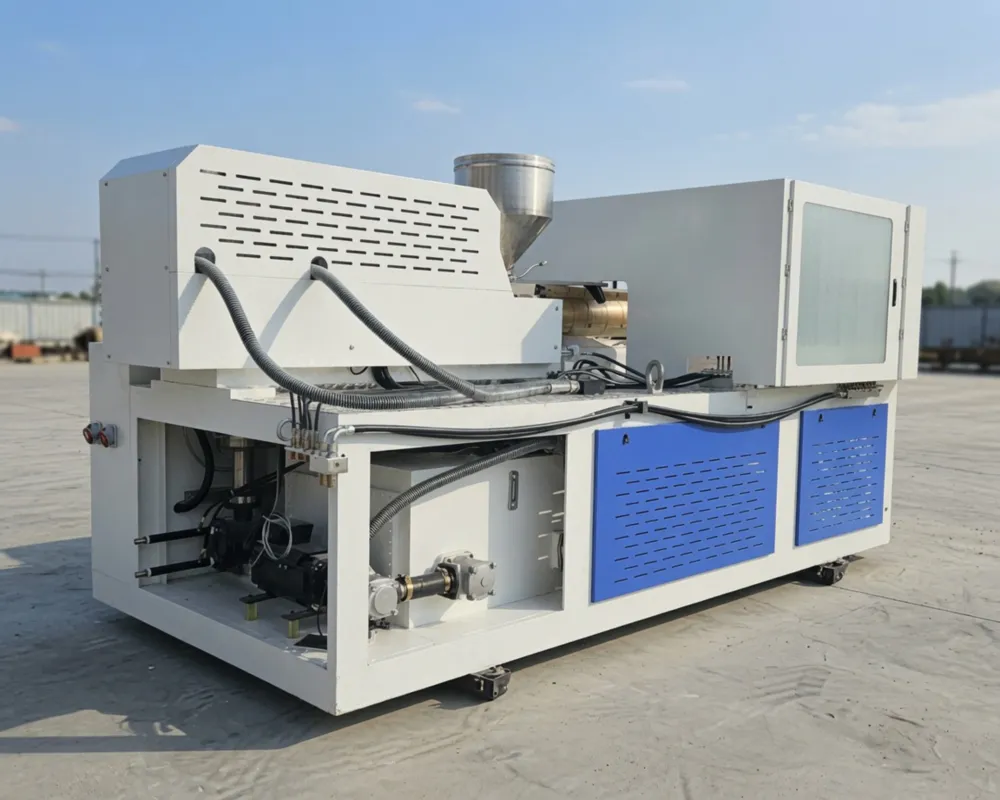
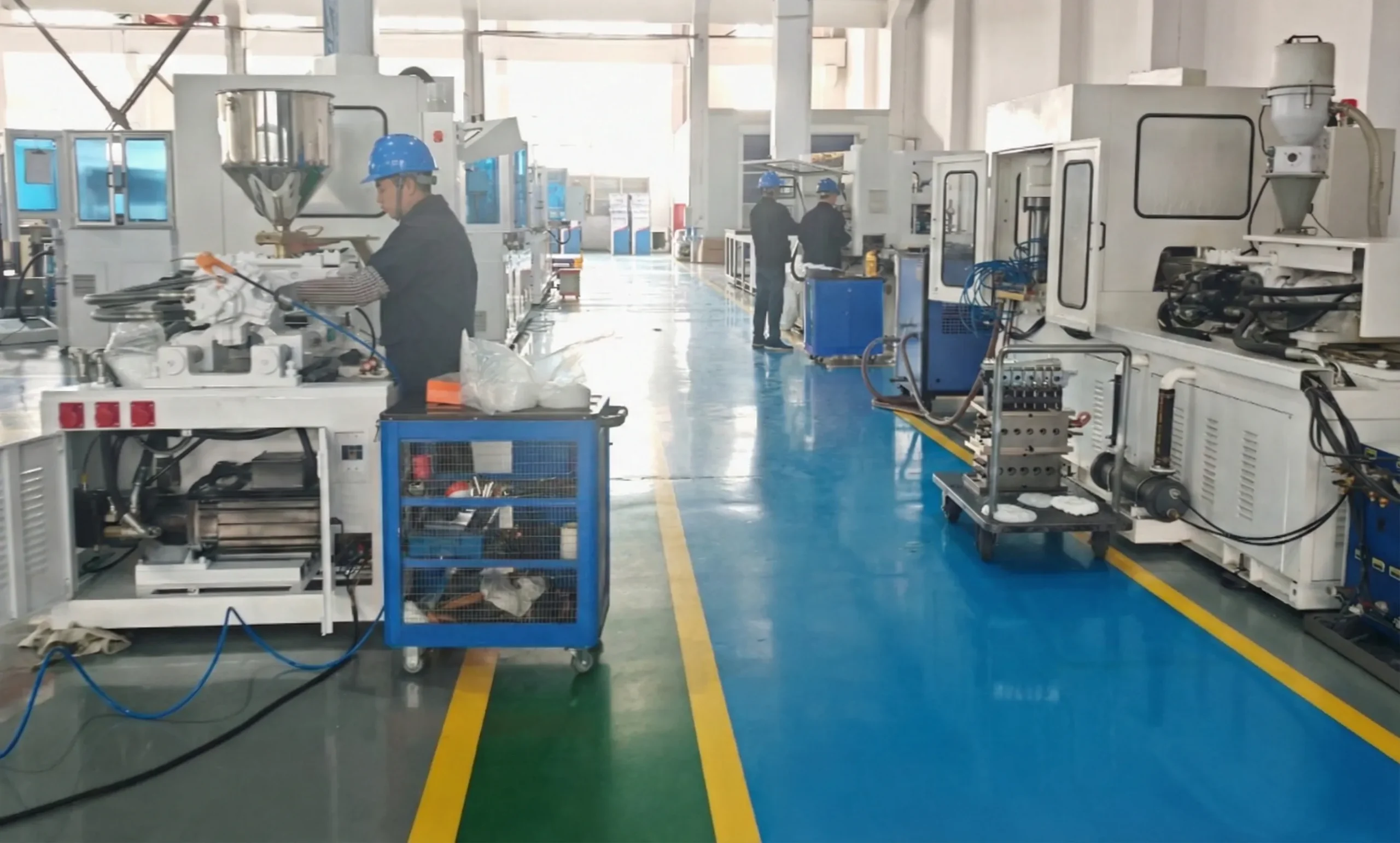
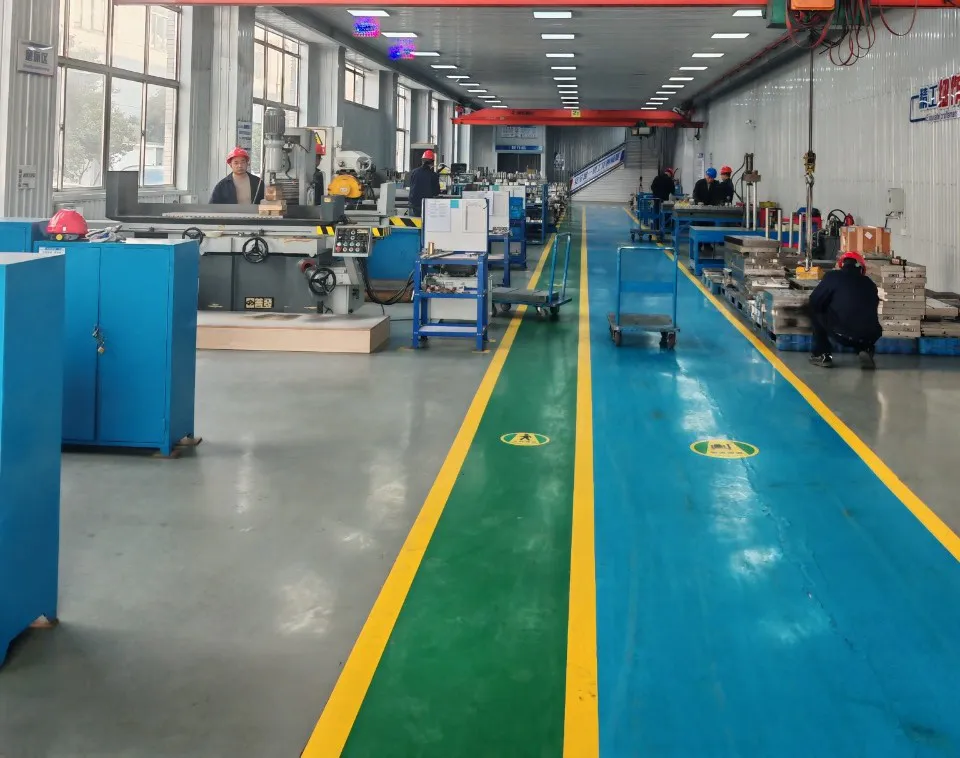
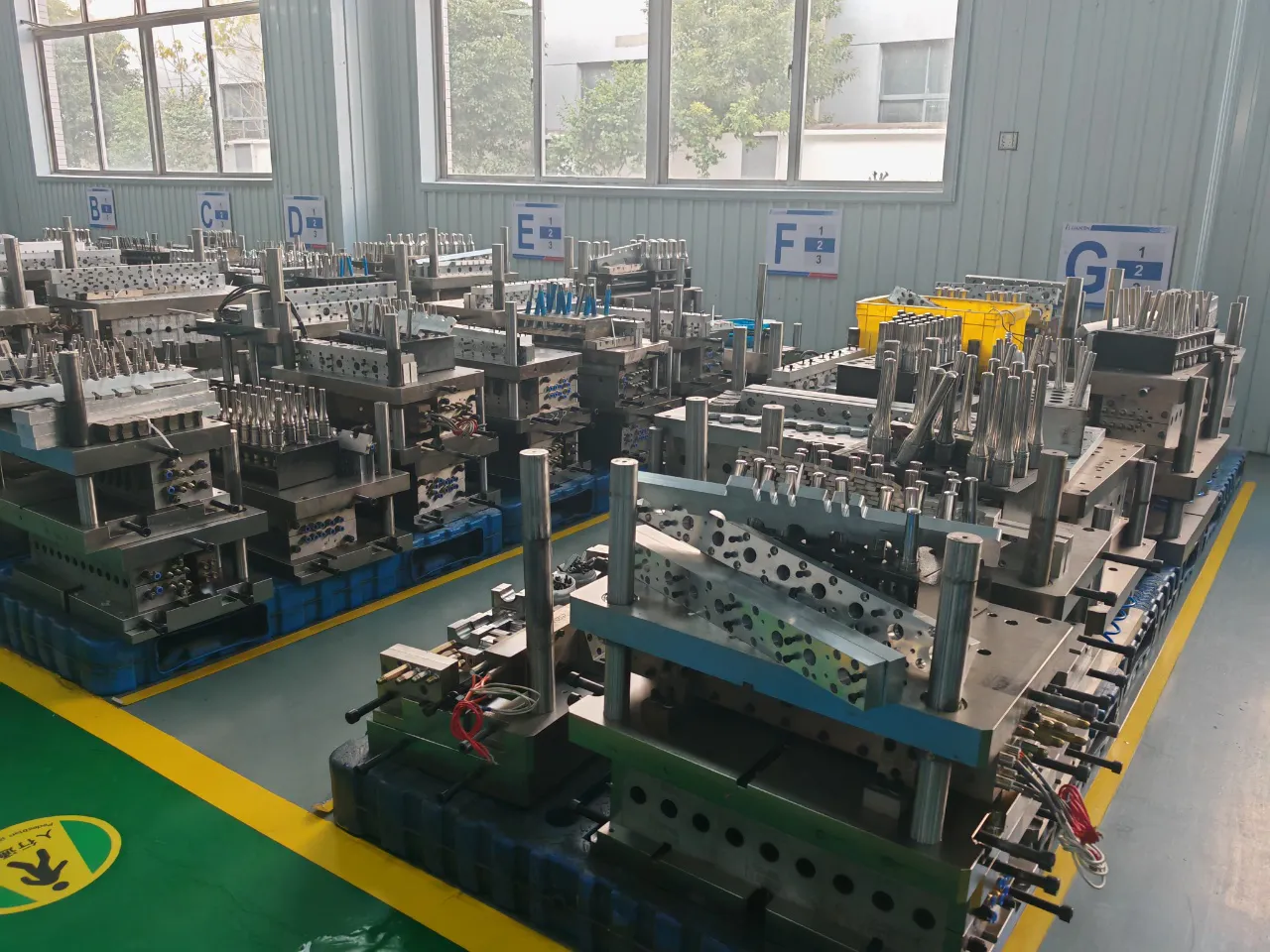
Our production facility operates across more than 20,000 square metres of precision machining and assembly floor, with over twenty years of accumulated experience in developing one-step injection blow molding machine platforms for demanding cosmetic, pharmaceutical, and specialty packaging applications. The engineering team has particular depth of knowledge in small-format container production — eye cream vials, serum dropper bottles, pharmaceutical eyedrop containers — where the dimensional tolerances and surface quality demands exceed what general-purpose blow moulding can consistently achieve.
Core components are sourced from globally recognised suppliers whose performance specifications are appropriate for the quality-critical applications the machine range serves: Yaskawa and Inovance servo systems for precision cycle repeatability, Parker high-pressure valves for stable blow air delivery, NSK Japan lead screws for accurate position control, Airtak air cylinders for reliable station movement, and YUKEN hydraulic control valves for stable hydraulic circuit performance. Machine documentation — electrical schematics, PLC program backups, operation and maintenance manuals — is supplied in the agreed language as part of every standard package, supporting local electrician sign-off and regulatory compliance without delay. Cosmetic brands and contract manufacturers across Europe, South Korea, Japan, Australia, South America, and Southeast Asia have relied on this injection blow molding machine platform for precision small-format container production.
WorkShop
Related Equipment for Serum and Eye Cream Production Lines
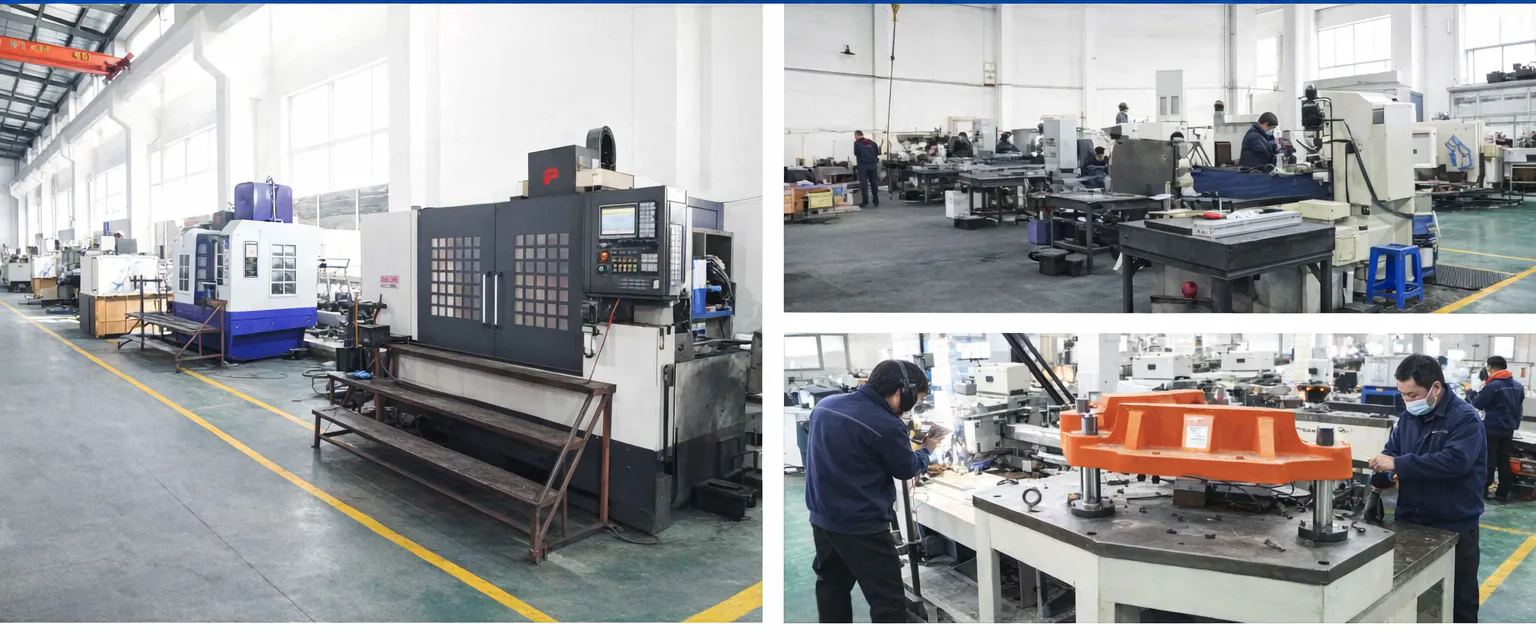
Reliable output from an injection blow molding machine in serum and eye cream container production depends on the quality of the auxiliary systems connected to it. Two have direct influence on container quality at the critical specifications this application demands.
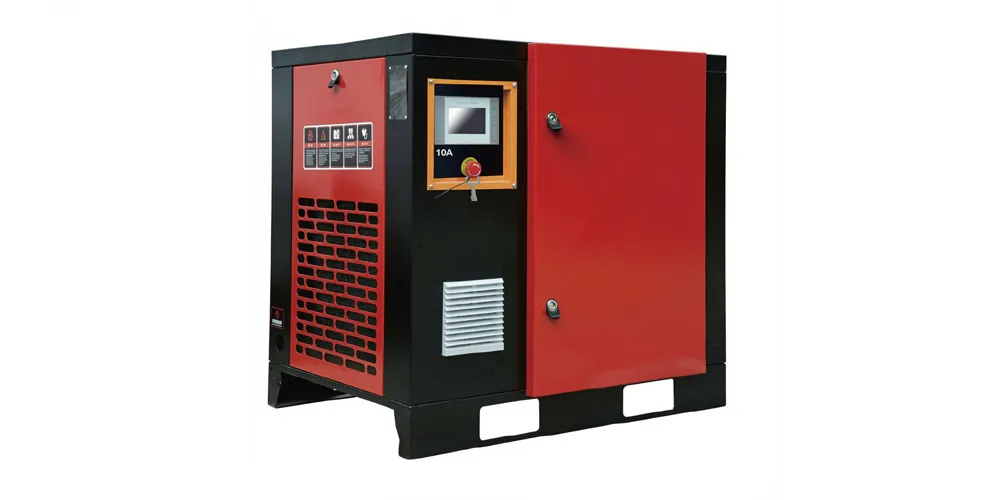
Oil-Free Air Compressor
For serum and eye cream dropper bottle production, the blow circuit air quality requirement is particularly exacting. Oil aerosol depositing on the interior surface of a 10 ml serum bottle represents a formulation contamination risk that cannot be remediated after filling — the container must be scrapped. An oil-free high-pressure compressor matched to the machine’s cycle air demand eliminates this contamination pathway while also protecting the Parker high-pressure valves that control blow air delivery across the machine range. For PETG processing, the compressor should also include a cold-dry filtration stage to remove residual moisture that could affect melt quality consistency.
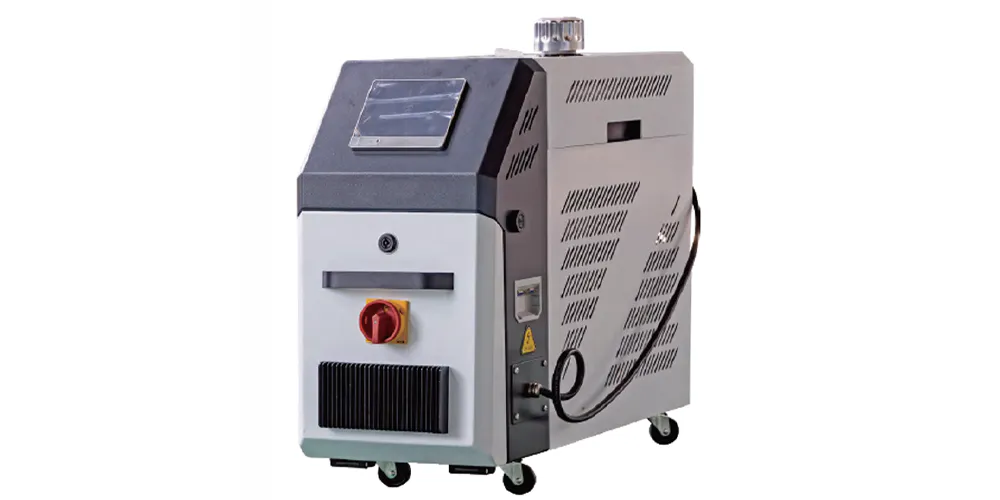
Mold Temperature Controller
Mould temperature consistency is critical for PETG and PET serum dropper bottle production at small shot weights. Coolant temperature variation of even a few degrees changes the solidification rate of the blown container, producing dimensional drift in bottle height and body diameter that accumulates across a production run. For the small-format serum bottles this article describes — where 0.2 mm of body diameter variation is visible to a calibrated gauge — a precision mould temperature controller with isolated electrical outputs provides the thermal stability the process requires. Isolated outputs also prevent the temperature control electrical signal from interfering with the machine PLC on a shared electrical earth, eliminating the spurious temperature-sensor fault codes that misconfigured auxiliary equipment can generate on a running ISBM machine. Including the mould temperature controller in the same procurement cycle as the injection blow molding machine ensures compatibility and simplifies the commissioning process.
Discuss Your Eye Cream and Serum Dropper Bottle Production Requirements
Whether you are developing a new serum dropper format, evaluating a replacement injection blow molding machine to retire aging ASB or AOKI equipment, or specifying a machine for a new cosmetic packaging contract, our application team is available to review your container specification and recommend the right configuration for your volume and format requirements.
Frequently Asked Questions
Editor: PXY