A practical technical guide for cosmetic packaging engineers, production managers, and brand developers who want to understand the process variables, machine parameters, mould conditions, and material choices that determine whether a plastic cosmetic bottle looks ordinary or exceptional.
Surface finish is the single characteristic that separates a plastic cosmetic bottle that reads as premium from one that reads as generic. Gloss level, haze, the absence of flow lines, cold spots, sink marks, gate marks, and parting-line flash — these are the details that the consumer registers in the first three seconds of contact with a product. They do not consciously evaluate the bottle’s surface quality; they simply feel it. And if the surface falls short, the perception of the formulation inside falls with it, regardless of how effective that formulation actually is.
The injection stretch blow moulding process — specifically the one-step ISBM approach — provides a structural advantage for cosmetic bottle surface finish that alternative processes cannot replicate: the preform is injected, conditioned, stretched, and blown within a single sealed environment, without ever being exposed to ambient air, transported, or rehandled between stations. Every variable that affects surface quality is controllable within one machine, one mould set, and one production cycle. This article breaks down what those variables are, how each affects the finished surface, and what production disciplines and machine configurations are required to achieve flawless cosmetic bottle quality consistently at scale.
The Physics of Surface Finish: What You Are Actually Controlling
Before getting into the process parameters, it is worth establishing what surface finish in a blown cosmetic bottle actually consists of at a physical level — because the parameters that affect each surface attribute are different, and treating surface quality as a single variable leads to trial-and-error troubleshooting rather than systematic problem-solving.
Gloss is the result of specular reflection from the outer surface of the bottle wall. It depends on the smoothness of the blow mould cavity surface, the temperature of the mould face during the blow phase, the final blow air pressure and dwell time that drive the material into contact with the mould surface, and the rate at which the material cools after contact. A mould surface polished to SPI A1 (optical) finish will produce high-gloss results only if the material reaches the mould surface at adequate temperature and pressure and dwells long enough to replicate the surface topography before cooling. Any one of these four conditions — surface finish, material temperature, blow pressure, dwell time — can limit the final gloss if it falls outside its optimal range.
Haze is a different physical phenomenon: it is caused by light scattering within the material itself, not at the surface. Haze in a cosmetic bottle made from PETG or PCTG is primarily driven by moisture content in the resin at processing temperature (hydrolytic degradation produces crystalline domains that scatter light), by thermal gradients in the preform during the blow phase (producing inconsistent biaxial orientation), and by contamination in the resin feed stream. Haze cannot be corrected by mould surface polishing — it requires upstream control of resin drying, melt temperature, and conditioning station temperature management.
Flow lines, cold spots, and weld lines are surface defects caused by inadequate melt flow uniformity during injection, by thermal gradients in the preform that produce differential viscosity zones during blowing, or by resin that has partially cooled and lost molecular mobility before filling the blow mould cavity. These defects are among the most persistent surface quality issues on injection blow molding machine lines producing complex cosmetic container geometries, and they require a combination of injection parameter optimisation, conditioning station tuning, and in some cases mould venting upgrades to eliminate.
Manufacturing Structure: How Station Count and Machine Architecture Affect Surface Quality
The configuration of the injection blow molding machine — the number of stations, the type of drive system, and the design of the conditioning module — determines which surface quality problems can be solved within the process and which require material or mould changes. Understanding the machine architecture is therefore a prerequisite for diagnosing and correcting surface finish problems on cosmetic lines.
3-Station vs 4-Station: The Conditioning Station Difference
On a 3-station injection blow molding machine, the second station combines tail cutting, light pre-blowing, and thermal equilibration into a single process step. For standard-wall cosmetic bottles in PETG or PET — bottles with wall thickness below approximately 1.2 mm — this consolidated step is sufficient to deliver consistent preform temperature at the blow station, and the surface quality of the resulting bottle can be excellent. The constraint appears when wall thickness increases beyond 1.2–1.5 mm, when the container geometry includes thick base sections, or when materials with narrower processing windows (PCTG, PC) are used. In these cases, the combined conditioning step cannot achieve the temperature uniformity across the preform wall cross-section that the blow station requires, and the result is non-uniform biaxial orientation — which produces the visible wall thickness variations and stress-whitening bands that are immediately apparent in high-clarity cosmetic containers.
A 4-station injection blow molding machine solves this with a dedicated temperature conditioning station that operates independently between injection and blowing. Individual conditioning cores maintain separate temperature setpoints for different preform axial zones, allowing the operator to compensate precisely for the heat gradient that the injection phase naturally produces between the heavily cooled gate end and the warmer shoulder area. This zone-by-zone temperature control is what makes thick-wall PETG cosmetic jars — with wall thickness of 2–4 mm — achievable without pearlescence, chill marks, or surface cloudiness. It is also why the scrap rate improvement when moving from a 3-station to a 4-station platform for demanding cosmetic applications is typically measured in percentage points rather than fractions.
Servo Drive Precision and Surface Consistency
Surface finish consistency across a production batch — not just the first few hundred bottles but the ten-thousandth bottle looking as good as the tenth — requires that every mechanical variable affecting surface quality remains constant throughout the run. The blow mould closing force, the stretch rod travel distance, the blow air pressure ramp profile, and the timing of mould open and bottle release all contribute to the final surface, and any of them can drift with temperature or hydraulic pressure variation in non-servo systems. Full servo-driven injection blow molding machines maintain position and force repeatability that hydraulic systems cannot match over extended runs, which translates into surface finish consistency across the batch rather than surface quality that is excellent at the start of the shift and gradually degrades as the machine warms up and hydraulic oil viscosity changes.
Blow Pressure Control and Mould Contact Quality
The quality of contact between the expanding preform and the blow mould cavity surface is determined by the blow air pressure profile — the rate at which pressure builds during pre-blow, the peak pressure during final blow, and the dwell time at peak pressure before mould opening. Cosmetic bottles with fine surface detail — embossed logos, precision facets, fine ribs — require higher peak pressure and longer dwell time to replicate the cavity surface detail fully. Under-pressure produces a surface that is slightly rounded at detail edges and lower gloss in recessed areas. Over-pressure can cause the bottle to stick to the cavity on release, creating surface marks where the material pulls away from the mould. Parker high-pressure valves as used in current injection blow molding machine platforms maintain blow pressure stability within tight limits, which is a critical contributor to batch-level surface consistency.
Surface Defect Diagnosis: Root Cause and Correction
| Surface Defect | Visual Appearance | Most Likely Root Cause | Primary Corrective Action |
|---|---|---|---|
| Haze / cloudiness | White or milky appearance in wall | Inadequate resin drying; hydrolytic degradation | Verify dew-point; extend drying time; reduce melt temperature |
| Pearlescence / whitening bands | White rings or patches under light | Preform too cool at blow station; insufficient conditioning | Increase conditioning temperature; extend conditioning dwell |
| Flow lines | Faint linear marks on body or shoulder | Melt flow non-uniformity at injection; cold runner spots | Increase melt temperature; optimise injection speed profile |
| Low gloss patches | Dull areas, especially at base or shoulder | Insufficient blow pressure; low mould temperature; early release | Increase final blow pressure; raise mould temperature; extend dwell |
| Gate vestige mark | Raised or rough spot at bottle base centre | Hot tip under-sized; tail cut incomplete; gate temperature too low | Adjust tail cut blade; optimise hot tip temperature |
| Surface streaks | Vertical or diagonal discolouration | Contaminated resin; degraded material in barrel | Purge barrel; check hopper and drying silo for contamination |
| Parting-line flash | Thin fin at mould parting line | Mould wear; over-injection; excessive blow pressure at mould gap | Inspect mould parting surface; reduce shot weight; check clamping force |
| Sink marks | Depressions in wall, especially near base | Insufficient packing pressure; cooling too fast; under-blow | Increase injection packing; review blow pressure profile and dwell |
Material System: Resin Choice and Its Direct Impact on Cosmetic Surface Quality
The resin specification is the first decision that constrains everything downstream in cosmetic bottle surface quality. The same injection blow molding machine, the same mould, and the same process parameters will produce measurably different surface outcomes depending on whether the resin is PETG, PCTG, standard PET, or PP — because each material has different optical properties, different surface tension characteristics during the blow phase, different responses to mould temperature, and different tolerance for processing variation.
PETG: The High-Gloss Cosmetic Standard
PETG (Glycol-modified PET) is the most widely used material for premium cosmetic bottles on injection blow molding machine lines for several reinforcing reasons. Its amorphous molecular structure means it does not crystallise during cooling, which eliminates the crystalline light-scattering that produces haze in standard PET at lower stretching temperatures. It processes at melt temperatures of approximately 230–260°C and accepts a wide range of blow conditions, producing wall surfaces that replicate the mould cavity finish with high fidelity. PETG’s surface tension during the blow phase allows it to conform to fine mould surface detail — embossed text, geometric facets, stippled surfaces — with less sensitivity to minor blow pressure variations than more viscous materials. Drying requirements are less demanding than PET (65–70°C, 4–6 hours), but moisture content should still be verified below 0.02% because residual moisture produces haze that is particularly visible in the thick-walled cosmetic containers that represent PETG’s primary application.
PCTG: For Chemical-Resistant Applications with Equivalent Surface Quality
PCTG delivers surface quality comparable to PETG — high gloss, excellent clarity, good reproduction of fine cavity detail — with the addition of higher resistance to alcohol-containing formulations and concentrated actives that can stress PETG over extended shelf periods. The processing window is somewhat narrower than PETG, and the conditioning station temperature profile needs to be optimised specifically for PCTG to avoid stress whitening at the shoulder transition — a defect that appears when the material begins the blow phase with a temperature gradient steeper than the material can accommodate without localised crystallisation. On 4-station injection blow molding machine platforms with individually controllable conditioning cores, this optimisation is straightforward; on 3-station platforms, it requires tighter process discipline at the conditioning/pre-blow station.
PP for Frosted and Opaque Cosmetic Finishes
Polypropylene is chosen for cosmetic containers where a frosted, satin, or matte surface is part of the aesthetic brief rather than a defect to be avoided. PP’s inherent surface characteristics on injection blow molding machine platforms produce a naturally soft-focus appearance that complements certain premium cosmetic ranges — particularly those targeting minimalist or clinical aesthetics. Surface quality in PP cosmetic containers is affected by the same core variables as PETG — conditioning temperature, blow pressure, mould temperature — but with different optimal setpoints. PP requires careful conditioning temperature management to prevent crystallisation during the thermal hold phase, which produces uneven opaque areas in what should be a uniform frosted surface. Clarified PP grades for applications requiring some translucency need additional attention to conditioning zone temperature stability.
| Material | Natural Gloss | Haze Sensitivity | Detail Replication | Moisture Sensitivity | Key Surface Risk |
|---|---|---|---|---|---|
| PETG | Very high | Medium | Excellent | Moderate (dry to 0.02%) | Haze from moisture; flow lines at low melt temp |
| PCTG | Very high | Medium | Excellent | Moderate | Stress whitening at shoulder if underconditioned |
| PET | High | High (if moisture present) | Very good | High (dry to 50 ppm) | Haze from hydrolysis; crystalline haze at low stretch temp |
| PP | Medium (natural satin) | Low | Good | Low | Uneven satin from conditioning temp variation |
| Tritan | Very high | Low | Excellent | Moderate | Stress cracking if blow temp not optimised on 4-station |
Mould Engineering: The Tooling Variables That Determine the Surface Ceiling
The injection blow molding machine and the process parameters set what is achievable in the blown bottle — but the mould sets the ceiling. A blow mould polished to a lower standard than the brand’s gloss requirement will not produce high-gloss bottles regardless of how well the machine is set up; the polymer can only replicate what is in front of it. Conversely, a cavity polished to optical standard will fail to deliver on that standard if the process conditions do not drive the material into complete, sustained contact with the surface. Both conditions must be met simultaneously for flawless cosmetic surface quality.
Cavity Surface Finish Specification
Blow mould cavities for luxury cosmetic bottles are typically specified to Society of the Plastics Industry (SPI) surface finish grades A1 or A2 (optical and near-optical polish), produced by progressive diamond paste polishing from coarse through fine grades on hardened steel tool inserts. For embossed or textured surface designs, the surface is produced by EDM (electrical discharge machining) or laser texturing to specific surface roughness (Ra) values that correspond to the target aesthetic — from fine satin (Ra 0.4–0.8 μm) to deep mattone (Ra 2.0–6.0 μm). The mould steel grade is relevant: harder steels (H13 tool steel at 52–54 HRC) hold the polished surface longer through production cycles, resisting the micro-abrasion from PETG and PCTG melt that gradually degrades a less-hard cavity surface.
Mould Temperature and Its Effect on Surface Quality
Mould temperature at the cavity face during the blow phase is one of the most impactful variables for cosmetic surface quality, and one of the most frequently mismanaged. When mould temperature is too low, the polymer surface solidifies rapidly on first contact before the blow pressure has fully driven it into the cavity detail — producing low-gloss patches and shallow embossed detail, particularly in recessed areas where air entrapment is possible. When mould temperature is too high, the polymer takes longer to set in the mould, extending cycle time and potentially causing the bottle to distort slightly as it releases — producing dimensional variation that creates a subtle waviness visible in certain lighting conditions. The optimal mould temperature for PETG cosmetic bottles on an injection blow molding machine is typically in the 10–25°C range, with the exact setpoint determined by the specific grade’s crystallisation kinetics and the wall thickness of the target container. A mold temperature controller — maintaining consistent coolant temperature at the mould face regardless of facility water supply variation — is the practical tool for holding this setpoint constant across a shift, a week, and a season.
Venting Design and Surface Defect Prevention
Air entrapment between the expanding preform and the blow mould cavity wall is a direct cause of surface defects — typically appearing as textured or dimpled patches in areas where the venting is inadequate. Good vent design routes the displaced air out of the mould cavity through the parting line, vent grooves machined into non-cosmetic surfaces, or porous inserts in recessed areas where geometry prevents adequate parting-line venting. The vent dimensions must be wide enough to allow rapid air displacement but narrow enough to prevent the polymer from flowing into the vent channel — typically 0.01–0.03 mm depth for PETG and similar materials. Vent blockage — from process byproducts, mould release agents, or minor contamination — is one of the most common causes of recurring surface defects that appear intermittent and difficult to reproduce in quality investigations. Vent channel inspection and cleaning should be a standard item in every scheduled mould maintenance interval.
Recommended Machine Platforms for Cosmetic Surface Quality
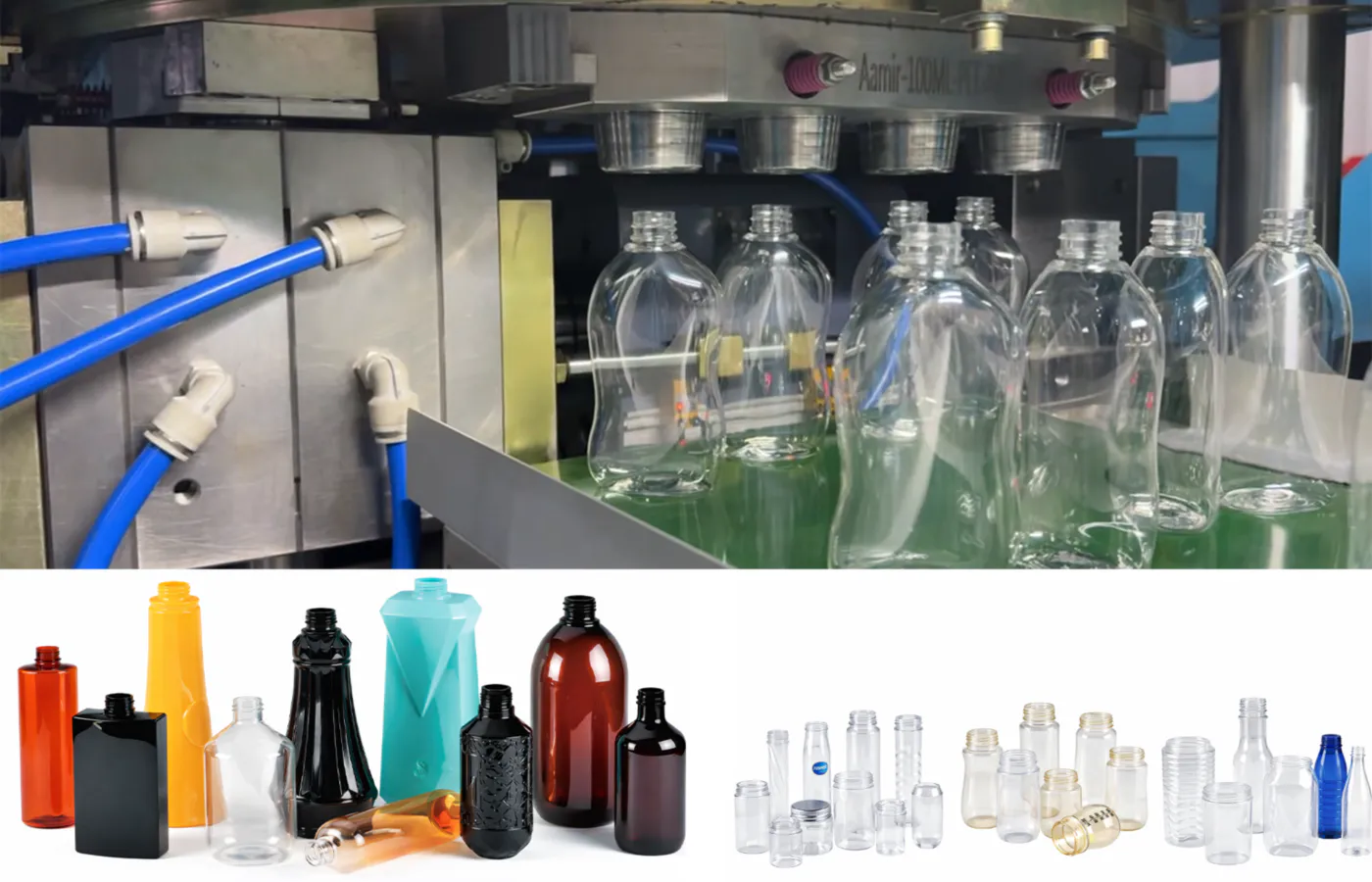
Two injection blow molding machine platforms that represent the primary options for cosmetic bottle surface finish applications — one optimised for compact, high-precision runs of standard cosmetic bottles, and one engineered for complex thick-wall containers where the conditioning station is the decisive technical feature.
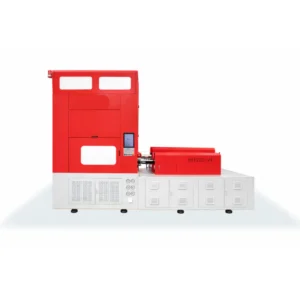
EP-HGYS200-V4 — 4-Station Premium Cosmetic
A 4-station injection blow molding machine purpose-built for demanding cosmetic and pharmaceutical container applications. Motor power: 49.2 kW (Inovance / WEICHI servo). Injection clamping force: 300 kN. Blow clamping force: 200 kN (single side). Screw diameter: 40–60 mm (standard 50 mm). Theoretical injection capacity: 310 g. Upper mould stroke: 460 mm. Machine dimensions: 4,800 × 2,000 × 3,200 mm. Weight: 13 tonnes. Compatible with ASB-12M moulds. Drive system: 3-set servo pump; Japan Yaskawa / WEICHI servo turntable; Parker high-pressure valves; Airtac cylinders; YUKEN hydraulic valves; NSK lead screws; nano-far-infrared barrel heating (10 kW). Total machine power: 59.2 kW. The dedicated conditioning station allows zone-by-zone temperature profiling that eliminates pearlescence, chill marks, and surface cloudiness in thick-wall PETG cosmetic jars. Scrap rate improvements of 8% down to under 0.5% have been reported when transitioning from 3-station platforms to this configuration for thick-base cosmetic containers.
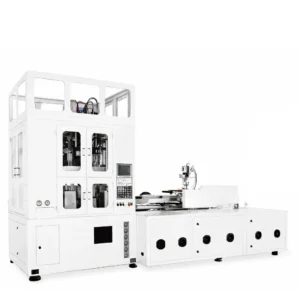
EP-BPET-70-V4 — 4-Station Versatile Cosmetic
A 4-station injection blow molding machine that covers a wide range of cosmetic container sizes from 1-cavity to 6-cavity configurations. Screw diameter: 45 mm. Driving power: 44 kW. Blow clamping force: 115 kN. Max bottle diameter (1-cavity): 80 mm. Max bottle height: 300 mm. Max bottle volume (1-cavity): 2,500 ml; (6-cavity): 150 ml. Machine dimensions: 4,400 × 1,350 × 2,900 mm. Weight: 5.1 tonnes. Compatible with PET, PETG, PCTG, high-transparency PP, PC, and Tritan. The 4-station design provides the dedicated conditioning station that allows temperature profiling for multi-material and multi-size production schedules — enabling a cosmetic packaging producer to run PETG lotion bottles on one shift and PP matte containers on the next without mechanical reconfiguration. Blow pressure maintained at 3.5 MPa maximum; machine running air pressure at 1 MPa.
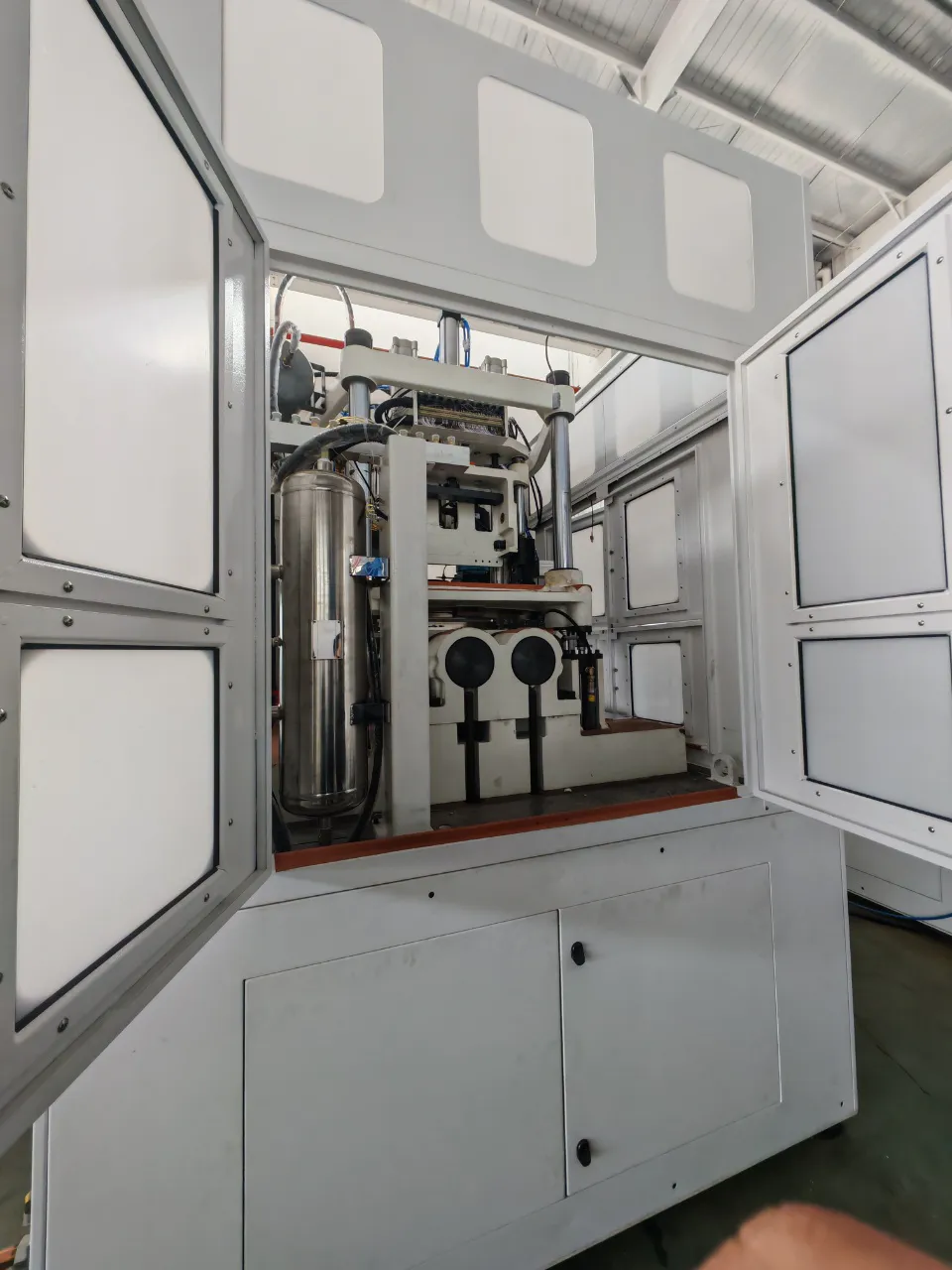
Process Parameter Disciplines for Consistent Cosmetic Surface Quality
Machine configuration and material selection establish the potential for flawless cosmetic surface finish. Realising that potential consistently across thousands of production cycles requires disciplined parameter management — setting each variable correctly at the start of a run and monitoring for drift that is gradual enough to be invisible until it produces rejects. The following disciplines represent the standard practice for cosmetic-grade injection blow molding machine production.
Resin Drying Protocol
Resin drying is the upstream control measure with the most direct impact on bottle clarity and haze — and it is the discipline most frequently relaxed under production time pressure, with predictably visible consequences. PETG should be dried at 65–70°C for 4–6 hours in a desiccant dryer capable of achieving outlet dew point below −40°C. The critical metric is the outlet dew point, not the elapsed time; time-based drying without dew-point verification can produce under-dried resin when ambient humidity is elevated or when the desiccant bed has absorbed its maximum moisture load and needs regeneration. A moisture analyser at the dryer outlet — or at the machine hopper — provides direct confirmation that the resin entering the barrel meets specification. For cosmetic-grade PETG production, any batch of resin where moisture content cannot be confirmed below 0.02% should not be processed. The cost of a batch of over-dried resin is zero; the cost of a production run of hazy cosmetic bottles is the full output plus customer relationship damage.
Melt Temperature and Back Pressure Stability
Melt temperature affects viscosity, which directly affects how the polymer flows into the preform cavity and subsequently how it distributes during the blow phase. Melt temperature that is too low produces a high-viscosity melt that flows unevenly at the gate areas, creating the cold-flow patterns that appear as flow lines or weld marks on the bottle surface, particularly visible in high-gloss PETG. Temperature that is too high causes material degradation — the polymer chain scission that produces yellowing, surface bubbles, and loss of clarity. The optimal melt temperature for PETG on an injection blow molding machine is typically 230–260°C at the barrel, with the exact setpoint reflecting the specific resin grade’s IV (intrinsic viscosity) and the shot weight being processed. Back pressure during screw recovery affects melt homogeneity: adequate back pressure (typically 5–15 MPa) ensures that the melt reaching the front of the screw is uniform in temperature and viscosity, which reduces bottle-to-bottle variation in both clarity and wall distribution.
Blow Phase: Pressure Profile, Timing, and Dwell
The blow phase is where the preform becomes the bottle, and where the mould surface detail is either faithfully replicated or partially lost. A two-stage blow pressure profile — pre-blow at lower pressure (typically 0.5–1.0 MPa) followed by final blow at full pressure (2.0–3.5 MPa) — provides the most consistent wall distribution and surface quality. The pre-blow phase begins the stretching process gently, avoiding the localised thinning that occurs when full pressure is applied immediately to a preform that has not yet begun to expand uniformly. The final blow pressure forces the expanded material into complete contact with the cavity surface. Dwell time at peak pressure — the period during which the blow air continues to hold the material against the cavity before the mould opens — directly controls the degree to which fine surface detail is replicated and how consistently the gloss level is achieved across the full bottle surface. For embossed cosmetic bottles, insufficient dwell time is the most common reason that fine detail appears softened or incomplete.
| Process Stage | Key Parameter | Typical Range (PETG) | Surface Quality Impact |
|---|---|---|---|
| Drying | Outlet dew point / moisture content | <−40°C dew point; <0.02% moisture | Primary control for clarity and haze |
| Injection | Barrel melt temperature | 230–260°C | Flow lines; discolouration; melt uniformity |
| Injection | Back pressure | 5–15 MPa | Melt homogeneity; clarity consistency |
| Conditioning | Core temperature (zone by zone) | 85–110°C (application-specific) | Pearlescence; wall uniformity; shoulder quality |
| Blowing | Final blow pressure | 2.0–3.5 MPa | Gloss level; detail replication; wall contact |
| Blowing | Blow dwell time | 1.5–4.0 seconds | Emboss depth; base gloss; dimensional stability |
| Mould | Cavity face temperature | 10–25°C (PETG/PCTG) | Gloss uniformity; surface waving; release quality |
Regulatory Frameworks for Cosmetic Packaging: What Surface Quality Must Also Meet
Surface finish in cosmetic containers is not purely an aesthetic requirement. In most regulated markets, cosmetic packaging is subject to material safety standards, chemical migration limits, and increasingly, sustainability requirements that interact with material and process choices. Understanding the applicable regulatory environment in your target markets is part of designing a cosmetic bottle that is both beautiful and compliant.
European Union: Cosmetic Regulation and REACH
The EU Cosmetics Regulation (EC) No 1223/2009 requires that cosmetic packaging does not compromise the safety of the finished product — establishing a base-level obligation for chemical compatibility between the container material and the formulation. For PETG and PCTG containers, migration testing for residual monomers and processing additives may be required, particularly for formulations with high alcohol content or low pH. The EU REACH Regulation (EC) No 1907/2006 restricts the use of substances of very high concern (SVHCs) in articles placed on the EU market, which affects the specification of plastic additives and colourants used in cosmetic containers. Surface finish considerations intersect with REACH when surface treatments — coatings, metallisation, or UV-curable lacquers applied post-moulding — introduce regulated substances. The EU Packaging and Packaging Waste Regulation (PPWR, 2024–2030) adds recyclability requirements that influence material and surface coating choices.
United Kingdom: UK REACH and Cosmetics Regulation SI 2013/1478
Post-Brexit, the UK operates its own REACH framework (UK REACH, administered by UKECHA under the Environment Agency) alongside the retained UK Cosmetics Regulation (SI 2013/1478). Material restrictions for plastic cosmetic containers broadly mirror the EU framework, but UK-specific SVHCs list updates may diverge over time. For injection blow molding machine producers supplying cosmetic containers into UK markets, maintaining current material compliance documentation under both EU REACH and UK REACH is the safest approach during the current period of regulatory divergence.
United States: FDA 21 CFR and California Prop 65
In the US, cosmetic containers are regulated under FDA 21 CFR (Code of Federal Regulations) provisions for food-contact materials and indirectly for cosmetic packaging through FD&C Act requirements. California Proposition 65 (Safe Drinking Water and Toxic Enforcement Act) requires warning labels on products containing listed substances above specified thresholds — which affects additive specification for cosmetic containers sold in California. For surface finishes involving UV-curable coatings or metallised layers, Prop 65 compliance for the coating materials should be verified specifically. California SB 54 mandates that all plastic packaging sold in California must be recyclable or compostable by 2032, which creates a constraint on surface coatings that would render an otherwise recyclable PETG bottle non-recyclable.
Japan: Pharmaceutical and Medical Device Act and JIS Standards
Japan’s Pharmaceutical and Medical Device Act (Yakuji-ho, overseen by MHLW) and Japanese Industrial Standards (JIS) for plastic packaging materials establish specific quality and chemical requirements for containers in contact with cosmetic products. Japanese retail channels — particularly department stores and specialty beauty retailers — apply their own supplier qualification requirements that typically exceed the statutory minimum, including visual quality standards for cosmetic bottles that have implications for surface finish specification. The Japanese market’s expectations for packaging quality are among the highest globally, and injection blow molding machine producers targeting Japanese cosmetic brands should ensure that their machine qualification and inspection protocols can generate the documentation that Japanese QA departments require.
Australia: AICIS and Responsible Packaging Code
Australia’s Australian Industrial Chemicals Introduction Scheme (AICIS) regulates chemicals used in industrial applications, including plastic processing additives and coatings used in cosmetic containers. The Australian Packaging Covenant Organisation (APCO) Responsible Packaging Code sets industry sustainability standards for packaging placed on the Australian market, including surface finish and coating choices that affect recyclability. For cosmetic containers with metallised or specialty coated surfaces, APCO recyclability assessment should be completed before finalising the surface specification for the Australian market.
South Korea: Cosmetics Act and Environmental Packaging Standards
South Korea’s Cosmetics Act (enforced by MFDS) and associated packaging regulations establish material safety requirements for cosmetic containers. The Korean Act on the Promotion of Saving and Recycling of Resources includes packaging design requirements that assign recyclability grades to different container designs — grades that influence whether a product can carry the recycling label required for EPR fee reductions. Surface coatings and metallisation that impair recyclability reduce the recyclability grade under Korean assessment criteria, creating a practical incentive to achieve premium surface aesthetics through mould and process engineering rather than post-moulding treatment wherever possible.
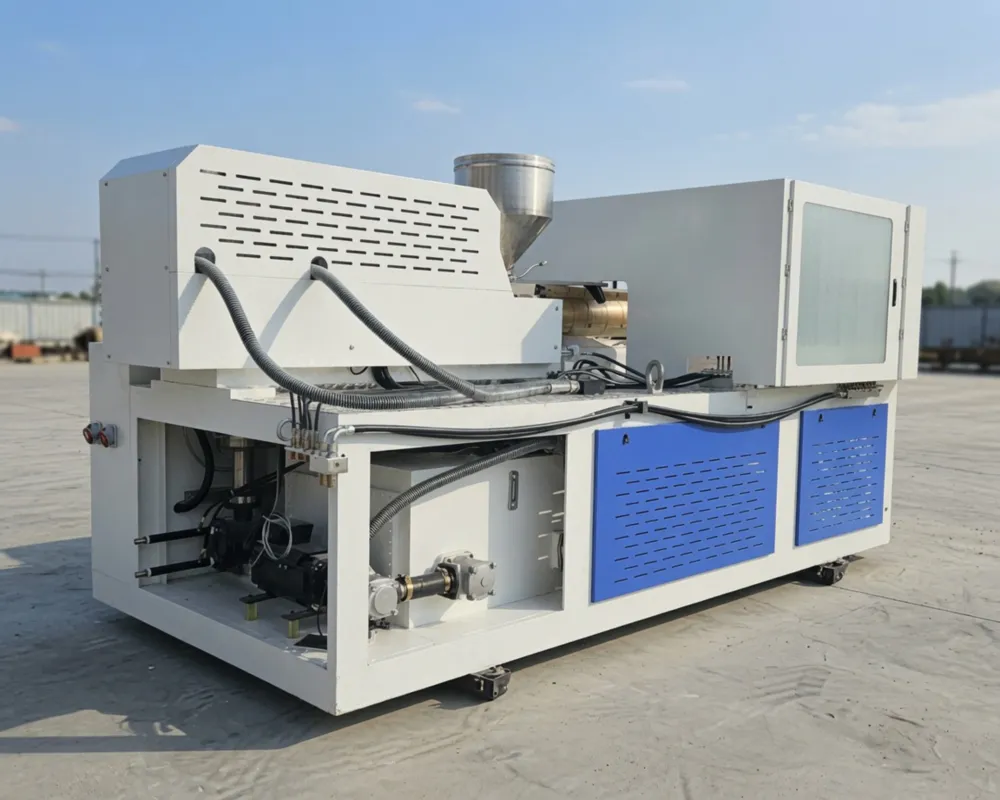
Related Equipment: Auxiliary Systems That Directly Affect Surface Finish
Two categories of auxiliary equipment have a direct, measurable effect on the surface quality of cosmetic bottles produced by injection blow molding machine lines: compressed air supply quality and mold temperature control. Both are frequently treated as utilities — infrastructure that exists in the background — rather than as active quality variables. That treatment is the reason both categories generate surface quality problems that are misattributed to process parameters or material variations when the actual root cause is in the auxiliary system.
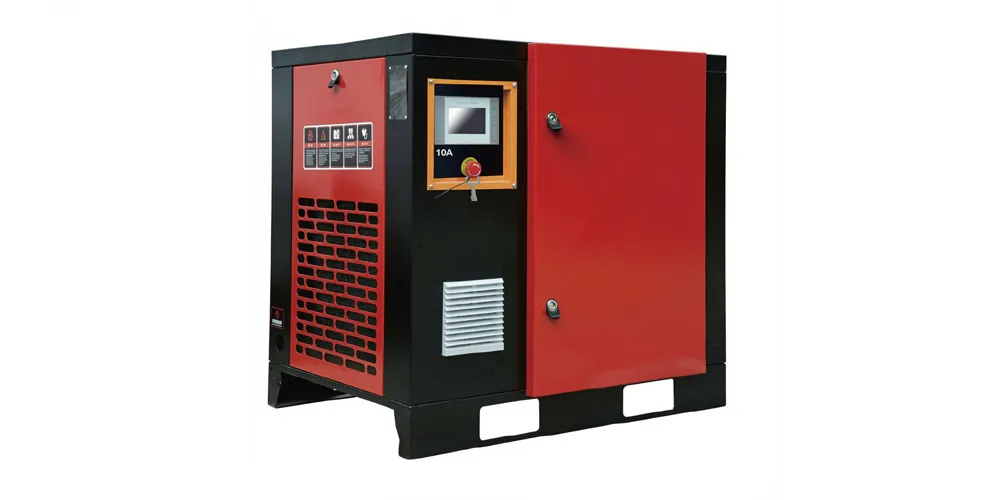
Oil-Free Air Compressor
Blow air that carries oil contamination — from a lubricated compressor with inadequate downstream filtration — deposits a hydrocarbon film on the interior surface of every bottle it inflates. On high-clarity PETG cosmetic bottles, this film is sometimes visible as a slight surface haze or irregular sheen in transmitted light — a defect that is inconsistent, difficult to reproduce in isolation, and easy to misattribute to material or process variation. An oil-free air compressor eliminates this contamination pathway entirely. For cosmetic containers with formulations that are sensitive to hydrocarbon trace contamination — vitamin C serums, active peptide formulations, retinoid treatments — the oil-free compressed air supply is a regulatory compliance requirement in most markets, not merely a quality preference. Specifying ISO 8573-1 Class 0 oil-free output for all blow air supply to an injection blow molding machine line serving cosmetic applications is the baseline standard.

Mold Temperature Controller
Mold temperature is a direct determinant of surface gloss level, detail replication depth, and cycle-to-cycle surface consistency. Facility cooling water temperature varies with season, ambient temperature, and building load — sometimes by 5–10°C across a 12-month period, sometimes by 3–5°C across a single shift as other equipment on the same cooling circuit cycles on and off. Each degree of mold temperature variation produces a measurable change in the surface gloss of PETG cosmetic bottles that may fall within tolerance individually but creates visible batch-to-batch variation when bottles from different production dates are displayed together. A dedicated mold temperature controller decouples the injection blow molding machine’s cooling circuit from facility water supply variation, holding the cavity face temperature at the validated setpoint regardless of external conditions. For luxury cosmetic containers where surface gloss consistency across the full production lifecycle is as important as the initial gloss specification, a mold temperature controller is as essential as the machine itself.
About Us
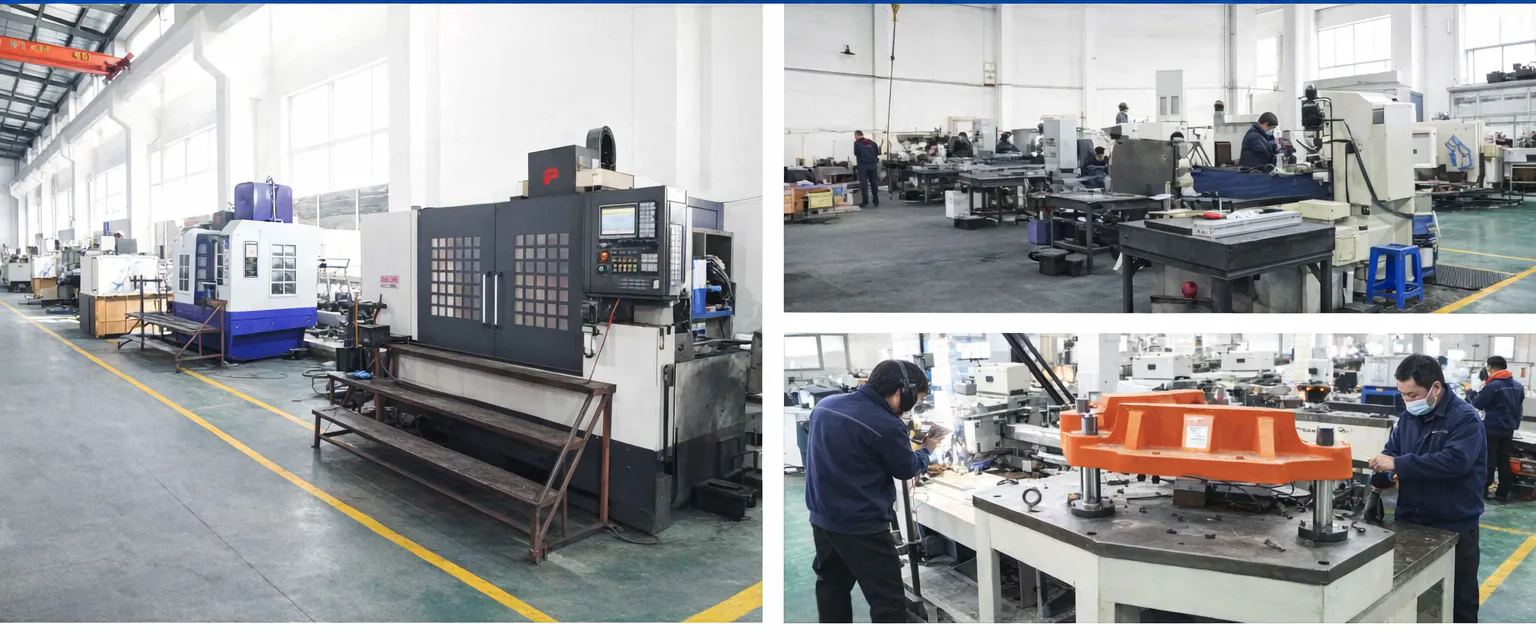
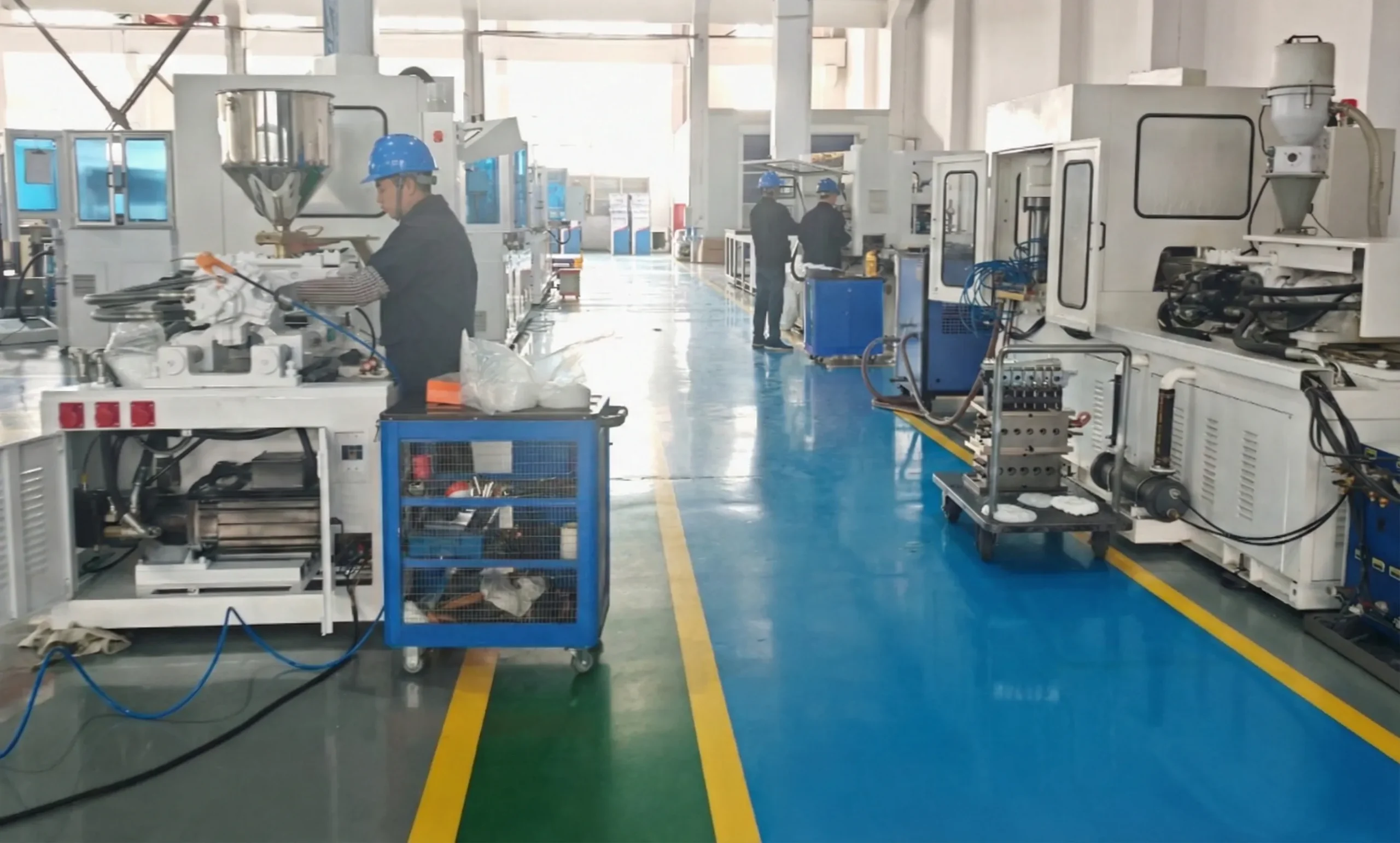
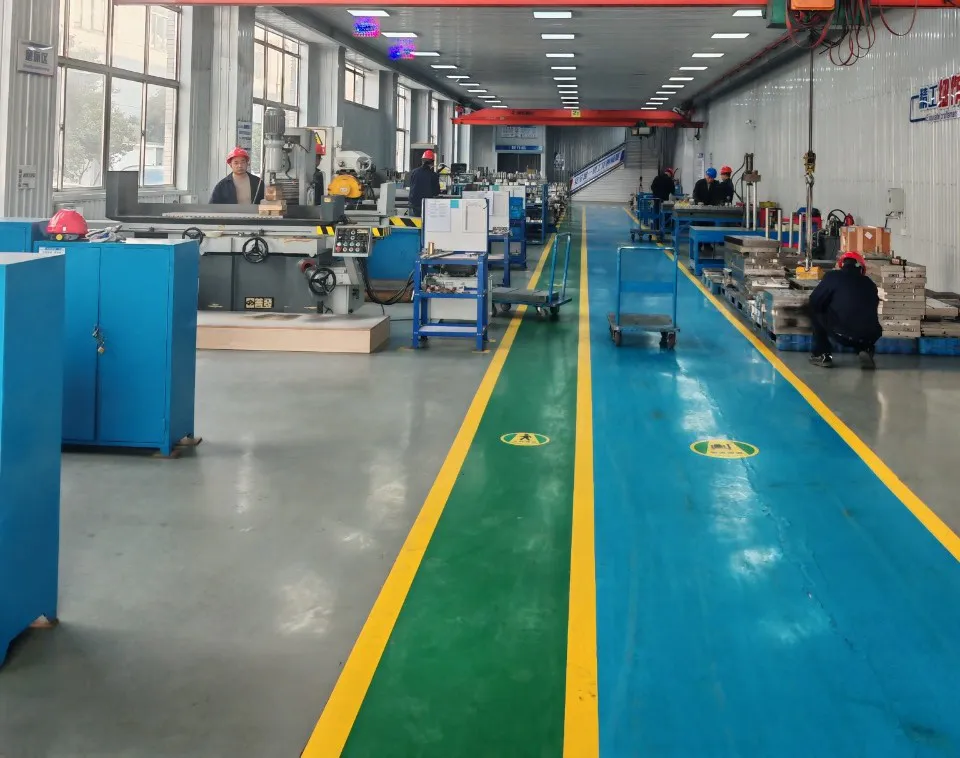
We are a professional manufacturer of one-step injection stretch blow moulding machines and mould tooling with over 20 years of experience in machine development, production, and global sales. Our facility exceeds 20,000 square metres and operates as a vertically integrated supply chain — covering machine manufacturing, in-house mould tooling production, servo system assembly, and documented spare parts programmes. We have developed specialised injection blow molding machine platforms for cosmetic, pharmaceutical, food, beverage, and industrial packaging across PET, PETG, PCTG, PC, PP, and Tritan materials. Our cosmetic packaging expertise extends from compact 3-station serum bottle machines through large-format 4-station platforms for wide-mouth jars, and includes full technical support for mould surface specification, material process validation, and surface quality qualification for major cosmetic brand approval processes. One-stop supply of machine, mould, and auxiliary equipment is a core part of how we work with customers.
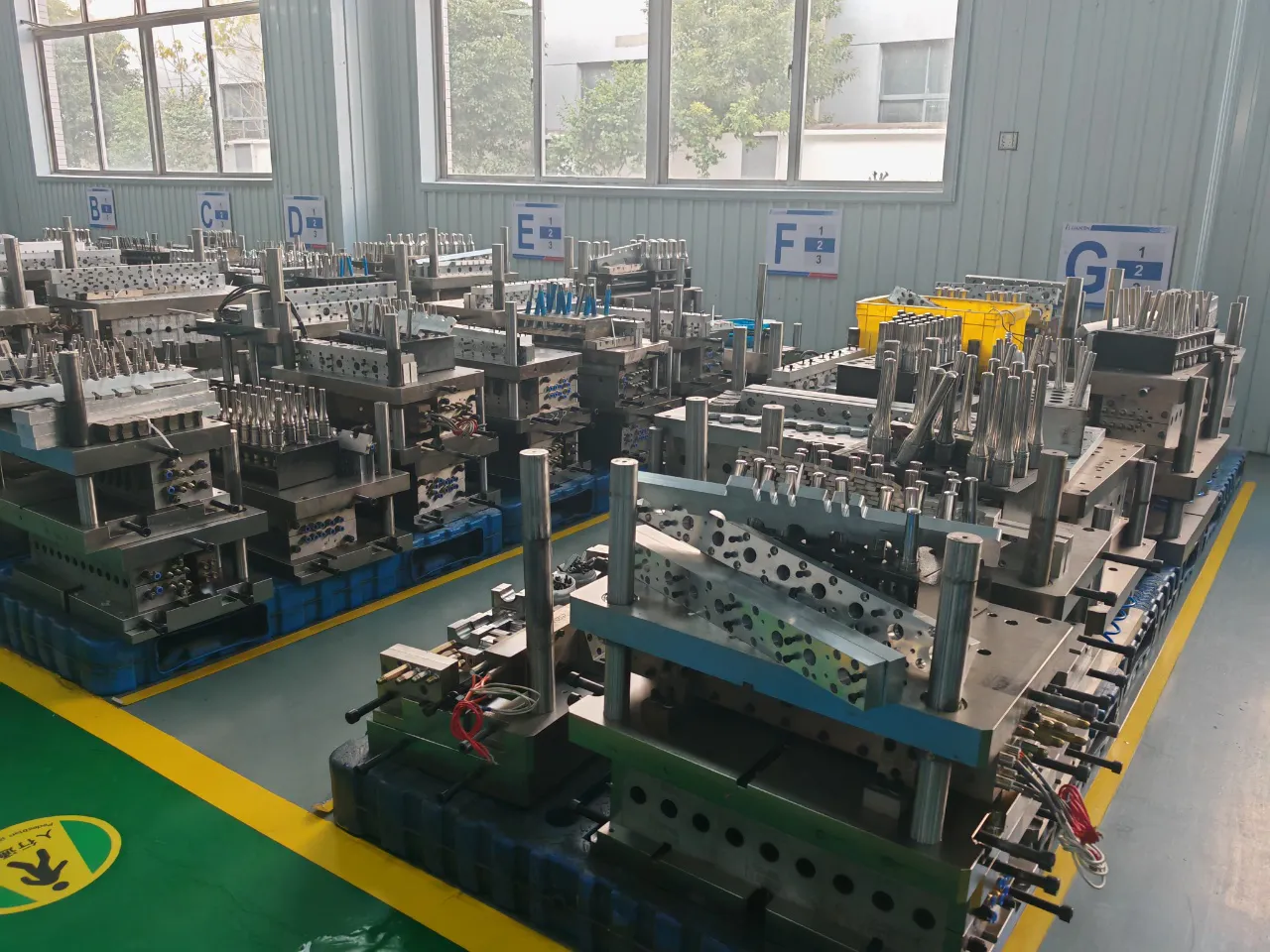
Workshop
Frequently Asked Questions
Achieve Flawless Cosmetic Bottle Surface Finish with the Right Machine
Our engineering team can specify the injection blow molding machine configuration, mould tooling, and auxiliary equipment combination for your specific cosmetic bottle surface quality target — from initial enquiry through validated production samples.
Editor: PXY