Food & Beverage Packaging — Technology Application
A comprehensive look at how the injection stretch blow moulding process delivers the clarity, barrier performance, and production efficiency that the global packaged water industry demands.
Why PET Water Bottle Production and ISBM Technology Are Inseparable
The packaged water market is one of the largest volume applications for plastic container production on the planet. Hundreds of billions of PET water bottles are produced annually across every continent, from multi-national water brands running high-speed blow moulding lines to regional bottlers serving local markets with smaller production volumes. Across this entire spectrum, the машина для лиття під тиском з розтягуванням — whether operating as a one-step (single-stage) or two-step (reheat-stretch-blow) platform — is the technology that makes PET water bottle production possible at both the quality and cost parameters the market demands.
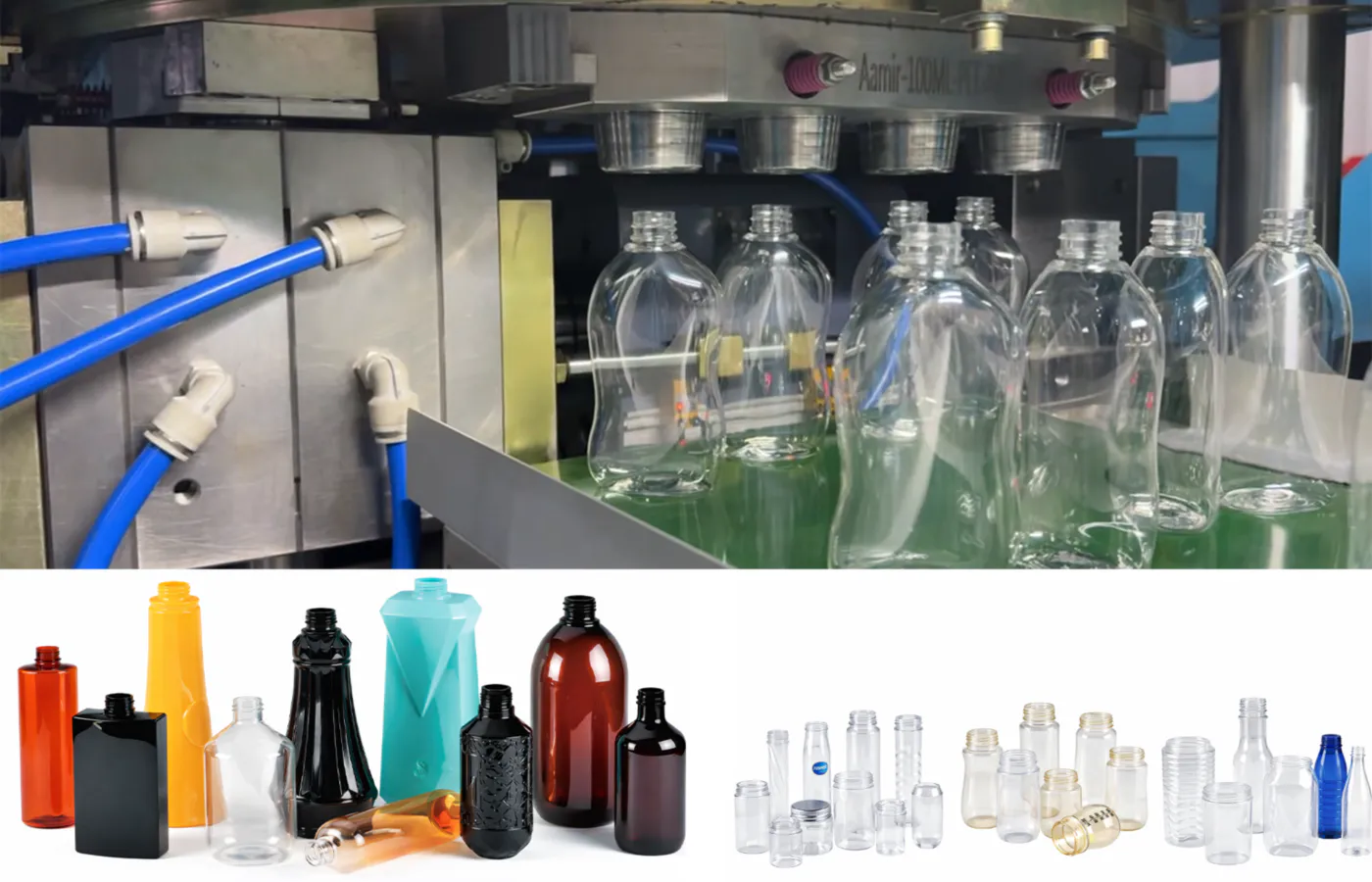
PET (polyethylene terephthalate) emerged as the dominant material for packaged water containers in the 1970s and 1980s, displacing glass and PVC not just because of its weight advantage, but because of the specific combination of properties that the injection stretch blow moulding process unlocks: exceptional optical clarity from biaxial molecular orientation, superior CO₂ and O₂ barrier performance compared to unoriented PET, high drop impact resistance from the oriented polymer chain network, and the ability to produce very thin walls (0.1–0.3 mm in the bottle body) with sufficient stiffness from the oriented structure to maintain container geometry through filling, capping, and distribution.
This article examines the injection stretch blow moulding process in the specific context of PET water bottle production — covering the manufacturing architecture of relevant ISBM machines, the material system considerations for different water bottle applications, the regulatory frameworks governing PET food-contact packaging globally, and the process parameters that determine bottle quality and production economics.
Manufacturing Architecture: One-Step ISBM for Water Bottle Production
The One-Step (Single-Stage) Injection Stretch Blow Moulding Process
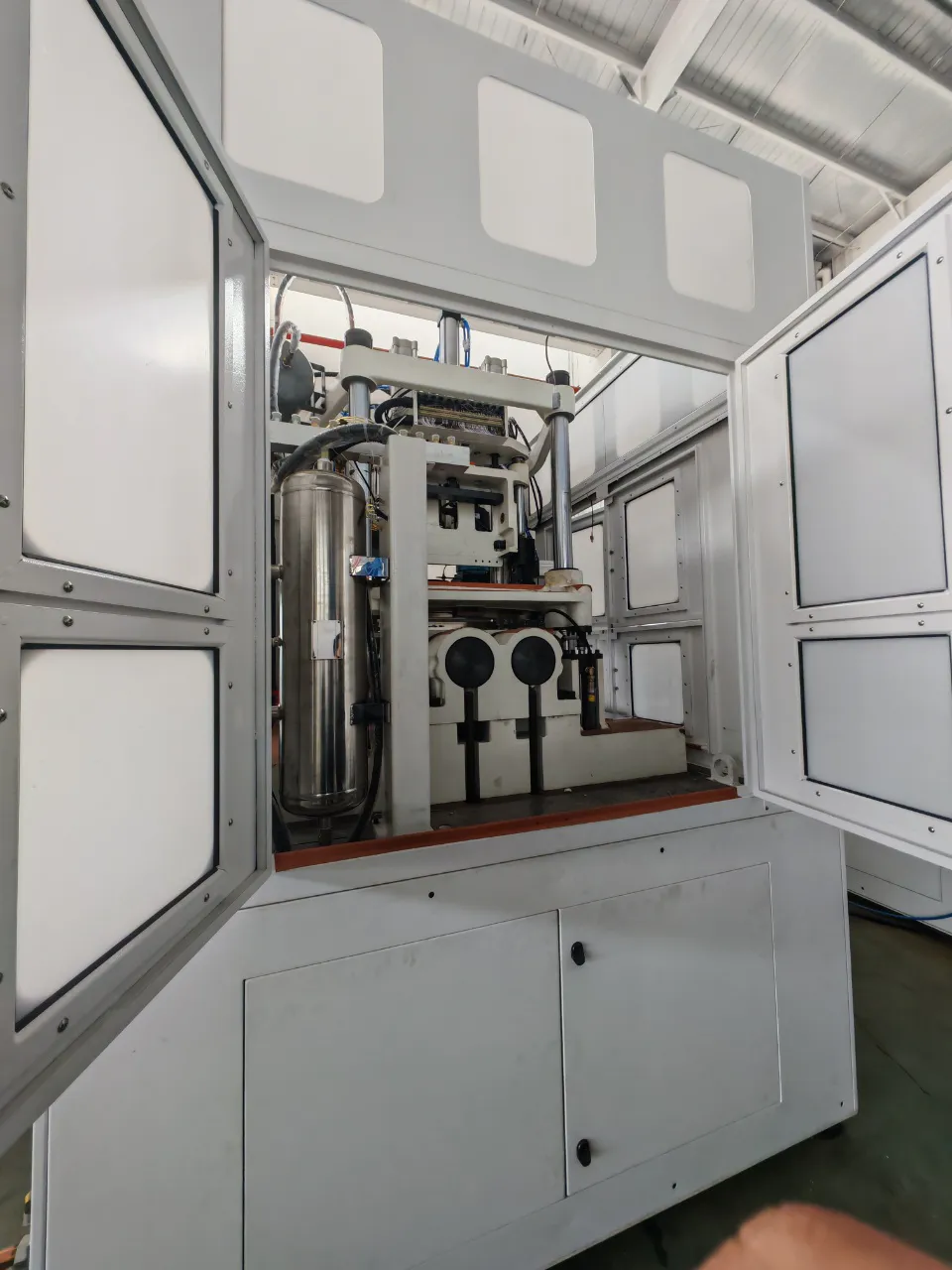
In a one-step injection stretch blow moulding machine, the complete bottle production sequence — from raw PET pellets to finished, ejected bottle — occurs within a single machine in a continuous cycle. The process begins at the injection station, where molten PET is injected into the preform cavity around a steel core rod to form a test-tube-shaped preform with a finished neck. In the 3-station configuration (used on machines such as the EP-HGY50-V3-EV and the EP-BPET-94-V3), the preform immediately rotates to the stretch-blow station while still at processing temperature, relying on the retained heat from injection to condition the preform for stretching. The stretch rod extends the preform axially at the same time that high-pressure air (typically 2.5–3.5 MPa) expands it radially against the blow mould walls, biaxially orienting the polymer chains in both the hoop and axial directions simultaneously.
In the 4-station configuration (used on machines such as the EP-BPET-70-V4, EP-BPET-125-V4, and EP-HGYS series), a dedicated temperature conditioning station between injection and blow moulding re-profiles the preform body temperature distribution before stretching. For PET water bottles, this additional temperature conditioning step is particularly valuable for producing bottles with very uniform wall thickness distribution — important for thin-walled water bottles below 0.15 mm body wall thickness where any preform temperature non-uniformity translates directly to visible wall thickness bands in the finished bottle.
The one-step ISBM process offers two specific advantages over the two-step (reheat stretch blow) process for water bottle production in certain market contexts: it eliminates the energy cost of cooling the preform after injection and reheating it before blow moulding (saving 25–40% energy per bottle versus two-step), and it maintains a closed production environment where the preform is never handled or exposed to external contamination between injection and blow moulding — a hygiene consideration relevant for food-contact primary packaging applications.
Станція 1 — Ін'єкція
Molten PET is injected into the preform cavity at 260–285°C melt temperature. The neck finish is formed to final dimensions at this station — giving the ISBM process its precision neck geometry advantage. Preform wall thickness, gate location, and injection speed profile directly affect the downstream orientation distribution in the blown bottle.
Station 2 — Temperature Conditioning (4-Station)
In 4-station machines, independent heating/cooling elements re-profile the preform body temperature to a target distribution (typically 95–115°C for PET) for optimal stretch response. The neck zone is protected from reheating. For water bottles, this step is critical for achieving uniform biaxial orientation.
Station 3 — Stretch-Blow
A servo-controlled stretch rod extends the preform axially while high-pressure air (2.5–3.5 MPa) expands it radially. Biaxial orientation aligns PET molecular chains, improving clarity, barrier properties, drop resistance, and allowing thinner walls than unoriented PET could achieve at equivalent stiffness.
Station 4 — Ejection
The finished bottle is released from the mould and ejected — either by mechanical arm or gravity, depending on machine design. In pharmaceutical-grade applications, servo-controlled robotic ejection ensures bottles are transferred without contact contamination. For water bottles, gravity ejection via chute is common at high production speeds.
Material Systems for PET Water Bottle Production
PET is the overwhelming material of choice for packaged still and sparkling water containers globally, but the specific PET grade selected significantly affects bottle performance, processing conditions on the ISBM machine, and compliance with food-contact material regulations in different markets. Understanding the material system is essential for specifying the correct ISBM machine parameters and tooling design for each application.
| PET Grade / Type | IV Range (dL/g) | Bottle Wall Target | Application | ISBM Process Notes |
|---|---|---|---|---|
| Bottle-grade PET (standard) | 0.74–0.80 | 0.20–0.35 mm | Still mineral water 330–1500 ml | Most common on one-step ISBM. Melt temp 265–280°C. Rapid cycle with retained heat blowing. 3-station preferred for bottles below 1,000 ml. |
| High IV PET | 0.80–0.85 | 0.25–0.40 mm | Sparkling water (CSD), pressurized bottles | Higher viscosity requires higher injection pressure. Improved CO₂ barrier from higher molecular weight. 4-station recommended for larger formats above 1,000 ml to manage preform temperature uniformity. |
| ПЕТГ | — | 0.25–0.50 mm | Premium water, flavored water, sports drinks | Glass-clear appearance even at lower orientation levels. Lower melting point than standard PET. Popular for high-end still water brands requiring exceptional shelf clarity. |
| rPET (recycled PET) | 0.72–0.78 | 0.22–0.40 mm | Sustainable water bottles, eco-brand positioning | IV variability between lots requires tighter incoming quality control. Color variation possible. Growing regulatory mandate in EU markets (SUP Directive targets). ISBM machines require compatible drying and IV compensation in process parameters. |
| Hot-fill PET | 0.78–0.84 | 0.30–0.50 mm | Hot-filled water, isotonic drinks, pasteurized beverages | Requires heat-set blow moulding (blow mould at 130–160°C for ISBM heat-set variants). Higher crystallinity in bottle body resists thermal shrinkage at filling temperatures up to 88°C. 4-station ISBM with heat-set capability recommended. |
Moisture control in PET before processing is critical regardless of grade. PET must be dried to below 50 ppm moisture content before injection on the ISBM machine — typically requiring 4–6 hours in a desiccant dryer at 160–170°C. Insufficient drying causes hydrolytic degradation of the PET molecular weight during injection, producing a bottle with reduced strength, increased acetaldehyde generation, and visible haze. ISBM machines specified for water bottle production should include an appropriately sized integrated dryer or provision for connection to a central drying system matched to the machine’s throughput rate.
Global Regulatory Frameworks for PET Water Bottle Packaging
PET water bottles are food-contact materials regulated by a complex layered framework of national food safety regulations, plastic material standards, and environmental packaging legislation. Water bottle producers using ISBM machines need to understand which frameworks apply in each market and how material selection and production process control contribute to compliance.
🇺🇸 United States — FDA 21 CFR Parts 177 & 180
PET used in food-contact packaging including water bottles must comply with FDA 21 CFR 177.1630 (polyethylene phthalate polymers) which establishes the permitted polymer specifications, additive restrictions, and extraction/migration limitations. The FDA’s 2015 Safety Assessment for Food Contact Notifications covers specific recycled PET (rPET) grades. Acetaldehyde limits are particularly relevant for water bottles — the FDA sets a migration limit of 0.16 mg/kg for beverages. ISBM process parameters (melt temperature, melt residence time, screw speed) directly affect acetaldehyde generation in the bottle, making process control a regulatory compliance tool, not just a quality optimization issue.
🇪🇺 European Union — Regulation (EC) 10/2011 & SUP Directive
EU Regulation 10/2011 on plastic materials and articles in contact with food lists permitted substances for PET packaging, establishes Overall Migration Limits (OML: 10 mg/dm² or 60 mg/kg food) and Specific Migration Limits (SML) for individual substances. The EU’s Single Use Plastics (SUP) Directive 2019/904 mandates that plastic beverage bottles (including water bottles) contain at least 25% recycled content by 2025 and 30% by 2030 — directly driving rPET adoption across European water bottle producers. The directive also requires caps to remain attached to the bottle body, creating a design constraint that affects bottle neck and cap geometry specifications in ISBM tooling.
🇬🇧 United Kingdom — UK Food Safety Act & Packaging Waste Regulations
Post-Brexit, the UK applies its own retained food-contact plastics legislation largely derived from EU Regulation 10/2011, managed by the Food Standards Agency (FSA). The UK Plastic Packaging Tax (PPT), effective from April 2022, imposes a levy on plastic packaging containing less than 30% recycled content — directly affecting water bottle producers supplying the UK market. The Extended Producer Responsibility (EPR) framework from 2024 additionally requires packaging producers and brand owners to fund the cost of household packaging waste collection and recycling, creating financial incentives for the continued expansion of rPET water bottle production on ISBM lines.
🌏 Asia-Pacific — Various National Standards
Japan’s JHOSPA (Japan Hygienic Olefin And Styrene Plastics Association) voluntary standards for PET food-contact materials are widely adopted by Japanese water bottle producers. China’s GB 9685-2016 (National Standard for Food Contact Materials) regulates permitted PET additives and migration limits. India’s Food Safety and Standards Authority (FSSAI) under FSS (Packaging) Regulations 2018 specifies PET compliance requirements for packaged drinking water containers. Australia and New Zealand apply FSANZ (Food Standards Australia New Zealand) Standard 1.4.4 for food-contact materials. Each market requires specific compliance documentation that ISBM producers should maintain for their PET water bottle production to support export market entry.
🌍 Environmental Packaging Trends — Global EPR Expansion
Beyond food safety regulations, environmental packaging legislation is increasingly affecting water bottle production economics and material selection globally. Deposit Return Schemes (DRS) in Germany (since 2003), Sweden, Norway, Denmark, and expanding across the EU, UK, Australia, and Canadian provinces create direct financial incentives for PET bottle recyclability. Recyclability requirements — that bottle labels, caps, and adhesives be compatible with PET mechanical recycling streams — are increasingly embedded in Extended Producer Responsibility (EPR) scheme rules, affecting ISBM tooling design decisions around neck and closure geometry.
Featured ISBM Machine for PET Water Bottle Production
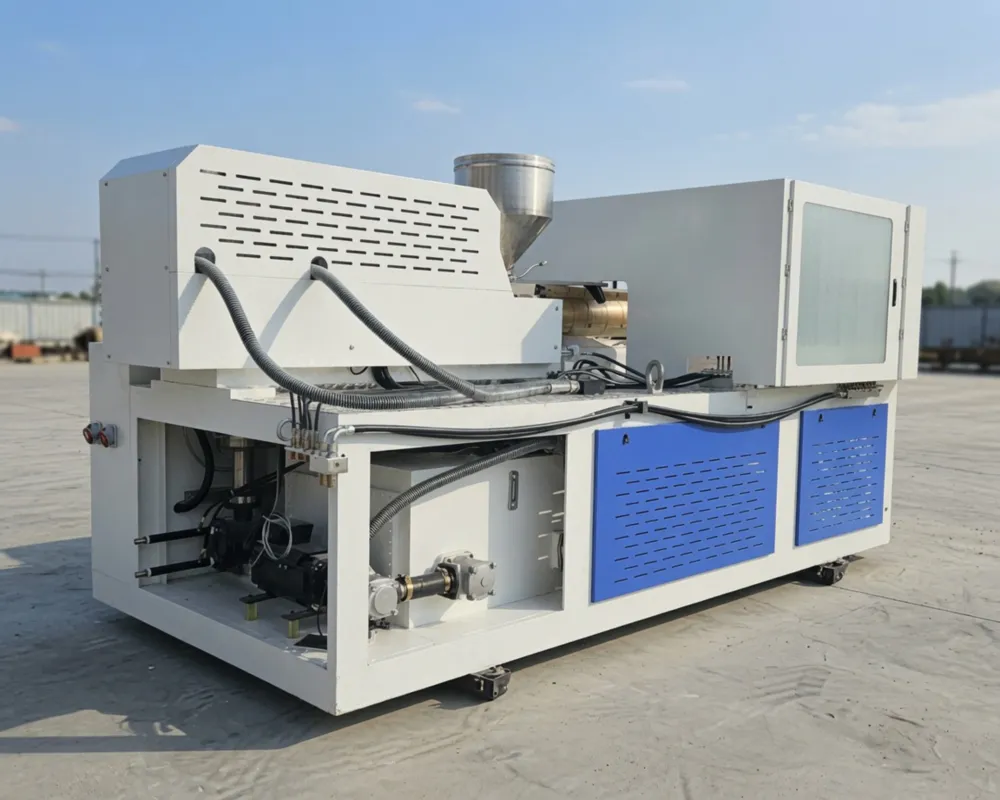
The EP-BPET-94-V3 is a 3-station one-step injection stretch blow moulding machine developed specifically for PET bottle production applications including still mineral water, flavored water, and soft drink containers.
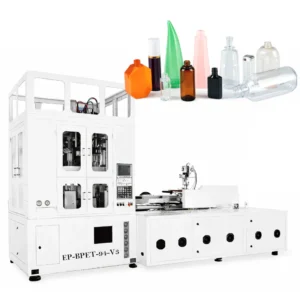
EP-BPET-94-V3 One-Step Injection Stretch Blow Moulding Machine
The EP-BPET-94-V3 is a 3-station ISBM machine in the BPET series, purpose-designed for PET bottle production with a focus on the bottle volume and cavity count ranges most relevant to still and sparkling water packaging. The BPET designation reflects the machine’s specific engineering optimizations for PET processing — including the injection barrel design, screw geometry, and blow station parameters that achieve the biaxial orientation levels required for thin-walled water bottles with adequate stiffness and barrier properties.
The 3-station architecture makes the EP-BPET-94-V3 particularly well-suited for standard-IV PET (0.74–0.80 dL/g) still water bottles in the 330–1,500 ml range, where retained injection heat provides sufficient preform temperature uniformity for the stretch-blow stage. The one-step process produces bottles in a single closed cycle from PET pellets to finished bottle, eliminating preform handling and reheating cost compared to two-stage blow moulding lines. Servo-controlled stretch rod actuation ensures consistent axial stretch ratio cycle-to-cycle, which is the primary driver of wall thickness distribution uniformity in the blown bottle.
Critical Process Parameters for PET Water Bottle Quality
PET water bottle quality — defined by wall thickness distribution, clarity, top-load strength, drop resistance, CO₂ barrier (for sparkling water), and acetaldehyde content — is determined by a set of interrelated process parameters on the ISBM machine. The following table summarizes the parameters most directly linked to water bottle quality attributes and their practical control ranges on one-step ISBM equipment.
| Process Parameter | Quality Attribute Affected | Typical Control Range | Practical Notes |
|---|---|---|---|
| PET melt temperature | Acetaldehyde generation, IV retention, clarity | 265–285°C | Higher temps increase AA exponentially. Keep melt temp as low as consistent with complete fill. AA levels above 20–30 ppb affect water taste perception. |
| Injection hold pressure and time | Preform neck weight, preform body weight uniformity | 60–85% of injection pressure; 1.5–4 s | Hold time must exceed gate freeze-off time to prevent back-flow. Short hold → light preform → thin walls → reduced top-load. Validate per resin grade and preform geometry. |
| Preform temperature at blow station | Biaxial orientation level, clarity, wall uniformity | 95–115°C (PET body zone) | Below 95°C → insufficient stretching → haze, stress whitening. Above 115°C → over-conditioning → reduced orientation, poor barrier. Temperature window is narrow; 4-station conditioning helps maintain it. |
| Axial stretch ratio (stretch rod speed) | Wall thickness distribution, drop resistance | 2.5–3.2:1 for standard water bottles | Axial stretch ratio with hoop ratio determines biaxial orientation balance. Under-stretch → thick base, thin shoulder. Servo rod control is essential for consistent ratio across multi-cavity molds. |
| Blow pressure (pre-blow and main blow) | Wall uniformity, shoulder clarity | Pre-blow: 0.3–0.8 MPa; Main blow: 2.5–3.5 MPa | Pre-blow initiates expansion before main pressure — controls how early the preform contacts the mold wall. Timing of pre-blow relative to stretch rod position affects shoulder material distribution. |
| Blow mould temperature | Cycle time, bottle crystallinity, shrinkage | 10–25°C for still water; 130–160°C for hot-fill | Cold mould → rapid quench → amorphous bottle with high clarity. Hot mould (heat-set) → thermally crystallized bottle body → dimensional stability at hot-fill temperatures up to 88°C. |
| Mould cooling water temperature | Cycle time, bottle release, dimensional stability | 8–18°C coolant for standard PET water | Mold temperature controller maintains consistent coolant temperature across the full production shift, preventing gradual cycle time drift and bottle shrinkage variation as mould temperature climbs without control. |
ISBM Tooling Design for PET Water Bottles
Preform and Cavity Design
The preform design is the single most critical engineering decision in ISBM water bottle production because the preform geometry determines the achievable blow ratio, wall thickness distribution, and the orientation homogeneity of the finished bottle. For a standard 500 ml still water bottle on a one-step ISBM machine, the preform length-to-diameter ratio and the wall thickness profile determine how evenly the material distributes from the shoulder through the body to the base during the biaxial stretch-blow step. Preform tooling for water bottles is typically manufactured from hardened P20 or H13 tool steel with gate tip geometry optimized for clean gate vestige — visible gate marks on the bottle base are aesthetically unacceptable in branded water bottle applications.
Blow Cavity Design and Materials
Blow cavities for PET water bottles are most commonly manufactured from aluminium alloy (7075-T6 or similar) for single-step ISBM machines, because the shorter cycle time and lower blow pressures (compared to two-step reheat blow moulding) make aluminium thermally and mechanically adequate. Aluminium’s high thermal conductivity produces faster bottle cooling than steel cavities — reducing cycle time for a given bottle wall thickness by 15–25%. For sparkling water bottles where internal CO₂ pressure during filling reaches 3–6 bar, higher-strength cavity materials or steel inserts at the base may be required to prevent long-term deformation of the cavity geometry.
Neck Finish Tooling for Water Bottle Closures
Water bottle neck finishes follow standardized thread designations — PCO 1881, PCO 1810, and MCA 30/25 are the most common worldwide for 28 mm and 30 mm closures on still and sparkling water bottles. The PCO 1881 finish (38% lighter than the previous PCO 1810 standard) was developed specifically to reduce closure material consumption and now dominates global still water bottling. ISBM neck ring tooling for PCO 1881 requires precision thread form manufacturing to tolerances compatible with the PCO 1881 standard’s T, E, and I dimension windows — which, unlike some pharmaceutical neck finishes, are driven by lightweighting goals that have progressively reduced material content while maintaining sealing reliability. Injection mould neck ring cooling design for water bottle production should target neck finish solidification within the ISBM cycle time without requiring excessive cooling dwell that would limit throughput.
One-Step vs. Two-Step ISBM for Water Bottle Production: Choosing the Right Platform
The choice between one-step (single-stage) and two-step (preform + reheat stretch blow) production platforms for water bottles is one of the most consequential decisions in packaging line investment planning. Both technologies use the same fundamental injection stretch blow moulding process to orient PET, but they differ in how the preform thermal history is managed between injection and blowing — with significant consequences for capital cost, production economics, bottle quality, and flexibility.
| Criterion | One-Step ISBM Machine | Two-Step Reheat Blow |
|---|---|---|
| Capital Investment | Lower per production line | Higher (separate injection molder + blow molder) |
| Споживання енергії | 25–40% lower per bottle (no reheat oven) | Higher due to continuous IR reheat oven |
| Production Speed | Lower (coupled injection + blow cycle) | Very high (up to 80,000 bottles/hour on high-speed lines) |
| Bottle Volume Range | Wide — 50 ml to 5,000 ml per setup | Best for 330–2,000 ml standard formats |
| Hygiene / Contamination | Closed environment — preform never exposed externally | Preform may be stored, transported, handled before blowing |
| rPET Compatibility | Good — direct IV monitoring possible | Good — but preform IV must be controlled at preform stage |
| Best For | Regional bottlers, specialty water, custom bottles, premium brands, pharmaceutical water | Major brand national/international bottlers with very high volumes and standard formats |
For regional water bottlers, premium brand water producers, flavored and functional water producers with smaller batch requirements, and producers who need the flexibility to switch between different bottle formats and sizes, the one-step injection stretch blow moulding machine platform offers a better economic and operational fit than the high-capital, high-throughput two-step reheat blow systems designed for single-format ultra-high-volume production.
rPET Integration in ISBM Water Bottle Production
The integration of recycled PET (rPET) content into water bottle production is no longer purely a brand sustainability initiative — it is becoming a regulatory mandate across the European Union, the United Kingdom, and an increasing number of national markets globally. EU Regulation 2022/1616 on recycled plastic materials and articles in contact with food specifically addresses rPET for food-contact packaging, establishing the technology platforms and supply chain requirements for authorized rPET recycling processes used in food-contact packaging applications including water bottles.
ISBM machines processing rPET-containing blends must accommodate the inherent variability of recycled feedstock compared to virgin PET. Key variables include: lot-to-lot IV variation (typically ±0.03–0.05 dL/g around the target value), color variation (from slight yellow to clear depending on the recycling source and sorting quality), moisture content variability (often requiring extended drying compared to virgin PET), and potential contamination carry-over from the mechanical recycling process. Machine process management for rPET should include incoming material IV testing, dryer dew point monitoring, and potentially wider injection pressure tolerances to accommodate viscosity variation between lots.
The EFSA (European Food Safety Authority) and FDA both require that rPET material used in food-contact water bottle applications be produced through specifically authorized recycling processes — mechanical recycling that has been evaluated and approved through EFSA’s recycling process authorization procedure under Regulation (EC) 282/2008 for EU markets, or through FDA’s Non-Objection Letter (NOL) process for US markets. ISBM water bottle producers using rPET must document the authorized recycling process of their rPET supplier as part of their food-contact compliance records.
Quality Control Systems for ISBM Water Bottle Production
Wall Thickness Measurement
Ultrasonic wall thickness gauging at defined measurement points on the bottle body, shoulder, and base provides the primary quantitative quality indicator for ISBM water bottles. Statistical process control (SPC) charts tracking wall thickness at each cavity per production shift detect preform temperature drift, blow pressure variation, or tooling wear before the variation exceeds specification limits. For PCO 1881 water bottles, base thickness typically targets 0.3–0.5 mm and label panel body thickness 0.18–0.28 mm in a standard 500 ml still water format.
Top-Load and Burst Testing
Top-load strength (the axial compressive load the bottle withstands before buckling) is the primary structural performance indicator for water bottles in stacked pallet distribution. Target top-load values for 500 ml still water bottles typically range 100–200 N depending on the bottle design and label support. Burst pressure testing (filling the bottle with water and pressurizing until failure) is the key quality indicator for sparkling water CSD bottles, where burst pressure typically targets 8–12 bar for standard PET grades. Both parameters are direct functions of the ISBM orientation level — process parameter control is quality control.
Acetaldehyde (AA) Testing
Acetaldehyde migration from the PET bottle into the water contents is a food quality and regulatory compliance issue. AA is generated during PET thermal processing — the higher the melt temperature and the longer the melt residence time in the barrel, the more AA is generated. Headspace gas chromatography (GC) testing of filled bottles measures the AA content migrating into the water. Brands with taste-sensitive consumers or compliance requirements in markets with AA migration limits (EU 10/2011, FDA) should include AA testing in the incoming quality protocol for each ISBM production lot, using ISBM process logs to investigate sources of variation if AA levels are elevated.
Discuss Your PET Water Bottle ISBM Requirements
Whether you are specifying a first ISBM machine for a regional water bottling operation or optimizing an existing line for rPET compliance, our engineering team can provide technical guidance on machine selection, tooling design, and process parameter setup.
Compatible Auxiliary Equipment
We supply the complete auxiliary equipment needed to operate ISBM machines efficiently in food and beverage packaging environments — oil-free compressed air, mold temperature control, and integrated system solutions.
Oil-Free Air Compressor
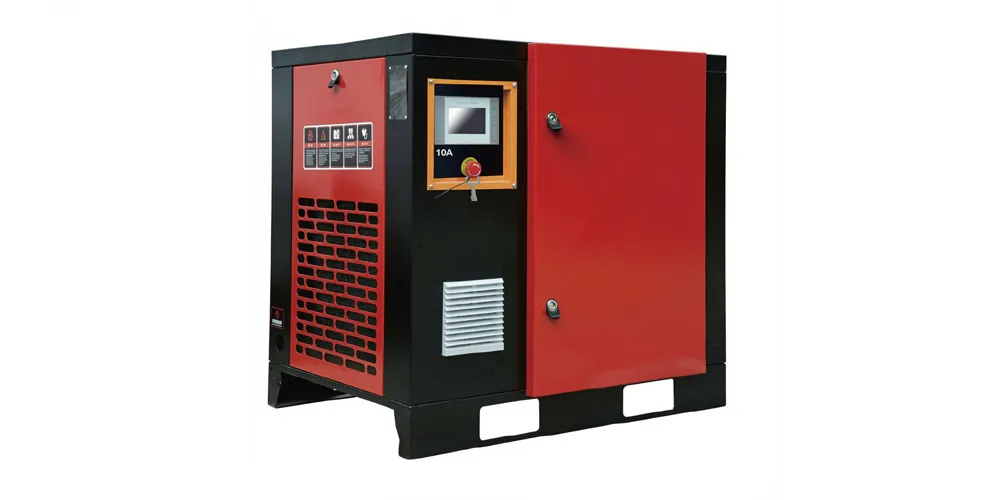
PET water bottle production requires high-pressure compressed air (2.5–3.5 MPa) for the blow station, and the air quality must meet food-contact standards — any oil carry-over into the blow air constitutes a contamination event for food-contact primary packaging. Our recommended oil-free air compressors deliver ISO 8573-1 Class 0 oil-free air suitable for direct food-contact blow air applications in PET water bottle production. Stable high-pressure delivery across the full production shift prevents the blow pressure variation that causes wall thickness inconsistency and reduces top-load strength.
Контролер температури прес-форми
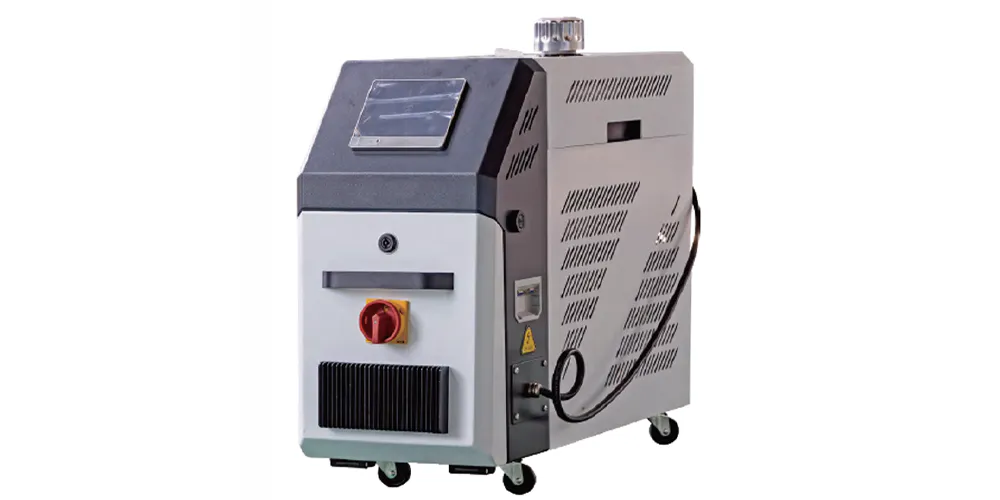
Blow mould temperature directly affects bottle cycle time, shrinkage, clarity, and crystallinity. For standard PET still water bottles, mould temperatures must be maintained at 8–18°C coolant temperature — within ±1°C of setpoint — across the full production shift to prevent gradual cycle time drift and bottle dimensional variation. For hot-fill water or beverages requiring heat-set blow moulding, mould temperatures of 130–160°C must be maintained with equal precision in the opposite direction. Our Mold Temperature Controllers are specified for both standard cold-mould water bottle ISBM and heat-set variants, with setpoint stability and alarm logging that supports food production record-keeping requirements.
Про нас
We design and manufacture one-step injection stretch blow moulding machines and associated tooling systems for the food, beverage, pharmaceutical, cosmetic, and industrial packaging sectors. Our ISBM product range includes 3-station and 4-station platforms processing PET, PETG, PCTG, rPET blends, PP, PC, TRITAN, and other engineering thermoplastics, in container volumes from 50 ml through 5,000 ml and cavity counts suited to both specialty low-volume production and regional commercial-scale bottling operations.
In the PET water bottle segment specifically, we serve regional water bottlers, premium brand water producers, contract packaging operations, and functional beverage producers across global markets. Our BPET-series machines are specifically engineered for PET and rPET bottle production applications, with processing parameters, tooling specifications, and dryer integrations optimized for the material characteristics of food-grade PET feedstocks.
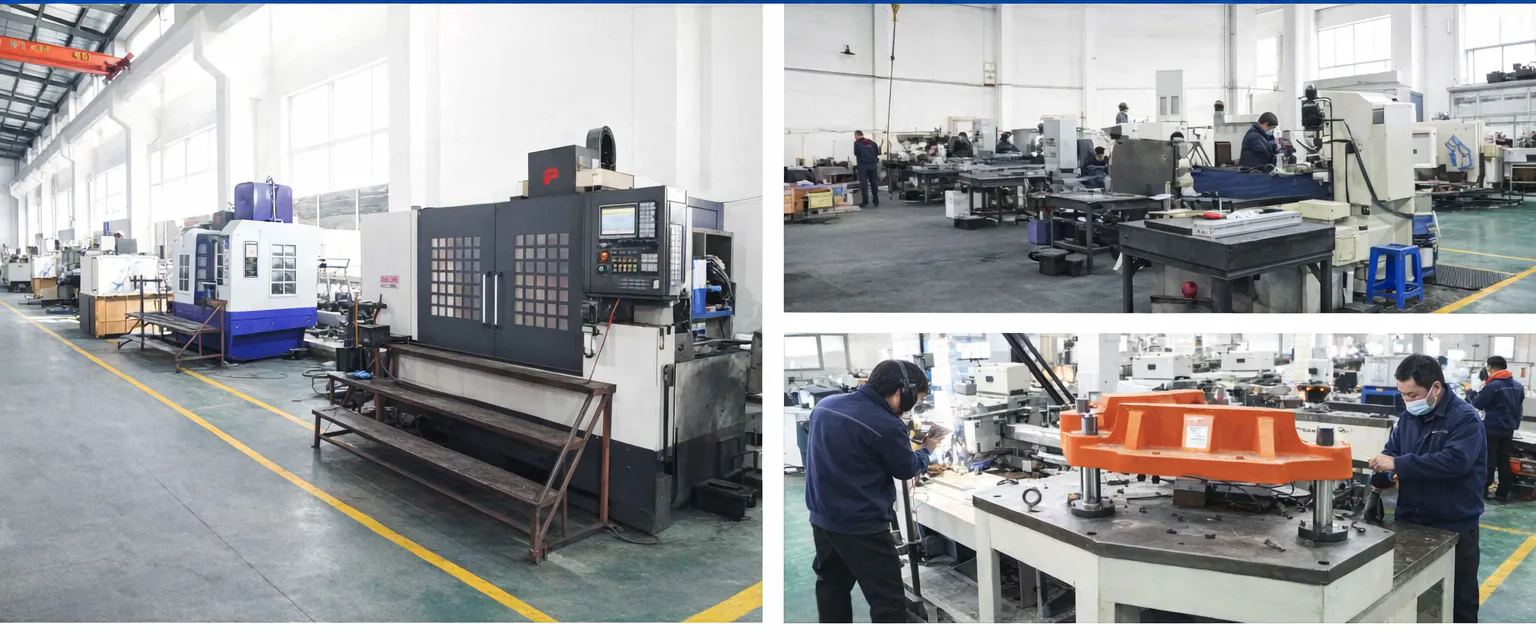
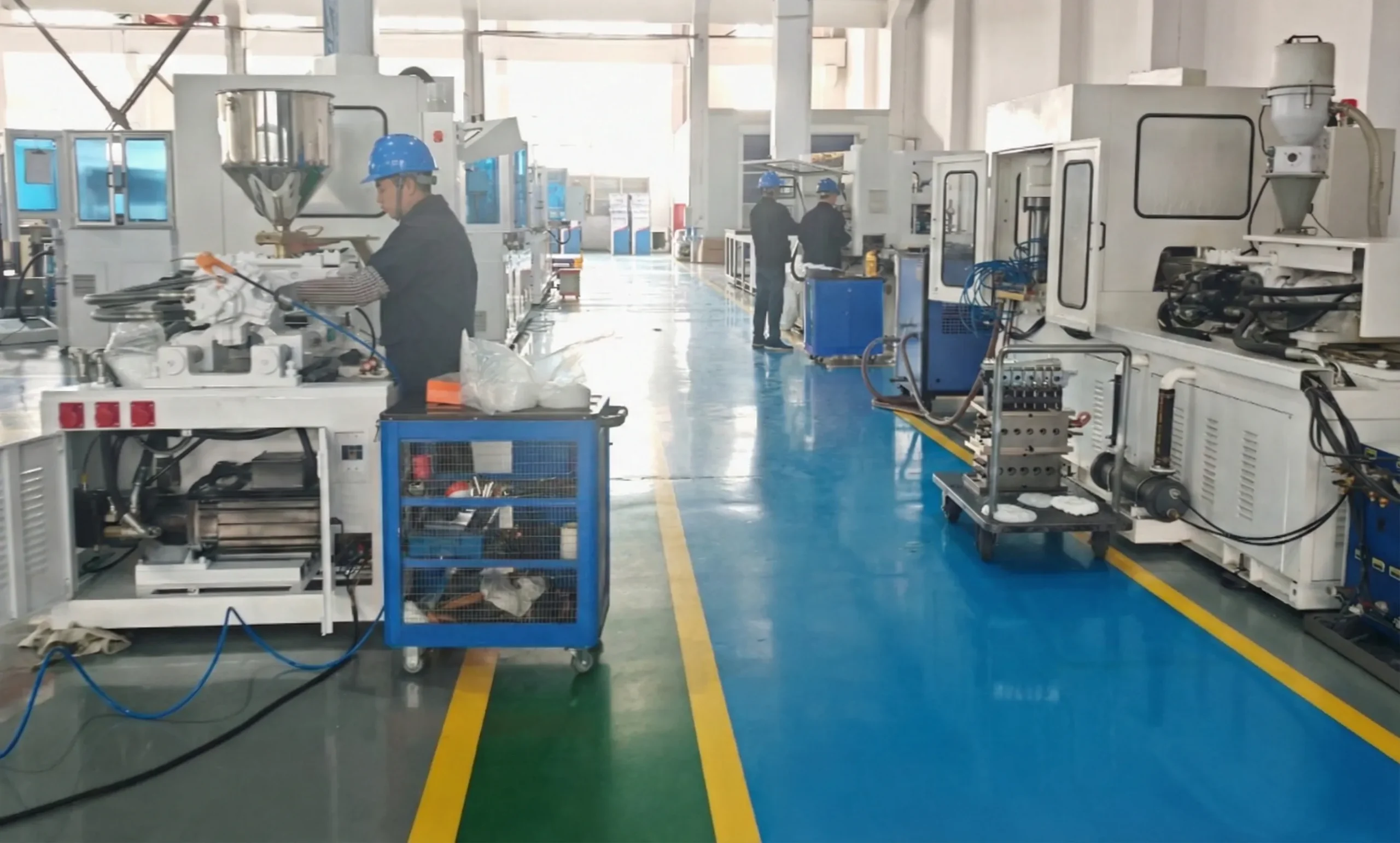
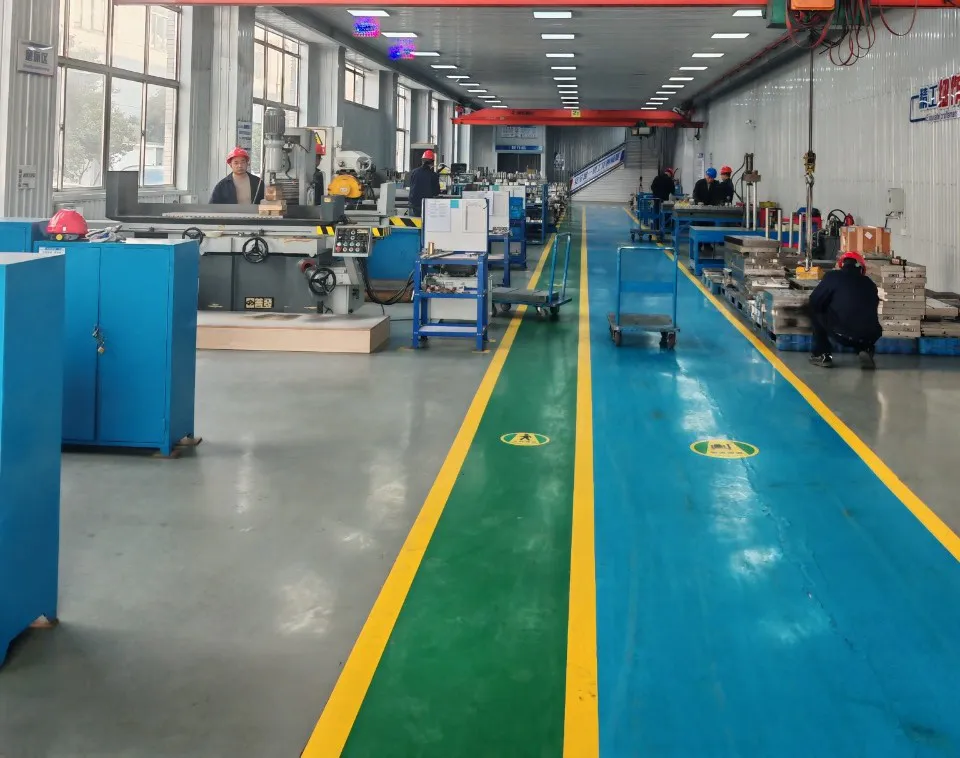
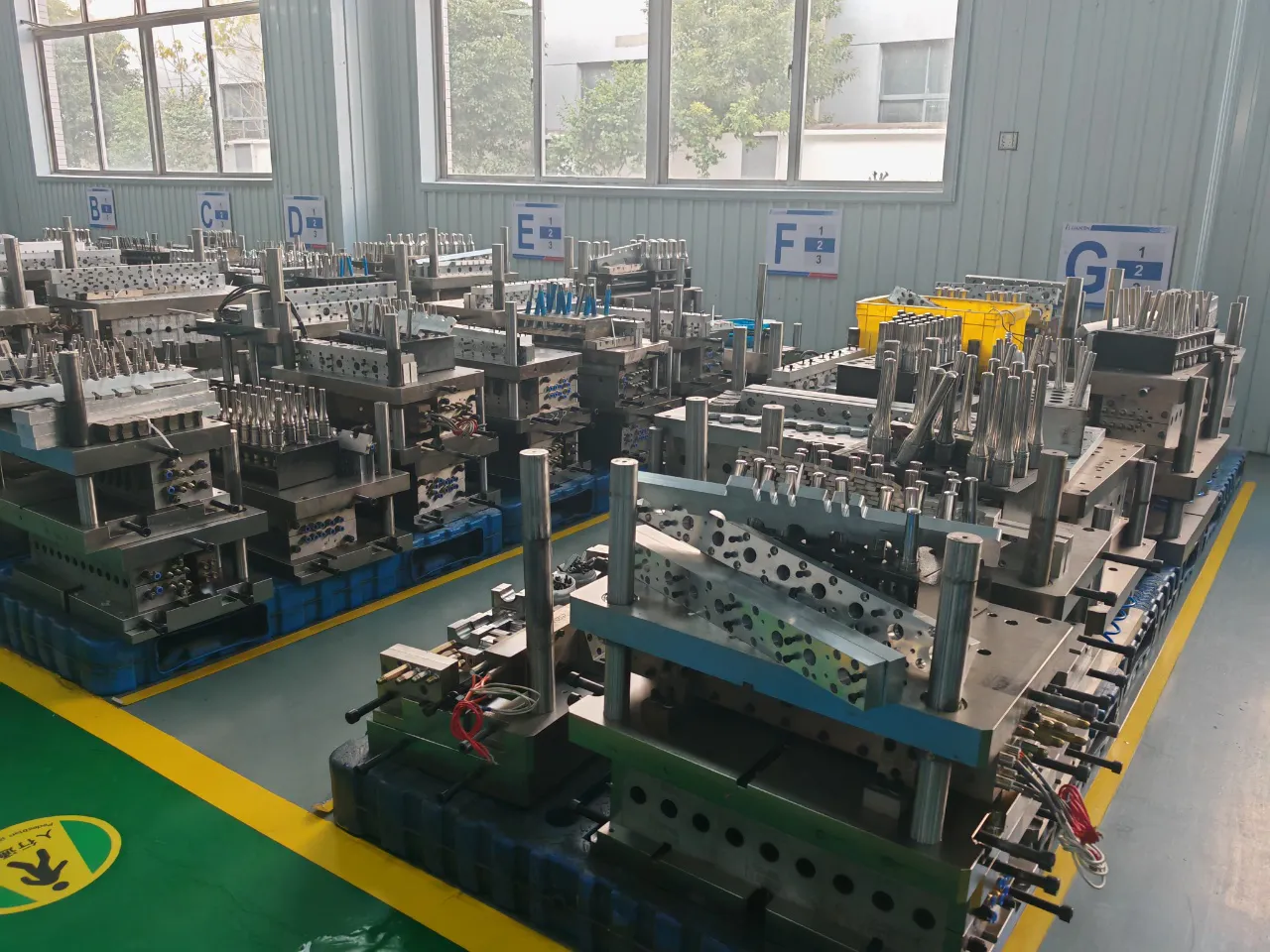
Майстерня
Часті запитання
Редактор: PXY