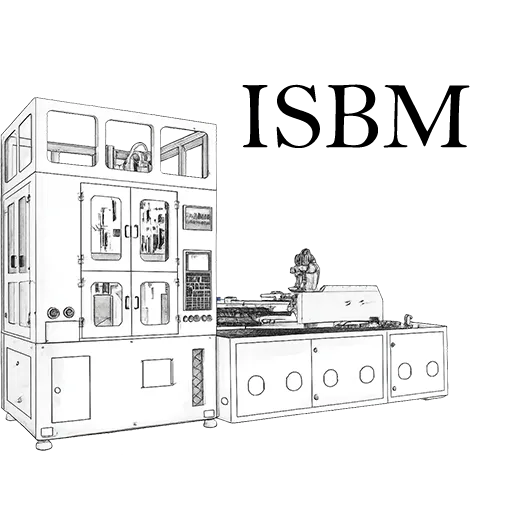
1. A Shift Cosmetic Brands Are Making Quietly
Walk into any modern beauty laboratory in Bogotá, Medellín or Cali and the conversation about primary packaging sounds very different from what it did five years ago. Brand owners are no longer asking suppliers to simply deliver PET preforms and reheat them later — they are asking whether a single injection stretch blow moulding machine can handle injection, stretching and blowing in one continuous cycle, without ever letting the preform touch the outside world. The reason is simple: premium cosmetic bottles live or die on neck precision, optical clarity and surface finish, and every time a preform cools, travels, reheats and re-deforms, small defects creep in. A one-step injection stretch blow moulding machine eliminates those handling gaps entirely, producing pump-ready, serum-ready, toner-ready containers in a sealed environment. For Colombian cosmetic houses serving both the domestic market and export orders into the Andean Community, that consistency is what allows a batch to sail through INVIMA notification review and retail shelf audits without rework.
2. Technical & Performance Parameters
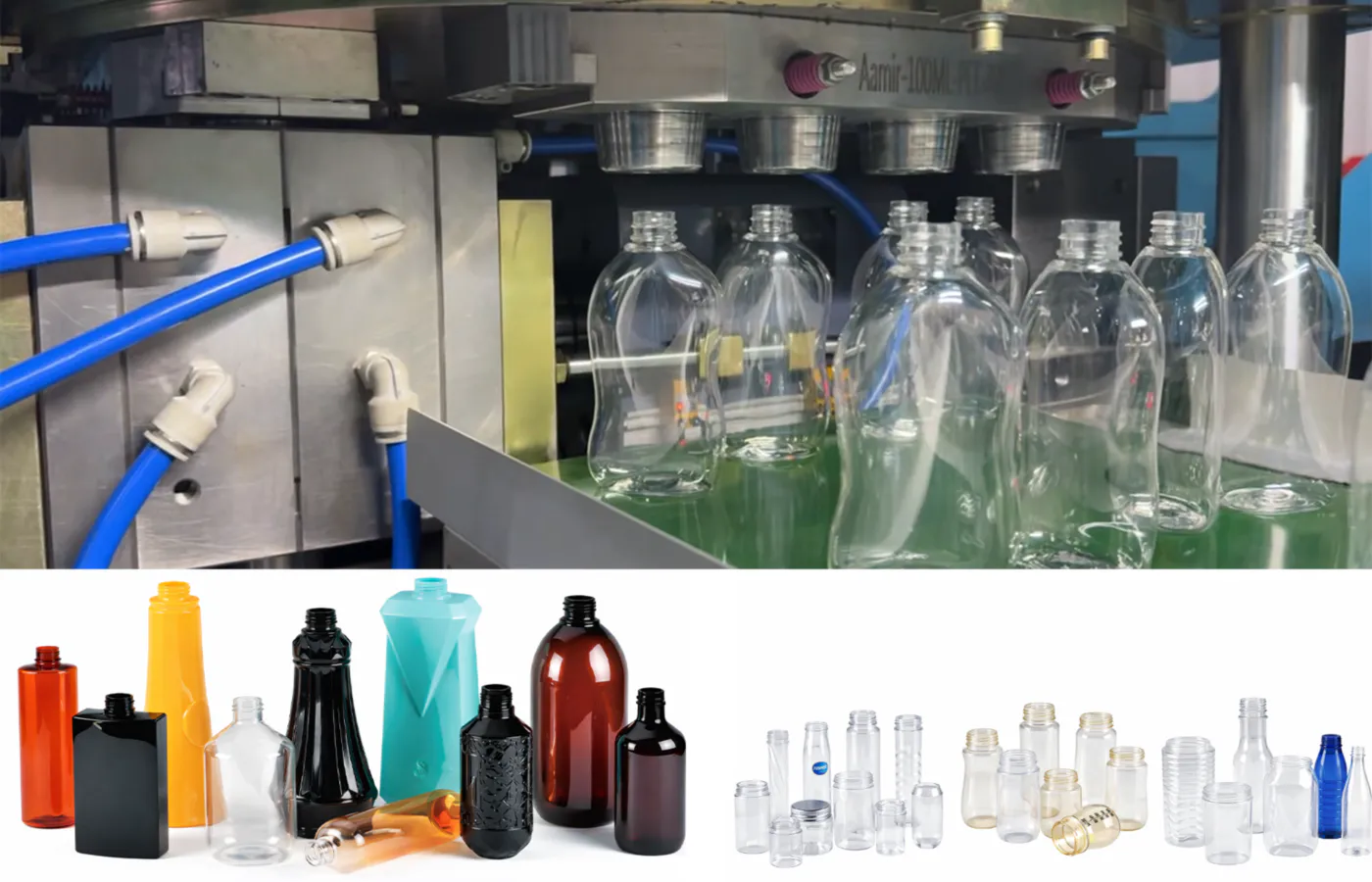
The table below summarises the parameters most frequently requested by Colombian cosmetic plants evaluating a one-step injection stretch blow moulding machine. Values reflect a typical four-station full-servo configuration suitable for the 50–500 ml premium skincare range.
| Paramètre | Standard Value | Optional Range |
|---|---|---|
| Machine Configuration | 4-station rotary | 3-station / 6-station |
| Système d'entraînement | Full servo (Inovance / Yaskawa) | Hydraulic / Full Electric |
| Diamètre de la vis | 50 mm | 40 / 55 / 60 mm |
| Volume d'injection théorique | 310 cm³ | 188 – 680 cm³ |
| Vitesse de rotation de la vis | 180 rpm | 150 – 350 rpm |
| Force de serrage par injection | 150 kN | 50 – 400 kN |
| Force de serrage par soufflage | 200 kN (single side) | 100 – 400 kN |
| Puissance du moteur | 43.2 kW | 34.8 – 102.8 kW |
| Puissance de chauffage | 10 kW | 10 – 15 kW |
| Blow Air Pressure | 2.0 – 3.5 MPa | as per bottle spec |
| Pression de l'eau de refroidissement | 0.4 – 0.6 MPa | chilled loop 12–18 °C |
| Tension de la machine | 380 V / 400 V, 3-phase | 220 V control circuit |
| Overall Dimensions (L×W×H) | 4200 × 1400 × 2900 mm | up to 6300 × 2400 × 3700 mm |
| Poids de la machine | 6 T | 3.5 – 28 T |
| Volume maximal de la bouteille | 2500 ml | up to 20 L on HGY650 |
| Max Neck Diameter | 83 mm | up to 140 mm |
| Cycle Time (per cycle) | 10 – 14 s | depends on bottle weight |
| Matériaux applicables | PET / PETG | PP / PPSU / PC / Tritan / PLA |
| Compatibilité des moules ASB/Aoki | ASB-12M / Aoki-250 / ASB-70DPH | model dependent |
| Hot Runner System | Integrated nano far-infrared heater | customisable zones |
3. The Colombian Regulatory Landscape Behind the Machine Choice
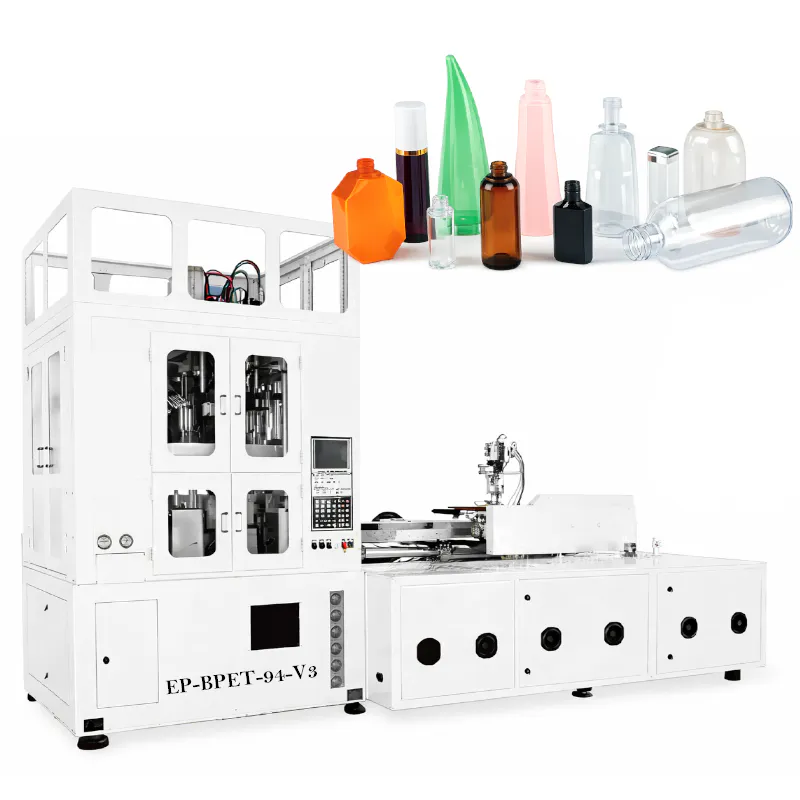
Colombia has one of the most structured cosmetic regulatory regimes in Latin America, and the choice of an injection stretch blow moulding machine is directly influenced by it. Every cosmetic product placed on the local market requires a Notificación Sanitaria Obligatoria (NSO) issued by INVIMA — the Instituto Nacional de Vigilancia de Medicamentos y Alimentos — under the framework of Andean Community Decision 833 of 2018, which replaced parts of Decision 516 of 2002. INVIMA reviews, among other things, the primary and secondary packaging declared by the NSO holder, which makes the dimensional repeatability of each bottle a regulatory concern, not just a marketing one. Resolutions 2310 and 2540, in force since December 2025, modernised the labelling rules and clarified sticker-based Spanish language labelling for imported brands, but the underlying expectation of packaging integrity remained. On the sustainability side, Resolution 1407 of 2018 (updated by Resolution 1342 of 2020) established Extended Producer Responsibility for paper, plastic, glass and metal packaging, requiring producers to recover a growing percentage of what they place on the market. A one-step injection stretch blow moulding machine helps brands meet this by cutting scrap, running lightweight PET bottle designs, and integrating post-consumer recycled resin cleanly. For food-contact cosmetic adjacent containers, INVIMA Resolutions 683 and 4143 of 2012, with the new 2026 Application Guide co-published with Acoplásticos, set migration limits and sanitary surveillance criteria that cleanly-produced, oil-free bottles satisfy more easily than bottles from cold-preform two-step lines. Beyond Colombia, similar frameworks apply: the EU Cosmetic Regulation (EC) No 1223/2009, the U.S. FDA FD&C Act for cosmetic containers, Mexico’s COFEPRIS NOM rules, Brazil’s ANVISA RDC 752/2022, Peru’s DIGEMID, and the Andean harmonisation standards continue to converge toward tighter primary packaging controls.
4. How the Machine Actually Works
A one-step injection stretch blow moulding machine integrates three normally-separate processes inside a single rotating station platform, typically three, four or six stations depending on model. At station one, molten PET (or PETG, PP, PPSU, PC, Tritan, PCTG, or PLA) is injected into a preform cavity and forms the neck finish with final threads already cut. At station two, the still-warm preform is conditioned to the optimum stretch temperature — in an injection stretch blow molding process this is typically the glass-transition window of around 95–110°C for PET — and the tail is either trimmed or held under heat preservation. At station three, a stainless stretch rod extends axially while high-pressure air (2.0 to 3.5 MPa) blows the preform radially into the blow cavity. At station four, the finished bottle is demoulded and ejected to the conveyor. Because the preform never leaves the sealed chamber, and because biaxial stretching orients the polymer chains in both directions, the resulting bottle has uniform wall thickness, excellent barrier performance, and the glossy crystal clarity that premium skincare and fragrance brands demand. That is the fundamental advantage of an injection stretch blow moulding machine over the older injection blow moulding route: the stretch phase enforces the molecular orientation that gives the bottle its strength. This is also why the isbm injection stretch blow molding technology has largely replaced legacy cold-preform workflows for containers between 5 ml and 2500 ml.
5. Five Reasons Premium Cosmetic Brands Specify One-Step ISBM
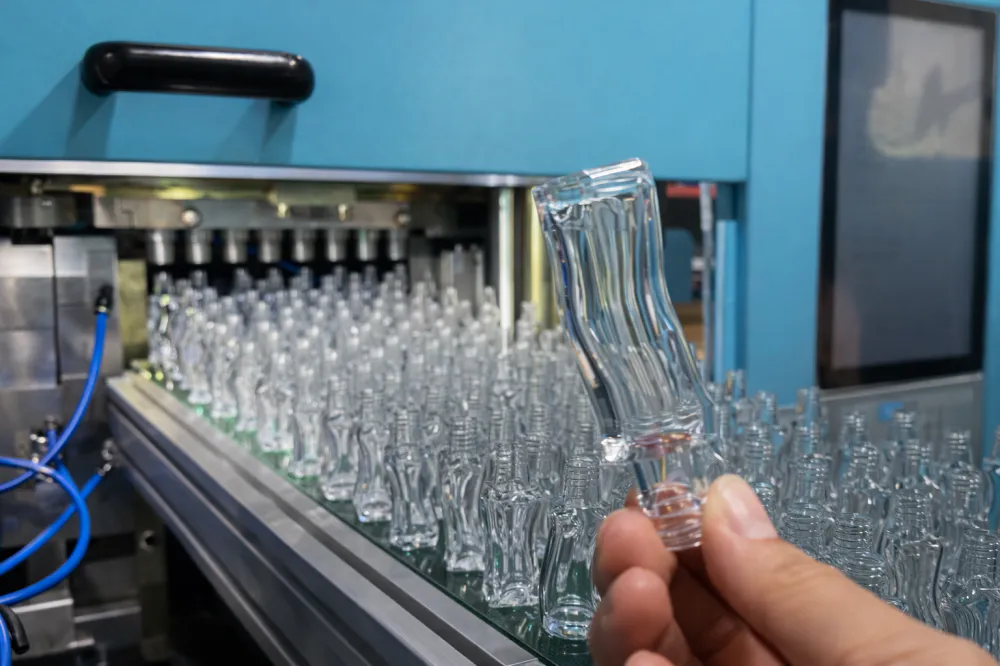
When a Colombian cosmetic brand evaluates whether to invest in its own injection stretch blow moulding machine or to keep outsourcing bottle supply, five specific advantages come up in almost every conversation. These are the engineering and commercial reasons, not marketing slogans.
1. Roughly 40% Lower Energy Use
Because a one-step injection stretch blow moulding machine keeps the preform warm from injection straight through to blowing, there is no second reheat oven. The energy cost of reheating cold preforms — the single biggest electricity line on a two-step site — effectively disappears. Brands typically report 35–42% lower kWh per thousand bottles, which matters under Colombia’s rising industrial electricity tariffs.
2. Contamination-Free Neck and Inner Surface
The bottle never touches human hands, never rolls across a floor, never sits in a dusty warehouse as a preform. For serums, eye drops, sensitive-skin toners and pharma-cosmetic hybrids, that sterility is non-negotiable — and directly aligns with INVIMA’s Good Manufacturing Practice (GMP) expectations under Decision 516 and 833.
3. Superior Neck and Appearance Quality
Pump dispensers, dropper caps, and crimp-on sprayers only work when the neck finish holds micron-level tolerance. A new injection stretch blow moulding machine with servo-driven clamping delivers neck ovality and thread pitch consistency that hand-reheat lines simply cannot match. This is a decisive factor for premium skincare brands.
4. Small Footprint, Flexible Batches
A four-station injection stretch blow moulding machine occupies roughly 21 m² plus auxiliaries — compressor, chiller, mould temperature controller — making it viable for mid-size cosmetic plants in Cali or Barranquilla without requiring a new building. Mould changeover in 2–4 hours supports the short-run, high-SKU production typical of private-label and indie cosmetic brands.
5. Wide Material Compatibility
The same chassis runs PET, PETG, PP, PPSU, PC, Tritan, PCTG, PS, ABS, and PLA, so a brand can launch a frosted PP deodorant stick, a crystal-clear PETG serum bottle, a BPA-free Tritan kids’ cup, and a PLA bio-based face-mist bottle on the same injection stretch blow moulding machine. That material freedom is what lets Colombian cosmetic houses chase trends quickly.
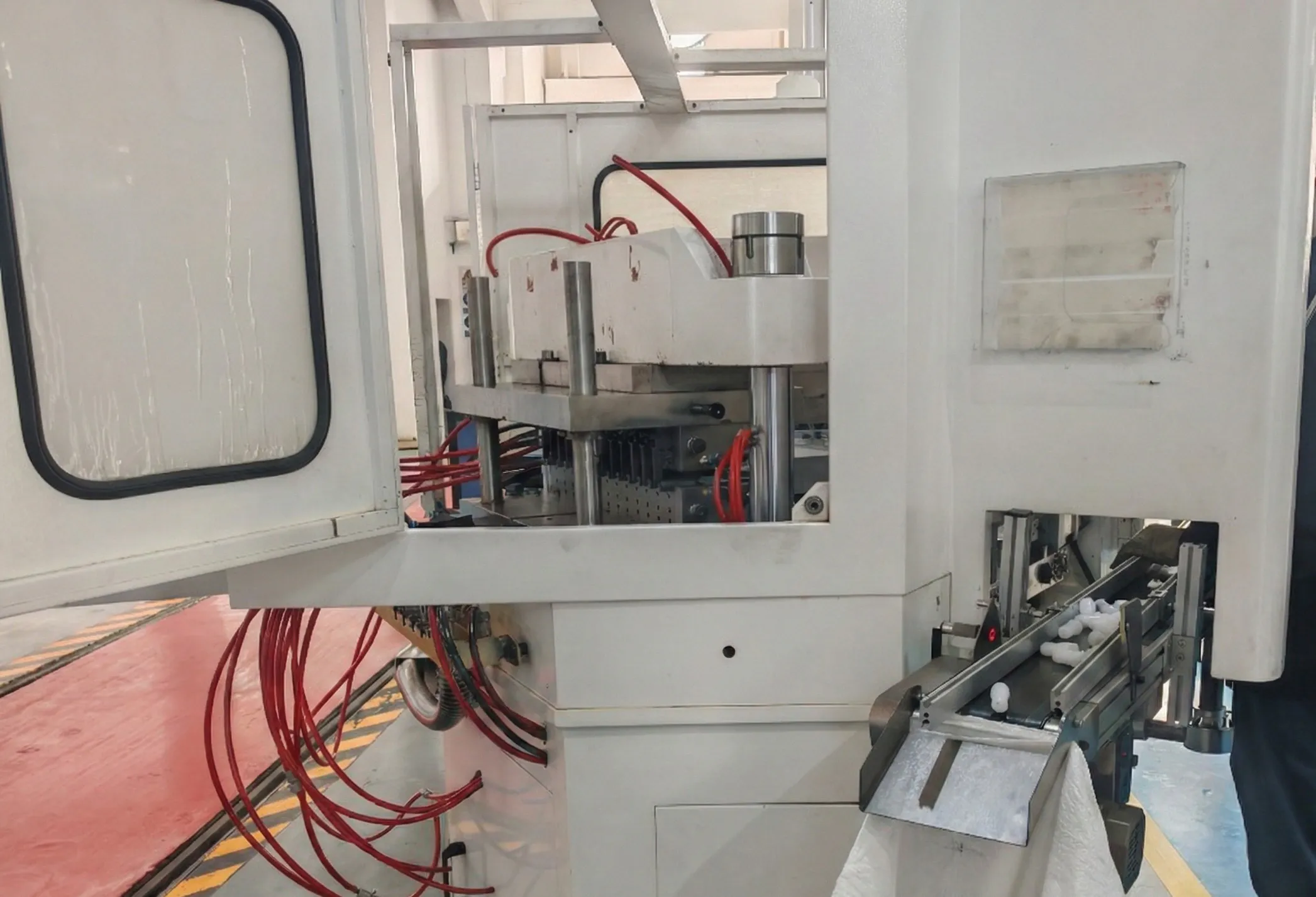
6. Engineering Dimensions That Define the Machine
Any serious evaluation of an injection stretch blow moulding machine should cover nine engineering dimensions — these are the same categories that rotating equipment engineers in Colombian cosmetic plants use when writing specification documents for procurement. Rather than bury these inside prose, they are summarised below so that plant managers can tick them off during supplier selection.
| Engineering Dimension | Specification for Premium Cosmetic Applications |
|---|---|
| Action Method | Four-station rotary indexing: injection, temperature conditioning / tail cutting, stretch-blow, take-out. Servo-driven turntable with precise stop positioning. |
| Type de structure | Rotary horizontal platform, 3-station, 4-station or 6-station. Fully electric (EV), servo (S) or hydraulic-servo hybrid configurations available. |
| Structure de fabrication | Heavy steel welded base frame, stress-relieved; precision-ground platens; modular electrical cabinets; integrated temperature control box; sealed oil-free design on EV models. |
| Système de matériaux | Compatible resins: PET, PETG, PP, PPSU, PC, Tritan, PCTG, PS, ABS, PLA. Moulds built from S136 stainless tool steel, preform cavities polished to SPI A1 for optical clarity. |
| Traitement de surface | Powder-coated blue external panels; hard-chrome plated stretch rods; nitrided clamping columns; food-grade polish on all melt-path components contacting resin. |
| Environmental Grade | Designed for controlled cleanroom-adjacent cosmetic workshops, 20–35 °C ambient, up to 75% relative humidity. IP54 electrical cabinet; compliant with EU Machinery Directive 2006/42/EC and CE marking. |
| Conditions de fonctionnement | Continuous 24/7 duty, 10–30 second cycle per set, blow air 2.0–3.5 MPa, cooling water 0.4–0.6 MPa at 12–18 °C, heating power 10–15 kW, drive power 34.8–102.8 kW depending on model. |
| Modes de défaillance typiques | Stretch rod wear after 8–12 million cycles; hot runner gate coking if purging skipped; servo belt stretch on older mechanical models; O-ring degradation in blow manifold under long campaigns. |
| Configuration recommandée | For premium cosmetic bottles 10–500 ml: 4-station fully-electric or full-servo injection stretch blow moulding machine, S136 mould, Parker high-pressure valves, Yaskawa or Inovance servo drives, NSK lead screws, 6–8 cavity mould layout. |
7. Materials Used in a Premium ISBM Build
The quality of an injection stretch blow moulding machine lives and dies on the material specification of its contact parts. For the melt path, the screw and barrel are machined from bimetallic high-wear alloy to resist the abrasive behaviour of glass-fibre-filled resins or recycled PET flake. The hot runner manifold uses H13 tool steel with integrated nano far-infrared heating bands, delivering a 10 kW or 15 kW heating circuit with ±1 °C control. For the moulds themselves, S136 stainless tool steel is the industry standard for cosmetic bottle cavities — it polishes to a mirror finish, resists corrosion from PET decomposition gases, and holds tolerance over millions of shots. Stretch rods are chromed 40Cr steel, blow pins are hardened stainless, and all fluid manifolds that see high-pressure air use Parker aluminium blocks with stainless internals. Electrical and motion components are selected for long duty cycles: Inovance or Yaskawa servo motors, Parker high-pressure pneumatic valves, YUKEN hydraulic valves (on hybrid models), NSK ball-screws, and integrated Inovance or MiRLE PLC control cabinets. This supply-chain discipline is what separates a premium injection stretch blow molding machine from budget clones, and it directly affects long-term cost of ownership for a Colombian cosmetic plant operating 24/7 shifts.
8. Application Scenarios — Where Cosmetic Brands Put These Machines to Work
The application boxes below reflect the most common deployments of an injection stretch blow moulding machine in Colombia and the wider Andean region. Each scenario maps to a slightly different mould, cycle time, and resin choice.
Premium Skincare & Serums
Clear PET or PETG dropper bottles from 15 ml to 100 ml, with matched pump-dispenser neck finishes. Used by Bogotá and Medellín skincare labs serving both local and export-to-Ecuador markets. Requires ultra-polished S136 cavities and ±0.1 mm neck tolerance.
Perfume & Fragrance Bottles
Crystal-clear PETG bottles with heavy base for shelf presence, 30 ml to 150 ml. The biaxial orientation from the injection stretch blow molding process delivers the optical quality that rivals glass, at a fraction of the shipping weight.
Shampoo, Conditioner & Body Wash
250 ml to 1000 ml PET bottles, often frosted or coloured, running at 8-cavity layouts for high throughput. Compatible with trigger-pump and flip-cap closures popular in Colombian drugstore retail.
Pharma & Cosmeceutical Containers
Eye drop bottles, hand sanitiser sprays, oral liquid bottles — ranging from 5 ml to 500 ml. The sterile one-step path simplifies INVIMA sanitary registration and GMP audits compared with reheated two-step lines.
Baby Products & Feeding Bottles
BPA-free PPSU, Tritan, and PCTG feeding bottles, 120 ml to 300 ml. The single-stage injection stretch blow moulding machine avoids contaminants that could otherwise be introduced during preform storage.
Wide-Mouth Food & Beverage Jars
Honey, sauces, powdered beverages and nutraceutical jars, 100 ml to 2500 ml. Complies with INVIMA Resolutions 683 and 4143 of 2012 and the 2026 Application Guide for food-contact materials.
Atelier
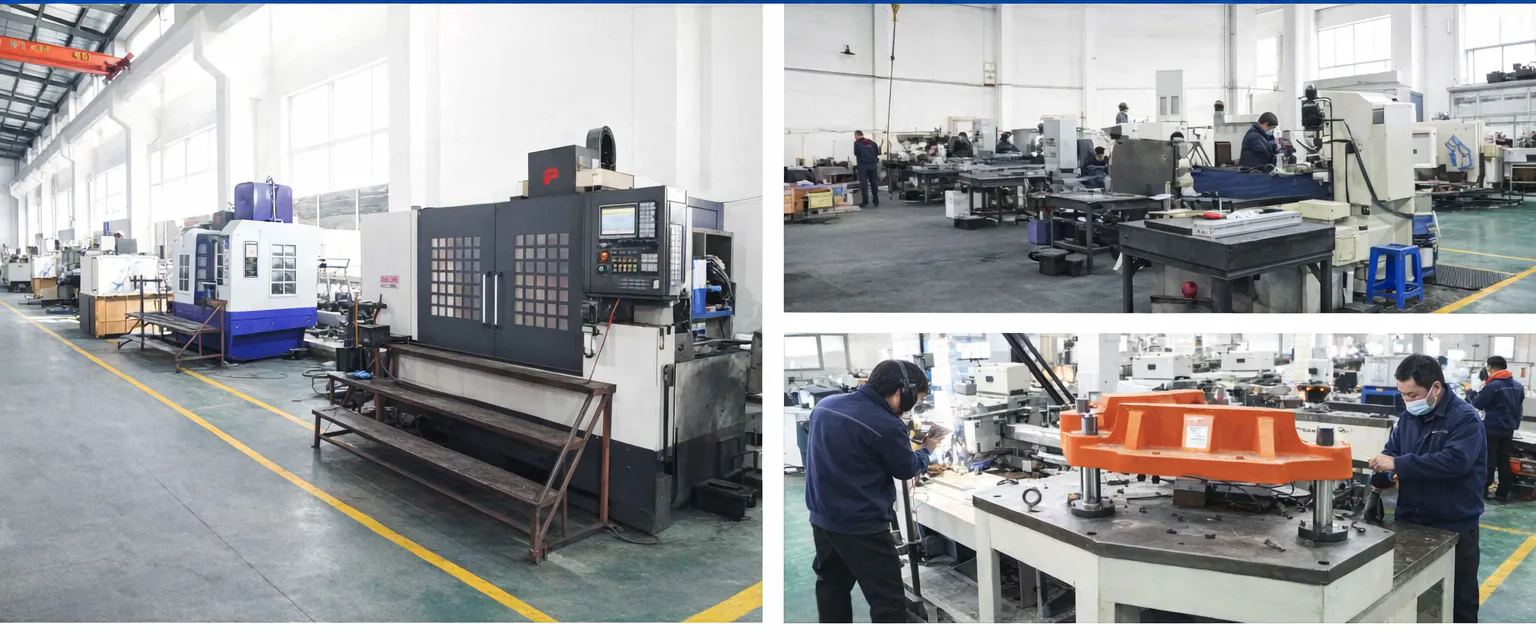
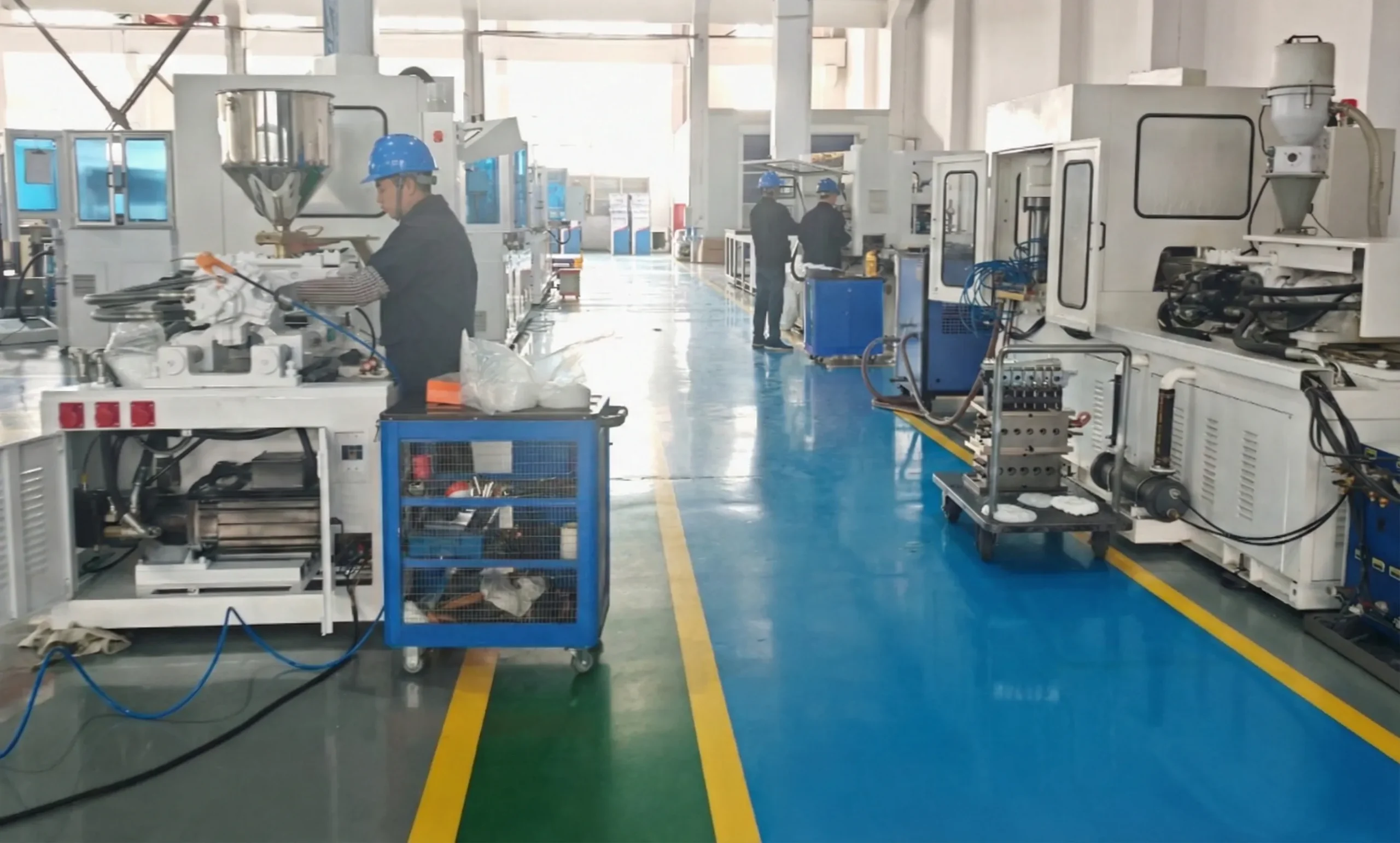
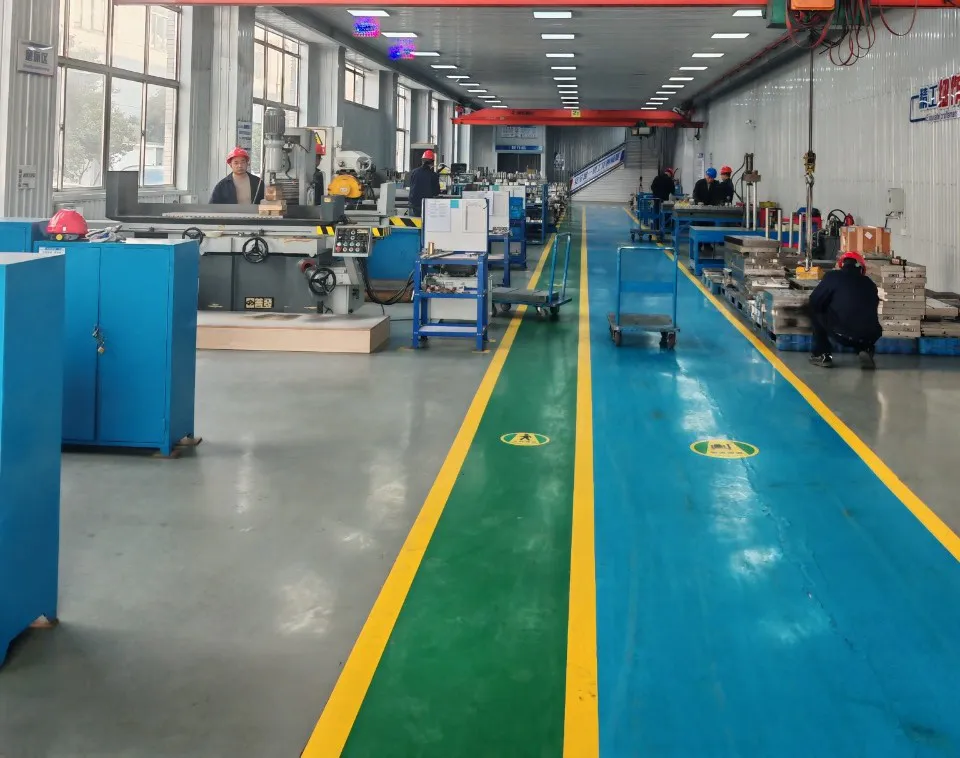
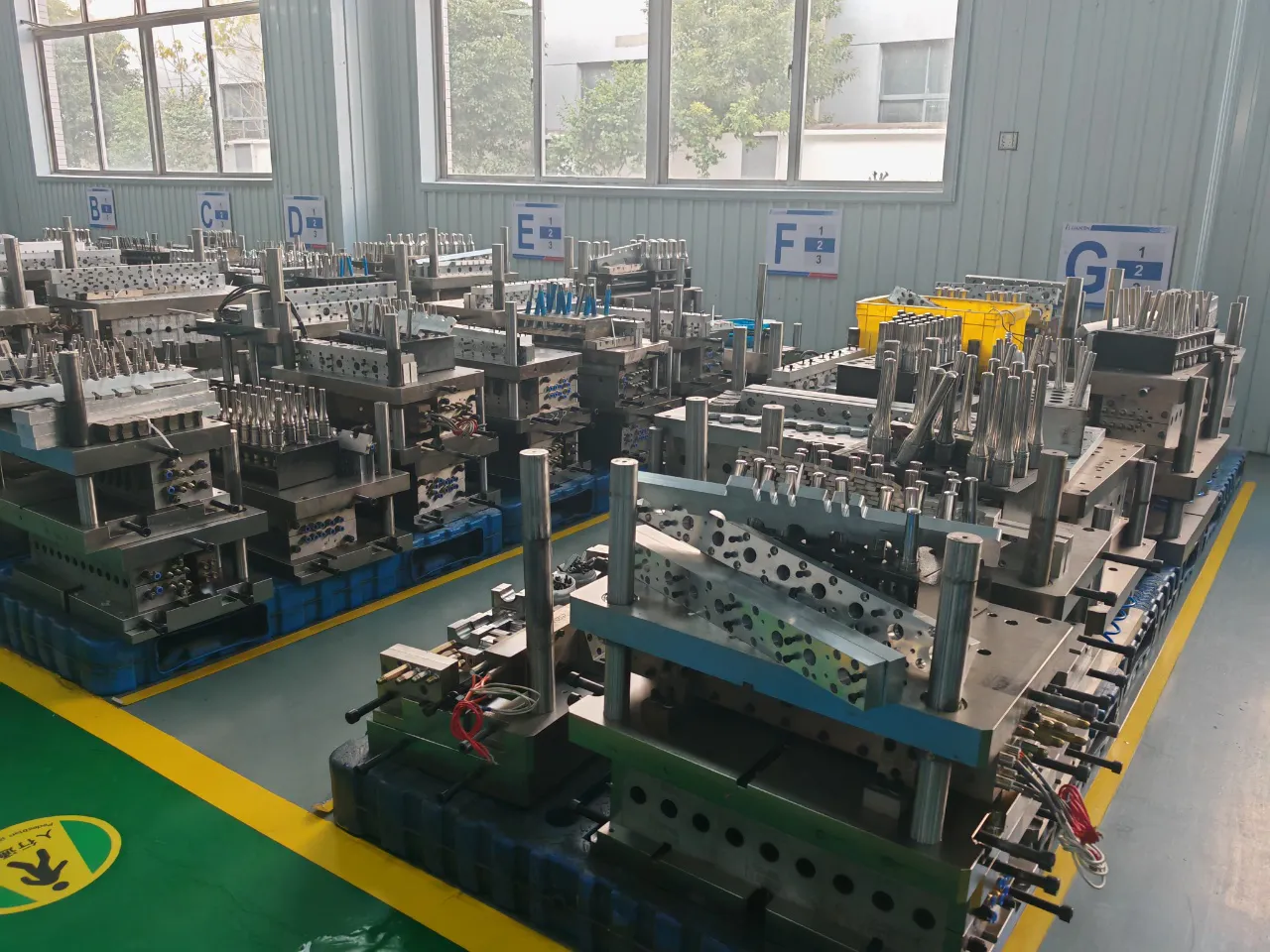
9. Related Products & One-Stop Supply
Beyond the injection stretch blow moulding machine itself, our broader machinery portfolio includes auxiliary drive and power-transmission equipment that production plants regularly ask for in the same sourcing cycle. This cross-category capability is what allows us to offer a true one-stop service for process plants, whether the end application is cosmetic bottle production, food packaging, or mechanical conveyance. System compatibility across our product lines reduces procurement friction and shortens lead times for multi-component factory builds.
Industrial Motor
High-efficiency three-phase industrial motors from 1.5 kW through 110 kW, suitable for pairing with gear reducers, pumps, conveyors and hydraulic power packs. IE3 / IE4 efficiency grades available to help meet Colombian industrial energy-efficiency targets.
Foire aux questions
Q1. Which injection stretch blow moulding machine configuration is most suitable for 30 ml premium PETG serum bottles in the Colombian cosmetic market?
A3. A four-station full-servo configuration with an 8-cavity S136 stainless mould, 50 mm screw, 150 kN injection clamping force, and integrated temperature control box is the most common choice for that serum size range.
Q2. When should a cosmetic manufacturer request a site audit visit before signing the purchase order for an injection stretch blow moulding machine?
A5. Ideally schedule the factory audit after technical specification agreement but before deposit payment. A two-day visit lets your engineers verify component sourcing, mould shop capability, and witness a running machine of similar model.
Q3. What does a typical maintenance schedule look like for an industrial injection stretch blow moulding machine in a Colombian cosmetic factory?
A6. Daily: cooling water quality and servo lubrication checks. Every 500 hours: NSK lead screw lubrication and filter cleaning. Quarterly: Parker valve calibration. Annually: deep cleaning of blow core, stretch rods, and hot runner gates.
Q4. Which injection stretch blow moulding machine manufacturers can support custom moulds compatible with existing ASB or Aoki tooling?
A7. Look for suppliers that explicitly list ASB-12M, Aoki-250, and ASB-70DPH mould compatibility on their machine datasheets. Compatibility is typically achieved on the 150, 200, and 250 tonnage model frames with adapter plates included.
Q5. What are the most common failure modes to monitor during high-volume cosmetic bottle production on an ISBM machine?
A9. The main watch items are stretch rod wear after roughly eight to twelve million cycles, hot runner gate coking if purging cycles are skipped, O-ring degradation in the blow manifold during long campaigns, and servo belt tension drift on older mechanical drives.
Q6. Which resins can a single injection stretch blow moulding machine handle for a multi-SKU cosmetic portfolio in Colombia?
A10. A standard chassis handles PET, PETG, PP, PPSU, PC, Tritan, PCTG, PS, ABS, and PLA without mechanical modification. Only the screw profile, hot runner temperature, and cycle time parameters need adjustment between resin families for optimal bottle quality.
Q7. What documentation should an ISBM machine supplier provide to ease INVIMA notification for Colombian cosmetic bottle production?
A11. Expect CE declaration of conformity, bill of materials, food-grade certificates for resin-contact components, material migration test reports, GMP-compatible cleaning procedures, and an operator training log — all translated into Spanish for INVIMA document review.
Q8. How does a cosmetic brand confirm that a replacement injection stretch blow moulding machine will match its existing ASB or Aoki bottle moulds?
A12. Share the existing mould GA drawings, neck finish drawings, and cavity layout with the equipment engineer; compatible frames (HGY150, HGY200, HGY250 class) accept ASB-12M, Aoki-250 and ASB-70DPH tooling with documented adapter interfaces and clamping-force verification.
Éditeur : PXY