Cómo la reducción de peso mediante máquinas de moldeo por soplado y estirado por inyección disminuye el uso de plástico sin sacrificar la integridad de la botella.
Una guía técnica exhaustiva para ingenieros de embalaje, gerentes de compras y líderes de sostenibilidad que explora cómo el paso a paso máquina de moldeo por inyección, estirado y soplado Este proceso permite reducir el espesor de la pared, ahorrar resina y mejorar el rendimiento mecánico, todo al mismo tiempo. Está dirigido a productores de Colombia, México, Ecuador y el mercado latinoamericano de envases.
Proceso ISBM de un solo paso
PET / PETG / PP / PC / Tritán / PLA
Reducción de energía de hasta 40%
Enfoque en Colombia y Latinoamérica
Resumen rápido: La reducción de peso —disminuir la masa de un envase de plástico manteniendo o mejorando su rendimiento funcional— es una de las palancas de sostenibilidad más impactantes disponibles para los productores de envases. El paso a paso máquina de moldeo por inyección, estirado y soplado Se encuentra en una posición privilegiada para posibilitar este enfoque, ya que su proceso integrado permite un control preciso y repetible del espesor de la pared a partir de una preforma térmicamente consistente, produciendo contenedores orientados biaxialmente cuya eficiencia estructural por gramo de resina supera con creces lo que pueden lograr el moldeo por extrusión-soplado o el moldeo por soplado-estirado con recalentamiento en dos etapas.
A diferencia de los procesos de dos pasos, donde el recalentamiento de la preforma introduce una falta de uniformidad térmica en todo el cuerpo de la preforma y, por lo tanto, una variación en el espesor de la pared en la botella terminada, el proceso de un solo paso proceso de moldeo por inyección, estirado y soplado El proceso traslada la preforma directamente de la inyección a la estación de soplado y estirado a una temperatura controlada y uniforme. Esta consistencia es la base física de las paredes más delgadas y uniformes que caracterizan a las botellas ISBM ligeras.
Para los productores de envases colombianos y latinoamericanos que enfrentan el aumento de los costos de la resina PET virgen, el endurecimiento de las regulaciones de responsabilidad extendida del productor (REP) y la demanda de los consumidores de envases sostenibles, comprender los mecanismos específicos por los cuales un máquina de moldeo por inyección, estirado y soplado La capacidad de aligerar el peso —sin fallos mecánicos, degradación de la barrera ni compromiso de la integridad del sellado— es un requisito estratégico competitivo.
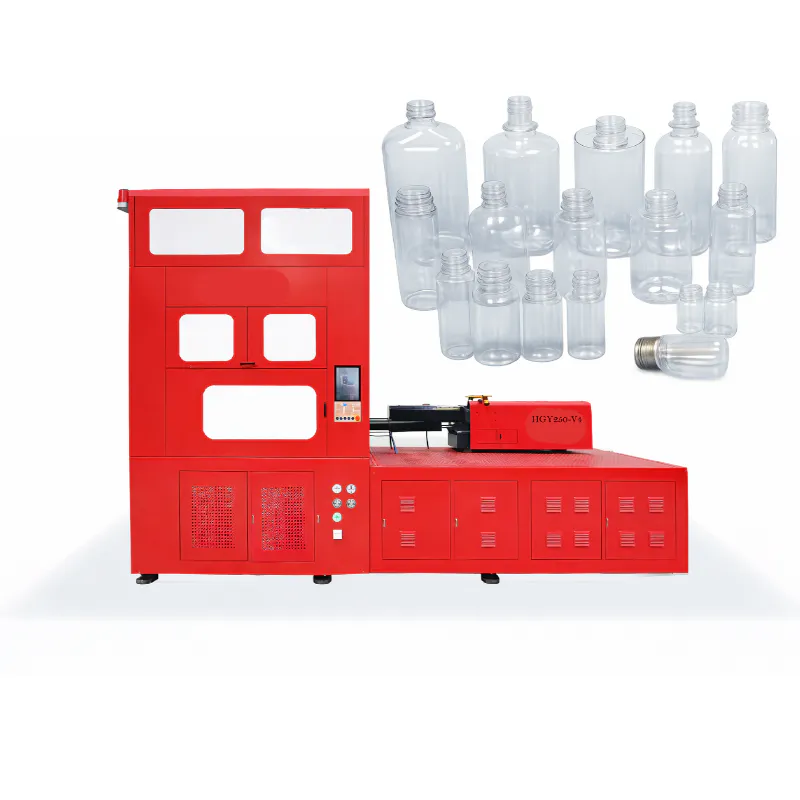
1. Parámetros técnicos — Serie de máquinas ISBM para la producción de botellas aligeradas
| Parámetro |
Unidad |
EP-HGY50-V3-EV (3 estaciones) |
HGY150-V4 (4 estaciones) |
HGY200-V4 (4 estaciones) |
HGY250-V4 (4 estaciones) |
| Materiales aplicables |
— |
PET / PETG |
PET / PETG |
PET / PETG |
PET / PETG |
| Diámetro del tornillo (opcional) |
mm |
40 / 50 / 55 |
40 / 50 / 55 / 60 |
40 / 50 / 55 / 60 |
50 / 55 / 60 |
| Volumen de inyección teórico |
cm³ |
239 / 315 / 442 |
188 / 310 / 380 / 480 |
188 / 310 / 380 / 480 |
340 / 420 / 480 |
| Fuerza de sujeción por inyección |
kN |
50 |
150 |
300 |
300 |
| Fuerza de sujeción por soplado (un solo lado) |
kN |
100 |
200 |
200 |
200 |
| Potencia del motor |
kW |
34.8 |
43.2 |
49.2 |
67.7 |
| Potencia de calefacción |
kW |
10.4 |
10 |
10 |
15 |
| Presión de aire de soplado |
MPa |
2.0 – 3.5 |
2.0 – 3.5 |
2.0 – 3.5 |
2.0 – 3.5 |
| Presión del agua de refrigeración |
MPa |
0,4 – 0,6 |
0,4 – 0,6 |
0,4 – 0,6 |
0,4 – 0,6 |
| Voltaje de la máquina |
V |
370 – 400 |
370 – 400 |
370 – 400 |
370 – 400 |
| Dimensiones de la máquina (largo × ancho × alto) |
mm |
3800 × 1200 × 2500 |
4200 × 1400 × 2900 |
4800 × 2000 × 3200 |
6300 × 2400 × 3700 |
| Peso de la máquina |
T |
3.5 |
6 |
13 |
16 |
| Volumen máximo de la botella (cavidad única) |
ml |
2,500 |
2,500 |
2,500 |
2,500 |
| Compatibilidad de moldes ASB / Aoki |
— |
— |
ASB-12M |
Aoki 250 (V4-B) |
ASB-70DPH |
| Sistema de transmisión |
— |
Totalmente eléctrico (VE) |
Bomba servo / Servo |
Bomba servoaccionada |
Bomba servoaccionada |
2. Qué significa realmente la reducción de peso en el contexto del moldeo por soplado y estirado por inyección en un solo paso.
La reducción de peso en la fabricación de envases de plástico no se limita a hacer paredes más delgadas. Significa lograr el mismo o mejor rendimiento estructural (resistencia a la carga superior, resistencia a la presión interna, resistencia al impacto por caída, barrera contra el oxígeno) con una menor masa de resina. Esta distinción es importante porque una reducción de pared ingenua sin control del proceso produce botellas que fallan durante la manipulación en el punto de venta o durante la presurización de la línea de llenado. El desafío de ingeniería es lograr un menor grosor al tiempo que se mejora la arquitectura molecular del material restante. El paso único máquina de moldeo por inyección, estirado y soplado Este proceso resuelve este desafío mediante el mecanismo físico de orientación biaxial: estira el material simultáneamente en sentido axial (a lo largo de la altura de la botella) y radial (alrededor de su circunferencia) durante la fase de soplado. Este estiramiento orientado reorganiza las cadenas poliméricas, transformando una disposición amorfa aleatoria en una red entrelazada altamente ordenada, mecánicamente muy superior al material no orientado que sale del molde de inyección.
En términos prácticos, una pared de PET biaxialmente orientada de 0,25 mm puede soportar la misma fuerza de carga superior que una pared de PET no orientada de 0,40 mm. Esa diferencia de 0,15 mm por pared, multiplicada a lo largo de toda la superficie de la pared lateral de una botella de bebida de 500 ml, se traduce en un ahorro de resina de 3 a 4 gramos por botella. A una tasa de producción de 5000 botellas por hora en una máquina multicavidad máquina de moldeo por inyección, estirado y sopladoEsto equivale a entre 15 y 20 kg de resina por hora, o aproximadamente entre 120 y 160 toneladas de PET al año en una sola máquina que funciona en dos turnos. Con los precios actuales de la resina PET en Colombia, esto representa una reducción de costos significativa y directa, independientemente de cualquier presión regulatoria o compromiso de sostenibilidad de la marca.
La razón por la que una máquina de un solo paso permite esto de manera más confiable que un proceso de recalentamiento de dos pasos es el historial térmico. En el enfoque de dos pasos, la preforma se moldea por inyección, se enfría a temperatura ambiente, se almacena (a veces durante días) y luego se recalienta en un horno infrarrojo separado antes del soplado. Este ciclo de recalentamiento introduce gradientes térmicos en la pared de la preforma (la superficie exterior se calienta más rápido que el núcleo), lo que da como resultado condiciones de soplado no uniformes. La máquina ISBM elimina por completo esta variable: la preforma se mueve directamente de la estación de inyección a la estación de acondicionamiento de temperatura y luego a la estación de soplado por estiramiento, con su perfil térmico controlado en todo momento como un único proceso continuo. La temperatura de la pared de la preforma es uniforme desde la superficie hasta el núcleo porque nunca se ha enfriado por completo. Esta consistencia térmica es el requisito mecánico previo para la distribución uniforme y predecible de la pared que requieren las botellas ligeras.
3. Modo de acción: cómo el proceso ISBM de un solo paso ejecuta la reducción de peso.
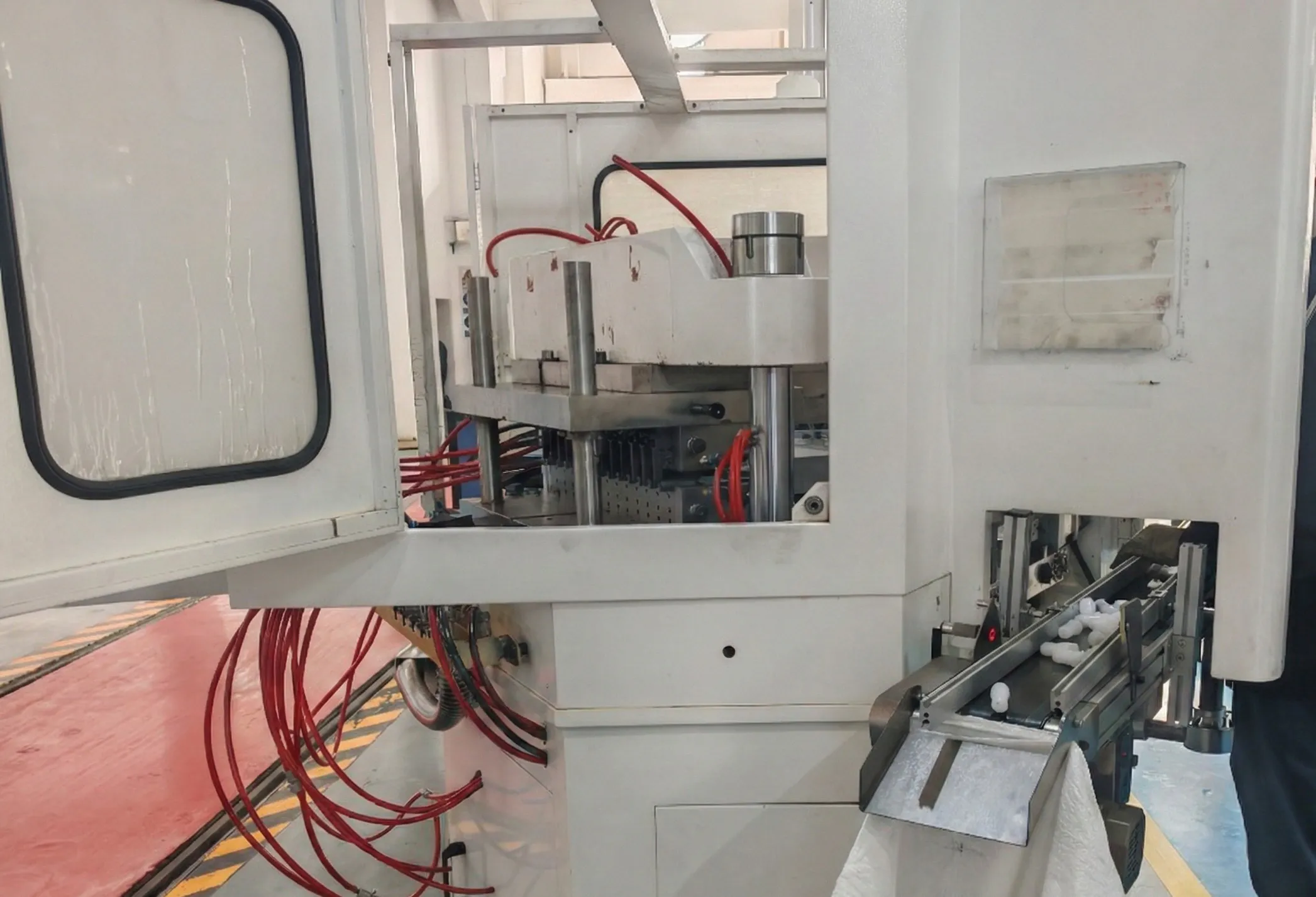
El paso único máquina de moldeo por inyección, estirado y soplado Funciona sobre una plataforma giratoria que transporta las preformas durante todo el ciclo de conformado sin separarlas del anillo del cuello, que sirve de referencia dimensional para el acabado crítico del envase (forma de la rosca y superficie de sellado). Esta retención continua del anillo del cuello es la causa mecánica fundamental de la calidad superior del acabado del cuello que presentan las botellas ISBM: dado que el cuello nunca se suelta ni se vuelve a sujetar, no existe la posibilidad de deformación por sujeción, desplazamiento de la rosca o desalineación de la superficie de sellado, del tipo que provoca fugas en el tapón en las botellas producidas mediante procesos de dos etapas.
Estación 1 — Inyección
La resina fundida (PET, PETG, PP, PC, Tritan, PLA, etc.) se inyecta en la cavidad de la preforma a presión y velocidad controladas. La preforma se moldea alrededor del núcleo del cuello, estableciendo la geometría final de la rosca y el espesor de la pared del cuerpo de la preforma, lo que determina la relación de estiramiento y el espesor final de la pared de la botella.
Estación 2 — Acondicionamiento de temperatura / Corte de cola
La preforma se coloca en la estación de regulación de temperatura para igualar la temperatura en toda la pared y ajustar el perfil térmico para lograr las condiciones óptimas de estirado y soplado. Aquí se realiza el recorte de la cola de la compuerta. Esta estación es fundamental para lograr la distribución uniforme de la pared, lo que hace que las botellas ligeras sean estructuralmente viables.
Estación 3 — Moldeo por soplado y estirado
La varilla de estiramiento se extiende axialmente mientras que el aire a alta presión (2,0–3,5 MPa) expande simultáneamente la preforma radialmente contra la cavidad del molde de soplado. Durante este paso, se produce una orientación biaxial de las cadenas poliméricas, lo que genera una mayor resistencia, mejores propiedades de barrera y una mayor transparencia, permitiendo así la reducción del espesor de la pared sin sacrificar el rendimiento.
Estación 4 — Recogida de botellas
La botella terminada y enfriada se libera del anillo del cuello y se transfiere mediante el mecanismo de extracción a la cinta transportadora siguiente. El anillo del cuello se limpia y se vuelve a cargar para el siguiente ciclo. No se manipula más el acabado del cuello, lo que preserva la precisión dimensional establecida en la Estación 1.
4. Tipo estructural: configuraciones de máquinas que permiten la reducción de peso.
Las configuraciones de máquina disponibles abarcan diseños rotativos de 3 y 4 estaciones, con opciones de accionamiento hidráulico estándar, servohíbrido y totalmente eléctrico. Cada configuración afecta el grado de control sobre el perfil térmico de la preforma —la variable clave para la reducción de peso— y la consistencia del tiempo de ciclo que determina si se pueden alcanzar los objetivos de espesor de pared en una producción continua, en lugar de solo en pruebas con botellas individuales.
El diseño de 3 estaciones (representado por modelos como el EP-HGY50-V3-EV) consolida las funciones de acondicionamiento de temperatura y extracción, produciendo un formato de máquina compacto adecuado para la producción de bajo volumen y alta variedad de botellas especiales (cosméticos, viales farmacéuticos, contenedores de laboratorio), donde los objetivos de aligeramiento se definen botella por botella en lugar de en series de alto volumen. El diseño de 4 estaciones (HGY150-V4, HGY200-V4, HGY250-V4, HGY650-V4 y sus variantes servo/totalmente eléctricas) introduce una estación de acondicionamiento de temperatura dedicada, que proporciona el mayor control térmico sobre el cuerpo de la preforma, lo que permite directamente la máxima profundidad de aligeramiento. El diseño de 6 estaciones (HGYS280-V6) duplica la capacidad de la unidad de inyección, aumentando la cavitación y la producción al tiempo que mantiene la misma arquitectura de gestión térmica.
El máquina de moldeo por soplado y estirado por inyección totalmente eléctrica Las variantes (HGY50-V3-EV, HGY150-V4-EV, HGY200-V4-EV, HGY250-V4-EV) merecen especial atención en el contexto de la reducción de peso, ya que sus accionamientos servoeléctricos proporcionan perfiles de velocidad y presión de inyección más precisos que los sistemas hidráulicos. En la producción de botellas ligeras, el espesor de la pared de la preforma en cada posición axial viene determinado por la dinámica de llenado por inyección. Una unidad de inyección servoeléctrica con control de velocidad de bucle cerrado puede reproducir el perfil de llenado con una precisión de ±0,5% ciclo a ciclo, frente a una variabilidad de ±2–3% para la inyección hidráulica estándar. Esta diferencia de repetibilidad se traduce directamente en una tolerancia de espesor de pared más estricta en la botella soplada, que es la base física para reducir el margen de seguridad del diseño y, por lo tanto, el espesor de pared nominal mínimo en un diseño ligero.
5. Estructura de fabricación: componentes clave para una producción ligera y consistente.
La capacidad de la máquina para producir botellas aligeradas de forma fiable depende de la precisión y la repetibilidad de cuatro sistemas de hardware principales: la unidad de inyección, el sistema de acondicionamiento de temperatura, el conjunto de estirado y soplado, y el molde.
El unidad de inyección Utiliza un husillo alternativo con un diámetro seleccionable entre 40 mm y 60 mm (según el modelo y el caudal requerido), accionado por servomotores Inovance o Yaskawa. La geometría del husillo está optimizada para la familia de resinas en uso: el PET requiere un husillo de baja compresión y baja cizalladura para evitar la generación de acetaldehído; el PP requiere un diseño de mayor compresión para manejar su mayor viscosidad de fusión. Los anillos calefactores de ahorro de energía por infrarrojo lejano nano en el cilindro proporcionan temperaturas zonales precisas con una respuesta rápida, reduciendo la variación térmica en el flujo de fusión que causa inconsistencias en el peso de inyección a inyección, la causa principal de la variación de peso de la preforma que perjudica el rendimiento de la producción de piezas ligeras.
El estación de climatización Utiliza núcleos y cilindros termorreguladores que rodean el cuerpo de la preforma y le confieren un perfil homogéneo, ideal para el estiramiento biaxial. La caja de control integrada gestiona la temperatura de cada zona de forma independiente, con una precisión que se traduce en una profundidad de orientación molecular uniforme en la pared de la botella. Las válvulas de alta presión de American Parker regulan el suministro de aire de soplado, asegurando que la tasa de aumento de presión en la cavidad de la botella sea repetible ciclo tras ciclo, un parámetro fundamental para lograr una distribución uniforme del espesor de la pared durante la fase de soplado.
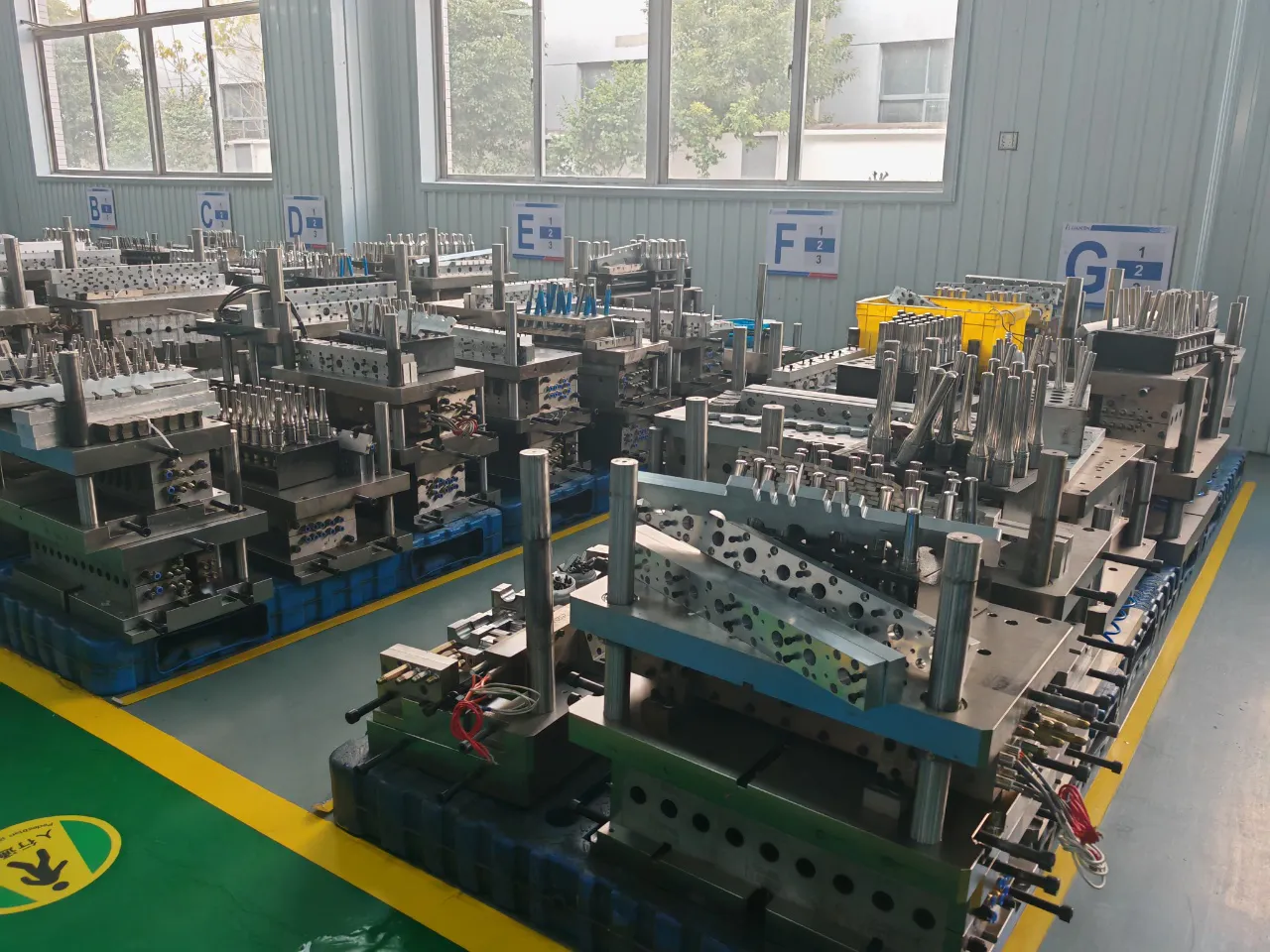
El Moldes de acero inoxidable S136 — producido internamente con compatibilidad entre los formatos de molde ASB-12M, Aoki 250 y ASB-70DPH — proporciona las dimensiones de la cavidad y la geometría del canal de enfriamiento que definen la precisión de la forma de la botella final y el tiempo de ciclo. La combinación del acero para herramientas S136 de alta dureza (HRC 50–52 en condiciones de trabajo), excelente pulibilidad y resistencia a la corrosión lo convierte en el estándar de la industria para moldes de botellas transparentes donde los defectos superficiales serían visibles en el envase terminado. Los husillos de avance NSK Japan en los ejes de rotación de la plataforma giratoria y de indexación de la estación proporcionan la precisión de posicionamiento (±0,02 mm) que garantiza que la preforma se presente en cada estación en una posición axial precisamente repetible, eliminando la desalineación de la preforma que causa una distribución asimétrica de la pared en la botella soplada.
6. Sistema de materiales: resinas adecuadas para la reducción de peso de ISBM
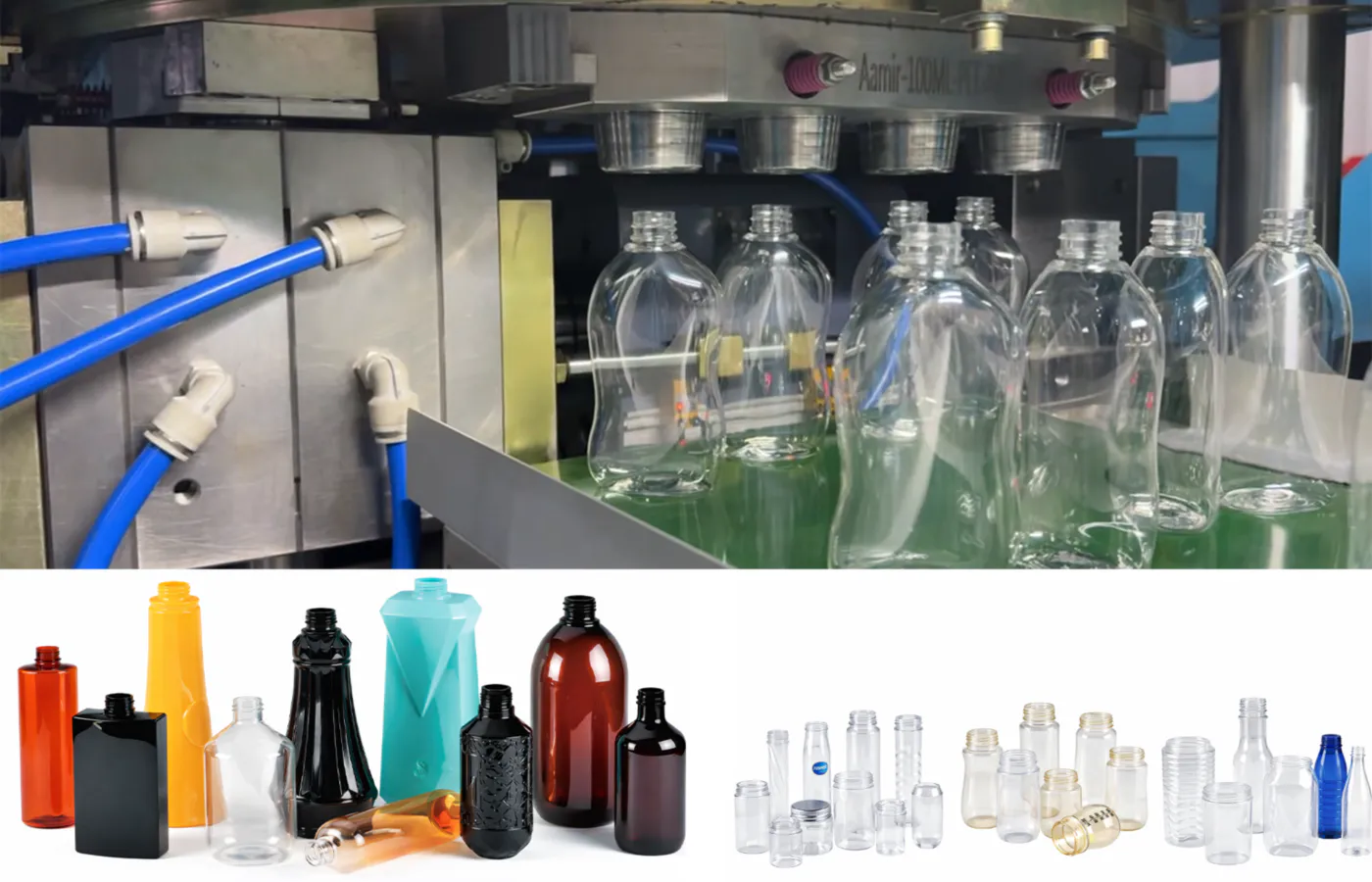
La elección de la resina determina la profundidad de aligeramiento alcanzable, la eficiencia de orientación y el perfil de cumplimiento normativo del envase terminado. Cada material procesado por un máquina de moldeo por inyección, estirado y soplado Tiene un rango característico de relación de estiramiento dentro del cual la orientación biaxial es productiva en lugar de destructiva.
PET (tereftalato de polietileno)
El PET es el material dominante para envases de bebidas, alimentos y productos de cuidado personal. Responde excepcionalmente bien a la orientación biaxial en el proceso ISBM: la cristalización inducida por la tensión durante el estiramiento produce una pared semicristalina con una resistencia a la tracción de 150–200 MPa, frente a los 50–80 MPa del PET amorfo. Este aumento de resistencia mecánica permite una reducción del espesor de pared de 20–35% en comparación con los envases soplados convencionales, manteniendo al mismo tiempo la resistencia al impacto y a la carga superior. El PET también ofrece excelentes propiedades de barrera contra el oxígeno y el CO₂ tras la orientación, lo que resulta relevante para aplicaciones de bebidas carbonatadas y alimentos sensibles al oxígeno.
PETG (PET con modificación de glicol)
El PETG permanece amorfo tras la orientación, pero ofrece una claridad y resistencia química excepcionales, lo que lo convierte en la opción preferida para envases primarios de cosméticos, productos de cuidado personal de alta gama y productos farmacéuticos. Es más dúctil que el PET, lo que significa que tolera mayores índices de estiramiento sin decoloración ni agrietamiento por tensión, algo fundamental para botellas con formas complejas y asimétricas donde resulta difícil lograr un adelgazamiento uniforme de la pared. El PETG es totalmente reciclable en el flujo de PET, cumpliendo así con el requisito de reciclabilidad al final de su vida útil, cada vez más explícito en la normativa colombiana sobre envases.
PP, PPSU, PC, Tritan, PLA
El PP se utiliza para envases de llenado en caliente y biberones debido a su compatibilidad con la esterilización. El PPSU y el PC se utilizan en biberones reutilizables de alta gama que requieren ciclos repetidos de esterilización por vapor. El Tritan (Eastman) y el PCTG son copolímeros libres de BPA que producen envases transparentes y resistentes a los impactos para el segmento premium. El PLA (ácido poliláctico) permite la producción de envases compostables para servicios de alimentación y aplicaciones de un solo uso, dirigidos a los programas municipales de compostaje de Bogotá y Medellín en Colombia. Cada uno de estos materiales tiene un rango específico de parámetros de inyección y estiramiento que los servocontroles programables de la máquina gestionan mediante recetas de procesamiento específicas para cada material.
7. Tratamiento de superficie: cómo lograr una estética superior con un menor espesor de pared.
Uno de los riesgos de diseño en la reducción de peso es que el menor espesor de la pared amplifica el impacto visual de los defectos superficiales: las líneas de flujo, las marcas de hundimiento, el velo de la compuerta y la distorsión óptica se hacen más evidentes en paredes más delgadas debido a que hay menos profundidad de material para difuminar la imperfección. El molde de acero inoxidable S136 utilizado en el proceso ISBM se pule hasta obtener un acabado de espejo óptico (Ra <0,1 μm) en la cavidad de la botella, lo que se transfiere directamente a la superficie exterior de la botella soplada. Debido a que la superficie de la botella se forma bajo presión de aire positiva contra la pared de la cavidad del molde —en lugar de por contacto con un mandril que deforma físicamente la superficie— la calidad del acabado es consistentemente reproducible de cavidad a cavidad y de inyección a inyección.
El perfil térmico controlado del proceso de un solo paso también elimina la turbidez inducida por la cristalización que afecta al moldeo por soplado y estiramiento con recalentamiento cuando las temperaturas del proceso varían: en la máquina ISBM, la preforma nunca se cristaliza antes del soplado, por lo que la pared de la botella permanece amorfa (para PET/PETG/Tritan) o solo alcanza la cristalinidad controlada inducida por la tensión que produce resistencia sin turbidez. Esta es la razón física por la que las botellas ISBM logran una mayor claridad óptica con un espesor de pared equivalente o menor que las botellas RSBM de dos pasos, un punto de calidad comercialmente relevante en el mercado colombiano de botellas para cosméticos y nutracéuticos de alta gama, donde la claridad es un indicador directo de la calidad del producto en la percepción del consumidor.
Los tratamientos superficiales posteriores al moldeo —tratamiento corona para la adhesión del etiquetado, energía superficial compatible con etiquetas de funda, recubrimiento de protección UV para envases farmacéuticos— pueden aplicarse en línea o fuera de línea. La energía superficial uniforme y la baja rugosidad de las botellas ISBM (en comparación con las equivalentes moldeadas por extrusión-soplado) reducen la potencia del tratamiento corona necesaria para la adhesión del etiquetado, lo que supone un ahorro energético indirecto que contribuye al perfil de sostenibilidad general de la máquina.
8. Grado medioambiental: la reducción de peso ISBM como herramienta de cumplimiento normativo.
El grado ambiental de un envase de plástico —su cumplimiento con las regulaciones aplicables sobre materiales, reciclabilidad y reducción de residuos— está directamente vinculado a su contenido de resina por unidad de volumen. Las botellas aligeradas producidas en un máquina de moldeo por inyección, estirado y soplado Obtienen mejores resultados en todos los indicadores principales de sostenibilidad utilizados en la legislación latinoamericana actual y futura sobre envases.
Colombia — Ley 1819 de 2016 y Resolución MADS 2019
El marco de gestión de residuos de envases de Colombia se basa en el Política de Gestión Integral de Residuos Sólidos y las obligaciones de responsabilidad extendida del productor en virtud de Resolución 1407 de 2018 del Ministerio de Ambiente y Desarrollo Sostenible (MADS), que establece objetivos de recogida y gestión de residuos de envases, incluidos los envases de plástico. Plan de Gestión Ambiental de Residuos de Envases y Empaques La ley exige a los productores de envases que demuestren objetivos progresivos de reducción de residuos. La reducción de peso disminuye directamente la masa de residuos de envases por unidad vendida, lo que contribuye al cumplimiento de estos objetivos. Además, la Ley 1819 de 2016 introdujo un impuesto a las bolsas de plástico; si bien no se aplica directamente a las botellas ISBM, establece una política que los analistas del sector prevén que se extienda a los envases de plástico de un solo uso en futuros ciclos legislativos. Los productores que utilizan la reducción de peso ISBM están preparando sus carteras de productos para esta probable expansión regulatoria.
Unión Europea — Reglamento de la UE sobre envases y residuos de envases (PPWR) de 2024
El Reglamento revisado de la UE sobre envases y residuos de envases, que entrará en vigor progresivamente a partir de 2025, establece requisitos mínimos de contenido reciclado (30% para 2030 en el caso de envases de plástico sensibles al contacto) y requisitos obligatorios de minimización de envases, que exigen que el peso y el volumen de los envases se reduzcan al mínimo necesario para garantizar la seguridad, la higiene y la funcionalidad. Las botellas de PET aligeradas ISBM que utilizan PET reciclado (rPET) en su formulación cumplen ambas dimensiones de este reglamento. Los exportadores colombianos que abastecen al mercado de la UE con productos alimenticios, bebidas o cosméticos envasados en botellas ISBM se benefician de este doble cumplimiento.
Estados Unidos — Legislación estatal sobre la Responsabilidad Extendida del Productor (REP) y contacto con alimentos de la FDA
Estados Unidos, entre ellos California (SB 54, 2022), Oregón y Washington, han promulgado leyes de responsabilidad extendida del productor que exigen que los envases de plástico alcancen porcentajes mínimos de contenido reciclado y cumplan con los estándares de reciclabilidad. Las botellas de PET de ISBM ya son compatibles con la infraestructura de reciclaje en la vía pública y cumplen con la normativa 21 CFR de la FDA para envases en contacto con alimentos, lo que las convierte en el formato de envase preferido para las exportaciones colombianas de alimentos y bebidas destinadas al mercado estadounidense.
Brasil — Acuerdo Setorial de Embalagens y Normas ABNT NBR
El acuerdo sectorial brasileño sobre residuos de envases (Acordo Setorial de Embalagens), en el marco de la Política Nacional de Resíduos Sólidos (PNRS — Lei 12.305/2010), exige a los productores participar en esquemas de logística inversa para envases. Las normas ABNT NBR para envases de plástico (incluida la NBR 13230 para el marcado de identificación de reciclabilidad) se aplican a las botellas ISBM. La reducción de la masa de resina por envase, lograda mediante la reducción de peso, disminuye la masa total de plástico que ingresa al flujo de logística inversa por unidad vendida, lo que representa un beneficio directo dentro del marco regulatorio contable brasileño.
9. Características operativas: ¿Qué define una producción de aligeramiento exitosa?
Una producción de aligeramiento en una máquina de moldeo por inyección, estirado y soplado Se diferencia de la producción estándar en varias dimensiones de parámetros del proceso. El espesor de la pared de la preforma es menor, lo que significa que el tiempo de llenado por inyección es más corto y el perfil de presión de inyección debe ajustarse para evitar inyecciones incompletas o rebabas. La ventana de acondicionamiento de temperatura es más estrecha: una preforma más delgada alcanza la temperatura de soplado más rápido y se enfría más rápido si el tiempo de permanencia en la estación es demasiado largo. La relación de estiramiento es mayor: el molde de soplado es proporcionalmente más grande en relación con el volumen de la preforma, lo que significa que la velocidad de aumento de la presión del aire de soplado debe calibrarse para evitar que la preforma se rompa en la zona de entrada antes de que la columna de aire se haya extendido por completo. Todas estas interacciones requieren que el sistema de servocontrol de la máquina sea capaz de almacenar y ejecutar recetas de procesamiento específicas para el material y el peso, y que el operador tenga acceso al conocimiento técnico para configurar estos parámetros correctamente.
Los parámetros operativos clave y sus rangos nominales para la producción de PET ligero en una máquina ISBM de 4 estaciones representativa se resumen en la tabla de especificaciones técnicas que figura a continuación. Estos parámetros sirven como punto de partida para el desarrollo del proceso; los ajustes finales para la producción se perfeccionarán durante un período de prueba del molde.
El consumo de energía es una característica operativa fundamental del proceso de un solo paso. Dado que la preforma nunca se enfría a temperatura ambiente para luego recalentarse, la energía térmica invertida en la plastificación de la resina se utiliza directamente en la fase de soplado: la máquina conserva eficazmente la entalpía del fundido en lugar de disiparla a temperatura ambiente y recuperarla con un horno infrarrojo. Esto se traduce en el ahorro energético ampliamente citado del proceso 40% en comparación con el RSBM de dos pasos para una producción equivalente. En un turno de 8 horas con una producción de 40 000 unidades, esta diferencia energética equivale a un ahorro de electricidad de aproximadamente 80-120 kWh; según las tarifas eléctricas industriales colombianas, esto representa una ventaja directa en los costos operativos que se acumula a lo largo de la vida útil de la máquina.
10. Modos de fallo típicos en la producción de botellas aligeradas ISBM y cómo prevenirlos.
Comprender los modos de fallo específicos de la producción de ISBM aligerados permite a los ingenieros de procesos diseñar rangos de parámetros robustos y especificaciones de materiales de entrada que evitan pérdidas de calidad durante el escalado. A continuación, se presentan los problemas más comunes, junto con sus causas raíz y las contramedidas recomendadas.
Fractura de la compuerta de preforma durante el estiramiento
La zona de entrada es el punto más delgado de la preforma y donde se concentra la mayor tensión durante la extensión axial de la varilla de estirado. Causa: Temperatura de acondicionamiento demasiado baja, velocidad de la varilla de estirado demasiado alta o pared de la zona de entrada demasiado delgada debido al diseño de la preforma. Solución: Aumentar el tiempo de permanencia en la estación de acondicionamiento, reducir la velocidad de aceleración de la varilla de estirado y especificar el espesor mínimo de la zona de entrada en el plano de la preforma.
Distribución no uniforme en la pared (base pesada / pared lateral ligera)
La fase de soplado finaliza en la base antes de que la pared lateral alcance el molde, lo que resulta en una base gruesa y una pared lateral delgada. Causa: La velocidad de aumento de la presión del aire de soplado es demasiado lenta, la temperatura de acondicionamiento es demasiado alta en la zona de la base o la carrera del núcleo de soplado es insuficiente. Solución: Calibrar los perfiles de flujo de la válvula Parker, reducir la temperatura de la zona de la base entre 3 y 5 °C y verificar la carrera del núcleo de soplado con respecto al plano del molde.
Fallo de carga superior en pruebas de apilamiento
La botella se deforma bajo carga de apilamiento antes de alcanzar el mínimo especificado (normalmente 100 N para una botella de PET de 500 ml). Causa: Orientación insuficiente: la temperatura de acondicionamiento supera el rango de estiramiento ideal, lo que reduce la eficiencia de alineación molecular. Solución: Reducir la temperatura de acondicionamiento entre 2 y 4 °C y verificar la cristalinidad de la botella mediante la medición de la densidad. Si se confirma una orientación insuficiente, reducir el espesor de la pared de la preforma para aumentar la relación de estiramiento.
Opacidad o blanqueamiento en la pared lateral de la botella
La pared lateral de la botella se ve blanca o turbia en lugar de transparente. Causa: Blanqueamiento por tensión debido al estiramiento por debajo de la temperatura de transición vítrea (temperatura demasiado baja) o sobrecristalización. Solución: Aumentar la temperatura de acondicionamiento entre 3 y 5 °C y verificar que la viscosidad intrínseca (IV) de la resina PET de entrada cumpla con las especificaciones; la resina con baja IV cristaliza más rápido y es más propensa a la turbidez a temperaturas de estiramiento estándar.
Desplazamiento dimensional del hilo del cuello
Las dimensiones de la rosca exceden la tolerancia del GPI (Glass Packaging Institute) o del estándar de acabado, lo que provoca fallos en la aplicación de la tapa en la línea de llenado. Causa: La temperatura del anillo del cuello supera las especificaciones o el inserto del anillo del cuello está desgastado. Medidas correctivas: Monitorear la temperatura del inserto del anillo del cuello; reemplazar los insertos según el intervalo recomendado por el fabricante; verificar las dimensiones del cuello cada hora con calibres de rosca.
11. Configuración recomendada: Adaptación de la máquina ISBM a su objetivo de aligeramiento.
Seleccionar el correcto máquina de moldeo por inyección, estirado y soplado La configuración para un programa de aligeramiento requiere adaptar la capacidad de gestión térmica, la cavitación y la precisión del accionamiento de la máquina a la combinación específica de peso objetivo de la botella, volumen de producción y tipo de resina. La siguiente guía abarca los escenarios más comunes que enfrentan los productores de envases colombianos y latinoamericanos.
Cosméticos y productos farmacéuticos: pequeño volumen, alta precisión.
Recomendado: EP-HGY50-V3-EV (3 estaciones, totalmente eléctrica). El accionamiento servoeléctrico proporciona el control de velocidad de inyección necesario para paredes delgadas de preformas (1,5–2,5 mm) en botellas especiales de pequeño diámetro. Se elimina la contaminación por aceite, fundamental para el envasado primario farmacéutico. El utillaje compatible con ASB permite la adaptación a las especificaciones del fabricante de equipos originales (OEM) cuando el diseño del molde ya está validado.
Cuidado personal y alimentos: volumen medio, reemplazo de ASB
Recomendado: HGY150-V4 o HGY150-V4-EV (4 estaciones). Compatible con el molde ASB-12M. El diseño de 4 estaciones proporciona una estación de acondicionamiento de temperatura dedicada para lograr la máxima uniformidad del espesor de pared en envases ligeros para cosméticos y alimentos. La variante con servobomba o totalmente eléctrica ofrece una reducción de energía de 30–40% en comparación con los modelos hidráulicos.
Bebidas y aceites comestibles: gran volumen y formato grande.
Recomendado: HGY250-V4 (compatible con ASB-70DPH) o HGY650-V4 para envases de galones y multilitros. La fuerza de cierre por inyección de 250 kN permite procesar los volúmenes de preforma más grandes necesarios para botellas de 2500 ml o más. Las configuraciones multicavidad (hasta 14 cavidades en el HGY250-V4) proporcionan el volumen de salida necesario para líneas de llenado de alta velocidad.
rPET y resinas de origen biológico: configuración que prioriza la sostenibilidad.
Recomendado: HGY150-V4-EV o HGY200-V4-EV (totalmente eléctrico). El rPET requiere un control más preciso de la temperatura de fusión para gestionar su mayor rango de viscosidad en comparación con el PET virgen; la unidad de inyección servoeléctrica lo proporciona. La eliminación del aceite hidráulico reduce el riesgo de contaminación al producir envases sensibles al contacto con rPET o PLA. Compatible con PLA para programas de envases compostables en la infraestructura municipal de compostaje de Bogotá y Medellín, Colombia.
12. Cinco ventajas clave del aligeramiento mediante ISBM en un solo paso frente a otros procesos alternativos.
1 — Eficiencia de orientación biaxial superior
La transición directa de la inyección al soplado-estirado, sin enfriamiento ni recalentamiento intermedios, preserva la ventana de movilidad molecular óptima para la orientación biaxial. Esto permite una orientación más profunda —cuantificada como un índice de cristalinidad más alto en PET— que el RSBM recalentado en dimensiones equivalentes de preforma y molde de soplado. El resultado es el máximo rendimiento mecánico alcanzable por unidad de masa de resina: una reducción del espesor de pared de 25–35% es sostenible en la producción, no solo en ensayos de laboratorio, debido a la consistencia térmica del proceso de un solo paso. proceso de moldeo por inyección, estirado y soplado es reproducible en cada ciclo.
2 — Ahorro de energía de hasta 40% en comparación con procesos de dos pasos
Eliminar el recalentamiento de la preforma elimina el mayor costo energético individual en el proceso de dos etapas: el horno infrarrojo consume entre 30 y 451 TP4T de la energía total de la máquina en RSBM. La máquina de una sola etapa conserva la entalpía de inyección y la utiliza directamente para el estirado y el soplado. Para un convertidor de empaques colombiano de tamaño mediano que opera una máquina de 4 estaciones dos turnos por día, este ahorro de energía reduce el consumo anual de electricidad entre 80 000 y 120 000 kWh, lo que representa una reducción directa de los costos operativos y una contribución significativa a los objetivos de reducción de la intensidad de carbono establecidos en los compromisos de Contribución Determinada a Nivel Nacional (NDC) de Colombia.
3 — Precisión superior en el acabado del cuello para cierres ligeros
Los programas de aligeramiento de envases suelen incluir tanto el tapón como la botella. Un tapón más ligero requiere una mayor precisión dimensional en el acabado de la botella para mantener la integridad del sellado con el mismo par de apriete. La retención continua del anillo del cuello de la máquina ISBM elimina la imprecisión de los procesos de dos pasos, lo que garantiza dimensiones de acabado del cuello dentro de las tolerancias estándar GPI o PCOP de forma consistente. Esta precisión es un requisito indispensable para los tapones de tara reducida que completan un programa integral de aligeramiento, logrando reducciones de resina combinadas de botella y tapón de 5 a 8 gramos por unidad en la categoría de 500 ml.
4 — Flexibilidad multimaterial para la reducción de peso en diversos segmentos de mercado
Un solo máquina de moldeo por inyección, estirado y soplado Puede procesar PET, PETG, PP, PPSU, PC, Tritan, PCTG, PLA y ABS modificando el perfil de temperatura del cilindro, el diseño del husillo y el utillaje del molde. Esta flexibilidad permite a los productores colombianos de envases implementar programas de aligeramiento en cosméticos (PETG), productos farmacéuticos (PP/PC), productos para bebés (Tritan, PPSU), bebidas (PET) y envases ecológicos (PLA) desde una única plataforma de maquinaria, sin necesidad de invertir en equipos separados para cada resina. La flexibilidad de producción y la eficiencia en la utilización de activos resultantes representan una ventaja directa en términos de inversión de capital en comparación con las máquinas específicas para cada proceso.
5 — Compatibilidad de moldes internos — Reemplazo validado de ASB y Aoki
Los productores que actualmente utilizan máquinas ASB o Aoki ISBM y desean actualizarse a una plataforma más eficiente energéticamente no necesitan volver a certificar sus moldes o diseños de preformas validados. Los modelos de máquinas HGY150-V4 (compatible con ASB-12M), HGY200-V4-B (compatible con Aoki 250) y HGY250-V4 (compatible con ASB-70DPH) aceptan los juegos de moldes existentes como un ajuste mecánico directo. Esto significa que los programas de aligeramiento desarrollados y validados en equipos ASB/Aoki existentes pueden transferirse a la nueva máquina sin repetir el ciclo completo de certificación de botellas, lo que supone una reducción significativa en el tiempo y el coste de la implementación de un programa de aligeramiento.
13. Escenarios de aplicación: donde la optimización de ISBM ofrece un valor cuantificable.
Envases de bebidas: agua y zumos en Colombia y Latinoamérica.
El mercado colombiano de agua mineral y zumos de frutas —dominado por marcas que operan en Bogotá, Medellín y la costa caribeña— representa el mayor volumen de aplicaciones para las botellas de PET aligeradas ISBM en el país. La estructura competitiva del mercado ejerce una presión constante sobre el transformador para reducir costes, mientras que los requisitos del INVIMA (Instituto Nacional de Vigilancia de Medicamentos y Alimentos) para materiales en contacto con alimentos exigen que el material de envasado mantenga su integridad de barrera a lo largo de la cadena de distribución. Las botellas de PET aligeradas ISBM cumplen con ambos requisitos: la reducción del espesor de la pared disminuye el coste de la resina entre 15 y 251 TP4T por unidad, mientras que la barrera de oxígeno mejorada gracias a la orientación biaxial prolonga la vida útil sin necesidad de un recubrimiento de barrera.
Cosméticos y cuidado personal: estética de envases de primera calidad a menor peso.
El mercado colombiano de cosméticos, el tercero más grande de Latinoamérica por valor, concentrado en Bogotá, Medellín, Cali y Barranquilla, exige envases que transmitan una calidad superior y que, al mismo tiempo, cumplan con los objetivos de costos del canal de farmacias de gran consumo. Los frascos de PETG y Tritan ISBM combinan una claridad cristalina (nivel de turbidez <1% en producción), una consistencia en el espesor de la pared (±0,05 mm en un proceso ISBM calibrado) y una capacidad de forma única (el proceso de un solo paso permite crear secciones transversales asimétricas y no redondas que el soplado por recalentamiento no puede replicar), en un formato ligero que reduce el peso del frasco sin disminuir su presencia visual ni su robustez estructural.
Productos farmacéuticos y nutracéuticos: envases que requieren cumplimiento normativo.
El envasado primario de productos farmacéuticos en Colombia está regulado por INVIMA bajo el Decreto 677 de 1995 y las normas técnicas subsiguientes derivadas del Capítulo de la USP (Farmacopea de los Estados Unidos) para materiales de envasado de plástico. Los frascos de PP ISBM con sistemas de revestimiento sellados por inducción son el formato estándar para formas farmacéuticas orales sólidas (tabletas, cápsulas) en el rango de 60 a 500 ml. La reducción de peso en los envases farmacéuticos está limitada por los requisitos de espesor mínimo de pared para el cumplimiento de la tasa de transmisión de vapor de humedad (MVTR), pero la uniformidad del espesor de pared del proceso ISBM permite al diseñador especificar la pared mínima que cumple con los requisitos sin agregar un margen de seguridad para la variación del proceso, lo que es la vía para reducir el peso dentro del margen de cumplimiento.
Productos para bebés: biberones ligeros, libres de BPA y aptos para esterilización.
Los biberones y vasos para bebés fabricados con Tritan, PPSU o PP de grado médico en la máquina ISBM abastecen el mercado de productos premium para bebés en Colombia, Perú y Ecuador. El proceso de un solo paso es ideal para esta aplicación, ya que produce envases libres de BPA sin riesgo de contaminación por aceite (en las variantes totalmente eléctricas) y con un espesor de pared uniforme que garantiza una distribución homogénea del calor durante la esterilización por vapor, evitando así el agrietamiento por estrés térmico inducido por puntos calientes que provoca fallas prematuras en biberones con paredes irregulares.
Aceites comestibles y condimentos: comportamiento estructural en muros aligerados
Los envases de aceite comestible de entre 1 y 5 litros son estructuralmente exigentes: la botella debe soportar el apilamiento por carga superior en los centros de distribución, la presión sostenida del líquido viscoso durante la inversión y el dispensado, y los impactos por caída sobre suelos de cerámica y hormigón en cocinas domésticas. Las configuraciones HGY200-V4-B y HGY250-V4, con fuerzas de cierre por inyección de 300 kN y fuerzas de cierre por soplado de 200-250 kN por lado, producen envases de PET biaxialmente orientados en este rango de tamaño con espesores de pared entre 20 y 30% inferiores a los de sus equivalentes moldeados por soplado y extrusión, superando al mismo tiempo su rendimiento estructural, lo que constituye la base física del caso comercial para la reducción de peso mediante ISBM en esta categoría.
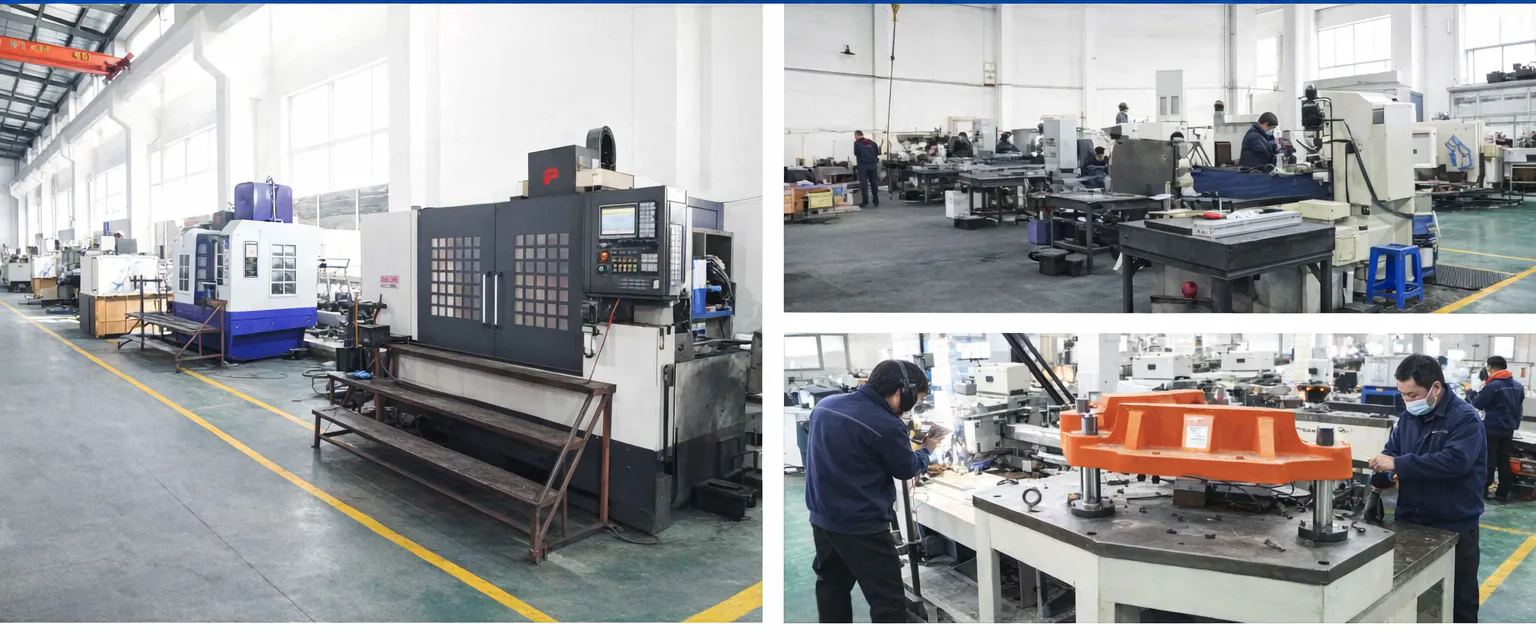
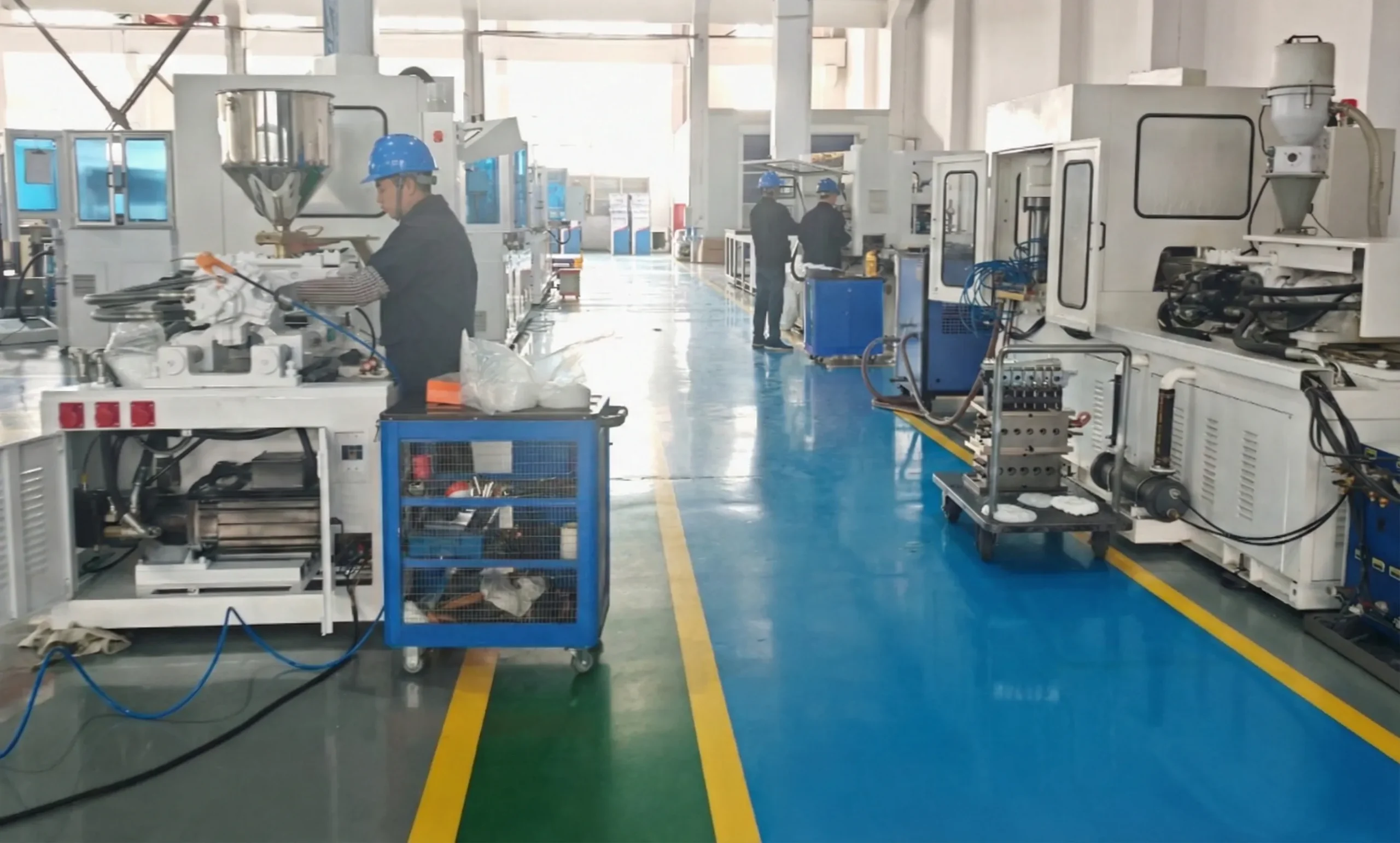
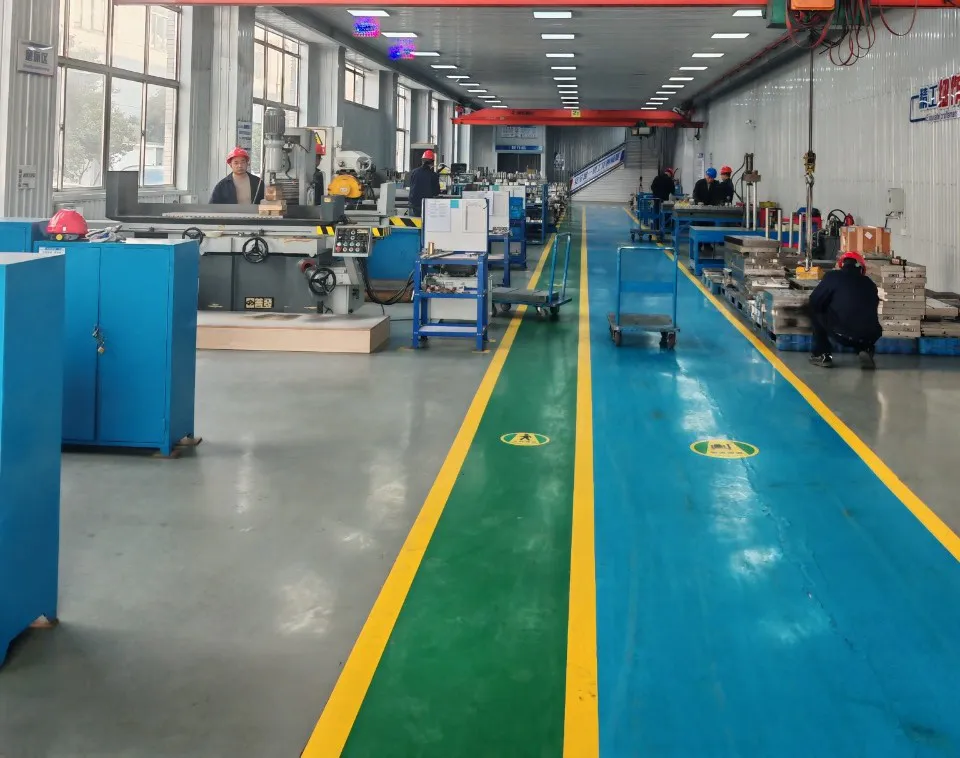
Taller
Preguntas frecuentes — Tecnología de aligeramiento de ISBM
P1. ¿Qué es una máquina de moldeo por soplado y estirado por inyección y en qué se diferencia de una máquina de moldeo por soplado estándar?
Un máquina de moldeo por inyección, estirado y soplado Integra el moldeo por inyección de la preforma, el estiramiento axial de la preforma con una varilla de estiramiento y la expansión radial por soplado de la preforma en la botella final, todo dentro de una sola máquina rotativa, sin liberar la preforma entre operaciones. Una máquina de moldeo por soplado y extrusión estándar no produce una preforma por inyección; en su lugar, extruye un tubo de preforma continuo que luego se sujeta y se sopla. Debido a que la extrusión no produce una preforma con espesor de pared controlado, no puede lograr la orientación biaxial que hace posible la reducción de peso ISBM. El proceso ISBM de un solo paso logra consistentemente un peso de botella entre 20 y 351 TP4T menor que el moldeo por soplado y extrusión para requisitos de rendimiento estructural equivalentes.
P2. ¿Qué proveedor de máquinas de moldeo por inyección-soplado-estirado ofrece la mejor compatibilidad de reemplazo de moldes ASB y Aoki para el mercado latinoamericano?
La serie de máquinas descrita en onestepblowmachine.com ofrece compatibilidad documentada con los formatos de molde ASB-12M (HGY150-V4), Aoki 250 (HGY200-V4-B) y ASB-70DPH (HGY250-V4). Esta compatibilidad se verifica mediante estudios dimensionales de las dimensiones de la interfaz de la pila de moldes, no solo mediante afirmaciones generales. Antes de comprar una máquina de reemplazo para una instalación ASB o Aoki existente, solicite la documentación de compatibilidad de moldes del fabricante y, si es posible, una prueba de molde con sus herramientas específicas; cualquier prueba creíble fabricante de máquinas de moldeo por soplado y estirado por inyección apoyará esta solicitud de validación.
P3. ¿Qué materiales puede procesar una máquina de moldeo por soplado y estirado por inyección de un solo paso para envases farmacéuticos producidos en Colombia?
Para envases farmacéuticos producidos en Colombia bajo la supervisión del INVIMA, los materiales más comúnmente procesados en una máquina ISBM de un solo paso son PP (para frascos de formas farmacéuticas orales sólidas: tabletas y cápsulas), PET (para envases farmacéuticos líquidos), PETG (para envases sin etiqueta de alta transparencia) y PC o PPSU (para frascos de jarabe multiuso que requieren esterilización repetida en autoclave). Se recomienda la variante de máquina totalmente eléctrica (HGY150-V4-EV o HGY200-V4-EV) para aplicaciones farmacéuticas, ya que elimina el aceite hidráulico del entorno de la máquina, lo que reduce el riesgo de contaminación y simplifica la documentación de cumplimiento de las Buenas Prácticas de Fabricación (BPF) según los requisitos de auditoría de instalaciones del INVIMA.
P4. ¿Cómo reduce el consumo de energía el proceso de moldeo por soplado y estirado por inyección en un solo paso y cuál es el ahorro energético típico para una planta de envasado colombiana?
El ahorro de energía en un solo paso proceso de moldeo por inyección, estirado y soplado La ventaja de la tecnología RSBM de dos etapas frente a la de dos etapas proviene de dos fuentes: (1) la eliminación del horno de recalentamiento de preformas por infrarrojos, que normalmente consume entre 30 y 451 TP4T de la energía total de la máquina de dos etapas; y (2) el uso de accionamientos servoeléctricos o servobombas en lugar de bombas hidráulicas de desplazamiento constante, que reducen el consumo de energía del accionamiento entre 30 y 501 TP4T en comparación con los hidráulicos. En conjunto, una máquina ISBM servo bien especificada logra un consumo de energía aproximadamente 401 TP4T menor por unidad producida en comparación con una línea RSBM hidráulica estándar de dos etapas de producción equivalente. Para una planta de envasado colombiana con una tarifa industrial de 0,55 a 0,65 COP/kWh, esto corresponde a ahorros anuales significativos que pueden cuantificarse con precisión a partir de los datos de consumo de energía actuales de la planta.
P5. ¿Cuál es el espesor mínimo práctico de pared que se puede lograr para una botella de agua PET de 500 ml en una máquina de moldeo por soplado y estirado por inyección de un solo paso?
El espesor mínimo práctico de la pared lateral para una botella de agua PET de 500 ml en una máquina ISBM de un paso bien ajustada es de aproximadamente 0,20–0,25 mm, sujeto a la geometría de la botella (relación de aspecto, ángulo del hombro y configuración del panel) y la viscosidad intrínseca (IV) y las características de nucleación de la resina PET. Lograr este mínimo requiere: PET IV ≥ 0,78 dl/g, espesor de pared de la preforma ajustado con precisión a la relación de estiramiento objetivo, temperatura de la estación de acondicionamiento dentro de ±1 °C del valor de desarrollo y tasa de aumento de la presión del aire de soplado calibrada al volumen de la cavidad de soplado. En un entorno de producción (en comparación con las condiciones de laboratorio), un mínimo práctico realista que mantiene un rendimiento >97% es de 0,23–0,28 mm de pared lateral para geometrías de botellas estándar.
P6. ¿Cómo mejora la variante de máquina ISBM totalmente eléctrica la capacidad de aligeramiento en comparación con los modelos hidráulicos?
El totalmente eléctrico máquina de moldeo por inyección, estirado y soplado La variante EV utiliza servomotores eléctricos para todos los ejes de movimiento (inyección, sujeción, estiramiento e indexación de la plataforma giratoria) en lugar de cilindros hidráulicos para los movimientos principales. El accionamiento eléctrico proporciona un control de velocidad y posición de bucle cerrado con una repetibilidad de ±0,1% frente a ±1–3% para los sistemas hidráulicos. Para la producción de productos ligeros, esta diferencia de precisión es crucial en la estación de inyección: un control más estricto del peso de la inyección significa que el espesor de la pared del cuerpo de la preforma varía menos entre inyecciones, lo que se traduce en relaciones de estiramiento más consistentes y una distribución de pared más uniforme en la botella final. En el extremo más ligero (por debajo de 0,30 mm de espesor de pared lateral), la precisión de inyección de la máquina totalmente eléctrica suele ser el factor clave que permite un rendimiento de producción sostenido viable donde las máquinas hidráulicas con servobomba resultan insuficientes.
P7. ¿Qué certificaciones y estándares de calidad debe proporcionar un proveedor de maquinaria ISBM para abastecer a industrias reguladas en Colombia?
Para el suministro de máquinas de moldeo por inyección-estirado-soplado Para la producción de envases para aplicaciones farmacéuticas, alimentarias o cosméticas en Colombia bajo la regulación INVIMA, los documentos clave del proveedor son: marcado CE (para el cumplimiento de la seguridad eléctrica con las normas IEC, aceptadas como equivalencia técnica por las normas técnicas colombianas en ausencia de una norma nacional específica de seguridad de maquinaria); certificación del sistema de gestión de calidad ISO 9001 que cubre el proceso de fabricación de la maquinaria; documentación del protocolo FAT (Prueba de Aceptación en Fábrica) que incluye la verificación dimensional de los componentes críticos; y declaraciones de conformidad de materiales para los componentes de la maquinaria en contacto con el flujo de aire y cualquier zona de proximidad potencial al contacto con alimentos. Para los productores farmacéuticos, el apoyo de la documentación GMP (Buenas Prácticas de Fabricación), que incluye una plantilla de protocolo de Calificación de Diseño (DQ) y Calificación de Instalación (IQ), por parte del fabricante de la maquinaria reduce la carga de documentación de validación a nivel de planta.
P8. ¿Cuánto tiempo lleva el desarrollo del molde para un nuevo diseño de botella ligera en una máquina de moldeo por soplado y estirado de inyección de un solo paso, y cuál es el plazo de entrega típico para la cotización?
El plazo de desarrollo del molde para un nuevo diseño de botella en una máquina ISBM de un solo paso suele oscilar entre 30 y 60 días desde la aprobación del plano final hasta la entrega de la primera muestra, dependiendo de la complejidad del molde y el número de cavidades. Esto incluye la fabricación del inserto del molde de inyección, el mecanizado de la cavidad del molde de soplado en acero S136, el pulido posterior al mecanizado, el montaje y la prueba inicial de la máquina en la fábrica. Para utillaje de repuesto compatible con ASB o Aoki, donde el diseño de la preforma ya está validado, el plazo puede reducirse a entre 20 y 35 días, ya que solo los componentes del molde de soplado requieren una nueva fabricación. El plazo de entrega de la cotización de la máquina suele ser de 3 a 5 días hábiles a partir de la recepción de su brief de producción (volumen de botellas, material, objetivo de producción anual y formato actual de la máquina). Póngase en contacto directamente con el equipo de onestepblowmachine.com para obtener una cotización específica para su proyecto.
Editor: PXY