A practical technical resource for pharmaceutical manufacturers, packaging engineers, and procurement teams worldwide — covering how injection blow moulding machines produce compliant oral liquid medicine containers, what machine configurations and material systems are appropriate, and how production satisfies GMP regulatory requirements across global markets.
Oral liquid medicines — syrups, suspensions, oral solutions, antacid preparations, paediatric formulations, and cough preparations — represent one of the largest and most consistently growing segments of the pharmaceutical packaging market. The bottles that contain these products must satisfy a demanding set of requirements: they must be compatible with the specific drug formulation chemistry, they must provide adequate barrier performance to protect active ingredients from oxygen and moisture ingress, they must accommodate child-resistant closures that comply with safety regulations in major markets, and they must maintain neck finish dimensional integrity over the shelf life of the product in conditions that range from controlled pharmaceutical warehouses to home bathroom cabinets in tropical climates.
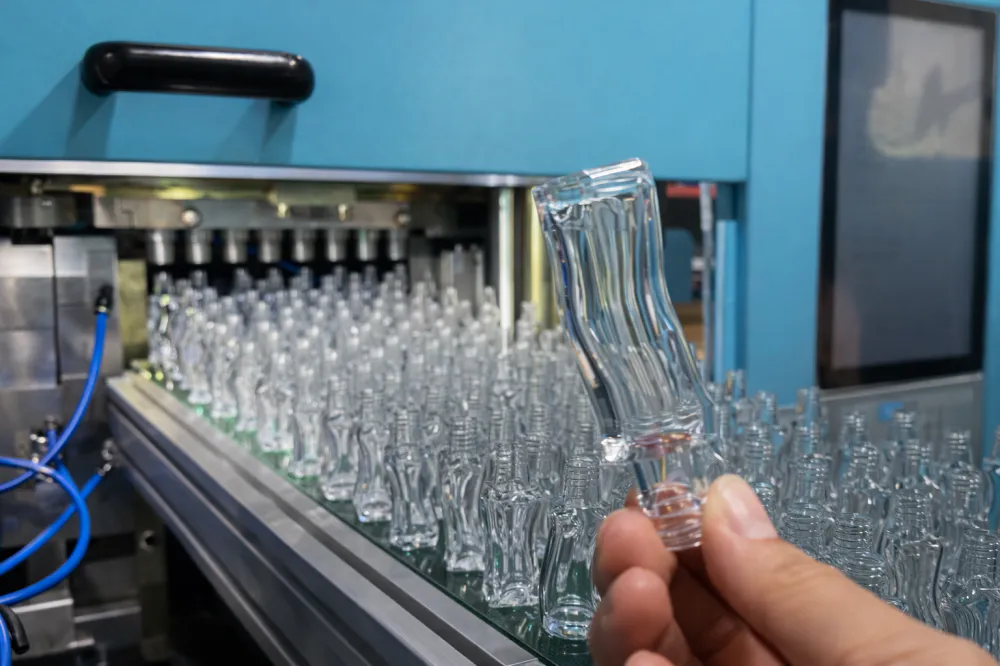
Yang injection blow molding machine — particularly the one-step injection stretch blow moulding configuration — has established itself as the preferred production technology for pharmaceutical oral liquid containers across a broad range of volume formats and dosage form types. The process combines the neck finish precision of injection moulding with the bottle body production efficiency of stretch blow moulding, eliminates the preform handling and storage steps that introduce contamination risks in two-step systems, and produces containers with the wall thickness consistency and optical clarity that pharmaceutical oral liquid packaging quality standards require. This article explains how these machines work for oral liquid medicine container production specifically, what machine features matter most for this application, and what regulatory compliance looks like across the major pharmaceutical markets where these machines are deployed.
Machine specifications and product parameters referenced throughout this article are drawn from the real product range available on this site. Where specific model parameters are cited, they reflect documented machine data rather than general estimates.
1. What Oral Liquid Medicine Containers Must Deliver — The Technical Requirements
Before selecting an injection blow molding machine for oral liquid pharmaceutical containers, it helps to understand the full set of performance requirements that the container must meet — because different requirements drive different machine configuration and material decisions. Oral liquid pharmaceutical containers span a wide range of volumes and dosage form types, and the performance requirements shift meaningfully between a 30 ml paediatric antibiotic suspension and a 500 ml antacid preparation.
Chemical Compatibility
The container material must not interact with the drug formulation over the stated shelf life — neither absorbing active ingredients from the product nor leaching extractable substances into it. Oral liquid pharmaceutical formulations cover a wide chemical range: aqueous and hydroalcoholic solutions, suspensions in glycerol or propylene glycol vehicles, formulations with preservatives (parabens, benzyl alcohol, sodium benzoate), and preparations containing solubilisers (polysorbates, PEG). Each formulation requires compatibility testing with the specific resin grade and moulding process used in the container production.
Oxygen Barrier Performance
Many oral liquid pharmaceutical products contain active ingredients sensitive to oxidative degradation — vitamins, certain antibiotics, plant extracts, and iron preparations among them. Biaxially oriented PET produced in a one-step mesin pengacuan tamparan regangan suntikan provides oxygen barrier performance that significantly exceeds unoriented PET and most other commonly used oral liquid packaging plastics. The orientation-derived oxygen transmission rate improvement is a meaningful performance advantage for formulations with oxidation-sensitive actives and supports extended shelf life claims that reduce product waste and manufacturing frequency.
Child-Resistant Closure Compatibility
Oral liquid pharmaceutical preparations in many markets are subject to mandatory child-resistant packaging requirements — particularly those containing active ingredients at concentrations that pose significant risk to young children if accidentally ingested. The neck finish of the container — its outer diameter, thread profile, and sealing land geometry — must be manufactured to tolerances tight enough to engage consistently with the child-resistant closure mechanism. The one-step injection blow moulding process forms the neck finish by injection moulding, maintaining dimensional tolerances of ±0.1 mm on thread OD that closure manufacturers specify for reliable push-and-turn or squeeze-and-turn engagement.
Dosing Accuracy Support
Oral liquid medicines are frequently dosed by volume using measuring cups, oral syringes, or calibrated droppers — and the accuracy of the delivered dose depends partly on the clarity and volume graduation of the container. Biaxially oriented PET bottles produced on an mesin pengacuan tamparan regangan suntikan achieve the optical clarity that allows patients and caregivers to read volume graduations printed or moulded into the bottle body. Consistent wall thickness distribution, a direct outcome of the one-step process’s precise temperature conditioning stage, ensures that any in-mould volume graduation marks align correctly with the actual fill level across production batches.
2. Why the One-Step Injection Stretch Blow Moulding Machine Process Suits Oral Liquid Pharmaceutical Containers
Several characteristics of the one-step mesin pengacuan tamparan regangan suntikan process make it particularly appropriate for pharmaceutical oral liquid container production. These are not peripheral benefits — they directly address the most critical performance and compliance requirements of the application.
Neck finish formed by injection, not by blowing. The neck of an oral liquid medicine bottle carries the dimensions that determine whether the child-resistant closure works correctly, whether the tamper-evident band engages properly, and whether the measuring cup or dosing device fits securely without leakage. In the one-step process, the neck is formed during the injection moulding station and remains unchanged through the stretch-blow phase. This means that neck outer diameter, thread pitch, and sealing land dimensions are as consistent as the injection mould itself — typically within ±0.1 mm on a well-maintained mould. Extrusion blow moulding forms the neck from an extruded parison, which is more susceptible to temperature and extrusion rate variation that can shift neck dimensions outside the closure manufacturer’s fitment tolerance band.
Closed-loop production eliminates preform storage contamination. For pharmaceutical oral liquid containers, contamination of the bottle interior — whether by airborne particulates during preform storage, by operator contact during transfer, or by chemical residues from storage bags — is a production quality issue that requires investigation and potentially rejection of affected batches. The one-step injection blow moulding machine eliminates the preform storage and transfer steps entirely: from the moment the plastic enters the barrel as granules to the moment the finished bottle exits the takeout mechanism, the material moves through a continuous, enclosed cycle within a single machine. This structural contamination control is documentable in the process risk assessment required for GMP pharmaceutical equipment qualification.
Biaxial orientation improves barrier and mechanical performance simultaneously. In the injection stretch blow molding process, the biaxial stretching of the PET preform during the blow phase aligns the polymer chains in both axial and hoop directions. This orientation improves oxygen barrier performance — relevant for oxidation-sensitive oral liquid actives — and significantly increases the impact resistance and compressive strength of the bottle wall. For oral liquid containers that will be packed in cartons, shipped in palletised cases, and handled by pharmacists and patients throughout their distribution life, the mechanical robustness conferred by biaxial orientation reduces breakage rates compared to unoriented alternatives. These performance advantages are achieved within the same cycle that produces the bottle, without any additional processing step.
3. Machine Manufacturing Structure — Key Components for Oral Liquid Medicine Container Production
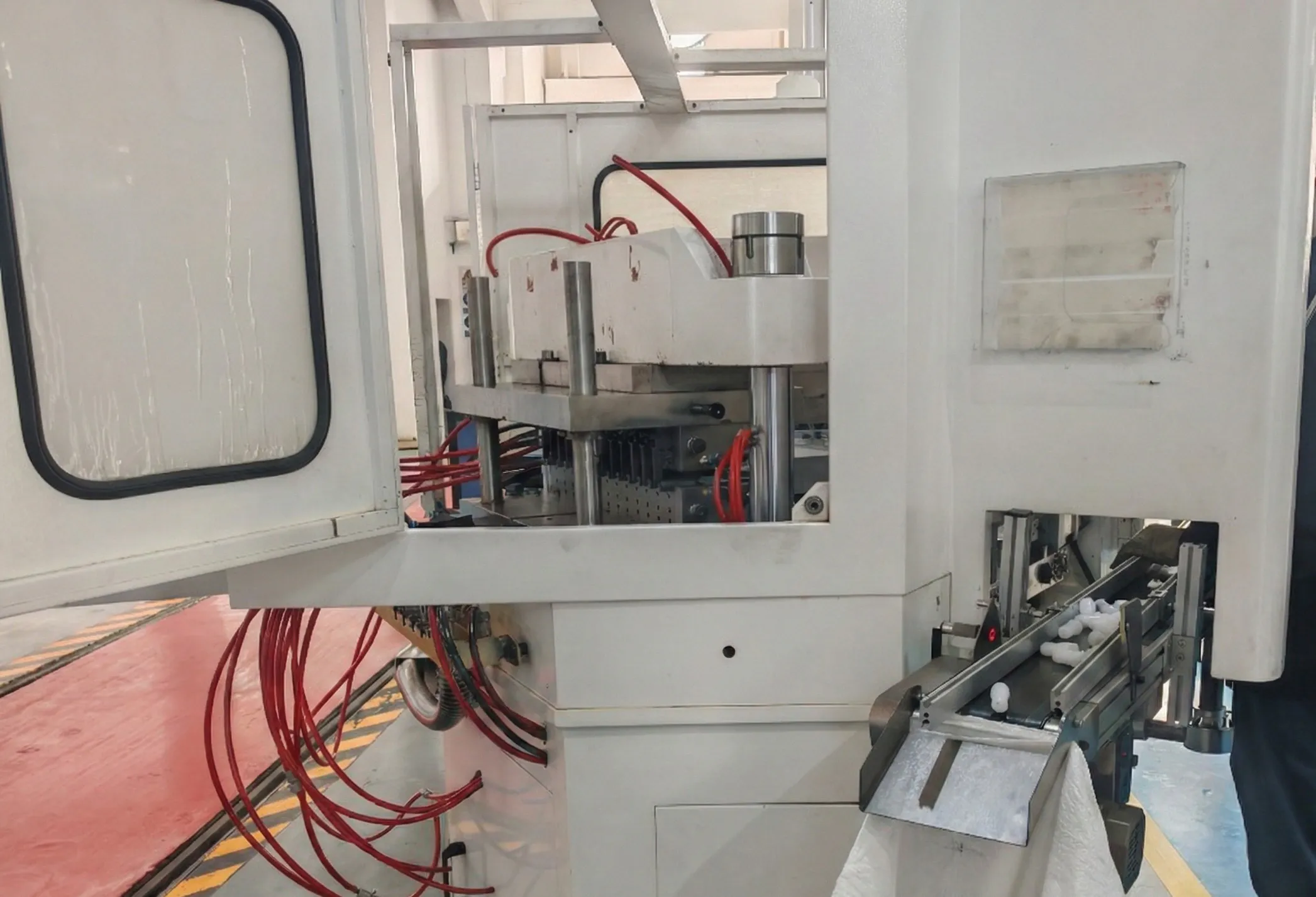
Producing pharmaceutical oral liquid containers on an injection blow molding machine in a GMP environment requires machine components that are designed for the precision, consistency, and documentation requirements of pharmaceutical production. The following covers the structural elements most relevant to oral liquid pharmaceutical container manufacturing.
Injection Unit — Screw, Barrel, and Melt Consistency
The injection unit determines the consistency of the preform weight from cycle to cycle, which in turn determines the wall thickness distribution and dimensional consistency of the finished oral liquid bottle. Barrels manufactured from 38CrMoAlA nitrided steel with surface hardness of 900–1000 HV provide the wear resistance needed for high-volume pharmaceutical production runs without dimensional change in the barrel bore that would affect shot-to-shot volume consistency. Nano far-infrared energy-saving heating rings deliver uniform thermal energy along the barrel length, reducing the barrel temperature variation that is a primary cause of preform weight scatter in less well-engineered machines. Screw diameters across the product range span 40 mm to 60 mm, with theoretical injection volumes from 188 cm³ to 480 cm³, covering the preform weight ranges needed for oral liquid containers from 30 ml to 500 ml at various cavity counts per cycle. NSK Japan ballscrews on precision axes ensure injection stroke repeatability within the validated tolerance band across millions of production cycles.
Temperature Conditioning Station
The temperature conditioning station is what distinguishes the four-station one-step process from three-station alternatives, and for pharmaceutical oral liquid containers its precision is directly relevant to wall thickness consistency. The conditioning station manages the thermal profile of the preform between injection and blow moulding — establishing the temperature window within which biaxial orientation occurs most uniformly and wall thickness distributes most evenly. For oral liquid bottles with volume graduation marks moulded into the body, wall thickness consistency is a critical quality attribute: if the wall is thicker in one area than another, the graduation marks no longer correspond accurately to the actual fill volume at that height. The integrated temperature control box used across the machine range provides high accuracy and stable zone management that supports this consistency requirement in pharmaceutical production environments.
Blow Mould and Neck Finish Tooling
The injection mould for the preform neck finish is the most dimensionally critical tool in the oral liquid container production set. For child-resistant closure compatibility — a regulatory requirement for many oral liquid pharmaceutical products globally — the neck outer diameter must be maintained within ±0.1 mm of the nominal specification throughout the mould’s production life. S136 stainless tool steel (AISI 420 equivalent, 13.6% chromium) provides the corrosion resistance and surface hardness combination appropriate for pharmaceutical production environments where cleaning agents and moisture are present. The blow mould body, typically from 7075-T6 aluminum for standard production volumes, must be polished to a finish that transfers the optical clarity to the bottle body surface needed for visual inspection of fill contents by pharmacists and patients in dispensing environments.
Servo Control Architecture
For GMP pharmaceutical oral liquid container production, a servo-driven machine architecture provides the documented process control that IQ/OQ/PQ qualification requires. Parker USA high-pressure valves at 2.0–3.5 MPa manage the blow air circuit, and the servo motor systems from Inovance and Yaskawa Japan drive every production axis with positional feedback. This means that every machine cycle generates a verifiable record of process parameter execution that can be compared against the validated limits established during OQ qualification. For pharmaceutical producers subject to FDA 21 CFR Part 11 electronic batch record requirements, or to EU GMP Annex 11 computerised systems validation, the machine’s PLC system provides the audit trail and data integrity foundation that these requirements impose.
| Component | Spesifikasi | Oral Liquid Container Relevance |
|---|---|---|
| Barrel | 38CrMoAlA nitrided, 900–1000 HV surface | Shot-to-shot preform weight consistency for volume graduation accuracy |
| Barrel heating | Nano far-infrared energy-saving rings | Uniform melt temperature; reduced degradation and acetaldehyde generation |
| Lead screws | NSK Japan, ISO C3, SUJ2 bearing steel | Injection stroke repeatability for GMP process parameter validation |
| Turntable drive | Yaskawa Japan servo + TSUNTIEN reducer | Neck concentricity for child-resistant closure fitment consistency |
| High-pressure valve | Parker USA, 2.0–3.5 MPa | Consistent blow pressure for uniform wall thickness distribution |
| Preform neck mould inserts | S136 stainless tool steel, Ra ≤ 0.05 µm | Neck OD tolerance ±0.1 mm for CRC fitment; corrosion resistance |
| Cooling water | 0.4–0.6 MPa, 20–25 °C via mold temp controller | Dimensional stability for volume graduation accuracy across production run |
| Hydraulic tubing | Imported Italian seamless steel tube | Fatigue resistance for 24/7 pharmaceutical production cycles |
4. Material System — Resin Selection for Oral Liquid Medicine Containers
The resin used for pharmaceutical oral liquid containers must satisfy a more structured set of requirements than general packaging resins. It must comply with the relevant pharmacopoeial standard for plastic pharmaceutical containers, demonstrate acceptable extractables and leachables behaviour under the relevant extraction conditions for the drug formulation, and be supplied with documented batch-level quality control data that can be included in the pharmaceutical manufacturer’s supplier qualification file. The following covers the resins most commonly processed on injection blow moulding machines for oral liquid pharmaceutical applications.
PET (food-grade or pharmaceutical-grade) is the most widely specified resin for oral liquid pharmaceutical containers globally. Pharmaceutical-grade PET typically carries USP <661> compliance documentation from the resin supplier, demonstrating that the material satisfies the identity, physicochemical, and biological reactivity tests required for Type I-equivalent plastic containers in pharmaceutical use. The biaxial orientation achieved in the one-step mesin pengacuan tamparan regangan suntikan process further reduces the surface area of amorphous polymer domains in the bottle wall — the regions where residual oligomers and additives are most concentrated and most mobile. This means that oriented PET bottles from a one-step machine typically show lower extractables under aqueous extraction conditions than unoriented PET bottles of the same wall thickness and resin grade, which is a directly demonstrable advantage in extractables and leachables studies submitted with pharmaceutical regulatory dossiers.
PP (polypropylene, pharmaceutical grade) is specified for oral liquid containers in applications where PET’s chemical resistance limitations become relevant — specifically where the formulation contains surfactants, organic solvents, or substances that interact with PET’s ester backbone. PP’s chemical resistance profile is broader than PET across pH extremes and organic vehicle concentrations, and PP has a lower extractables burden under aqueous extraction conditions, which is one reason it is the preferred resin for ophthalmic preparations and for certain injectable preparations where the extractables standards are most demanding. Processing PP on an injection blow moulding machine requires specific machine configuration — PP’s narrower biaxial orientation temperature window and higher melt viscosity compared to PET require adjusted screw geometry and temperature management. Confirm PP capability at the machine quotation stage before committing PP oral liquid applications to a given machine configuration.
PETG is occasionally specified for oral liquid pharmaceutical containers in applications where the process-independent clarity of amorphous PETG — which does not require precise biaxial orientation to achieve its transparency — is preferred over the process-dependent clarity of oriented PET. PETG’s inherent amorphous character means that it is less sensitive to temperature conditioning variation in the injection stretch blow moulding machine, which can be a practical advantage in facilities with variable process control maturity. Its extractables profile and pharmacopoeial compliance should be confirmed using the specific resin grade being specified, as the co-monomer content in PETG varies between suppliers and affects extraction behaviour.
| Resin | Pharmacopoeial Standard | Key Advantage for Oral Liquids | Key Limitation | Typical Volume Range |
|---|---|---|---|---|
| PETI | USP <661>, Ph. Eur. 3.1.5, JP | High clarity; biaxial orientation O₂ barrier; low acetaldehyde when well-controlled | Limited chemical resistance to certain organic vehicles; not autoclave-sterilisable | 30–500 ml; all standard formats |
| PP | USP <661> Type III, Ph. Eur. 3.1.6, IP | Broad chemical resistance; low aqueous extractables; steam-sterilisable grades available | Semi-transparent; specific machine configuration required | 30–250 ml; chemical-resistant applications |
| PETG | USP <661> (as modified PET); grade-specific compliance | Process-independent clarity; wider processing window | Lower O₂ barrier; less established regulatory precedent than PET or PP | 30–200 ml; clarity-critical specialty applications |
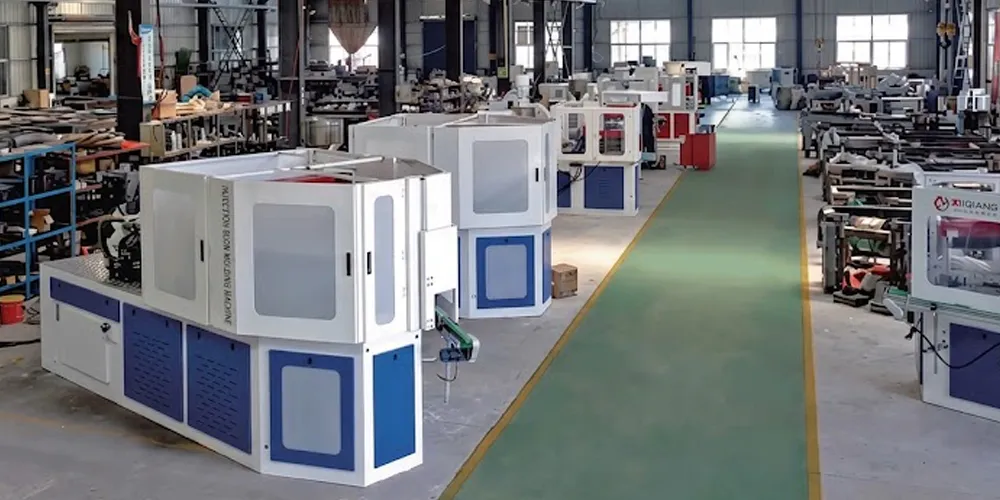
5. Featured Machine — EP-HGYS200-V4: Four-Station ISBM for Oral Liquid Medicine Container Production
The EP-HGYS200-V4 four-station injection blow moulding machine is a capable production platform for oral liquid pharmaceutical containers across the mid-range volume formats that characterise the majority of the global oral liquid pharmaceutical packaging market. With injection clamping force of 300 kN and blowing clamping force of 200 kN single side, the machine handles the neck finish precision requirements for both standard CRC (child-resistant closure) fitment and tamper-evident banding across the container size range from 30 ml to 2,500 ml depending on cavity count selection.
The machine uses 3 servo pump systems (Inovance / WEICHI) at 49.2 kW combined motor power, with screw diameter options of 40, 50, 55, and 60 mm covering theoretical injection volumes from 188 cm³ to 480 cm³ per shot. This range accommodates preform weights for oral liquid bottle formats from small paediatric dosing containers to large 500 ml multi-dose preparations within the same machine platform. The integrated temperature control system provides stable conditioning station management, and Parker USA high-pressure valves maintain blow air at 2.0–3.5 MPa for consistent biaxial orientation in oriented PET oral liquid containers. The machine operates at 370–400 V, occupies a footprint of 4800 × 2000 × 3200 mm, and weighs 13 tonnes — proportions that fit within standard pharmaceutical production floor plans without requiring structural modification.
For pharmaceutical oral liquid producers evaluating this machine as a mesin pengacuan tamparan regangan suntikan gantian for ageing equipment on existing production lines, the machine is compatible with Japanese ASB-12M mold format tooling, allowing validated preform and blow mold tooling to transfer to the new machine and reducing the scope of re-qualification compared to a complete new tooling programme. This is a commercially significant feature for pharmaceutical sites with established validated tooling assets that want to upgrade machine technology without triggering a full packaging revalidation cycle.
| Parameter | Unit | Nilai |
|---|---|---|
| Model | — | EP-HGYS200-V4 (4-station) |
| Compatible Material | — | PET / PETG |
| Diameter Skru (pilihan) | MM | 40 / 50 / 55 / 60 |
| Isipadu Suntikan Teori | CM³ | 188 / 310 / 380 / 480 |
| Daya Pengapit Suntikan | KN | 300 |
| Daya Pengapit Meniup | KN | 200 (sisi tunggal) |
| Kuasa Motor | KW | 49.2 |
| Kuasa Pemanasan | KW | 10 |
| Tekanan Udara Bertiup | MPa | 2.0–3.5 |
| Tekanan Air Penyejuk | MPa | 0.4–0.6 |
| Voltan | V | 370–400 |
| Machine Size (L×W×H) | MM | 4800 × 2000 × 3200 |
| Berat Mesin | T | 13 |
| ASB Mold Compatibility | — | ASB-12M format |
| Isipadu Botol Maks. | ML | Up to 2,500 (cavity-dependent) |
6. Oral Liquid Container Volume Formats and Machine Selection Considerations
Oral liquid pharmaceutical containers span a significant volume range — from 15 ml paediatric single-dose preparations to 500 ml multi-dose antacid preparations — and the appropriate injection blow molding machine configuration shifts across this range based on the clamping force requirements, injection volume, and production rate needed for the specific container. The following framework guides machine selection for common oral liquid container formats.
Small Format: 15–100 ml
Paediatric syrups, single-dose oral solutions, cough preparations, and iron supplements in this volume range typically run 4–6 cavities per cycle on compact three-station or four-station machines. The EP-HGY50-V3-EV three-station fully servo machine covers bottle diameters from 28–100 mm in this cavity count range. Neck finish precision is most critical in this format because child-resistant closure fitment tolerances leave less margin than in larger containers, and the relatively small preform means that any shot weight variation has a proportionally larger effect on wall thickness distribution and barrier performance.
Mid Format: 100–250 ml
The majority of oral liquid pharmaceutical SKUs globally fall in this volume range — standard antibiotic suspensions, multivitamin syrups, oral rehydration solutions, and liquid analgesic preparations. Four-station machines running 2–4 cavities per cycle at screw diameters of 50–55 mm are the standard configuration for this format. The EP-HGYS200-V4 and EP-HGYS150-V4 both serve this segment well, with injection clamping forces of 300 kN and 150 kN respectively providing the clamping capacity needed for the container geometries in this range. Wall thickness consistency for volume graduation accuracy is the primary machine quality driver in mid-format oral liquid containers.
Large Format: 250–500 ml
Large oral liquid containers — antacid preparations, disinfectant oral preparations, mineral supplements — in the 250–500 ml range typically run 1–2 cavities per cycle on larger four-station machines. The higher bottle weight means larger preform volumes (screw diameter 55–60 mm, theoretical injection volume 380–480 cm³) and higher blow clamping force requirements to prevent mould opening against the larger projected area. The EP-HGYS200-V4 at 300 kN injection clamping and 200 kN blow clamping addresses this format range. For bottles with volume graduation marks in large-format oral liquid containers, wall thickness uniformity in the body panel area is especially important because the graduation marks span a larger height range and any wall thickness inconsistency in the mid-body area produces a visible error at the graduation line level.
7. Global Regulatory Requirements for Oral Liquid Pharmaceutical Container Production
Oral liquid pharmaceutical containers are regulated as primary packaging components of medicinal products across all major markets — meaning that the regulatory requirements governing their production, material compliance, and documentation are determined by pharmaceutical law rather than by general food or consumer product packaging regulations. For operators of injection blow molding machines producing oral liquid medicine containers, this has practical implications for both the packaging material specification and the machine compliance documentation required in each market.
European Union — Ph. Eur., EU GMP, and Child-Resistant Packaging Directive
In the EU, oral liquid pharmaceutical containers are governed by European Pharmacopoeia (Ph. Eur.) Chapter 3.1 (plastic materials for pharmaceutical containers) and by the packaging material requirements of the marketing authorisation dossier submitted to the EMA or national competent authority. EU Directive 76/768/EEC (Cosmetics) does not apply — pharmaceutical products fall under Directive 2001/83/EC (medicinal products for human use), which incorporates by reference the packaging safety requirements of Ph. Eur. Child-resistant packaging for oral liquid medicines in the EU is governed by Directive 2012/19/EU and by specific guidance from the EMA on child-resistant packaging requirements for oral liquid preparations. The injection blow molding machine must carry CE marking under EU Machinery Directive 2006/42/EC for operation in EU GMP facilities. The 2022 revision of EU GMP Annex 1 has introduced enhanced contamination control requirements that are relevant to how the one-step process’s closed-loop production cycle is documented in the pharmaceutical manufacturer’s Contamination Control Strategy (CCS).
United States — FDA cGMP, USP, and PPPA
In the United States, oral liquid pharmaceutical containers must comply with USP General Chapter <661> (Plastic Packaging Systems and their Materials of Construction) for material identification and extractables testing, and USP <671> for container performance including light transmission and moisture permeation. The FDA’s 21 CFR Parts 210/211 cGMP regulations govern the pharmaceutical manufacturing process including packaging material testing and supplier qualification. Child-resistant packaging for oral liquid medicines in the US is governed by the Poison Prevention Packaging Act (PPPA) and the Consumer Product Safety Commission (CPSC) regulations at 16 CFR Part 1700, which specify the child-resistance performance criteria (failure rate for children under 5 years must be ≥80% unopened) that the closure-container system must demonstrate in standardised testing. This performance standard is directly dependent on neck finish consistency — which the injection moulding station of the one-step injection blow moulding machine delivers with the precision required for reliable CRC system performance.
India — CDSCO, Schedule M, and IP Standards
India’s pharmaceutical oral liquid container regulatory framework is administered by CDSCO under the Drugs and Cosmetics Act, with GMP requirements under Schedule M and packaging material standards under the Indian Pharmacopoeia (IP). India’s large generic medicine manufacturing sector — which supplies oral liquid preparations globally — creates significant production volume for pharmaceutical oral liquid containers, and Indian pharmaceutical manufacturers seeking WHO prequalification or US FDA or EU approval for their exported products must additionally meet the more stringent GMP and packaging material documentation requirements of those importing markets. This creates a practical requirement for injection blow moulding machine installations in India to be capable of generating the qualification documentation needed for multiple regulatory systems simultaneously — a consideration that should be raised with the machine supplier at the URS specification stage.
Brazil — ANVISA, Farmacopeia Brasileira, and Child Safety Regulations
ANVISA regulates pharmaceutical oral liquid containers under Resolution RDC 185/2001 and its updates, with material compliance against Farmacopeia Brasileira (FB) standards. Brazil’s Statute of the Child and Adolescent (ECA) and ANVISA Resolution RDC 46/2002 together govern child-resistant packaging requirements for oral liquid medicines containing potentially hazardous active ingredients, requiring that containers pass ABNT NBR-equivalent testing for child resistance performance. NR-12 machinery safety requirements apply to the injection blow moulding machine installation in Brazilian pharmaceutical production facilities. ANVISA GMP inspections increasingly align with WHO GMP standards, and pharmaceutical producers exporting from Brazil to regulated markets must demonstrate that their packaging material supplier qualification and production equipment validation meet the regulatory expectations of the destination market.
Southeast Asia — ASEAN Harmonisation and Country-Level Requirements
Within ASEAN, pharmaceutical product regulation follows a path toward harmonisation through the ASEAN Common Technical Dossier (ACTD) framework, but individual country-level agencies — Thailand’s FDA, Vietnam’s DAV, Indonesia’s BPOM, Malaysia’s NPRA, and the Philippines’ FDA — maintain their own national requirements for pharmaceutical packaging materials and production GMP. Oral liquid pharmaceutical container requirements in most ASEAN markets reference the ASEAN Common Technical Requirements (ACTRs) for pharmaceutical products, which in turn align broadly with ICH guidelines on packaging materials. For blow moulding machine installations in ASEAN pharmaceutical packaging facilities, CE marking on the machine provides a strong baseline for demonstrating machinery safety compliance to most ASEAN regulatory authorities, as their industrial safety frameworks typically reference or align with IEC and ISO standards.
| Market | Container Compliance Standard | CRC Regulation | Machine Compliance |
|---|---|---|---|
| EU | Ph. Eur. 3.1.x; Directive 2001/83/EC | EU Directive 2012/19/EU + EMA guidance | CE Machinery Directive 2006/42/EC; EU GMP Annex 11 |
| Amerika Syarikat | USP <661>, <671>; 21 CFR 211 | PPPA; 16 CFR Part 1700; CPSC testing | OSHA 29 CFR 1910; NFPA 79; NRTL cert |
| India | IP containers chapter; Schedule M | Drugs & Cosmetics Act provisions | BIS; industrial machinery standards |
| Brazil | Farmacopeia Brasileira; RDC 185/2001 | RDC 46/2002; ABNT equivalent testing | NR-12; ANVISA GMP RDC 204/2017 |
| ASEAN | ACTD framework; national pharmacopoeia ref | Country-level child-safety regulations vary | IEC/ISO aligned national standards; CE baseline |
Explore Injection Stretch Blow Moulding Machines for Oral Liquid Pharmaceutical Containers
From three-station compact units for paediatric oral liquid formats to four-station configurations handling high-volume syrup and multi-dose oral preparation containers — find the machine specification that fits your pharmaceutical production requirements.
Tentang Kami
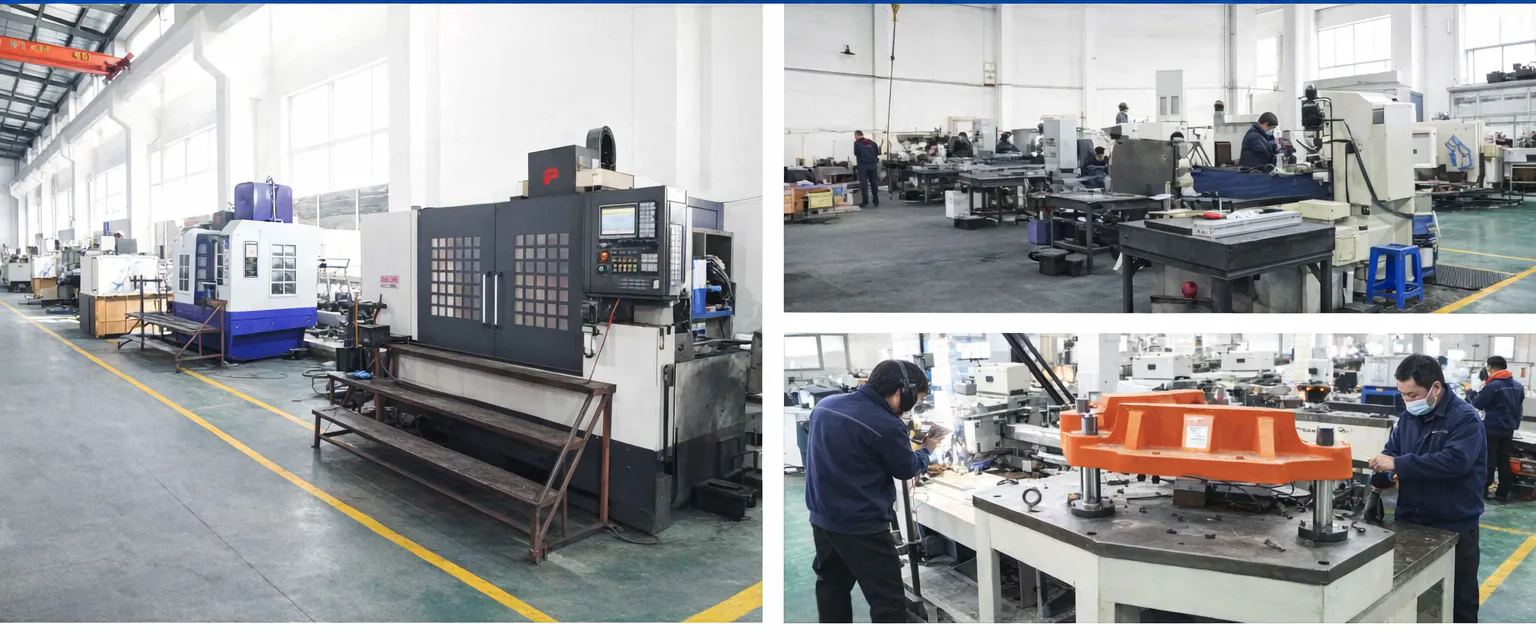
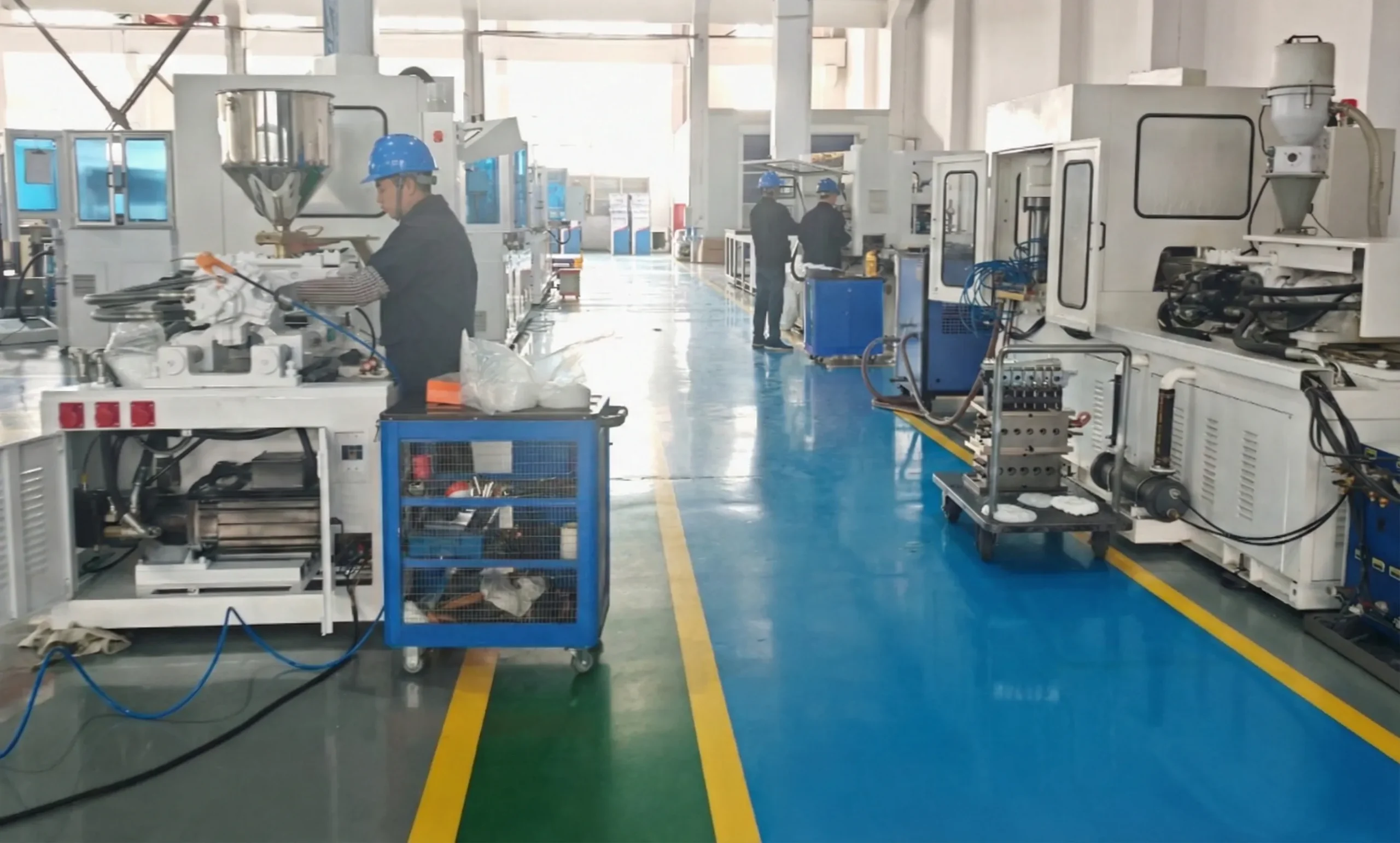
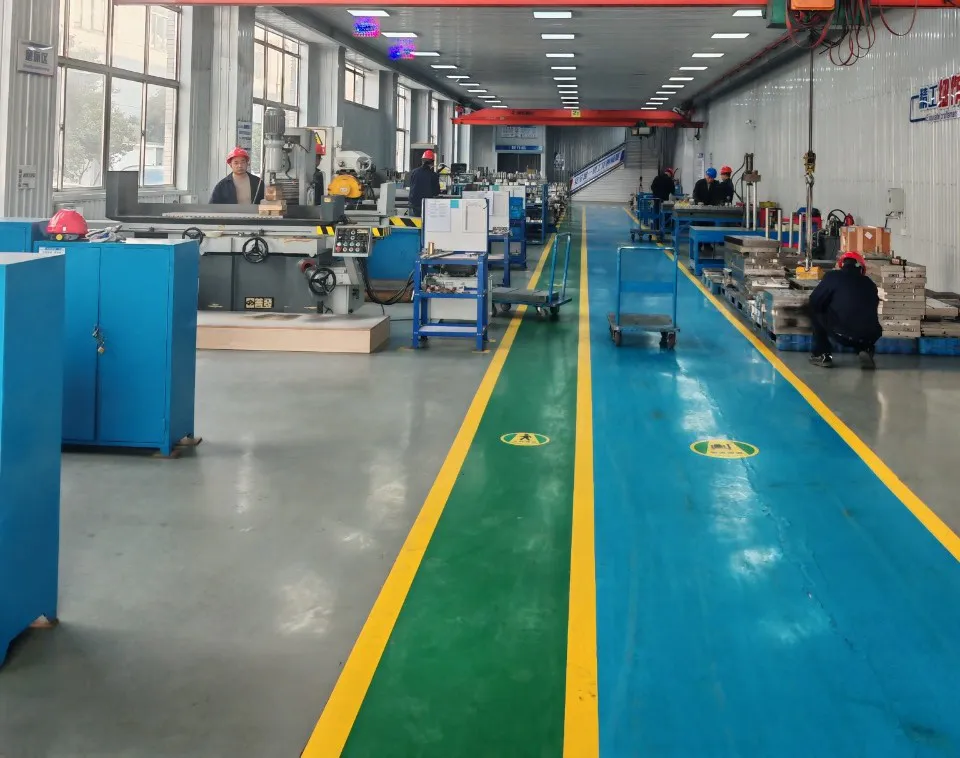
Our manufacturing base — covering more than 20,000 square meters — has more than two decades of accumulated experience in the development, production, and commissioning of one-step injection stretch blow moulding machines for pharmaceutical, cosmetic, food, and beverage packaging applications. The engineering team has filed multiple national patents in machine design and process control, and has developed machine configurations deployed in pharmaceutical oral liquid container production facilities across Asia, Europe, India, Brazil, the Middle East, and other regulated markets. ASB-12M mold format compatibility on qualifying machine models is a practically important feature for pharmaceutical producers transitioning between machine generations while preserving existing validated tooling assets.
For pharmaceutical oral liquid container applications, our technical support scope extends to User Requirements Specification development, instrument calibration certificate compilation, Functional Specification preparation, and guidance on the contamination risk assessment documentation appropriate for GMP pharmaceutical facility audits. Component choices throughout the machine range — 38CrMoAlA nitrided barrels, NSK Japan ballscrews, Parker USA high-pressure valves, S136 stainless mold steel — address the extractables, leachables, and equipment durability requirements that pharmaceutical container production imposes on production equipment.
Kedai Kerja
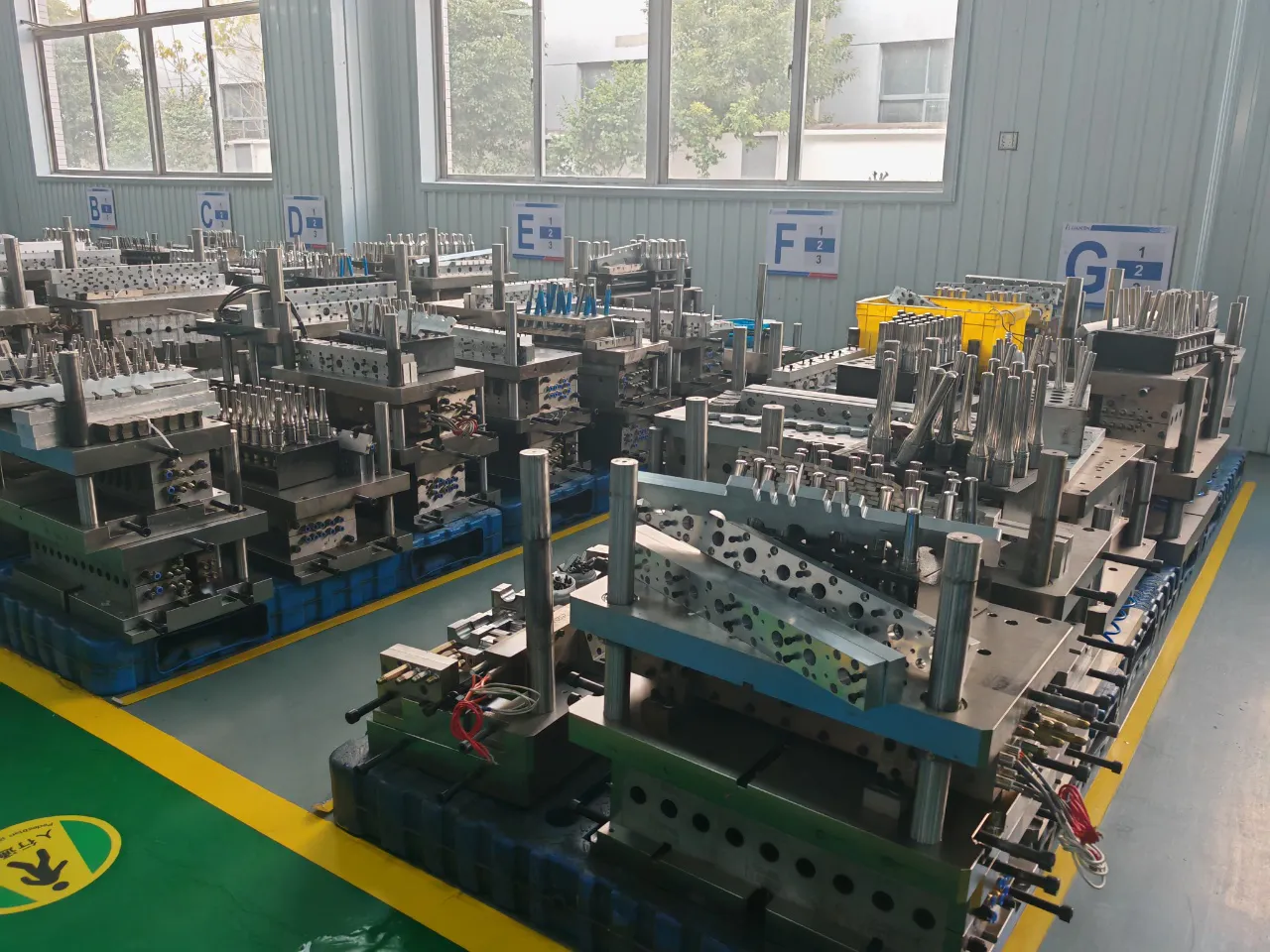
Related System Solutions for Oral Liquid Container Production
Consistent quality in oral liquid pharmaceutical container production depends on the entire production system — machine, compressed air supply, and mold temperature control — operating within the parameters defined during qualification. Two auxiliary solutions are directly relevant to maintaining the process consistency that pharmaceutical oral liquid container standards require.
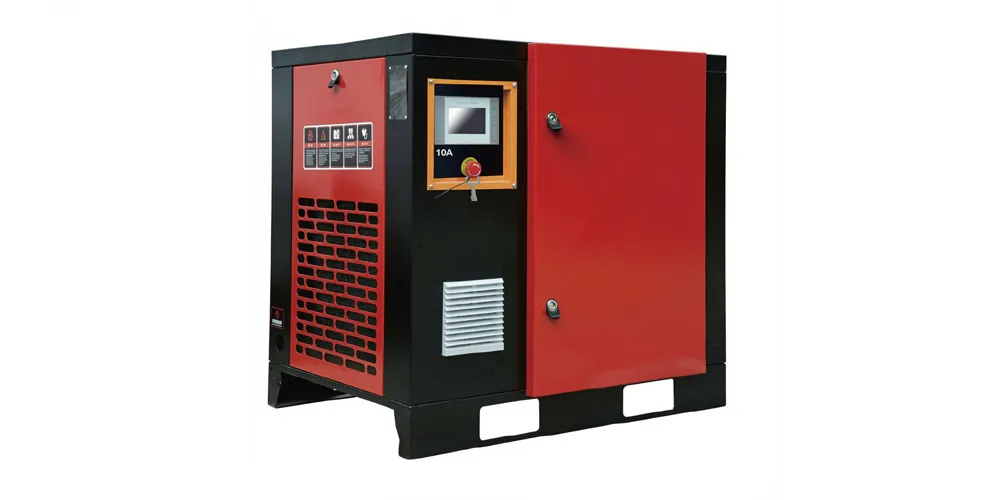
Oil-Free Air Compressor
Blow air at 2.0–3.5 MPa contacts the interior surface of the oral liquid pharmaceutical bottle during the blow phase. Oil contamination from a conventional compressor introduces hydrocarbon residues into the container interior that can affect drug-packaging interaction studies and cannot be removed by post-production rinsing in standard pharmaceutical packaging workflows. An oil-free compressor supplying pharmaceutical-grade compressed air per ISO 8573-1 Class 1 specification eliminates this contamination pathway. The oil-free status of the blow air supply is a documented utility in the machine Installation Qualification (IQ) protocol and must be verifiably maintained throughout the commercial production life of the packaging line.
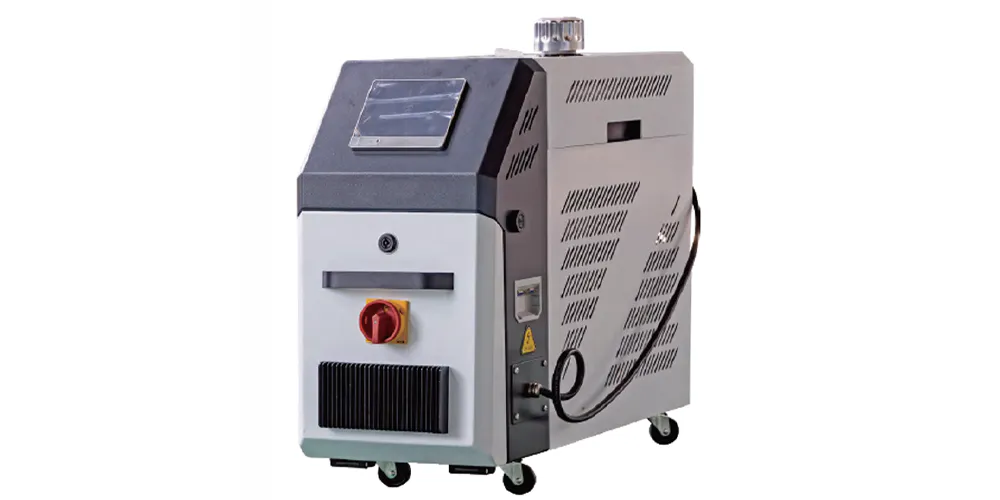
Pengawal Suhu Acuan
For oral liquid containers with volume graduation marks moulded or printed onto the bottle body, dimensional consistency across the production run is directly relevant to patient dosing accuracy. The cooling water temperature in the blow mold must be maintained stably at 20–25 °C throughout the production campaign; temperature drift above the validated range causes the blow mold to expand thermally, shifting the bottle body diameter and potentially displacing volume graduation lines from their validated positions. A mold temperature controller with logged calibrated output maintains this parameter within the validated limit and provides the documented evidence needed for GMP batch records and ANVISA or FDA inspection readiness. Calibrated data output is recommended for integration with site electronic batch record systems.
Soalan Lazim
Q1. Which injection blow molding machine configuration is best for producing child-resistant PET syrup bottles for a pharmaceutical company in India supplying the EU export market?
Q2. How does the injection blow moulding machine process achieve neck finish consistency for oral liquid child-resistant closures compared to extrusion blow moulding?
Q3. What USP and ICH standards govern the extractables testing required for PET oral liquid pharmaceutical bottles produced on an injection blow molding machine for the US market?
Q4. Where can pharmaceutical manufacturers in Brazil find reliable injection blow moulding machine suppliers who understand ANVISA GMP and NR-12 documentation requirements for oral liquid packaging lines?
Q5. How does biaxial orientation in a one-step injection stretch blow moulding machine improve the oxygen barrier of PET oral liquid pharmaceutical containers compared to unoriented PET?
Editor: PXY