ISBM 기계는 어떤 플라스틱을 가공할 수 있을까요? PET, PETG, PCTG, PP, PC, PPSU 등을 포함한 다양한 플라스틱 가공에 대한 완벽 가이드
For any Colombian packaging producer shortlisting a new 사출 연신 블로우 성형기, the very first technical question is rarely about cycle time or station count. It is about resin. Which plastics will the machine actually run? What does each resin need in terms of drying, barrel temperature, stretch ratio, and mould steel? Which combinations deliver a premium cosmetic bottle and which deliver a commodity water container? This guide walks through the complete material palette a modern one-step ISBM line can process — PET, PETG, PCTG, PP, PPSU, PC, Tritan, PLA, PS, and ABS — explaining for each one the processing window, the finished bottle properties, the end-market fit, and the real-world pitfalls Colombian operators should prepare for. Whether you are building your first line in Bogotá or retrofitting a 15-year-old ASB unit in Medellín, understanding resin compatibility is the foundation every sourcing decision sits on top of.
2. Why Resin Choice Drives Every Other ISBM Decision
Resin is the constraint that shapes every downstream choice on an 사출 연신 블로우 성형기. It sets the barrel temperature profile, dictates the screw geometry, influences the clamping force required, determines which mould steel will survive the abrasion, and decides whether a hydraulic or fully electric drive is appropriate. A machine tuned for PET water bottles at 270°C melt temperature cannot simply switch to Tritan at 260°C without rewriting the entire processing recipe. Understanding this dependency is what separates a buyer who specifies the right ISBM from the first factory acceptance test onward versus a buyer who discovers three months later that the machine “supports” a resin in the brochure but cannot actually run it to production standard.
Colombian producers face an additional practical constraint — resin availability and import logistics. PET is widely stocked by distributors in Bogotá, Medellín, and Cartagena with short lead times. PETG and PP are reasonably accessible. Specialty grades like Tritan, PPSU, and PCTG often require planned imports with 8–12 week lead times from Eastman, Solvay, or SK Chemicals. Aligning resin availability with a realistic 사출 연신 블로우 성형 공정 production schedule prevents the all-too-common scenario of a commissioned machine sitting idle because the specialty resin is stuck in a container at Buenaventura port.
3. Five Key Advantages of a Multi-Resin ISBM Platform
1. Broad Resin Compatibility
A modern HGY-class one-step 사출 연신 블로우 성형기 processes PET, PETG, PCTG, PP, PPSU, PC, Tritan, PS, ABS, and PLA on a single frame, letting one production line chase multiple end-markets without buying separate equipment.
2. Quick SKU Changeover
Purging from PET to PETG typically takes 90 minutes; switching to PP adds 2–3 hours. A servo-electric platform retains barrel thermal stability between changes, cutting lost production time compared to hydraulic units.
3. Pre-Stored Processing Recipes
Modern PLC controllers like the Inovance and MiRLE systems used on HGY platforms store hundreds of resin-and-cavity recipes, recalling melt profile, clamp stroke, and blow timing at the push of a button.
4. Regulatory Coverage Across Resins
Each resin family has its own FDA, EU, and INVIMA clearance. A multi-resin 사출 연신 블로우 성형기 supplier provides per-resin documentation bundles that accelerate Colombian sanitary registration timelines.
5. Legacy Mould Compatibility
HGY150-V4 and HGY250-V4 platforms accept ASB-12M, Aoki 250, and ASB-70DPH tooling, giving producers a seamless asb와 aoki의 교체 path without scrapping their mould inventory.
4. Working Principle — How Each Resin Moves Through the ISBM Cycle
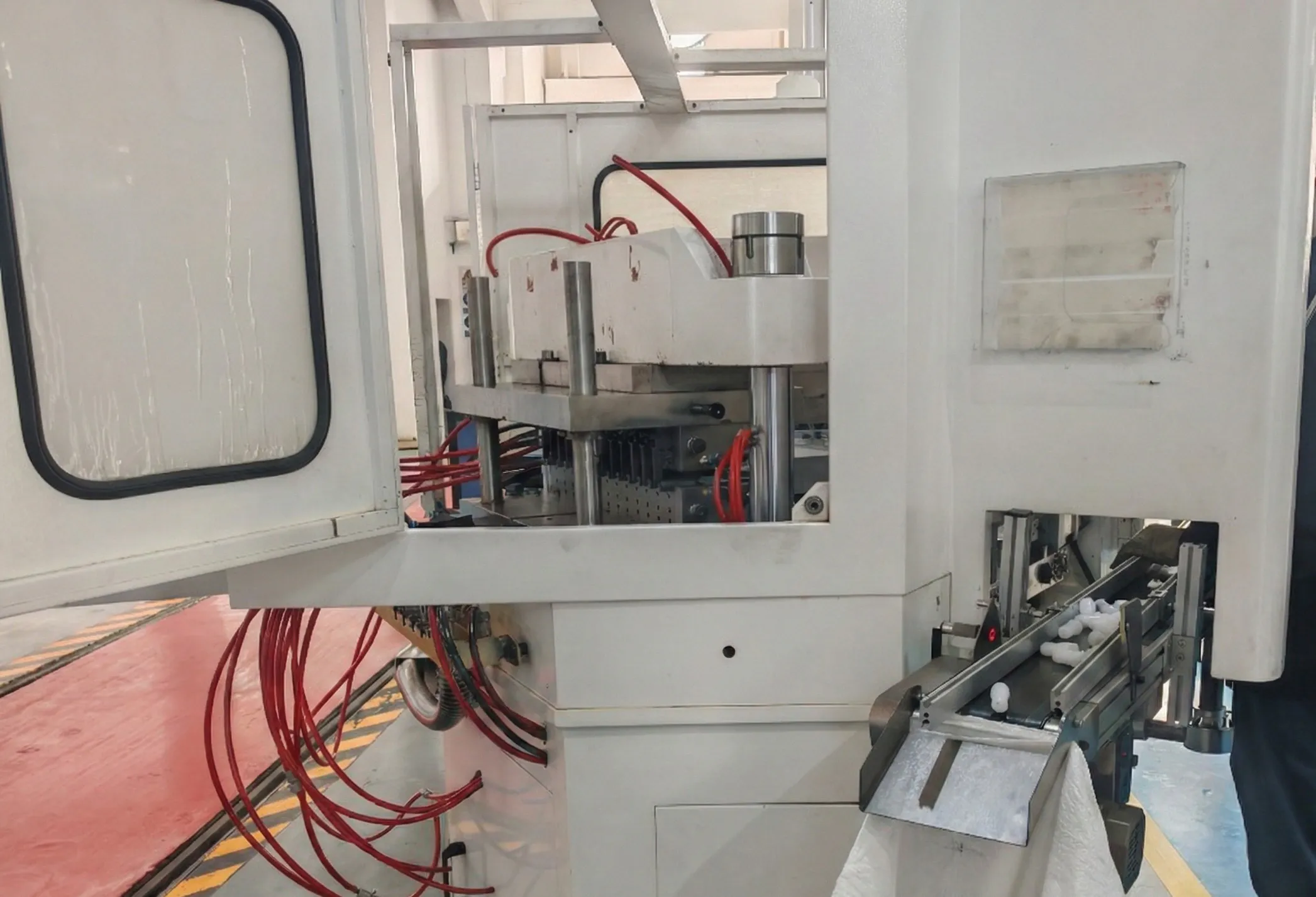
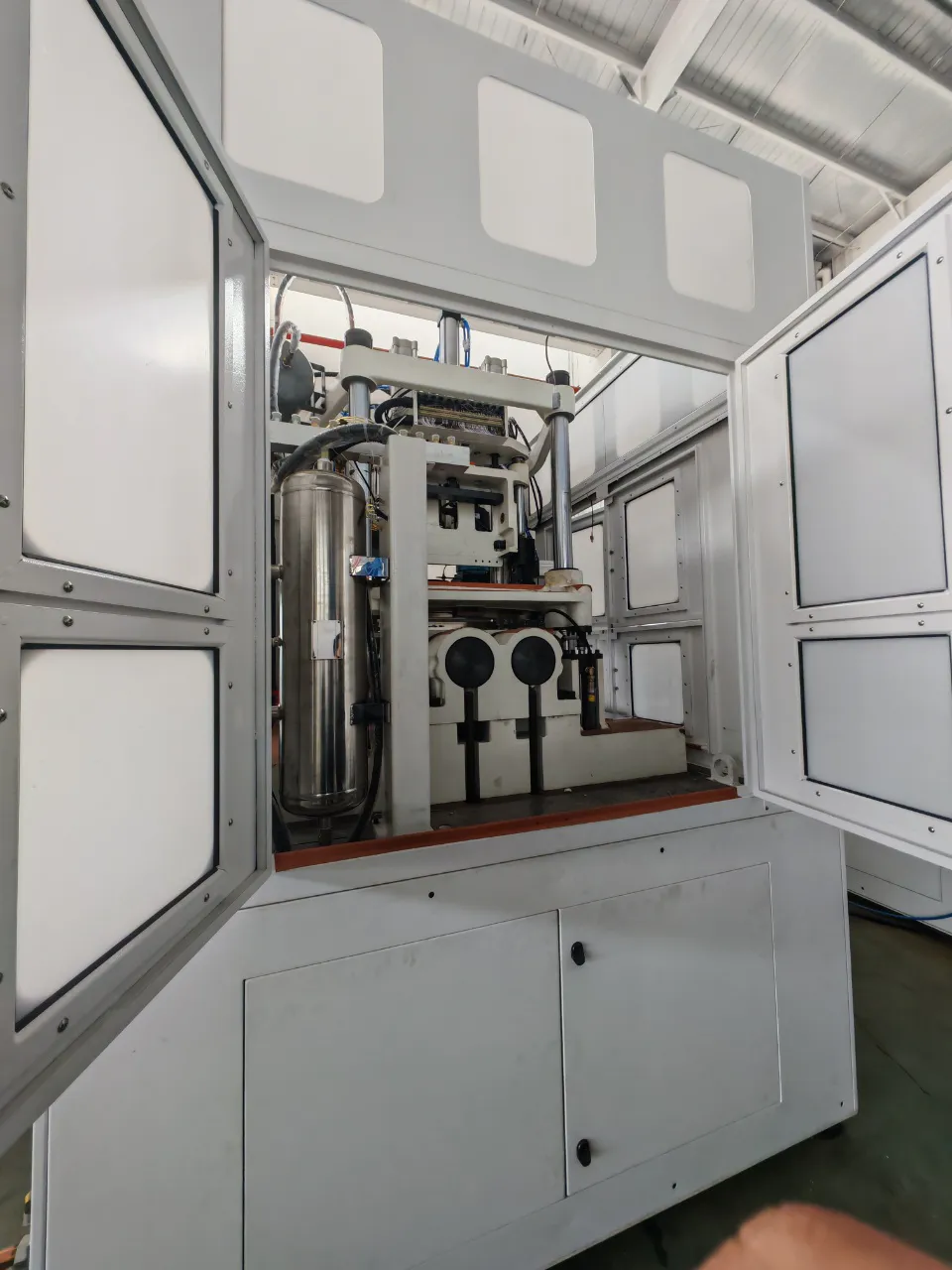
Every resin passes through the same four-station architecture of a one-step 사출 연신 블로우 성형기, but each does so under different conditions. At station 1, pellets are melted in the plasticizing screw and injected into preform cavities. Barrel temperature varies by resin — 265–275°C for PET, 250–270°C for Tritan, 230–250°C for PETG, 200–230°C for PP, and 330–360°C for high-performance PPSU. At station 2, preforms undergo conditioning or tail trimming. PET benefits from minimal conditioning since it retains injection heat well, while Tritan and PCTG require a brief thermal-equalization hold for uniform wall behavior. At station 3, a stretch rod elongates the preform axially and compressed air at 2.0–3.5 MPa expands it biaxially into the 사출 연신 블로우 성형 cavity. At station 4, a servo take-out arm ejects the finished bottle.
The axial and radial stretch ratios are where resin chemistry really shows. PET tolerates an axial stretch of 2.5–3.5 and a radial stretch of 4.0–4.5, producing the high-clarity, biaxially-oriented bottles that dominate the water market. PETG handles 2.0–2.8 axial and 3.0–4.0 radial. Tritan works best at 2.5–3.0 axial and 3.5–4.0 radial. PP runs cooler but tolerates less aggressive stretch, and PPSU requires careful stretch control because of its high stiffness. Matching resin to correct stretch ratio during the 사출 연신 블로우 성형 공정 is what separates a premium bottle from a stressed-out commodity container.
5. Resin-by-Resin Profile — What Each Plastic Delivers
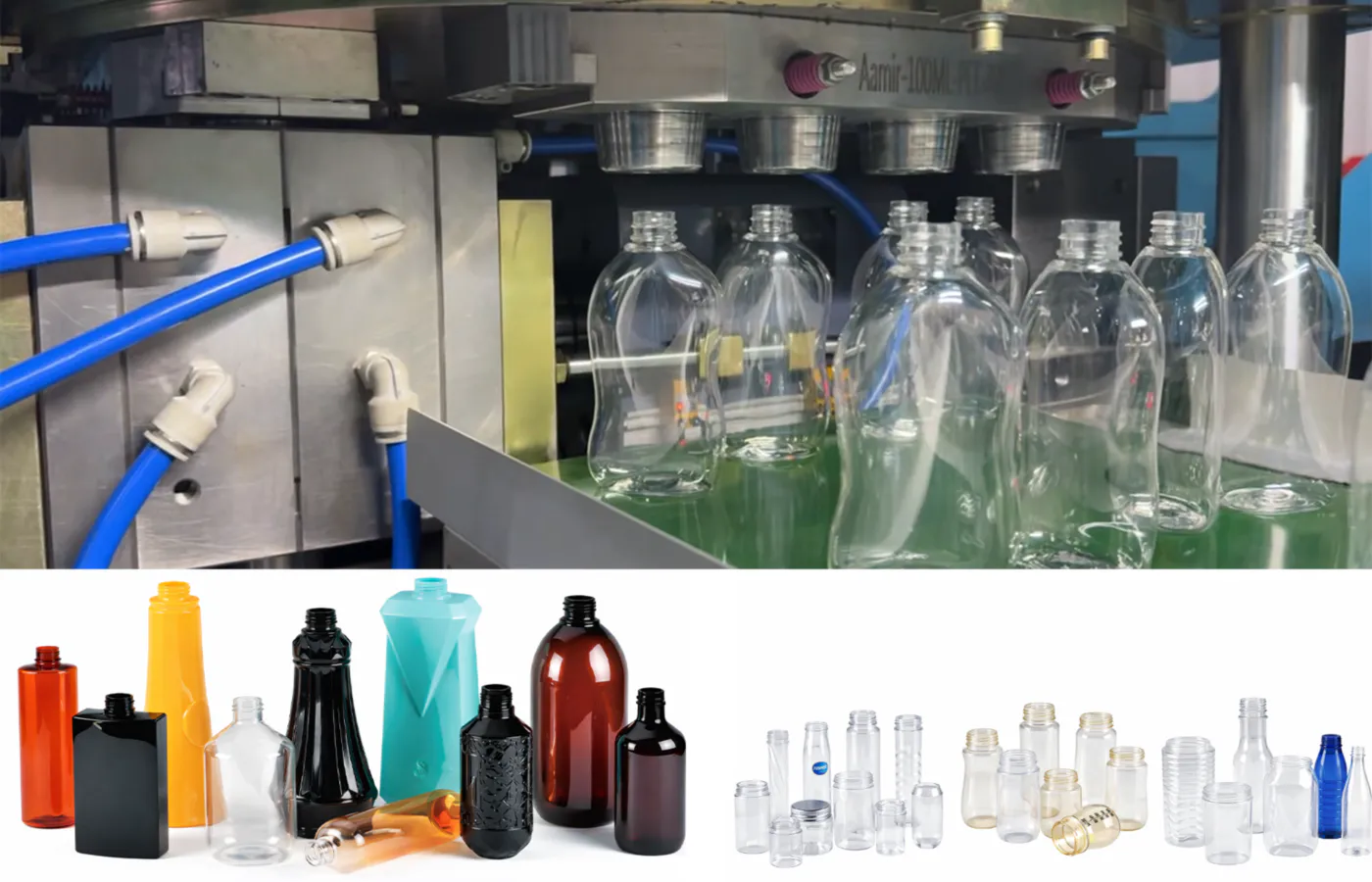
PET(폴리에틸렌 테레프탈레이트) is the workhorse resin behind 80% of Colombian beverage bottles. It delivers excellent clarity, good CO2 barrier for carbonated applications, competitive raw-material cost, and universal recycling acceptance under resin identification code 1. Requires drying to below 50 ppm moisture. Runs on any HGY-class 사출 연신 블로우 성형기 without special configuration.
PETG and PCTG are glycol-modified copolyesters delivering superior clarity and impact strength at lower processing temperatures than PET. PETG serves cosmetic droppers, fragrance bottles, and transparent food packaging. PCTG delivers higher heat resistance for premium skincare jars. Both run well on the HGY150-V4-EV platform with standard S136 mould tooling.
PP(폴리프로필렌) is the specialty choice for sauce bottles, sports closures, and microwave-safe food containers. PP runs cooler than PET, resists stress cracking under hot-fill conditions, and carries lower raw-material cost. Tooling requires dedicated PP-optimized cavities because the shrinkage profile differs substantially from PET.
PC (Polycarbonate) delivers exceptional optical clarity and impact strength but requires elevated processing temperatures. Historically dominant in baby bottles until BPA regulations restricted its use for food-contact applications. Today PC remains relevant for laboratory bottles, industrial fluid containers, and protective equipment housings where BPA exposure is not a concern.
PPSU(폴리페닐설폰) is the premium medical-grade resin for high-temperature sterilizable bottles. It survives repeated autoclave cycles at 135°C, passes FDA and USP Class VI medical-grade testing, and delivers consistent performance in infant feeding and healthcare applications. Requires bimetallic barrel and specialized high-temperature screw design.
Tritan is the BPA-free copolyester engineered by Eastman for premium baby bottles, sippy cups, and reusable hydration containers. Glass-like clarity, dishwasher durability beyond 2,000 cycles, and complete BPA/BPS/BPF absence make it the dominant choice for modern infant-feeding product lines across Colombian retail chains.
PLA (Polylactic Acid) is the bio-based, compostable alternative for eco-focused brands. Runs at lower processing temperatures than PET, delivers good clarity, but suffers from limited heat resistance and higher sensitivity to moisture. Niche but growing application in cosmetic and short-shelf-life beverage packaging targeting European export markets.
PS and ABS are specialty resins for promotional containers, craft bottles, and industrial fluid packaging where transparency is optional but impact strength and dimensional stability matter. Both run on standard HGY platforms with modest parameter adjustments during commissioning.
6. Application Scenarios — Resin Fit by End-Market
Water & Carbonated Beverages
PET is the default across 500 ml, 1 L, and 1.5 L SKUs dominating Colombian beverage retail. HGY200-V4 and HGY250-V4 platforms deliver the throughput that the Cauca valley and Caribbean coast plants demand from their water-bottle lines.
Cosmetic & Fragrance Bottles
PETG and PCTG excel for 30–200 ml dropper, serum, and fragrance bottles. The HGY50-V3-EV and HGYS150-V4 platforms optimize the small-cavity, high-clarity production profile premium Colombian cosmetic brands require for shelf appeal.
Infant Feeding & Baby Care
Tritan and PPSU dominate the premium baby-bottle segment. The fully electric HGY150-V4-EV eliminates oil-contact risk, satisfying INVIMA pediatric standards and FDA 21 CFR requirements for EU export markets.
의약품 포장
PETG and PP serve oral-dose, syrup, and liquid-medicine bottles regulated by INVIMA. Clarity, dimensional precision, and cleanroom-grade production on a servo-electric platform are the defining requirements.
Edible Oil & Sauces
PET in 500 ml–2 L formats and PP for hot-fill sauce applications share production floor on HGY200-V4-B variants compatible with Aoki 250 legacy moulds — a common retrofit path for Colombian food co-packers.
Eco & Bio-Based Packaging
PLA production serves sustainability-focused Colombian brands exporting to European retailers under LATAM green-packaging credentials. Short shelf-life cosmetic and fresh-juice applications drive this emerging segment.
7. Regulatory Landscape for Each Resin Family
Each resin comes with its own regulatory portfolio. A Colombian producer must verify that the resin grade, the machine build, and the documentation align with the target market’s rules.
콜롬비아: INVIMA governs food-contact plastics under Resolución 2674 of 2013 for manufacturing practices. Resolución 2400 of 1979 sets industrial safety standards. NTC 5000 provides plastic food-packaging guidance. RETIE certification is mandatory for any three-phase 사출 연신 블로우 성형기 installation. Pediatric bottle applications align with ICONTEC-issued standards matching international infant-feeding rules. Decree 2412 on Extended Producer Responsibility encourages recyclable resin choices.
기타 시장: United States — FDA 21 CFR 177.1315 (copolyesters including Tritan and PETG), FDA 21 CFR 177.1520 (PP), FDA 21 CFR 177.1580 (PC). European Union — Regulation (EU) No 10/2011, plus Commission Directive 2011/8/EU banning BPA in feeding bottles. Japan — JFSL 370. Korea — KFDA food-contact rules. Australia and New Zealand — AS 2070. Brazilian ANVISA RDC 52/2010. Mexican CoFEPRIS aligns with FDA. Cross-cutting machine certifications include ISO 9001:2015 quality management, ISO 14001 environmental, and USP Class VI for medical-grade PPSU applications. Most Colombian exporters target at least two of these regions simultaneously.
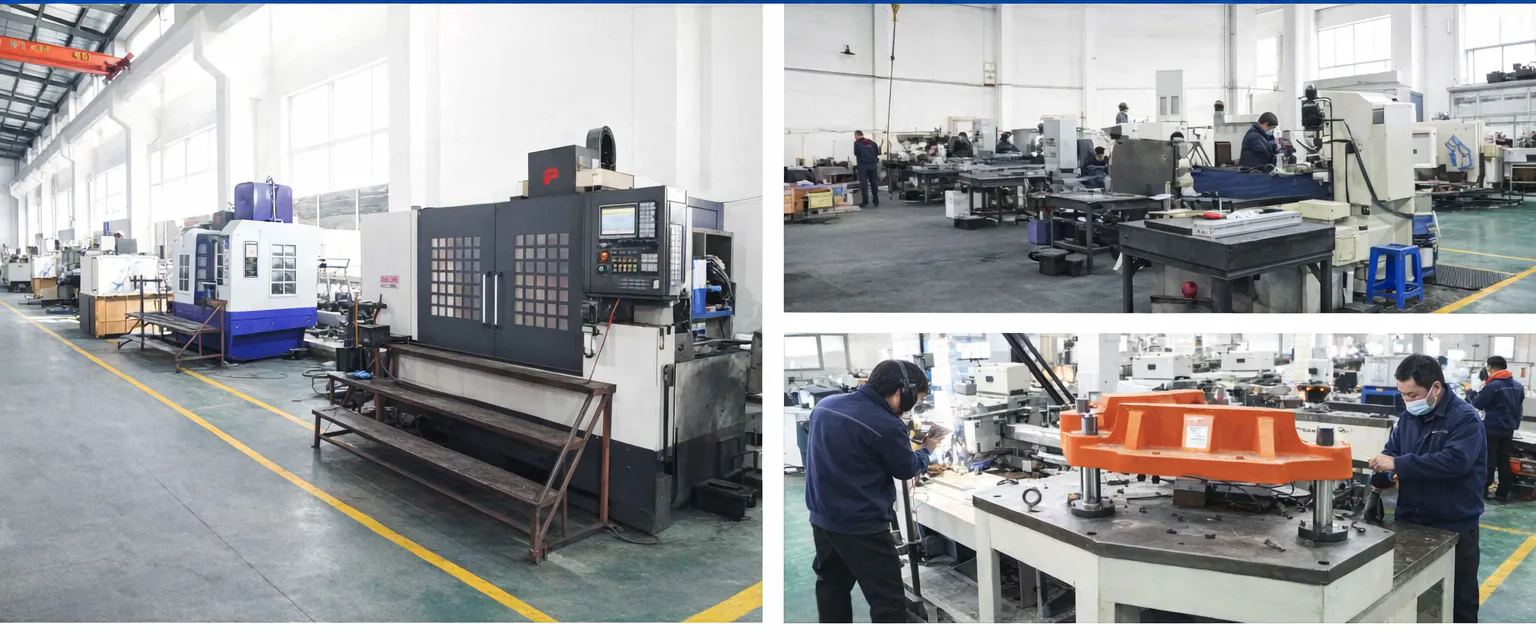
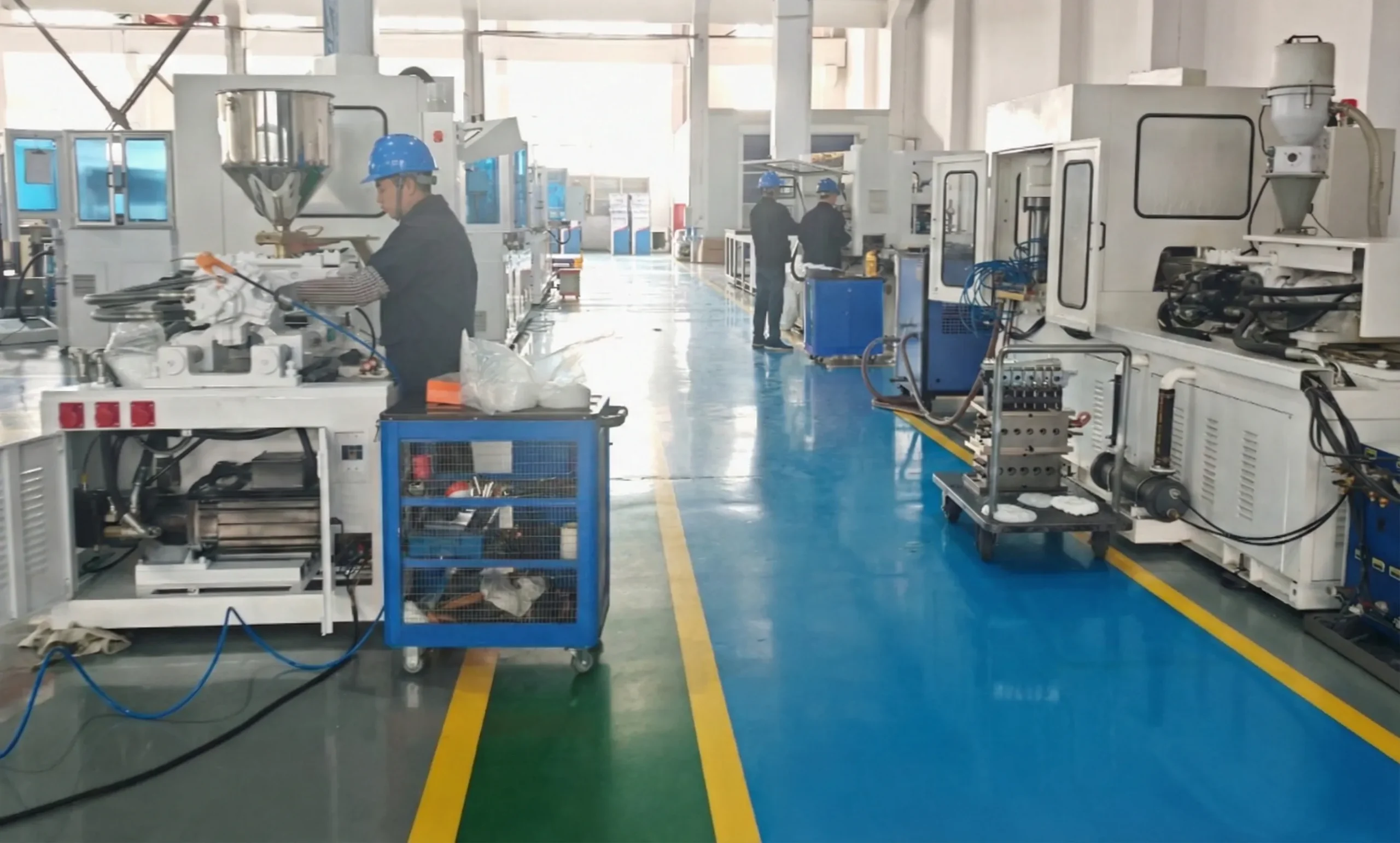
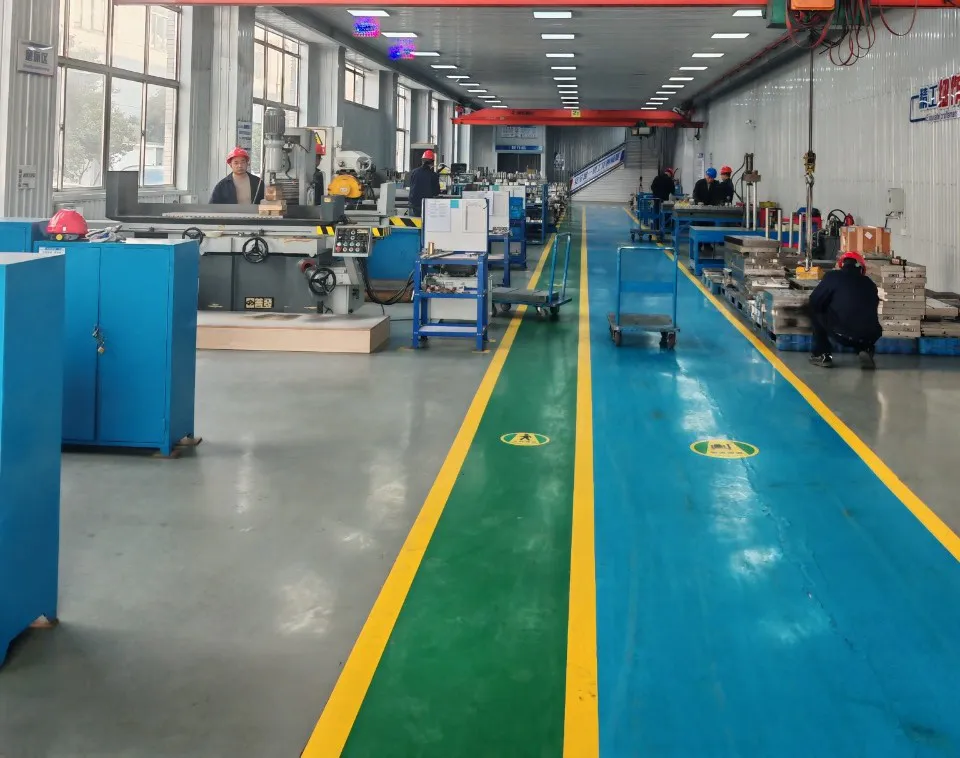
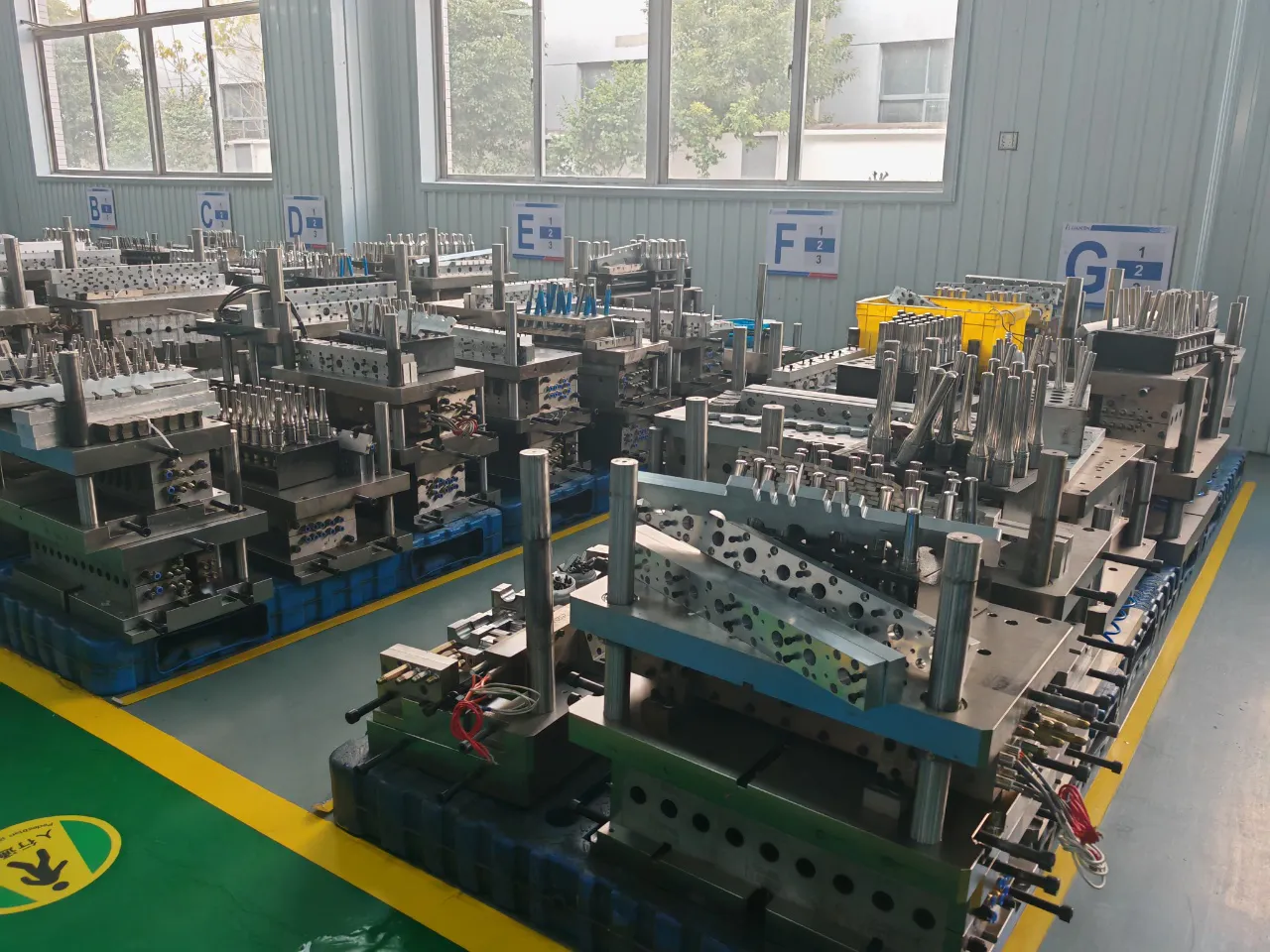
작업장
8. Related Components — One-Stop Line Supply
Multi-resin ISBM production leans on auxiliary components beyond the 사출 연신 블로우 성형기 itself. Sourcing these from a single supplier consolidates commissioning, reduces spare-parts sprawl, and keeps the maintenance calendar manageable.
Industrial Gearboxes for Line Peripherals
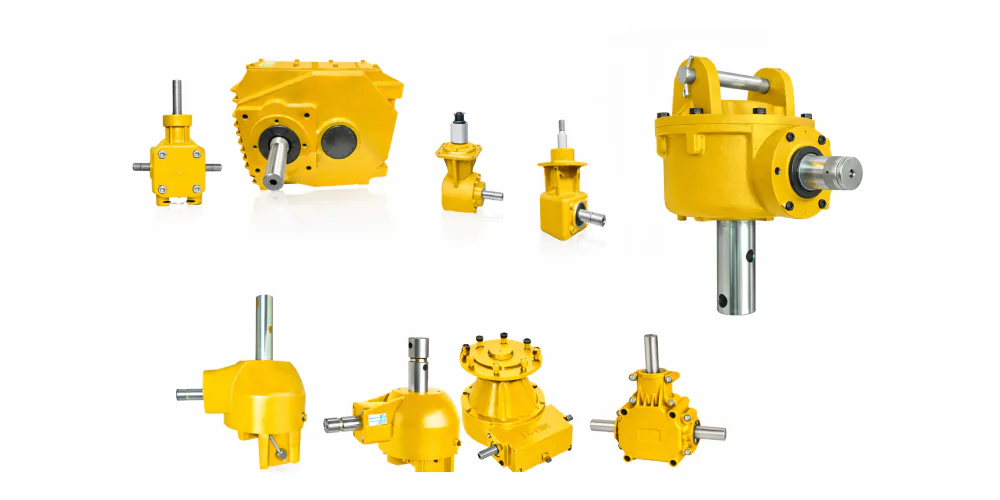
Conveyor reducers, feeder drives, and palletizer gear units that accompany every ISBM installation benefit from sourcing through an established 산업용 기어박스 supplier. Matching helical and bevel-helical ratios with the bottle-output rate keeps the downstream packaging line in sync with the ISBM cycle.
구동축 정렬용 강성 커플링
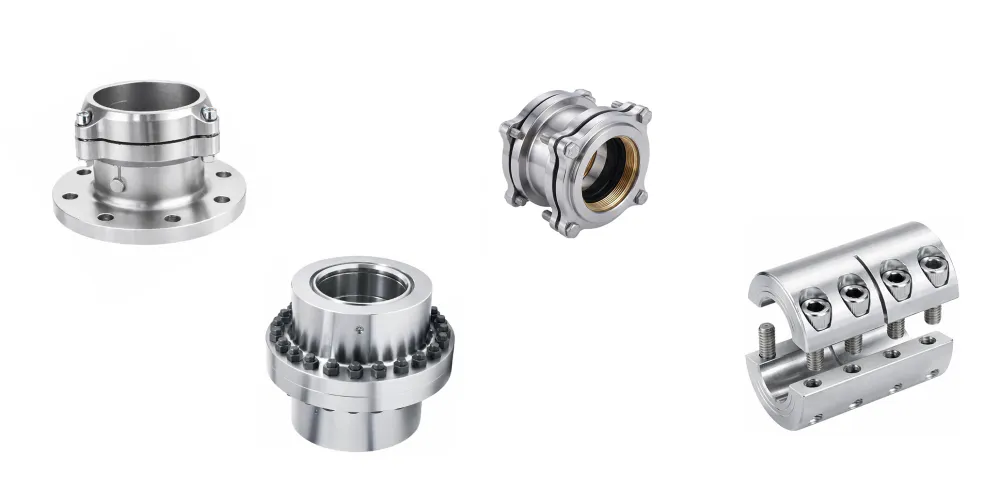
Compressor couplings, feeder shaft alignments, and motor-to-reducer connections benefit from standardized rigid coupling inventory sized to match the machine’s driven equipment. Zero-backlash alignment protects precision sections of the Colombian bottle-making line.
자주 묻는 질문
Q1. Which injection stretch blow moulding machine supplier offers the widest resin compatibility for a Colombian multi-SKU cosmetic producer?
A1. Prioritize suppliers whose HGY platform documentation demonstrates commercial runs in at least six resin families — PET, PETG, PCTG, PP, Tritan, and PPSU. Request sample bottles from each resin family before signing. Colombian cosmetic producers typically end up running 3–5 resins, so compatibility depth matters.
Q2. What are the most common failure modes when running multi-resin production on an injection stretch blow moulding machine in tropical plants?
A2. Insufficient resin drying is the number one cause, followed by barrel coking from leaving high-temperature resins sitting at melt temperature during breaks, and screw wear from abrasive mineral fillers in specialty resins. Disciplined purge protocols and verified resin moisture before each shift prevent roughly 85% of these issues.
Q3. What is the best injection stretch blow molding machine for a Colombian pharma brand producing PPSU medical bottles?
A3. The fully electric HGY150-V4-EV upgraded with a bimetallic barrel is the recommended configuration. It handles PPSU’s 350°C melt temperature, eliminates hydraulic oil contact, passes USP Class VI considerations, and simplifies INVIMA medical-grade submission documentation.
Q4. How long does a typical resin changeover take between PET and Tritan on a four-station ISBM platform?
A4. Plan for 2–3 hours including barrel purge with transition resin, mould swap, barrel temperature ramp from 270°C down to 260°C, and first-article quality validation. Servo-electric platforms hold barrel temperatures more stably than hydraulic units during the transition, saving roughly 30 minutes.
Q5. Which injection stretch blow molding machine manufacturers provide per-resin processing recipe documentation for Colombian INVIMA submission?
A5. Serious manufacturers supply a processing recipe bundle covering melt temperature, drying schedule, injection speed profile, mould temperature, stretch ratio, and blow timing for each resin the machine will run. Ask to see the actual documentation set before purchase, not just a claim in a brochure.
Q6. What injection stretch blow mold steel works best for PP bottle cavities in a hot-fill Colombian sauce application?
A6. S136 stainless at 48–52 HRC with a Ra 0.4 µm polish is the typical choice. The slightly coarser polish vs. PET tooling accommodates PP’s higher shrinkage and demoulding behavior. Expect a service life of 1.5 to 2 million cycles before cavity refurbishment.
Q7. When should a Colombian producer choose PCTG over PETG for a premium cosmetic line?
A7. Choose PCTG when the product needs higher heat resistance — for example, skincare jars that sit in bathroom windows reaching 45°C midday, or fragrance bottles shipped through the Caribbean heat belt. For ambient-temperature applications, PETG delivers similar clarity at lower raw-material cost.
Q8. How can I watch an injection stretch blow molding video demonstrating PPSU bottle production on a four-station platform?
A8. Most reputable manufacturers host a video library on their corporate site showing PPSU cycles with 2-cavity and 4-cavity tooling. You can also request a live video demo where the supplier runs your specific bottle drawing under representative shift conditions for final validation before purchase.
Q9. Which resin gives the highest production throughput on an injection stretch blow moulding machine in Latin America?
A9. PET delivers the highest cycle speed because of its forgiving processing window and mature additive package. Expect roughly 540 bottles per cavity per hour at 500 ml format on an HGY250-V4. PETG runs 10–15% slower, PP about 20% slower, PPSU and Tritan 25–35% slower because of their tighter processing windows.
Q10. How much does running cost per thousand PLA bottles compare with PET on an ISBM line in Colombia?
A10. PLA resin costs roughly 2 to 2.5 times PET per kilogram. Cycle times are 15–20% longer. Energy draw is similar to PET since melt temperatures are actually lower. The economic case depends on whether the end-customer pays a premium for compostable branding — many EU retailers do, which is why Colombian export brands pursue PLA lines.
Q11. Which injection stretch blow molding machines can replace an aging ASB-70DPH running multi-resin production for a Colombian industrial packer?
A11. The HGY250-V4 platform is designed as a direct drop-in replacement for the ASB-70DPH. Mould tooling transfers with minor fixture adjustment, and the new machine delivers 20–30% energy improvement plus wider resin compatibility — expanding from just PET/PETG to the full PPSU, Tritan, and PCTG catalog.
편집자: PXY