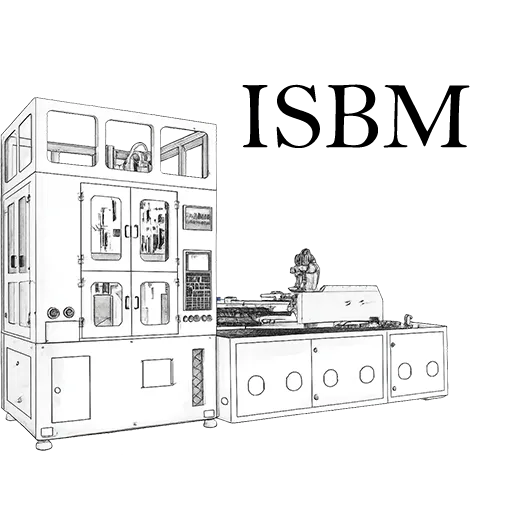
1. Comprehensive Maintenance and Troubleshooting Guide for the Injection Stretch Blow Moulding Machine
Welcome to the ultimate knowledge base dedicated to the maintenance, troubleshooting, and operational excellence of the modern injection stretch blow moulding machine. As the plastics manufacturing industry continues to evolve, businesses across the globe, particularly in dynamic markets like Colombia, are increasingly relying on advanced technologies to produce premium, high-precision hollow plastic containers. Whether you are dealing with a new injection stretch blow moulding machine or managing a fleet of established units, understanding the profound intricacies of this equipment is crucial for maximizing uptime and ensuring superior product quality. This comprehensive guide is designed to empower operators, maintenance engineers, and facility managers with deep technical insights into every aspect of the injection stretch blow molding process. From understanding the core working principles to navigating complex local compliance regulations, we cover everything you need to know. By mastering the fundamental action methods, structural configurations, and material systems, you can significantly reduce unexpected downtime and extend the lifespan of your valuable production assets. Let us delve into the fascinating world of advanced container manufacturing and explore how meticulous maintenance protocols can transform your production efficiency and elevate your injection stretch blow molding products to unprecedented heights of excellence.
2. مبدأ عمل آلة التشكيل بالنفخ والتمديد بالحقن
The working principle of the One-step injection stretch blow molding machine is a marvel of modern engineering, combining three distinct manufacturing phases into a single, seamless, and highly efficient continuous process. Unlike traditional two-step methods that require preforms to be cooled, stored, and then subsequently reheated in a separate blow molding machine, the one-step process capitalizes on the latent thermal energy retained from the initial injection phase. Initially, raw plastic resin is melted and injected into a specialized preform mold to create a “test-tube” shaped preform with a fully formed threaded neck. Immediately after this injection phase, the still-hot preform is transferred via a precision rotary table to the conditioning or stretch-blow station. Here, a stretching rod descends to mechanically elongate the preform axially, while high-pressure air is simultaneously introduced to expand the material radially against the walls of the blow mold cavity. This simultaneous biaxial stretching aligns the polymer molecules, dramatically enhancing the container’s structural rigidity, clarity, and barrier properties. Because the preform is never allowed to fully cool, the process eliminates the need for energy-intensive reheating ovens, resulting in up to a 40% reduction in overall energy consumption. Finally, the perfectly formed bottle is transported to the ejection station where it is safely extracted, completely ready for downstream filling or packaging without the risk of contamination or surface scratching associated with bulk preform handling. This integrated approach ensures that every single injection stretch blow molding products meet the highest standards of quality and consistency.
3. Action Method
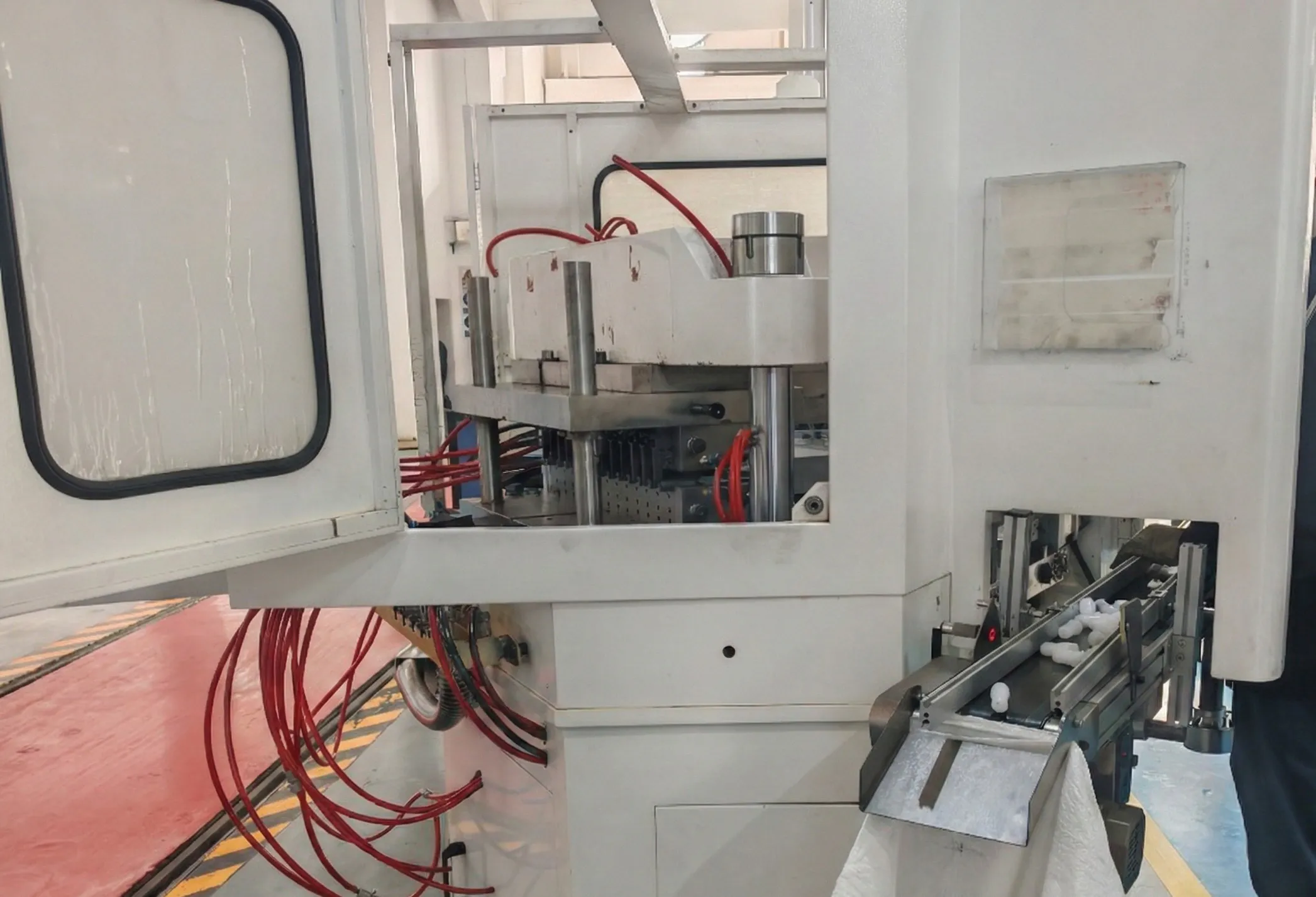
The action method of the injection stretch blow moulding machine is characterized by highly synchronized, multi-axis movements driven by state-of-the-art servo technologies and precision hydraulics. The core of this rotational orchestration relies on advanced servo motors, frequently utilizing globally recognized brands like Yaskawa or Inovance, paired with high-precision Taiwan TSUNTIEN reducers. This combination ensures that the central rotary table indexing—which moves the preforms from the injection station to the blowing and ejection stations—is executed with absolute positional accuracy and minimal vibration. The injection unit itself often employs a robust single-cylinder or dual-cylinder mechanism, where the melt motor can be controlled either hydraulically or via a dedicated servo motor for exact volumetric dosing. During the critical clamping phase, the machine utilizes a sophisticated dual servo motor mold clamping system supplemented by a high-pressure compensation function. This means that when the immense blowing pressure is applied internally to the plastic, the clamping force automatically adjusts to prevent any microscopic mold separation, completely eliminating parting line flashes. Every action, from the descent of the stretch rods to the opening of the pneumatic valves for high-pressure air, is managed by a centralized, intelligent PLC system that allows operators to monitor and fine-tune response times down to the millisecond. This level of automated, precise action is exactly what makes the modern injection stretch blow molding machines vastly superior to older, mechanically cam-driven alternatives.
4. نوع الهيكل
When discussing the structure type of an injection stretch blow moulding machine, we primarily look at the monolithic, integrated rotary station designs that define this category. These machines are engineered in either a 3-station or a 4-station architectural layout, depending on the specific production requirements and the complexity of the container being manufactured. A 3-station structure seamlessly integrates injection, stretch-blowing, and ejection. This highly compact footprint is ideal for manufacturers looking to maximize output in limited factory spaces while maintaining exceptional energy efficiency, as it bypasses any intermediate conditioning. On the other hand, a 4-station machine introduces a dedicated thermal conditioning or tail-cutting station. This additional structural node allows for meticulous temperature equalization of the preform before it enters the blow mold, making it the perfect replacement of asb and aoki systems for producing complex, asymmetrical, or ultra-thick-walled cosmetic containers that demand absolute thermal uniformity. Regardless of the station count, the overarching structure is built upon a heavy-duty, vibration-dampening chassis. The integrated layout ensures that the hot runner systems, injection barrels, and blowing cavities are situated in close proximity, drastically reducing the physical distance material must travel and thereby minimizing the risk of thermal degradation. This tightly knit structural type is what allows the equipment to function flawlessly as a self-contained, high-yield production cell.
5. هيكل التصنيع
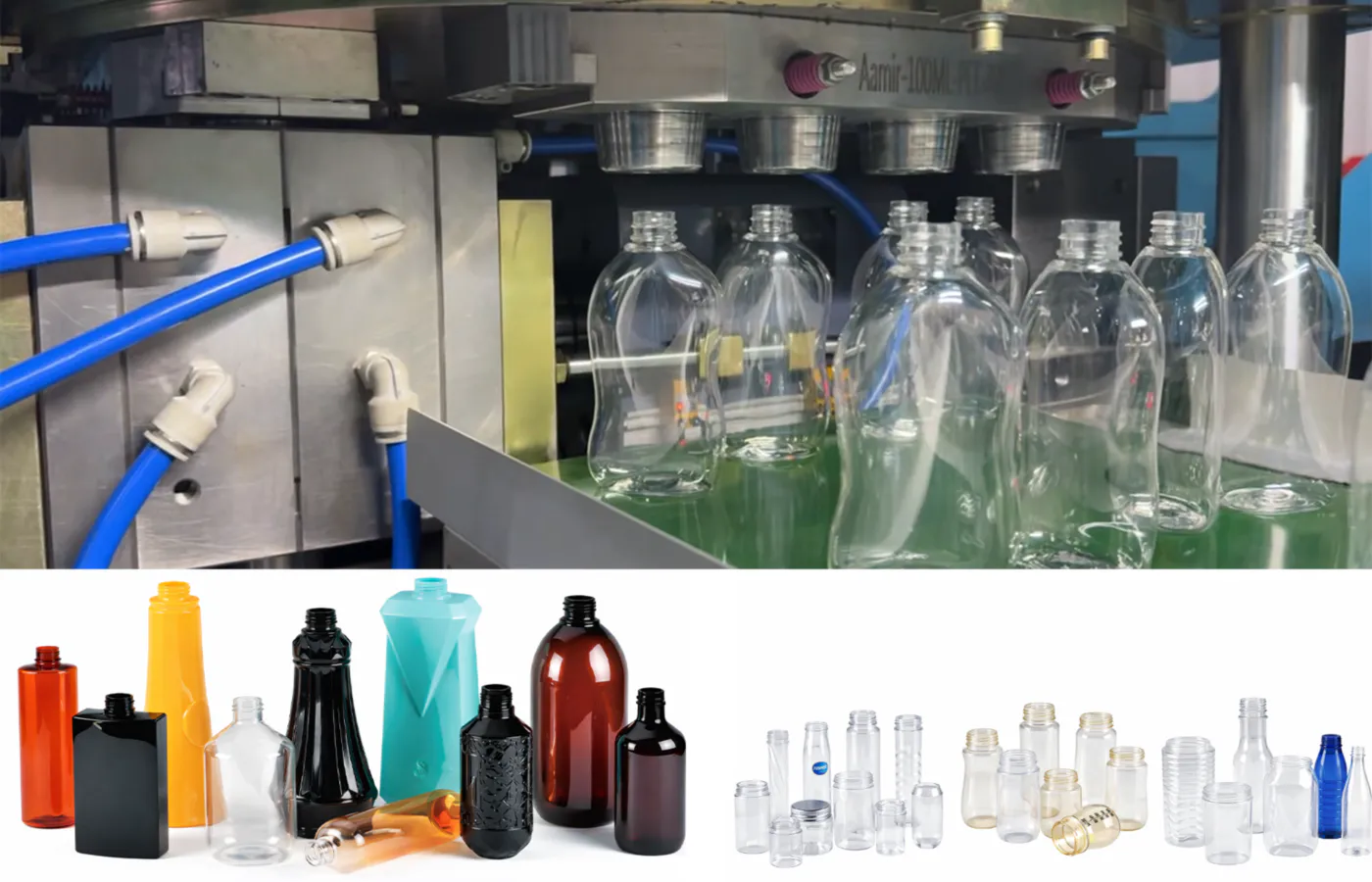
The manufacturing structure of a premium injection stretch blow moulding machine is a testament to rigorous mechanical engineering and heavy industrial design principles. The foundational frame is constructed from massive, stress-relieved steel weldments or heavy cast iron, designed to absorb the intense, repetitive dynamic loads generated during the high-pressure injection and stretch blowing cycles without yielding or warping over decades of continuous 24/7 use. At the heart of the forming process is the One-step Injection Stretch Blowing Mould, which is precision-machined from ultra-high-grade S136 stainless steel. This specific steel alloy is chosen for its exceptional hardness, remarkable corrosion resistance against off-gassing polymers, and its ability to achieve an optical-grade mirror polish, which directly translates to the flawless, glass-like surface finish of the final plastic containers. The tie-bars within the clamping structure are typically hard-chrome plated and utilize robust toggle or direct-hydraulic mechanisms to distribute clamping forces evenly across the entire mold platen area, often reaching clamping forces of up to 400KN or more. Furthermore, the manufacturing structure intelligently houses all complex routing for cooling water, high-pressure air, and hydraulic fluids within heavily shielded, easily accessible raceways, significantly simplifying routine maintenance while protecting vital hoses and wiring from accidental industrial damage.
6. نظام المواد
Evaluating the internal material system of the injection stretch blow moulding machine requires looking closely at the top-tier, globally sourced components that constitute its mechanical, electrical, and pneumatic anatomy. To guarantee uncompromised long-term stability and to drastically minimize the necessity for unexpected spare part replacements, leading injection stretch blow molding machine manufacturers equip these systems with premium materials and branded components. The hydraulic nervous system typically features high-pressure valves from renowned manufacturers like Parker (USA) and precision control valves from YUKEN, ensuring smooth, leak-free fluid dynamics even under extreme operational pressures. The pneumatic actuation systems, responsible for the rapid movements of core pins and ejection mechanisms, utilize high-durability Airtac cylinders. Meanwhile, the intricate oil tubing networks are forged from specialized Italian imported materials designed to resist thermal degradation and hydraulic shocks over millions of cycles. In the plasticizing unit, the screw and barrel are fabricated from bi-metallic, wear-resistant alloys capable of processing highly abrasive or demanding resins like PCTG or Tritan without suffering premature wear. Additionally, the heating system heavily utilizes nano-far-infrared energy-saving heating rings, which not only provide incredibly uniform thermal distribution across the injection barrel but also significantly extend the lifespan of the heating elements themselves compared to traditional ceramic band heaters.
7. معالجة السطح
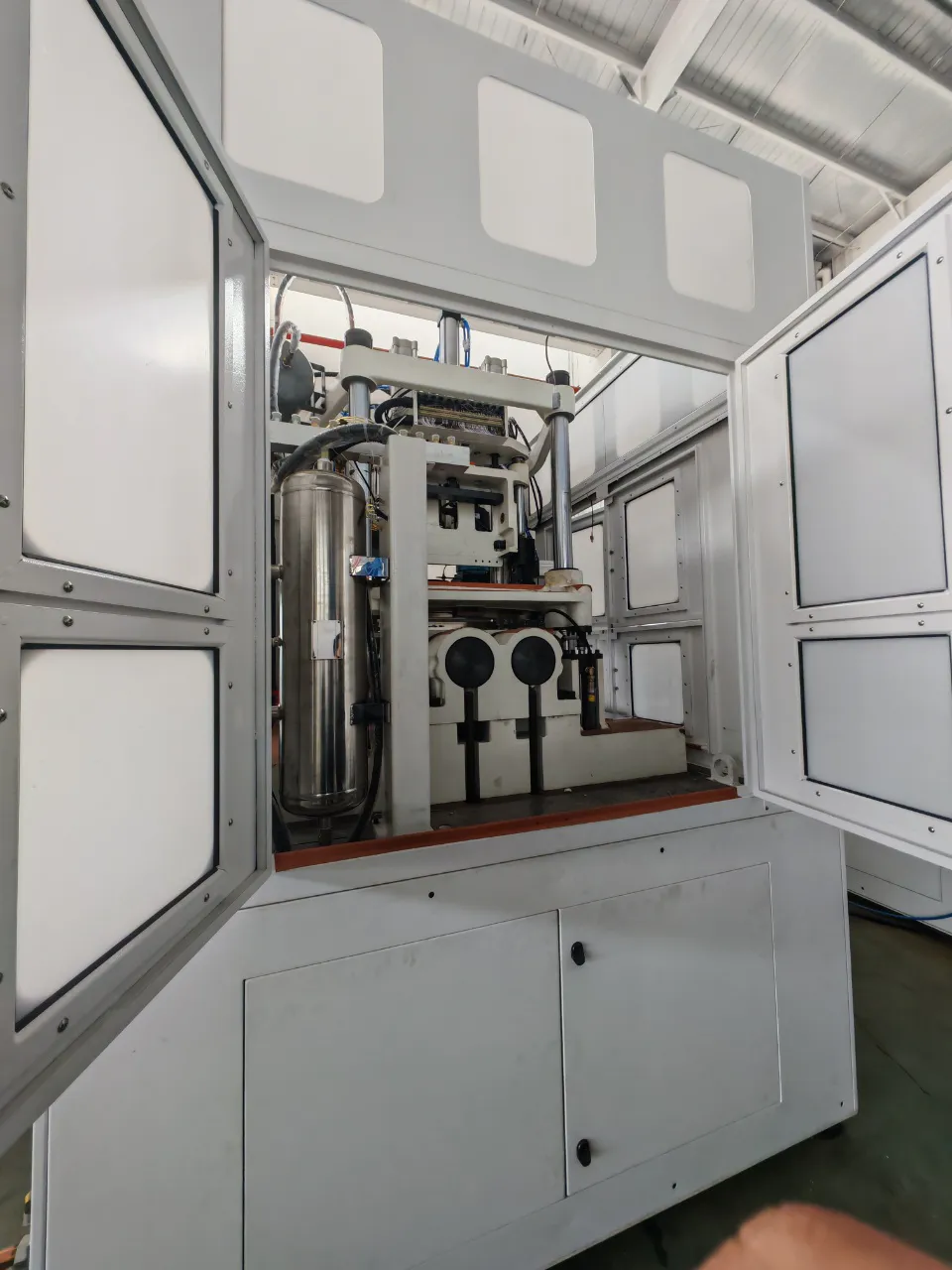
The surface treatment protocols applied to the injection stretch blow moulding machine are critical for ensuring both operational hygiene and long-term durability in harsh, continuous-duty industrial environments. The exterior chassis and sheet metal enclosures undergo a rigorous multi-stage preparation process, typically involving shot blasting to remove any microscopic welding scale, followed by the application of heavy-duty, industrial-grade epoxy or polyurethane powder coatings. This creates an impenetrable barrier against environmental moisture, hydraulic oil spills, and the ambient factory dust, whether you are operating a striking blue injection stretch blow moulding machine, a pristine white injection stretch blow moulding machine, or a sleek gray injection stretch blow moulding machine. Internally, any exposed carbon steel components that interact with the mechanical linkages are subjected to advanced anti-corrosion treatments such as black oxide coating, nitrocarburizing, or hard chrome plating to drastically reduce friction coefficients and prevent oxidation. Perhaps the most critical surface treatment occurs within the mold cavities themselves; the S136 stainless steel is subjected to an exhaustive, multi-step optical hand-polishing process. This specialized surface finishing ensures that there are zero microscopic imperfections that could transfer onto the final injection stretch blow molding products, guaranteeing that high-end cosmetic and pharmaceutical bottles exit the machine with a flawless, premium aesthetic appeal right from the first cycle.
8. ظروف العمل
The working conditions under which an injection stretch blow moulding machine operates are characterized by extremely high pressures, rapid mechanical cycling, and precise thermodynamic fluctuations, demanding an incredibly robust and stable operational environment. To sustain high-volume production without interruption, the facility must supply a continuous, highly stable electrical voltage (typically 370-400V, 3-phase), robustly protected against surges or sags which could disrupt the highly sensitive servo motor feedback loops. Furthermore, the injection stretch blow molding process is highly dependent on rigorous temperature regulation; therefore, a dedicated industrial chilling system is mandatory. The machine requires a steady flow of cooling water at a pressure of 0.4-0.6 Mpa to rapidly solidify the injected preforms within the molds and to maintain the machine oil cooler water temperature strictly between 20-25 degrees Celsius. Simultaneously, a high-capacity, moisture-free compressed air supply, regulated tightly between 2.0-3.5 Mpa, is absolutely critical for the stretch-blowing phase. Any moisture or oil vapor present in the blowing air can severely compromise the clarity and structural integrity of the final plastic containers. The machine is designed to thrive in intensive 24/7 continuous operation scenarios, making rigorous adherence to these fundamental working condition parameters the cornerstone of reliable, long-term manufacturing success and minimizing overall wear and tear.
9. Typical Failure Modes & Troubleshooting
Even the most advanced injection stretch blow moulding machine can occasionally encounter operational anomalies, and understanding the typical failure modes is essential for rapid troubleshooting and minimizing costly downtime. One common issue is “short shots” during the injection phase, where the mold cavity does not fill completely. This is often caused by insufficient injection pressure, a premature drop in barrel temperature, or a partially blocked hot runner nozzle; troubleshooting involves systematically checking the nano-far-infrared heater bands and verifying the servo injection pressure settings. Another frequent challenge is uneven or asymmetrical wall thickness in the blown bottle. This usually indicates that the preform was either unevenly conditioned regarding temperature or that the stretching rod descended off-center or at an incorrect velocity. Adjusting the PID temperature controls in the conditioning station or recalibrating the stretch rod servo parameters typically resolves this. Sometimes, operators may experience bottles bursting during the high-pressure blow phase; this can be traced back to excessive blowing air pressure, blowing the preform while it is too cold, or microscopic scratches on the preform surface acting as stress concentrators. Additionally, hydraulic or servo alarms may trigger if the oil filter becomes clogged or if the Taiwan TSUNTIEN reducer requires lubrication. By maintaining a strict preventative maintenance schedule and deeply understanding these failure modes, technicians can ensure that the injection stretch molding equipment remains in peak condition.
10. Compliance & Local Regulations (Colombia & Global)
When importing, installing, and maintaining an injection stretch blow moulding machine in the Colombian market, absolute compliance with local and international industrial regulations is non-negotiable. In Colombia, all industrial machinery and electrical installations must strictly adhere to the ريتي (Reglamento Técnico de Instalaciones Eléctricas). This mandates that the machine’s electrical cabinets, grounding systems, and internal wiring harnesses meet highly specific safety thresholds to prevent electrical hazards in the workplace. Furthermore, regarding the mechanical transmission systems—specifically the high-torque gearboxes and servo reducers utilized in the rotary table—facilities must align with international standards such as ISO or AGMA, which are widely recognized and often mapped to local NTC (Norma Técnica Colombiana) guidelines. This ensures that the gearboxes operate within safe thermal and acoustic limits, preventing catastrophic mechanical failures. Additionally, industrial safety protocols dictated by the Ministry of Labor in Colombia require that machines feature comprehensive operator safety interlocks, emergency stop networks, and physical guarding around the high-pressure mold clamping areas to safeguard workers. By proactively ensuring that your injection stretch blow molding machine manufacturers deliver equipment fully compliant with CE, RETIE, and stringent local safety decrees, businesses can avoid severe regulatory penalties and foster a fundamentally secure, highly productive manufacturing environment.
11. Five Key Advantages of Our Solutions
- Unprecedented Energy Efficiency: By completely eliminating the preform reheating process required in legacy two-step methods, our One-step injection stretch blow molding machine slashes electrical energy consumption by an impressive 40%, drastically reducing long-term operational overhead.
- Superior Flawless Aesthetics: The integrated process ensures the preform never touches another surface before being blown, completely eliminating scratches and scuffs. Combined with our S136 stainless steel One-step Injection Stretch Blowing Mould, the resulting containers feature unparalleled, glass-like cosmetic clarity.
- Highly Compact Production Footprint: Engineered as a singular, unified manufacturing cell, the equipment integrates injection, stretching, and blowing into one remarkably compact chassis, freeing up highly valuable factory floor space and simplifying internal logistics.
- اتساق استثنائي للمنتج: Utilizing state-of-the-art Inovance PLCs and precision servo motors, the machine exerts absolute control over wall thickness and material distribution, ensuring that every single batch of injection stretch blow molding products boasts flawless dimensional stability.
- Unrivaled Material Flexibility: The advanced screw design and highly responsive temperature control systems allow the machine to effortlessly process a vast array of complex engineering resins, including PET, PP, PC, PPSU, and Tritan, providing ultimate adaptability for changing market demands.
12. Technical Parameters Overview
| المعايير الفنية | تفاصيل المواصفات |
|---|---|
| نوع الآلة | One-step Injection Stretch Blow Moulding Machine (3/4-station) |
| خيارات قطر البرغي | 40 مم / 50 مم / 55 مم / 60 مم |
| حجم الحقن النظري | 188 cm³ to 480 cm³ (depending on screw config) |
| قوة تثبيت الحقن | 150 KN to 400 KN |
| قوة التثبيت بالنفخ | 100 KN to 400 KN |
| قوة المحرك | 34.8 KW up to 102.8 KW (Servo driven) |
| الطاقة الحرارية | 10 KW – 15 KW (Nano-far-infrared energy-saving) |
| ضغط هواء النفخ | 2.0 – 3.5 ميجا باسكال |
| ضغط ماء التبريد | 0.4 – 0.6 ميجا باسكال |
13. Product Materials
The versatility of the injection stretch blow molding process lies heavily in its capability to masterfully process an exceptionally wide spectrum of high-performance thermoplastic resins. Our systems are precision-calibrated to handle industry-standard حيوان أليف (Polyethylene Terephthalate) and PETG, renowned for their incredible glass-like transparency and robustness, making them the absolute go-to choice for premium cosmetics and high-end beverage packaging. Furthermore, the equipment effortlessly processes PP (Polypropylene), which offers outstanding chemical resistance and high-temperature tolerance, alongside advanced engineering plastics like جهاز كمبيوتر (Polycarbonate) and PPSU (Polyphenylsulfone), which are mandatory for producing shatter-proof, sterilizable infant feeding bottles. We also seamlessly support the production of containers using Tritan™, a highly sought-after BPA-free copolyester that combines the clarity of glass with extreme impact resistance, as well as emerging eco-friendly bioplastics like PLA. This expansive material compatibility guarantees that your investment in an injection stretch blow moulding machine remains future-proof, allowing you to continually pivot and cater to diverse, highly specialized market sectors without needing to overhaul your core machinery.
14. سيناريوهات التطبيق
Premium Cosmetics & Personal Care
In the highly competitive cosmetics industry, shelf appeal is everything. The injection stretch blow moulding machine excels at producing ultra-clear, thick-walled PET and PETG jars, serum dropper bottles, and luxury lotion dispensers. The one-step process guarantees a completely scratch-free surface and perfect thread formation, which is absolutely vital for preventing expensive product leakage and ensuring the high-end aesthetic required by global beauty brands.
الأدوية والرعاية الصحية
Pharmaceutical packaging demands the highest levels of hygiene, dimensional accuracy, and light-barrier properties. Utilizing this advanced equipment allows for the sterile, automated production of precise medicine bottles, eye-drop containers, and supplement jars in a completely enclosed environment. The ability to precisely control wall thickness ensures compliance with strict medical packaging standards, safeguarding the integrity and efficacy of the medical contents inside.
منتجات الأطفال والرضع
Manufacturing safe, durable, and highly sterilizable baby feeding bottles requires impeccable processing of specialized resins like PPSU, PC, and Tritan. The injection stretch blow molding process ensures that these BPA-free containers are molded with absolute structural integrity, capable of withstanding repeated boiling and aggressive impact drops without cracking or leaching harmful chemicals, providing ultimate peace of mind for parents worldwide.
Food, Beverage & Specialty Crafts
From wide-mouth peanut butter jars and premium olive oil cruets to highly complex, uniquely shaped specialty craft containers, the flexibility of the one-step process is unmatched. The precise biaxial stretching vastly improves the oxygen and moisture barrier properties of the plastics, thereby significantly extending the shelf life of consumable food and beverage products while allowing for brilliantly creative, highly customized bottle designs that capture consumer attention.
ورشة عمل
الأسئلة الشائعة (FAQ)
Q1. What is the primary difference when I operate an injection stretch blow moulding machine versus a traditional two-step system?
Operating a One-step injection stretch blow molding machine eliminates the secondary preform reheating process entirely. By moving the hot preform directly from the injection cavity to the blowing station, you dramatically save on electrical energy consumption and avoid any risk of surface scratching or contamination that occurs when storing and transporting bulk preforms, making it ideal for pristine cosmetic containers.
Q2. Where can I find reliable injection stretch blow molding machine manufacturers offering robust technical installation support in Bogota?
Finding reliable injection stretch blow molding machine suppliers globally means looking for companies that offer end-to-end service. Our premium machines are distributed globally, and we provide comprehensive remote and on-site technical installation support, operator training, and preventative maintenance strategies completely tailored for production facilities operating within Bogota and broader Colombian industrial sectors.
Q3. Which advanced safety features are included to ensure compliance with Colombian RETIE electrical and industrial safety regulations?
Our advanced injection stretch blow molding machines are rigorously engineered to meet comprehensive international safety standards that align beautifully with RETIE guidelines. This includes high-grade IP54 electrical cabinets, emergency stop networks, heavy-duty physical interlock guards around the clamping units, and specific thermal shielding over the nano-far-infrared heating rings to ensure absolute operator safety during continuous factory operation.
Q4. When should I consider executing the complete replacement of asb and aoki equipment with a modern servo-driven system?
You should seriously evaluate the replacement of asb and aoki legacy equipment when your current machinery begins exhibiting chronic maintenance issues, unpredictable servo alarms, or when you are actively seeking to dramatically lower your electrical overhead. Upgrading to a new injection stretch blow moulding machine with fully modern Inovance or Yaskawa servo drives immediately guarantees massive energy savings and far superior cycle consistency.
Q5. What specific types of premium cosmetic containers can the One-step injection stretch blow molding machine efficiently produce?
The highly versatile injection stretch blow molding process is absolutely perfect for manufacturing a wide array of premium cosmetic packaging. This includes ultra-thick-walled PETG jars that mimic the luxurious weight and clarity of glass, elegant slender serum dropper bottles, and sophisticated asymmetrical lotion dispensers. The process guarantees superior neck finish accuracy, which is essential for ensuring high-end cosmetic pumps fit flawlessly.
Q6. How can a facility manager effectively troubleshoot asymmetrical wall thickness issues in finished injection stretch blow molding products?
Troubleshooting asymmetrical wall thickness requires a highly methodical approach. A facility manager should first verify the precise temperature uniformity within the conditioning station to ensure the preform isn’t experiencing uneven cooling. Next, critically inspect the mechanical alignment and descent speed of the servo-driven stretch rods. Finally, evaluate the high-pressure blowing valve timing via the PLC to ensure optimal radial expansion of the injection stretch blow molding products.
Q7. Which maintenance protocols are mandatory for preserving the pristine surface of the S136 stainless steel injection stretch blow mold?
To meticulously preserve the optical-grade mirror polish of your One-step Injection Stretch Blowing Mould, it is absolutely mandatory to utilize only specialized, non-abrasive mold cleaning solvents and ultra-soft microfiber cloths during routine maintenance. Never use harsh metallic tools for clearing stuck plastic, and always ensure the mold is lightly coated with an industrial-grade rust preventative spray if the machine is scheduled to be idle for an extended duration.
Q8. What constitutes the ideal operating temperature for the machine oil cooler to ensure the asb injection molding machine alternative runs smoothly?
For absolute optimal hydraulic performance and to drastically extend the lifespan of internal seals and precision Yuken valves, the machine oil cooler water temperature should be strictly maintained between 20 to 25 degrees Celsius. Implementing a robust, dedicated industrial chiller system to consistently regulate this thermal window is a non-negotiable requirement for any high-volume, 24/7 continuous plastic container manufacturing facility.
المحرر: PXY