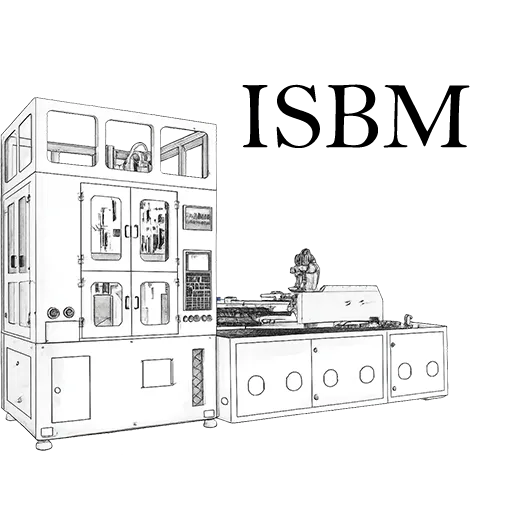
1. What Is an ISBM Machine?
An ISBM machine — short for Injection Stretch Blow Molding machine — is a specialized piece of plastic processing equipment that transforms raw polymer resin directly into finished hollow containers within a single, continuous production cycle. The defining characteristic of this technology is that all three fundamental steps of the process — injection molding, axial stretching, and radial blow molding — take place on the same machine without the container or preform being removed between steps. This is what distinguishes ISBM from conventional two-stage blow molding, where preforms are produced on a separate injection molding machine, cooled, stored, and then reheated on a different blow molding machine hours or even days later. The elimination of that intermediate cooling and reheating sequence is what gives one-step ISBM its most significant process advantages: lower energy consumption, tighter dimensional control, and reduced contamination risk — particularly important in pharmaceutical and food contact packaging applications where sterility and dimensional precision are non-negotiable requirements.
In practical terms, an operator loads raw plastic pellets — PET, PETG, PP, PC, TRITAN, or several other polymer grades — into the hopper of the ISBM machine. From that point forward the process is fully automatic: the machine injects molten resin to form a preform, conditions its temperature to the optimal stretch profile, extends a mechanical stretch rod to elongate the preform axially, simultaneously applies high-pressure blow air to expand it radially against the blow mold cavity walls, and finally ejects the finished container via robot arm or gravity chute. The completed bottle or jar arrives at the collection point already dimensioned, neck-finished, and ready for downstream filling, labeling, or capping without any secondary operations. A compact 3-station machine such as the EP-HGY50-V3-EV, with a footprint of just 3.8 m × 1.2 m, can produce containers ranging from 100 ml up to 2,500 ml across up to six cavity positions per cycle — representing a remarkably productive use of factory floor space for a process that delivers such a wide container size range.
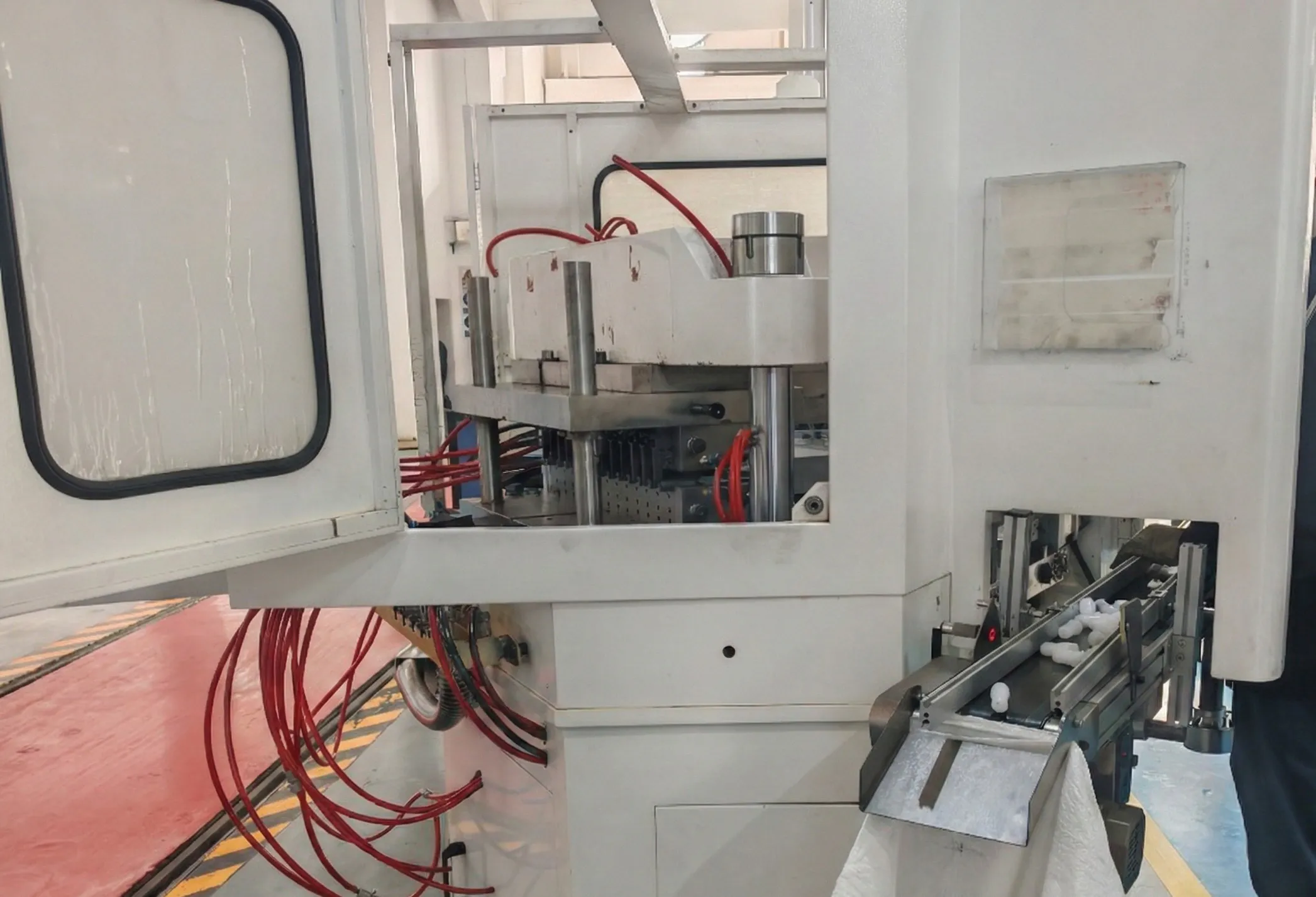
2. How Does an ISBM Machine Work? The Injection Stretch Blow Molding Process Step by Step
தி ஊசி நீட்சி ஊதி மோல்டிங் செயல்முறை can be broken into four sequential stages, each of which corresponds to a physical station on the machine’s rotary table. Understanding each stage helps clarify why the technology produces containers with properties — particularly biaxial molecular orientation, barrier performance, and neck finish accuracy — that two-stage and extrusion blow molding alternatives typically cannot match at equivalent wall thickness.
Stage 1 — Injection Molding (Preform Formation)
Plastic resin pellets enter the barrel through the hopper and are progressively melted by the rotating screw and heater bands. The molten polymer is then injected under high pressure through a hot runner system into the injection mold cavity, where it solidifies around the neck core pins to form the preform — a thick-walled tube with the finished neck geometry already in its final form. The neck finish (thread profile, sealing surface, neck height) is permanently set at this stage to tolerances tighter than ±0.05 mm, which is why one-step ISBM consistently achieves better closure leak performance than processes where the neck must be set in a separate reheat-blow sequence. Injection clamping forces on machines in the EP range vary from 50 kN on the compact EP-HGY50-V3-EV through to 400 kN on the large-format EP-HGY650-V4, reflecting the range of preform sizes and cavity counts supported.
Stage 2 — Temperature Conditioning (3-Station and 4-Station Difference)
On a 3-station machine such as the EP-HGY50-V3-EV or EP-BPET-94-V3, this intermediate stage handles tail cutting (removing the gate vestige), light pre-blowing for thin-wall applications, and thermal equilibration — allowing the preform temperature to stabilize from the outer surface through to the core. On a 4-station machine such as the EP-BPET-70-V4, EP-BPET-125-V4, or EP-HGYS150-V4, this step is separated into a dedicated temperature conditioning station with individual heating and conditioning cores, allowing significantly more precise temperature profiling. This is the key reason 4-station machines can reliably process thick-walled containers, wide-mouth jars, and engineering resins such as PC and PPSU, where tight temperature uniformity before stretching is essential to achieve uniform biaxial orientation in the blown wall.
Stage 3 — Stretch Blow Molding
The preform — still warm and dimensionally controlled from the injection stage — transfers to the blow station where the blow mold halves close around it. A stretch rod descends axially through the neck, mechanically elongating the preform to the target stretch ratio (typically 2:1 to 3:1 axially for PET). Simultaneously, blow air at pressures between 2.0 and 3.5 MPa expands the preform radially against the cooled blow mold cavity surfaces. This biaxial stretching — axial from the rod, radial from the air pressure — aligns the polymer molecular chains simultaneously in both directions. The result is a container with significantly higher tensile strength, impact resistance, clarity, and barrier performance than could be achieved through uniaxial or extrusion-based processes alone.
Stage 4 — Ejection and Take-Out
On 3-station machines the finished container is ejected directly from the blow station by gravity or mechanical pusher. On 4-station machines a dedicated ejection station with mechanical arm or robot gripper removes the container cleanly from the neck cores, enabling faster cycle recovery and eliminating the risk of the finished container contacting the hot blow mold during ejection — important for high-clarity or thin-wall containers where surface marking is a quality concern. The 6-station EP-HGYS280-V6 uses a twin-screw dual-injection configuration that effectively doubles the output of a standard 4-station machine for high-volume small-container applications.
3. 3-Station vs 4-Station ISBM Machines: Which Should You Choose?
The choice between a 3-station and 4-station machine is one of the most common questions buyers ask when evaluating the injection stretch blow molding machine options available in the market. The honest answer is that neither configuration is universally superior — they address different production requirements, and the right choice depends on the container type, material, production volume, and floor space available at the specific facility.
| Comparison Factor | 3-Station ISBM Machine | 4-Station ISBM Machine |
|---|---|---|
| Typical Models | EP-HGY50-V3-EV, EP-BPET-94-V3 | EP-BPET-70-V4, EP-BPET-125-V4, EP-HGYS150-V4, EP-HGY250-V4, EP-HGY650-V4 |
| நிலையங்கள் | Inject → Condition/Cut → Blow | Inject → Condition → Blow → Eject |
| இயந்திரத் தடம் | Smaller (e.g., 3.8×1.2×2.5 m) | Larger (e.g., 4.8×2.0×3.2 m to 6.3×2.4×3.7 m) |
| Container Size Range | 100 ml – 2,500 ml (PET/PETG) | 20 ml – 20 L depending on model |
| வெப்பநிலை கட்டுப்பாடு | Good — combined conditioning/blow stage | Excellent — dedicated conditioning station |
| Best For | Standard PET/PETG bottles, cosmetic & pharma | Wide-mouth jars, PC/TRITAN, thick-wall, high-volume |
| Compatible with ASB Moulds | Certain models (e.g., EP-BPET-94-V3) | Yes (e.g., EP-HGYS150-V4 ASB-12M compatible) |
| ஆற்றல் நுகர்வு | Lower (fewer servo systems required) | Higher absolute power, similar per-bottle efficiency |
| Cavity Count Range | 1–6 cavities (model dependent) | 1–28 cavities (model dependent) |
For a factory in Colombia entering the premium cosmetic bottle market for the first time, a 3-station EP-HGY50-V3-EV with 4-cavity tooling for a 250 ml serum bottle is a sound starting point — low capital, small footprint, and the full-servo drive system delivers dimensional consistency comparable to much more expensive equipment. As the product mix grows to include wide-mouth food jars or large-format 5-litre water containers, a 4-station EP-BPET-125-V4 or EP-HGY250-V4 becomes the natural next platform, with injection clamping forces up to 300 kN and blow clamping forces up to 250 kN per side enabling the larger preform volumes those containers require.
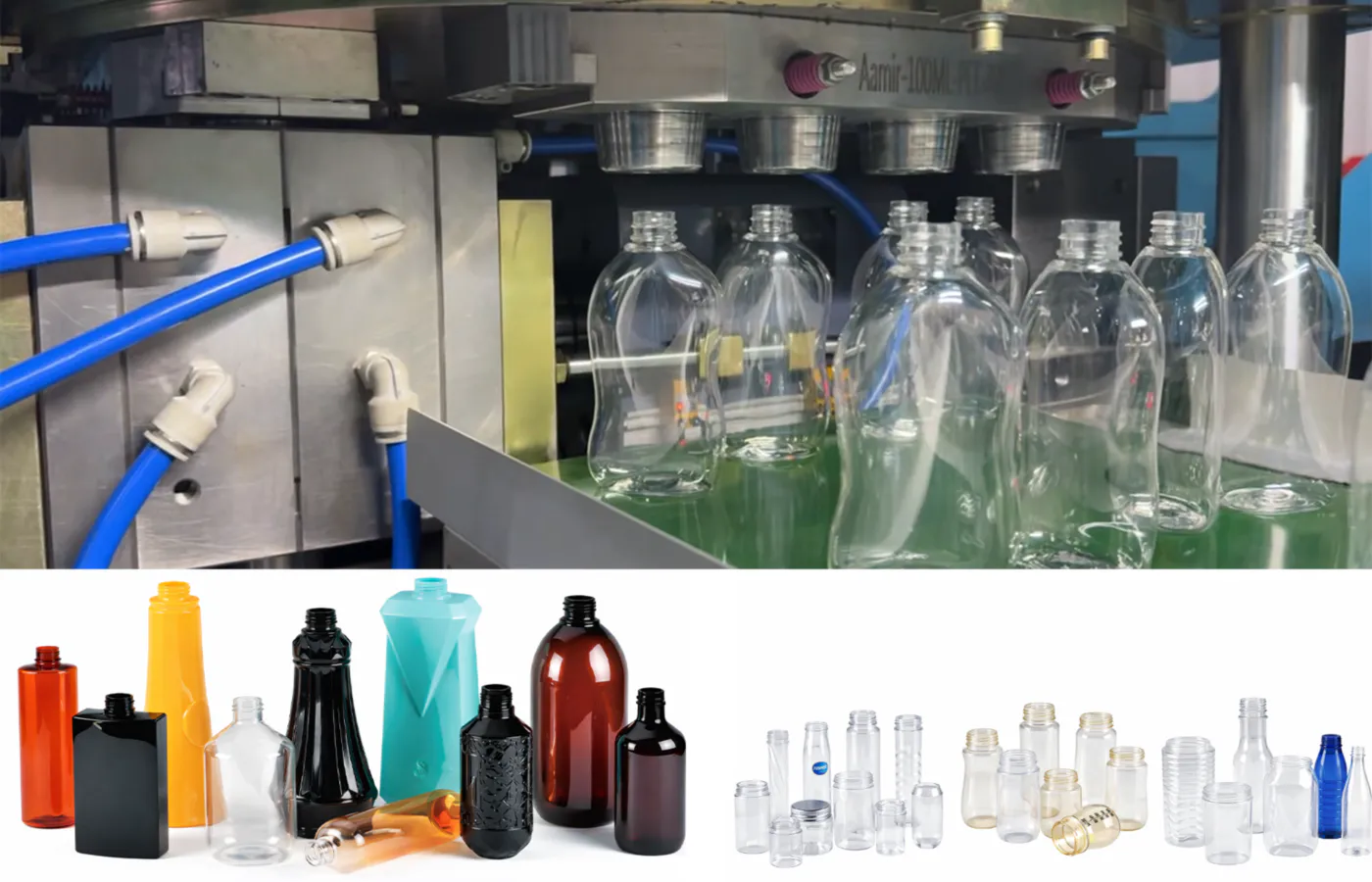
4. One-Step ISBM vs Two-Step SBM: A Practical Comparison
The single most important distinction in the blow molding industry is between the one-step injection stretch blow molding process and the two-step (or two-stage) process. In the two-step process, preforms are produced on a dedicated injection molding machine, removed, cooled to ambient temperature, stored, and then loaded into a reheat stretch blow molding machine where they are re-heated by infrared lamp ovens before being stretched and blown. This reheating step introduces several disadvantages that the one-step ISBM process structurally avoids. First, the energy required to reheat cold preforms is substantial — typically adding 25–40% to the thermal energy budget of the blow cycle. Second, preforms stored between operations can absorb atmospheric moisture, which degrades optical clarity and barrier performance in hygroscopic resins like PET. Third, the reheating lamps leave visible heat marks on the preform surface that may transfer as subtle surface defects to the finished container — a concern for premium cosmetic packaging where visual perfection is a brand requirement. Fourth, handling preforms between machines introduces contamination opportunities that are categorically unacceptable in pharmaceutical packaging environments.
The one-step approach — as implemented on all EP series ISBM machines — eliminates every one of those drawbacks by keeping the preform on the machine neck cores from injection through to the finished container ejection. The polymer never cools to ambient temperature, never sits in storage, and is never exposed to the factory atmosphere between process stages. Biaxial molecular orientation is achieved with the polymer chains in the ideal stretch condition, which is directly after forming when the temperature is uniformly distributed and the material’s viscosity is at the optimal stretch point. This is not simply a marginal process improvement — it is a fundamentally different quality mechanism that consistently produces containers with higher top-load strength, better optical clarity, and lower wall thickness variation than two-step production of the same bottle geometry and same resin lot can achieve.
| அளவுரு | One-Step ISBM | Two-Step Reheat SBM |
|---|---|---|
| Energy per bottle | Lower — no secondary reheating required | Higher — infrared reheat oven adds 25–40% |
| Preform handling | None — preform stays on neck cores throughout | Manual or automated transport between machines |
| Contamination risk | Minimal — sealed single-machine process | Higher — storage, transport, reheating all expose preform |
| Neck finish accuracy | Set once in injection station, never reheated | Set in injection, may relax during reheating |
| Container clarity | Superior — no lamp contact marks | May show lamp-contact heat marks on surface |
| Equipment investment | One machine covers full process | Injection machine + reheat blow machine |
| Ideal for | Pharma, cosmetics, premium food & beverage, baby products | Very high-volume commodity PET beverage bottles |
| Pharmaceutical suitability | Excellent — contamination-free process | Moderate — additional sterilization may be required |
5. What Materials Can an ISBM Machine Process?
One of the most practical advantages of a ஒரு-படி ஊசி நீட்சி ஊதி மோல்டிங் இயந்திரம் is the breadth of polymer families it can process. Unlike extrusion blow molding, which is strongly associated with HDPE and LDPE, ISBM technology is genuinely multi-material. The injection stage handles any resin that can be plasticized at temperatures compatible with standard hot runner and screw materials; the stretch-blow stage applies to any thermoplastic that exhibits adequate stretch-induced molecular orientation at the processing temperature. In practice, the resins most commonly processed on EP series ISBM machines are as follows, with notes on why each is chosen for specific end uses.
| பொருள் | Full Name | Key Properties | Primary Applications | Processing Notes |
|---|---|---|---|---|
| செல்லப்பிராணி | Polyethylene Terephthalate | High clarity, excellent barrier, fully recyclable | Water, juice, condiments, pharma, cosmetics | Standard configuration; most widely processed resin on ISBM machines |
| PETG (பெட்ஜி) | Glycol-modified PET | Superior clarity, impact resistance, no crystallization | Premium cosmetics, skincare, specialty food | Lower processing temperature than PET; excellent for colored transparent containers |
| பிசிடிஜி | Polycyclohexylene dimethylene terephthalate glycol | Toughness, clarity, chemical resistance | Cosmetics, personal care, specialty packaging | Excellent for complex shapes; good compatibility with pigments |
| பிபி | Polypropylene (high-transparency grade) | Chemical resistance, heat resistance, recyclable | Food containers, household cleaning, automotive fluids | Requires modified gate and conditioning profile; semi-crystalline behavior needs careful temperature control |
| பி.கே. | Polycarbonate | Exceptional impact resistance, heat resistance, optical clarity | Baby bottles, reusable water bottles, medical devices | Requires higher processing temperature (280–310°C); H13 steel mould inserts recommended |
| டிரைடன் | Tritan copolyester (BPA-free) | BPA-free, exceptional clarity, dishwasher-safe | Baby bottles, sports bottles, food-contact items | FDA/EFSA-listed food contact compliance; premium material with higher resin cost |
| PS / SAN | Polystyrene / Styrene-Acrylonitrile | Good clarity, rigid, economical | Cosmetic jars, LED lampshades, craft containers | Brittle relative to PET; injection parameters require careful velocity profiling |
6. Five Key Advantages of One-Step Injection Stretch Blow Molding Technology
The preform retains its injection heat through every subsequent station until the blow stage is complete. This eliminates the need for an infrared reheat oven — which on a two-stage machine accounts for 25–40% of total thermal energy consumption per container. For a factory producing one million bottles per month, this energy saving represents a meaningful and permanent reduction in operating cost. The EP-HGY50-V3-EV, for example, operates at a total installed power of 45.2 kW — competitive for a machine capable of 6 cavities per cycle and continuous 24-hour operation at cycle times typically between 15 and 25 seconds.
Because the neck finish is set in the injection station and the preform never leaves the neck cores until the container is ejected, there is no opportunity for the neck to relax, deform, or vary dimensionally between production runs. Wall thickness variation in properly optimized one-step ISBM production is routinely held below ±5% across all cavities — a specification that directly translates to lower reject rates, more consistent closure performance, and predictable container top-load strength. This level of dimensional control is one reason ISBM is the preferred manufacturing route for pharmaceutical dropper bottles and cosmetic closure-critical containers, where neck finish variation of even 0.1 mm can cause closure torque failures.
In pharmaceutical, medical, baby product, and food-grade packaging operations, the sealed single-machine environment of one-step ISBM is a decisive hygiene advantage. The preform is formed, conditioned, stretched, and blown without ever being handled, stored, or transported in the open factory environment. There is no preform storage racking, no operator touching containers in intermediate stages, and no exposure to atmospheric humidity that would degrade PET clarity or absorb surface contaminants. For regulated production environments in Colombia and internationally, the clean-room integration potential and documentation simplicity of a single-machine process materially simplifies GMP compliance validation compared to a two-machine two-stage setup.
One-step ISBM machines generate minimal production waste. Gate vestiges and sprue material from the injection stage are either trimmed inline and returned to the regrind hopper, or in advanced configurations eliminated entirely through hot runner direct-gating. There are no preform rejects from improper storage or moisture absorption to write off, and no blow rejects from preform temperature non-uniformity entering the blow station at the wrong temperature. Overall material utilization rates above 95% are routinely achievable in steady-state production, compared to 88–92% being more typical on two-stage systems where cold preform transport and reheating introduce additional reject mechanisms. For expensive specialty resins like TRITAN or medical-grade PC, this material efficiency difference has a direct and significant impact on cost per finished container.
A single one-step ISBM machine replaces both an injection machine and a blow machine from a two-stage setup, yet occupies a fraction of the combined floor space. The EP-HGY50-V3-EV stands in a footprint of 3.8 × 1.2 meters. The larger EP-HGY250-V4, capable of producing containers up to 2,500 ml in multi-cavity configurations or up to 20-litre containers in single-cavity mode, fits within 6.3 × 2.4 meters. For factories in Colombia’s industrial zones — where factory floor rental costs in cities like Bogotá, Medellín, and Barranquilla can be substantial — consolidating injection and blow molding into a single footprint is a meaningful ongoing operational saving, not just a one-time capital consideration.
7. EP Series ISBM Machine Range Overview
The EP product range spans from compact 3-station servo machines designed for flexible small-to-medium batch production through to heavy-duty 4-station platforms capable of producing 20-litre containers and supporting cavity counts up to 28 per cycle on dual-row configurations. The following table summarizes the key technical parameters of the main machine models to assist in preliminary platform selection. All models operate on PET and PETG as standard; material-specific configurations for PP, PC, and TRITAN are available across the range on request.
| மாதிரி | நிலையங்கள் | Injection Clamp (kN) | Blow Clamp (kN) | மோட்டார் சக்தி (kW) | இயந்திரத்தின் அளவு நீளம் × அகலம் × உயரம் (மிமீ) | எடை (டன்) | அதிகபட்ச அளவு |
|---|---|---|---|---|---|---|---|
| EP-HKY50-V3-EV | 3 | 50 | 100 | 34.8 | 3800×1200×2500 | 3.5 | 2,500 மிலி |
| EP-BPET-94-V3 | 3 | 785 | 298 | 65 | 4800×2050×3000 | 11.6 | 4,500 மிலி |
| EP-BPET-70-V4 | 4 | 285 | 115 | 44 | 4400×1350×2900 | 5.1 | 2,500 மிலி |
| EP-BPET-125-V4 | 4 | 685 | 286 | 65 | 5000×2050×3000 | 11.6 | 5,000 மிலி |
| EP-HGYS150-V4 | 4 | 150 | 200 | 43.2 | 4200×1400×2900 | 6 | 2,500 மிலி |
| EP-HGYS200-V4 | 4 | 300 | 200 | 49.2 | 4800×2000×3200 | 13 | 2,500 மிலி |
| EP-HGY250-V4 | 4 | 300 | 200 | 67.7 | 6300×2400×3700 | 16 | 2,500 மிலி (9°C வரை) |
| EP-HGY650-V4 | 4 | 400 | 400 | 75.7 | 6100×2600×4200 | 28 | 20 லிட்டர் |
| EP-HGYS280-V6 | 6 | 150 | 200 | 43.2 | 5900×2600×3200 | 14 | 2,500 மிலி (இரட்டைத் திருகு) |
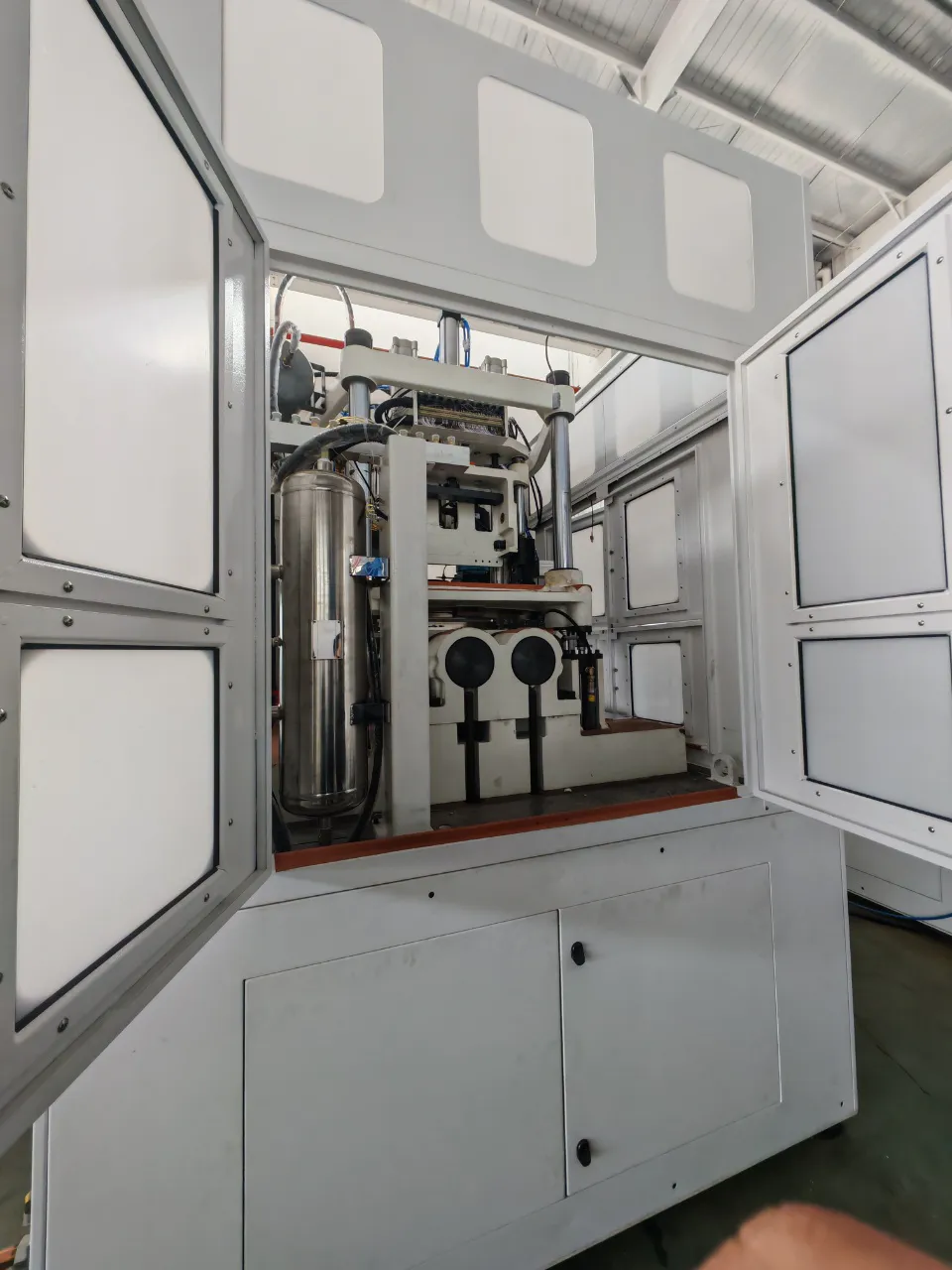
8. ISBM இயந்திரங்கள் எங்கே பயன்படுத்தப்படுகின்றன? முக்கிய பயன்பாட்டுத் துறைகள்
பலதரப்பட்ட பொருட்களைக் கையாளும் திறன், உயர் பரிமாணத் துல்லியம் மற்றும் மாசுபடாத உற்பத்தி ஆகியவற்றின் ஒருங்கிணைப்பு, இன்ஜெக்ஷன் ஸ்ட்ரெட்ச் ப்ளோ மோல்டிங் இயந்திரத்தை பல்வேறு தொழில்துறைகளுக்கு மிகவும் பொருத்தமானதாக ஆக்குகிறது. பின்வரும் துறைகள் ISBM தொழில்நுட்பத்திற்கான மிகவும் நிறுவப்பட்ட சந்தைகளைக் குறிக்கின்றன; மேலும், மாற்று வழிகளைக் காட்டிலும் இந்த ஒற்றை-படி செயல்முறையால் ஒவ்வொரு துறையும் ஏன் குறிப்பாகப் பயனடைகிறது என்பதும் விளக்கப்பட்டுள்ளது.
அழகுசாதனப் பொருட்கள் & தனிப்பட்ட பராமரிப்பு
பிரீமியம் சீரம்கள், மாய்ஸ்சரைசர்கள், வாசனைத் திரவிய இரண்டாம் நிலை பேக்கேஜிங் மற்றும் ஷாம்பு ஆகியவை ISBM உடன் மிகவும் தொடர்புடைய வகைகளில் அடங்கும். PETG மற்றும் PCTG கொள்கலன்களின் கண்ணாடி போன்ற தெளிவு, துல்லியமான பம்ப் விநியோகத்திற்கான கூர்மையான கழுத்துப் பகுதி, மற்றும் எக்ஸ்ட்ரூஷன் ப்ளோ மோல்டிங் தளங்களில் சாத்தியமில்லாத சமச்சீரற்ற அல்லது புடைப்பு வடிவங்களை உருவாக்கும் திறன் ஆகியவை, கொலம்பியாவில் பேக்கேஜிங் உற்பத்தியை மேற்கொள்ளும் முக்கிய பிராண்டுகள் உட்பட, உலகளவில் நடுத்தர முதல் பிரீமியம் வரையிலான அழகுசாதனப் பிராண்ட் பேக்கேஜிங்கிற்கான ஒரு தரமான செயல்முறையாக ISBM-ஐ மாற்றியுள்ளன.
மருந்து மற்றும் மருத்துவம்
கண் சொட்டு மருந்து புட்டிகள், வாய்வழி திரவக் கொள்கலன்கள், மாத்திரை ஜாடிகள் மற்றும் பல-மருந்தளவு மருந்துக் கலன்களுக்கு, தூய்மை உறுதிசெய்யப்பட்ட சூழலில் GMP-இணக்கமான உற்பத்தி தேவைப்படுகிறது. முன்வடிவத்திலிருந்து கொள்கலன் வரையிலான செயல்முறை முழுவதுமாக ஒரே இயந்திரத்திற்குள் அடங்கியிருப்பதால், இந்த ஒற்றை-படி ISBM செயல்முறையானது, சிறப்புத் தூய்மை-அறை உள்கட்டமைப்பு இல்லாமலேயே இந்தத் தேவையைத் தனித்துவமாகப் பூர்த்தி செய்கிறது. கொலம்பியாவில் உள்ள மருந்துப் பொதியிடல் வாங்குபவர்கள், மருந்துப் பொதியிடலுக்கான INVIMA ஒழுங்குமுறைக் கட்டமைப்புகளையும் பின்பற்ற வேண்டும். ஆவணப்படுத்தப்பட்ட அளவுருக் கட்டுப்பாடு மற்றும் தடமறியும் தன்மையுடன் கூடிய ஒற்றை-இயந்திரச் செயல்முறையில் இவற்றைச் சரிபார்ப்பது மிகவும் எளிதானது.
உணவு & பானங்கள்
சமையல் எண்ணெய் பாட்டில்கள், சூடாக நிரப்பக்கூடிய பழச்சாறு கொள்கலன்கள், மினரல் வாட்டர், மசாலாப் பொருட்கள் ஜாடிகள் மற்றும் தேன் ஜாடிகள் ஆகியவை ISBM-இன் உணவு மற்றும் பானத் தடத்தைக் குறிக்கின்றன. சரியான உணவு-தொடர்பு தர ரெசின்கள் பயன்படுத்தப்படும்போது, உணவுடன் தொடர்பு கொள்ளும் PET மற்றும் PP பொருட்கள் INVIMA (கொலம்பியா), FDA (அமெரிக்கா), EU ஒழுங்குமுறை 10/2011 மற்றும் ANVISA (பிரேசில்) உணவுப் பாதுகாப்பு கட்டமைப்புகளுக்கு இணங்குகின்றன. பொருத்தமான குழி கருவிகளைக் கொண்டு, EP-BPET-125-V4 தளத்தில் 5,000 மில்லி கொள்ளளவு வரையிலான அகன்ற வாய் கொண்ட உணவு ஜாடிகளை உருவாக்க முடியும்.
குழந்தை மற்றும் சிசுப் பொருட்கள்
குழந்தை பால் புட்டிகள், சிப்பி கோப்பைகள் மற்றும் கைக்குழந்தை சேமிப்புக் கொள்கலன்கள் ஆகியவை, ISBM இயந்திரங்கள் நன்கு கையாளும் BPA-இல்லாத பொருட்களான — ட்ரைட்டான், PPSU, உணவுத் தர PC — ஆகியவற்றின் இயல்பான பயன்பாடுகளாகும். குழந்தை புட்டிகளில் கழுத்துப் பகுதியின் பரிமாணத் துல்லியம் குறிப்பாக முக்கியமானது, ஏனெனில் அதில் பால் நிப்பிள் பொருத்துவதற்கு, ஒரு மில்லிமீட்டரின் பின்னங்கள் வரை துல்லியமான ஒரு சீலிங் இடைமுகம் தேவைப்படுகிறது. ஒவ்வொரு உற்பத்தித் தொகுதிக்குமான மூலப்பொருள் தடமறிதல் மற்றும் செயல்முறை அளவுருக்களை ஆவணப்படுத்தும் திறனும், கொலம்பியாவிலும் சர்வதேச அளவிலும் கைக்குழந்தைப் பொருட்கள் பிரிவில் ஒழுங்குமுறை இணக்கத்திற்கு மிகவும் முக்கியமானதாகும்.
பெரிய அளவிலான தொழில்துறை கொள்கலன்கள்
EP-HGY650-V4 ஆனது, ஒற்றைக் குழி முறையில் 5 லிட்டர், 12 லிட்டர் மற்றும் 20 லிட்டர் வரையிலான கொள்கலன்களுக்கு ISBM திறனை விரிவுபடுத்துகிறது. இந்த வடிவம் பொதுவாக எக்ஸ்ட்ரூஷன் ப்ளோ மோல்டிங்குடன் தொடர்புடையது. இருப்பினும், பிரீமியம் வாட்டர் கூலர் பாட்டில்கள், பெரிய அளவிலான உணவுச் சேவைக் கொள்கலன்கள் மற்றும் சரிபார்க்கக்கூடிய பரிமாணத் தரநிலைகள் தேவைப்படும் சிறப்பு இரசாயன டிரம்கள் போன்ற, இன்ஜெக்ஷன்-ஸ்ட்ரெட்ச் தொழில்நுட்பத்தின் உயர்ந்த தெளிவு மற்றும் கழுத்துப் பகுதி நேர்த்தித் துல்லியம் ஆகியவை உண்மையான தயாரிப்பு மதிப்பைச் சேர்க்கும் பயன்பாடுகளில், ISBM முறையிலும் இதைச் சாத்தியமாக்கலாம்.
தொழில்நுட்ப மற்றும் புட்டி அல்லாத பயன்பாடுகள்
ISBM இயந்திரங்களில் செய்யப்படும் PS மற்றும் PMMA செயலாக்கம், ஊசி வார்ப்பின் துல்லியமும் ஊது வார்ப்பின் உள்ளீடற்ற உருவாக்கும் திறனும் ஒருங்கே தேவைப்படும் LED விளக்கு நிழல் பாகங்கள், ஒளியியல் கொள்கலன்கள் மற்றும் அலங்கார கைவினைப் பொருட்களை உற்பத்தி செய்ய உதவுகிறது. இந்த ஊசி நீட்சி வார்ப்பு செயல்முறையானது, வேறு எந்த ஒற்றை-படி செயல்முறையாலும் உருவாக்க முடியாத சமச்சீரற்ற புட்டிகள், புடைப்பு வடிவங்களைக் கொண்ட ஜாடிகள், மற்றும் ஒருங்கிணைந்த கைப்பிடிகள் அல்லது சிக்கலான தோள்பட்டை வடிவவியல்களைக் கொண்ட சிறப்பு கொள்கலன்களின் உற்பத்திக்கும் துணைபுரிகிறது.
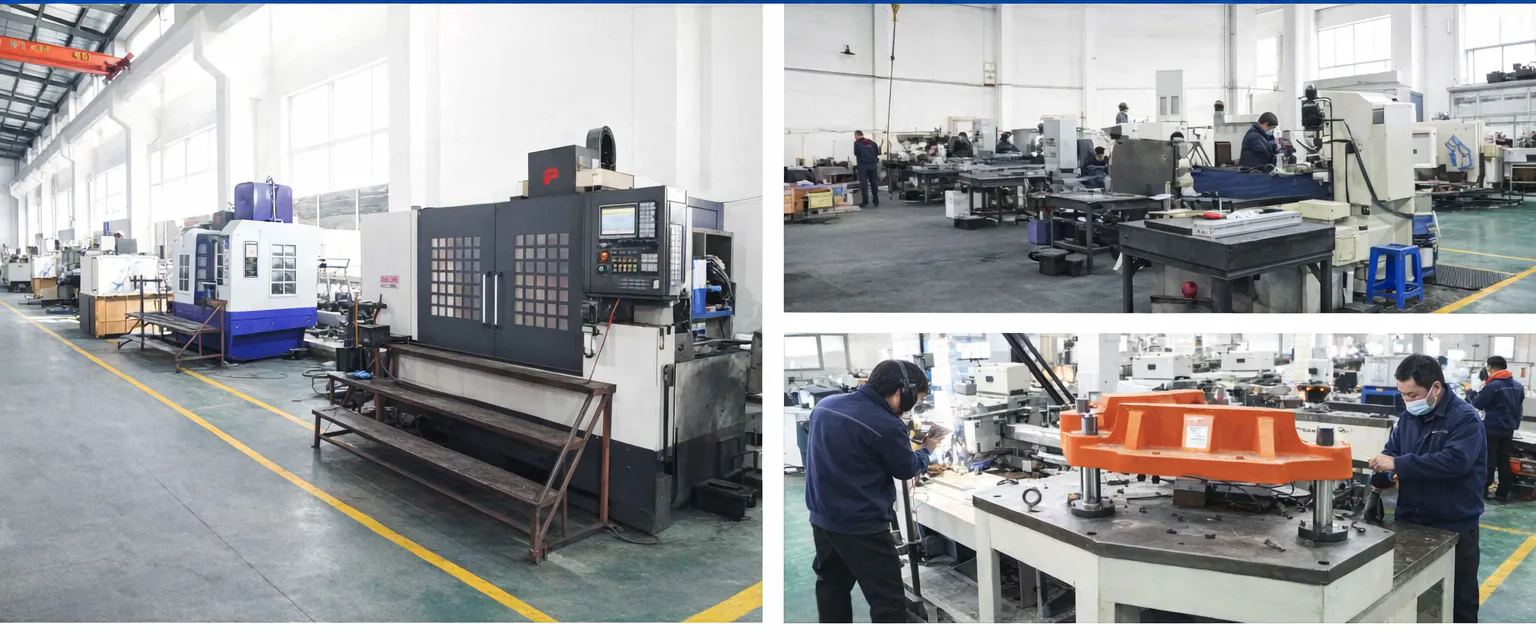
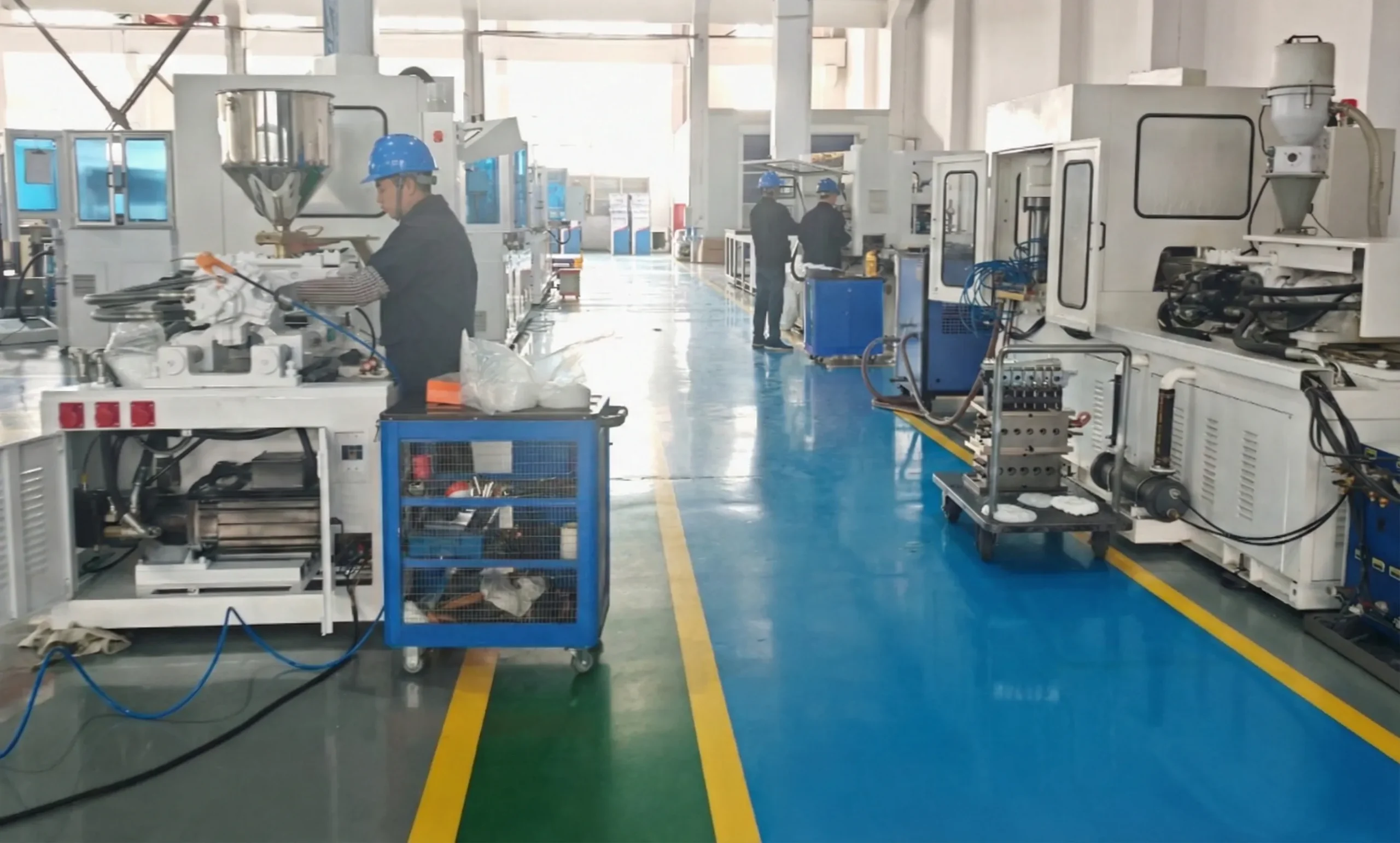
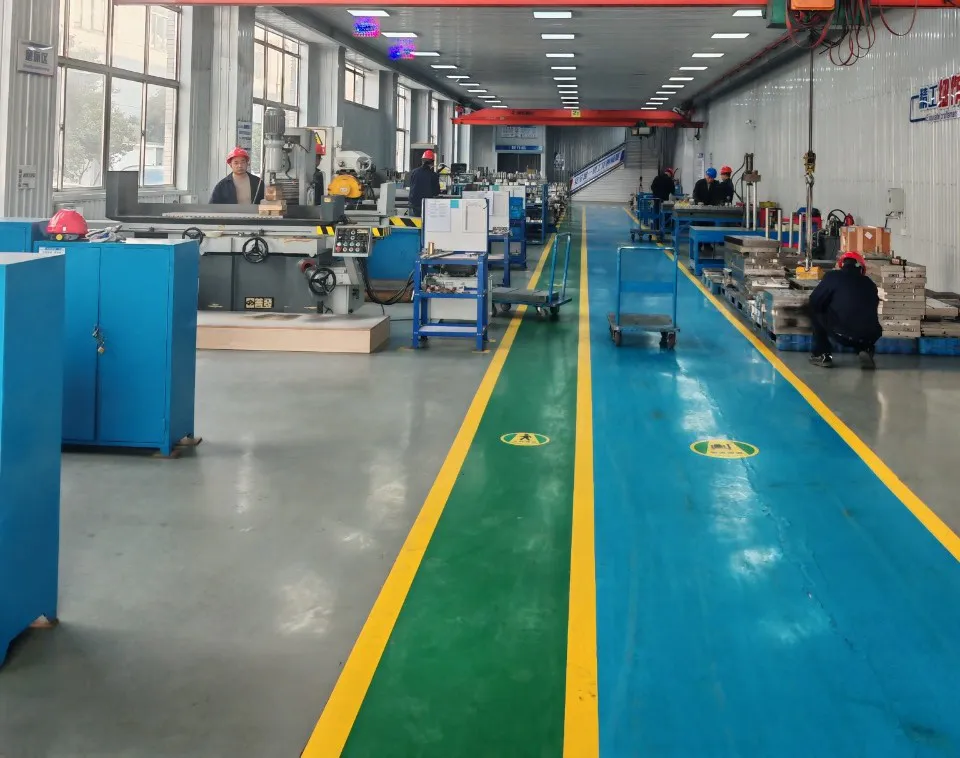
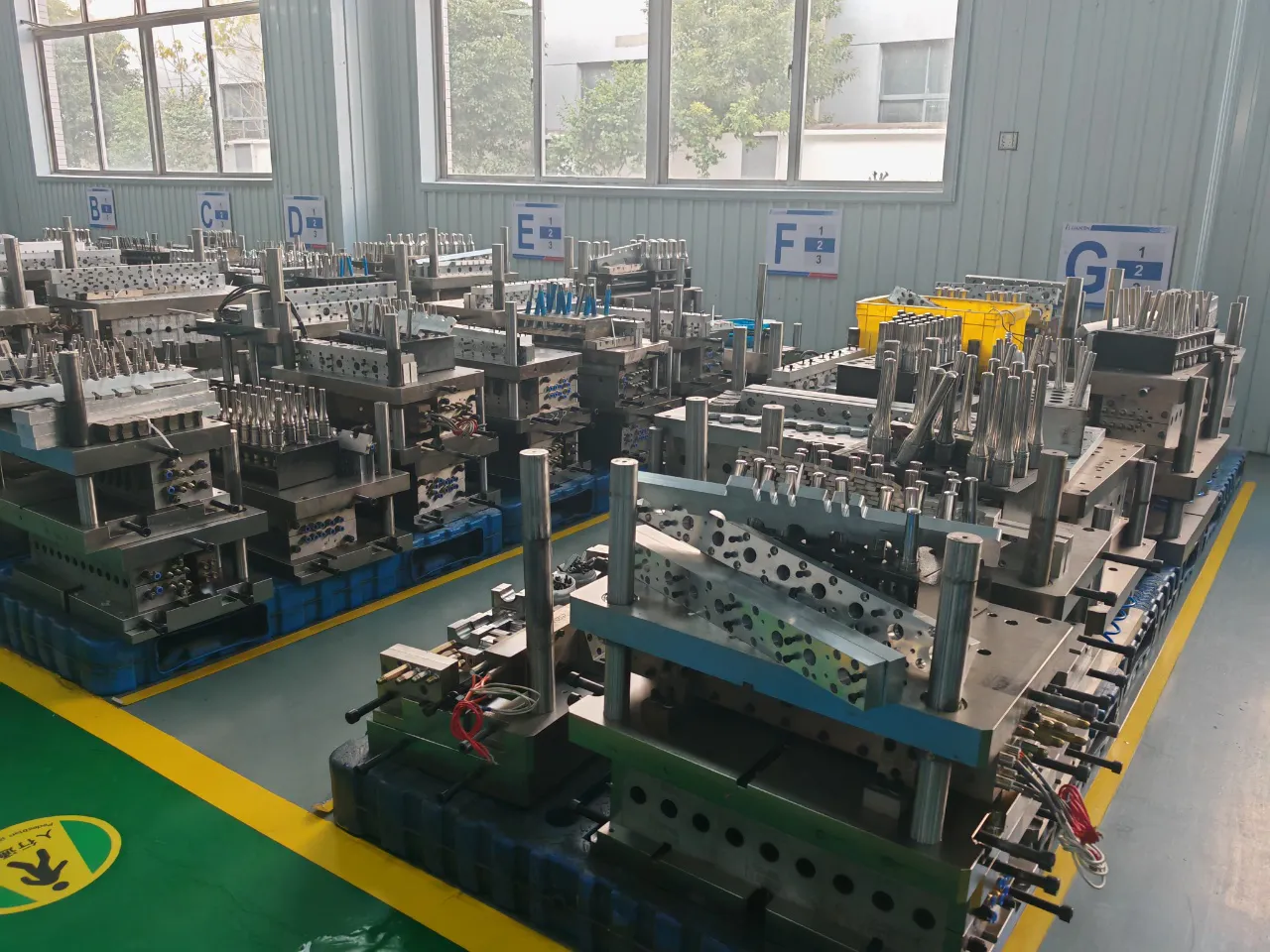
பட்டறை
ISBM இயந்திரங்கள் பற்றிய அடிக்கடி கேட்கப்படும் கேள்விகள்
ஆசிரியர்: PXY