ISBM மற்றும் EBM (எக்ஸ்ட்ரூஷன் ப்ளோ மோல்டிங்): ஒவ்வொரு பேக்கேஜிங் வாங்குபவரும் தெரிந்து கொள்ள வேண்டிய முக்கிய வேறுபாடுகள்
A buyer’s field guide written for packaging engineers, plant managers, and category buyers in Colombia and across Latin America — covering the real engineering differences between an injection stretch blow moulding machine and an extrusion blow moulder, so you can specify the right line the first time.
Technical Parameters of Representative HGY-Series Models
The table below compares five representative models across the injection stretch blow moulding machine lineup. Specifications are referenced directly to the published technical data sheets and validated in factory acceptance testing.
| அளவுரு | HGY50-V3-EV அறிமுகம் | HGY150-V4 | HGY200-V4 அறிமுகம் | HGY250-V4 | HGY650-V4 அறிமுகம் |
|---|---|---|---|---|---|
| நிலையங்கள் | 3-நிலையங்கள் | 4-நிலைய | 4-நிலைய | 4-நிலைய | 4-நிலைய |
| இயக்க வகை | முழுமையாக மின்சாரத்தில் இயங்கும் | ஹைட்ராலிக் / செர்வோ | ஹைட்ராலிக் / செர்வோ | ஹைட்ராலிக் / செர்வோ | ஹைட்ராலிக் / செர்வோ |
| பொருந்தக்கூடிய பொருள் | PET / PETG | PET / PETG | PET / PETG | PET / PETG | PET / PETG |
| திருகு விட்டம் (மிமீ) | 40 / 50 / 55 | 40–60 | 40–60 | 50–60 | 50–60 |
| கோட்பாட்டு ஊசி அளவு (cm³) | 239 / 315 / 442 | 188–480 | 188–480 | 340–480 | 340–480 |
| உட்செலுத்துதல் இறுக்கும் விசை (kN) | 50 | 150 | 300 | 300 | 400 |
| ஊதுதல் இறுக்கும் விசை (kN) | 100 | 200 | 200 | 200 | 400 |
| மோட்டார் சக்தி (kW) | 34.8 | 43.2 | 49.2 | 67.7 | 75.7 |
| வெப்பமூட்டும் திறன் (kW) | 10.4 | 10 | 10 | 15 | 15 |
| காற்று அழுத்தம் (MPa) | 2.0–3.5 | 2.0–3.5 | 2.0–3.5 | 2.0–3.5 | 2.0–3.5 |
| குளிரூட்டும் நீரின் அழுத்தம் (MPa) | 0.4–0.6 | 0.4–0.6 | 0.4–0.6 | 0.4–0.6 | 0.4–0.6 |
| Voltage (V) | 370–400 | 370–400 | 370–400 | 370–400 | 370–400 |
| இயந்திரத்தின் அளவு நீளம் × அகலம் × உயரம் (மிமீ) | 3800×1200×2500 | 4200×1400×2900 | 4800×2000×3200 | 6300×2400×3700 | 6100×2600×4200 |
| இயந்திர எடை (டன்) | 3.5 | 6 | 13 | 16 | 28 |
| அதிகபட்ச பாட்டில் அளவு | 2500 மிலி | 2500 மிலி | 2500 மிலி | 2500 மிலி | 20 லிட்டர் |
| அச்சு இணக்கத்தன்மை | தரநிலை | Standard / ASB-12M | ASB-12M / Aoki 250 | ஏஎஸ்பி-70டிபிஎச் | பெரிய வடிவம் |
1. Why this comparison matters to Colombian packaging buyers
If you supply cosmetic, pharmaceutical, or food-and-beverage bottles to brands in Bogotá, Medellín, Cali, or Barranquilla, the blow-moulding technology you choose shapes your cost structure for the next decade. Two processes dominate rigid plastic container production today: extrusion blow moulding (EBM) and injection stretch blow moulding, with the latter usually running on a purpose-built injection stretch blow moulding machine. The two look superficially similar on a factory floor — both take hot polymer and inflate it into a hollow part — but the metallurgy, kinematics, materials compatibility, and finished-bottle performance are genuinely different. Getting the choice wrong can mean paying a premium for capability you do not use, or worse, specifying a line that physically cannot produce the clarity, barrier, or neck precision your brand customer demands. This guide walks through nine technical dimensions a procurement team should compare, anchored in real machine data from the HGY-series injection stretch blow moulding machine family and cross-referenced to practical EBM alternatives, so the decision becomes a matter of matching the process to the product instead of guessing.
2. What is an injection stretch blow moulding machine?
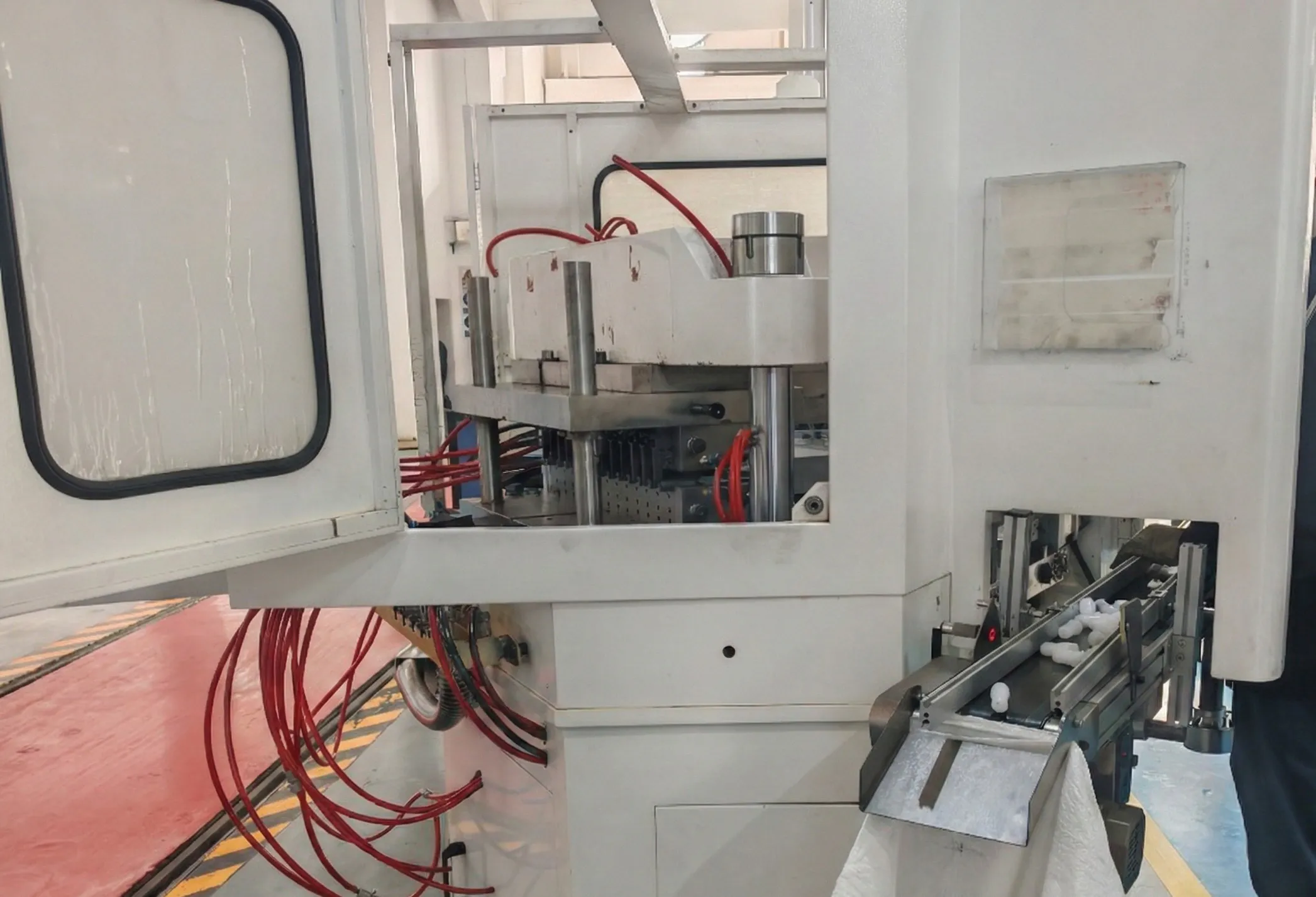
An injection stretch blow moulding machine is a single piece of integrated equipment that injects a preform, keeps that preform at its own residual processing temperature, then stretches and blows it into a finished bottle — all inside one cabinet, on a rotary table that indexes the preform between stations. The one-step injection stretch blow moulding cycle typically runs through three or four stations: injection of the preform, optional heat preservation or tail cutting, stretch-blow in the bottle cavity, and finished-part take-out. Because the preform never leaves the machine and never cools to room temperature, the thermal energy injected during melting is largely retained for the stretch-blow step. This is the defining feature that separates a true injection stretch blow moulding machine from a two-step line, where preforms are molded on an injection press, stored, and later reheated on a standalone reheat blow press. The one-step approach reduces energy consumption by around forty percent, eliminates preform handling damage, and yields the mirror-like internal surface finish that cosmetics brands specifically request. The result is a process that gives packaging buyers a PET or PETG bottle with controlled wall thickness, crystal-clear bodies, and a precisely molded neck finish that accepts standard closures without deformation.
3. What is extrusion blow molding (EBM)?
Extrusion blow moulding takes a fundamentally different path from both the injection blow moulding family of processes and from ISBM. An extruder melts polymer pellets and pushes the melt continuously or in shot-accumulator bursts through an annular die, forming a hollow tube called a parison. Two mould halves close around the parison, pinch it off at one end, and compressed air inflates the still-molten tube against the cavity walls. Because there is no injection step, no preform, and no oriented biaxial stretching, EBM is mechanically simpler and historically cheaper for large-volume commodity containers. Typical EBM materials are polyolefins — HDPE, LDPE, and PP — used for motor-oil bottles, household cleaner containers, industrial jerrycans, and thick-walled healthcare jugs. EBM neck finishes are formed at the pinch-off and trimmed, which means the thread accuracy and the internal neck surface cannot match what a dedicated injection stretch blow moulding machine delivers. For clear PET beverage bottles, for pharmaceutical bottles that need tight ovality tolerance, and for cosmetic bottles that demand a polished gloss, EBM is structurally disadvantaged. For a five-litre motor-oil jug in opaque HDPE, EBM is almost always the better economic answer. The two processes are complementary more than they are competitive.
4. Nine-dimension comparison: ISBM vs EBM at a glance
The following matrix summarises the nine engineering dimensions that most frequently drive a packaging buyer’s final choice. Each row compares how a typical injection stretch blow moulding machine handles the category against a representative extrusion blow moulder. A deeper discussion of each dimension follows the table.
| Dimension | Injection Stretch Blow Moulding Machine (ISBM) | Extrusion Blow Moulding (EBM) |
|---|---|---|
| செயல்பாட்டு முறை | Inject preform, retain heat, stretch axially, blow radially | Extrude parison, close mould, pinch off, blow |
| கட்டமைப்பு வகை | Rotary turntable with 3, 4, or 6 stations; servo-indexed | Linear shuttle or continuous wheel; single-cavity or multi-cavity die head |
| உற்பத்தி கட்டமைப்பு | Integrated injection unit, temperature-control core, stretch rod, blow cavity in one cabinet | Extruder with screw and die, clamp unit with pinch-off knives, separate deflashing |
| பொருள் அமைப்பு | PET, PETG, PP, PPSU, PC, Tritan, PCTG, PLA, PS, ABS — biaxially stretchable resins | HDPE, LDPE, PP, PVC — polyolefins that hold a parison without sag |
| மேற்பரப்பு சிகிச்சை | High-gloss, optical-grade clarity; polished S136 stainless cavity | Satin to semi-gloss; visible pinch-off weld line on base |
| சுற்றுச்சூழல் தரம் | Suitable for cleanroom installation, food-grade, pharma, baby products | General industrial; food-grade possible with additional shielding |
| இயக்க நிலைமைகள் | Closed cycle; servo pressure compensation; stable ambient | Continuous extrusion; open parison exposure; more tolerant of ambient swings |
| பொதுவான தோல்வி முறைகள் | Preform crystallisation, stretch whitening, neck thread shrinkage | Parison sag, flash over-trim, weld-line weakness at pinch-off |
| பரிந்துரைக்கப்பட்ட உள்ளமைவு | Servo or fully electric drive, Parker high-pressure valves, S136 moulds | Accumulator head extruder, hydraulic clamping, deflashing station |
5. Action Method — how the polymer is shaped
The action method is the single most important engineering difference, because it determines everything downstream. An injection stretch blow moulding machine first injects molten PET or PETG into a preform cavity under a clamping force that typically sits between fifty and four hundred kilonewtons depending on model. That preform is then indexed to the stretch-blow station while still warm, a stretch rod descends axially, and high-pressure air — usually between 2.0 and 3.5 megapascals — inflates the preform radially against the bottle cavity. The polymer molecules orient biaxially, which is the reason PET beverage bottles can be so thin yet so strong. EBM has no preform and no biaxial orientation: a continuous or intermittent parison is extruded, clamped, pinched, and inflated. The polymer chains retain roughly their extrusion-direction orientation and do not develop the transverse strength that biaxial stretching gives. This single distinction explains why a one-step injection stretch blow moulding machine produces water bottles you can squeeze without buckling, while EBM-made HDPE jugs rely on thicker walls for the same rigidity. The process philosophy is stretch-for-strength versus mass-for-strength, and each path makes sense for its matching product family.
6. Structure Type — stations and indexing
An injection stretch blow moulding machine is built around a rotary turntable. Entry-level models run three stations: injection, stretch-blow, and take-out. Four-station machines add a dedicated temperature-conditioning or tail-cutting station between injection and blow, which stabilises preform temperature and gives more reliable wall-thickness distribution. Six-station configurations, such as the HGYS280-V6, split the injection and blow work across parallel columns to raise throughput for high-volume cosmetic bottle runs. Indexing is driven by a servo motor paired with a precision reducer, giving sub-degree angular accuracy that is essential for keeping preforms aligned with the stretch rod. EBM structure is entirely different: most machines use a reciprocating shuttle that carries two mould halves to the parison, or a continuous wheel where many moulds circulate past a stationary die. There is no preform, no indexing to an injection unit, and no temperature-conditioning stage — the process runs continuously at the die-head rate. This fundamental structural contrast is why converting an EBM plant to a new injection stretch blow moulding machine line is not a retrofit; it is a re-engineering of the factory layout, utility loads, and operator training program.
7. Manufacturing Structure — what sits inside the cabinet
Inside a modern injection stretch blow moulding machine the buyer will find an injection screw with diameter ranging from 40 mm on small HGY50-V3-EV units up to 60 mm on HGY250 and HGY650 models, a nano far-infrared energy-saving heating ring on the screw barrel, a dual servo-motor clamping system for the blow mould with high-pressure compensation, a stretch rod assembly actuated by a servo cylinder, and a preform-temperature-conditioning core that equalises skin-to-core heat before blowing. Hydraulic control valves from YUKEN, high-pressure air valves from Parker, and servo motors from Inovance or Yaskawa are typical in top-tier configurations. An EBM machine is built around a quite different skeleton: a horizontal or vertical extruder with a longer L/D screw, an accumulator head or continuous die, pinch-off blades on the mould halves, and a deflashing or tail-trim station after blow. EBM lines rarely use servo hydraulics because the process is more forgiving of pressure variation. The manufacturing-structure delta also drives the spare-parts strategy: replacement injection stretch blow moulding machine components concentrate on precision servo drives and polished mould cavities, whereas EBM spares focus on screws, dies, and pinch-off inserts.
8. Material System — what polymers actually work
The polymer shortlist for each process is almost completely non-overlapping. An injection stretch blow moulding machine is designed around biaxially stretchable resins: PET is the overwhelming default, PETG adds chemical resistance, PP delivers opaque wide-mouth jars, PPSU and PC survive repeated sterilisation for medical and baby applications, Tritan gives BPA-free clarity for reusable drinkware, and PLA serves the bioplastic segment. The injection stretch blow molding process requires the resin to hold its melt temperature long enough to pass from injection to stretch-blow without crystallising — PET’s narrow processing window is exactly why it rewards a precision one-step line. EBM, in contrast, lives on polyolefins. HDPE is the volume workhorse for detergent bottles and milk jugs, LDPE gives softer squeeze bottles, and PP EBM serves ketchup and condiment containers. PVC EBM persists in specific pharmaceutical and cosmetic niches. A new injection stretch blow moulding machine cannot economically run HDPE because HDPE does not biaxially orient in the same way, and an EBM line cannot run PET clear bottles at the clarity, neck precision, or wall uniformity the beverage market expects. Specifying the right material is therefore inseparable from specifying the right machine platform.
9. Surface Treatment — the finish buyers can actually see
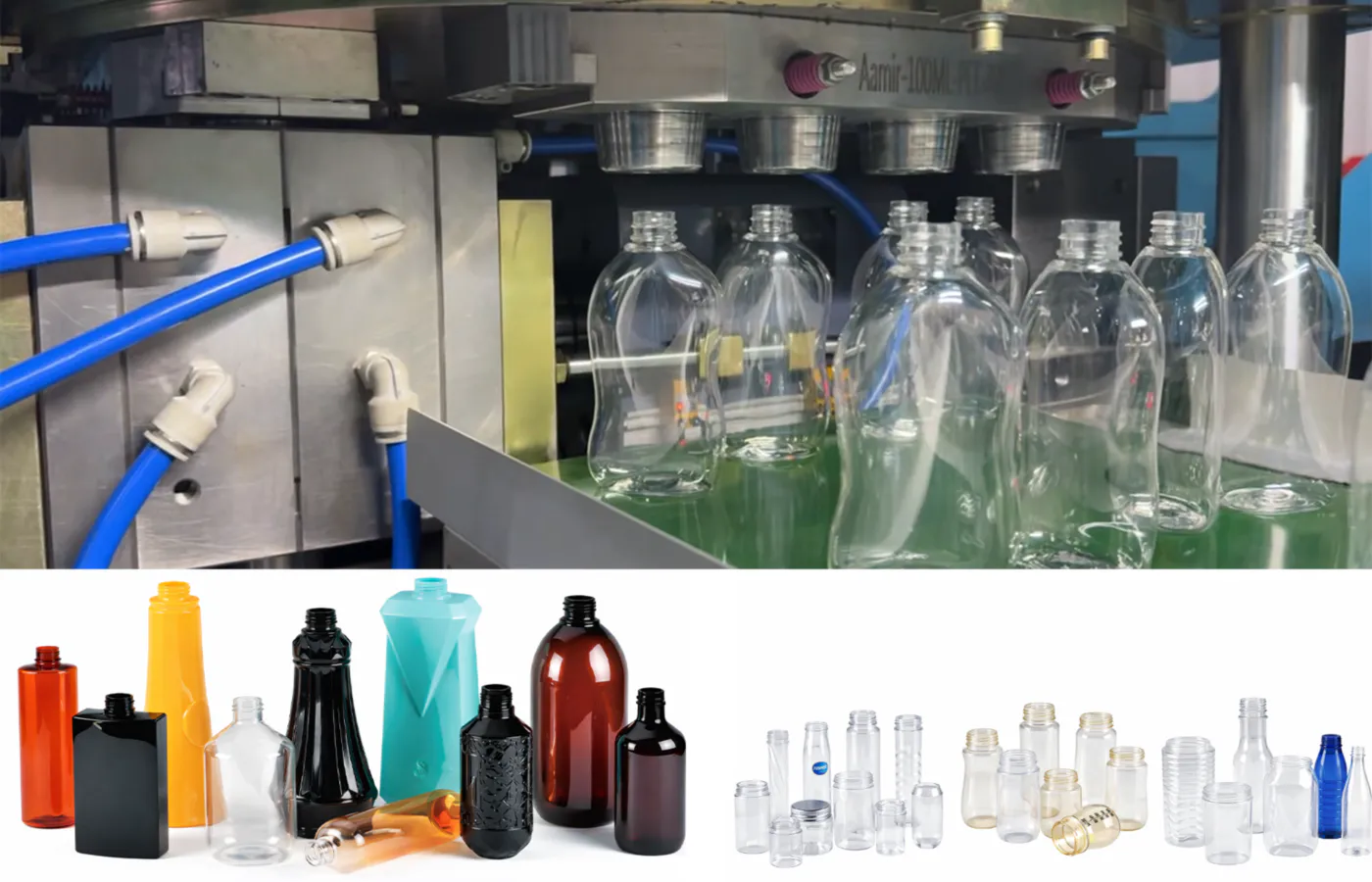
Visual quality is where an injection stretch blow moulding machine truly separates itself. The cavity blocks on a premium ISBM line are cut from S136 stainless steel, polished to a mirror finish, and held to tight vent tolerances. Because the stretch-blow step inflates a clean preform against this polished cavity, the resulting bottle body is optically clear, free of flow lines, and shows no pinch-off mark. Cosmetic brands in Cali and Medellín routinely specify ISBM-produced PET or PETG bottles for this reason — the clarity, gloss, and neck-ring sharpness become part of the on-shelf brand identity. EBM, by contrast, leaves two structural signatures: a visible weld line at the base where the parison is pinched off, and slight ovality around the pinch area. Surface gloss on an EBM HDPE bottle is usually matte or semi-gloss unless an in-line flame or plasma treatment is added. For a motor-oil bottle no buyer minds the finish; for a perfume or serum bottle the difference is a purchase-decision item. Specifying a blue injection stretch blow moulding machine (the standard hydraulic colour) or a white injection stretch blow moulding machine (the fully electric EV variant) does not change the bottle finish — the finish is driven by the cavity polishing and the resin.
10. Environmental Grade — cleanroom and food-contact readiness
A one-step injection stretch blow moulding machine, especially in its fully electric configuration, is structurally compatible with cleanroom classifications down to ISO 8 when fitted with appropriate enclosures and filtered air supply. The fully-electric drive removes hydraulic oil from the production environment, a requirement Colombian pharmaceutical and infant-formula plants increasingly apply in tender documents. Because the preform never leaves the sealed machine before becoming a bottle, particulate and microbial contamination risk drops sharply compared to any two-step reheat process, where preforms are stored in open bins and conveyed between buildings. EBM lines can achieve food-grade status but rarely reach pharmaceutical-cleanroom grade without heavy enclosure retrofits. The extruder itself is a high-temperature, oil-lubricated assembly whose shear generates fines, and the parison is briefly exposed to ambient air before clamp. For bottled water in Colombia produced for domestic retail, either process can be qualified; for oral pharmaceutical liquids, ophthalmic solutions, or infant-formula nursing bottles, the injection stretch blow moulding machine route is almost always preferred by INVIMA-audited customers, and the associated validation documentation is more straightforward to prepare.
11. Operating Conditions — ambient sensitivity and utilities
Every injection stretch blow moulding machine asks for a narrow set of utility conditions: cooling water between 20 and 25 degrees Celsius at 0.3 to 0.4 megapascals pressure for oil cooling, process cooling water at 0.4 to 0.6 megapascals, compressed air at 2.0 to 3.5 megapascals for blowing, and a stable three-phase 380 to 400 volt supply. Ambient plant temperature between 18 and 32 degrees is ideal; the servo closed-loop compensation handles short excursions. These conditions are readily met in industrial parks around Bogotá, Medellín, Cali, and Barranquilla. EBM has wider ambient tolerance — the parison is briefly exposed, the extruder is self-heating, and thermal swings on the cavity side are damped by the continuous flow — but it also consumes more total energy per bottle because there is no residual heat to recover. The injection stretch blow molding machines we see in Colombian installations typically draw between 45 and 110 kilowatts of installed motor power depending on whether the model is HGY50-V3-EV (34.8 kW), HGY150-V4 (43.2 kW), HGY250-V4 (67.7 kW), or HGY650-V4 (75.7 kW). An equivalent-throughput EBM line usually installs more extruder motor capacity and more compressed-air load, so the electrical contracted demand ends up higher.
12. Typical Failure Modes — what actually goes wrong
After twenty years of field experience, the failure catalogue for each process is predictable. On an injection stretch blow moulding machine the classic issues are preform crystallisation when the hold time exceeds the resin’s crystallisation window, stretch whitening when the stretch ratio is too aggressive for the cavity, neck-thread shrinkage if cooling in the neck ring is uneven, and pearlescent haze on clear PET if the temperature-conditioning core is miscalibrated. Each of these is a process-parameter issue rather than a hardware defect, and they are corrected by retuning temperature profiles and stretch rates. EBM failure modes are different: parison sag in hot weather causes uneven wall distribution, flash over-trim at the pinch-off weakens the base, weld-line splits appear in heavy drop-test conditions, and screen-pack plugging causes pressure spikes that mark the part surface. An experienced injection stretch blow molding machine manufacturers’ service team will solve ISBM issues by spending time at the HMI trimming servo curves; an EBM service team focuses on the extruder screw, die lips, and parison control. When evaluating injection stretch blow molding machine suppliers for the Colombian market, buyers should verify local access to process engineering support, because the two skill sets do not overlap.
13. Recommended Configuration — matching the machine to the bottle
For a Colombian cosmetic buyer who needs PETG facial-serum bottles with a polished neck and high clarity, the recommended specification is a servo-driven injection stretch blow moulding machine such as the HGYS150-V4 or HGYS200-V4, fitted with S136 stainless steel moulds, a dual servo-motor blow-clamping system, and Parker high-pressure valves. The machine is compatible with the legacy ASB-12M preform-set and can function as a replacement of ASB and Aoki mould tooling, which matters when a plant is refreshing an aging two-step line. In markets that still use the older generation ASB injection molding machine as a reference point, a new one-step injection stretch blow molding machine offers a migration path that preserves existing mould investment while stepping up on energy efficiency and bottle quality. For a pharmaceutical packaging converter producing PPSU baby bottles or PC medicine bottles, the fully-electric HGY150-V4-EV or HGY200-V4-B is the right choice, because the oil-free environment aligns with INVIMA audit expectations. For large-format water carboys or chemical jerrycans up to twenty litres, the HGY650-V4 handles neck diameters up to 140 mm and bottle heights to 510 mm. A gray injection stretch blow moulding machine or white injection stretch blow moulding machine variant is simply a paint-scheme choice and does not affect capability. EBM is still the right answer for HDPE motor-oil jugs or thick-walled detergent bottles. The point is to specify the process that matches the product, not to assume that one technology dominates.
14. Five Key Advantages of a One-step Injection Stretch Blow Moulding Machine
1. தோராயமாக 40% குறைந்த ஆற்றல் பயன்பாடு
Because the preform never cools to room temperature, the residual injection heat carries directly into the stretch-blow step. Skipping the reheat oven of a two-step line removes a large electrical load; converters routinely report cycle-energy savings in the 35 to 45 percent range after commissioning a new injection stretch blow moulding machine.
2. Superior Neck and Clarity
The injection-molded neck finish delivers thread geometry within the tolerances cosmetic and pharmaceutical closures require. Biaxial stretching produces optical-grade clarity on PET and PETG bottles — a visual difference every purchasing manager can spot from across the sampling room without measuring instruments.
3. High Material Utilisation
A one-step injection stretch blow moulding process has no tail flash, no pinch-off scrap, and no deflashing waste. The only regrind stream is an occasional purge start-up lot. For PET at current Latin American resin prices, this translates directly into a lower cost per finished bottle over a ten-year run.
4. Batch-to-Batch Consistency
Servo-driven injection and clamping keep injection volume, preform temperature, and stretch timing repeatable across thousands of cycles. Wall-thickness variation is typically within five percent across the bottle body, which matters for validated fill-weight tolerances on pharmaceutical and baby-food lines.
5. Small Footprint, Short Commissioning
A full HGY150-V4 line fits inside a footprint of roughly 4.2 by 1.4 metres. Because injection and blow are integrated, there are no conveyors or reheat tunnels between machines. Commissioning a new injection stretch blow moulding machine at a Colombian plant typically runs four to six weeks from arrival to validated production.
15. Working Principle of the Injection Stretch Blow Moulding Machine
The working principle follows a tightly sequenced four-step cycle. Step one is injection: dried PET or PETG pellets feed into the heated screw barrel, the melt is metered, and the injection cylinder shoots the melt into a preform cavity under clamping forces between 50 and 400 kilonewtons depending on model. The preform retains mould for a few seconds of skin cooling, then the turntable indexes. Step two is heat preservation or tail cutting: the preform temperature is equalised between the crystallisation-resistant skin and the warmer core, so the subsequent stretch does not whiten or blow unevenly. Step three is stretch-blow: a stretch rod descends axially into the preform, pre-blow air starts radial inflation, and full high-pressure air (2.0 to 3.5 MPa) completes the bottle against the polished cavity. Biaxial orientation develops in the PET chains, giving the finished bottle its strength-to-weight ratio. Step four is take-out: the blow mould opens and the finished part is ejected onto a conveyor or gripper for downstream packing. The entire cycle runs between eight and sixteen seconds depending on bottle size and wall thickness. Anyone searching for an injection stretch blow molding video online, or a generic blow moulding video for the first time, will see exactly this sequence — the rhythm of the stations indexing through injection, temperature conditioning, stretch-blow, and part take-out. Some English-language sources drop the second syllable and write simply “injection stretch molding”, but the process described is identical.
16. Materials the Machine Can Process
A modern injection stretch blow moulding machine handles a broad range of thermoplastics, each chosen for a specific bottle requirement. PET is the dominant resin for water bottles, carbonated soft drinks, edible oil bottles, and transparent pharmaceutical containers — it biaxially orients well and delivers a clean gas barrier. PETG sits beside PET when chemical resistance, impact strength, or thicker walls are needed, typical of cosmetic jars and serum bottles. PP gives opaque wide-mouth jars for food and nutraceuticals, at lower material cost. PPSU and PC (when the brief allows it) survive repeated steam-sterilisation cycles, which is exactly what baby-bottle and reusable medical-container programs require. Tritan offers a BPA-free alternative with PC-like clarity, popular for premium reusable drinkware. PLA supports bioplastic commitments for brands that publish environmental targets. PS and ABS appear in specific specialty bottles. The same injection stretch blow moulding machine platform accepts all of these with a screw-and-barrel change plus adjustments to the temperature profile, though the mould cavity is always application-specific. Screws, barrels, and valves are typically Parker, YUKEN, and Inovance components to assure parts availability for Colombian service teams over the full machine life.
17. Application Scenarios
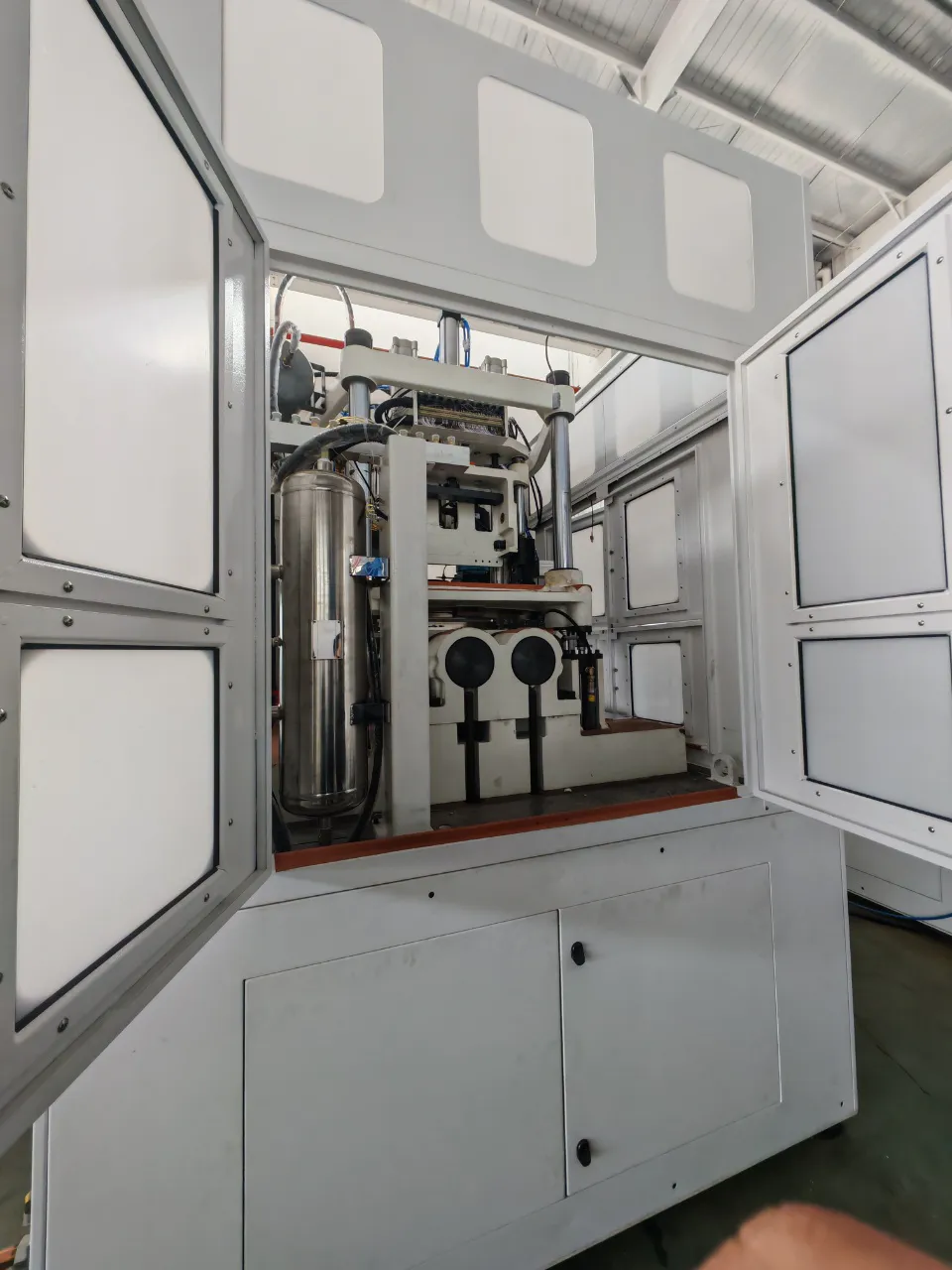
The injection stretch blow moulding machines deployed across Latin America support a mix of product categories. Four representative end uses are summarised below.
அழகுசாதனப் பொருட்கள் மற்றும் தனிநபர் பராமரிப்பு
Serum droppers, foundation bottles, toner bottles, shampoo flacons, and premium skincare jars in PET or PETG. Colombian beauty brands buying from dedicated injection stretch blow moulding machine lines get the thread precision and optical clarity that back-of-shelf differentiation requires, and can combine frosted, tinted, or fully transparent bodies in the same production cell.
உணவு மற்றும் பானம்
PET water bottles from 200 ml to 2.5 litres, PET juice and ready-to-drink tea bottles, edible oil containers, condiment bottles, and wide-mouth PP food jars. The injection stretch blow moulding process produces the light-weighted PET water bottle that dominates Colombian retail shelves, and the same platform handles seasonal SKU changeovers with quick mould swaps.
மருந்து பேக்கேஜிங்
PET oral-liquid bottles, PC multi-dose medicine bottles, PETG ophthalmic and nasal-spray bottles. Pharmaceutical converters in Colombia favour a fully-electric new injection stretch blow moulding machine because it eliminates hydraulic-oil proximity to the product path and simplifies INVIMA documentation during regulatory audits and routine re-certifications.
Baby Products and Nursing Bottles
PPSU and Tritan baby feeders, sippy cups, teethers with bottle bodies, and pacifier storage containers. The biaxial oriented wall structure delivered by an injection stretch blow moulding machine provides drop-test robustness and retains clarity through repeated dishwasher and steriliser cycles, which is exactly what parents and paediatric advisors expect.
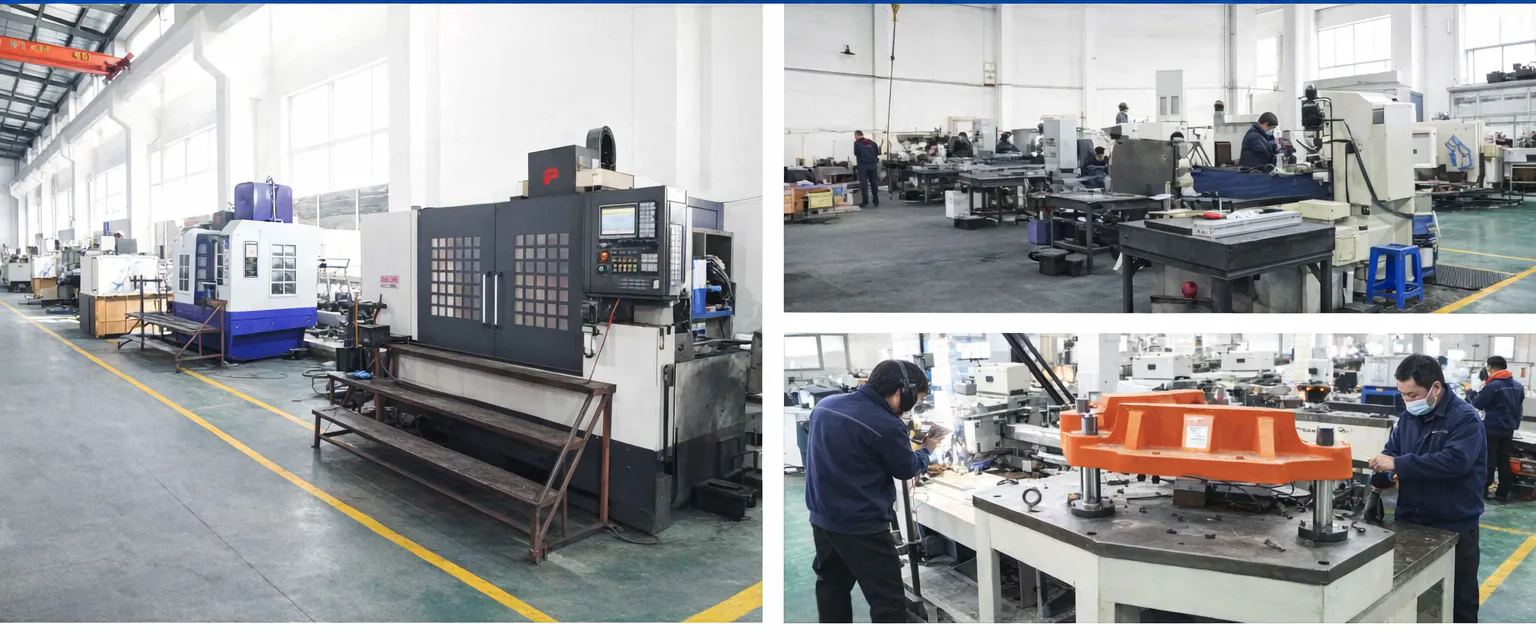
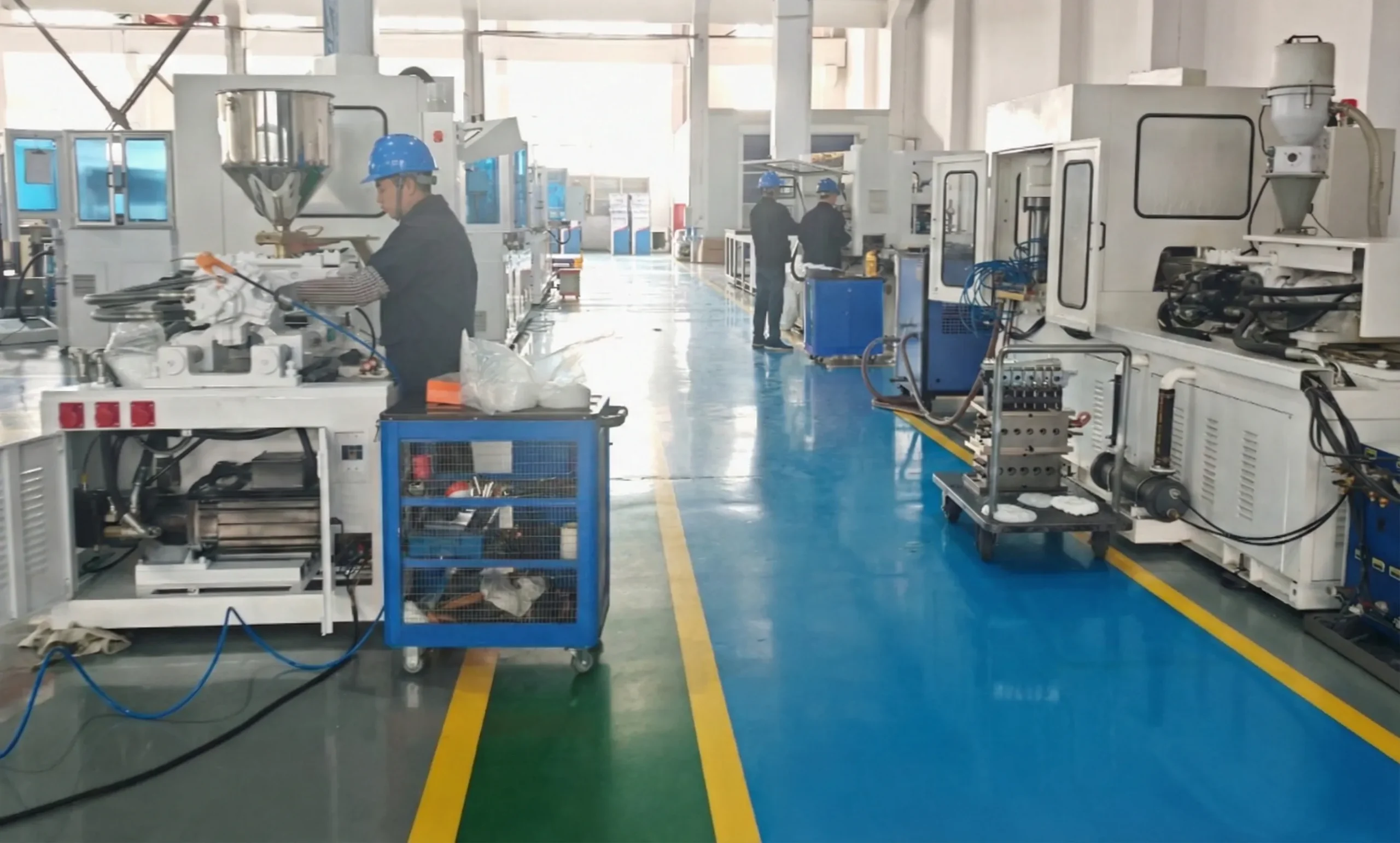
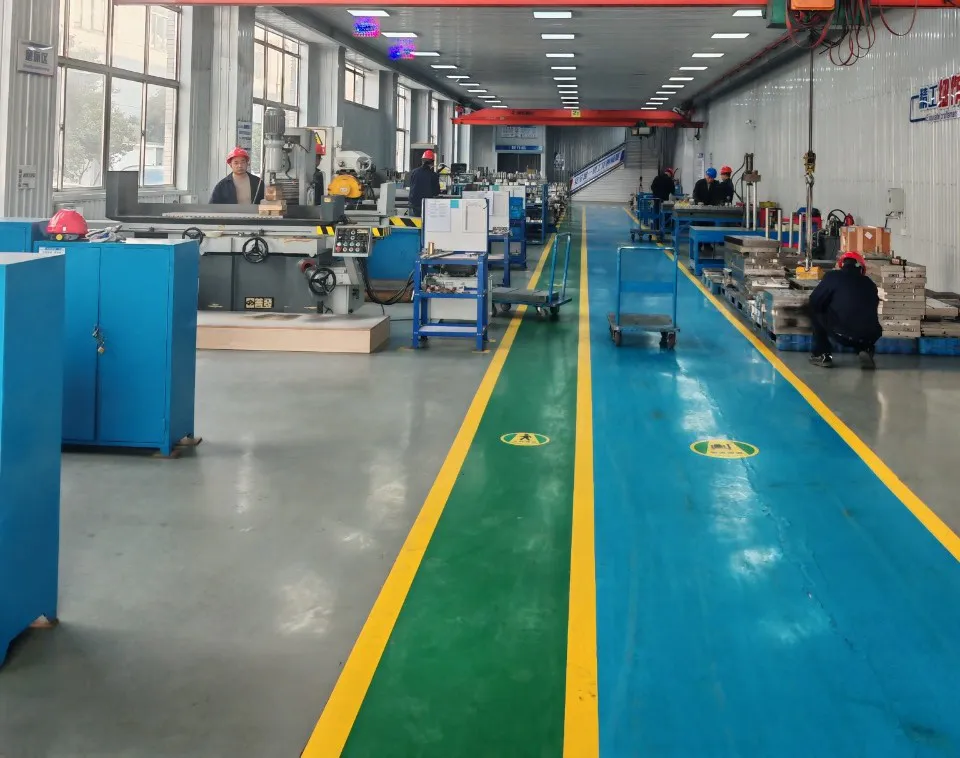
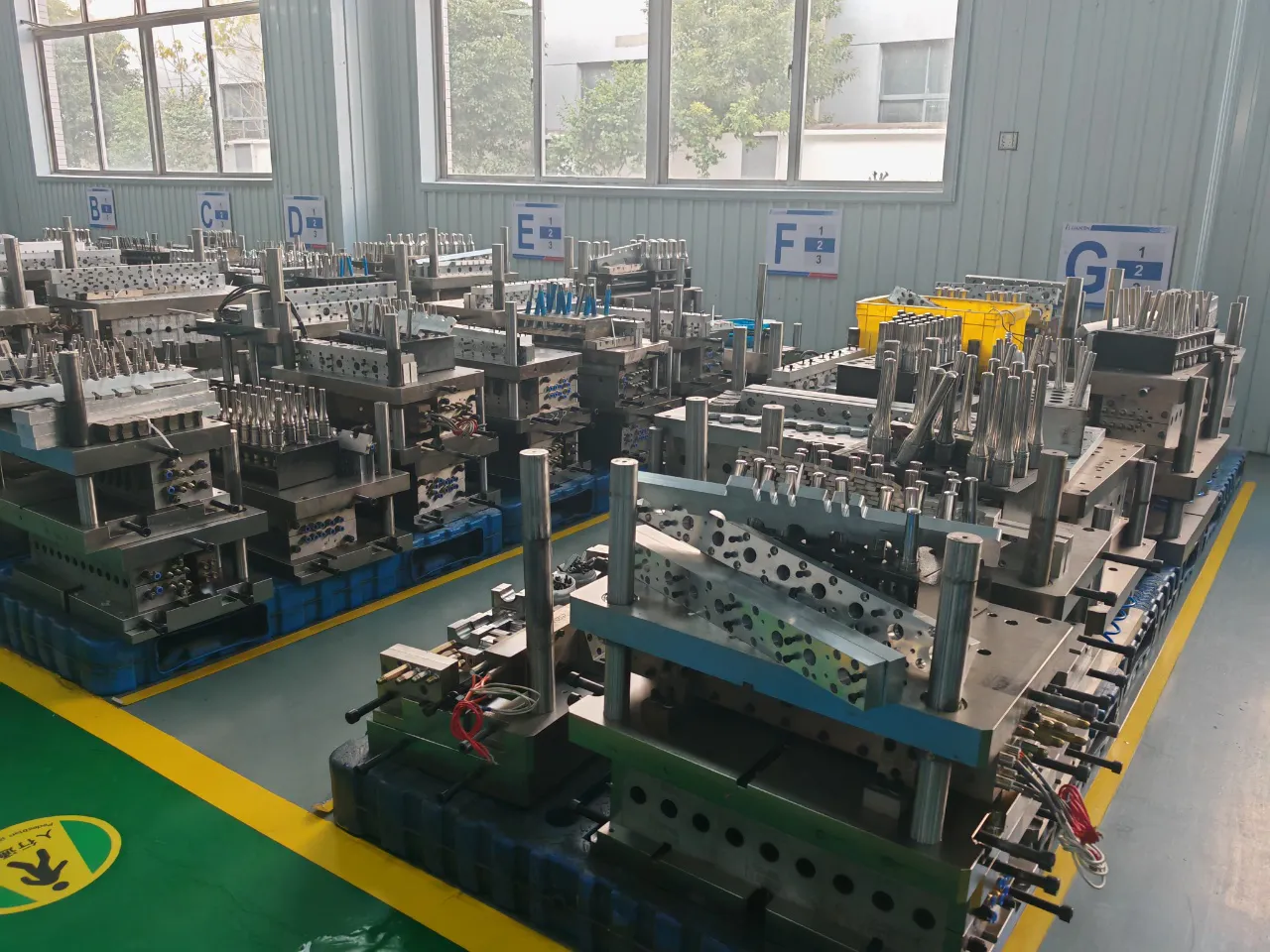
பட்டறை
18. Related Products and One-stop Auxiliary Supply
Beyond the injection stretch blow moulding machine itself, we supply and integrate auxiliary drive and power-transmission components that pair directly with our lines — including precision rigid couplings, servo motors, and drive gearboxes for conveyor and bottle-handling systems. The one-stop supply model keeps the entire mechanical and electrical specification under a single engineering review, which shortens commissioning and simplifies long-term service sourcing for Colombian plants.
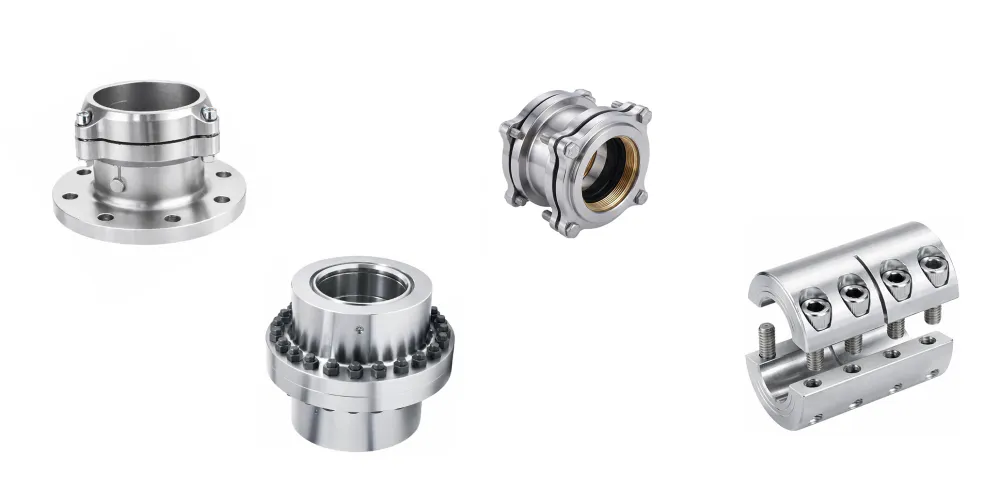
Rigid Couplings
Precision rigid couplings sized for servo-motor to screw-shaft connections on injection units and for bottle-conveyor drive lines downstream of the injection stretch blow moulding machine.
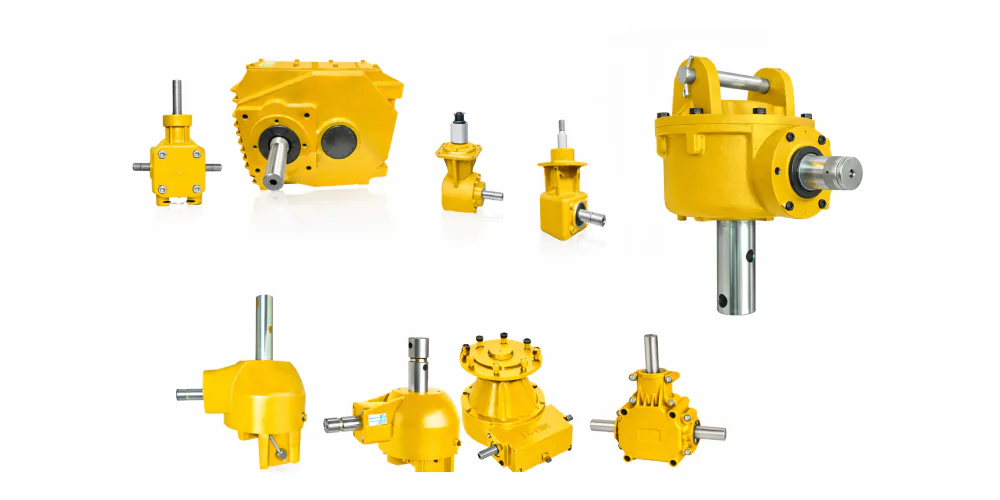
Drive Gearboxes and Motors
Matched servo-motor and drive-gearbox packages for turntable indexing, auxiliary conveyors, and upstream resin-feeding systems. Engineered for continuous-duty operation alongside injection stretch blow molding machines.
அடிக்கடி கேட்கப்படும் கேள்விகள்
Q1. What is the main difference between an injection stretch blow moulding machine and an extrusion blow moulder for Colombian beverage bottlers?
A1. The injection stretch blow moulding machine injects a precision preform and biaxially stretches it, giving clear PET bottles with tight neck tolerances. An extrusion blow moulder pushes a hollow parison and pinches it off, which suits opaque HDPE but cannot match PET clarity or neck precision.
Q2. How does a one-step injection stretch blow moulding machine reduce total energy consumption for a packaging plant operating in Bogotá?
A2. The one-step cycle retains preform heat from injection straight into the stretch-blow step, eliminating the reheat oven of a two-step line. Most Colombian converters see electrical draw fall between 35 and 45 percent per finished bottle over the first billing period after commissioning.
Q3. Which injection stretch blow moulding machine model works best for producing PETG cosmetic serum bottles in Cali with short changeover times?
A4. The HGYS150-V4 or its fully-electric HGY150-V4-EV variant pair well with PETG serum SKUs between 15 ml and 250 ml. A dedicated servo drive plus S136 polished mould gives the clarity cosmetic brands specify and keeps mould-change cycles under two hours.
Q4. Why do food-grade packaging buyers in Colombia often prefer ISBM over EBM for high-clarity PET containers used in beverages?
A5. PET bottles made on an injection stretch blow moulding machine carry no pinch-off weld, no base scar, and deliver biaxial wall uniformity. Clarity, light weight, and thread accuracy are all superior to EBM-made PET, which is why the beverage category standardised on ISBM globally.
Q5. How do I select the right injection stretch blow moulding machine for small-batch PPSU baby bottle production in a pharma cleanroom environment?
A6. Select a fully-electric model such as HGY150-V4-EV or HGY200-V4-B to eliminate hydraulic oil from the product zone. Specify a three- or four-cavity mould, cleanroom-ready enclosure, and validate the process against your INVIMA audit checklist before first production lot.
Q6. When should a packaging manufacturer upgrade from a two-step PET process to a one-step ISBM line for improved margin?
A7. Upgrade when energy cost per bottle becomes a decisive margin driver, when preform handling damage exceeds acceptable scrap, or when cosmetic or pharma customers begin specifying neck-gauge tolerances a two-step line cannot consistently hit at commercial scale.
Q7. What materials can an injection stretch blow moulding machine process besides PET for Colombian cosmetic and personal-care brands?
A8. The same platform runs PETG for chemical resistance, PP for opaque jars, PPSU and PC for sterilisable bottles, Tritan for BPA-free drinkware, and PLA for bioplastic programs. Screw and temperature profile adjustments cover the transitions; the cavity itself must be product-specific.
Q8. How does a servo-driven injection stretch blow moulding machine compare to a hydraulic model for pharmaceutical bottle applications?
A9. Servo drives deliver tighter repeatability on injection volume and stretch timing, lower noise, and lower oil-contamination risk. For pharmaceutical SKUs the servo or fully-electric option is almost always preferred; for thicker-walled industrial bottles a hydraulic drive remains cost-effective.
Q9. Can the same injection stretch blow moulding machine produce both cosmetic bottles and food-grade jars with just a mould change?
A10. Yes, provided the base cavity block, preform set, and temperature profile are matched to each SKU. A validated mould-change SOP lets a single machine run cosmetic PETG serum bottles on one shift and food-grade PP jars on the next without compromise.
Q11. What Colombian certifications must an injection stretch blow moulding machine meet for food-contact packaging production and export?
A11. For Colombian food-contact packaging, ICONTEC NTC standards, INVIMA food-contact approval under Resolución 683 de 2012, and RETIE electrical compliance are baseline. Export adds EU 10/2011, US FDA 21 CFR 177, and ISO 22000 depending on destination-market customer requirements.
ஆசிரியர்: PXY