आईबीएम बनाम आईएसबीएम: इंजेक्शन ब्लो मोल्डिंग और इंजेक्शन स्ट्रेच ब्लो मोल्डिंग में क्या अंतर है?
A practical reference for plant managers and packaging specifiers in Colombia who are deciding between an older injection blow moulding cell and a modern injection stretch blow moulding machine. Both processes inject a preform — only one of them stretches it, and that single difference reshapes cost, quality, and which SKUs you can actually make.
1. Technical Parameters across the HGY Series
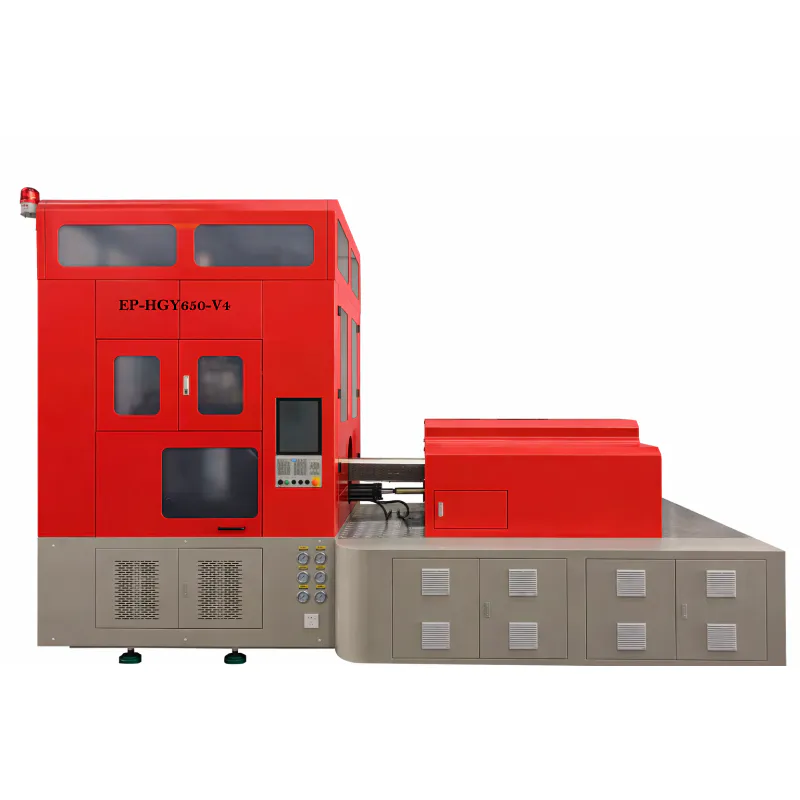
The parameter matrix below references five representative injection stretch blow moulding machine models published on the technical data sheets. These are the configurations Colombian specifiers most frequently evaluate when migrating from an older IBM cell or starting a greenfield line.
| पैरामीटर | HGY50-V3-EV | एचजीवाईएस150-वी4 | HGY200-V4-B | एचजीवाई250-वी4 | एचजीवाई650-वी4 |
|---|---|---|---|---|---|
| के स्टेशन | 3-स्टेशन | 4-स्टेशन | 4-स्टेशन | 4-स्टेशन | 4-स्टेशन |
| ड्राइव प्रकार | पूरी तरह से इलेक्ट्रिक | Servo-hydraulic | Hydraulic / Servo | Hydraulic / Servo | Hydraulic / Servo |
| लागू सामग्री | पीईटी / पीटीजी | पीईटी / पीटीजी | पीईटी / पीटीजी | पीईटी / पीटीजी | पीईटी / पीटीजी |
| पेंच का व्यास (मिमी) | 40 / 50 / 55 | 40–60 | 40–60 | 50–60 | 50–60 |
| सैद्धांतिक इंजेक्शन आयतन (सेमी³) | 239–442 | 188–480 | 240–480 | 340–480 | 340–480 |
| इंजेक्शन क्लैम्पिंग बल (kN) | 50 | 150 | 300 | 300 | 400 |
| ब्लोइंग क्लैम्पिंग बल (kN) | 100 | 200 | 250 | 200 | 400 |
| मोटर शक्ति (किलोवाट) | 34.8 | 43.2 | 49.2 | 67.7 | 75.7 |
| तापन शक्ति (किलोवाट) | 10.4 | 10 | 15 | 15 | 15 |
| वायु दाब (एमपीए) | 2.0–3.5 | 2.0–3.5 | 2.0–3.5 | 2.0–3.5 | 2.0–3.5 |
| शीतलन जल दाब (एमपीए) | 0.4–0.6 | 0.4–0.6 | 0.4–0.6 | 0.4–0.6 | 0.4–0.6 |
| Voltage (V) | 370–400 | 370–400 | 370–400 | 370–400 | 370–400 |
| Machine Size L×W×H (mm) | 3800×1200×2500 | 4200×1400×2900 | 4800×2000×3800 | 6300×2400×3700 | 6100×2600×4200 |
| मशीन का वजन (टी) | 3.5 | 6 | 13 | 16 | 28 |
| अधिकतम बोतल की मात्रा | 2500 मिलीलीटर | 2500 मिलीलीटर | 2500 मिलीलीटर | 2500 मिलीलीटर | 20 लीटर |
| Mould Compatibility | Standard | एएसबी-12एम | आओकी 250 | एएसबी-70डीपीएच | Large-format |
2. Why this distinction trips up packaging buyers
Walk into almost any cosmetic, pharmaceutical, or nutraceutical packaging plant in Bogotá, Cali, or Bucaramanga and you will hear the terms IBM and ISBM used almost interchangeably. They are not the same. Both are injection-based blow-molding technologies and both start with a molten polymer shot into a preform cavity, but the kinematics diverge immediately afterward. Injection blow molding — the classic three-station IBM process — parks the preform on a core rod and blows it directly into a finished bottle, with no axial stretching. Injection stretch blow moulding adds a fourth station and a mechanical stretch rod that pulls the preform lengthwise while compressed air inflates it radially, creating biaxial molecular orientation that completely changes the bottle’s strength, clarity, and weight. In modern packaging literature the injection stretch blow molding process is sometimes grouped with the broader injection stretch blow molding machines family, but this blurs the critical distinction that this article unpacks. A packaging buyer who mis-specifies one for the other risks buying the wrong cavity geometry, the wrong resin grade, and a machine that cannot reach the shelf-appeal or barrier performance the end customer actually demands. This guide lays the two processes side by side so the spec decision becomes straightforward.
3. What is the injection stretch blow moulding machine?
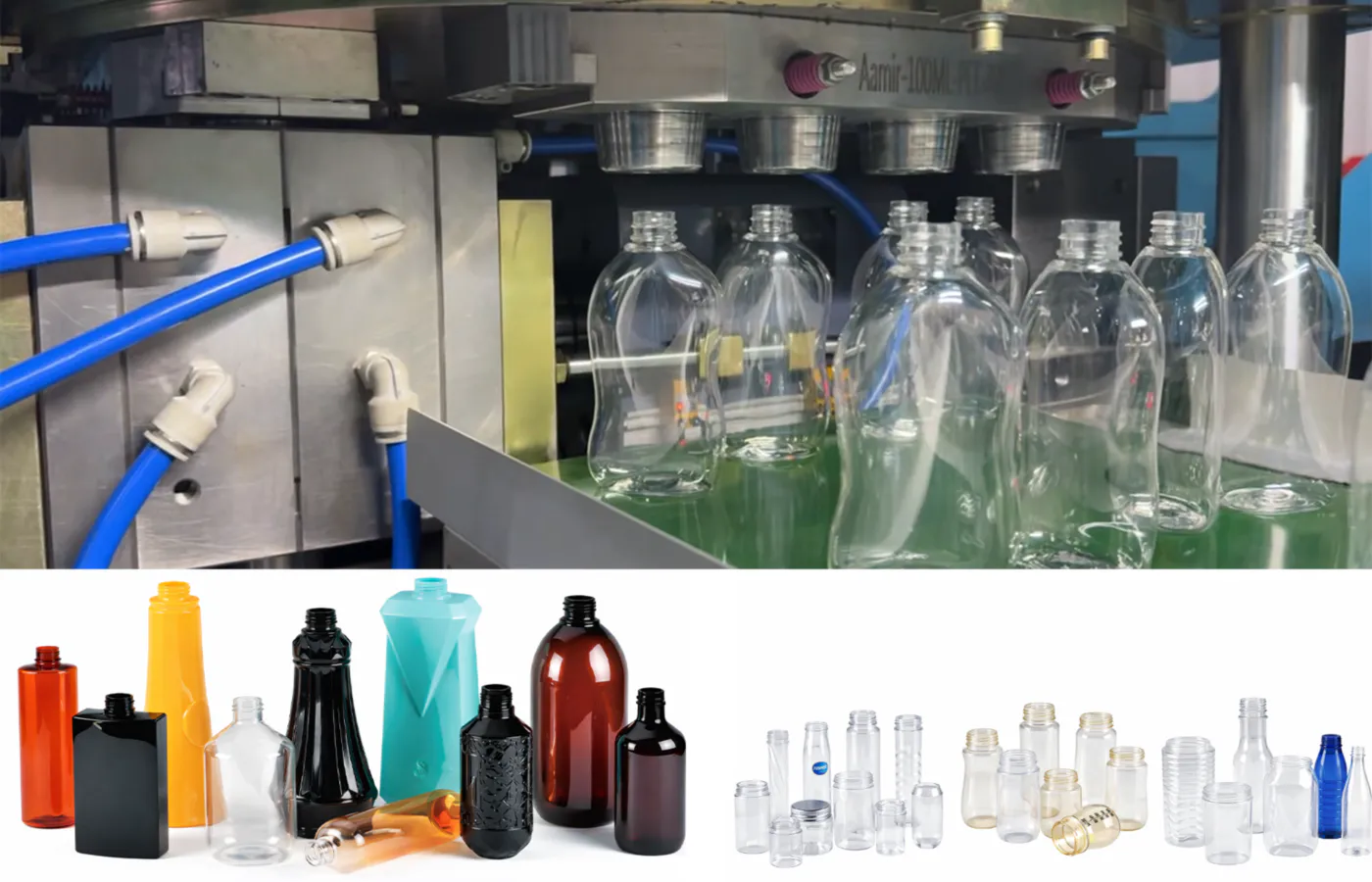
The injection stretch blow moulding machine is the modern evolution of injection-based bottle making. Instead of three stations and a core rod, it runs on a four- or six-station rotary turntable, and the preform is indexed between positions rather than riding on a single fixed rod. Stations typically include injection, temperature conditioning (or tail cutting), stretch-blow, and finished-bottle take-out. The defining feature is the stretch rod: during the blow step a servo-driven rod descends axially into the preform and pulls it lengthwise while high-pressure air (2.0 to 3.5 MPa) inflates it radially against a polished S136 stainless cavity. This combined axial-plus-radial action gives the polymer biaxial molecular orientation — the mechanism that lets a 500 ml PET water bottle weigh 9 grams and still survive drop tests at retail. An ISBM line also supports a broader resin shortlist (PET, PETG, PP, PPSU, PC, Tritan, PCTG, PLA) and reaches container volumes up to twenty litres on the HGY650-V4 platform. In Colombian cosmetic, beverage, and modern pharmaceutical plants, the injection stretch blow moulding machine is now the default specification, with IBM reserved for legacy small-volume SKUs.
4. Action Method — the kinematic fork in the road
The action method is the definitional divide. In injection blow moulding the preform is injected directly around a core rod that stays with the preform through the blow step. Air enters through the same core rod and inflates the preform radially. There is no axial displacement of the polymer — the bottle simply grows outward until it touches the cavity wall. This keeps the neck highly accurate because the neck geometry is formed in the injection stage and never leaves the rod, but it means the polymer molecules along the bottle wall retain their injection-flow orientation and never develop the cross-direction strength that stretching provides. In contrast, the injection stretch blow moulding machine separates the preform from any rod after injection and indexes it through a temperature-conditioning station. At the blow station a dedicated stretch rod, driven by a servo cylinder, descends inside the preform to a preset depth while air pressure rises in controlled ramps. The axial pull plus radial inflation creates true biaxial orientation, which is why an ISBM-formed PET bottle achieves roughly triple the burst strength of an IBM-formed PET bottle of equal weight. The kinematic difference is small on a drawing but enormous in bottle economics.
5. Structure Type — stations, heads, and indexing
Injection blow molding is built around a three-station indexing head — typically a horizontal rotary arm that carries three or four core rods in fixed positions. The indexing head itself rotates, carrying the core rods between injection, blow, and eject positions while the rods remain fixed relative to the head. An injection stretch blow moulding machine abandons this architecture entirely. The preform is injected, released from the injection unit, and indexed by a precision rotary turntable to subsequent stations where different tooling acts on it. The HGY50-V3-EV runs three turntable stations (injection, stretch-blow, take-out) while HGY150-V4 through HGY650-V4 add the fourth temperature-conditioning station for more consistent wall distribution. The HGYS280-V6 extends to six stations with parallel injection columns for higher throughput on cosmetic-bottle runs. Indexing accuracy is maintained by a Yaskawa or Inovance servo motor paired with a Taiwan-made TSUNTIEN reducer, giving sub-degree repeatability. The structural implication for a specifying plant is that converting an IBM cell to an injection stretch blow moulding machine is not a retrofit of the same chassis — it is a new machine architecture with different floor-space, utility, and operator-training demands.
6. Manufacturing Structure — what sits inside each machine
Lifting the hood on a typical IBM cell reveals a single screw-and-barrel injection unit (often 40 to 60 mm screw diameter), a set of three or four chrome-plated core rods mounted rigidly to the indexing head, a blow mould closed by a toggle or hydraulic clamp, and a simple take-off gripper. There is no stretch rod, no dedicated temperature-conditioning station, and no sophisticated pressure-ramp controller. An injection stretch blow moulding machine is considerably denser in components: an injection unit with a nano far-infrared energy-saving heating ring (10 to 15 kW), a temperature-conditioning core that equalises preform skin-to-core heat, a stretch-rod assembly with servo cylinder, a blow cavity in polished S136 stainless steel, a dual-servo-motor blow-mould clamping system with high-pressure compensation, YUKEN hydraulic control valves on the hybrid platforms, Parker high-pressure pneumatic valves at the blow head, and Inovance or Yaskawa servo drives throughout. The consequence for maintenance planning is that an IBM spare-parts catalogue is short and mostly mechanical, while an injection stretch blow moulding machine has a longer list skewed toward servo drives, precision cavity inserts, and sealed hydraulics.
7. Material System — what each process can actually run
Resin compatibility marks another clear split. Injection blow molding handles polyolefins and amorphous resins that do not rely on stretch-induced orientation for performance: LDPE and HDPE for squeeze bottles and small detergent containers, polypropylene for pharmaceutical vials, polystyrene for sample jars, and some PVC for specific medical niches. It can run PET in principle, but the lack of stretching means the bottle cannot realise PET’s characteristic light-weight-plus-clarity performance, so PET is almost never specified for commercial IBM production. The injection stretch blow moulding machine, by contrast, is designed around biaxially stretchable polymers — PET is the overwhelming default for beverages, PETG adds chemical resistance for cosmetic serums, PP delivers opaque wide-mouth food jars, PPSU and PC handle repeat-sterilisation baby and medical bottles, Tritan offers BPA-free clarity for reusable drinkware, PCTG gives high impact with good clarity, and PLA supports bioplastic packaging commitments. A replacement injection stretch blow moulding machine ordered for a Colombian plant migrating from an aging IBM line typically starts with PET on HGY150-V4 or HGY200-V4, then expands the resin palette as new SKUs are qualified. Neither process crosses cleanly into the other’s material world.
8. Environmental Grade — cleanroom and food-contact readiness
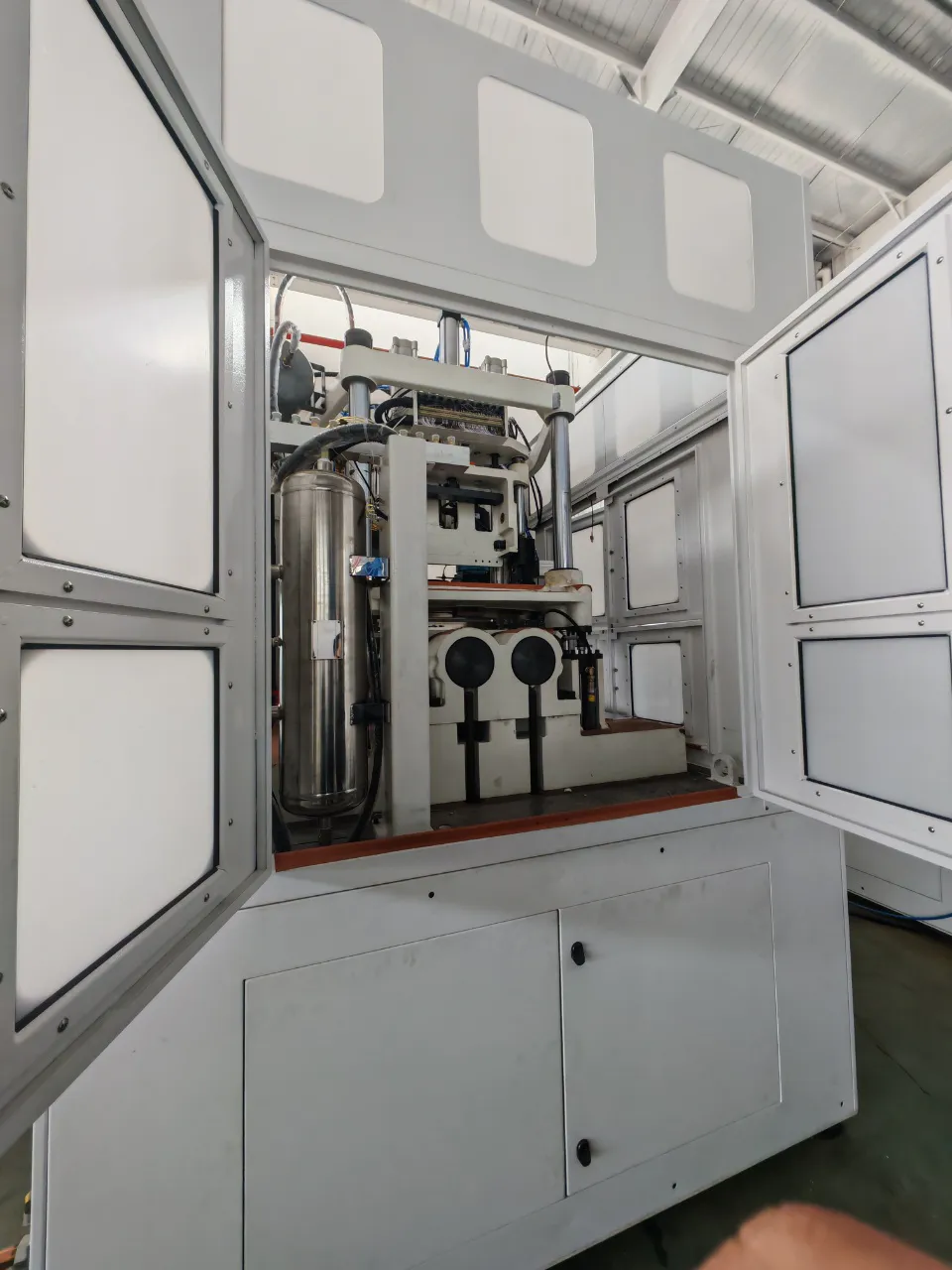
For many Colombian packaging buyers this dimension decides the platform choice on its own. IBM cells are generally adequate for food-grade and pharmaceutical small-bottle production, but their hydraulic drive systems and open core-rod transfer make them difficult to scale into ISO Class 8 cleanroom production without heavy enclosure work. The fully-electric variant of the injection stretch blow moulding machine — HGY150-V4-EV, HGY200-V4-EV, HGY250-V4-EV — removes hydraulic oil from the product zone entirely, which aligns neatly with INVIMA expectations for primary pharmaceutical packaging and with ISO 15378 GMP for primary packaging materials. The enclosed sealed cabinet, filtered air supply, and oil-free drive combine to make cleanroom installation straightforward. For baby-bottle SKUs in PPSU or PC, for ophthalmic and nasal-spray containers in PETG, and for infant-formula bottles the fully-electric injection stretch blow moulding machine platform is effectively the industry default. IBM retains a legitimate place for ultra-small-volume specialty pharmaceutical bottles where the small footprint and single-supplier validation advantages outweigh the lower cleanroom scalability.
9. Operating Conditions — cycle stability and utility demand
IBM cells historically operate with relatively simple utility profiles: compressed air at 1 to 2 MPa for blowing (lower than ISBM because there is no stretching resistance), chilled water for core-rod cooling, and three-phase 380 volt electrical supply. Cycle times on small bottles run between four and eight seconds, which is attractive on paper, but the narrow SKU range and limited bottle-size envelope cap the throughput ceiling. An injection stretch blow moulding machine requires a slightly richer utility footprint: cooling water at 0.4 to 0.6 MPa and 20 to 25 °C, compressed air at 2.0 to 3.5 MPa for the blow step, hybrid hydraulic-plus-electric or fully-electric supply at 370 to 400 volts, and installed motor power ranging from 34.8 kW (HGY50-V3-EV) through 67.7 kW (HGY250-V4) up to 75.7 kW (HGY650-V4). Cycle times sit between eight and sixteen seconds per cavity set, but because ISBM runs multi-cavity moulds at every station the finished-bottle output per hour exceeds IBM on almost any commercial SKU. Stability across thousands of cycles is also higher on ISBM thanks to servo-loop feedback. For a Colombian plant running three shifts, throughput and repeatability usually make the injection stretch blow moulding machine line the more capable investment.
10. Typical Failure Modes — what actually breaks in service
IBM failure modes are mostly mechanical and preform-related. Core-rod wear after tens of thousands of cycles causes preform eccentricity, which shows up as uneven wall thickness on the finished bottle. Core-rod misalignment during a tool change leaves visible parting-line flash on the neck. Preform-gate mismatch produces surface blemishes at the base of the bottle. Fixing these is a question of tooling inspection and routine core-rod replacement. An injection stretch blow moulding machine presents a different failure catalogue that reflects its process complexity. Stretch whitening appears when the stretch-rod speed or ratio does not match the preform’s crystallisation window. Preform crystallisation itself happens when the preform dwells too long at the temperature-conditioning station. Cavity-vent blockage from lubricant carryover creates trapped-air dimples on the bottle body. Servo-valve seal wear shows up as inconsistent blow pressure ramps. Each of these is diagnosed at the HMI rather than at the tooling bench, which is why injection stretch blow molding machine suppliers invest heavily in remote-diagnostics software for Colombian and Latin American customers where same-day engineering visits are not always practical.
11. Recommended Configuration — matching the machine to the SKU
For a Colombian pharmaceutical specialty plant producing 10 ml to 100 ml eye-drop bottles, nasal-spray containers, or single-dose oral-liquid bottles in HDPE or PP, a dedicated IBM cell with three or four core rods remains a sensible specification. It delivers neck accuracy, modest footprint, and low capital outlay. For essentially every other modern bottle SKU — PET water bottles from 200 ml upward, PETG cosmetic serum bottles, PP wide-mouth food jars, PPSU baby bottles, Tritan reusable drinkware, large-format 20 litre water carboys — the injection stretch blow moulding machine is the right platform. Specific model recommendations: HGYS150-V4 for cosmetic PETG work at 15 to 500 ml, HGY200-V4-B for PET beverage bottles with Aoki 250 mould compatibility, HGY250-V4 with ASB-70DPH mould compatibility for larger PET SKUs, and HGY650-V4 for 5 to 20 litre large-format PET. A white injection stretch blow moulding machine (the fully-electric EV variant) or a blue injection stretch blow moulding machine (standard hydraulic colour) is a finish choice; the capability is defined by the drive and the cavity, not by the paint. The migration path from an aging IBM cell to a new one-step injection stretch blow molding machine is now a standard project for Colombian converters expanding into cosmetic and beverage categories.
12. Five Key Advantages of Choosing ISBM over IBM
1. Biaxial Orientation Strength
The stretch rod plus radial air inflation creates molecular orientation in two directions, which triples burst strength on the same resin weight. A Colombian water-bottle converter can light-weight a 500 ml PET bottle to around 9 grams on an injection stretch blow moulding machine while keeping drop-test performance — a feat completely outside the capability of any IBM line.
2. Broader Resin Envelope
The same ISBM chassis accepts PET, PETG, PP, PPSU, PC, Tritan, PCTG, and PLA with screw and temperature-profile adjustments. A single injection stretch blow moulding machine can pivot between cosmetic, beverage, pharmaceutical, and baby-product SKUs with mould changes measured in hours, not days. IBM is locked to polyolefins and small-container specialties.
3. Larger Container Range
IBM economics break down above 500 ml. The ISBM HGY650-V4 reaches 20 litres with an injection clamping force of 400 kN and blow clamping of 400 kN. A single operator can supervise production of carboys, mid-size beverage bottles, and small cosmetic containers — all on the same injection stretch blow moulding machine platform by swapping moulds.
4. Premium Surface Quality
Biaxial orientation plus a polished S136 stainless cavity produces optical-grade clarity on PET and PETG. For Colombian cosmetic brands competing on-shelf in supermarkets and pharmacies, the visible gloss difference versus IBM is a purchase-decision lever. The neck accuracy that once justified IBM is now equally available on ISBM.
5. Cleanroom-Ready Platform
The fully-electric injection stretch blow moulding machine configuration removes hydraulic oil entirely from the production envelope. This simplifies INVIMA validation for pharmaceutical SKUs, aligns with ISO 15378 GMP for primary packaging, and opens cleanroom-grade production that IBM cannot economically match without major retrofit expense.
13. Working Principle of the Injection Stretch Blow Moulding Machine
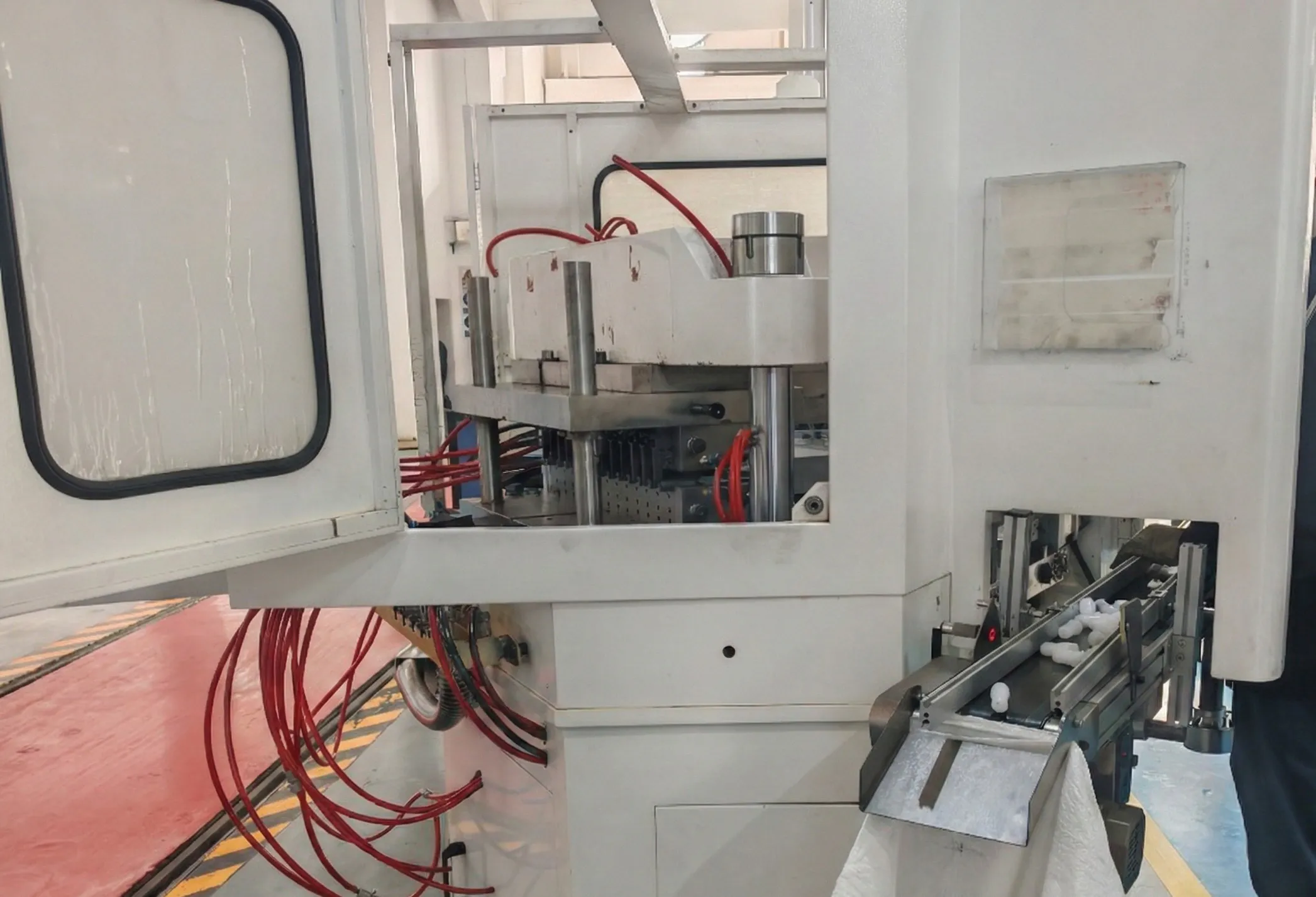
The four-step cycle inside an ISBM line reads like this. Step one, injection: dried PET pellets are melted by a screw-and-barrel with nano far-infrared heating rings at 10 to 15 kW, metered, and injected into a preform cavity under clamping pressure of 50 to 400 kN. The preform cools briefly against the cavity skin. Step two, temperature conditioning: the turntable indexes the preform to a dedicated station where the temperature profile between skin and core is equalised using a regulating core and barrel — this step is absent on IBM and is what makes wall-thickness distribution so uniform on ISBM. Step three, stretch-blow: the preform arrives at the blow cavity, a servo-driven stretch rod descends axially at a programmed speed, pre-blow air starts radial inflation, then full high-pressure air (2.0 to 3.5 MPa) completes the bottle against the polished stainless cavity. Biaxial orientation develops, and the bottle takes final shape with uniform wall thickness. Step four, take-out: the blow mould opens, a gripper removes the finished bottle, and the turntable indexes back to injection for the next cycle. Anyone viewing an injection stretch blow molding video of this sequence will see the turntable rhythm that distinguishes a one-step injection stretch blow molding machine from every other bottle-forming platform.
14. अनुप्रयोग परिदृश्य
Four primary end-use categories dominate Colombian and Latin American demand for an injection stretch blow moulding machine. Each is summarised below with the resin, bottle-size, and platform choice most commonly specified.
Cosmetic Serum and Toner Bottles
15 ml to 500 ml PETG and PET containers with a polished body, exact neck gauge, and optional frosted or tinted colour. Colombian cosmetic converters typically run the HGYS150-V4 or HGY150-V4-EV for these SKUs, specifying servo drives to hold wall-thickness tolerance within five percent across the run.
Beverage and Edible-Oil Bottles
200 ml to 2500 ml PET bottles for carbonated drinks, iced teas, juices, water, and cooking oils. The HGY200-V4 or HGY200-V4-B with Aoki 250 mould compatibility handles the domestic retail SKU range that Colombian supermarkets stock.
Pharmaceutical and Nutraceutical Packaging
PETG ophthalmic and nasal-spray bottles, PC multi-dose medicine containers, PET oral-liquid bottles, and PP nutraceutical wide-mouth jars. A fully-electric injection stretch blow moulding machine supports INVIMA validation and ISO 15378 GMP documentation without hydraulic-oil proximity to the product path.
Baby Products and Reusable Drinkware
PPSU and Tritan baby feeders, sippy cups, and reusable water bottles. Biaxial orientation gives drop-test resilience through repeated dishwasher and steriliser cycles — exactly what paediatric advisors and parents expect from premium baby-product packaging lines.
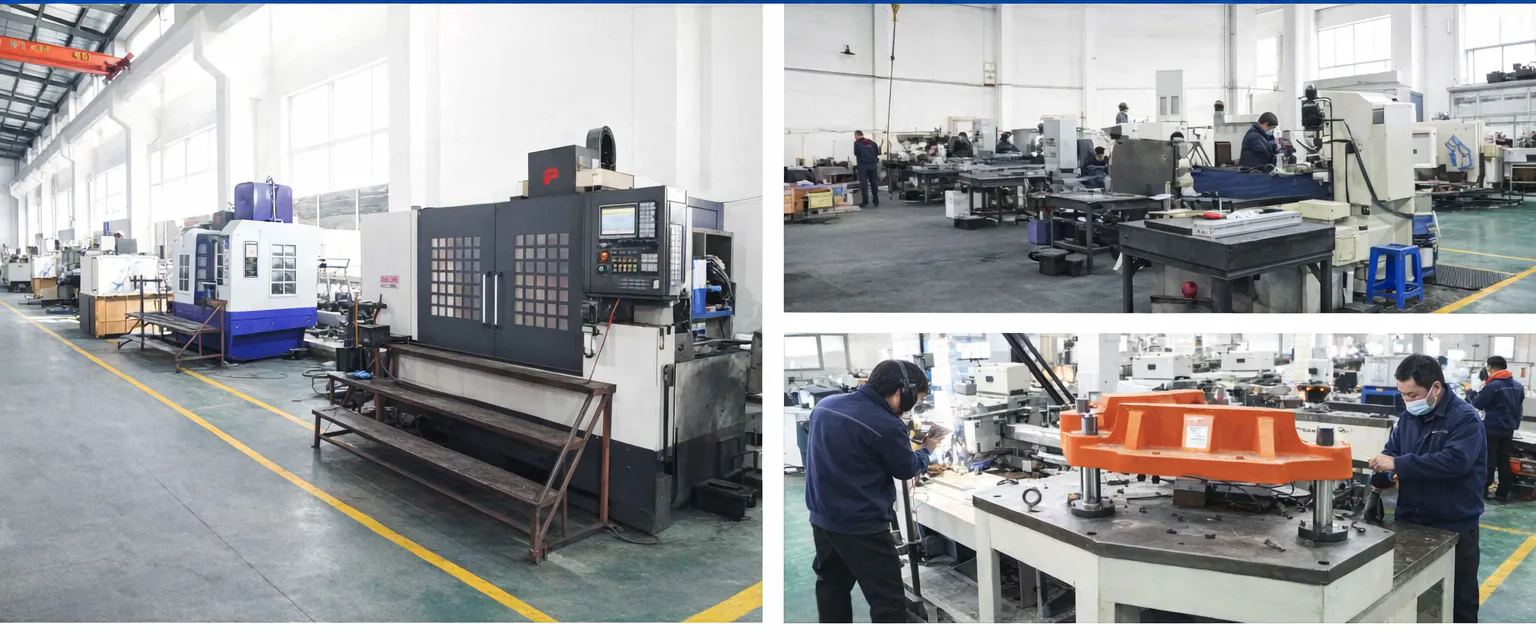
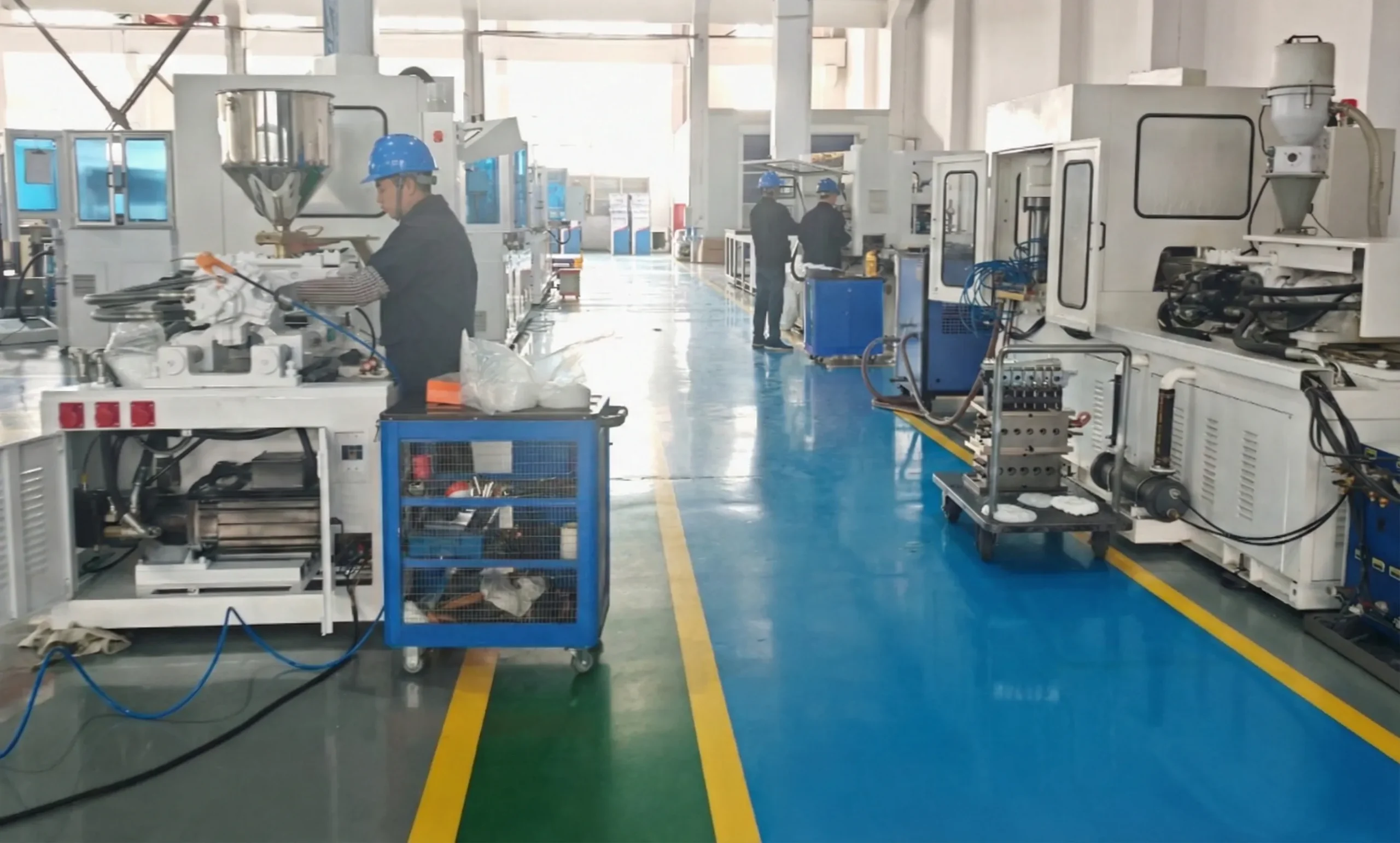
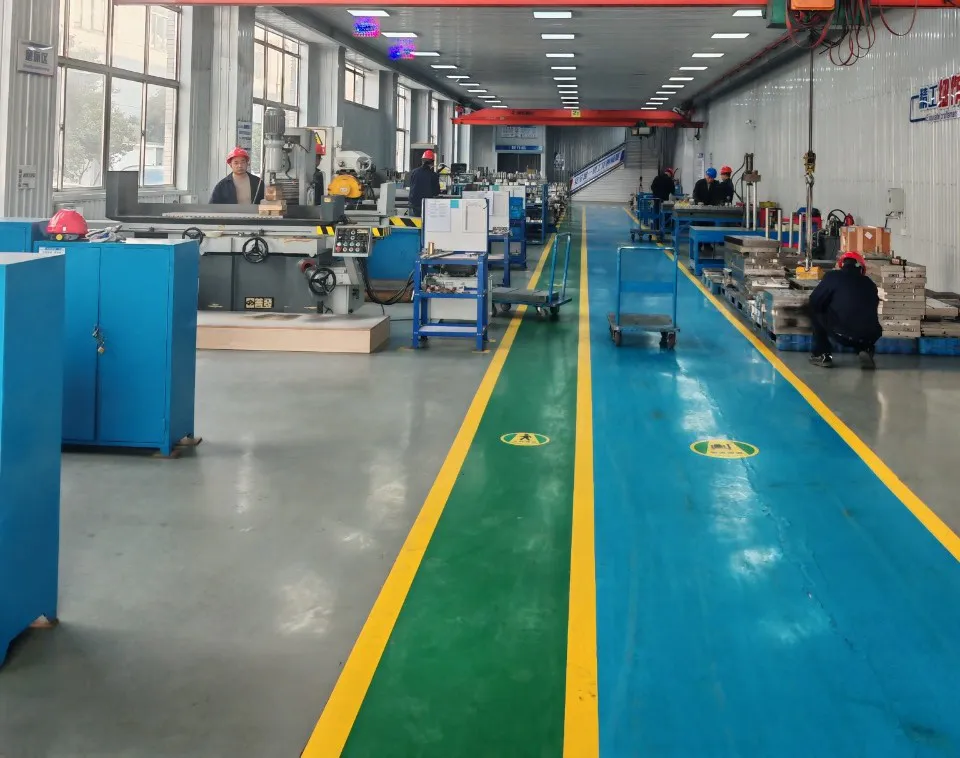
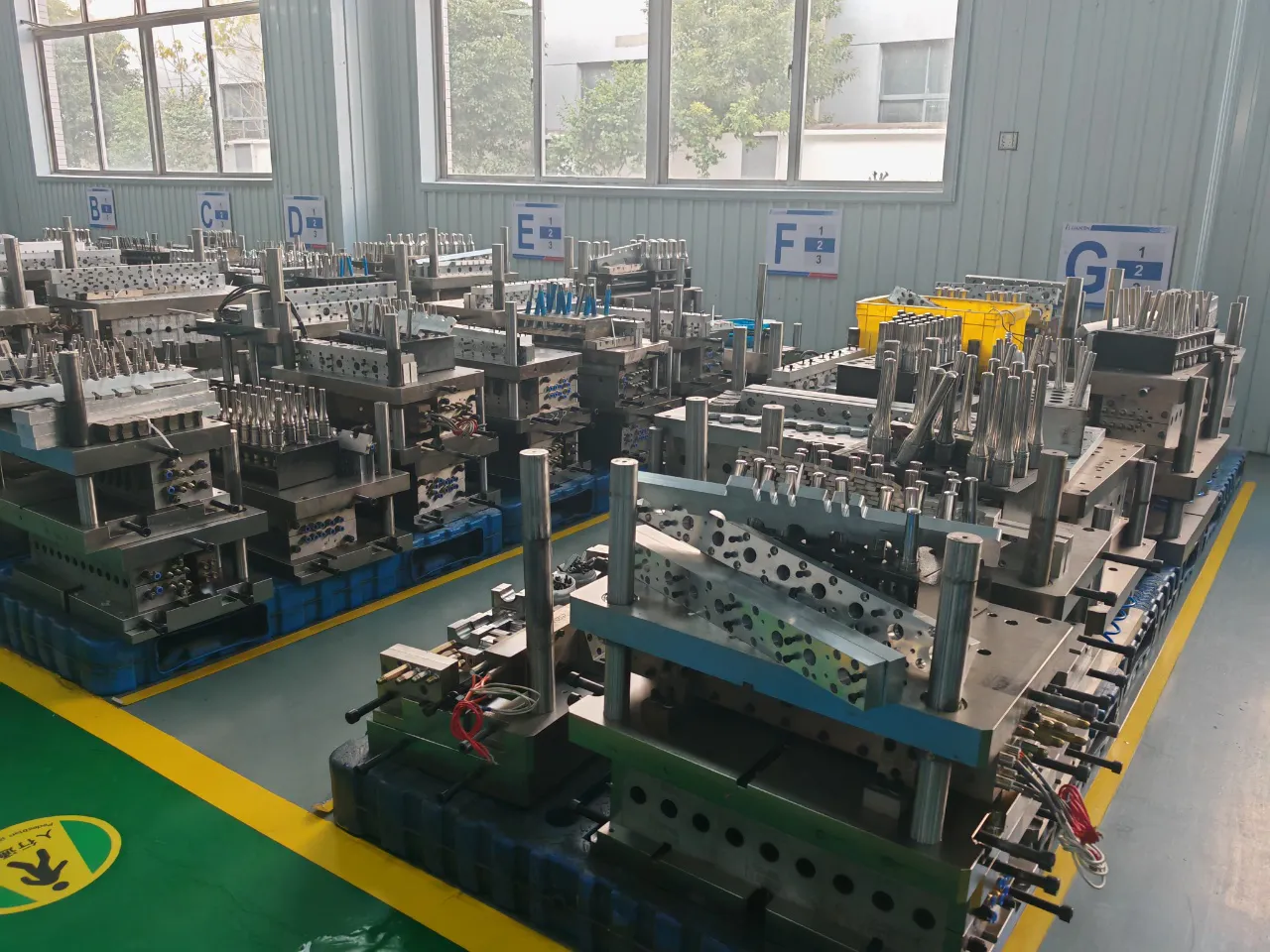
कार्यशाला
16. Related Products and One-stop Auxiliary Supply
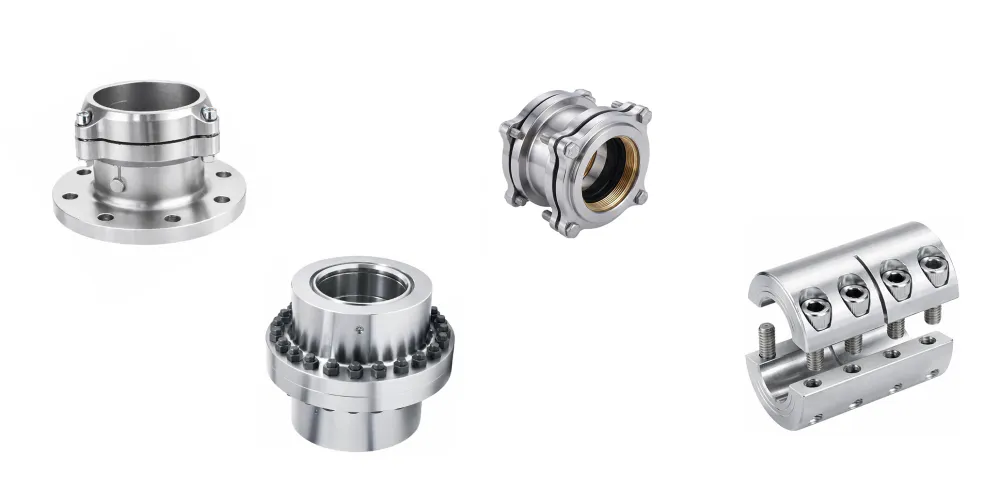
Alongside the injection stretch blow moulding machine itself, we supply matched auxiliary drive and power-transmission components that integrate directly with the bottle line. Precision rigid couplings connect servo motors to screw shafts; drive gearboxes and PTO motor packages power conveyors, bottle-handling robotics, and upstream material-feeding systems. This one-stop sourcing model keeps the electromechanical specification unified under a single engineering review, which shortens commissioning timelines and simplifies long-term service support for Colombian plants.
Drive गियरबॉक्स and Couplings
Precision drive gearboxes and matched couplings dimensioned for the turntable index drive and downstream bottle-conveyor lines. Bundled supply keeps the electromechanical spec aligned with the main injection stretch blow moulding machine chassis.
अक्सर पूछे जाने वाले प्रश्नों
Q1. What exactly is the difference between IBM and an injection stretch blow moulding machine for Colombian cosmetic packaging production?
A1. IBM blows the preform radially only, using a fixed core rod, and is limited to small polyolefin bottles. The injection stretch blow moulding machine adds axial stretching, which produces biaxially oriented PET and PETG containers with superior clarity, lighter weight, and higher burst strength.
Q2. When should a pharmaceutical buyer in Bogotá choose an IBM cell over a modern injection stretch blow moulding machine for small-volume bottles?
A2. Choose IBM only when the SKU portfolio is strictly small polyolefin bottles below 100 ml, the neck-gauge tolerance is critical, and the production volume does not justify a multi-cavity ISBM investment. For virtually every other modern SKU, ISBM is the better engineering choice.
Q3. Can an injection stretch blow moulding machine serve as a replacement for an older ASB injection molding machine running small cosmetic SKUs?
A3. Yes. The HGYS150-V4 and HGY200-V4-B are specifically configured for compatibility with ASB-12M and Aoki 250 preform sets, meaning a replacement injection stretch blow moulding machine can inherit existing tooling. This is a common upgrade route for Colombian converters modernising legacy lines.
Q4. What utility specifications must a Colombian plant prepare before installing a new injection stretch blow moulding machine on the production floor?
A4. Three-phase 370 to 400 volts at the installed motor rating, cooling water at 0.4 to 0.6 MPa and 20 to 25 °C, compressed air at 2.0 to 3.5 MPa for the blow step, and a level concrete foundation rated for the machine weight. Ambient workshop temperature between 18 and 32 °C is ideal.
Q5. Which HGY-series injection stretch blow moulding machine model works best for 20-litre PET water carboys in a Colombian industrial-scale plant?
A5. The HGY650-V4 with a 60 mm screw, 400 kN injection clamping force, 400 kN blow clamping, and a 1070 mm upper mould stroke is engineered specifically for large-format PET carboys. It handles neck diameters up to 140 mm and finished containers up to 20 litres.
Q6. Why does a servo-driven injection stretch blow moulding machine deliver more consistent wall thickness than an older IBM cell for beverage bottles?
A6. Servo control on the injection unit, stretch rod, and blow clamp allows closed-loop compensation on every cycle. Combined with the temperature-conditioning station, this keeps biaxial orientation uniform across the bottle body, holding wall thickness within roughly five percent batch to batch.
Q7. What certifications should an injection stretch blow moulding machine carry for pharmaceutical bottle production destined for the Colombian market?
A7. Baseline expectations are ICONTEC NTC testing documentation, INVIMA food-contact or pharmaceutical primary-packaging approval, RETIE electrical compliance, ISO 9001 quality management, and ISO 15378 GMP for primary packaging. Export SKUs add EU 10/2011 and FDA 21 CFR 177 depending on destination.
Q8. How long does commissioning of a new injection stretch blow moulding machine typically take at a greenfield Colombian packaging plant?
A8. From container arrival at plant to first validated production lot, a well-prepared site commissions an injection stretch blow moulding machine in four to six weeks. Utility readiness, mould availability, and operator training schedule are the three factors that most often drive the timeline.
संपादक: पीएक्सवाई